On May 11, 2026, the global push for autonomous humanoid robots hit a definitive engineering crossroads. As the Infineon Startup Challenge closed its primary application window for deep-tech robotics companies, the sheer volume of capital and proposals dedicated to a single, historically elusive capability exposed a structural shift in the industry's priorities. The mandate is no longer just about vision or natural language processing; it is about whole-body tactile perception.
For the last three years, the robotics sector has aggressively scaled computer vision and large language models, attempting to build bipedal machines that can see and reason. But a heavy bipedal machine that cannot feel its surroundings remains a severe liability in unstructured human environments. Now, the race to grant robots a functioning sense of touch has fractured into three fiercely competing technological architectures. Instead of a unified approach to artificial perception, hardware engineers are engaged in a fundamental dispute over how a machine should process physical contact.
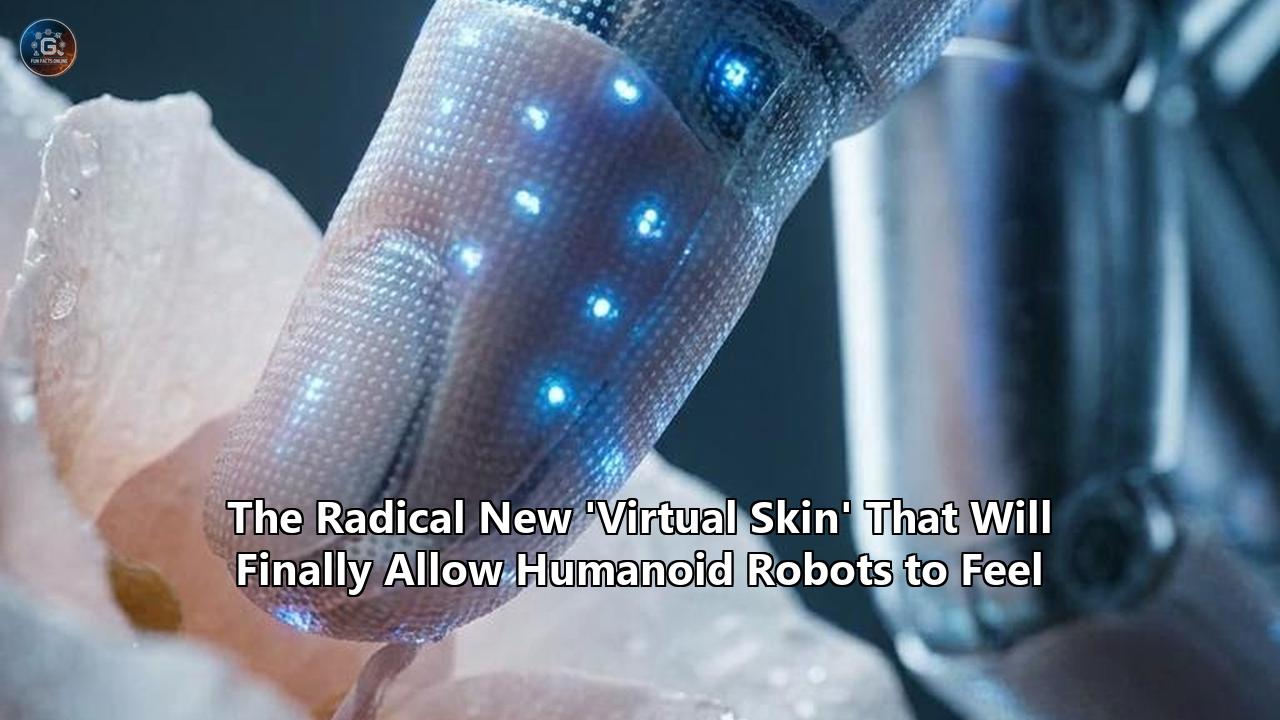
The dividing lines center on three distinct methodologies: biomimetic hydrogel membranes utilizing electrical impedance, vision-based polymer composites that rely on internal cameras, and purely algorithmic models that map external forces onto a computational robot virtual skin,. Each of these architectures offers a radically different solution to the same bottleneck, presenting complex tradeoffs in manufacturing scalability, computational overhead, and physical durability in industrial environments.
The Collapse of the MEMS Consensus
To understand why this divergence is happening now, one must look at the quiet failure of traditional tactile sensors. Historically, robotics engineers relied on microelectromechanical systems (MEMS)—tiny, rigid sensors embedded across a robot's chassis to detect pressure, heat, and structural damage. While highly accurate in isolated applications, MEMS proved disastrous when scaled to cover the entire surface area of a humanoid robot.
The primary failure point of MEMS is the "wiring nightmare." A human hand possesses thousands of mechanoreceptors; replicating that density with discrete electronic sensors requires complex multiplexing and highly vulnerable wire routing. When a robot arm bends, the rigid layers of traditional electronic skins frequently delaminate from the soft underlying polymers. Furthermore, electrical interference between closely packed sensors corrupts the data flow, leading to "ghost touches" or total localized failure.
In late 2025, Rodney Brooks, the former MIT professor and founder of iRobot, leveled a harsh critique at the humanoid robotics boom, explicitly citing the lack of tactile sensing and force control as the industry's core self-delusion. Brooks pointed out that expecting robots to learn human-level dexterity solely by watching video data—a common assumption among AI software developers—was an engineering fantasy. Without the micro-adjustments provided by a highly sensitive, durable outer layer, robots simply crush delicate objects or fail to register glancing collisions.
The industry listened. The current array of solutions moving into commercial viability entirely discards the discrete MEMS approach in favor of unified, continuous materials.
Architecture A: The Hydrogel Impedance Approach
The first major contender in the tactile perception race treats the robot's exterior as a single, continuous computational field. Developed initially by researchers at the University College London (UCL) and the University of Cambridge in mid-2025, this approach utilizes a soft, stretchable, and electrically conductive hydrogel,.
Rather than embedding thousands of individual sensors, the Cambridge and UCL teams utilized Electrical Impedance Tomography (EIT). By injecting small electrical currents into the perimeter of the hydrogel and measuring the resulting voltages, an internal algorithm calculates the conductivity distribution across the entire material. When an object presses against the skin, or when the skin is subjected to localized heating, the internal conductivity changes.
The performance metrics of this material are highly specific. The hydrogel membrane contains over 860,000 distinct conductive pathways,. The processing algorithm can simultaneously detect multiple types of stimuli—such as a sharp puncture, a broad insulated press, and a sudden drop in temperature—all within a single layer of material.
The Tradeoffs:The sheer elegance of the EIT hydrogel lies in its manufacturability. It can be cast into complex shapes, easily molded over a multi-jointed robotic hand like a glove, and requires minimal physical wiring since the electrodes are only placed at the material's perimeter. If a robot operating in a manufacturing facility slashes its arm on a piece of sheet metal, the hydrogel can be melted down and reformed.
However, the tradeoffs are significant. Hydrogels, by their nature, are water-absorbent polymer networks. Maintaining their moisture content and structural integrity in harsh, high-temperature factory environments, or in arid outdoor settings, presents a severe chemical engineering challenge. Furthermore, the EIT process requires solving complex, non-linear inverse mathematical problems in real-time. Translating the voltage changes into precise spatial maps of where the robot is being touched demands heavy, continuous compute cycles, which drains battery life on untethered bipedal models.
Architecture B: The Vision-Tactile Hybrid
In stark contrast to the chemical complexity of hydrogels, a second camp has engineered an optical illusion to solve the tactile problem. Pioneered by a research team at the Japan Advanced Institute of Science and Technology (JAIST) in late 2025, this architecture completely abandons electrical conductivity for tactile sensing, relying instead on computer vision.
The JAIST system, known as ProTac, utilizes a polymer-dispersed liquid crystal (PDLC) layer wrapped around the robot's limbs. PDLC has a unique physical property: it alters its transparency when an electrical voltage is applied. The engineers placed stereo cameras inside the hollow limbs of the robot, pointing outward at the inner surface of the skin.
When the PDLC is subjected to voltage, it becomes transparent, allowing the internal cameras to act as proximity sensors, detecting objects approaching the robot's arm before they even make contact. When the voltage is cut, the skin instantly turns completely opaque. In this opaque state, the internal cameras track the physical deformation of the skin as objects press against it from the outside.
The Tradeoffs:The vision-tactile hybrid achieves something the hydrogel cannot: it bridges the gap between spatial awareness and physical contact using the same sensor array. By eliminating the need for complex embedded electronics inside the soft skin itself, the ProTac system is aggressively durable. If the outer polymer gets scratched or dented, the system continues to function perfectly, so long as the internal cameras remain intact. It supports highly adaptive behaviors, such as slowing down a robotic arm when proximity is breached, and switching to tactile interpretation the millisecond contact occurs.
The drawback is volumetric space. For an internal camera to have a wide enough field of view to track deformations on the skin, there must be empty physical space between the camera lens and the inner wall of the polymer layer. This severely limits how compact the robot's limbs can be. While suitable for large industrial arms, shrinking a vision-tactile system down to the intricate, tightly packed mechanics of a humanoid finger is currently restricted by the focal lengths of microscopic lenses. Additionally, processing high-framerate stereo video to detect microscopic skin deformations requires specialized vision processing units (VPUs) that add thermal output to the robot's core.
Architecture C: The Mathematical Robot Virtual Skin
The third competing approach completely rejects the necessity of advanced surface materials. Proponents of this methodology argue that placing any fragile material on the exterior of a working machine is a fundamental design flaw. Instead, they rely on a robot virtual skin—a highly sophisticated digital twin synchronized with the robot's internal joint torques,.
In this framework, the machine is covered in standard, inexpensive industrial materials like molded polyurethane. However, the software generates a robot virtual skin, mapped as a dense resistance network composed of hundreds of connected nodes representing specific points on the machine's geometric surface,.
When the robot physically collides with an environment, the motor controllers detect micro-fluctuations in the torque required to move the joints. Using complex inverse kinematics, the system calculates the exact vector and magnitude of the external force and maps it instantly onto the robot virtual skin mesh,. Systems like the adaptive electronic skin sensitivity models developed at CTU VRAS allow the software to instantly recognize if an impact occurred on the forearm, the shoulder, or the hip, based purely on how the impact disrupted the planned trajectory of the internal motors.
The Tradeoffs:The financial and durability arguments for a robot virtual skin are undeniable. It requires zero exotic materials, zero delicate surface wiring, and relies entirely on sensors that already exist within the robot's servomotors. The skin can be beaten, scraped, and subjected to extreme temperatures without any loss of "sensory" fidelity, because the perception is happening mathematically at the joint level.
The glaring limitation of the robot virtual skin is its lack of granular resolution. While a torque-based algorithmic model can perfectly identify that a robot's forearm just bumped into a human worker, it cannot feel the difference between a rough brick and a smooth piece of glass. It cannot detect temperature changes, nor can it sense a highly localized, low-force stimulus like a needle prick. For heavy logistics, this approach is more than sufficient. But for fine manipulation—such as eldercare tasks, handling delicate fabrics, or operating human hand tools—the virtual model lacks the micro-texture data required to adjust grip strength accurately.
The Regulatory Pressure: ISO/TS 15066 and Safety
The urgency surrounding these diverging technologies is not purely academic. It is being heavily driven by industrial safety regulations, specifically ISO/TS 15066, which governs the safety of collaborative robots operating in shared human spaces.
Under ISO/TS 15066, robots must strictly limit the maximum force and pressure they can exert during an accidental collision with a human body. A robot operating without whole-body tactile awareness relies entirely on speed and separation monitoring (SSM)—meaning it uses external cameras to try and avoid people altogether. But in cluttered environments like a hospital ward or a tight assembly line, blind spots are inevitable. If a bipedal robot's shoulder swings into a technician, the robot must be able to feel the impact and immediately arrest its kinetic energy to stay within permissible pressure limits.
This regulatory reality has exposed the limitations of localized sensing. Currently, platforms like Tesla's Optimus have demonstrated exceptional progress in fingertip tactile technology. In late 2023 and early 2024, Tesla showcased the Optimus robot utilizing 11 degrees of freedom in its hands, equipped with advanced tactile sensors to manipulate fragile items like eggs and accurately fold clothing. But localized fingertip sensing does not solve the whole-body collision problem. The $2 billion global flexible sensor market is heavily indexing on full-body coverage precisely because localized sensing fails to meet the safety requirements of highly dynamic, shared environments.
Economic and Processing Realities
Analyzing the economic tradeoffs reveals why the market has not yet selected a definitive winner among the three architectures.
The biomimetic hydrogel (Architecture A) is technically the cheapest material to produce in raw form. Hydrogels are fundamentally mostly water and basic polymers. However, the cost of the computing hardware required to run electrical impedance tomography continuously at high frequencies offsets the material savings. EIT is notoriously sensitive to baseline drift; as the hydrogel inevitably loses some moisture over time, its base conductivity shifts, requiring continuous, automated algorithmic calibration.
The vision-tactile ProTac system (Architecture B) introduces a different economic hurdle. Polymer-dispersed liquid crystal is an established technology, commonly used in privacy windows in commercial real estate. But outfitting a robot with dozens of internal stereo cameras multiplies the component failure points. While the outer skin is safe, the internal optical hardware is subject to vibration damage. A humanoid robot taking heavy footfalls transfers substantial kinetic shock through its frame. Keeping inner-limb cameras perfectly calibrated to track microscopic skin deformations while the robot is dynamically moving is a formidable challenge in mechanical dampening.
The purely algorithmic robot virtual skin (Architecture C) is the most economically viable immediately. It treats tactile sensing as a software update rather than a hardware overhaul. By projecting tactile node voltages into a simulated mesh, companies can retrofit existing industrial arms and bipedal prototypes,. The primary ongoing cost is algorithmic training. The robot must undergo extensive machine learning phases where it purposefully collides with objects of various masses to calibrate how those impacts register on the internal joint torques, building out a highly accurate proprioceptive map.
The Convergence of Modalities
As we look at the state of the market in mid-2026, the rigid dogmatism that separated these three approaches is beginning to show cracks. Leading hardware developers are increasingly recognizing that no single architecture can universally solve the tactile perception bottleneck. The limitations of each approach directly complement the strengths of the others, leading to an emerging consensus that the humanoid of 2030 will require a heavily hybridized nervous system.
We are already seeing the theoretical frameworks for this convergence. An optimal bipedal machine will likely utilize a computational robot virtual skin for its gross motor areas—the torso, the upper legs, and the back. In these regions, the primary requirement is broad collision detection and blunt force measurement to satisfy safety protocols like ISO/TS 15066. Because the torso does not need to identify the micro-texture of the objects it bumps into, relying purely on internal torque monitoring saves immense amounts of data processing and entirely eliminates the need for fragile surface materials in high-impact zones.
Conversely, the forearms and lower legs—areas that frequently breach proximity thresholds in cluttered environments—are prime candidates for the JAIST ProTac vision-tactile system. The ability to rapidly switch the polymer from transparent (for proximity sensing) to opaque (for contact deformation) offers a robust mid-tier level of perception. These limbs require spatial awareness to avoid obstacles dynamically, and the vision-based approach solves this without encumbering the robot with external lidar or vulnerable radar modules.
Finally, the hands and fingertips, the primary vectors of physical manipulation, demand the extreme multi-stimuli sensitivity of the Cambridge/UCL hydrogel EIT model. When gripping a tool, folding a fabric, or assisting a human patient, the robot must be able to detect temperature anomalies, localized pressure, and slip mechanics simultaneously,. Confining the heavily computational EIT algorithms to the small surface area of the hands keeps the data processing load manageable, while allowing the robot to execute the delicate maneuvers that AI video models incorrectly assume are purely visual tasks.
What to Watch For Next
The immediate milestone to watch in late 2026 and early 2027 is the integration of these sensory outputs into foundation models. Currently, large AI models in robotics are predominantly trained on visual-motor parameters—they see an object, and they move the arm to grasp it. Injecting tactile data—whether it comes from a physical hydrogel, an optical deformation tracker, or a mapped robot virtual skin—requires entirely new multimodal training techniques. The AI must learn the latency between seeing an object slip and feeling it slip, and adjust its grip in milliseconds.
Furthermore, the materials science sector must solve the hydrogel degradation issue. Startups participating in the Infineon Challenge are actively exploring hybrid elastomers that encapsulate conductive hydrogels within a microscopic silicone matrix, attempting to prevent moisture evaporation without sacrificing the material's stretchability or electrical sensitivity.
The resolution of the artificial touch problem will dictate the timeline for widespread humanoid deployment. Until bipedal machines can accurately feel the ground beneath their feet and the weight of the objects in their hands, they remain isolated to heavily controlled demonstration environments. But with the rapid parallel maturity of impedance networks, vision-tactile polymers, and sophisticated joint-torque mapping, the era of the numb machine is aggressively coming to an end. The hardware is finally catching up to the software, forcing a radical recalculation of what automated labor will look like over the next decade.
Reference:
- https://www.roboticstomorrow.com/news/2026/05/11/infineon-startup-challenge-2026-puts-humanoid-robotics-in-the-spotlight/26539/
- https://thedebrief.org/robots-that-feel-breakthrough-robotic-skin-could-revolutionize-human-robot-interactions/
- https://www.eurekalert.org/news-releases/1095605
- https://www.frontiersin.org/journals/human-neuroscience/articles/10.3389/fnhum.2022.862344/full
- https://arxiv.org/html/2409.06369v1
- https://www.reddit.com/r/robotics/comments/1nucejb/irobot_founder_and_longtime_mit_professor_rodney/
- https://www.ucl.ac.uk/news/2025/jun/improved-electronic-skin-gives-robots-human-touch
- https://www.medicaldevice-network.com/analyst-comment/synthetic-skin-robots-sense-touch/
- https://pub.uni-bielefeld.de/download/2512954/2633271/C1_OUP_NguyenWachsmuth.pdf
- https://pmc.ncbi.nlm.nih.gov/articles/PMC9201416/