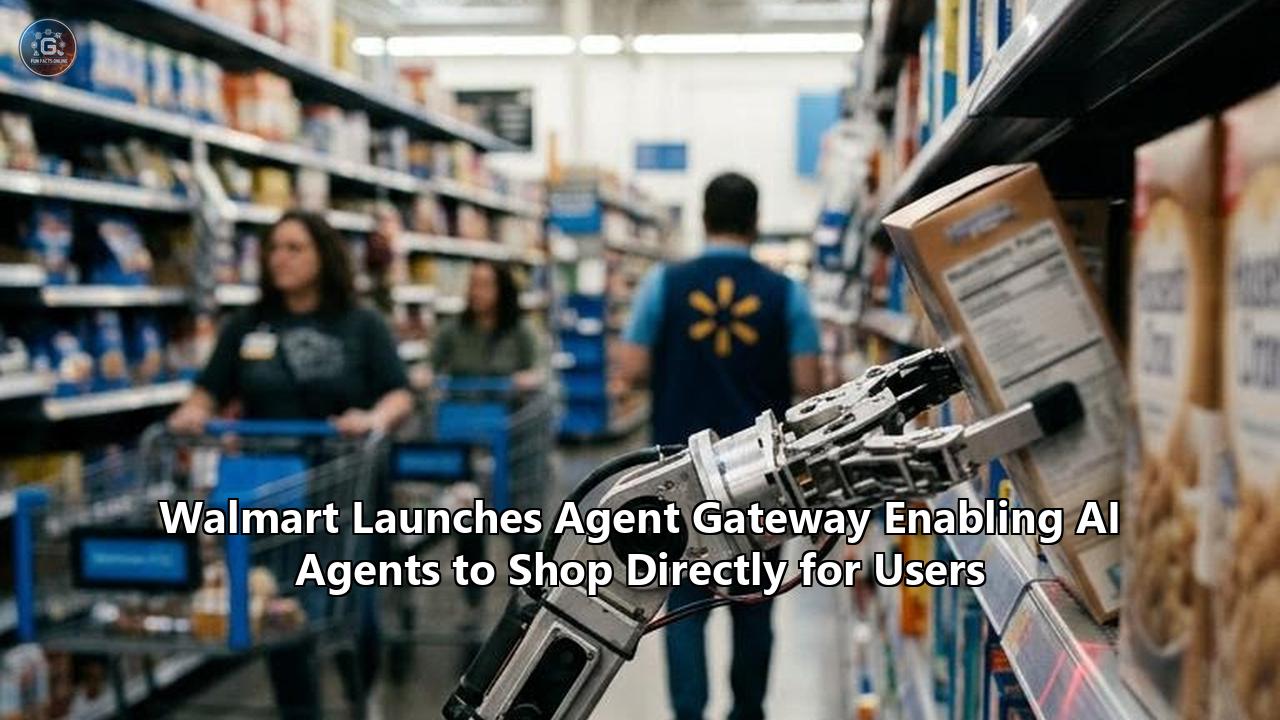
Walmart opened its digital infrastructure to autonomous software on Wednesday, launching a developer platform called the Walmart Agent Gateway that allows third-party artificial intelligence assistants to directly search inventory, assemble shopping carts, and execute purchases on behalf of consumers.
The service, announced at the Masters of Scale Summit in San Francisco, connects external AI systems—including OpenAI’s ChatGPT, Google’s Gemini, and Meta’s Muse—directly into the checkout pipelines of Walmart and Sam’s Club. Alongside the gateway, the world’s largest retailer announced that it will introduce "Agent Profiles" in November, establishing an account architecture where consumers can authorize individual bots, cap their spending, mandate transaction-by-transaction approvals, and review algorithmic purchases separately from human orders.
The release marks a deliberate counter-strategy against Amazon. While Amazon spent late 2025 and 2026 restricting automated assistants—blocking Meta’s Muse, litigating against Perplexity’s shopping bot, and curbing third-party bot traffic under its human-only Terms of Service—Walmart is building public on-ramps for machine buyers.
"As customers begin using agents to help them shop, we’re building connections, permissions, and options that complement those tools and support how customers want to use them," Walmart said in a statement detailing the rollout. Speaking at the San Francisco event, Walmart U.S. President and CEO John Furner underscored that retail must adapt to how consumers delegate labor, noting that Walmart intends to shape autonomous transactions rather than defend legacy web browsing patterns.
Financial markets and retail analysts immediately seized on the divergence between the retail giants. David Bellinger, retail analyst at Mizuho, noted that Walmart’s implementation of granular budget controls and spending caps provided much-needed structural reassurance for an emerging channel, observing that "the momentum and buy-in from top management teams seems to be making this into a real thing".
Yet Walmart’s move is far more than a single platform update. It serves as an instructive case study in the structural reorganization of digital commerce. As purchasing shifts from human eyes evaluating visual interfaces to autonomous agents querying programmatic endpoints, the foundational assumptions of online retail—search rankings, retail media ad networks, consumer loyalty, and cart friction—are being rebuilt. Examining the mechanics behind the Walmart Agent Gateway reveals the technical, financial, and strategic blueprints that will govern the post-browser economy.
Technical Architecture: Abandoning the Human Browser for Model Context Protocol
To understand why Walmart built a dedicated gateway, one must examine how autonomous bots previously attempted to shop online. Over the past eighteen months, AI agents attempting to fulfill user requests operated primarily through headless browser automation. Frameworks like Playwright or Puppeteer directed large language models to visually inspect Document Object Model (DOM) trees, click interactive buttons, scroll through infinite pages, and input credit card numbers into HTML text fields.
Walmart classified this approach as fundamentally unstable, sluggish, and prone to hallucinations. Dynamic website code, anti-bot CAPTCHAs, changing layouts, and network latencies caused scraping agents to fail mid-checkout, purchase wrong pack sizes, or misread promotional disclaimers. Furthermore, headless browsing imposes enormous, useless compute overhead on both the retailer’s servers and the AI developer’s inference infrastructure.
The Walmart Agent Gateway abandons human visual emulation entirely. Instead, Walmart deployed an endpoint server built on the Model Context Protocol (MCP), an open standard originally created by Anthropic to standardize how generative models query external tools and datasets.
[ AI Assistant: ChatGPT / Gemini / Muse ]
                  │
                  ▼  (JSON-RPC over Secure Transport)
     [ Model Context Protocol (MCP) ]
                  │
                  ▼
      [ Walmart Agent Gateway ]
      ├── Scoped Data Redaction Engine
      ├── Catalog & Real-Time Store Inventory Engine
      └── Delegation & Tokenized Checkout Service
                  │
                  ▼
     [ Core Commerce Core: Walmart / Sam's Club ]
Under this protocol, the AI assistant does not "browse" Walmart.com. Instead, the assistant and the retailer communicate through structured JSON-RPC messages. When an end user prompts an assistant with a high-level instruction—such as "Restock my usual laundry detergent and buy three packs of whole-wheat bagels for pickup at the store near my house"—the AI model translates that natural language into deterministic API calls mediated by the MCP server.
Through the gateway, the bot queries four core capabilities:
- Catalog Discovery: The agent searches structured item taxonomies, reading precise parameters like unit prices, package counts, allergens, and Universal Product Codes (UPCs) without rendering web pages.
- Store-Level Inventory Locators: The gateway exposes real-time local inventory across Walmart's network of more than 4,600 domestic physical stores and Sam’s Club locations.
- Contextual Substitution Matching: If a preferred item is out of stock, the gateway returns programmatic substitute candidates pre-filtered by customer preference history, preventing LLM hallucinations.
- Direct Cart Construction: Items are committed directly to a pending digital basket without the assistant needing to interact with visual buttons or session cookies.
By implementing standard machine-readable interfaces, Walmart has transformed its entire retail catalog into an execution environment. For third-party software developers building a Walmart AI shopping agent, the gateway replaces brittle scraping scripts with predictable, sub-second latency tool execution.
Delegated Authority: How "Agent Profiles" Redefine Digital Identity
When human beings shop online, the digital identity model is binary: an individual signs in with an email address and password, or signs in through a federated single sign-on (SSO) provider. The session assumes that the authenticated entity possesses full agency, unrestricted access to saved payment cards, and complete ownership of the purchase history.
Agentic commerce destroys this binary assumption. If a user hands their raw login credentials to an AI model, that model inherits absolute power over the account. An unchecked reasoning error by the model could result in hundreds of dollars in unauthorized orders, or expose private payment data to third-party model providers.
Walmart's introduction of "Agent Profiles" provides a working template for solving the problem of delegated machine authority. The company modeled its identity system not on traditional web accounts, but on the authorized user framework used by commercial credit card issuers.
┌────────────────────────────────────────────────────────┐
│                   PRIMARY ACCOUNT                      │
│                (Consumer Master Profile)               │
└──────────────────────────┬─────────────────────────────┘
                           │
         ┌─────────────────┴─────────────────┐
         ▼                                   ▼
┌──────────────────┐               ┌──────────────────┐
│   Agent Profile  │               │   Agent Profile  │
│  (Meta Muse MCP) │               │ (OpenAI ChatGPT) │
├──────────────────┤               ├──────────────────┤
│ Spending Cap:    │               │ Spending Cap:    │
│ $100 / week      │               │ $0 (Approval Req)│
│ Permissions:     │               │ Permissions:     │
│ Groceries Only   │               │ Electronics Only │
│ Payment Token:   │               │ Payment Token:   │
│ Restricted Card  │               │ Restricted Card  │
└──────────────────┘               └──────────────────┘
Within a single Walmart or Sam's Club account, users will be able to spin up dedicated profiles for specific AI tools, such as one for ChatGPT and another for Meta's Muse. Each profile operates under four distinct architectural constraints:
1. Isolated Transaction Ledgers
Orders placed by an agent do not disappear into the consumer's general order stream. They appear on an isolated ledger labeled specifically with the identifier of the assistant that triggered the purchase. If an unauthorized or errant transaction occurs, the user immediately identifies which autonomous agent was responsible.
2. Programmable Spending Caps and Approval Gates
Users configure programmatic guardrails before an agent can interact with checkout. These range from a zero-trust setting—requiring manual biometric or two-factor human approval on a smartphone before any transaction is executed—to discretionary expenditure limits, such as authorizing an agent to spend up to $75 per week strictly on recurring household consumables.
3. Payment Credential Redaction
Under the gateway’s operating terms, third-party AI models are strictly blocked from viewing or processing raw payment card data, Card Verification Values (CVVs), or full bank account details. The transaction is completed via an internal tokenized balance or pre-authorized token maintained entirely on Walmart’s payment infrastructure. The assistant never handles PCI-DSS-regulated payment payloads.
4. Selective Preference Disclosure
A major point of friction in autonomous systems is data leakage. If an assistant needs to know what brand of oat milk a consumer buys, should the merchant hand over five years of granular purchase records spanning pharmacy, apparel, and personal care?
Walmart's gateway acts as a differential privacy proxy. It shares isolated contextual attributes—such as confirming that a customer prefers unscented detergent or showing a preferred brand of whole-wheat bread—without exposing the broader, unified profile of the consumer to external models.
This system offers a valuable design principle for digital architects: machine identity cannot be treated as an extension of user login sessions. Machine access must be decoupled into fine-grained capabilities with programmatic boundaries, spending throttles, and automated audit trails.
The Strategic Divergence: Retail Media Margins vs. Scale Efficiency
The announcement of the Walmart Agent Gateway brings a stark competitive divide into focus. Why did Walmart embrace autonomous purchasing assistants while Amazon took sweeping measures to block them?
The answer does not lie in technological capability. It lies in the contrasting economic structures of the two retailers, specifically the role of retail media advertising.
┌────────────────────────────────────────────────────────┐
│             THE RETAIL MEDIA PARADOX                   │
├────────────────────────────┬───────────────────────────┤
│    HUMAN SHOPPING LOOP     │    AGENT SHOPPING LOOP    │
├────────────────────────────┼───────────────────────────┤
│  1. Enters vague search    │  1. Queries exact SKU     │
│  2. Scrolls 4 ad carousels │  2. Evaluates constraints │
│  3. Clicks sponsored brand │  3. Checks price & store  │
│  4. Impulsive add-to-cart  │  4. Deterministic checkout│
├────────────────────────────┼───────────────────────────┤
│   High Ad Monetization     │    Zero Ad Engagement     │
└────────────────────────────┴───────────────────────────┘
Over the past decade, Amazon converted its search results page into one of the most lucrative advertising real estates in the corporate world. In 2025 alone, Amazon generated $68.6 billion in advertising services revenue—an income stream carrying estimated operating margins of 60% to 70%. By comparison, Amazon's entire combined North American and International retail store operations generated roughly $34.4 billion in operating income during the same period.
Amazon's profitability is fundamentally tied to human friction: shoppers scrolling past four rows of "Sponsored Products," comparing alternatives, and absorbing paid placements.
An autonomous AI agent does not look at banner ads. It does not scroll past sponsored carousels, succumb to eye-level packaging psychology, or get persuaded by flash-sale badges. When an agent searches for paper towels, it parses machine-readable inventory schemas, evaluates cost per sheet, checks physical store proximity, cross-references customer preferences, and submits an order in milliseconds.
For Amazon, third-party agents threaten to hollow out the primary engine of its operational profit. When Meta’s Muse or OpenAI’s bots bypass the search interface, they bypass Amazon's $68 billion ad machine. Blocking those agents is a rational defense of its core financial margins.
Walmart faced the same dilemma, but its strategic incentives point in a different direction. Although its Walmart Connect media business is expanding, advertising does not dominate Walmart's profit structure to the degree it does Amazon's. Walmart remains, at its core, a high-volume, low-margin supply chain and logistics machine grounded in physical stores.
Consider the distinct structural advantages Walmart holds when machine agents make purchase choices:
- Physical Proximity and Real-Time Pickup: Over 90% of the U.S. population lives within 10 miles of a Walmart retail unit. If an AI agent prioritizes getting groceries to a home within two hours at the lowest delivery fee, Walmart’s physical store fleet beats Amazon’s centralized fulfillment centers on delivery economics.
- Everyday Low Price (EDLP) Consistency: Algorithms evaluate price transparently. Walmart announced that prices exposed to AI agents will match human pricing on Walmart.com exactly. In a world where machines compare unit costs down to the tenth of a cent, Walmart’s private-label brands (such as Great Value) hold a structural pricing edge.
- Aggressive Customer Acquisition: By making its platform the default, friction-free destination for third-party bots, Walmart captures consumer grocery and replenishment market share that might otherwise drift to local grocers or Amazon.
By building the gateway, Walmart is betting that raw transaction volume and fulfillment dominance outweigh the risk of losing ad impressions. The retailer is willing to sacrifice consumer visual attention in exchange for becoming the default fulfillment engine of algorithmic commerce.
Governance, Liability, and the Mechanics of Algorithmic Intent
Allowing automated systems to spend money on consumer accounts opens an array of legal, commercial, and operational dilemmas. If an assistant misunderstands an instruction and buys 24 pounds of bananas instead of two individual bananas, who bears the financial liability?
Walmart addressed this friction head-on by publishing an updated Agentic Access Terms framework alongside the gateway launch. The company’s policy establishes concrete boundaries governing how agents interact with its systems, setting legal precedents for the wider industry:
┌────────────────────────────────────────────────────────┐
│             WALMART AGENTIC ACCESS TERMS               │
├────────────────────────────────────────────────────────┤
│ • Automated Agency Clause:                             │
│   Actions taken within granted permissions are legally │
│   treated as direct actions of the human consumer.     │
│                                                        │
│ • Full Pricing Transparency:                           │
│   Agent queries receive human-identical pricing with   │
│   no dynamic agent markups or hidden tool surcharges.  │
│                                                        │
│ • Training Data Prohibition:                           │
│   Scraping site materials or gateway payloads to       │
│   train, evaluate, or refine foundation LLMs is barred.│
│                                                        │
│ • Disclosure & Identity Mandate:                       │
│   Agents must identify as automated callers; masking   │
│   requests as human browser traffic triggers a ban.    │
└────────────────────────────────────────────────────────┘
The Legal Fiction of Direct Agency
Under Walmart’s terms, any action an authorized agent executes within its assigned permissions is legally treated as an action taken directly by the customer. If a user authorizes a Walmart AI shopping agent to make autonomous purchases up to $50, the resulting purchase forms a binding contract between the human user and Walmart. The third-party LLM provider (such as OpenAI or Google) is not treated as a contractual party to the sale.
Returns and the "Hallucination Defense"
Walmart affirmed that its standard customer return policies apply to agent-initiated purchases. A customer who receives an unintended item can return it via standard store drop-off or parcel return.
However, Walmart explicitly does not guarantee refunds for perishable items or custom orders that fall outside normal return criteria merely because an AI model misunderstood user prompts. The financial risk of model misinterpretation remains primarily with the end consumer, underscoring why Walmart instituted default transaction approvals for high-value orders.
Strict Protection Against Unlicensed AI Training
Walmart’s governance rules explicitly separate tool usage from model training. The terms ban any bot, spider, or gateway caller from using catalog information, product images, inventory data, or customer reviews to train, fine-tune, or benchmark machine learning models without express written permission.
If an AI provider uses the MCP server to harvest pricing data across 100,000 SKUs under the guise of customer purchasing, Walmart reserves the right to immediately revoke its developer keys and permanently sever the gateway connection.
Prohibition of Deceptive Automation
The framework requires absolute identity transparency. Agents must openly declare their identity in transaction headers and must not conceal automated behaviors or impersonate human browser sessions.
This requirement establishes an enforcement boundary: developers who use the official gateway are granted streamlined access, while unauthorized bots that bypass the gateway to scrape HTML will face aggressive IP blocks and bot-mitigation countermeasures.
Five Architectural Principles for the Post-Browser Commercial Era
The launch of Walmart's Agent Gateway offers critical operational lessons for engineering leaders, enterprise retailers, and consumer brand executives. As programmatic transactions begin to supplement conventional human browsing, organizations must rethink how digital retail systems are built.
The transition from human e-commerce to agentic commerce surfaces five enduring structural principles:
1. APIs Are Replacing Storefronts as the Primary Conversion Layer
For a quarter-century, e-commerce optimization focused entirely on the human eye: color theory, layout optimization, call-to-action buttons, checkout progress bars, and mobile responsiveness.
In agentic commerce, those investments carry zero weight. When an assistant evaluates where to execute an order, it processes machine-readable data structures.
Retailers that lack clean, semantic, low-latency API layers will find themselves completely invisible to the emerging layer of automated assistants. To capture programmatic volume, the underlying product catalog must be exposed through standardized schemas that allow software to check inventory, calculate tax, verify shipping times, and assemble carts without rendering visual components.
2. Identity Must Decouple Into Delegated Capabilities
Traditional authentication relies on human presence. Single-factor passwords, session cookies, and SMS-based two-factor authentication were built on the assumption that a conscious human is looking at a screen.
As automated agents take over execution, identity systems must support delegated, capability-based security. Retail platforms must adopt authorization frameworks—drawing on OAuth 2.0 token exchange, cryptographic key signatures, and granular role-based permissions—that allow consumers to issue scoped digital power of attorney.
Systems must allow users to define:
- How much money an automated agent is allowed to spend.
- Which specific product categories the bot can touch.
- How long the agent's checkout authorization token remains valid.
- What threshold of anomaly triggers a fallback to human verification.
3. Search Engine Optimization Gives Way to Agent Optimization
Search engine optimization (SEO) has historically meant optimizing keywords, meta tags, backlink profiles, and page-load times to win visual rankings on Google or Amazon.
When an AI assistant executes a product recommendation, traditional SEO tactics fail. The model queries vector databases, checks real-time inventory endpoints, and evaluates programmatic constraints. Product discovery shifts toward structured data completeness, machine-readable specifications, and supply chain reliability.
If an item's dimensions, unit price, material composition, and local inventory levels are ambiguous or missing from the structured feed, an autonomous assistant will bypass the product in favor of a competitor with unambiguous machine-verifiable attributes.
4. Retail Advertising Must Move from Gaze Monetization to Context Injection
The prevailing model of digital retail advertising—monetizing eyeball impressions, banner clicks, and visual carousel ads—faces direct disintermediation as agent adoption expands.
Retailers cannot simply paste image ads into an API payload without breaking the protocol.
As a result, retail media networks must re-architect their ad inventory. Monetization will transition toward structured context injection and verified recommendation auctions. Instead of buying a visual banner, a brand might bid on becoming the default suggested alternative when an agent’s primary search query encounters an out-of-stock condition.
Ad networks must adapt to serve algorithms rather than human attention spans, providing mathematically relevant choices that fit within the agent's objective parameters.
5. Security Architecture Must Shift from Bot Mitigation to Bot Authentication
For twenty years, digital commerce cybersecurity teams treated non-human automated traffic as an attack vector. Cloudflare, Akamai, and AWS WAF tools were deployed specifically to detect machine behavior, challenge headless browsers with CAPTCHAs, and terminate automated sessions.
Agentic commerce makes this defensive mindset obsolete. Retailers can no longer afford to treat all automated traffic as hostile.
Engineering organizations must build split-routing architectures that differentiate between malicious scrapers and authorized agent proxies. Using open protocols like the Model Context Protocol, retailers can funnel verified assistants through authenticated, rate-limited, and audited gateways while maintaining defensive perimeter walls against credential stuffers and adversarial scrapers.
Consumer Adoption Barriers and the Emerging Retail Schism
While Walmart has laid down the programmatic tracks, large-scale consumer adoption faces significant behavioral friction.
Recent consumer research indicates that the general public remains cautious about surrendering purchasing authority to machine intelligence. According to retail sentiment surveys cited by GlobalData Retail, only approximately 16% of U.S. consumers currently report feeling comfortable delegating financial transactions and autonomous purchasing decisions directly to AI agents.
Consumers readily embrace AI for informational queries, recipe generation, price comparison, and gift ideation. However, delegating the physical authority to pull money from a checking account and dispatch packages to a front doorstep requires a fundamentally higher threshold of institutional trust.
Neil Saunders, managing director of GlobalData Retail, observed that consumer hesitation centers primarily on loss of control: fear of receiving incorrect variations, apprehension over automated billing mistakes, and reluctance to navigate return logistics for goods they did not explicitly click to buy.
This trust barrier explains the conservative design choices embedded in Walmart's initial rollout:
┌────────────────────────────────────────────────────────┐
│             TRUST ARCHITECTURE PHASING                 │
├────────────────────────────────────────────────────────┤
│  PHASE 1: Conversational Discovery & Cart Assembly     │
│  • Agent suggests items via natural language           │
│  • Carts assembled through MCP endpoints               │
│  • Manual human checkout required                      │
├────────────────────────────────────────────────────────┤
│  PHASE 2: Gated Transaction Approvals (Current)        │
│  • Agent initiates payment via Agent Profiles          │
│  • Push notification requires human biometric approval │
│  • Transaction ledgers kept completely separate        │
├────────────────────────────────────────────────────────┤
│  PHASE 3: Bounded Autonomous Replenishment             │
│  • Agent executes recurring pantry restocking          │
│  • Enforced strict spending ceilings ($50/week)        │
│  • Zero-human-touch end-to-end checkout                │
└────────────────────────────────────────────────────────┘
By introducing "Agent Profiles" with mandatory per-transaction approvals enabled as a baseline, Walmart is executing a staged trust onboarding strategy. The consumer is not asked to surrender full financial control immediately. Instead, the user delegates the tedious labor of search, inventory verification, cart assembly, and coupon calculation, retaining final veto authority at the exact moment of financial commitment.
Once consumers experience frictionless, error-free execution over dozens of routine weekly transactions, they are far more likely to relax those constraints—gradually elevating spending caps and granting permission for background replenishment of daily staples.
This dynamic reveals an emerging rift across the retail landscape:
- The Open-Gateway Camp: Led by Walmart, Sam's Club, and launch partners like Meta and OpenAI, these retailers treat autonomous agents as an entirely new distribution channel. They are actively redesigning their core infrastructure around open API access, programmatic catalog feeds, and transparent protocol handshakes.
- The Walled-Garden Camp: Led by Amazon, these players rely on defending human visual engagement to protect high-margin retail media advertising businesses. They intend to keep agents behind their own proprietary assistants (such as Amazon’s Rufus), keeping third-party LLMs out while forcing consumers to remain inside their owned user interfaces.
The friction between these opposing approaches will dictate e-commerce development across the rest of the decade. If third-party AI assistants from Apple, Google, Meta, and OpenAI become the dominant daily operating systems through which people organize their lives, consumers will naturally prefer fulfillment platforms that interface with their chosen tools without friction.
A consumer who asks their smartphone assistant to replenish their household pantry will have little patience for a merchant that blocks the request and forces them to manually open an app, navigate search bars, and click through promotional pop-ups.
What to Watch: The Next Milestones for Agentic Commerce
The deployment of the Walmart Agent Gateway provides an initial glimpse into a post-browser retail environment. Over the next twelve to eighteen months, several key technical and market milestones will determine whether this architecture becomes the standard for global commerce:
- November 2026 Consumer Rollout: The first critical test arrives with the general availability of Agent Profiles within the Walmart and Sam’s Club mobile apps. Watch whether consumer activation rates move past early technical adopters, and track the default spending ceilings users choose to assign to their assistants.
- Competitive Repositioning: Amazon’s wall-off strategy faces immediate competitive pressure. If a meaningful share of grocery and replenishment transactions migrates toward Walmart via ChatGPT and Meta’s Muse, Amazon will face mounting pressure from brands to provide a safe, programmatic agent gateway of its own—even if doing so risks cannibalizing a fraction of its sponsored ad revenues.
- Enterprise Protocol Standardization: While Walmart adopted Anthropic’s Model Context Protocol for its gateway, the broader industry has yet to settle on a single universal standard for commercial agent transactions. Watch whether rivals like Target, Kroger, and Shopify form a consortium around MCP or whether fragmented, proprietary agent APIs begin to emerge across the enterprise software sector.
- Third-Party Developer Integrations: The utility of any gateway is measured by what developers build on top of it. Early implementations will reveal whether developers use the API primarily for routine grocery restocking, or whether more complex autonomous systems emerge—such as smart home appliances that automatically reorder water filters or event-planning bots that coordinate catering orders across Sam's Club locations.
- Regulatory Scrutiny of Machine Spending: As autonomous transactions gain market share, financial regulators will inevitably turn their attention to programmatic commerce. The Consumer Financial Protection Bureau (CFPB) and Federal Trade Commission (FTC) are likely to scrutinize how liability for algorithmic purchase errors is disclosed to consumers, potentially establishing statutory frameworks around transaction rollbacks, agent identity disclosures, and machine-driven dark patterns.
The retail landscape is moving beyond the era where websites were static digital magazines built for human eyeballs. By acknowledging that software agents will increasingly act as the initial shoppers, evaluators, and buyers of goods, Walmart has taken the first decisive step toward institutionalizing machine-to-machine retail. The companies that thrive in this next era will not be those that build the prettiest digital storefronts, but those that build the fastest, most reliable, and most secure gateways for autonomous intelligence.
Reference:
- https://www.investing.com/news/stock-market-news/walmart-launches-tools-for-ai-agents-to-shop-for-customers-4964210
- https://www.adweek.com/commerce/walmart-embraces-ai-agents-that-shop-on-behalf-of-customers/
- https://www.businessinsider.com/walmart-adding-ai-agent-shopping-features-while-amazon-blocks-bots-2026-10
- https://www.androidheadlines.com/2026/10/walmart-ai-agent-shopping-profiles-gateway.html
- https://www.unite.ai/walmart-introduces-agent-profiles-gateway-for-ai-shopping-agents/
- https://ua.news/en/technologies/walmart-zapustiv-agent-gateway-dlia-pokupok-cherez-shi-agentiv-techcrunch
- https://pluang.com/en/news-feed/walmart-luncurkan-agent-gateway-sedangkan-amazon-blokir-ai-agents
- https://www.unite.ai/walmart-introduces-agent-profiles-gateway-for-ai-shopping-agents/
- https://superpowerdaily.com/posts/walmart-lets-approved-ai-agents-shop-for-customers-through-new-gateway
- https://finance.biggo.com/news/a29b0592-50a3-485f-8521-4d47b3edc525
- https://businessmodelanalyst.com/amazon-blocks-ai-agents-ad-revenue-store-profit/
- https://corporate.walmart.com/news/2026/10/Making-It-Possible-for-Agents-to-Shop-on-Behalf-of-Customers
- https://podscripts.co/podcasts/the-startup-ideas-podcast/amazon-delta-are-blocking-ai-agents-how-to-win-anyway