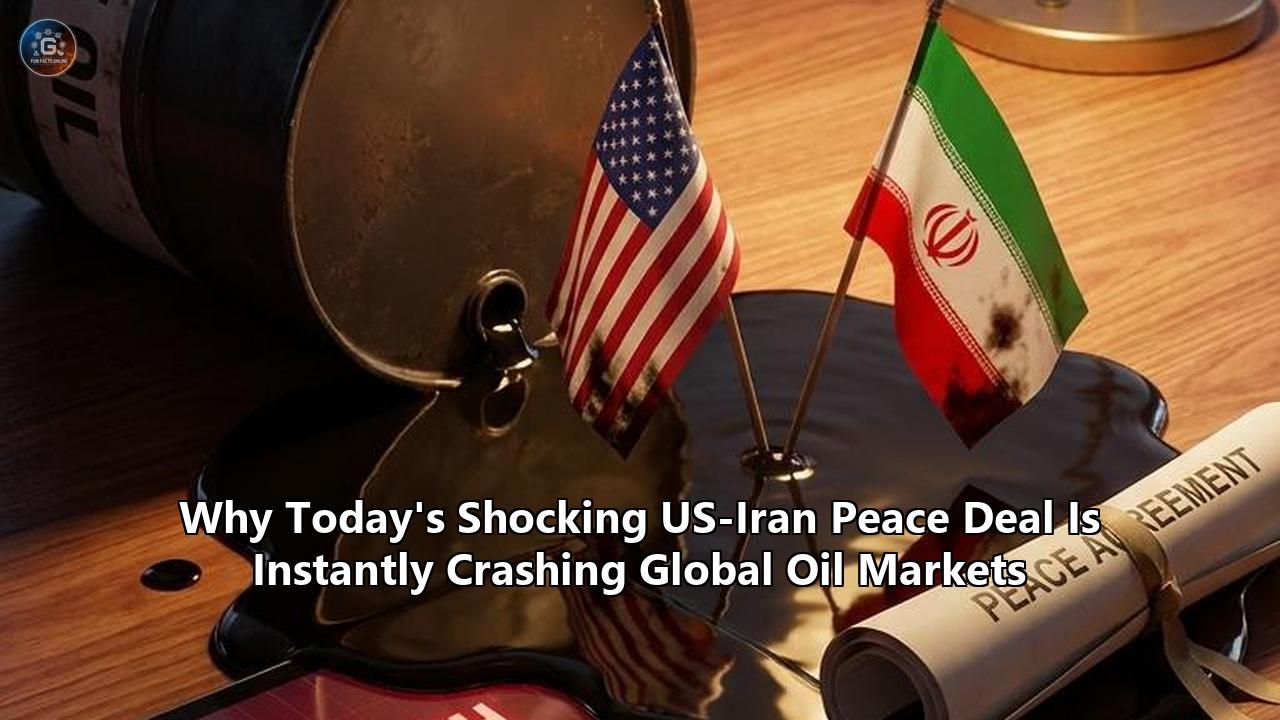
On the evening of Sunday, June 14, 2026, the global energy architecture shifted on a single social media post. At 5:30 PM in Washington, U.S. President Donald Trump announced that a comprehensive peace framework with the Islamic Republic of Iran had been finalized, declaring "the immediate and permanent termination of military operations on all fronts". Brokered via an intense, months-long backchannel mediated by Pakistani Prime Minister Shehbaz Sharif, the deal brings a sudden, dramatic end to a war that has ravaged the Middle East since late February.
The centerpiece of the announcement was the immediate, "toll-free" reopening of the Strait of Hormuz—the world’s most critical energy chokepoint, which has been blockaded and heavily mined for nearly four months—and the simultaneous lifting of the U.S. naval blockade on Iranian ports. "Ships of the World, start your engines," Trump declared. "Let the oil flow!"
The reaction across global financial centers was instantaneous and violent. As Asian trading desks opened for the week on Monday morning, June 15, crude futures experienced their largest single-day selloff since the initial shock of the war in early March. Brent crude plummeted past 4% within minutes, sliding rapidly to trade under $83 a barrel, while West Texas Intermediate (WTI) tumbled more than 4.6% to slide below $79.
To the casual observer, the market crash looks like a straightforward diplomatic sigh of relief—the unwinding of a standard geopolitical risk premium. But behind the screens of major oil brokerages, physical trading desks, and maritime insurance syndicates, a far more complex, technical, and systemic unwinding is underway. The sudden peace deal has triggered a structural collision between an artificial supply deficit and a massive, hidden wave of physical crude that has been bottled up in onshore tanks and a sprawling "ghost fleet" of tankers.
This historic diplomatic breakthrough is rewriting the physical balance of global energy, and several critical underlying factors are driving the massive oil market impact today.
The Pakistani-Omani Backchannel and the Secret $25 Billion Accord
While public attention during the first half of June focused on escalating tensions and sporadic military exchanges, a highly sophisticated backchannel was quietly finalizing the terms of the memorandum of understanding (MoU). The negotiations, which occurred primarily in Islamabad and Muscat, relied heavily on Pakistani mediators who shuttled between U.S. national security officials and Iranian Deputy Foreign Minister Kazem Gharibabadi.
The path to Sunday’s announcement was notoriously volatile. On Sunday morning, a sudden Israeli airstrike on Beirut threatened to derail the entire framework. President Trump openly expressed frustration with the timing of the strike, which briefly halted talks as Iranian hardliners in Tehran vociferously pushed to reject the proposed deal. However, the economic devastation wrought by the four-month U.S. naval blockade on Iran’s economy ultimately forced the hand of Iranian negotiators.
                [ Islamabad & Muscat Backchannels ]
                     /                      \
                    /                        \
    [ U.S. National Security ]         [ Iranian Dep. FM Gharibabadi ]
                    \                        /
                     \                      /
               [ Final 14-Point MoU (June 14, 2026) ]
               - Permanent Ceasefire (Inc. Lebanon)
               - Toll-Free Reopening of Hormuz (June 19)
               - U.S. Naval Blockade Lifted
               - $25B Asset Release ($12B Frontloaded)
               - U.S. Sanctions Waivers Approved
Details of the 14-point memorandum leaked by the Iranian state-affiliated Mehr news agency reveal the complex financial engineering required to secure the peace. Under the terms of the preliminary agreement, the United States has agreed to:
- Release $25 billion in frozen Iranian assets. Crucially, $12 billion of this sum is to be unfrozen and transferred immediately before the official bilateral signing ceremony, scheduled for Friday, June 19, in Switzerland.
- Establish credit lines and direct cash transfers managed through regional financial institutions in Qatar and Oman to bypass standard primary sanctions.
- Issue temporary oil sanctions waivers allowing Tehran to legally market its crude to international buyers and receive direct revenue without the risk of secondary U.S. sanctions.
In return, Iran has committed to maintaining the nuclear status quo. This includes halting all uranium enrichment beyond current levels, freezing the expansion of its nuclear facilities, and agreeing to a supervised program to dilute its existing stockpile of highly enriched uranium inside the country over the next 60 days.
The sheer speed of this financial and political realignment caught Wall Street desks completely off guard, instantly collapsing the geopolitical risk structure that had supported crude prices above $90 for months.
Unwinding the "War Risk" Premium: The Financial Collapse of Freight and Insurance
The most immediate catalyst for the market crash was not the physical arrival of new oil, but the rapid collapse of the paper and insurance structures that govern maritime transit.
Since the outbreak of hostilities on February 28, the cost of moving a barrel of crude out of the Persian Gulf had skyrocketed to unprecedented levels. Shipping oil through the region requires two essential components: physical vessels and maritime insurance. When the war began, major European and American insurance syndicates—primarily centered around the Joint War Committee (JWC) of the Lloyd's Market Association in London—designated the entire Persian Gulf, the Gulf of Oman, and the southern Red Sea as high-risk areas.
[ Wartime Shipping Costs ]                [ Peace Deal Shipping Costs ]
==========================                =============================
Base Freight Rate: High                   Base Freight Rate: Normal
War Risk Premium: Up to $2M/transit  -->  War Risk Premium: COLLAPSED ($0)
Military Escort Costs: Extreme            Military Escort Costs: ELIMINATED
--------------------------                -----------------------------
Total Cost: Astronomical                  Total Cost: Standard Maritime Rates
For a standard Very Large Crude Carrier (VLCC) carrying 2 million barrels of oil, "War Risk" insurance premiums spiked from nominal baseline levels to as much as $2 million per single transit. In many cases, P&I (Protection and Indemnity) Clubs refused to cover hull and machinery risks altogether unless vessels participated in highly restricted naval convoys. This risk forced shipping companies to demand astronomical freight rates, which were ultimately priced directly into the physical cost of crude, widening the spread between local Persian Gulf benchmarks (like Dubai/Oman) and global benchmarks (like Brent).
With Trump’s announcement of an "immediate removal of the United States Naval blockade" and a "toll-free" reopening of the Strait on June 19, these war risk premiums began to evaporate overnight.
London insurance brokers are already preparing to downgrade the risk classification of the Gulf of Oman and the Strait of Hormuz. The anticipated elimination of the war risk surcharge will slash the cost of importing Middle Eastern crude by several dollars per barrel. Because oil prices are calculated on a delivered basis, this sudden drop in logistics costs is exerting massive downward pressure on prompt-month futures contracts.
Clearing the Sea Lanes: The Technical Reality of Reopening Hormuz
The physical reopening of the Strait of Hormuz on June 19 is not as simple as flipping a diplomatic switch. The strait is a highly regulated, narrow body of water where commercial traffic is restricted to a strict Traffic Separation Scheme (TSS)—consisting of a two-mile-wide inbound lane, a two-mile-wide outbound lane, and a two-mile-wide separation buffer. During the war, this vital corridor became a tactical minefield.
To understand why the oil market impact is crashing prices so rapidly today, one must look at the technical confidence shippers now have in the safety of these lanes.
Since mid-April, U.S. Central Command (CENTCOM) has been engaged in a high-stakes, unpublicized mine-clearance mission in the outer approaches of the Strait. Led by Admiral Brad Cooper, the Navy deployed advanced guided-missile destroyers—including the USS Frank E. Peterson and the USS Michael Murphy—to shield specialized mine-countermeasure assets from potential attacks by the Islamic Revolutionary Guard Corps (IRGC).
                                [ Traffic Separation Scheme (TSS) ]
                                  =============================
                                  Inbound Lane (2 Miles Wide)
                                  -----------------------------
                                  Separation Buffer (2 Miles)  <-- scan area
                                  -----------------------------
                                  Outbound Lane (2 Miles Wide)
                                  =============================
                                                ^
                                                |
[ Detection: MH-60S Helicopters ] --------------+
  - Airborne Laser Mine Detection (ALMDS)
  - Rapid surface/near-surface laser scans
                                                |
[ Neutralization: MK18 Mod 2 Kingfish UUVs ] ---+
  - High-resolution sonar seabed mapping
  - Fiber-optic guided robotic torpedoes ($100k/ea)
Rather than relying solely on traditional, slow-moving wooden-hulled minesweepers, the U.S. and its European allies utilized cutting-edge, remote counter-mine technologies to map and clear the sea lanes:
- Airborne Laser Mine Detection Systems (ALMDS): MH-60S Seahawk helicopters flew low-altitude patterns over the shipping lanes, using pulsed laser beams to rapidly locate floating and near-surface moored contact mines.
- Autonomous Underwater Vehicles (AUVs): Torpedo-shaped MK18 Mod 2 Kingfish robots scanned the seabed, using high-resolution synthetic aperture sonar to identify bottom-dwelling, influence-ground mines designed to detonate based on a ship's magnetic or acoustic signature.
- Robotic Torpedoes: Once a mine was identified, operators deployed fiber-optic guided robotic torpedoes to detonate and neutralize the explosive devices without risking human divers.
Trump’s clarification on Sunday night that the official June 19 opening date is designed "for purposes of mine removal" indicates that the final, cooperative phase of this operation is underway. Under the terms of the MoU, Iranian naval forces will cooperate with international monitors to share the exact GPS coordinates of the defensive minefields they laid during the war.
The transition from a highly dangerous, contested corridor to a fully cooperative, verified navigational pathway means that commercial tankers will no longer have to navigate through narrow, cleared convoy channels. This drastically reduces transit delays, allows vessels to travel at standard speeds, and eliminates the multi-week bottleneck that had left hundreds of millions of barrels of global oil supply stranded on either side of the chokepoint.
Unleashing the Ghost Fleet: Iran’s 160-Million-Barrel Floating Arsenal
The most potent physical weight bearing down on the global oil market is the imminent release of Iran's massive offshore crude reserves.
When the U.S. naval blockade was established in mid-April, the primary tactical objective was to completely paralyze Iran's oil export revenue. The blockade succeeded in reducing official Iranian exports to a trickle, but it created an immense technical challenge for the Iranian oil ministry.
Oil wells are highly dynamic, pressurized geologic structures. In many of Iran's older, mature fields—particularly in the Khuzestan province—shutting in a producing well is a risky and costly technical maneuver. If a well is closed abruptly, the sudden change in underground pressure can cause reservoir damage, water encroachment, or severe equipment corrosion. To avoid permanently damaging their primary economic assets, Iranian engineers chose to keep wells producing, rerouting the excess crude into every available storage vessel.
                        [ Iran's Production & Storage (Est. June 2026) ]
                        ================================================
                        Domestic Refining Capacity:      2.6 Million bpd
                        Onshore Crude Storage (Kharg):  10.0 Million barrels
                        Floating Storage (Tankers):     42.0 Million barrels
                        Global Transit / Shadow Fleet: 110.0 Million barrels
                        ------------------------------------------------
                        Total Market-Ready Stockpile:  162.0 Million barrels
According to satellite inventory data compiled by firms like Kayrros and Kpler, Iran’s onshore storage facilities on Kharg Island reached their physical limits within weeks of the blockade's commencement. To manage the overflow, the state-run National Iranian Tanker Company (NITC) turned to its "ghost fleet"—a network of aging, unregistered, or foreign-flagged Very Large Crude Carriers (VLCCs) and Suezmax tankers that traditionally operate under the radar to bypass international sanctions.
These tankers were converted into temporary floating storage facilities, packed to capacity and anchored in dense clusters around Kharg Island, the Gulf of Oman, and anchorage sites off Singapore and Malaysia.
- Floating Storage: Kpler estimates that tankers in the immediate Persian Gulf region are currently holding approximately 42 million barrels of Iranian heavy and light crude.
- Global Transit & Shadow Fleet: Maritime intelligence firm Vortexa and former Congressional Research Service analyst Kenneth Katzman calculate that Iran has an additional 110 million to 120 million barrels of crude currently idling in transit or parked in East Asian waters.
This brings the total volume of market-ready Iranian crude sitting on water to a staggering 160 million to 170 million barrels.
Now that Trump has agreed to waive oil sanctions for a specified period as part of the Switzerland MoU, this massive volume of oil is no longer illegal "shadow" crude. It can be sold openly to any refiner in the world.
                                [ Refinery Optimization ]
                                =========================
                                 Iranian Light & Heavy
                                (High-Sulfur, Sour Crude)
                                            |
                                            v
                                [ Chinese Independent ]
                                [ "Teakettle" Refineries ]
                                (Highly complex coking &)
                                ( hydrotreating systems )
                                            |
                                            v
                                 High-Yield Diesel & Gas
This sudden legalization of over 160 million barrels has sent shockwaves through the refining sector, particularly in East Asia. Independent refineries in China's Shandong province—known colloquially as "teakettles"—are highly optimized to process heavy, sour, high-sulfur Iranian grades. These refineries, which had been forced to run at reduced capacities or purchase expensive alternative grades from the spot market, are now preparing for a flood of cheap, legal Iranian oil.
The immediate availability of this colossal offshore stockpile means that global crude inventories will experience a rapid, structural surge the moment the Swiss accord is signed on Friday.
The Paper Market Meltdown: Crashing the Backwardation Structure
In the financial boardrooms of New York, London, and Singapore, the oil market impact is being amplified by a technical unwind of the futures curve.
For the past several months, the physical scarcity of prompt-delivery oil caused by the Strait of Hormuz blockade kept the oil futures market in a state of extreme backwardation. In a backwardated market, the price of a futures contract for immediate delivery (the prompt month) is significantly higher than the price of contracts for delivery in future months. This price structure reflects a high "convenience yield"—buyers are willing to pay a massive premium to secure physical barrels today rather than waiting.
[ Extreme Backwardation (Wartime) ]        [ Prompt Contango (Post-Deal) ]
==================================        ===============================
Prompt Month (June): $95/bbl              Prompt Month (June): $82/bbl
Future Month (Dec):  $85/bbl              Future Month (Dec):  $84/bbl
(Indicates severe immediate scarcity)     (Indicates massive immediate surplus)
The announcement of the peace deal completely shattered this backwardation structure. Traders realized that not only would normal production from the Persian Gulf resume, but the market would also have to absorb the 160-million-barrel Iranian floating storage pool alongside the ongoing flows from other major producers.
As a result, the "prompt spread"—the price difference between the first-month and second-month Brent contracts—collapsed. In a matter of hours, the front of the curve shifted toward contango, a structure where near-term prices are lower than longer-term prices, indicating an oversupplied physical market.
This structural shift triggered automated selling programs. Commodity Trading Advisors (CTAs) and algorithmic hedge funds, which had built up massive net-long positions in Brent and WTI futures to ride the wartime momentum, saw their technical risk models trigger immediate sell signals. The liquidation of these paper positions exacerbated the physical price decline, turning a steady downward trend into a full-scale market route.
The sheer speed of the transition from a market starved of immediate supply to one facing an imminent physical glut is unprecedented in recent energy history.
The Double-Supply Shock: Re-routing the IEA's 400-Million-Barrel Overhang
To fully appreciate the severity of today's market crash, one must analyze the broader global inventory picture. When the war began in February and Brent crude surged toward its wartime peak of $113 a barrel, major consuming nations panicked. Fearing a prolonged shutdown of the Middle East's energy exports, the International Energy Agency (IEA) coordinated a historic, emergency release of 400 million barrels of crude from government-controlled Strategic Petroleum Reserves (SPR).
                                [ The Double-Supply Shock ]
                                ===========================

    [ IEA Emergency Release ]                         [ Reopened Strait of Hormuz ]
    - 400M barrels injected                   - Normal Gulf exports resume
    - SPR refilling delayed                           - 160M bbl Iranian storage freed
                     \                                     /
                      \                                   /
                       v                                 v
                        [ MASSIVE PHYSICAL OIL SURPLUS ]
                        - Crashing physical spot prices
                        - Prompt spreads shift to contango
This SPR release was the largest in global history, designed to flood refining systems in North America, Europe, and Asia to compensate for the lost barrels transiting the Strait of Hormuz. Because refining crude takes time and supply chains have built-in logistical lags, a substantial portion of these 400 million barrels is still working its way through global storage networks and refinery units.
The peace deal has effectively created a massive double-supply shock:
- The IEA SPR Release Overhang: Hundreds of millions of barrels of emergency crude are already active in the global supply chain, meaning commercial inventories are far higher than they would normally be at this stage of a geopolitical crisis.
- The Return of Middle Eastern Production: The reopening of the Strait of Hormuz instantly restores normal export flows from Saudi Arabia, Iraq, Kuwait, and the United Arab Emirates, while simultaneously releasing the massive Iranian floating storage fleet.
Prior to the deal, Goldman Sachs and other Wall Street analysts had predicted that Brent would average $90 a barrel in the final quarter of the year, assuming a slow normalization of oil flows starting in August. However, the immediate opening of the Strait on June 19 has forced a drastic recalculation. Goldman Sachs has already lowered its oil price forecast, warning that the sudden structural surplus could push prices down to the $70s much faster than expected.
With commercial inventories already elevated by the emergency releases, there is simply no immediate physical home for the sudden wave of returning Middle Eastern barrels, forcing producers to aggressively discount their spot prices to find buyers.
The OPEC+ Nightmare: Navigating a Fractured Cartel
For the OPEC+ alliance, led by Riyadh and Moscow, the U.S.-Iran peace deal is an operational nightmare.
During the war, major Gulf producers were forced to implement costly, complex logistics workarounds to bypass the blockaded Strait of Hormuz. Saudi Arabia relied heavily on its East-West Crude Oil Pipeline—a 745-mile system capable of transporting up to 5 million barrels per day from its eastern fields to the port of Yanbu on the Red Sea. Similarly, the United Arab Emirates utilized its Habshan-Fujairah pipeline to bypass the strait, pumping up to 1.5 million barrels per day directly to the Gulf of Oman.
                    [ Pipeline Bypass Routes (Wartime) ]
                    ====================================
                    Saudi East-West Pipeline (to Yanbu):   5.0 Million bpd
                    UAE Habshan-Fujairah Pipeline:         1.5 Million bpd
                    - High operational tariff costs
                    - Limited capacity compared to maritime shipping
                                      |
                                      v (Post-Deal Reopening)
                    Return to normal tanker shipping via Hormuz
                    - Tariff costs eliminated
                    - Unlimited maritime transport capacity
                    - Facing massive new volume from Iran
While these pipelines kept a portion of Gulf crude flowing to global markets, they operated at maximum technical capacity, carried high operational tariff costs, and could not fully replace the massive marine shipping volumes that normally transit the Strait.
Now, with the Strait of Hormuz reopening, these expensive pipeline routes will be deactivated in favor of standard tanker shipping. However, this return to logistical normalcy coincides with a massive threat to the cartel's pricing power: the return of Iranian barrels to the mainstream market.
Historically, Iran has been exempt from OPEC+ production quotas due to the impact of U.S. sanctions. Under the new peace framework, Iran’s production—which had been severely constrained by the blockade—is expected to rapidly scale back up toward its pre-war capacity of nearly 3.8 million barrels per day, with exports rising by 1.5 million barrels per day within a matter of months.
                                [ OPEC+ Strategic Choice ]
                                ==========================
                                            |
                    +-----------------------+-----------------------+
                    |                                               |
                    v                                               v
      [ Option A: Defend the Price ]                  [ Option B: Defend Market Share ]
      - Implement deep, voluntary cuts                - Maintain production levels
      - Cede market share to Iran                     - Let prices fall to $60s
      - High risk of internal friction                - Force high-cost producers out
This leaves Saudi Arabia and the rest of the OPEC+ alliance with a difficult strategic choice:
- Option A: Defend the Price. They can implement deep, voluntary production cuts to offset the return of Iranian crude and prevent a total price collapse. However, this would mean ceding valuable market share to a geopolitical rival and absorbing severe revenue losses.
- Option B: Defend Market Share. They can maintain their current production levels, allowing global oil prices to fall toward $60 or even $50 a barrel in an attempt to squeeze high-cost non-OPEC producers (such as U.S. shale operators) out of the market.
This internal tension is already fracturing the fragile unity of the cartel. Sources close to the Saudi Energy Ministry indicate that Riyadh was not fully consulted on the rapid timeline of the U.S.-Iran sanctions waivers, creating immediate diplomatic friction between Washington and its traditional Gulf allies.
Geopolitical Friction and Technical Hurdles Ahead
While the immediate market reaction has been a dramatic, downward plunge, seasoned energy analysts warn that the path to a sustained, long-term oil surplus is paved with significant geopolitical and technical hurdles.
The agreement announced on Sunday is a preliminary peace framework, not a finalized treaty. The official signing ceremony on June 19 in Switzerland merely initiates a highly complex, 60-day negotiation window during which both sides must implement the highly technical terms of the accord.
One of the most sensitive technical aspects of the deal is the dilution of Iran’s highly enriched uranium stockpile. Under the draft MoU, Iran has agreed to downblend its uranium enriched up to 60% U-235 back to commercial-grade levels (under 5% enrichment). This process requires the physical introduction of natural or depleted uranium "tails" into Iranian enrichment cascades—a delicate technical procedure that must be verified on the ground by inspectors from the International Atomic Energy Agency (IAEA).
If IAEA inspectors encounter any access restrictions or technical delays at key facilities like Natanz or Fordow, the U.S. has warned it will immediately revoke the temporary oil sanctions waivers, bringing a sudden end to legal Iranian exports.
                            [ 60-Day Technical Timeline ]
                            =============================
                             June 19, 2026: Swiss Signing
                                          |
                                          v
                             IAEA Inspectors Arrive
                             (Verify Nuclear Status Quo)
                                          |
                                          v
                             Uranium Downblending Starts
                             (Dilute 60% Enriched Stockpile)
                                          |
                             +------------+------------+
                             |                         |
                    [ Technical Success ]     [ Technical Delay / Dispute ]
                             |                         |
                             v                         v
                       Final Treaty              Waivers Revoked
                     Sanctions Lifted         Naval Blockade Resumed
Furthermore, Israel remains a highly volatile wild card in this diplomatic equation. While the peace deal nominally includes a cessation of military operations in Lebanon, the Israeli government has not yet formally committed to the terms of the ceasefire.
Should Israel choose to continue unilateral military operations against Iran-aligned targets in the Levant, or if sporadic drone and missile exchanges resume, the fragile peace could collapse as quickly as it was formed.
What to Watch: Key Milestones in the Coming Weeks
As global energy markets adjust to this sudden structural shift, market participants will be closely watching several key technical and political milestones over the next 15 to 30 days:
1. The Swiss Signing Ceremony (June 19, 2026)
This will mark the official entry into force of the 60-day interim agreement. Traders will analyze the final, published text of the treaty for any unexpected clauses regarding the precise timing of the $25 billion asset release or the exact duration of the U.S. oil sanctions waivers.
2. Tanker Loading Rates at Kharg Island
Satellite tracking of NITC tankers will provide immediate, empirical data on how quickly Iran is offloading its 160-million-barrel floating storage pool. A rapid surge in "dark fleet" tankers turning on their AIS transponders and loading crude under legal waivers will confirm that a massive physical supply wave is officially hitting the water.
3. The OPEC+ Extraordinary Meeting
Look for OPEC+ to schedule an emergency ministerial meeting in Vienna. The cartel's response to the return of Iranian crude will determine whether oil prices find a stable floor in the low-$70s or if they will continue their downward trajectory toward pre-war levels of $70 or lower.
4. IAEA Verification Reports
The first official reports from IAEA inspectors on the progress of the uranium dilution process will be critical. Any signs of diplomatic friction between Tehran and the inspectors will instantly inject a fresh round of geopolitical volatility back into the market.
Today's oil market crash is not merely a reaction to a diplomatic headline. It is the mechanical, technical result of a sudden unwinding of maritime risk, the imminent release of a massive, hidden 160-million-barrel physical stockpile, and the realization that the global energy market is transitioning from an era of war-induced scarcity to a period of structural oversupply. As the diplomatic machinery gears up for Switzerland on Friday, the energy world is watching to see if this historic peace will hold—or if the market is merely experiencing the calm before the next geopolitical storm.
Reference:
- https://www.straitstimes.com/world/middle-east/pakistan-pm-says-us-and-iran-reach-peace-deal-after-talks
- https://www.cbsnews.com/news/us-iran-deal-reached-trump-strait-of-hormuz/
- https://www.thehindu.com/news/international/us-israel-iran-war-live-updates-ceasefire-peace-deal-donald-trump-mojtaba-khamenei-benjamin-netanyahu-june-14-2026/article71100124.ece
- https://www.theguardian.com/business/2026/jun/12/global-oil-prices-trump-us-iran-deal-brent-crude-strait-of-hormuz
- https://www.axios.com/2026/06/14/oil-prices-us-iran-war-hormuz-strait-peace-deal
- https://ua.news/en/world/iran-peretvoriv-tankeri-na-morski-skladi-nafti
- https://caspianpost.com/analytics/is-iran-s-oil-storage-nearly-full-and-will-it-have-to-cut-production
- https://www.theguardian.com/world/2026/jun/14/trump-calls-for-restraint-israel-airstrikes-beirut-us-iran-peace-deal
- https://www.iranintl.com/en/202604160564
- https://www.al-monitor.com/originals/2026/06/iran-says-draft-us-deal-includes-oil-sanctions-waiver-nuclear-limits-and-asset
- https://gulfnews.com/world/mena/us-mine-clearing-operation-in-strait-of-hormuz-how-it-works-and-why-it-matters-1.500504401
- https://news.un.org/en/story/2026/03/1167216
- https://www.youtube.com/watch?v=dewgMGGvFDs
- https://www.investing.com/analysis/crude-oil-floating-storage-surge-puts-market-balance-on-edge-200670243