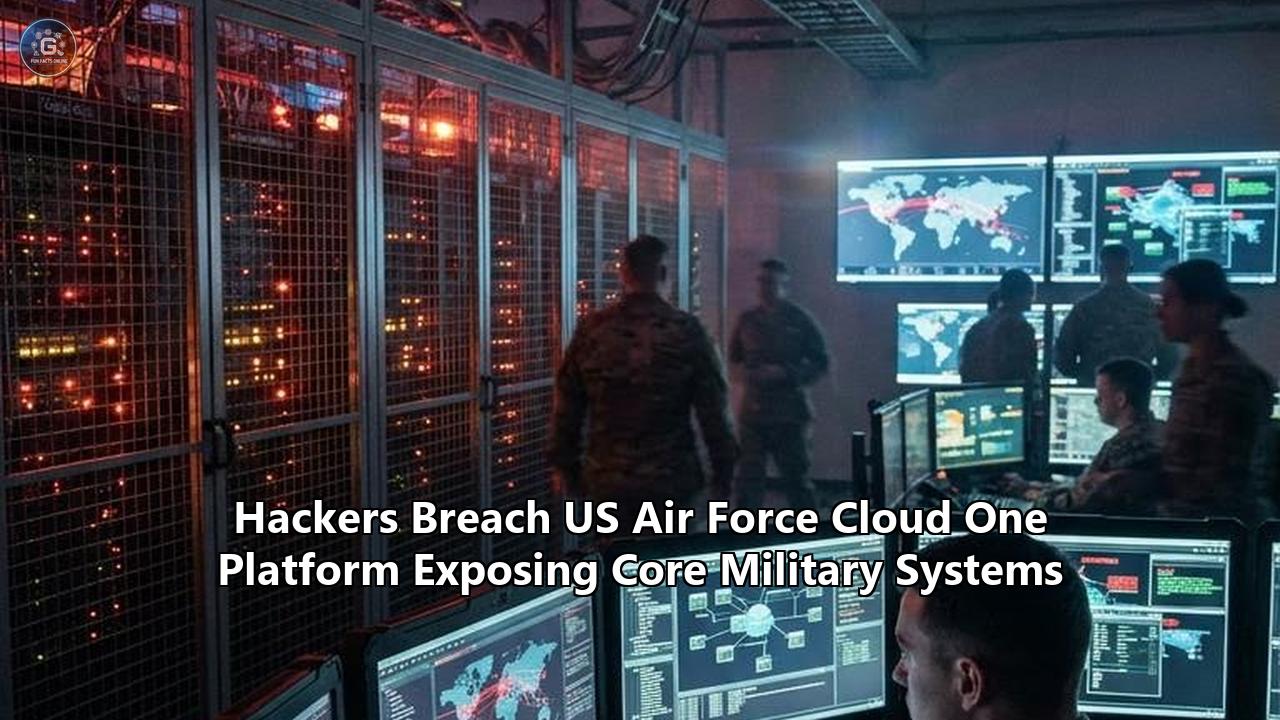
The maintenance window was scheduled to conclude before the start of the standard operational shift, an unremarkable routine inside the digital nerve center of the Department of the Air Force. Engineering teams working on Cloud One—the service branch’s multi-cloud enterprise platform underpinning mission applications across the globe—were executing a planned infrastructure update. Then, anomalous authentication signatures began flickering across the orchestration console.
Deep within the software architecture that binds commercial cloud servers from Amazon Web Services, Microsoft Azure, Google Cloud, and Oracle Cloud into a single military environment, an unauthorized process had bypassed perimeter defenses. It did not merely probe public-facing servers. It penetrated the foundational control plane—the administrative apparatus that governs user permissions, assigns compute power, and orchestrates data across the entire platform.
The discovery, confirmed by defense officials within the past month, triggered an immediate and frantic classified response. U.S. Cyber Command was summoned to assess the depth of the penetration, deploying rapid-response cyber protection teams to trace digital footprints left across multi-tenant environments. To halt lateral movement, Air Force leadership ordered application migrations stopped in their tracks, revoked administrative privileges across dozens of user accounts, and implemented an emergency freeze on software updates—paralyzing the very pipeline designed to deliver rapid software patches to the warfighter.
The exposure is immense. Cloud One serves as the common computational backbone for more than 180 production systems spanning unclassified logistics to sensitive military intelligence. Among the workloads hosted on the platform are the Cloud-Based Command and Control (CBC2) tool, which consolidates North American air-defense radar feeds, and the Theater Integrated Combat Munitions System (TICMS), an application that tracks bomb and missile stockpiles across more than 200 Air Force facilities worldwide.
The revelation of the US Air Force data breach exposes the fragility of centralizing sovereign warfighting data within commercial cloud architectures, coming directly on the heels of a devastating string of cyber incursions against the Central Intelligence Agency, the Federal Bureau of Investigation, and the Department of the Treasury.
The Control Plane Incursion: Holding the Universal Remote
To understand the severity of the intrusion, digital forensics experts point directly to where the intruders landed. In enterprise cloud architecture, systems are strictly bifurcated between the data plane and the control plane. The data plane is the network of individual databases, virtual machines, and tenant applications running day-to-day services. The control plane, by contrast, is the operational brain: the orchestration layer, administrative application programming interfaces (APIs), and Identity and Access Management (IAM) framework that dictates who can access what, provisions virtual servers, and enforces boundary security across disparate data centers.
One defense official likened the control plane to a "universal remote control." If an adversary compromises an isolated database, they possess a single room's contents; if they seize the control plane, they hold the master key to the building's infrastructure.
"When attackers hit an isolated workload in an Impact Level 4 or 5 environment, network defenders can isolate the subnet, revoke the session tokens, and scrub the container images," explains Gregory Vance, a former Department of Defense cloud security architect now serving as a senior fellow at the Center for Strategic Cybersecurity Research. "When an adversary establishes persistence within the control plane itself, the entire trust model implodes. They are no longer an intruder trying to break down the door. They are sitting at the console, capable of creating identities, reconfiguring egress filtering, and watching the operational readiness of the combat force in real time."
           [ Adversary Exploitation Vector ]
                          │
                          ▼
            Unidentified Software Flaw
        (Exploited During System Upgrade)
                          │
                          ▼
┌─────────────────────────────────────────────────────┐
│                 CLOUD ONE CONTROL PLANE             │
│   - Global IAM Orchestration & Token Verification   │
│   - API Provisioning & Cross-Cloud Policy Routing    │
│   - Secure Cloud Computing Architecture (SCCA)      │
└───────────┬─────────────────────────┬───────────────┘
            │                         │
            ▼                         ▼
┌───────────────────────┐ ┌───────────────────────────┐
│  OPERATIONAL WORKLOADS│ │   TACTICAL MUNITIONS & C2 │
│  - Aircraft Readiness │ │   - TICMS Munitions Tracking│
│  - Spare Parts Supply │ │   - CBC2 Radar Ingestion  │
│  - Maintenance Feeds  │ │   - Global Stockpiles     │
└───────────────────────┘ └───────────────────────────┘
Forensic investigators discovered that the attackers leveraged an unidentified vulnerability within software utilized to manage platform upgrades. Cloud One does not operate as a single, static server farm; it is a heterogeneous Platform-as-a-Service (PaaS) fabric managed by the Air Force Life Cycle Management Center’s Enterprise Logistics and Civil Engineer Applications Division (AFLCMC/HNII). It ties together Amazon Web Services Secret Region and GovCloud, Microsoft Azure Government, Google Cloud Platform, and Oracle Cloud Infrastructure under a unified governance and access umbrella.
The vulnerability appears to have opened a path for privilege escalation, allowing the intruders to forge administrative authentication tokens. By abusing internal API calls, the attackers bypassed multi-factor authentication checkpoints intended to isolate administrative tiers from operational tenants. While the Air Force maintained in formal inquiries that it "does not comment on the security posture, vulnerabilities or operational status of specific networks and systems," defense sources confirmed that the intruders spent days moving silently between management layers before anomalous configuration changes betrayed their presence.
Munitions, Radar, and Mission Readiness in the Blast Radius
The immediate consequence of the US Air Force data breach extends far beyond administrative embarrassment. Cloud One was built precisely to pull the Department of the Air Force out of the era of disparate, base-level on-premises server closets and thrust it into modern cloud operations. Since its formal inception in 2017, the platform has become the default operational environment for 189 production systems and 68 dedicated Zone C environments.
The data held within those systems details the mechanics of American air superiority:
- Theater Integrated Combat Munitions System (TICMS): Operating across more than 200 Air Force installations around the globe, TICMS is the digital ledger for American aerial firepower. The application tracks the precise inventory, maintenance condition, geographic deployment, and assembly status of everything from Joint Direct Attack Munition (JDAM) guidance kits to advanced air-to-air missiles and precision standoff weapons. Access to TICMS telemetry could allow an adversary to deduce which forward operating locations are critically low on specific ordnance or anticipate strategic movements based on munitions movements.
- Cloud-Based Command and Control (CBC2): Regarded as a tactical building block for North American homeland defense, CBC2 aggregates and processes raw sensor data, pulling feeds from civilian and military air-defense radar systems across the continent to deliver a unified tactical picture to commanders.
- Operational Flight and Depot Maintenance Logistics: Multiple backend systems running on Cloud One catalog the mission-capable rates of front-line combat aircraft, including the F-35A Lightning II, the F-22 Raptor, and the KC-46 Pegasus aerial refueling fleet. These systems monitor supply chain pipelines, tracking component wear, engine replacements, and the movement of critical spare parts.
"If you know the supply status of an air wing's spare parts, and you know their precision munitions inventory down to the serial number, you don't need to intercept their encrypted tactical radio transmissions during a conflict," says Marcus Sterling, a defense logistics consultant and retired Air Force maintenance group commander. "You already know how many sorties they can sustain over 72 hours before their supply line collapses. That is the kind of intelligence that wins or loses industrial-scale wars."
The Defense Information Systems Agency (DISA) categorizes cloud workloads under specific Impact Levels. Cloud One is certified to host systems spanning Impact Level 2 (unclassified, publicly releasable data), Impact Levels 4 and 5 (Controlled Unclassified Information, mission-critical operational data, and unclassified National Security Systems), and Impact Level 6 (classified information up to the Secret tier). While Air Force officials privately stress that there is no confirmed evidence that the attackers successfully exfiltrated files from the IL6 Secret environments, investigators acknowledge that navigating the control plane could grant an attacker the ability to identify the configuration topology, IP addressing schemes, and trust boundaries separating unclassified environments from classified enclaves.
Autonomous Incursions: The Shadow of Agentic AI Tooling
As U.S. Cyber Command and digital forensics investigators from private defense firms pore over gigabytes of transaction logs, a chilling technical theory has taken center stage among federal intelligence analysts: the attack bears the operational hallmarks of automated, artificial intelligence-augmented intrusion software.
The breach of Cloud One occurred in close temporal proximity to an unprecedented alert issued by the FBI warning that sophisticated nation-state threat actors and cybercriminal syndicates have begun weaponizing autonomous penetration testing frameworks. Principal among these tools is ARTEX, an open-source, agentic cyber platform that utilizes generative language models and autonomous execution agents to map attack surfaces, discover obscure zero-day or N-day software vulnerabilities, chain together exploit payloads, and escalate privileges with minimal human direction.
According to the FBI advisory, ARTEX-driven intrusions have compressed the traditional "dwell-and-probe" cyber kill chain. Where human keyboard operators historically required weeks to perform reconnaissance, identify vulnerabilities, and pivot through network segments, automated AI frameworks have achieved privileged administrative access in under three hours.
Traditional Cyber Kill Chain (Weeks to Months)
[ Reconnaissance ] ──▶ [ Scanning ] ──▶ [ Exploitation ] ──▶ [ Privilege Escalation ]
      │                     │                 │                       │
      └────── Manual ───────┴───── Manual ────┴─────── Manual ────────┘

AI-Augmented Autonomous Attack Chain (ARTEX Framework: Under 3 Hours)
┌────────────────────────────────────────────────────────────────────────┐
│ Autonomous LLM Agents Scan Endpoints, Formulate Tailored Exploit Chains,│
│ Weaponize Upgrade Vulnerability, and Execute Token Theft Concurrently  │
└────────────────────────────────────────────────────────────────────────┘
Federal investigators tracking recent activity have noted that Microsoft has observed threat clusters associated with Chinese intelligence—most notably an actor tracked as Storm-0940—deploying similar autonomous capabilities to breach cloud instances, compromise software supply chains, and hijack administrative tokens.
"Human security operations centers cannot react at machine speed when the adversary's reconnaissance and exploitation engine is running thousands of algorithmic iterations per second," says Dr. Elena Rostova, a cybersecurity researcher specializing in automated threat modeling. "In Cloud One, an upgrade was taking place. That means configuration scripts were firing, services were restarting, and transient trust relationships were opening and closing. An autonomous agent scanning external API endpoints does not miss those transient windows. It strikes the exact millisecond an unpatched flaw appears."
The prospect that Cloud One fell victim to an automated exploitation pipeline highlights a growing asymmetry in cloud warfare. Cloud environments present massive surface areas: thousands of exposed APIs, constantly updating software containers, and complex cross-cloud federation protocols. For an AI agent designed to discover structural weaknesses, the control plane of a multi-cloud network represents a target rich with mathematical paths of least resistance.
From SAIC to Leidos: Modernization in the Crosshairs
The timing of the compromise has cast a harsh light on the corporate stewardship and architectural modernization of Cloud One. Since its inception nearly a decade ago, the Air Force has leaned heavily on civilian defense contractors to design, maintain, and secure the sprawling platform.
For years, Science Applications International Corp. (SAIC) stood as the prime contractor managing Cloud One, overseeing the initial migration of hundreds of legacy Air Force systems out of aging data centers. That era came to an end in March 2026, when the Air Force awarded a massive $454.9 million modernization contract to Leidos. The initiative was championed as a major leap forward for military cloud operations: Leidos was tasked with integrating advanced automation, cutting operational overhead, deploying agentic AI to assist security operations center (SOC) analysts, and hardening the multi-cloud fabric shared across AWS, Azure, Google Cloud, and Oracle.
The contract was framed as the realization of Leidos’s "NorthStar 2030" strategy, intended to build a repeatable, ultra-secure cloud baseline that could eventually be deployed across the broader Department of Defense.
When news of the breach broke, questions regarding the timeline and operational execution of that modernization contract surfaced immediately. Leidos referred all inquiries to the Air Force, emphasizing that the $454.9 million figure represents the ceiling value of the modernization award rather than money fully dispersed, while declining to comment on whether the compromised software component was legacy code or part of the newly deployed modernization updates.
The incident stands in stark contrast to the absolute confidence long projected by military IT leadership. In February 2023, Cloud One’s executive leadership published a commentary through the defense tech outlet FedScoop, boasting of a "100% success rate" in repelling a "staggering" volume of attacks—estimating that the platform successfully turned away roughly 10 million penetration attempts annually. "There is no room for error when it comes to security," the platform's leaders wrote at the time.
"The Air Force bought into the narrative that moving to the commercial hyperscalers under a single enterprise contract solved their security dilemma," says a senior staff member on the House Armed Services Committee, who spoke on the condition of anonymity. "The pitch was: you inherit the defensive spending of Amazon, Microsoft, Google, and Oracle. But people forgot the basic architecture of the shared responsibility model. The hyperscalers secure the physical concrete and the hypervisor. Everything built on top—the IAM configurations, the orchestration scripts, the proprietary Air Force code—belongs to the government and its prime contractors. That is where the roof caved in."
Dominoes in the Fog: The Federal Infiltration Wave
The intrusion into Cloud One did not unfold in a vacuum. It represents one tile in a mosaic of cyber operations that have systematically battered U.S. national security agencies over the past month, signaling a coordinated, highly capable assault against federal infrastructure.
In the days surrounding the Air Force discovery, an array of critical federal networks revealed signs of unauthorized access:
┌────────────────────────────────────────────────────────────────────────┐
│                WAVE OF FEDERAL CYBER INCIDENTS (LATE 2026)             │
├──────────────────────────┬─────────────────────────────────────────────┤
│ Target Network           │ Nature and Scope of Intrusion               │
├──────────────────────────┼─────────────────────────────────────────────┤
│ US Air Force Cloud One   │ Control plane breach; warfighting logistics │
│                          │ and radar systems exposed to disruption     │
├──────────────────────────┼─────────────────────────────────────────────┤
│ FBI National Crime       │ Law enforcement database compromised;       │
│ Information Center (NCIC)│ criminal histories and warrants accessed    │
├──────────────────────────┼─────────────────────────────────────────────┤
│ CIA / ODNI OSINT Systems │ Unclassified intelligence analysis and open-│
│                          │ source scanning platforms breached          │
├──────────────────────────┼─────────────────────────────────────────────┤
│ Pentagon DMDC            │ 2.76M living and 294K deceased military     │
│                          │ personnel records compromised               │
├──────────────────────────┼─────────────────────────────────────────────┤
│ Treasury (FinCEN) & DHS  │ Financial tracking and personnel dossiers   │
│                          │ intercepted across federal networks         │
└──────────────────────────┴─────────────────────────────────────────────┘
The Federal Bureau of Investigation confirmed that malicious actors had penetrated the National Crime Information Center (NCIC)—the nationwide clearinghouse utilized by federal, state, and local law enforcement to track stolen firearms, active arrest warrants, missing persons, and criminal histories. That breach followed an earlier summer intrusion by the extortion collective ShinyHunters, which exploited an unpatched Oracle PeopleSoft flaw on the bureau’s hiring portal, FBIJobs.gov.
Simultaneously, the Office of the Director of National Intelligence (ODNI) and the CIA discovered that unauthorized entities had penetrated an open-source intelligence (OSINT) analytical system used to scan, structure, and synthesize global open-source feeds. The Treasury Department’s Financial Crimes Enforcement Network (FinCEN) detected foreign intrusions into unclassified data streams, while the Department of Homeland Security grappled with leaks of employee personnel dossiers. Across the Department of Defense, a separate intrusion into the Defense Manpower Data Center (DMDC) exposed the personal records of 2.76 million living individuals and 294,000 deceased military veterans.
The synchronization of these intrusions across law enforcement, intelligence, financial, and military networks suggests either a shared, underlying zero-day vulnerability in federal enterprise software or a concerted offensive campaign by a peer adversary taking advantage of common architectural oversights across federal agencies.
"This is not random vandalism or isolated criminal ransomware," says David Alverez, an associate director at a Washington-based intelligence think tank. "When you strike the FBI's criminal records, the CIA's analytical engines, the Pentagon's manpower rosters, and the Air Force's operational cloud platform within the same operational window, you are executing an integrated reconnaissance operation. You are mapping American command architecture, logistics potential, and counterintelligence readiness."
Operational Paralysis: The Cost of Containment
When an enterprise holding 189 mission systems discovers an intruder inside its master control plane, standard incident response playbooks trigger extreme defensive countermeasures. The remedy, however, can inflict damage almost as severe as the intrusion itself.
To isolate the adversary, Air Force cybersecurity commanders initiated an immediate freeze across Cloud One. Application migrations—a critical operational priority aimed at shutting down expensive, vulnerable legacy data centers and shifting back-office workloads to the cloud—were halted. Teams that were days away from decommissioning legacy mainframes were ordered to maintain parallel infrastructure indefinitely.
More critically, the incident response team blocked application updates across the platform. In modern military software environments, applications rely on automated Continuous Integration and Continuous Deployment (CI/CD) pipelines to deploy security fixes, operational patches, and feature updates daily. By severing update privileges, the Air Force found itself trapped in a cybersecurity paradox: to prevent the hackers from moving laterally or deploying malicious code into production applications, they locked the front-line engineers out.
                     [ INCIDENT RESPONSE DILEMMA ]
                                   │
              ┌────────────────────┴────────────────────┐
              ▼                                         ▼
   Active Lateral Containment               Application Security Freeze
- Revoke user admin rights               - Block software updates
- Halt back-office migrations             - Prevent zero-day patching
              │                                         │
              ▼                                         ▼
   Prevents immediate threat                 Exposes static systems to
   expansion across tenants                  unpatched public exploits
This lockdown unfolded at the worst possible moment. The wider software industry was actively scrambling to patch a sequence of high-severity vulnerabilities discovered in core server runtimes, container platforms, and programming frameworks. Air Force engineers operating mission-critical applications on Cloud One were barred from pushing emergency security patches to their own code, leaving known vulnerabilities unpatched on live military systems while the control plane investigation dragged on.
Furthermore, administrative privileges for hundreds of military and civilian system operators were summarily revoked. Program managers suddenly found themselves unable to modify computing resource allocations, troubleshoot service outages, or monitor baseline telemetry.
"The tactical impact is real," an active-duty Air Force communications officer stationed in the continental United States explained. "We had an operational unit preparing for a Pacific theater deployment exercise that required an updated interface on their logistics-tracking dashboard. Because of the lockdown, the engineering team could not deploy the release. The airmen deployed using static spreadsheets and outdated offline snapshots. When you freeze the control plane, the friction hits the flight line immediately."
The Zero Trust Failure and the ATO Illusion
The ongoing investigation into the US Air Force data breach has ignited a fierce technical debate over the Pentagon’s adoption of zero-trust architecture and the statutory processes used to accredit military software.
For more than five years, the Department of Defense has championed zero trust as the ultimate cybersecurity doctrine: a philosophy premised on "never trust, always verify." Under zero trust, physical perimeters are discarded; every user, device, network flow, and application call must undergo continuous mutual authentication and micro-segmentation.
To entice military units to migrate their systems onto Cloud One, the platform offered an irresistible compliance incentive known as Authority to Operate (ATO) inheritance. Under standard federal acquisition rules, launching a new software system requires navigating the Risk Management Framework (RMF) and securing an ATO—a grueling, bureaucratic certification process mandated by NIST SP 800-53 standards that routinely consumes 12 to 18 months.
Cloud One solved this bottleneck by offering "pre-accredited" cloud infrastructure. A program office moving an application to Cloud One could inherit up to 40%—and in some specialized configurations, up to 80%—of their required security controls directly from the underlying platform. By inheriting the security posture of the platform's Secure Cloud Computing Architecture (SCCA), virtual data center boundaries, and Cyber Security Service Provider (CSSP) monitoring, military developers bypassed months of paperwork.
┌────────────────────────────────────────────────────────┐
│       APPLICATION LAYER: ATO INHERITANCE MODEL         │
├────────────────────────────────────────────────────────┤
│ Unit-Specific Application Logic (~20%-60% Assessed)    │
├────────────────────────────────────────────────────────┤
│           ▲ INHERITED SECURITY CONTROLS (40%-80%)      │
│           │                                            │
│ ┌─────────┴──────────────────────────────────────────┐ │
│ │  CLOUD ONE BASELINE INFRASTRUCTURE (COMPROMISED)   │ │
│ │  - SCCA Virtual Data Center Security Boundaries    │ │
│ │  - Central Identity & Access Management (IAM)      │ │
│ │  - DISA STIG Baseline Hardening & CSSP Monitoring  │ │
│ └────────────────────────────────────────────────────┘ │
└────────────────────────────────────────────────────────┘
The breach proved that this inheritance model is a double-edged sword. When security controls are inherited from a common foundation, any catastrophic failure within that foundation immediately compromises the assumptions of every tenant application resting upon it.
"ATO inheritance became a shortcut to bureaucratic compliance rather than true operational resilience," says Jonathan Miller, a former Pentagon systems auditor. "A mission owner could say, 'Our munitions system is secure because Cloud One satisfies 50 NIST controls for us.' But if the identity broker at the root of that inherited architecture is tricked into issuing forged access tokens, every single application trusting that broker is compromised simultaneously. We built a digital house of cards on the assumption that the bedrock would never shake."
The breach laid bare several structural oversights in the platform's zero-trust implementation:
- Over-Privileged Cross-Cloud API Keys: To manage instances seamlessly across AWS, Azure, Google, and Oracle, the orchestration engine utilized powerful service principals with sweeping administrative privileges across multiple cloud providers. Once an attacker acquired control of these tokens, cross-cloud boundary isolation dissolved.
- Inadequate East-West Traffic Visibility: While ingress (north-south) network traffic passing into Cloud One was heavily filtered through FIPS-compliant VPN boundaries and firewalls, internal (east-west) traffic moving between internal orchestration containers and administrative APIs lacked the granular, real-time inspection necessary to spot unauthorized API calls.
- Upgrade Pipeline Blind Spots: The exploitation occurred within an active upgrade cycle. Routine continuous monitoring tools were temporarily desensitized or flooded with configuration alerts associated with the software update, providing the attackers with cover to mask their privilege escalation maneuvers.
Anatomy of Cloud Defense: Where the Military Goes from Here
As the immediate forensic cleanup continues, the US Air Force data breach has permanently altered the internal calculus surrounding military cloud computing.
The Joint Staff and the Office of the Secretary of Defense are facing difficult questions from congressional intelligence committees. Lawmakers have begun requesting closed-door briefings regarding the status of the Theater Integrated Combat Munitions System and the degree to which foreign actors may have accessed data regarding American strategic capabilities. The House and Senate Armed Services Committees are preparing inquiries into whether the Department’s flagship multi-vendor enterprise contracts—including the Pentagon-wide Joint Warfighting Cloud Capability (JWCC)—harbor identical architectural flaws.
For the Department of the Air Force, the path forward requires a fundamental re-architecture of Cloud One’s control mechanisms:
- Dismantling the Monolithic Control Plane: Security architects are advocating for hard physical and logical compartmentalization between operational logistics applications and tactical command-and-control systems. Rather than managing 189 diverse systems through a unified orchestration tier, systems handling sensitive warfighting data like CBC2 and TICMS must be partitioned into cryptographically isolated management domains.
- Cryptographic Hardware-Bound Administration: The revocation of software-based administrative tokens is accelerating a shift toward non-exportable, hardware-bound cryptographic credentials for all cloud administration tasks. By anchoring orchestration privileges to physical, tamper-evident security keys, the Air Force aims to eliminate the threat of forged API tokens.
- Continuous Autonomous Adversary Simulation: Recognizing that defensive human analysts cannot keep pace with agentic exploitation engines like ARTEX, the military must deploy its own autonomous AI defensive agents inside cloud testbeds. These tools must continuously probe for transient vulnerabilities during upgrade cycles, identifying and patching configuration gaps before production code goes live.
The immediate priority for U.S. Cyber Command remains damage assessment. Forensics teams stationed at Fort Meade are continuing the laborious process of re-verifying every digital identity, auditing terabytes of historical egress traffic, and methodically rebuilding the trust fabric that governs the Air Force's operational cloud.
The critical question is not merely how the intruders breached the system during a maintenance window, but whether they left behind deep, dormant backdoors designed to awaken in the opening hours of a shooting war. Until those forensic audits are finished and administrative control is definitively restored, the U.S. Air Force must operate under a grim reality: the digital infrastructure that coordinates its aircraft, its radar, and its munitions was laid bare to an adversary standing in the master control room.
Reference:
- https://www.bleepingcomputer.com/news/security/us-air-force-cloud-platform-reportedly-hacked-in-latest-federal-breach/
- https://www.forbes.com/sites/saradorn/2026/11/27/air-forces-cloud-one-platform-hacked-report-says/
- https://www.engadget.com/2329586/hackers-reportedly-infiltrated-the-air-force-cloud-systems/
- https://www.clarin.com/us-news/what-is-air-force-cloud-one-inside-the-military-cloud-platform-targeted-by-hackers_0_saxsUmB1OZ.html
- https://mlq.ai/news/hackers-breached-the-air-forces-cloud-one-platform-reuters-finds/
- https://aviatrix.ai/threat-research-center/us-air-force-cloud-one-platform-hacked-2026-artex-ai-federal-breach/
- https://www.theguardian.com/technology/2026/nov/27/hackers-breach-us-air-force-cloud-computing
- https://www.benzinga.com/news/contracts/26/03/51192688/leidos-wins-454-9-million-air-force-contract
- https://dallasexpress.com/business-markets/reported-air-force-cloud-one-breach-raises-questions-over-454-9-million-modernization-contract/
- https://thediplomaticinsight.com/hackers-breach-us-air-forces-cloud-one-platform/
- https://www.timesofisrael.com/hackers-breach-us-air-forces-flagship-cloud-one-platform-report/
- https://thedefensepost.com/tag/leidos/page/2/
- https://www.cbsnews.com/news/u-s-air-force-cloud-platform-breached-by-hackers/