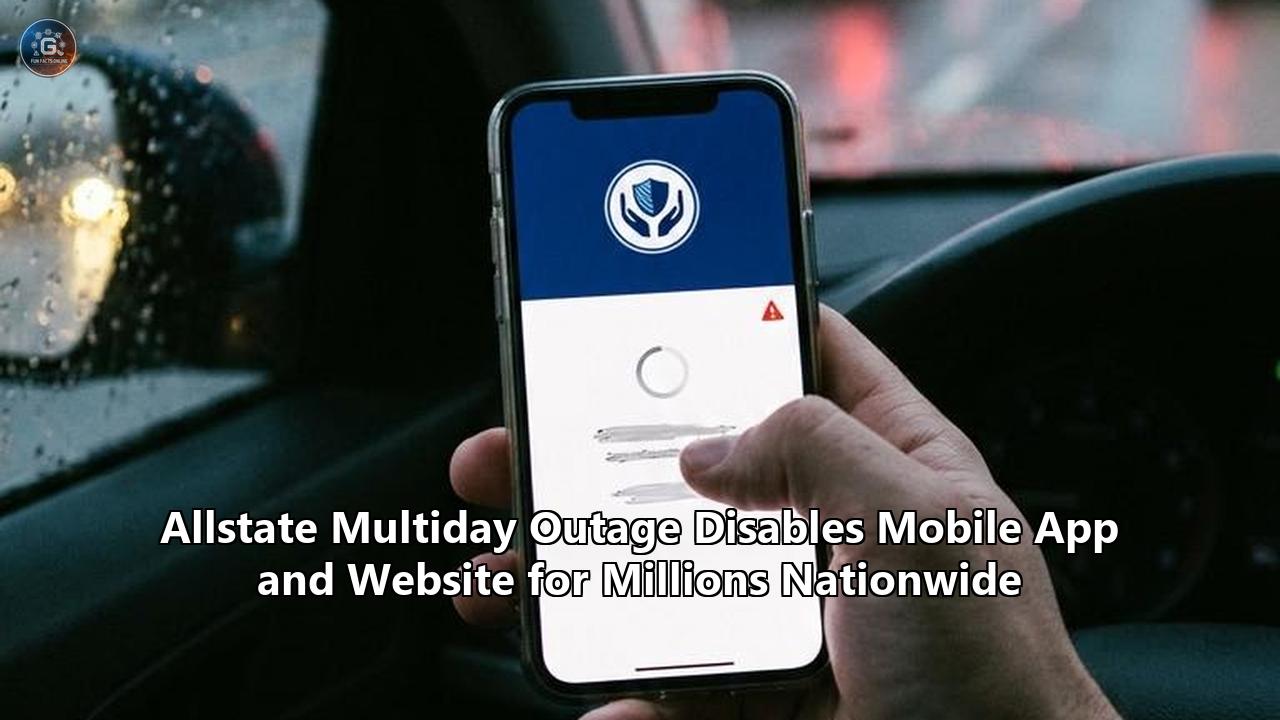
A catastrophic, multiday technology failure at Allstate Corporation has paralyzed the insurance giant’s customer-facing infrastructure, locking millions of American households out of their insurance accounts, stalling emergency roadside dispatches, halting real estate transactions, and stranding drivers across the country during the busiest holiday travel period of the year.
The disruption began in the early morning hours of Monday, November 23, and metastasized throughout the week. By Friday, November 27, the failure had stretched into its fifth day, systematically knocking offline the insurer’s consumer website, its primary smartphone application, and its internal agency-facing policy management software.
The timing could hardly have been more punitive. The digital blackout coincided with the peak Thanksgiving travel window—when an estimated 55 million Americans take to the roads—and arrived alongside an intense nor'easter that battered the East Coast with heavy rain, snow, and treacherous driving conditions.
Allstate, based in Northbrook, Illinois, is the nation's fourth-largest property and casualty insurer. It provides automotive insurance to more than 26 million drivers and safeguards the residential properties of more than 8 million homeowners. For nearly a week, those customers were stripped of their primary tools for managing policies, paying premiums, filing first notices of loss, and accessing electronic proof of insurance.
Instead of the swift self-service experience promised in company advertisements, policyholders trying to launch the app were met with infinite loading screens or abrupt error prompts. When visiting the company's portal, users encountered a stark placeholder: "Customers may not be able to access some of our services and we're working to restore access as soon as possible". On its roadside assistance portal, the message was even blunter: "Our site is currently down for maintenance".
As emergency lines buckled under historic call volumes and regional agent offices were reduced to answering manual desk phones without access to customer files, the crisis revealed a profound vulnerability at the intersection of modern digital dependency and legacy insurance infrastructure.
ALLSTATE DIGITAL COLLAPSE: TIMELINE & IMPACT
══════════════════════════════════════════════════════════════════════
• Mon, Nov 23: Core databases fail; mobile app & portals crash nationwide.
• Tue, Nov 24: Downdetector reports spike; roadside dispatch portals offline.
• Wed, Nov 25: Allstate releases holding statement; claims phone lines jam.
• Thu, Nov 26: Thanksgiving Day; millions travel without digital policy ID.
• Fri, Nov 27: Outage reaches 5th day; mortgage closings & auto sales freeze.
• Direct Scope: 26M Auto Drivers | 8M Homeowners | 10,000+ Field Agencies.
══════════════════════════════════════════════════════════════════════
Chaos on the Ground: Frozen Closings, Highway Stranding, and Muffled Agents
The immediate human cost of the Allstate app outage rippled across highway shoulders, dealership showrooms, mortgage escrow desks, and county motor vehicle departments.
Along Interstate 95 in Connecticut, where the midweek nor'easter brought wind-whipped rain and standing water, auto accidents climbed steadily. Motorists involved in minor collisions pulled out their phones to initiate claims and request flatbed towing, only to discover their apps would not authenticate.
Because Allstate, like many major carriers, has incentivized customers to discard paper insurance cards in favor of digital wallet passes and in-app proof of coverage, thousands of motorists found themselves unable to produce valid verification of insurance during police accident investigations or routine traffic stops.
"I stood in freezing rain for two and a half hours outside New Haven trying to get the app to open to call Allstate roadside assistance," said Marcus Vance, a logistics coordinator who was traveling from Boston to Philadelphia. "The app gave me an authentication timeout. When I tried to dial the 800-number, the automated switchboard told me wait times exceeded three hours, and then the line dropped. I had to pay $450 out of pocket to a local private towing company that took cash, and I couldn't even present an insurance card to the state trooper who arrived on the scene."
In mortgage and real estate markets, the outage generated acute administrative paralysis. Prior to the statutory Thanksgiving holiday closure, prospective homebuyers were racing to complete year-end property transactions. Federally backed mortgages require verified, active hazard insurance binders before lenders can disburse escrow funds and sign off on deed transfers.
With Allstate’s policy generation and verification software dead, buyers were locked in limbo. Closing attorneys and title agents found themselves unable to contact underwriters or download updated declarations pages.
"We had three residential closings scheduled for Wednesday morning before the holiday recess," said Sarah Lin, a managing real estate attorney in suburban Atlanta. "In two of those cases, the buyers held Allstate policies where the lender required a minor binder modification regarding deductibles.
"The local Allstate agent could not log into the portal to issue an amended endorsement. The Allstate customer support hotline was useless. Our escrow deadline passed, the rate locks expired, and the families were left sitting outside their new homes with moving trucks running on overtime fees. A digital outage in the personal insurance sector doesn't just inconvenience smartphone users; it brings physical transactions grinding to a halt."
Automotive dealerships suffered comparable gridlock. Department of Motor Vehicles regulations in nearly every state forbid a dealership from releasing a newly purchased vehicle without verifiable proof of insurance that includes the vehicle identification number (VIN). Across multiple states, customers who arrived to pick up vehicles for holiday road trips were forced to abandon their cars on dealer lots because Allstate’s mobile portal could not bind coverage or output an electronic insurance binder.
Meanwhile, the company’s extensive footprint of exclusive agents found themselves completely abandoned on the frontline. For years, Allstate has pushed its local agencies to adopt corporate cloud systems, standardizing operations through proprietary enterprise customer relationship tools and back-office policy management interfaces. When the central network collapsed, these field agents were left blind.
CUSTOMER PAIN POINTS REPORTED DURING OUTAGE
┌───────────────────────┬────────────────────────────────────────────┐
│ Functional Area       │ Observed Real-World Impact                 │
├───────────────────────┼────────────────────────────────────────────┤
│ Digital Proof of Ins. │ Drivers unable to produce valid ID cards   │
│                       │ during police stops and accidents  │
├───────────────────────┼────────────────────────────────────────────┤
│ Roadside Assistance   │ App dispatch dead; policyholders stranded  │
│                       │ on highways in severe weather      │
├───────────────────────┼────────────────────────────────────────────┤
│ Real Estate Closings  │ Failure to issue certified hazard binders  │
│                       │ caused mortgage escrows to stall   │
├───────────────────────┼────────────────────────────────────────────┤
│ Telematics Tracking   │ Drivewise app failed to log trips, risking │
│                       │ safety tier discounts for users    │
├───────────────────────┼────────────────────────────────────────────┤
│ Claims Initiation     │ Zero First Notice of Loss (FNOL) via app;  │
│                       │ property damage claims backlogged  │
└───────────────────────┴────────────────────────────────────────────┘
An Allstate agency owner in California, speaking on condition of anonymity due to corporate media restrictions, detailed the administrative nightmare that unfolded inside local branch offices:
"We were completely crippled. We arrived Monday morning and our agency portal threw continuous database gateway errors. We could not see customer records. We could not confirm if a policy was active, we could not accept credit card payments, and we could not file claims.
"Our phone lines were ringing off the hook with furious clients who thought we were personally ignoring them. Allstate corporate sent us zero internal memos for the first 36 hours explaining the technical root cause. We were instructed to take down customer information on yellow legal pads with pens. We were operating like it was 1974, except in 1974 we actually had physical paper ledger books with policy numbers on the shelf. Today, if the central server goes black, we don't even know who our customers are."
Corporate Silence and the Crisis Communication Vacuum
While millions of policyholders struggled with system lockouts, the response from Allstate’s corporate communications apparatus in Northbrook was characterized by silence and automated holding language.
During the initial 48 hours of the breakdown, as complaints flooded social media platforms and Downdetector charts registered thousands of incident reports across major metro hubs—including Chicago, New York, Dallas, Atlanta, and Los Angeles—Allstate posted no public advisories to its social channels.
Instead, the company’s official accounts on X (formerly Twitter) and Facebook relied on automated macro replies. Whenever a frantic customer posted about being stranded on a freeway or blocked from a loan closing, the verified company account delivered variations of a canned response: "We apologize for any inconvenience. Please send us a direct message with your policy number, full name, and phone number so our team can assist you."
Those who sent direct messages reported receiving automated replies indicating that support channels were experiencing unprecedented volumes, directing them back to the non-functioning website or to 800-numbers where the wait times frequently triggered automatic disconnects.
It was not until late Wednesday afternoon—more than 55 hours after systems first went dark—that Allstate delivered a formal written statement. Even then, the communication minimized the severity of the operational failure:
"Allstate customers can reach us in many ways, including online, by phone and through local offices. Some access has been restricted over the last 48 hours, but we continue to be available for customers and respond to and settle claims. To the extent service interruptions impact a customer's ability to make a payment, they won't lose coverage or be charged late fees."
Industry analysts and communications strategists reacted to the company's messaging with sharp criticism. The corporate statement claimed that customers could reach the insurer "online"—the precise medium that had collapsed—while asserting that access had merely been "restricted over the last 48 hours," directly contradicting internal reports and timestamped telemetry showing that the core platforms had failed broad scale early Monday morning.
"The communication strategy here was textbook denial," said Danielle Moreau, an enterprise crisis communications consultant and former executive director at the Center for Corporate Reputation. "In modern enterprise risk management, the worst mistake a financial services firm can make during an operational outage is to downplay the scope to the very people experiencing the disruption.
"Telling policyholders that they can 'reach us online' while their browsers are returning server timeout errors destroys institutional trust. Customers understand that software fails. What they do not tolerate is institutional obfuscation, particularly when their personal mobility, legal compliance, and property security are hanging in the balance."
The insurer’s assurance that coverage would not lapse for unpaid premiums and that late fees would be waived offered financial protection, but it failed to solve the operational crisis. While a driver might avoid a $25 late fee, that guarantee was useless when facing an impound yard requiring immediate proof of current coverage or a county registrar refusing to renew license plates without live digital validation.
ENTERPRISE CRISIS RESPONSE COMPARISON
┌──────────────────────┬───────────────────────────┬──────────────────────────┐
│ Operational Element  │ Best Practice Standard    │ Allstate Actual Response │
├──────────────────────┼───────────────────────────┼──────────────────────────┤
│ Public Notification  │ Within 2-4 hours of       │ ~55 hours after initial  │
│ Window               │ system failure            │ telemetry collapse│
├──────────────────────┼───────────────────────────┼──────────────────────────┤
│ Status Dashboard     │ Public, real-time node    │ Opaque maintenance      │
│ Transparency         │ status updates            │ error banner     │
├──────────────────────┼───────────────────────────┼──────────────────────────┤
│ Field Enablement     │ Direct internal comms and │ Agents left uninformed;  │
│                      │ failover access protocols │ forced to manual pads│
├──────────────────────┼───────────────────────────┼──────────────────────────┤
│ Social Channels      │ Human triage teams        │ Automated macro-replies  │
│                      │ with escalation paths     │ driving to dead links│
└──────────────────────┴───────────────────────────┴──────────────────────────┘
The Architecture of Failure: Unpacking Legacy Mainframes and Cloud Breakdowns
The technical anatomy of the Allstate app outage points to a systemic structural dilemma plaguing the century-old carrier: the fragile integration between modern, cloud-native digital endpoints and decades-old mainframe computing systems.
Modern insurance applications run on sophisticated cloud environments—primarily Amazon Web Services (AWS) or Microsoft Azure—employing microservices architecture, dynamic API gateways, and distributed content delivery networks. When a user opens the Allstate mobile application on an iPhone or Android device, the frontend communicates with these cloud microservices to handle user authentication, render vector graphics, and organize menu trees.
However, the actual data—the system of record—rarely lives solely in the modern cloud layer.
In established carriers like Allstate, core insurance operations (policy administration, historical claims repositories, billing ledgers, and rate-calculation engines) frequently reside on legacy IBM z/OS mainframes or complex hybrid databases built on relational architectures dating back to the late 1980s and 1990s. Many of these systems rely on legacy programming languages such as COBOL, integrated with modern software via middleware abstraction layers, enterprise service buses (ESBs), and specialized API wrappers.
THE ENTERPRISE INTEGRATION BOTTLENECK
┌────────────────────────────────────────────────────────┐
│            CLIENT TIER (Mobile App / Web)              │
│       Native iOS / Android Apps & Web Portals          │
└───────────────────────────┬────────────────────────────┘
                            │ HTTPS / REST / GraphQL
┌───────────────────────────▼────────────────────────────┐
│                  API GATEWAY TIER                      │
│     Authentication (IAM), Rate Limiting, WAF, Routing  │
└───────────────────────────┬────────────────────────────┘
                            │ JSON / Microservices
┌───────────────────────────▼────────────────────────────┐
│              ENTERPRISE MIDDLEWARE (ESB)               │
│  Data Transformation, Message Queuing (MQ), Caching    │
└───────────────────────────┬────────────────────────────┘
                            │ Legacy RPC / SNA / SOAP
┌───────────────────────────▼────────────────────────────┐
│            LEGACY CORE SYSTEMS (The Core)              │
│  IBM Mainframes (COBOL), Policy Admin, Billing Ledgers │
└────────────────────────────────────────────────────────┘
When an enterprise insurance platform suffers a synchronized multiday collapse across web and mobile surfaces, software reliability engineers examine three primary technical vulnerabilities:
1. Identity and Access Management (IAM) Gateway Desynchronization
For an app user to view their auto policy, the client application must pass an authentication token through an identity broker (such as Okta, Ping Identity, or Azure Active Directory B2C). If a database patch, schema update, or certificate rollover corrupts the directory service linking cloud identity tokens with backend legacy policy IDs, the system suffers complete authentication failure.
The frontend servers remain powered on, but they cannot grant access to any accounts. This explains why users faced continuous login loops and error screens while visiting the site.
2. Message Queue Deadlocks and Cascading Middleware Collapse
Modern enterprise architectures use message-queuing infrastructure (such as Apache Kafka or RabbitMQ) to mediate between fast cloud frontends and slow legacy databases.
If an upstream database update introduces an unhandled exception or data serialization error, messages begin backing up in the queue. Within hours, millions of retries from automated mobile clients flood the network, triggering a distributed self-inflicted denial-of-service (Self-DoS).
The middleware crashes under the weight of uncommitted transactions, severing the link between customer apps and the database.
3. Failed Database Migrations and Corrupted Replicas
Restoring enterprise databases from unintended structural failures is a delicate engineering challenge. If a planned holiday software deployment corrupted relational tables across active and secondary database clusters, engineering teams cannot simply roll back with the flip of a switch.
Restoring multi-terabyte transactional databases that govern 34 million combined policies requires taking systems offline, validating data integrity record by record, purging inconsistent transactions, and reconstructing lost state histories from point-in-time backup snapshots. In enterprise environments, that recovery process takes days, not hours.
HYPOTHETICAL ENTERPRISE OUTAGE FAILURE CASCADE
Step 1: Unhandled database schema error deployed during off-peak maintenance.
Step 2: Microservices fail to parse incoming database records; throw HTTP 500 errors.
Step 3: Client mobile apps hit automated retry loops (millions of pings/sec).
Step 4: Enterprise Message Queue buffer exhausts memory; broker crashes.
Step 5: Secondary database mirrors replicate corrupted state table.
Step 6: Total failover lock: Engineers forced to initiate manual cold-backup rebuild.
The disruption occurred amid broader warnings from federal authorities regarding national cyber resilience. In early November, Director of National Intelligence Jay Clayton and cybersecurity officials publicly noted that several high-profile disruptions across airlines, financial institutions, and communication networks were rooted in flawed system upgrades applied to fragile, aging infrastructure rather than state-sponsored malicious cyberattacks.
While cybersecurity analysts initially monitored dark-web ransomware leak sites for mentions of Allstate data, no public evidence or threat-actor extortion claims materialized during the first five days of the breakdown.
Federal officials noted that rapid modern software patch cycles—often accelerated by automated artificial intelligence vulnerability scanners—are running headfirst into legacy codebases that were never engineered to process dynamic, real-time microservice queries at modern consumer scale.
"When an enterprise tries to bolt AI interfaces and cloud agility onto a forty-year-old transactional core, you create extreme systemic brittleness," explained Dr. Aris Thorne, an enterprise systems architect and former senior fellow for digital resilience at the Massachusetts Institute of Technology.
"The modern web expects sub-second latency and elastic scaling. Mainframe architectures were built for batch processing overnight. To reconcile the two, engineers deploy layer upon layer of middleware adapters. If one abstraction layer breaks during a maintenance update, the whole house of cards collapses. Because the architecture is so complex, diagnosing why the frontend cannot read the backend policy file takes days of digital archaeology."
Telematics in the Dark: The Drivewise and Claims Disruption
The timing of the technical failure compromised one of Allstate’s marquee consumer technologies: its proprietary telematics platform, Drivewise.
Over the past decade, Allstate has positioned Drivewise as a primary pillar of its auto insurance business model. The program functions via the Allstate smartphone application, using the phone’s gyroscope, accelerometer, and GPS sensors to track policyholders’ driving habits in real time.
The software records vehicle speed, sudden braking, late-night driving, and smartphone usage behind the wheel. In exchange for allowing continuous behavioral monitoring, safe drivers are promised policy discounts of up to 40% alongside cash-back rewards distributed at regular intervals.
When the Allstate app outage severed connections between mobile devices and company servers, the telematics infrastructure went dark.
DRIVEWISE TELEMATICS DATA PIPELINE (NORMAL VS. OUTAGE)

NORMAL OPERATION:
[Mobile Sensors] ──> [Local App Cache] ──> [Telemetry API] ──> [Underwriting Engine]
   (Gyro/GPS)           (Buffers Trip)       (Ingests Data)     (Computes Discounts)

OUTAGE STATE:
[Mobile Sensors] ──> [Local App Cache] ──X   [API DOWN]         [ENGINE BLIND]
   (Capturing)        (Buffer Overflow)     (Auth Failure)      (No Risk Scoring)
During Thanksgiving week, drivers were traveling hundreds of miles through holiday traffic and severe winter conditions, yet the platform could not reliably sync trip data or compute safe driving scores.
Policyholders expressed frustration online, concerned that unrecorded miles or sync failures might skew their seasonal driving profiles, inflate their premium rates, or erase accumulated safe-driving bonuses.
The disruption extended into the insurer's First Notice of Loss (FNOL) systems.
Over the last five years, Allstate has spent hundreds of millions of dollars nudging consumers away from telephone claims reporting and toward its "QuickFoto Claim" and automated digital intake workflows. Under normal conditions, an insured driver who experiences an accident opens the Allstate app, follows a guided interface to photograph vehicle damage, uploads police reports, and receives an automated damage appraisal powered by machine learning algorithms within hours.
With the mobile application offline, this entire digital assembly line failed.
Drivers involved in collisions were forced back into analog reporting. When callers dialed the backup telephone support lines, they were funneled into call centers that were immediately overwhelmed. With claims adjusters unable to access digital FNOL files, physical claims evaluations stalled.
Automobile body repair shops across the country reported an immediate bottleneck. Without digital claim numbers and adjuster approvals, repair facilities could not order replacement parts, approve rental car authorizations through partners like Enterprise Rent-A-Car, or begin bodywork.
"An insurance company’s core product is not a piece of paper; it is the speed and liquidity it provides at the moment of property loss," said Gregory C. Stone, an independent insurance claims auditor and former property adjuster.
"When digital FNOL systems go down during a holiday weekend with a major winter storm, the operational damage compounds exponentially. Rental car allocations burn through policy limits while cars sit untouched in impound lots. Adjuster workloads double overnight.
"What would have been a five-day turnaround for a bumper replacement turns into a four-week administrative nightmare. That operational drag directly inflates Loss Adjustment Expenses (LAE), which ultimately drives up loss ratios across the enterprise."
Corporate Restructuring, AI Mandates, and the Human Factor
The technological breakdown occurred against a backdrop of internal corporate restructuring and cost-cutting initiatives at Allstate’s corporate offices.
Earlier in the month, industry reports surfaced indicating that Allstate was preparing an operational efficiency campaign aimed at trimming its workforce by up to 10%—representing an elimination of approximately 5,000 corporate and operational roles.
The job cuts, first reported by trade publications including P&C Specialist, were tied directly to an enterprise-wide push toward artificial intelligence integration, automated claims processing, and the algorithmic streamlining of customer service infrastructure.
ALLSTATE CORPORATE PROFILE & EFFICIENCY SHIFT
• Headquarters: Northbrook, Illinois
• Total Auto Policyholders: ~26 Million
• Total Homeowner Policyholders: ~8 Million
• Workforce Adjustment Under Review: Up to 10% (~5,000 employees)
• Primary Strategic Goal: Expansion of generative AI, algorithmic FNOL, & self-service sales
• Key Brand Channels: Allstate Protection, National General, Esurance integration
Under Chief Executive Officer Tom Wilson, Allstate has pursued a multi-year transformation strategy. The company has methodically trimmed operational overhead, consolidated regional offices, acquired non-standard auto carriers like National General, and invested heavily in software automation to lower its combined ratio—a key insurance metric evaluating profitability by comparing incurred losses and expenses to earned premiums.
The strategic goal has been clear: replace human customer service representatives and manual underwriting reviewers with straight-through digital automation.
By pushing customers to resolve claims via mobile apps and expanding algorithmic customer interactions, Allstate aimed to reduce overhead and improve shareholder returns. In earnings calls with Wall Street analysts earlier in the year, executives frequently highlighted the company’s capital investments in advanced computing, promising the rollout of new automated, AI-driven sales and servicing tools heading into the new fiscal year.
However, enterprise software engineers and labor advocates warn that aggressive corporate downsizing tied to rapid automation creates severe vulnerabilities inside mission-critical IT environments.
"When large corporations announce sweeping cuts aimed at replacing administrative and engineering staff with automated tools, institutional knowledge walks out the door," said Kenjiro Sato, an enterprise software reliability architect who has managed infrastructure migrations for Tier-1 financial institutions.
"The engineers who built the custom connectors between the mainframe and the cloud portals are often the first to take buyout packages or seek employment elsewhere.
"The operational teams left behind are understaffed, managing unfamiliar codebases, and pressured to release updates faster to demonstrate immediate efficiency gains. When you push aggressive software deployments ahead of a holiday travel weekend with a skeleton reliability engineering crew, you are courting operational catastrophe."
The intersection of workforce anxiety and technical fragility has emerged as a major point of discussion within the insurance and enterprise technology sectors.
While enterprise executives view AI as a path to operational efficiency, the Allstate breakdown serves as a case study in what happens when the digital self-service front door slams shut, leaving an under-resourced human support network to manage the resulting surge.
COMBINED RATIO & OPERATIONAL RISK DYNAMICS
┌───────────────────────────┬────────────────────────────────────────┐
│ Strategic Objective       │ Unintended Operational Consequence     │
├───────────────────────────┼────────────────────────────────────────┤
│ Headcount Reductions      │ Loss of legacy systems architecture    │
│ (10% workforce reduction) │ institutional knowledge │
├───────────────────────────┼────────────────────────────────────────┤
│ Automated App Self-Service│ Zero customer redundancy when central  │
│ (Shift away from agents)  │ cloud gateways fail     │
├───────────────────────────┼────────────────────────────────────────┤
│ Aggressive Patch Cadence  │ Insufficient regression testing across │
│ (Rapid AI deployment)     │ complex legacy mainframe links │
├───────────────────────────┼────────────────────────────────────────┤
│ Lower Operational Expense │ Catastrophic Loss Adjustment Expense   │
│ (Reduced call center staff│ (Call queues drop; field friction      │
│  ahead of holidays)       │  damages retention metrics)    │
└───────────────────────────┴────────────────────────────────────────┘
Regulatory Exposure and Legal Repercussions
The multiday failure of customer-facing and back-office policy infrastructure places Allstate in the crosshairs of state insurance commissioners, consumer advocacy organizations, and corporate governance watchdogs.
Unlike standard technology firms, whose service interruptions are governed primarily by commercial end-user license agreements (EULAs) and terms-of-service disclaimers, property and casualty insurers operate under strict state statutory frameworks. Every state maintains an insurance department led by an insurance commissioner tasked with enforcing consumer protections, claims handling timelines, and market conduct standards.
The prolonged failure directly implicates several core regulatory mandates:
Statutory First Notice of Loss and Claims Acknowledgment Windows
Most states enforce Unfair Claims Settlement Practices Acts based on model legislation drafted by the National Association of Insurance Commissioners (NAIC). These laws require insurers to acknowledge the receipt of a claim within a defined window—typically 10 to 15 calendar days—and provide necessary claims forms and instructions immediately.
While a five-day outage does not automatically breach the absolute deadline, the resulting operational backlog threatens insurers' ability to meet statutory deadlines for investigating claims, delivering formal estimates, and tendering payments for property damage.
Unfair Trade Practices and Payment Accessibility
While Allstate issued a blanket promise that coverage would not lapse and late fees would be waived for policyholders unable to process billing transactions, the statutory mechanics are complicated.
State laws strictly dictate the notice periods required before an insurer can cancel coverage for non-payment of premium.
If an automated banking interface or billing server drops a scheduled electronic funds transfer (EFT) during an outage, the insurer must execute complex data reconciliation to ensure that cancellation notices are not automatically printed and mailed by automated batch systems—an error that can lead to significant regulatory fines and bad-faith litigation.
REGULATORY & STATUTORY RISK MATRIX
┌───────────────────────┬──────────────────────┬─────────────────────┐
│ Regulatory Authority  │ Focus Area           │ Statutory Liability │
├───────────────────────┼──────────────────────┼─────────────────────┤
│ State Insurance       │ Market Conduct &     │ Fines for systemic  │
│ Departments (e.g.,    │ Unfair Claims        │ claims handling     │
│ CA CDI, FL OIR, NYDFS)│ Settlement Acts      │ delays & violations │
├───────────────────────┼──────────────────────┼─────────────────────┤
│ Financial Industry    │ Material Operational │ Mandatory Form 8-K  │
│ Regulators (SEC)      │ Disruptions & Cyber  │ disclosures for     │
│                       │ Incident Reporting   │ core infrastructure │
├───────────────────────┼──────────────────────┼─────────────────────┤
│ Consumer Protection   │ Bad Faith & Contract │ Civil actions over  │
│ Litigation (Civil Bar)│ Breach for Stranded  │ uninsured losses    │
│                       │ Policyholders        │ during system crash │
└───────────────────────┴──────────────────────┴─────────────────────┘
"State insurance commissioners are not going to look kindly on this event," said Robert H. Jerry II, an insurance law scholar and former dean of the University of Florida Levin College of Law.
"Insurance is an affected-with-a-public-interest industry. The law grants insurers unique privileges, but in exchange, they are legally obligated to maintain an operational infrastructure capable of servicing the policies they underwrite.
"If an insured driver is arrested for operating an uninsured vehicle because the company's application failed to render an ID card that the carrier promised was legally sufficient, or if a homeowner suffers water damage that worsens because emergency remediation could not be authorized through a dead portal, the insurer faces direct exposure to civil bad-faith litigation."
State insurance departments in key markets—including California, Florida, and Illinois—routinely initiate market conduct examinations following major technological breakdowns to inspect whether policyholders were unlawfully cancelled, penalized, or delayed in receiving critical claim settlements.
At the federal level, financial regulatory scrutiny is also mounting.
The Securities and Exchange Commission (SEC) has enacted strict disclosure rules requiring publicly traded entities to report material cybersecurity incidents on Form 8-K within four business days of determining materiality.
While Allstate maintained that there was no immediate evidence of a malicious cyberattack or external data exfiltration, regulatory interpretations of operational risk increasingly encompass massive, enterprise-wide technological outages that disrupt revenue generation, affect core service delivery, and harm brand equity.
Shareholders will also demand answers. Institutional investors will scrutinize the fourth-quarter financial statements to assess the financial impact of the event:
- The precise cost of emergency overtime for customer service and engineering contractors.
- Increased Loss Adjustment Expenses resulting from the holiday claim backlog.
- Policyholder churn, as consumers switch carriers after being stranded without roadside assistance or digital access during a holiday crisis.
A Systemic Crisis Across America's Digital Infrastructure
The operational collapse at Allstate did not take place in a vacuum. It was the latest in a series of digital infrastructure failures that have hit major American corporate and governmental services.
In the weeks leading up to Thanksgiving, Americans weathered a wave of high-profile outages across multiple sectors.
Federal Aviation Administration (FAA) flight-planning systems suffered temporary software glitches that triggered nationwide ground stops and hundreds of flight delays. Enterprise workplace platforms like Microsoft 365, Outlook, and Teams suffered regional connection failures.
Mobile payment ecosystems including Apple Pay faced intermittent authorization drops, while banking platforms at JPMorgan Chase and other major institutions experienced balance display errors and mobile check-deposit failures. Even social media platforms like TikTok experienced technical disruptions during the same cycle.
NOTABLE NOVEMBER INFRASTRUCTURE FAILURES
• Personal Insurance: Allstate 5-day web/app/agency system blackout
• Commercial Aviation: FAA flight-planning glitch; nationwide ground stops
• Enterprise Software: Microsoft 365, Outlook, & Teams connection drops
• Digital Payments: Apple Pay authorization failures & merchant drops
• Retail Banking: JPMorgan Chase customer balance sync & portal glitches
This wave of disruptions across unrelated sectors highlights a critical transition occurring across the nation's digital economy.
Over the past decade, corporations and government agencies have moved away from localized, on-premise compute models, migrating workloads into concentrated hyperscale cloud environments and shared SaaS platforms. Simultaneously, organizations have accelerated software development lifecycles, replacing deliberate quarterly software releases with continuous integration and continuous deployment (CI/CD) pipelines.
Under CI/CD models, code changes, automated security patches, and database modifications are deployed to production environments on a weekly or daily basis.
While this model enables rapid deployment of security bug fixes and new features, it also introduces systemic concentration risk.
If an automated vulnerability scanner identifies an operational flaw and engineers push a rushed update across tightly coupled architectures, a single configuration mistake can instantly take down an entire national enterprise.
The problem is compounded by technical debt.
While consumer-facing applications appear sleek, intuitive, and modern, they are frequently wrapped around brittle legacy cores. The United States financial sector remains heavily reliant on systems developed decades ago.
According to financial services technology research, hundreds of billions of dollars in daily economic transactions flow through core applications written in legacy code that are maintained by an aging workforce of software engineers.
As corporations attempt to modernize these systems—hastily deploying artificial intelligence microservices, automated API interfaces, and hybrid-cloud bridges—the operational friction between the new code and the old foundation increases.
The result is a fragile digital ecosystem where routine maintenance updates can trigger cascading, multiday failures across consumer platforms.
THE EVOLUTION OF OPERATIONAL RISK IN FINANCIAL SERVICES
Past Model:
• Localized on-premise servers
• Quarterly/Annual deployment cycles
• Redundant paper records & local branch autonomy
• High operational cost; highly resilient to centralized failure

Present Hybrid Model:
• Hyperscale cloud hosting coupled with legacy mainframe backbones
• Continuous deployment pipelines (CI/CD) with automated code updates
• Complete elimination of paper ledgers; mandatory app-based interaction
• Low operational cost; vulnerable to cascading single-point-of-failure shocks
In the insurance industry, this vulnerability is especially dangerous.
Unlike retail or streaming entertainment, insurance is an essential financial utility. The entire modern economy—from closing a mortgage on a family home to driving an automobile to operating a commercial freight fleet—relies on the legal risk-transfer mechanisms provided by insurers.
When a carrier covering tens of millions of people goes dark for nearly a week, the disruption spreads across consumer mobility, commercial supply chains, and the wider financial system.
The Road Ahead: Rebuilding Resilience in a Paperless Era
As engineering teams at Allstate work to clear backlogs and restore system access, the company faces a protracted effort to repair its operational standing and brand equity.
Moving forward, the insurer will confront a series of critical milestones that will test both its corporate leadership and its underlying operational strategy:
1. The Post-Mortem Root Cause Analysis (RCA)
Allstate will face intense pressure from enterprise clients, independent agent associations, and regulatory bodies to publish a transparent, detailed Root Cause Analysis.
The company must provide technical specifics explaining why failover systems and redundant disaster recovery environments did not activate as designed.
Enterprise risk professionals will demand to know why a technical fault in customer-facing portals disabled agent back-office terminals, and what steps are being taken to isolate core infrastructure from client-tier disruptions in the future.
2. The Operational Claims Backlog
The restoration of web servers and mobile apps is only the first step in resolving the disruption.
In the wake of the Allstate app outage, the insurer’s adjusters, customer service representatives, and contracted body shops must work through a massive backlog of delayed claims, unverified accident reports, and stalled settlements compiled over nearly a week of system paralysis.
This operational hurdle will extend deep into the winter, driving up corporate claim-processing expenses and testing the patience of policyholders.
3. Regulatory Market Conduct Examinations
State insurance commissioners will continue their inquiries into whether the outage violated statutory requirements governing claims acknowledgment timelines, policy cancellations, and consumer disclosures.
Allstate could face formal regulatory consent decrees, mandatory investments in digital infrastructure resilience, and administrative fines if investigators find that cost-cutting campaigns degraded the carrier's baseline operational capabilities.
4. Re-evaluating the Agency Network and Digital Redundancy
The crisis has exposed the operational danger of treating local agents as mere marketing storefronts rather than vital, empowered service redundancies.
For years, corporate leadership has reduced agency commissions and pushed customers toward smartphone self-service.
Yet when the central cloud systems crashed, it was those local agency owners who fielded the emergency calls and managed community fallout with zero administrative support from headquarters.
This disaster will likely spark renewed debate within agent advisory councils regarding the need for robust, decentralized offline systems that allow local offices to issue binders, verify coverage, and serve policyholders during major network failures.
OPERATIONAL ROADMAP: ALLSTATE POST-OUTAGE MILESTONES
─────────────────────────────────────────────────────────────────
Phase 1: Stabilization (Immediate)
• Restore database integrity across all regional cloud nodes.
• Reconnect API pipelines for mobile authentication and Drivewise telemetry.
• Manually audit all billing schedules to prevent improper policy drops.

Phase 2: Administrative Triage (Weeks 1–4)
• Process the massive holiday First Notice of Loss (FNOL) backlog.
• Clear mortgage escrow documentation delays with title attorneys.
• Accelerate repair approvals with contracted auto body facilities.

Phase 3: Formal Accounting & Compliance (Months 1–3)
• Submit mandatory operational resilience disclosures to state regulators.
• Quantify financial impact on Q4 Loss Adjustment Expenses and retention.
• Re-evaluate planned corporate restructuring and IT workforce reductions.
─────────────────────────────────────────────────────────────────
For the broader insurance industry, the multiday collapse at Allstate serves as an urgent wake-up call.
The industry's aggressive push toward a frictionless, entirely paperless customer experience has introduced profound structural risks.
When an insurance carrier eliminates physical documents, shutters regional customer service hubs, and forces millions of households to rely exclusively on a mobile application, the company assumes an absolute technical obligation: its digital infrastructure must never fail.
When that software goes down, the human and economic costs are immediate and severe.
As holiday travelers return home, repair shops work through stalled vehicles, and homebuyers reschedule canceled loan closings, the lesson of Allstate’s five days in the dark is clear: technology cannot merely be a tool for corporate cost-cutting and workforce reduction.
In a world running on digital infrastructure, operational resilience is not an optional IT feature—it is the bedrock of the entire enterprise.
Reference:
- https://www.digitaltoday.co.kr/en/view/132034/allstate-systems-down-for-days-during-thanksgiving-week-wsj
- https://techcrunch.com/2026/11/25/allstate-suffers-multi-day-tech-outage-ahead-of-thanksgiving/
- https://settlementinsight.com/news/allstate-outage-november-23-2026-no-cyberattack-disclosed
- https://www.tokenpost.com/news/technology/63891
- https://qz.com/allstate-outage-claims-roadside-help-thanksgiving-112726
- https://www.newsweek.com/major-insurer-allstate-hit-by-3-day-outage-amid-spate-of-us-service-issues-12768326
- https://hoodline.com/2026/11/allstate-outage-drags-into-day-three-leaves-customers-locked-out-before-thanksgiving/
- https://gizmodo.com/allstates-tech-outage-is-leaving-customers-in-the-dark-ahead-of-thanksgiving-2000845539
- https://www.insurancejournal.com/news/national/2026/11/27/893817.htm
- https://www.scworld.com/brief/allstate-experiences-nationwide-service-outage
- https://globalnews.ca/news/12168693/allstate-outage-us/
- https://www.youtube.com/shorts/XwrwCcMn8EI
- https://daily.dev/posts/allstate-suffers-multi-day-tech-outage-ahead-of-thanksgiving-wjpsw7hlq