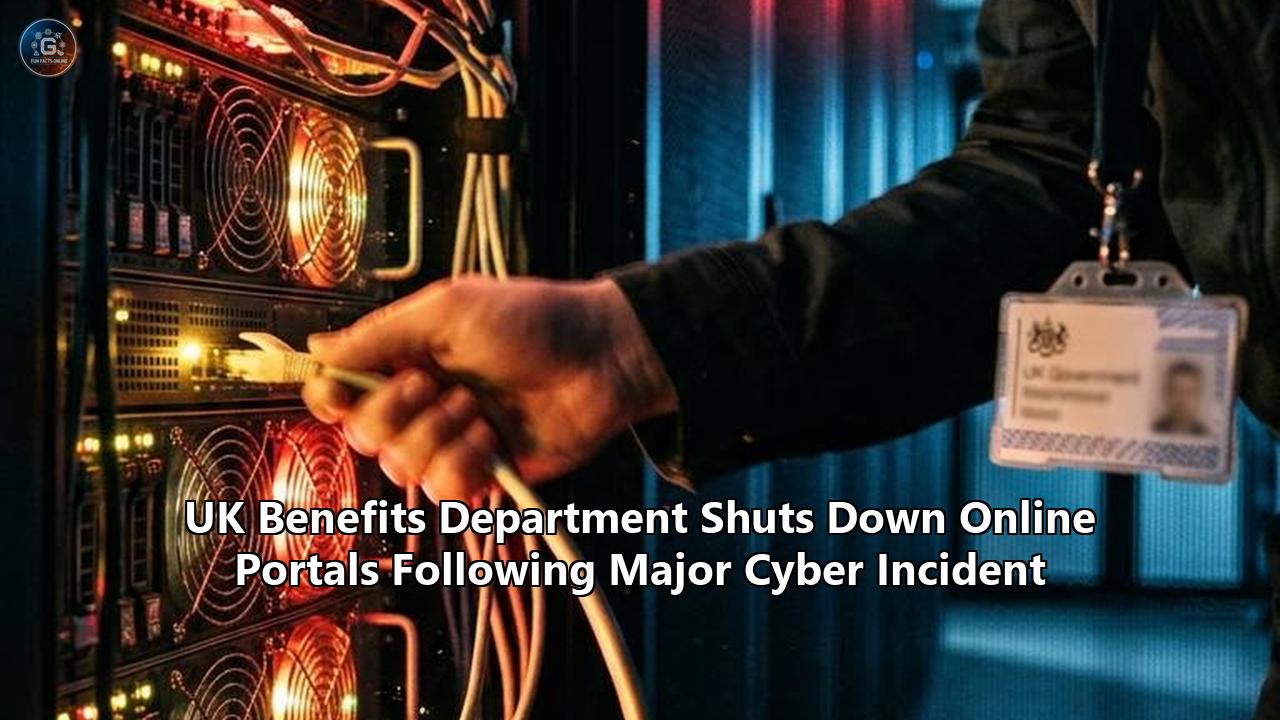
In an unprecedented emergency containment maneuver, the Department for Work and Pensions (DWP) abruptly pulled the plug on Britain’s primary digital welfare infrastructure late Thursday evening, plunging the nation’s £330 billion social security network into an enforced digital blackout. The emergency shutdown took down the Universal Credit claims and management portal, Personal Independence Payment (PIP) submission interfaces, the State Pension Credit verification portal, and the cross-departmental "Tell Us Once" bereavement service.
The intervention was triggered after automated monitoring systems detected anomalous and suspicious intrusion signatures across the department's network environment. Work and Pensions Secretary Pat McFadden confirmed the severity of the breach, characterizing it as a "serious cyber incident" while defending the decision to take public-facing portals offline as the only responsible way to safeguard citizens' sensitive personal and financial data.
GCHQ’s National Cyber Security Centre (NCSC) and the Cabinet Office’s Government Cyber Coordination Centre (GC3) were immediately deployed to lead incident response, threat hunting, and digital forensics. Downing Street moved quickly to state there was no evidence that hostile actors had pivoted from DWP networks into other ministerial databases. However, David Knott, who served as the UK’s Chief Technology Officer until December 2025, stated publicly that the disruption was "probably an attack," pointing to the targeted paralysis of the state’s largest delivery agency.
               +-------------------------------------------------+
               |         ANOMALOUS ACTIVITY DETECTED             |
               |     Suspicious intrusion signatures trigger     |
               |      DWP network containment protocols          |
               +-----------------------+-------------------------+
                                       |
                                       v
               +-------------------------------------------------+
               |          PRECAUTIONARY SEVERANCE                |
               |       Public-facing digital interfaces          |
               |         severed from core databases             |
               +-----------------------+-------------------------+
                                       |
        +------------------------------+-------------------------------+
        |                                                              |
        v                                                              v
+-------------------------------+                             +-------------------------------+
|     OFFLINE INTERFACES        |                             |     PRESERVED OPERATIONS      |
| - Universal Credit Journals   |                             | - Automated Bacs payment rails|
| - PIP Evidence Uploads        |                             | - Pre-scheduled entitlements  |
| - State Pension Portals       |                             | - Internal core processing    |
| - "Tell Us Once" Service      |                             |   (partially isolated)        |
+-------------------------------+                             +-------------------------------+
        |                                                              |
        v                                                              v
+-------------------------------+                             +-------------------------------+
|     IMPACT PROFILE            |                             |     RECOVERY & FORENSICS      |
| - New claims frozen           |                             | - NCSC & GC3 investigation    |
| - Sanction rules suspended    |                             | - Identity threat hunting     |
| - Helplines overwhelmed       |                             | - Backlog containment plan    |
+-------------------------------+                             +-------------------------------+
DWP officials confirmed that scheduled, automated welfare and pension payments processed through the Bankers' Automated Clearing Services (Bacs) network remained intact. Yet behind that technical reassurance lies an operational crisis. By severing the digital front doors through which millions interact with the British state, the government has exposed the acute vulnerability of its "digital by default" operating model. The event immediately triggered a systemic shock wave, paralyzing new claims, delaying discretionary crisis relief, stranding vulnerable citizens, and raising difficult questions about the cyber resilience of the UK’s social safety net.
Anatomy of the Blackout: Systems Severed and Containment Mechanics
The tactical decision to disconnect public portals was made during the late hours of Thursday night after internal telemetry revealed unauthorized lateral activity within DWP’s digital infrastructure. The department is Britain's largest public operating ministry, employing over 80,000 civil servants, dispersing funds to 22 million individuals, and maintaining massive stores of biometric, demographic, and financial records. Faced with indications of an active intrusion, cybersecurity incident response teams implemented a total partition protocol, physically and logically severing the public web tier and its associated application programming interfaces (APIs) from backend transaction processing mainframes.
The immediate casualty was the Universal Credit service. For roughly 6.5 million claimants, Universal Credit is not simply an administrative filing system; it is an active, interactive digital ledger. Claimants communicate with dedicated Work Coaches via an internal messaging feed known as the "journal," report fluctuating zero-hours earnings, upload proof of housing costs, and confirm attendance at mandatory job search sessions. By Friday morning, visiting the portal returned a sparse warning instructing claimants to "try again later" while warning them to remain vigilant against phishing messages requesting banking credentials.
The collateral fallout across other specialized welfare portals quickly widened:
- Personal Independence Payment (PIP): The digital pipeline enabling applicants to register new disability claims, complete functional impact assessments, and submit digital medical records was knocked completely offline.
- State Pension and Pension Credit Calculators: Citizens approaching the state pension age were locked out of digital forecast platforms, while low-income pensioners could not lodge digital claims for Pension Credit—a benefit vital for unlocking statutory fuel and winter support packages.
- "Tell Us Once" Service: The vital inter-agency platform that enables bereaved families to report a death simultaneously to the DWP, HM Revenue and Customs (HMRC), the Driver and Vehicle Licensing Agency (DVLA), and local authority council tax registries became totally inoperative.
- Stat-Xplore and Administrative Portals: Specialized research, statistical query tools, and internal analytical databases used by local councils and researchers were uncoupled to limit attack surfaces.
Technically, isolating transactional web front-ends while keeping underlying payment rails running is possible because modern public sector architectures separate interactive web tiers from batch-processed payment engines. The automated disbursement of state pensions and regular benefit installments relies on deeply embedded, pre-programmed schedules piped through the clearing house automated payment systems days before funds drop into bank accounts. These core clearing engines execute batch files isolated from public internet exposure.
However, any benefit action requiring human-in-the-loop validation, dynamic adjustments, emergency discretion, or identity verification relies directly on the interfaces that were shut down. While the automated disbursements ran on schedule on Friday, the DWP acknowledged that internal staff faced restricted access to certain administrative workflows. This dynamic prevented staff from clearing processing backlogs, adjusting overpayments, or clearing manual exceptions. The portal shutdown created an operational bottleneck that accumulated new claim delays with every passing hour.
Population-Level Fallout: Who Is Trapped in the Digital Void
While Downing Street and ministerial spokespeople sought to reassure the financial markets by emphasizing that recurring benefit payments were insulated, the immediate human toll hit the most economically precarious segments of the population. The assumption that modern welfare claimants can simply "try again later" fundamentally misunderstands the reality of living at the margins of subsistence.
+---------------------------------------------------------------------------------------------------+
|                               POPULATION FALLOUT & DISRUPTION PROFILE                             |
+--------------------------+------------------------------+-----------------------------------------+
| Claimant Category        | Immediate Operational Impact | Secondary Crisis Vector                 |
+--------------------------+------------------------------+-----------------------------------------+
| New Universal Credit     | Inability to lodge dynamic   | Stretches 5-week statutory wait period; |
| Applicants               | claim records or verify ID   | emergency advance payments blocked      |
+--------------------------+------------------------------+-----------------------------------------+
| PIP & Disability         | Medical uploads paralyzed;   | Exacerbates 15-20 week wait lists;      |
| Applicants               | deadline submissions frozen  | risks missed assessment windows         |
+--------------------------+------------------------------+-----------------------------------------+
| Active Jobseekers        | Loss of digital Work Coach   | Conditionality compliance panic;        |
|                          | journal & appointment logs   | forced mitigation via blanket waiver    |
+--------------------------+------------------------------+-----------------------------------------+
| Bereaved Families        | "Tell Us Once" interface     | Multiple manual agency filings required |
|                          | completely inaccessible      | under high psychological distress       |
+--------------------------+------------------------------+-----------------------------------------+
1. New Applicants and the Emergency Cash Crunch
For people losing employment, leaving an abusive relationship, or suffering sudden health emergencies, the day a claim is submitted dictates their official "Date of Claim." In the UK Universal Credit framework, new applicants must already endure an institutional five-week waiting period before their first standard assessment payment clears.
Because initial applications could not be lodged online, thousands of people were unable to start this statutory countdown. Even more critically, the portal failure blocked applicants from requesting Universal Credit Budgeting Advances and Fast-Track New Claim Advances. These advances serve as emergency lifelines used to buy food, charge prepay energy meters, or prevent immediate eviction. With digital application pathways closed, emergency cases had to turn entirely to telephony routing, running into phone systems that rapidly collapsed under historic call volumes.
2. Active Claimants Caught in Conditionality Rules
Active Universal Credit claimants operate under legally binding Claimant Commitments. Under standard rules, failing to log job searches, missing a Work Coach check-in message, or failing to attend an interview documented in the digital journal can trigger severe financial sanctions that strip away up to 100% of a claimant's standard benefit allowance.
The immediate shutdown sparked widespread panic among claimants who found themselves locked out of their accounts and unable to fulfill digital compliance obligations. Recognizing that its own technical infrastructure had broken down, the DWP issued an emergency directive confirming that claimants directly affected by the service blackout would not face benefit sanctions for missed commitments or unanswered journal messages during the incident.
Despite this official reassurance, frontline advocacy groups reported that anxiety among claimants was severe. Many remembered previous administrative errors where automated sanctions were mistakenly issued by uncoordinated regional jobcentres.
3. Disability Claimants and Structural PIP Delays
For individuals applying for Personal Independence Payments, the digital portal shutdown compounded an already strained administrative backlog. Processing an initial PIP assessment often takes 15 to 20 weeks. Applicants use the secure portal to upload complex, highly confidential medical evidence, including psychiatric evaluations, surgical summaries, and occupational therapy reports.
When the PIP digital entry points were severed, applicants facing strict deadlines to submit evidence or request Mandatory Reconsiderations—the critical administrative appeals process required before taking rejected claims to an independent tribunal—found themselves locked out. The inability to upload files electronically left thousands facing the prospect of gathering paper photocopies and turning to registered post, an alternative that is financially burdensome, logistically difficult, and introduces weeks of manual processing delays.
4. Bereavement Services and Inter-Agency Paralysis
The collapse of the "Tell Us Once" service revealed how deeply individual agency dependencies run across the UK's digitized state. When an individual dies in the UK, Tell Us Once allows the family to inform local authority registrars, who then push the data via secure message brokers to the DWP, the National Health Service, HMRC, the Passport Office, and local council tax teams simultaneously.
With this pipeline closed, grieving relatives faced the emotional and administrative burden of contacting multiple bureaucratic departments individually. Beyond the emotional strain, taking down this service opens an administrative liability: delays in registering deaths can lead to welfare and state pension overpayments, which the DWP is later legally mandated to claw back from estates, causing further distress to grieving families.
Operational Rupture: The Forced Retreat from "Digital by Default"
The sudden collapse of these digital entry points forced the British welfare machinery to abandon its flagship operational doctrine: the "digital by default" strategy pioneered by the Government Digital Service over a decade ago. Designed to steer the public away from expensive face-to-face appointments and labor-intensive call centers toward automated, self-service portals, this policy left public operations with limited capacity to process work manually when digital systems went dark.
+---------------------------------------------------------------------------------------------------+
|                               OPERATIONAL FRICTION: PLANNED VS. ACTUAL                            |
+--------------------------+------------------------------------+-----------------------------------+
| Operational Layer        | Digital-by-Default Architecture    | Manual Contingency Failure Mode   |
+--------------------------+------------------------------------+-----------------------------------+
| First-Contact Intake     | Automated self-service cloud forms | Helplines overloaded with call    |
|                          | with real-time field validation    | queues and long wait times        |
+--------------------------+------------------------------------+-----------------------------------+
| Identity Verification    | Cross-referenced verification      | Manual identity checks at         |
|                          | via credit and identity databases  | crowded Jobcentre Plus offices    |
+--------------------------+------------------------------------+-----------------------------------+
| Dispute & Modifications  | Asynchronous messaging through     | Physical queues and triage lines  |
|                          | the claimant's digital journal     | run by overwhelmed desk staff     |
+--------------------------+------------------------------------+-----------------------------------+
Telephony Meltdown and Frontline Congestion
As millions of Britons found portals inaccessible, user traffic shifted instantly to national telephone helplines. DWP call centers, which routinely operate near peak operational capacity, faced catastrophic call volumes.
Callers reported endless automated loops, engaged tones, and sudden disconnections as regional switchboards overloaded. Jobcentre Plus facilities saw queues spill onto high streets as people sought clarity regarding scheduled assessments, emergency payments, and mandatory appointments.
Frontline Work Coaches, who rely heavily on internal digital applications to view, update, and manage claimant caseloads, were forced to switch to provisional paper-based notes or basic intake forms. This sudden operational regression revealed that decades of aggressive digital transformation have stripped away the physical and clerical infrastructure needed to handle disruptions in automated services.
Pressure on Third-Sector and Municipal Safety Nets
When central government welfare infrastructure stumbles, the resulting financial strain cascades directly onto local governments and the third sector.
Citizens Advice branches across England, Scotland, and Wales reported an immediate surge in inquiries from distressed benefits claimants seeking guidance on their rights, pending payments, and sanctions risks. Trussell Trust food banks and independent food distribution hubs braced for emergency demand. Community relief networks frequently step in when benefit applications are disrupted, issuing emergency parcels to bridge the gap until digital processing can be restored.
Concurrently, local authorities running Local Welfare Assistance schemes and discretionary housing payments struggled to process applications because they could not digitally verify an applicant's Universal Credit status with the DWP. The disruption severed the shared data ecosystem that councils rely on to deliver local support.
Short-Term Vulnerabilities: The Second-Wave Fraud and Phishing Threat
The sudden shutdown of major government portals creates an ideal environment for secondary cybercrime. Threat actors routinely exploit the confusion and anxiety that follow major service disruptions, using social engineering to prey on the public's concern over delayed payments.
Within hours of the portal shutdowns, the DWP updated its landing page with a direct warning: "As always, we will never message you to ask for bank details or ask you to click on links".
This prominent advisory reflects deep institutional concern over opportunistic smishing (SMS phishing) and email phishing campaigns. Cybercriminal syndicates closely monitor operational incidents affecting central government bodies. During prior technical disruptions, scammers launched automated, mass-scale text campaigns warning recipients that their "Universal Credit account had been frozen due to security maintenance" or that their "State Pension details require immediate re-verification."
        THREAT ACTOR RECONNAISSANCE & CAMPAIGN CREATION
    Scans media reports of DWP portal shutdown and builds
    cloned authentication pages matching Gov.UK styling
                             |
                             v
        MASS PHISHING & SMISHING DEPLOYMENT
    Automated transmission of lookalike SMS and email alerts:
    "DWP Alert: Your Universal Credit access is suspended.
     Verify your bank details immediately to prevent payment stops."
                             |
                             v
        VICTIM EXPLOITATION & CREDENTIAL HARVESTING
    Panicked claimants, locked out of legitimate Gov.UK portals,
    click the malicious links and enter credentials and banking data
                             |
                             v
        DOWNSTREAM IDENTITY THEFT & BENEFIT DIVERSION
    Stolen credentials used to orchestrate fraudulent loan claims,
    divert future Bacs disbursements, and drain personal accounts
These fraudulent communications feature convincing domain names mimicking authentic Gov.UK web assets and route victims to cloned login interfaces designed to capture personal credentials, National Insurance numbers, and banking details. For users who were already blocked from checking their official accounts, the psychological impulse to click a verification link sent via SMS is acute.
The National Cyber Security Centre’s Active Cyber Defence branch faced the urgent task of identifying, intercepting, and taking down opportunistic phishing infrastructure set up to capitalize on the public blackout. The downstream risks of widespread credential harvesting during such incidents often outlast the operational disruption itself. Stolen credentials can later be weaponized to mount coordinated identity fraud, divert future welfare payments, or orchestrate unauthorized applications for state-backed loans.
The Technical Backdrop: Inside a Suspected UK Government Cyber Attack
While the DWP initially used careful phrasing, officially calling the disruption a "cyber incident" and a "temporary disruption," security professionals and former intelligence officials framed the event through a more alarming lens. When an organization voluntarily pulls down almost all of its public web services to contain an incident, it indicates that anomalous activity breached the network perimeter and raised fears of unauthorized administrative access.
The forensic investigation, running under the joint direction of the NCSC and the Government Cyber Coordination Centre, focuses on determining the initial attack vector, assessing whether privilege escalation took place, and confirming whether data was exfiltrated. In analyzing the potential scope of this UK government cyber attack, digital forensics specialists are evaluating three main threat scenarios:
+---------------------------------------------------------------------------------------------------+
|                           POTENTIAL THREAT VECTORS UNDER INVESTIGATION                            |
+--------------------------+----------------------------------+-------------------------------------+
| Threat Scenario          | Operational Profile              | Strategic / Geopolitical Motive     |
+--------------------------+----------------------------------+-------------------------------------+
| Nation-State APT         | Sophisticated living-off-the-land| Espionage, strategic sabotage,      |
| Infiltration             | tools, persistent silent recon   | psychological disruption of state   |
+--------------------------+----------------------------------+-------------------------------------+
| Ransomware Syndicate     | Automated perimeter exploitation | Financial extortion, triple         |
| Breach                   | and attempts to deploy encryption| extortion threats using stolen data |
+--------------------------+----------------------------------+-------------------------------------+
| Supply-Chain & Managed   | Compromise of third-party        | Bypassing perimeter controls via    |
| Service Vulnerability    | enterprise IT or software vendor | pre-authenticated integration links |
+--------------------------+----------------------------------+-------------------------------------+
1. State-Sponsored Advanced Persistent Threats (APTs)
Hostile intelligence services—principally affiliated with Russian, Chinese, or Iranian state apparatuses—maintain active, aggressive cyber espionage and reconnaissance operations against Western government infrastructure. A state actor’s objective in penetrating a department like the DWP may not be immediate financial extortion, but rather long-term strategic reconnaissance.
The DWP maintains detailed personal records on millions of citizens, including civil servants, military personnel, intelligence officers, and elected officials. Gaining persistent access to longitudinal earnings records, home addresses, family dynamics, and financial vulnerability profiles offers invaluable intelligence for foreign espionage operations.
Furthermore, simply proving that a foreign power can force the UK’s welfare infrastructure offline provides adversaries with a powerful tool for hybrid warfare. The disruption demonstrates how hostile actors can trigger civic panic, disrupt public services, and undermine faith in government institutions without ever firing a shot.
2. Financially Motivated Ransomware Syndicates
Organized cybercrime groups operating out of safe-harbor jurisdictions present a constant threat to public sector infrastructure. Typically exploiting unpatched perimeter appliances, compromised virtual private network (VPN) gateways, or stolen enterprise credentials, these groups seek to establish a foothold, deploy privileged tooling, harvest administrative credentials, exfiltrate sensitive files, and deploy ransomware.
If malicious actors accessed internal administrative domains, the DWP’s incident response playbooks would mandate an immediate, aggressive shutdown of public portals. This isolation prevents automated malware from spreading, cuts off data exfiltration channels, and stops attackers from moving laterally from edge web nodes into core database environments.
3. Supply-Chain and Third-Party Dependencies
The modern UK public sector does not operate as an isolated software environment. Instead, it relies on a complex supply chain of enterprise software providers, managed service contractors, and digital consultancy partners. The wider public sector has repeatedly seen major operational disruptions triggered by third-party vulnerabilities.
Recent precedents illustrate this vulnerability:
- The 2023 ransomware attack on business services giant Capita crippled administrative processes across dozens of local councils, pension schemes, and central government departments.
- The catastrophic cyber incident at Synnovis, a pathology services partner for the NHS, disrupted thousands of patient operations, medical procedures, and blood transfusions across London hospitals for months.
- The exploitation of vulnerabilities in widely used enterprise tools, like file-transfer platforms and managed administrative software, has repeatedly compromised public agencies that thought their own networks were secure.
The NCSC's investigation must determine whether the anomalous activity originated from an exploit directly targeting DWP codebases, or if compromised credentials from a contracted supplier allowed unauthorized actors to traverse the department's boundaries.
The Legacy IT Burden: Why the Welfare State Is Structurally Fragile
The disruption has cast an uncomfortable light on the fragile technological foundations supporting the UK's welfare state. For years, government watchdogs, technical specialists, and parliamentary committees have sounded the alarm over the public sector’s mounting legacy IT deficit.
The DWP is a prime example of an institution managing a complex mix of new and old technology. At the front end, it features modern, cloud-native web portals built in agile environments. At the back end, however, it remains anchored to monolithic transaction processing engines and database structures that date back to the late twentieth century.
Only weeks before this outage, Dame Sarah Healey, the Permanent Secretary at the Department for Work and Pensions, delivered frank testimony to members of Parliament. She acknowledged that the department remains dependent on "extremely old computer systems," explaining that these legacy mainframes make administrative processes rigid and limit the department's operational agility.
+---------------------------------------------------------------------------------------------------+
|                           THE DUAL-TIER WELFARE IT ARCHITECTURE CRISIS                            |
+------------------------------------+--------------------------------------------------------------+
| Modern Edge Tier (Cloud-Facing)    | - Scalable cloud microservices on AWS / Azure               |
|                                    | - Rapidly patched agile web containers                       |
|                                    | - Governed by modern Identity & Access Management (IAM)      |
+------------------------------------+--------------------------------------------------------------+
| Integration Layer (Middlewares)    | - Fragile APIs translating RESTful web traffic to mainframes |
|                                    | - Bespoke data brokers and custom synchronization pipelines  |
|                                    | - Difficult to patch without triggering wider system crashes |
+------------------------------------+--------------------------------------------------------------+
| Core Legacy Tier (Mainframe Core)  | - Virtual Machine Environment (VME) legacy systems           |
|                                    | - Monolithic databases designed decades ago                  |
|                                    | - Lacks native telemetry, zero-trust protocols, & SIEM hooks |
+------------------------------------+--------------------------------------------------------------+
The DWP is currently navigating a sprawling, high-stakes IT modernization program that is not projected to finish until 2033. Marianne Betts, chief executive of the public-sector technology consultancy Civiteq, pointed out that older IT systems are not inherently more vulnerable to intrusion. However, she observed that these legacy environments are far more difficult to patch, monitor, and integrate with modern telemetry and automated security controls. This complexity makes both early threat prevention and post-incident recovery exceptionally challenging.
This layered architecture creates significant security challenges:
- Visibility and Telemetry Gaps: Modern security operations centers rely on continuous endpoint detection, behavioral monitoring, and automated logging. Legacy mainframe systems, however, often operate without modern logging hooks, making it difficult to detect an intruder's lateral movement until unusual activity spills into modern monitoring tools.
- Patching Complexities: In modern continuous-integration environments, security teams can deploy software patches within hours of a zero-day vulnerability being disclosed. Within legacy government mainframes, applying patches often requires weeks of regression testing to prevent brittle, undocumented system dependencies from failing.
- The Fragile Edge: Because replacing backend mainframes is risky, expensive, and politically fraught, public departments frequently build custom APIs to connect modern web interfaces with legacy databases. While this approach allows departments to launch citizen-facing portals quickly, it creates an expanded, complex attack surface where software dependencies can become obscure and difficult to defend.
When unusual activity was detected late Thursday, the inability to quickly verify the depth of the intrusion left administrators with only one safe option: shut down the external interfaces entirely. A more modern, micro-segmented zero-trust architecture would have allowed engineers to isolate compromised containers without shutting down public access across the board. The wholesale shutdown of public services is the clearest operational indicator of legacy technical debt.
Long-Term Policy, Governance, and National Resilience Consequences
The shutdown of DWP portals will likely influence UK cybersecurity policy, digital governance, and administrative welfare oversight for years to come.
                                  PARLIAMENTARY SCRUTINY
               Commons Select Committees demand transparent accounting of DWP
                legacy vulnerabilities, contractor oversight, and backup plans
                                           |
                                           v
                              LEGISLATIVE & MANDATORY ACTION
                The Cyber Security and Resilience Bill is updated to treat
                   critical administrative databases with the same rigor as
                                the power grid and defense assets
                                           |
                                           v
                               STRUCTURAL POLICY SHIFT
               The "Digital by Default" doctrine is overhauled, requiring
              permanent, fully staffed analogue fallbacks for essential services
                                           |
                                           v
                               SECURITY EXPENDITURE REVIEW
                Treasury faces pressure to accelerate the DWP’s 2033 IT
               modernization timeline, shifting funds toward core upgrades
1. Hardening the Cyber Security and Resilience Bill
The incident adds urgency to parliamentary debates over the government's proposed Cyber Security and Resilience Bill. Designed to expand the regulatory frameworks established by the UK Network and Information Systems (NIS) Regulations, the bill seeks to expand statutory reporting requirements and mandate stricter cybersecurity standards across essential digital supply chains.
This disruption makes it clear that the UK's social security administration must be protected as critical national infrastructure. For years, cybersecurity strategies focused primarily on preventing catastrophic attacks on the power grid, telecommunications backbones, defense networks, and transport hubs.
Now, policymakers must reckon with the fact that social safety nets are just as vital to national stability. Disabling the systems that provide income to a third of the population creates immediate economic and social turmoil. In response, ministers will face intense pressure to expand the mandate of the National Cyber Security Centre, giving it binding oversight and audit powers over civilian administrative databases.
2. A Reassessment of the "Digital by Default" Mandate
For over a decade, UK digital strategy has focused on phasing out manual, paper, and phone channels to cut administrative overhead. While this approach lowered operational costs per transaction, this incident demonstrates how it eliminated operational buffers and resilience.
Commons Work and Pensions Committee chair Debbie Abrahams, alongside Science, Innovation and Technology Committee chair Dame Chi Onwurah, indicated that Parliament will examine both the technical failures and the broader policy implications of the outage.
Lawmakers are likely to demand the creation of statutory "analogue fallback" requirements. Under these rules, government departments managing life-critical public services would be legally mandated to maintain active, fully staffed non-digital pathways—such as hot-standby telephony banks and physical emergency processing workflows—that can deploy immediately whenever primary digital portals are disrupted.
+---------------------------------------------------------------------------------------------------+
|                         STRATEGIC REASSESSMENT: RESILIENCE VS. EFFICIENCY                         |
+--------------------------+-----------------------------------+------------------------------------+
| Dimension                | Pre-Incident Trajectory           | Post-Incident Requirement          |
+--------------------------+-----------------------------------+------------------------------------+
| Efficiency Focus         | Drive all claimants to self-help  | Maintain funded, hot-standby       |
|                          | web portals to lower costs        | telephony and in-person backups    |
+--------------------------+-----------------------------------+------------------------------------+
| Architecture Standards   | Layer web apps over legacy        | Accelerate total decoupling and    |
|                          | 20th-century mainframes           | retirement of legacy mainframes    |
+--------------------------+-----------------------------------+------------------------------------+
| Threat Model             | Treat welfare as an administrative| Treat benefits delivery as         |
|                          | service rather than defense asset | Critical National Infrastructure   |
+--------------------------+-----------------------------------+------------------------------------+
| Incident Playbooks       | Total disconnect of web portals   | Micro-segmented zero-trust design  |
|                          | to contain intrusion risk         | enabling partial service continuity|
+--------------------------+-----------------------------------+------------------------------------+
3. Financial Repercussions for the Treasury
The disruption lands directly ahead of crucial fiscal and public spending debates. DWP’s decade-long plan to modernize its core IT infrastructure by 2033 was laid out as an extended cost-saving measure.
This incident will almost certainly force the Treasury to rethink that timeline. Stretching foundational software upgrades over more than ten years creates an unacceptable window of operational vulnerability. Accelerating the retirement of legacy systems, however, will require billions of pounds in upfront capital expenditure.
In a tight fiscal environment, ministers will face difficult political choices: they must either direct significant resources toward replacing legacy administrative technology, or accept the risk of further disruptive cyber incidents across key public platforms.
Indicators to Watch: The Recovery and Forensic Trajectory
As cybersecurity incident response teams, threat intelligence specialists, and DWP engineers work to restore operational stability, several key milestones will show whether the situation is stabilizing or entering a more challenging phase:
- Forensic Attribution and Threat Disclosures: The NCSC and Cabinet Office will eventually release initial findings on the threat vector. Determining whether the disruption was caused by an automated vulnerability scan, an extortion-driven ransomware attack, or a targeted nation-state campaign will shape the government's diplomatic and security response.
- The ICO Assessment and Exfiltration Verdicts: The Information Commissioner’s Office has opened regulatory inquiries into the incident. The most critical question remains whether unauthorized actors merely triggered network defenses or successfully accessed and exfiltrated citizens' personal, banking, or medical records. Proof of significant data exfiltration would trigger a legal and political crisis, requiring the government to launch an unprecedented identity protection and credit-monitoring effort for millions of affected citizens.
- The Scale of the Processing Backlog: Even after portals return online, the DWP will face a massive operational backlog. Resolving tens of thousands of delayed Universal Credit applications, stalled PIP submissions, and unprocessed bereavement notifications will test the capacity of jobcentres and call centers for weeks. Observers should monitor whether the department brings in emergency overtime staffing or temporary reassignment pools to clear the backlog before the next monthly payment cycle begins.
- Welfare Appeals and Tribunal Impacts: Watch for administrative pressure building within the tribunal system. If portal down-time caused applicants to miss strict deadlines for Mandatory Reconsiderations or disability evidence submissions, ministers will need to issue formal, department-wide grace periods to prevent claimants from losing their right to appeal benefit decisions.
- Contractor and Supply Chain Audits: In the coming weeks, the Cabinet Office will likely launch security reviews targeting external software suppliers and managed service providers that hold integration links with the DWP's infrastructure. Scrutiny will focus on third-party access rights, privileged identity management, and the security boundaries separating external vendor systems from the core welfare network.
The emergency shutdown of the DWP’s online portals is more than a routine technical failure. It serves as a stark demonstration of how deeply digital vulnerabilities can impact core public infrastructure. When a cyber incident hits the state’s administrative machinery, it directly affects the livelihoods, security, and well-being of millions of people who depend on its services every day. As the investigation continues, the focus must shift from managing the immediate technical disruption to addressing the chronic legacy weaknesses that left Britain's social safety net vulnerable to systemic failure.
Reference:
- https://www.theguardian.com/politics/2026/nov/27/dwp-cyber-incident-pensions-benefits-systems-offline
- https://www.ft.com/content/59a87442-51ad-47b7-ba11-e36876456fd4?syn-25a6b1a6=1
- https://www.bcs.org/articles-opinion-and-research/cyber-incident-takes-key-dwp-services-offline/
- https://www.euronews.com/2026/11/27/live-and-ongoing-cyber-incident-takes-down-uk-department-for-work-and-pensions-online-serv
- https://med-techinsights.com/the-dwp-shutdown-is-a-warning-for-connected-healthcare/
- https://finance.biggo.com/news/5629f099-03b5-49da-8156-ee520dd1e304