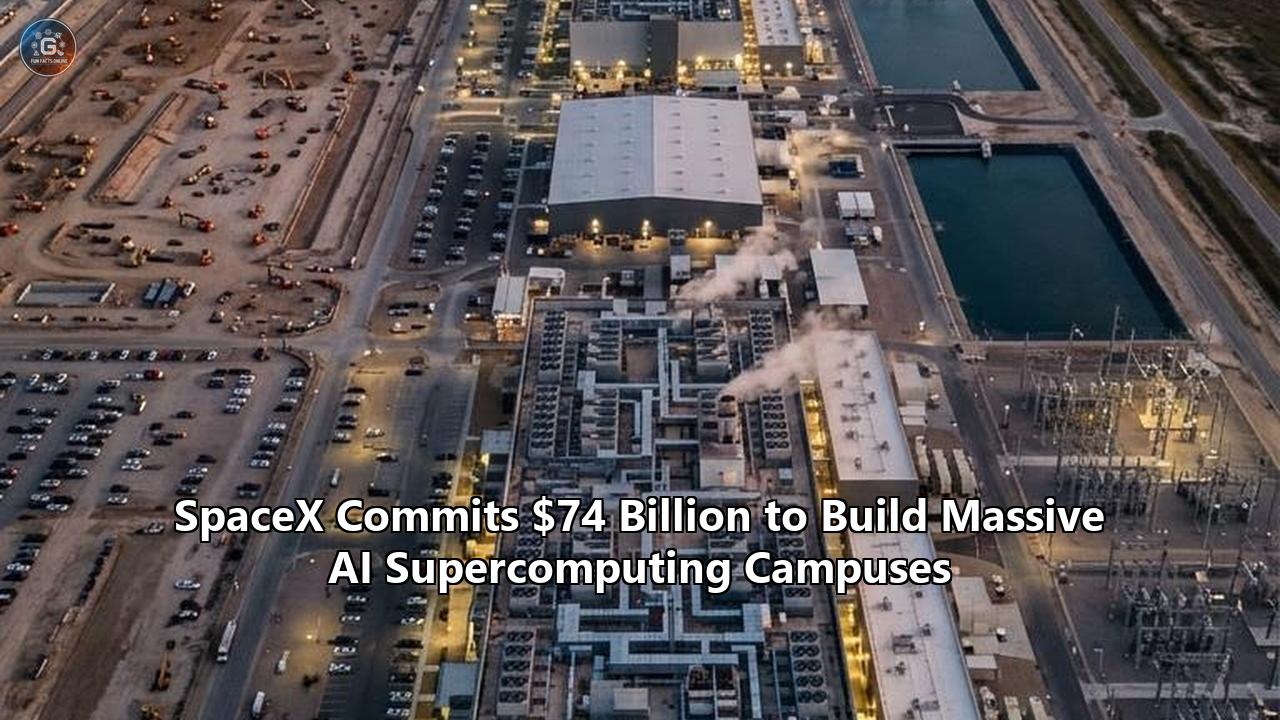
On November 12, 2026, Space Exploration Technologies Corp. officially filed capital expenditure plans committing more than $74 billion toward the development of two sovereign-scale artificial intelligence data campuses in Texas and Arizona. The announcement establishes the largest single infrastructure commitment by a private technology company in American history, signaling an aggressive push to dominate the physical foundation of frontier artificial intelligence.
The scale of this planned investment positions SpaceX AI supercomputing infrastructure as a distinct commercial engine within the newly public aerospace giant (NASDAQ: SPCX). Following its February 2026 merger with xAI and its subsequent June public offering, the company is no longer merely building orbital launch vehicles and satellite constellations. In its third-quarter 2026 financial disclosures, the company revealed that its AI compute division generated $7.56 billion in revenue—surpassing Starlink’s $5.2 billion and dwarfing its legacy rocket launch operations to account for more than half of its $14.57 billion quarterly gross.
The $74 billion commitment is distributed across two starkly different geographic and regulatory theaters:
- Starbase, Texas ($24+ Billion): An off-grid, self-powered installation spanning 444 acres near the Port of Brownsville, backed by an on-site, 35-turbine natural gas generation plant producing an initial 748 megawatts of dedicated power.
- Cochise County, Arizona (~$50 Billion): A 747-acre campus designed for nine compute halls capable of supporting up to 6 gigawatts of power draw alongside 24 gigawatt-hours of battery energy storage, planned via local utility cooperatives.
This development is not an isolated corporate real estate expansion. It represents an instructive case study in how frontier artificial intelligence is breaking the traditional boundaries of software, cloud leasing, and public utilities. By analyzing the engineering, financial architecture, and municipal friction points of these two massive projects, we can extract the fundamental principles governing the next era of industrial compute.
Deconstructing the Campuses: Two Countervailing Infrastructure Models
The dual-site strategy deployed by SpaceX offers a controlled comparative study in modern hyperscale development. Faced with an urgent demand for multi-gigawatt compute clusters, the company has pursued two fundamentally divergent engineering paths: complete energy autarky in South Texas, and a grid-dependent cooperative partnership in southeastern Arizona.
                     $74B+ DUAL-CAMPUS CAPITAL ALLOCATION
                                      │
         ┌────────────────────────────┴────────────────────────────┐
         ▼                                                         ▼
  STARBASE, TEXAS                                           COCHISE COUNTY, ARIZONA
  ────────────────                                          ───────────────────────
  Capital: $24B+ (Initial Phase)                            Capital: ~$50B (Full Buildout)
  Footprint: 444 Acres                                      Footprint: 747 Acres
  Architecture: Self-Generated / Off-Grid                   Architecture: Grid-Cooperative / BESS
  Generation: 35 Gas Turbines (748 MW initial)              Capacity: Up to 6 GW Draw; 24 GWh BESS
  Cooling: Industrial Closed-Loop / Water Injection         Cooling: High-Efficiency Dry Cooling
  Permitting: Municipal Enclave (Starbase City Commission)   Permitting: County Zoning Board (Contested)
  Fuel/Feedstock: 8-Mile Lone Star Gas Pipeline             Grid Partner: SSVEC / AEPCO (Co-ops)
The Starbase Off-Grid Sovereignty Model
At its Starbase headquarters in Cameron County, Texas, SpaceX is moving to construct a computing cluster that functions as an independent energy island. A city public hearing notice filed in November 2026 detailed plans for an on-site natural gas power station that will deploy 35 industrial turbines to produce an initial 748 megawatts of electricity. This generation capacity is dedicated entirely to behind-the-meter compute loads, completely isolated from the Electric Reliability Council of Texas (ERCOT) transmission grid.
To feed the 35 turbines, SpaceX affiliate Lone Star Mineral Development has filed permit applications for an eight-mile natural gas pipeline directly into the Starbase complex, targeted for commercial operation by January 2027. By producing its own electricity directly from regional natural gas fields, SpaceX bypasses Texas’s transmission congestion and escapes the multi-year interconnection queue that currently delays industrial-scale energy hookups across the state.
To secure municipal stability, SpaceX has committed $220 million in private capital to augment the water and wastewater networks of the Brownsville Public Utilities Board (BPUB), having already disbursed an initial $40 million to expand regional water handling by 20 million gallons per day. The project has already generated 3,000 construction jobs and forecasts over 500 permanent operational roles, with formal consideration of a Chapter 312 property tax abatement set before the company-dominated Starbase City Commission on December 9, 2026.
┌────────────────────────────────────────────────────────────────────────┐
│                   STARBASE ISLANDED COMPUTE FABRIC                     │
│                                                                        │
│   ┌─────────────────────┐             ┌────────────────────────────┐   │
│   │  Lone Star Mineral  │             │   35 Aeroderivative Gas    │   │
│   │  8-Mile Gas Line    │────────────▶│   Turbines (748 MW)        │   │
│   └─────────────────────┘             └──────────────┬─────────────┘   │
│                                                      │                 │
│                                       ┌──────────────▼─────────────┐   │
│   ┌─────────────────────┐             │  Dedicated Step-Up Sub-    │   │
│   │ Brownsville PUB     │             │  stations (Islanding Hub)  │   │
│   │ Wastewater Loop     │             └──────────────┬─────────────┘   │
│   │ ($220M Upgrade)     │                            │                 │
│   └──────────┬──────────┘             ┌──────────────▼─────────────┐   │
│              │                        │  Frontier Training Halls   │   │
│              └───────────────────────▶│  (Liquid-to-Chip Thermal)  │   │
│                                       └────────────────────────────┘   │
└────────────────────────────────────────────────────────────────────────┘
The Cochise County Grid-Symbiosis Gamble
In contrast, the roughly $50 billion deployment planned for Cochise County, Arizona, tests the viability of scaling frontier compute within traditional rural utility frameworks. Sited across 747 acres near the historic town of Willcox, the proposal—initially submitted under the corporate alias Tombstone Resources LLC—outlines nine compute halls, each spanning approximately 493,000 square feet.
The Arizona facility targets an unprecedented 6 gigawatts of electrical throughput at maximum buildout, stabilized by a massive 24 gigawatt-hour battery energy storage system (BESS). Rather than generating power on site, the campus relies on contractual alliances with the Sulphur Springs Valley Electric Cooperative (SSVEC) and the Arizona Electric Power Cooperative (AEPCO).
Because Cochise County sits inside the severely overdrafted Douglas and Willcox groundwater basins, the facility is engineered to use closed-loop dry cooling, disclaiming any industrial draw on local aquifers. To neutralize community opposition, company representatives have pledged that the campus will finance up to $3.6 billion in transmission infrastructure upgrades, lower residential electricity bills by up to 20%, and reduce local property taxes by 20% while creating 5,500 construction positions and 1,000 permanent operational jobs.
Despite these sweeteners, the Arizona project has met acute civic resistance. Siting a 6-gigawatt load—nearly ten times the total 626-megawatt capacity of the neighboring coal-and-gas Apache Generating Station—in an agricultural basin has sparked vocal backlash. A petition with 2,400 local signatures has demanded that the Cochise County Planning and Zoning Commission reject the rezoning application at its decisive public hearing on December 9, 2026.
Capital Allocations Behind the SpaceX AI Supercomputing Offensive
The sheer financial magnitude of this $74 billion commitment must be understood within the broader economics of sovereign AI development. In 2026, training a frontier model no longer costs tens of millions of dollars; it demands double-digit billions in dedicated physical assets.
QUARTERLY FINANCIAL REALIGNMENT: SPACEX (SPCX) - Q3 2026
┌──────────────────────────────────────┬────────────────────────────────┐
│ Metric                               │ Value                          │
├──────────────────────────────────────┼────────────────────────────────┤
│ Total Q3 Revenue                     │ $14.57 Billion (+161.4% YoY)   │
│ AI Compute Infrastructure Revenue    │ $7.56 Billion (51.9% of Total) │
│ Starlink Satellite Internet Revenue  │ $5.20 Billion                  │
│ Launch Services & Commercial Space   │ $1.81 Billion                  │
│ GAAP Net Income                      │ $4.40 Billion                  │
│ Capital Expenditures (First 9 Mos.)  │ $48.00 Billion                 │
│ AI-Specific Capex Allocation (9 Mos.)│ ~$40.00 Billion                │
│ Projected Q4 2026 Capex              │ $35.00 - $40.00 Billion        │
└──────────────────────────────────────┴────────────────────────────────┘
The pivot toward SpaceX AI supercomputing as the company's primary growth driver explains why Wall Street greeted the $74 billion spending plan with calm stability. Following the November 12 announcement, shares of SPCX edged up just 0.14% in regular trading before ticking up 1.44% after hours to hover near $142. Market analysts treated the enormous sum not as speculative burn, but as forward-deployed capital expenditure backed by verified cash flow and pre-leased cluster capacity.
           SPACEX Q3 2026 REVENUE COMPOSITION (TOTAL: $14.57B)

        AI Compute Revenue: 51.9% ($7.56B)
        █████████████████████████████████████████

        Starlink Satellite Network: 35.7% ($5.20B)
        ████████████████████████████

        Launch Services & Other: 12.4% ($1.81B)
        ██████████
The underlying monetization engine depends heavily on external enterprise leasing. Alongside training xAI's internal Grok model architectures, SpaceX has emerged as a premier merchant supplier of raw compute. The company's existing Colossus mega-clusters in Memphis, Tennessee, and Southaven, Mississippi—which surpass 2 gigawatts of installed capacity across millions of GPUs—are actively subleased to outside frontier developers. Anthropic has leased capacity under a multi-year arrangement valued at roughly $1.25 billion per month, while Alphabet has secured multi-hundred-megawatt allocations to support secondary inference loads.
This hybrid utilization model transforms multi-billion-dollar compute campuses from internal cost centers into high-margin utility assets. The revenue yields are then funneled directly back into hardware procurement, insulating the capital structure against market shifts.
Lesson 1: The Energy Decoupling Principle
The first overarching lesson extracted from this case study is that frontier artificial intelligence has outgrown public power grids. Siting a multi-gigawatt computing cluster via conventional regional transmission organizations (RTOs) or regulated utilities is no longer functionally viable on competitive timelines.
          TRADITIONAL UTILITY QUEUE VS. DECOUPLED ON-SITE GENERATION

TRADITIONAL GRID CONNECTION:
[ Site Selection ] ──▶ [ Interconnection Study ] ──▶ [ Grid Upgrades / RTO Queue ] ──▶ [ Substation Build ] ──▶ [ Energization ]
  (Month 0)              (Months 12–24)                (Months 36–60)                    (Months 60–72)          (Year 6–7)

SPACEX STARBASE ISLANDED TIMELINE:
[ Site Selection ] ──▶ [ Turbines / Pipeline Build ] ──▶ [ Behind-the-Meter Setup ] ──▶ [ Phased Energization ]
  (Month 0)              (Months 3–12)                    (Months 12–18)                (Month 18–24)
Across North America, interconnections for loads exceeding 100 megawatts face backlogs ranging from four to seven years. When a technology firm demands between 750 megawatts and 6 gigawatts—quantities equivalent to the baseline demand of major metropolitan areas—the regional grid cannot accommodate the influx without multi-billion-dollar, ratepayer-funded high-voltage transmission lines.
Elon Musk articulated this physical reality during his November 6, 2026, address at the Baron Investment Conference:
"It is extraordinarily difficult to bring on compute at scale. The electricity requirements for these clusters have moved past what traditional utilities can deliver on anything resembling a tech development cycle. If you sit in an interconnection queue, your model is obsolete before your transformers are energized".
The Texas facility demonstrates the logical conclusion of this bottleneck: complete energy decoupling. By installing 35 on-site aeroderivative gas turbines, SpaceX effectively builds a mid-sized municipal utility directly behind its data hall step-up transformers.
┌────────────────────────────────────────────────────────────────────────┐
│                   THE BEHIND-THE-METER EFFICIENCY DIVIDEND             │
│                                                                        │
│   TRADITIONAL GRID PATHWAY                                             │
│   Gas Field ──▶ Distant Power Plant ──▶ High-Voltage Lines ──▶ Grid    │
│                 (Transmission losses: 5-8% | Wheeling tariffs: +30%)   │
│                 RTO Congestion Risk | Variable Curtailment Delays      │
│                                                                        │
│   STARBASE ON-SITE PATHWAY                                             │
│   Direct Wellhead Feed ──▶ Dedicated 8-Mile Pipe ──▶ On-Site Turbines  │
│                           (Zero wheeling tariffs | Flat fuel base)     │
│                           Uncurtailed Island Power ──▶ Compute Hall    │
└────────────────────────────────────────────────────────────────────────┘
This engineering choice generates three distinct operational advantages:
- Temporal Compression: Eliminating the formal RTO interconnection queue shortens energization timelines from over five years to less than eighteen months.
- Tariff Insulation: Behind-the-meter generation avoids wheeling fees, transmission cost adjustments, and peak-demand congestion pricing imposed by public utility commissions.
- Dynamic Load Balancing: Modern GPU clusters present erratic transient load profiles, fluctuating by hundreds of megawatts in fractions of a second during model checkpointing and parallel backpropagation passes. Public grids struggle to mitigate these frequency swings without expensive synthetic inertia systems. A privately operated, dedicated turbine bank can run optimized governor controls explicitly tailored to the step-function power cycles of frontier AI training.
Conversely, the Cochise County deployment illustrates the steep structural penalties of attempting to negotiate gigawatt-scale loads through rural utility cooperatives. By asking SSVEC and AEPCO to manage a 6-gigawatt draw, SpaceX has run headfirst into capital allocation impasses. Sourcing that volume of electricity without building an on-site generation fleet requires $3.6 billion in grid reinforcements and long-term bilateral power purchase agreements that stretch across multi-state transmission corridors.
The lesson for capital allocators is clear: At the gigawatt frontier, computing companies must become independent energy producers. Those that treat energy as a purchased utility service will forfeit the speed and cost structure necessary to stay competitive.
Lesson 2: The Political Geography of Siting and Municipal Capture
The second lesson highlights the friction between industrial compute projects and local communities. Siting hyper-dense infrastructure has evolved from an exercise in corporate real estate into a high-stakes geopolitical campaign fought across county commissioner boards and municipal water authorities.
During his November 2026 conference remarks, Musk acknowledged this escalating friction:
"The pitchfork level for data centers is pretty high right now. You can’t just show up in an agricultural county, consume the regional water allotment, push the local substation to its thermal limits, and expect a ribbon-cutting ceremony".
The divergent political landscapes of Starbase and Cochise County showcase two methods for managing this community pushback.
                     CIVIC RESISTANCE VS. MUNICIPAL INTEGRATION

   COCHISE COUNTY: CITIZEN POPULATION               STARBASE: MUNICIPAL ENCLAVE
  ┌───────────────────────────────────┐            ┌───────────────────────────────────┐
  │ • Independent farming community   │            │ • Single-corporate incorporation  │
  │ • Severe basin water depletion    │            │ • Deep local industrial alignment │
  │ • Grassroots mobilization         │            │ • City-level executive control    │
  │ • 2,400-signature petition        │            │ • Ch. 312 direct tax abatements   │
  │ • High electoral vulnerability    │            │ • Insulated local governance      │
  └─────────────────┬─────────────────┘            └─────────────────┬─────────────────┘
                    ▼                                                ▼
     [ Dec 9 Zoning Commission Vote ]               [ Dec 9 Starbase Commission Vote ]
       (High Disapproval Risk)                        (Virtually Guaranteed Approval)
In South Texas, SpaceX insulated its operations by engineering its own local governance structure. By driving the incorporation of the City of Starbase and arranging the disannexation of 444 acres from the Port of Brownsville, the company established a municipal enclave where it effectively sits on both sides of the negotiating table. When the Starbase City Commission convenes on December 9, 2026, to vote on Chapter 312 property tax abatements and economic development agreements, it will do so as a regulatory body whose economic interests are fully aligned with the company's industrial expansion.
Even with this jurisdictional control, SpaceX has realized it must provide substantial public benefits to sustain regional peace. It has structured its infrastructure investments to solve acute municipal problems, such as transferring $40 million up front to the Brownsville Public Utilities Board to reinforce local water systems. By addressing public infrastructure deficits out of its own balance sheet, the company blunts regional opposition.
┌────────────────────────────────────────────────────────────────────────┐
│                   THE COMMUNITY BENEFIT COMPACT: STARBASE              │
│                                                                        │
│   Corporate Outlay:                                                    │
│   $220M Dedicated Water / Wastewater Infrastructure Pledge             │
│   ├─▶ $40M Direct Cash to Brownsville Public Utilities Board (Paid)    │
│   └─▶ 20M Gallons/Day Net Regional Capacity Expansion Added            │
│                                                                        │
│   Civic Yield:                                                         │
│   • Brownsville avoids municipal bond issuance for utility expansion   │
│   • Water security insulated from industrial closed-loop consumption   │
│   • Regulatory friction neutralized across Cameron County leadership   │
└────────────────────────────────────────────────────────────────────────┘
In Cochise County, by contrast, SpaceX operated as an outside applicant confronting an established rural population. Siting a multi-gigawatt facility within an arid basin immediately ignited fears over groundwater depletion, noise pollution from cooling banks, and soaring residential electric rates. Even though the company used an anonymous shell company (Tombstone Resources LLC), committed to dry-cooling systems, and offered substantial utility bill reductions, it could not avert organized grassroots opposition. The 2,400 signatures gathered on the petition demonstrate that when industrial compute expands into existing communities, technological efficiency arguments rarely overcome local resource protection concerns.
This dynamic reflects a nationwide trend. Across the United States during the 2026 midterm elections, voters rejected data center development plans in 40 out of 41 local ballot initiatives. As large-scale compute installations consume more land and power, sovereignty over municipal and regulatory boundaries becomes as critical an engineering variable as chip architecture or network topology.
Lesson 3: The Imperative of Hyper-Vertical Integration
A third insight from SpaceX's $74 billion capital program is that modern artificial intelligence demands deep, cross-industry vertical integration.
Traditional hyperscalers—such as Microsoft, Amazon Web Services, and Google Cloud—rely on fragmented supply chains. They purchase specialized accelerators from semiconductor vendors, lease land from commercial real estate developers, contract power through regional public utilities, and route off-site data via commercial telecom backbones.
The SpaceX AI supercomputing architecture dismantles this fragmented approach by merging power production, specialized aerospace manufacturing, satellite networking, and compute facilities into a single operational workflow.
THE HYPERSCALER FRAGMENTATION GAP VS. SPACEX INTEGRATED STACK

TRADITIONAL HYPERSCALE ECOSYSTEM:
┌─────────────────┐   ┌─────────────────┐   ┌─────────────────┐   ┌─────────────────┐
│ Merchant Utility│──▶│ Commercial REIT │──▶│ Merchant Silicon│──▶│ Tier-1 Telecom  │
│ (Regulated Grid)│   │ (Wholesale Lease)│   │ (External Fab)  │   │ (Fiber Leases)  │
└─────────────────┘   └─────────────────┘   └─────────────────┘   └─────────────────┘
  High Interconnect     Standard Concrete     Subject to Public     High Latency WAN
  Queue Delays          Data Centers          Supply Bottlenecks    Congestion Charges

SPACEX VERTICALIZED STACK:
┌───────────────────────────────────────────────────────────────────────────────────┐
│ Lone Star Mineral Gas Reserves + In-House Power Turbine Blade Manufacturing       │
├───────────────────────────────────────────────────────────────────────────────────┤
│ Dedicated Corporate Enclave Real Estate (City of Starbase Owned Acreage)          │
├───────────────────────────────────────────────────────────────────────────────────┤
│ Starlink Optical Space-Laser Backbone (Direct Planetary Cluster Interconnect)     │
├───────────────────────────────────────────────────────────────────────────────────┤
│ Starship Cryogenic & Fluid Transfer Systems Applied to High-Density Liquid Cooling│
└───────────────────────────────────────────────────────────────────────────────────┘
This integrated model leverages capabilities that pure-play software companies cannot match:
Industrial Metallurgy and In-House Turbine Production
To overcome global backlogs for natural gas turbines, SpaceX shifted specialized alloy casting techniques developed for its Starship Raptor rocket engines toward manufacturing industrial turbine blades. Producing high-temperature turbine components in-house allows the company to build and service on-site power plants far faster than standard utility timelines permit.
Cryogenic Fluid Management Applied to Thermal Cooling
Frontier data clusters dissipate staggering amounts of thermal energy. Pumping hundreds of megawatts of heat out of tightly packed compute racks pushes standard air and liquid cooling designs to their breaking points. SpaceX adapts the high-volume fluid dynamics, cryogenic valve manifolds, and closed-loop pump architectures engineered for rocket propellant loading to build industrial-grade liquid-to-chip heat dissipation systems.
Direct Optical Orbital Interconnect
Connecting geographically separated superclusters—such as tying Starbase into the Memphis Colossus facility and the planned Arizona halls—typically requires leasing dark fiber routes from major telecom carriers. SpaceX bypasses third-party telecom infrastructure entirely by routing high-bandwidth cluster data through Starlink's orbital optical crosslinks. This constellation-level backbone links separate terrestrial data centers into a single distributed processing fabric with ultra-low latency, insulated from terrestrial fiber cuts and regional routing tolls.
The Path Toward Space-Based Compute
The company views ground-based facilities as stepping stones toward orbital computing. In its November 12 disclosures, SpaceX explicitly noted that the Texas campus will serve as an active testbed for computing architectures bound for its proposed "Starmind" satellite constellation. Deploying compute modules directly into low Earth orbit harnesses continuous solar energy and natural vacuum radiation cooling, bypassing terrestrial environmental restrictions altogether.
These cross-domain synergies reveal that the long-term cost curve of frontier AI is fundamentally tied to industrial manufacturing and energy production. Companies that control physical infrastructure from the wellhead to the orbital bus can build compute clusters at a speed and scale that software-centric developers cannot duplicate.
Technical Architecture of the 6-Gigawatt Frontier Cluster
Constructing a 6-gigawatt data center campus like the proposed Cochise County facility requires re-engineering every layer of modern data hall architecture. The physical realities of moving, transforming, and cooling that magnitude of electrical energy dictate building layouts that look far more like industrial smelters than traditional server rooms.
                 6-GIGAWATT DRY-COOLED CAMPUS SCHEMATIC

 ┌────────────────────────────────────────────────────────────────────────┐
 │ 230kV / 500kV Utility Interconnect & 24 GWh Battery Storage Bank       │
 └──────────────────────────────────┬─────────────────────────────────────┘
                                    │
    ┌───────────────────────────────┴───────────────────────────────┐
    ▼                                                               ▼
┌───────────────────────────────┐               ┌───────────────────────────────┐
│ COMPUTE HALL 1 (493,000 SQ FT)│               │ COMPUTE HALL 2 (493,000 SQ FT)│
│                               │               │                               │
│ ┌───────────────────────────┐ │               │ ┌───────────────────────────┐ │
│ │ High-Density Liquid-to-   │ │               │ │ High-Density Liquid-to-   │ │
│ │ Chip Core Racks (120 kW/R)│ │               │ │ Chip Core Racks (120 kW/R)│ │
│ └─────────────┬─────────────┘ │               │ └─────────────┬─────────────┘ │
│               │ Warm Liquid Loop              │               │ Warm Liquid Loop
│ ┌─────────────▼─────────────┐ │               │ ┌─────────────▼─────────────┐ │
│ │ CDU Pumping Station       │ │               │ │ CDU Pumping Station       │ │
│ └─────────────┬─────────────┘ │               │ └─────────────┬─────────────┘ │
└───────────────┼───────────────┘               └───────────────┼───────────────┘
                │ Heat Rejection                                │ Heat Rejection
                ▼                                               ▼
┌────────────────────────────────────────────────────────────────────────┐
│ Outdoor Yard: Fin-Fan High-Efficiency Dry Coolers (Zero Evaporative)  │
└────────────────────────────────────────────────────────────────────────┘
High-Voltage Distribution and Transient BESS Damping
In traditional enterprise data centers, electricity enters the perimeter at 69 kilovolts or 138 kilovolts before step-down transformers drop it to 13.8 kilovolts or 4.16 kilovolts for distribution across computer room air handlers and uninterrupted power supply (UPS) banks.
A 6-gigawatt installation renders medium-voltage perimeter entry obsolete. Massive power loads demand bulk transmission substations that accept 230-kilovolt or 500-kilovolt lines directly on site. From there, power steps down to 34.5-kilovolt collector systems—voltages traditionally reserved for regional utility substations.
┌────────────────────────────────────────────────────────────────────────┐
│                   ELECTRICAL STEP-DOWN DISTRIBUTION TOPOLOGY           │
│                                                                        │
│  Bulk Utility Lines (230kV / 500kV Dual-Feed)                         │
│  │                                                                     │
│  ▼                                                                     │
│  On-Site Primary Substation Step-Down ──▶ 34.5kV Internal Distribution │
│  │                                                                     │
│  ├─▶ 24 GWh Battery Energy Storage System (BESS) [Transient Smoothing] │
│  │                                                                     │
│  ▼                                                                     │
│  Hall Transformer Step-Down ──▶ 415V / 480V Three-Phase Power          │
│  │                                                                     │
│  ▼                                                                     │
│  Solid-State Busway Architecture ──▶ Direct 48V / 12V DC Rack Ingestion│
└────────────────────────────────────────────────────────────────────────┘
The on-site 24 gigawatt-hour battery storage bank does not function merely as emergency backup. Instead, it serves as an active dynamic shock absorber. Modern distributed training workloads cycle through phases of intense floating-point computation followed by abrupt cluster-wide synchronization steps.
When millions of GPU cores complete a batch run and pause for parameter gradient updates, power consumption can instantaneously drop by hundreds of megawatts. Without a massive solid-state BESS buffer to absorb these violent fluctuations, the resulting phase-angle instability and transient voltage spikes would damage regional transmission equipment and trip protective circuit breakers across the grid.
Zero-Groundwater Closed-Loop Thermal Dynamics
Cooling a multi-gigawatt facility without depleting regional aquifers requires abandoning evaporative cooling towers entirely. Evaporative cooling consumes massive amounts of water, evaporating millions of gallons daily into the atmosphere to shed heat. In water-stressed environments like Cochise County, using evaporative towers at this scale would dry up neighboring wells within months.
                     EVAPORATIVE VS. DRY COOLING WATER DEMAND

   CONVENTIONAL EVAPORATIVE DATA CENTER       COCHISE COUNTY DRY-COOLED DESIGN
  ┌─────────────────────────────────────┐    ┌─────────────────────────────────────┐
  │ • Open cooling towers               │    │ • Closed-loop fluid circuits        │
  │ • Constant water evaporation        │    │ • Heat shed via ambient air heat    │
  │ • Consumes 2M–5M gallons/day per GW │    │   exchangers (fin-fan dry coolers)  │
  │ • High draw on regional aquifers    │    │ • Zero industrial groundwater loss  │
  └──────────────────┬──────────────────┘    └──────────────────┬──────────────────┘
                     ▼                                          ▼
       Severe Aquifer Depletion                 Regional Water Resources Preserved
       High Community Backlash                  Protected Operational Longevity
SpaceX's engineering blueprints pivot exclusively to closed-loop dry cooling. Compute halls rely on liquid coolant circulated directly through cold plates mounted on the processing dies. The heated fluid flows out of the server racks through insulated stainless-steel loops into external radiator yards equipped with industrial-scale fin-fan dry heat exchangers. These units reject heat into the ambient air through convective heat transfer, using zero industrial groundwater.
This design choice carries an efficiency tradeoff. Dry cooling increases the facility’s Power Usage Effectiveness (PUE) ratio—particularly during hot summer months when the ambient air temperature exceeds 100 degrees Fahrenheit. The campus must spend significantly more electrical energy driving high-velocity fans to shed heat into hot desert air.
However, in modern infrastructure planning, energy availability can be solved with capital investments, whereas water exhaustion triggers immediate regulatory shutdowns. Accepting a higher electrical overhead to achieve zero water consumption is the only path that makes gigawatt-scale data centers viable in the arid American Southwest.
Macro Implications and Strategic Risks
While the economic logic of SpaceX’s $74 billion expansion is compelling, the program faces acute political, regulatory, and commercial risks. Treating this initiative as a case study requires evaluating the headwinds that could stall or reshape its rollout.
CRITICAL PATH RISKS: SPACEX $74B DEPLOYMENT
┌──────────────────────┬────────────────────────────────────────────────────────┐
│ Vulnerability Tier   │ Structural Risk Factor                                 │
├──────────────────────┼────────────────────────────────────────────────────────┤
│ Municipal / Zoning   │ Cochise County Commission rejection on Dec 9, 2026     │
│ Regulatory / Air     │ EPA air-quality permits for 35 gas turbines in Texas   │
│ Political Executive  │ Texas Gubernatorial moratorium proposals on compute    │
│ Commercial Offtake   │ Tenant concentration risk (Anthropic renewal exposure) │
│ Capital Intensity    │ Acceleration of Q4 Capex to $40B straining cash flow   │
└──────────────────────┴────────────────────────────────────────────────────────┘
The Regulatory Bottleneck: The December 9 Siting Hurdle
The immediate test for both sites arrives on December 9, 2026, when local commissions vote on crucial permits and tax structures:
- In Cochise County, the Planning and Zoning Commission could vote down the Tombstone Resources rezoning application or attach strict conditions that slash allowed power capacity or demand costly infrastructure concessions. A defeat in Arizona would strand preliminary engineering capital and force SpaceX to seek friendlier jurisdictions, exposing the vulnerability of relying on grid-connected rural utilities.
- At Starbase, the City Commission’s vote on Chapter 312 property tax exemptions is virtually assured of passage given the company’s civic dominance. However, operating a dedicated, 748-megawatt fossil generation station exposes the company to federal environmental challenges. Environmental groups have prepared legal challenges targeting the Texas Commission on Environmental Quality (TCEQ) air-quality permits, arguing that grouping 35 gas turbines next to sensitive coastal ecosystems violates the Clean Air Act.
Political Realignments in State Leadership
State politics are also shifting around large-scale data infrastructure. In Texas, the election of Gina Hinojosa to the governor’s office has altered the state's traditionally hands-off regulatory environment. Hinojosa campaigned on reassessing utility incentives for large compute facilities, warning that unmonitored industrial demand strains water supplies and threatens grid stability.
Although SpaceX's self-powered design insulates its Texas site from direct ERCOT grid politics, legislative efforts to tax high-volume natural gas usage or restrict industrial water permits could increase operating costs and complicate future on-site expansions.
Commercial Tenant Concentration and Offtake Exposure
The financial model of this computing expansion relies on high-rate leasing agreements with third-party frontier AI developers. A major near-term risk centers on tenant retention.
Industry reports indicate that Anthropic—which currently leases substantial capacity from the Colossus cluster under a multi-billion-dollar framework—is weighing whether to renew its lease agreements past mid-2027. As competitive frontier developers look to develop proprietary custom silicon (ASICs) or seek multi-cloud hosting to avoid vendor lock-in, SpaceX faces the risk of tenant churn.
If external software developers reduce their merchant cluster leasing, SpaceX will need to absorb an unprecedented volume of computing capacity internally, driving up operational costs across its balance sheet.
Future Trajectory: What to Watch Across the Compute Landscape
The execution of SpaceX's $74 billion capital expenditure plan marks a decisive transition in the evolution of technological infrastructure. As these projects advance toward construction and energization, key milestones will signal whether this model becomes the universal template for frontier artificial intelligence:
- The December 9, 2026, Regulatory Rulings: The concurrent votes by the Starbase City Commission and the Cochise County Planning and Zoning Commission will reveal whether municipal capture or community resistance prevails in defining industrial compute geography.
- Turbine Deployment and Gas Feed Timelines: Monitoring the completion of Lone Star Mineral Development's eight-mile natural gas pipeline and the installation of the initial 35 turbines at Starbase through early 2027 will demonstrate whether private companies can build generation capacity faster than regulated public utilities.
- Capital Efficiency and Margin Defense: SpaceX's fourth-quarter 2026 earnings will clarify whether surging AI division revenues can continue to fund capital expenditures of $35 billion to $40 billion per quarter without weighing on the company's operating margins.
- The Shift Toward Orbital Systems: The initial testing of space-hardened supercomputing payloads aboard Starship test flights throughout 2027 will show whether terrestrial compute campuses are destined to become permanent infrastructure fixtures or temporary bridges to orbital data centers.
What just unfolded in Texas and Arizona establishes a new operational baseline. Software engineering is no longer decoupled from physical infrastructure. The race to achieve frontier artificial intelligence is now thoroughly anchored in pipeline mileage, private corporate municipalities, high-voltage substations, and dedicated industrial power generation. The companies that lead this technological era will not merely design neural network architectures; they will construct, power, and govern the massive physical installations required to bring them online.
Reference:
- https://247wallst.com/investing/2026/11/13/spacex-plans-to-spend-74-billion-on-ai-supercomputers/
- https://aiweekly.co/alerts/spacex-commits-74b-to-ai-campuses-in-arizona-and-texas
- https://finance.biggo.com/news/4457ce79-74ae-4536-85cf-8bf4d3743588
- https://www.bytefederal.com/news/spacex-plans-24-billion-ai-supercomputer-in-texas-dwarfing-its-1-39-billion-bitcoin-holdings/41196
- https://www.thestar.com.my/tech/tech-news/2026/11/13/spacex-to-invest-over-74-billion-in-supercompute-facilities-in-texas-arizona
- https://timesofindia.indiatimes.com/technology/tech-news/elon-musks-spacex-plans-over-74-billion-in-ai-computing-campuses-across-texas-and-arizona-including-a-50-billion-proposal-that-promises-6500-jobs-but-faces-opposition-from-2400-local-petition-signers/articleshow/135789604.cms
- https://www.benzinga.com/markets/prediction-markets/26/11/63216316/spacex-ai-buildout
- https://finance.biggo.com/news/8918e364-d31f-4029-bef1-4f7052cebb08
- https://qz.com/spacex-74-billion-ai-supercomputing-texas-arizona-111226
- https://www.unite.ai/spacex-unveils-two-ai-supercomputing-campus-plans-in-texas-and-arizona/
- https://www.business-standard.com/world-news/spacex-to-invest-over-74-bn-in-texas-arizona-supercomputing-campuses-126111300102_1.html
- https://www.govconwire.com/articles/spacex-ai-supercompute-campuses-starbase-cochise-county
- https://www.tradingview.com/news/stocktwits:ec5933fb0094b:0-spacex-commits-74b-to-new-ai-campuses-while-musk-eyes-hiring-former-nvidia-ceo-starship-readies-flight-15/
- https://www.trendingtopics.eu/spacex-ai-data-centers-texas-arizona-74-billion/
- https://spacex.com/Mid-South
- https://www.tomshardware.com/tech-industry/data-centers/elon-musk-wants-to-build-a-new-gas-powered-data-center-in-starbase-texas-usd24-billion-site-goes-up-for-approval-in-december-but-could-face-headwinds-from-new-governor