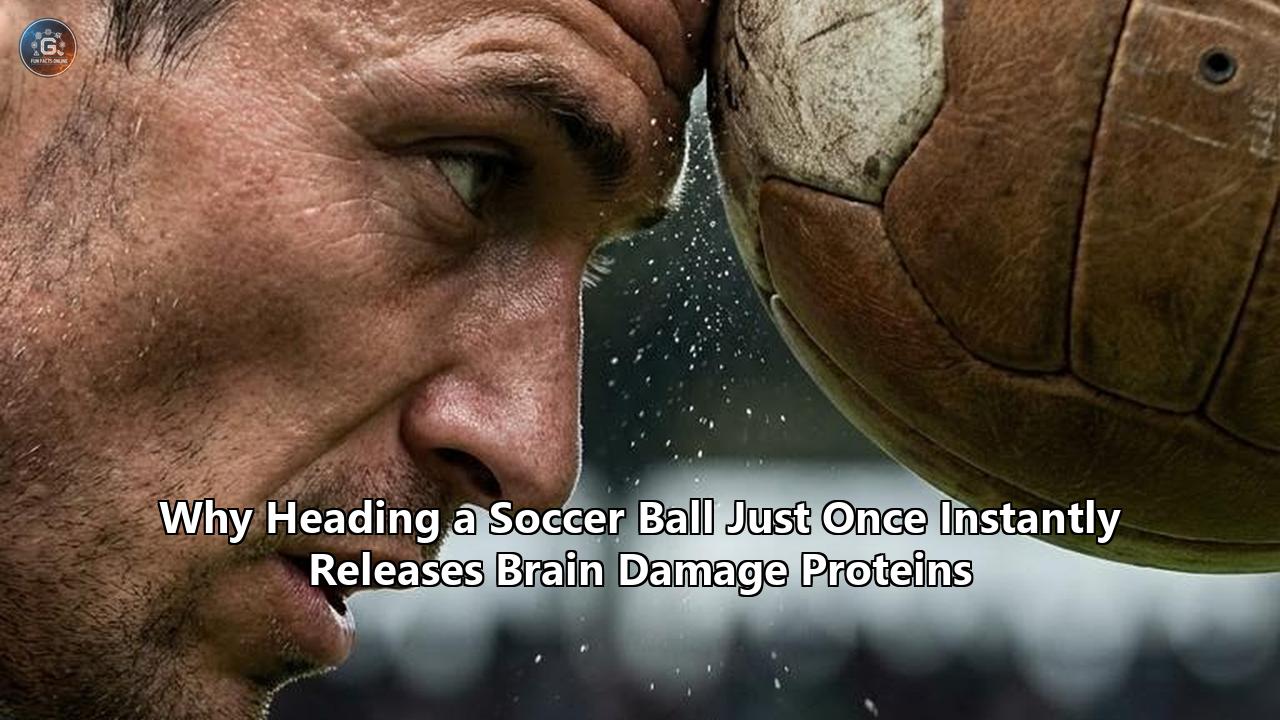
A player leaps to meet a high, looping cross, positioning their forehead to redirect the ball. In the context of a match, it is an ordinary play, executed millions of times daily across the globe. There is no head-to-head collision, no signs of a concussion, and no stoppage of play. Yet beneath the skull, a quiet, immediate biochemical cascade has already begun.
A study published in JAMA Neurology has revealed that heading a soccer ball just once is enough to trigger the immediate release of brain-damage-related proteins into a player’s bloodstream. Conducted by researchers at the Amsterdam University Medical Center, the study showed that subconcussive impacts from routine headers cause immediate, measurable changes in biomarkers associated with acute brain cell damage and neurodegenerative diseases like Alzheimer's.
The finding introduces a critical challenge for the world's most popular sport. It alters the debate surrounding soccer heading brain injury from a discussion about the cumulative effects of decades of professional play to an immediate question of acute, play-by-play cellular trauma. For years, sports medicine focused heavily on concussions—events with visible symptoms like dizziness, nausea, or loss of consciousness. But this research shifts the spotlight to the subclinical, everyday actions of the game, forcing scientists, coaches, and sports governing bodies to confront the reality that even "safe" headers may not be safe at all.
The Dutch Landmark Study: Deciphering the Discovery
To capture these immediate biological shifts, researchers at Amsterdam University Medical Center, led by Marsh Königs, an assistant professor of developmental neuroscience, designed an observational study tracking 302 amateur male soccer players in the Netherlands. Rather than using artificial laboratory settings or controlled drills, the team observed players across 11 high-level amateur matches played under official refereeing and real-game conditions.
The study’s methodology was exceptionally rigorous to isolate the exact impact of heading. The research team videotaped every match, cataloging every single header executed by the players. They classified each header based on various parameters, including "high-impact headers," defined as those where the ball traveled more than 20 meters after making contact with the head—such as clearances, long crosses, or goal kicks.
To control for the physiological effects of running, sprinting, and physical exertion, players wore local position measurement (LPM) transponders and heart rate sensors. This allowed researchers to isolate the biochemical signals caused by head impacts from those caused by intense cardiovascular exercise, which is known to transiently affect blood-brain barrier permeability.
Blood samples were drawn from the participants at three precise intervals: before the match, immediately after the match, and again 24 to 48 hours later. The researchers analyzed the blood for six specific biomarkers known to indicate brain damage.
The results were stark:
- Even a single header was sufficient to cause a significant, immediate rise in the blood concentration of S100B, a protein produced by star-shaped brain support cells called astrocytes. Players who executed at least one header during the match showed elevated S100B levels compared to those who did not head the ball at all.
- Repetitive or high-impact headers amplified the damage. Players who performed more than two headers, or who executed multiple high-impact headers, showed a substantial rise in p-tau217 (phosphorylated tau-217), a protein that serves as one of the primary blood-based biomarkers for Alzheimer’s disease.
- Dose-Response Relationship: The study demonstrated a clear correlation between the frequency and force of the headers and the concentration of these brain-damage proteins in the blood. The more headers a player completed, and the harder the impacts, the higher the levels of S100B and p-tau217 rose.
While both biomarkers returned to baseline levels within 24 to 48 hours, the study authors emphasized that this temporary elevation does not mean the brain escaped unharmed. "It's not the rise in biomarkers itself but rather what it reflects, which is concerning," explained Königs. The rapid appearance of these proteins in the blood means that the mechanical stress of heading a soccer ball physically disrupts brain cells, forcing intracellular proteins to leak out of damaged neurons and astrocytes, slip past the blood-brain barrier, and enter the systemic circulation.
The Biological Culprits: What S100B and p-tau217 Reveal About Brain Stress
To understand why these findings are so troubling, one must look at the specific functions and locations of the proteins detected in the blood.
S100B: The Sentinel of Astrocyte Damage
S100B is a calcium-binding protein found predominantly in astrocytes, the star-shaped glial cells that form the structural and metabolic support network of the central nervous system. Astrocytes play a critical role in maintaining the extracellular environment of the brain, regulating blood flow, and supporting the blood-brain barrier.
Under normal conditions, S100B is kept inside the astrocytes or released in trace amounts to facilitate cell growth. However, when the brain experiences mechanical trauma, astrocytes are stretched, sheared, or torn. This physical distortion compromises their cell membranes, causing S100B to spill into the brain's extracellular fluid.
Because S100B is a relatively small molecule, it quickly crosses the compromised blood-brain barrier and enters the bloodstream. In clinical medicine, S100B is widely used as a rapid-screening biomarker for traumatic brain injury (TBI). Emergency department clinicians often measure S100B to determine whether a patient who sustained a head impact requires a CT scan. Finding elevated S100B in soccer players after a single, unremarkable header indicates that even low-level, routine impacts are physically disruptive enough to cause astrocyte stress and compromise blood-brain barrier integrity.
P-tau217: The Structural Failure of Axons
While S100B represents damage to the brain’s supporting cells, p-tau217 indicates direct structural damage to the neurons themselves.
Neurons transmit electrical and chemical signals along long, cable-like structures called axons. Inside these axons is a network of microtubule tracks, which act as a cellular railway system to transport nutrients and molecules. Tau is a structural protein that acts like railroad ties, stabilizing and holding these microtubules in place.
When the brain is subjected to sudden acceleration and deceleration—such as when the forehead strikes a soccer ball flying at high speed—the brain tissue shifts and slides within the skull. This mechanical stress exerts pulling, stretching, and shearing forces on the delicate axons.
As the axons are stretched, the mechanical tension detaches tau proteins from the microtubule scaffolding. Once free-floating, specific enzymes in the brain modify the detached tau through phosphorylation, converting it into various forms of phosphorylated tau, including p-tau217.
In recent years, p-tau217 has emerged as the most sensitive and reliable blood-based biomarker for diagnosing Alzheimer’s disease and tracking its progression. In Alzheimer's patients, abnormal hyperphosphorylation of tau leads to the formation of neurofibrillary tangles, which choke and kill brain cells. Finding elevated p-tau217 in young, healthy amateur athletes immediately after heading a soccer ball indicates that soccer-related head impacts initiate the exact same biological pathways of axonal shearing and tau detachment that characterize chronic neurodegenerative disease.
The Subclinical Paradox
The biomarker elevations observed in the Dutch study did not cross the clinical diagnostic thresholds used in emergency departments to diagnose a concussion or moderate TBI. However, these clinical cutoffs are designed to detect acute, life-threatening brain swelling or severe structural damage. They are not calibrated to catch subtle, subclinical cellular injuries.
The fact that these proteins rose significantly above baseline—even if they remained below clinical diagnostic limits—shows that heading causes subconcussive damage. Because this damage occurs silently without causing immediate cognitive dysfunction or concussion symptoms, players continue to head the ball, unaware that they are compounding microscopic cellular injuries with every match.
The Physics of Heading: From Linear Forces to Skull Pressure Waves
To understand why a single header can cause such immediate cellular disruption, we must examine the physics of ball-to-head contact.
A soccer ball is not soft. When inflated to match standards, a size 5 ball has an internal pressure of 8.5 to 15.6 psi and a weight of roughly 410 to 450 grams. During a match, shots, crosses, and clearances can easily travel at velocities between 50 and 80 miles per hour (80 to 130 km/h).
When a player heads a ball traveling at these speeds, the impact delivers a massive amount of kinetic energy to the skull. Biomechanical research has shown that a high-velocity header, such as one from a corner kick, can deliver up to 500 pounds of force to the head, albeit for a fraction of a millisecond. During this collision, the player's head experiences rapid linear and rotational accelerations ranging from 30g to 70g. For comparison, this is the same level of acceleration experienced by American football linemen engaging in head-first, helmet-to-helmet collisions during a tackle.
| Activity / Event | G-Force (g) |
|---|---|
| Roller coaster ride (max) | 4g – 6g |
| High-velocity soccer header (corner kick) | 30g – 70g |
| American football lineman head-on tackle | 30g – 80g |
| Severe automotive crash (with airbag) | 60g – 100g |
When this force is applied to the forehead, the skull is suddenly pushed backward, while the brain—suspended in cerebrospinal fluid—initially lags behind due to inertia. This causes the frontal lobe of the brain to slam against the hard interior of the frontal bone. As the head then whips back, the brain rebounds, striking the rear of the skull (the coup-contrecoup phenomenon).
The Discovery of the Frontal Pressure Wave
While acceleration and deceleration forces have long been studied, a study published in April 2026 by researchers at the Loughborough University Sports Technology Institute uncovered an entirely new mechanism of injury.
Funded philanthropically by England’s Football Association (FA), the Loughborough team simulated ball-to-head impacts at realistic match speeds using an advanced surrogate head model equipped with high-speed internal sensors. For the first time, researchers detected a distinctive, high-frequency pressure wave that travels directly through the skull and frontal brain tissue upon impact.
This pressure wave acts like a shockwave, transferring intense mechanical energy directly into the brain's frontal region. The discovery of this pressure wave explains how the brain can sustain localized tissue damage even if the overall linear or rotational acceleration of the head is kept low by a player’s neck muscles.
The Loughborough study also revealed that the intensity of this pressure wave varies drastically depending on the design and material of the ball. Comparing modern synthetic balls with heavy, leather-laced balls from the mid-20th century, researchers found that the magnitude of energy transferred into the brain by the pressure wave varied by up to 55 times. While modern balls do not absorb water like the old leather balls—which became notoriously heavy in the rain—their stiffer, highly pressurized synthetic casings can still generate substantial shockwaves that travel directly into the frontal lobe.
The Cumulative Threat: Why 'No Concussion' Doesn't Mean No Damage
The central issue revealed by the 2026 JAMA Neurology study is not that a single header will cause permanent brain damage on its own. The human brain has remarkable repair mechanisms, and the rapid return of S100B and p-tau217 to baseline within 48 hours indicates that the brain works to clear these toxic proteins and heal cellular structures after isolated impacts.
The crisis lies in the cumulative nature of the sport. An active soccer player does not head the ball just once and then rest for 48 hours. Over the course of a single match, an individual player may head the ball six to twelve times. Across a single season, including training sessions, a player might execute hundreds or even thousands of headers. For a career spanning youth leagues, high school, college, and professional play, the total number of headers can easily reach 10,000 to 20,000.
When the brain is subjected to repeated subconcussive impacts day after day, the cellular repair mechanisms are overwhelmed. The microscopic damage does not fully heal before the next impact occurs. Over time, this chronic, unresolved cellular stress triggers a cascade of permanent neurological decay.
The Progression to CTE and Inflammation
A study published in early 2025 provided a detailed look at this progression. By analyzing post-mortem brain tissue from former contact sports athletes, researchers found that years of repeated head trauma kill neurons, damage white matter tracts, and trigger chronic, low-grade brain inflammation.
Specifically, repeated subconcussive impacts activate microglia—the brain’s resident immune cells. Under normal conditions, microglia clear cellular debris and protect the brain. However, when chronically stimulated by repeated impacts, they shift into a pro-inflammatory state, releasing neurotoxic cytokines that inadvertently destroy healthy neurons and break down neural pathways.
This chronic inflammation and axonal damage lay the groundwork for Chronic Traumatic Encephalopathy (CTE). CTE is a progressive neurodegenerative disease characterized by the abnormal accumulation of hyperphosphorylated tau protein in a unique pattern—deep in the sulci of the cerebral cortex and around blood vessels. The symptoms of CTE include:
- Memory loss and cognitive decline
- Severe depression and mood swings
- Impulsive behavior and aggression
- Progressive dementia and motor difficulties (similar to Parkinson's disease)
Initially thought to affect only boxers (where it was known as dementia pugilistica), CTE has now been widely diagnosed in former American football players, rugby players, and soccer players.
The FIELD Study: Unmasking the Real-World Risk
The real-world consequences of this cumulative damage were unmasked by the landmark FIELD (Football's InfluencE on Lifelong health and Dementia risk) study, led by Dr. Willie Stewart, a neuropathologist at the University of Glasgow.
The FIELD study analyzed the medical records of more than 7,600 former professional soccer players in Scotland, comparing them to over 23,000 matched individuals from the general population.
The epidemiological findings were shocking:
- Former professional soccer players had a 3.5 times higher rate of death from neurodegenerative diseases, including Alzheimer's, motor neuron disease (ALS), and Parkinson's, compared to the general public.
- The risk of developing dementia was directly tied to a player’s field position. Goalkeepers, who rarely head the ball, showed no elevated risk of neurodegenerative disease compared to the control group.
- In contrast, outfield players had significantly elevated risks, with defenders—who head the ball most frequently—facing a 5-fold increased risk of developing neurodegenerative diseases.
- The risk also increased with the length of a player's career, establishing a clear exposure-response relationship between playing soccer and permanent brain decay.
| Position | Relative Risk Factor (vs. General Population) |
|---|---|
| General Population (Control) | 1.0x (Baseline) |
| Goalkeepers (Rarely head) | 1.0x (No elevated risk) |
| Midfielders | 3.0x – 4.0x |
| Defenders (Most frequent headers) | 5.0x |
The 2026 JAMA Neurology study provides the crucial biological explanation for the FIELD study's findings. By showing that even a single header initiates the release of p-tau217 and S100B, science has finally linked the acute physical act of heading directly to the long-term molecular pathways of brain damage and dementia.
Youth Soccer at a Crossroads: Implementing Direct Policy Solutions
Faced with mounting, undeniable evidence of the dangers of soccer heading brain injury, sports medicine experts, parent groups, and soccer governing bodies are shifting from passive observation to active intervention. The long-held defense that "more research is needed" is no longer tenable in light of the 2026 biomarker and pressure wave studies.
Governing bodies have recognized that the most vulnerable population is youth players. Children and adolescents have developing brains that are highly sensitive to trauma. Furthermore, youth players have larger head-to-body ratios, weaker neck muscles, and less myelinated axons, making their brains far more susceptible to the shear forces of head impacts.
The FA’s Phased Ban on Deliberate Heading
England’s Football Association (FA) has been at the forefront of policy reform, leveraging the International Football Association Board (IFAB) trials to fundamentally reshape youth soccer.
Beginning in the 2024–25 season, the FA introduced a landmark rule to phase out deliberate heading in matches for all grassroots youth soccer between the Under-7 (U7) and Under-11 (U11) levels over three seasons. The phase-out is structured as follows:
- 2024–25 Season: Deliberate heading was banned in matches for U7, U8, and U9 age groups.
- 2025–26 Season: The ban expanded to include the U10 age group.
- 2026–27 Season: The ban is fully implemented to include the U11 age group.
To enforce this, the FA established the Deliberate Header Restart rule. If a player in these age groups deliberately heads the ball during a match, the referee stops play and awards an indirect free kick to the opposing team. If a player deliberately heads the ball within their own penalty area, the play is stopped, and the opposing team is awarded an indirect free kick taken from the nearest sideline of the penalty area, preventing a direct penalty kick and avoiding a punitive game-changing scenario for an instinctive physical act.
Crucially, the FA designed these changes not just to protect the brain, but to improve the technical quality of youth soccer. By removing the long, high-ball clearances that force heading, youth matches are played on the ground. Coaches are forced to teach passing, dribbling, and spatial awareness, leading to more active playing time and greater technical mastery of the ball.
As players transition to the Under-12 level and enter secondary school, heading is introduced gradually with strict training limitations. Coaches are advised to limit heading practice to a maximum of one session per week, with no more than five headers using extremely light, under-inflated balls or sponge balls, always in an unopposed (non-contact) setting.
The U.S. Soccer Federation Standards
In the United States, the U.S. Soccer Federation (USSF) has maintained strict heading guidelines since 2015, which serve as a model for youth sports safety:
- U10 and Under: Deliberate heading is completely banned in both training and matches. Just like the FA rules, deliberate heading results in an indirect free kick for the opposing team.
- U11 to U13: Heading is permitted in matches, but strictly limited in training to a maximum of 30 minutes per week, with no more than 15 to 20 headers per player, per week.
- Concussion Substitutions: To remove the pressure on players and coaches to play through head trauma, USSF implemented a rule where substitutions made due to suspected head injuries do not count against a team's total limit of allowed substitutions.
These policy interventions represent a massive step forward, but experts agree they only address one part of the problem. While youth players are increasingly protected, millions of high school, collegiate, and professional players continue to head highly pressurized balls at full speed without restrictions during matches.
Technological and Physical Shields: Neck Strength, Ball Redesigns, and Biomarker Monitoring
To address the danger of soccer heading brain injury across all levels of play, scientists and sports leaders are turning to physical training, technological innovations, and equipment redesigns.
Targeted Neck Strength Training
One of the most effective, low-tech solutions to mitigate head acceleration during heading is targeted cervical (neck) strengthening.
The brain's movement inside the skull during a header is dictated by how much the head whips back upon impact. If a player has a weak, relaxed neck, the impact of the ball will cause the head to undergo rapid, uncontrolled acceleration. However, if the player has a strong, stiff neck and actively tenses their neck muscles prior to impact, the head and neck are effectively locked to the torso. This increases the effective mass absorbing the blow, transferring the force of the ball down into the shoulders and body, thereby drastically reducing the acceleration experienced by the brain.
               [ Soccer Ball ]  ──► Velocity (80 km/h)
                      │
                      ▼
               [ Forehead Contact ]
              /                  \
             /                    \
   (Weak / Relaxed Neck)     (Strong / Tensed Neck)
             │                             │
    Rapid Head Whip-Back          Head Locked to Torso
             │                             │
  High Brain Acceleration      Force Distributed to Body
             │                             │
    Axonal Shearing &             Minimal Brain Tissue
    Biomarker Release                  Distortion
Research has consistently validated this approach:
- A study published in the Journal of Orthopaedic and Sports Physical Therapy found that overall neck strength is a primary predictor of concussion risk. For every one pound of neck strength an athlete gains, their risk of sustaining a concussion or head injury decreases by 5%.
- A 2025 report in the Youth Sports Business Report emphasized that neck strengthening is particularly vital for female soccer players. On average, female players have less neck muscle mass and smaller neck circumferences than their male peers, which contributes to the statistically higher rates of concussion and more severe, long-lasting symptoms reported by female athletes.
- Organizations like United Soccer Coaches have developed specific, easily integrated youth neck-strengthening programs. These protocols involve neuromuscular exercises, such as resisted cervical flexion, extension, lateral flexion, and rotation, which can be completed in just 10 minutes twice a week during warm-ups without any specialized gym equipment.
Redesigning the Ball to Minimize Pressure Waves
The discovery of the Loughborough University pressure wave has opened up an entirely new avenue for preventive equipment design. Previously, soccer ball manufacturers focused primarily on aerodynamics, water resistance, and flight stability. Now, they must design for brain safety.
Loughborough researchers, led by Professor Andy Harland, are working with major sporting goods manufacturers to design balls that minimize the transfer of pressure wave energy to the skull. By adjusting the stiffness of the outer casing, utilizing multi-layered energy-absorbing foam beneath the synthetic leather, and reducing the required internal inflation pressure, engineers can create balls that deform more upon impact. This deformation dampens the shockwave, dispersing the kinetic energy across the surface of the ball rather than transmitting a direct pressure wave through the player's frontal lobe.
Furthermore, research has shown that using balls of lower mass and lower internal pressure during training sessions significantly reduces the G-forces experienced by the brain. Simply lowering the inflation pressure of training balls to the minimum allowable standard can significantly decrease the mechanical stress on players' brains during repetitive drills.
Next-Generation Monitoring: Smart Mouthguards and Rapid Testing
At the elite level, technology is being deployed to monitor head impacts in real-time.
Professional and collegiate teams are increasingly adopting smart mouthguards equipped with triaxial accelerometers and gyroscopes. Unlike sensors placed on helmets or headbands—which can slip and provide inaccurate data—mouthguards bond directly to the upper teeth, providing an extremely accurate measurement of the exact linear and rotational forces experienced by the skull.
These devices allow medical staff to track a player’s cumulative "g-load" across training and matches. If a player exceeds a pre-determined threshold of cumulative head acceleration, they can be pulled from training or rested, allowing the brain time to clear proteins and heal micro-injuries before permanent damage occurs.
Additionally, the development of rapid, finger-prick blood tests for biomarkers like S100B and p-tau217 represents the future of pitch-side diagnostics. While currently confined to laboratory analysis, researchers are working on handheld point-of-care devices that could measure a player’s biomarker levels within minutes. In the future, a player who sustains a high-impact collision or heads the ball multiple times could have their blood analyzed on the sideline to determine whether cellular brain stress has occurred, providing an objective, biological basis for return-to-play decisions.
Summary of Challenges and Solutions in Soccer Heading Brain Injury
The following table outlines the key problems identified by recent research and the corresponding scientific, policy, and training solutions currently being implemented across the sport.
| Identified Challenge / Problem | Biological & Physical Mechanism | Implemented / Proposed Solution |
|---|---|---|
| Acute Cell Damage from Single Headers | Astrocytes shear and release S100B; axons stretch and release p-tau217. | Sideline Biomarker Monitoring: Point-of-care blood tests to track real-time brain stress and mandate rest periods. |
| Frontal Lobe Pressure Waves | Contact with stiff, pressurized balls sends a high-frequency shockwave through the skull. | Ball Redesign: Engineering multi-layered, energy-absorbing casing materials to dampen pressure wave energy. |
| Cumulative Neurodegeneration & Dementia | Repetitive subconcussive impacts trigger microglial activation, brain inflammation, and CTE. | Training Limits: Restricting adult training sessions to a maximum of 10 high-force headers per week. |
| High Vulnerability in Youth Players | Developing brains, larger head-to-body ratios, and weak neck muscles amplify shear forces. | Phased Heading Bans: Total ban on deliberate heading in matches and training for U11 and below. |
| Uncontrolled Head Acceleration | Weak neck muscles fail to stabilize the head upon ball contact, causing severe brain tissue whip-back. | Neuromuscular Neck Strengthening: Integrating 10-minute neck-conditioning protocols into standard warm-ups. |
Forward-Looking Perspective: What to Watch For Next
The revelation that a single soccer header instantly releases brain-damage proteins into the blood has dismantled the long-standing boundary between "concussive" and "safe" play. Managing the risk of soccer heading brain injury is no longer just about identifying injured players on the pitch; it is about acknowledging that the fundamental mechanics of the sport, as currently played, cause microscopic, repetitive brain trauma.
Moving forward, the sport faces several critical milestones and unresolved questions:
- Will Heading Ever Be Banned in Adult Soccer? While a complete ban on heading in professional and adult amateur soccer remains highly unlikely due to the cultural and tactical nature of the sport, the pressure to implement stricter training limits will grow. Watch for whether FIFA and UEFA mandate a maximum cap on headers in training sessions across all professional leagues, mirroring the limits already set by the English FA.
- Long-Term Longitudinal Studies: Researchers are now initiating long-term studies to track young players who grew up under the U11 heading bans. Over the next decade, cognitive testing and advanced neuroimaging will reveal whether these early-life interventions successfully lower the rates of microstructural white matter damage and cognitive decline in early adulthood.
- The Evolution of Ball Standards: Watch for FIFA to introduce new "brain safety" certification standards for match balls. Future regulations could require match balls to pass dynamic pressure-wave testing, forcing manufacturers to prioritize energy dissipation alongside traditional aerodynamic properties.
- Legal and Financial Pressures: As the scientific link between subconcussive soccer heading and diseases like CTE or Alzheimer's becomes legally indisputable, soccer leagues and national associations will face mounting product-liability and personal-injury lawsuits from retired players and their families. This financial liability may ultimately be the driving force that compels the sport to adopt radical rule changes, such as eliminating long goal kicks or restricting heading entirely to the penalty area.
Ultimately, the goal of sports medicine is not to destroy the beautiful game, but to save it. By utilizing advanced biomarker tracking, physical conditioning, and innovative equipment design, soccer has a viable path forward—one where players can showcase their athletic brilliance on the pitch without sacrificing their neurological future.
Reference:
- https://en.wikipedia.org/wiki/Header_(association_football))
- https://www.ecoportal.net/en/soccer-header-brain-damage/22952/
- https://www.livescience.com/health/neuroscience/heading-a-soccer-ball-just-once-is-enough-to-raise-levels-of-proteins-associated-with-brain-damage
- https://www.turkiyetoday.com/sports/single-header-alters-football-players-brain-chemistry-study-finds-3221146
- https://www.rutgers.edu/news/athletes-should-build-neck-strength-avoid-concussions-rutgers-researchers-recommend
- https://gigazine.net/gsc_news/en/20260602-heading-soccer-ball-brain-damage-proteins/
- https://www.youtube.com/watch?v=R9sUB5DX-Lw
- https://fperrywilson.medium.com/soccer-headers-acutely-raise-brain-damage-biomarkers-896337b48fff
- https://www.orthocarolina.com/blog/heading-the-ball-in-soccer-is-it-safe
- https://www.lboro.ac.uk/news-events/news/2026/april/pressure-wave-energy-in-football-heading/
- https://pmc.ncbi.nlm.nih.gov/articles/PMC10496449/
- https://oss.scot/traumatic-brain-injury-related-neurodegeneration-among-ex-professional-footballers-and-rugby-players/
- https://www.theguardian.com/football/2021/aug/02/football-should-consider-eliminating-heading-come-with-health-warning-dementia-expert-dr-willie-stewart
- https://www.neuro-central.com/videos/what-is-next-following-the-field-study-an-interview-with-willie-stewart/
- https://ukabif.org.uk/news/475073/The-FIELD-Study-published-in-the-New-England-Journal-of-Medicine.htm
- https://youthsportsbusinessreport.com/the-overlooked-shield-how-neck-strength-training-can-reduce-concussion-risk-in-youth-athletes/
- https://www.hertfordshirefa.com/news/2024/may/17/new-heading-rules
- https://www.englandfootball.com/participate/learn/brain-health/heading-in-football
- https://pmc.ncbi.nlm.nih.gov/articles/PMC9528716/