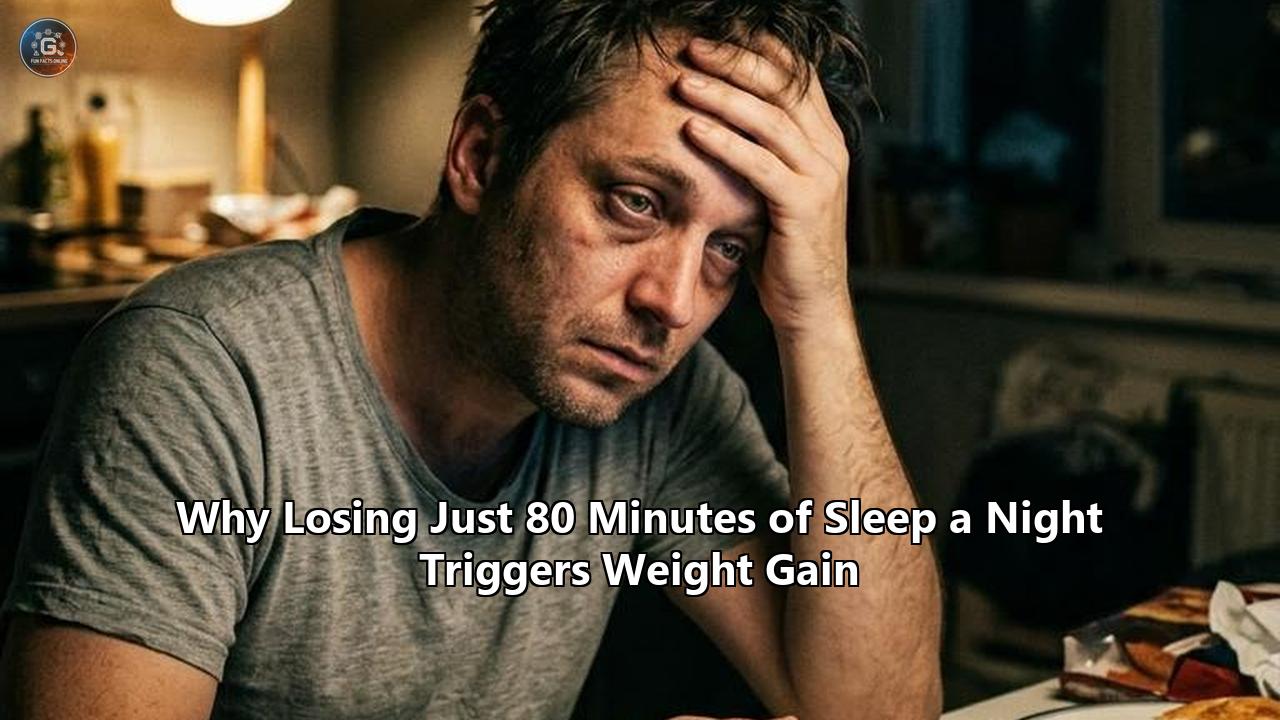
The seemingly benign habit of delaying bedtime by an hour and a half—whether to scroll through social media, finish a television episode, or answer late-night emails—carries a metabolic price tag far steeper than simple morning grogginess.
A study from Columbia University Vagelos College of Physicians and Surgeons, published in the Annals of Internal Medicine, reveals that cutting sleep by just 80 minutes a night over a six-week period triggers a cascade of physiological and behavioral changes that result in measurable weight gain.
The trial tracked 95 adults who habitually slept between seven and eight hours per night. Utilizing a randomized crossover design, researchers evaluated participants across two distinct six-week phases: one in which they maintained their habitual sleep schedule, and another in which they delayed their bedtime by 90 minutes, translating to an average loss of 78.4 minutes of actual shut-eye each night.
The results were immediate and striking. After six weeks of mild sleep restriction, participants gained an average of approximately one pound (0.45 kg), experienced a half-centimeter increase in waist circumference, and showed a significant rise in whole-body volume.
More surprising, however, was how they gained this weight. Rather than exhibiting the ravenous hunger and extreme hormone spikes classically observed in severe sleep deprivation, participants became significantly more inactive. Sedentary time increased by an average of 17 minutes per day, ballooning to nearly 30 minutes per day among men and postmenopausal women.
This "inactivity paradox" occurred despite the fact that participants were awake longer, exposing a silent behavioral adaptation that drives the connection between sleep deprivation and weight gain.
Columbia University Study at a Glance:
+------------------------+---------------------------------------+
| Study Parameter        | Observation under Sleep Restriction   |
+------------------------+---------------------------------------+
| Sleep Loss             | ~78.4 minutes less per night          |
| Duration               | 6 weeks                               |
| Average Weight Gain    | +1 pound (0.45 kg)                    |
| Waist Circumference    | +0.52 cm                              |
| Sedentary Time Increase| +17.2 mins/day (up to 30 mins for men/  |
|                        | postmenopausal women)                 |
+------------------------+---------------------------------------+
While a one-pound gain over six weeks may appear modest, researchers warn that this slow, insidious accumulation compiles into clinically significant obesity over months and years. The study represents a critical departure from previous sleep research, shifting the scientific consensus away from extreme laboratory sleep deprivation and toward the subtle, chronic shortfalls that characterize modern adult life.
Methodological Showdown: Extreme Lab Deprivation vs. Real-World Restriction
To understand why these findings are so pivotal, it is necessary to contrast the methodologies that have historically dominated metabolic sleep research. For decades, the scientific community relied almost exclusively on short-term, highly controlled inpatient studies to establish the biological links between sleep deprivation and weight gain.
The Extreme Laboratory Paradigm
In a typical classic sleep study, healthy volunteers are admitted to a metabolic ward, completely isolated from external cues, and restricted to a grueling four hours of sleep per night for three to five consecutive days.
- The Trade-Offs: These studies offer exceptional internal validity. Researchers can precisely measure every calorie consumed, control light exposure, and monitor blood markers on an hourly basis.
- The Limitation: Such extreme protocols lack ecological validity. Human beings rarely tolerate a four-hour sleep limit for more than a few days before experiencing severe cognitive and physical collapse. Consequently, these studies only demonstrate how the body reacts to acute, catastrophic stress, rather than chronic lifestyle habits.
The Columbia Outpatient Paradigm
The Columbia University trial utilized an outpatient, free-living crossover model. Participants slept in their own beds, managed their own diets, and navigated their usual work and family routines. They were simply instructed to delay their bedtime by 90 minutes.
- The Trade-Offs: Because participants were in their natural environments, researchers could not strictly control every bite of food consumed.
- The Strength: The study captured real-world behaviors. By utilizing wrist-worn accelerometers to track movement and sleep, and conducting comprehensive MRIs to measure body composition changes, the researchers mapped the precise, slow-burning progress of metabolic erosion as it actually occurs in the general population.
This methodological shift reveals that the human body does not need to be pushed to the brink of exhaustion to experience metabolic dysfunction. A simple, daily 80-minute deficit—the exact amount of sleep lost by millions of commuting, screen-using, and stressed working adults—is more than enough to tilt the physiological scale toward weight gain.
The Endocrine Battleground: Traditional Cravings vs. The Chronic Leptin Paradox
The most scientifically provocative finding of the Columbia study lies in the hormone data, which directly challenges the long-standing endocrine model of sleep-induced weight gain.
The Traditional Endocrine Model
For over twenty years, the prevailing theory held that sleep deprivation causes weight gain primarily by manipulating the dual appetite-regulating hormones: ghrelin and leptin.
- Ghrelin: Synthesized primarily in the stomach, ghrelin acts as an "orexigenic" hormone, signaling the hypothalamus to stimulate hunger and seek out energy-dense foods.
- Leptin: Synthesized by adipose (fat) tissue, leptin serves as an "anorexigenic" mediator, communicating to the brain that the body has sufficient energy stores, thereby suppressing appetite.
Under acute, severe sleep restriction (such as four hours of sleep), this hormonal seesaw breaks down. Ghrelin spikes by as much as 15% to 28%, while leptin drops by 18% to 20%.
The brain interprets this sudden hormone shift as a state of acute starvation, driving intense, near-insatiable cravings for high-carbohydrate, high-fat, and sugar-laden foods. Under this model, weight gain is viewed almost entirely as an energy-intake problem driven by a compromised, hyper-hungry brain.
Acute vs. Chronic Sleep Restriction Hormonal Profiles:
+-------------------------+-------------------------+-------------------------+
| Biological Marker       | Acute Severe Restriction| Chronic Mild Restriction|
|                         | (Traditional Model)     | (Columbia 2026 Model)   |
+-------------------------+-------------------------+-------------------------+
| Ghrelin (Hunger)        | Significant Spike       | No Significant Change   |
| Leptin (Satiety)        | Significant Drop        | Elevated (+2.03 ng/mL)  |
| GLP-1 (Incretin/Satiety)| Diminished              | No Change               |
| Energy Balance Driver   | Excessive Caloric Intake| Sedentary Compensation  |
| Primary Outcome         | Acute Hyperphagia       | Gradual Fat & Vol. Gain |
+-------------------------+-------------------------+-------------------------+
The Chronic Leptin Paradox
In the Columbia study, which looked at mild, six-week sleep restriction, this classical hormonal signature did not materialize.
- Ghrelin levels did not spike; in fact, they showed a slight, non-significant downward trend.
- GLP-1 (glucagon-like peptide-1), a crucial gut hormone that promotes postprandial satiety and slows gastric emptying, remained entirely unchanged.
- Leptin levels, rather than plummeting, actually increased by an average of 2.03 ng/mL.
At first glance, elevated leptin during sleep restriction seems highly counterintuitive. If leptin suppresses hunger, why would individuals with higher leptin levels gain weight?
This clinical phenomenon is known as the leptin paradox, and it points directly to the development of leptin resistance. When the body is subjected to sustained, low-grade metabolic stress—such as chronic, mild sleep deprivation—leptin levels rise in tandem with the accumulation of adipose tissue.
However, the brain's leptin receptors in the arcuate nucleus of the hypothalamus become increasingly desensitized to the signal. Even though leptin is circulating in high quantities, the brain fails to register the satiety signal, resulting in a state of functional starvation amid plenty.
This hormonal gridlock indicates that chronic sleep restriction alters the baseline set-point of energy regulation, quietly facilitating weight gain without the dramatic, obvious hunger spikes seen in acute laboratory settings.
The Inactivity Paradox: Why Extra Waking Hours Breed Sedentary Habits
Perhaps the most disruptive finding of the Columbia trial is the "inactivity paradox". Simple physics and thermodynamic models would suggest that if a person is awake for an additional 90 minutes each day, they should naturally expend more energy.
After all, being conscious requires movement, standing, speaking, and interacting with the environment—all of which burn more calories than lying completely still in a state of slow-wave or REM sleep.
Yet, the objective accelerometer data collected during the study proved the exact opposite: on nights when sleep was shortened, participants grew significantly more inactive, adding an average of 17 minutes of sedentary behavior to their daily routines.
This increase in sedentary time remained pronounced even after the researchers mathematically controlled for the fact that participants simply had more waking hours available in which they could have moved.
Average Daily Sedentary Time Increase (SR vs. AS):
==================================================
Overall Cohort:       [███████████████] +17.2 mins
Men & Postmenopausal: [██████████████████████████████] +30 mins
==================================================
This behavioral compensation is closely tied to the collapse of Non-Exercise Activity Thermogenesis (NEAT). NEAT encompasses all the energy expended during daily life that is not structured, intentional exercise. It includes:
- Fidgeting, tapping feet, and pacing while on phone calls.
- Maintaining posture, standing rather than sitting, and walking from room to room.
- Spontaneous, micro-movements driven by baseline physical vigor.
NEAT is highly sensitive to the body's perceived energy reserves. When a person loses just 80 minutes of sleep, the prefrontal cortex and the motor control centers of the brain experience a subtle, low-grade neural fatigue.
While the individual might still attend their scheduled 45-minute gym session—explaining why the study observed no drop in moderate-to-vigorous physical activity—their brain quietly and systematically clawed back energy throughout the rest of the day.
Instead of pacing while speaking, they sat. Instead of standing to wash dishes immediately, they left them for later. Instead of taking the stairs, they chose the escalator.
This behavioral adaptation is completely unconscious. The human brain, operating on evolutionary mechanisms designed to conserve energy during times of perceived physical stress, treats sleep restriction as a signal to preserve fuel.
By draining the spontaneous physical drive that fuels NEAT, chronic mild sleep loss creates a quiet energy surplus, turning those extra 90 minutes of wakefulness into 90 minutes of metabolic stagnation.
Sex, Hormones, and Menopause: Who is Most Vulnerable?
The Columbia University study did not find a uniform response across all participants. Rather, it highlighted significant, sex-specific vulnerabilities, particularly concerning men and postmenopausal women, both of whom experienced a near-doubling of sedentary behavior—adding up to 30 minutes of sitting time per day—when sleep-deprived.
To understand why postmenopausal women and men show such pronounced susceptibility to the sleep-deprivation-sedentary axis, we must examine the intersection of sex hormones and circadian biology.
The Protective Shield of Estrogen
In premenopausal women, circulating estrogen (specifically estradiol) serves as a potent metabolic and behavioral protector. Estradiol interacts directly with estrogen receptor alpha (ERα) in the hypothalamus to regulate energy expenditure, voluntary physical activity, and body fat distribution.
Estrogen acts as a natural stimulant for voluntary physical movement and helps maintain baseline NEAT, even under conditions of mild physical stress or fatigue. Furthermore, estrogen promotes the subcutaneous storage of fat rather than the more dangerous visceral fat that accumulates around abdominal organs.
The Postmenopausal Metabolic Shift
When women transition through menopause, estradiol levels drop precipitously. This hormonal withdrawal alters the hypothalamic signaling pathways, reducing baseline energy expenditure and predisposing women to a more sedentary state.
When you layer chronic sleep restriction on top of this postmenopausal state, the metabolic safety net is entirely gone. Lacking the stimulatory effect of estrogen on the central nervous system, postmenopausal women experience a much more severe drop in spontaneous physical activity when fatigued.
Furthermore, sleep restriction in postmenopausal women has been shown to heavily accelerate insulin resistance. In a previous subset analysis of the Columbia cohort, women with elevated cardiometabolic risk who reduced their sleep by 80 minutes developed profound insulin sensitivity deficits, with the most severe impairments occurring in the postmenopausal subgroup.
The Estrogen Defense: Why Menopause Magnifies Sleep-Induced Weight Gain
+-------------------------+-------------------------+-------------------------+
| Physiological Pathway   | Premenopausal State     | Postmenopausal State    |
|                         | (High Estrogen)         | (Low Estrogen)          |
+-------------------------+-------------------------+-------------------------+
| Hypothalamic Vigor      | High; preserves baseline| Low; baseline energy    |
|                         | energy and movement     | expenditure is reduced  |
| Fat Distribution        | Subcutaneous (gynoid)   | Visceral (android/      |
|                         | fat storage prioritized | abdominal) prioritized  |
| Response to Sleep Loss  | Moderate NEAT preservation| Severe NEAT collapse    |
|                         |                         | (+30 mins sitting/day)  |
| Insulin Sensitivity     | Highly resilient        | Rapidly degraded; high  |
|                         |                         | risk of type 2 diabetes |
+-------------------------+-------------------------+-------------------------+
The Male Vulnerability
Men lack the protective, high levels of estradiol that safeguard premenopausal female metabolism. Additionally, male fat storage is inherently biased toward the visceral and abdominal regions.
When men experience mild sleep loss, their testosterone-to-cortisol ratio can shift unfavorably, driving systemic lethargy and promoting the accumulation of visceral fat.
The 30-minute increase in daily sedentary behavior observed in sleep-deprived men represents a significant biological response, directly feeding into abdominal fat accumulation and elevated cardiovascular risk.
The Cardiometabolic Ripple Effect: From Mild Sleep Loss to Heart Inflammation
Focusing solely on the scale, however, obscures the deeper biological damage. The one-pound weight gain observed over six weeks is merely the outward symptom of a highly destructive, multi-system inflammatory and metabolic cascade occurring beneath the surface.
        80 Minutes of Nightly Sleep Loss
                       │
                       ▼
        Chronic Hypothalamic Fatigue
                       │
         ┌─────────────┴─────────────┐
         ▼                           ▼
    NEAT Collapse            Visceral Fat Storage
 (Spontaneous Movement)    (Insulin Resistance Spikes)
         │                           │
         └─────────────┬─────────────┘
                       ▼
          Elevated Inflammatory Cells
             (Cardiovascular Risk)
The Insulin Resistance Cascade
Insulin is the primary hormone responsible for clearing glucose from the bloodstream and delivering it to cells for energy. When sleep is restricted by just 80 minutes, the body's cells quickly become desensitized to insulin's signals.
Because the pancreas must secrete increasingly large amounts of insulin to manage the same carbohydrate load, insulin levels in the blood remain chronically elevated. This state of hyperinsulinemia effectively locks fat cells, preventing lipolysis (the breakdown of stored fat) and prioritizing lipogenesis (the accumulation of new fat).
Under chronic mild sleep restriction, insulin resistance acts as a metabolic roadblock, ensuring that any excess calories consumed are immediately funneled into fat storage, particularly in the abdominal cavity.
Vascular and Cardiac Inflammation
Perhaps the most alarming secondary finding from the Columbia research cohort involves the cardiovascular tissue itself. In related investigations of the same participant group, researchers discovered that mild sleep restriction triggered a measurable influx of inflammatory cells into the heart and vascular lining.
- Vascular Endothelial Dysfunction: Sleep restriction impairs the vascular endothelium's ability to produce nitric oxide, a critical molecule that allows blood vessels to dilate and maintain healthy blood pressure.
- Monocyte and Macrophage Influx: When sleep is cut short, the immune system remains in a state of low-grade, hyper-reactive surveillance. Monocytes and other inflammatory cells are recruited to the arterial walls and cardiac tissues, promoting the formation of early atherosclerotic plaques.
- The Sympathetic Overdrive: Chronic sleep restriction shifts the autonomic nervous system away from the restorative parasympathetic "rest-and-digest" state and toward the sympathetic "fight-or-flight" state. This elevates resting heart rate, increases blood pressure, and floods the vascular system with catecholamines, compounding the inflammatory damage to the heart muscle.
This clinical reality fundamentally alters how we must view bedtime. Sleep is not merely passive downtime; it is an active, essential period of cellular repair, metabolic recalibration, and vascular detoxification.
Cutting this process short by even a small margin deprives the cardiovascular and endocrine systems of the time required to clear inflammatory compounds and restore insulin sensitivity.
Competing Therapeutic Paradigms: Diet, Sleep Tech, or GLP-1s?
As the medical community absorbs these findings, a debate is intensifying over how to clinical manage patients suffering from the twin crises of sleep deprivation and weight gain.
Currently, three major, competing therapeutic paradigms are vying for dominance in metabolic and obesity medicine.
Obesity Management Strategy Trade-Offs:
+------------------------+------------------------+------------------------+
| Intervention Strategy  | Primary Advantages     | Key Limitations/       |
|                        |                        | Physiological Risks    |
+------------------------+------------------------+------------------------+
| Diet & Exercise        | High cardiovascular and| Fails when brain is    |
| (Traditional Paradigm) | muscular health benefits| sleep-deprived; poor   |
|                        |                        | compliance             |
+------------------------+------------------------+------------------------+
| Sleep Technology       | Non-pharmacological;   | Requires massive       |
| & CBT-I                | treats root circadian  | lifestyle discipline;  |
|                        | causes                 | slow weight-loss rate  |
+------------------------+------------------------+------------------------+
| GLP-1 Agonists         | Fast weight loss;      | Muscle loss risk; expensive;|
| (Semaglutide, etc.)    | bypasses compromised   | does not repair cardiac|
|                        | cognitive willpower    | sleep inflammation     |
+------------------------+------------------------+------------------------+
Paradigm 1: The Traditional Calorie-Deficit and Exercise Focus
For decades, the standard medical response to weight gain has been a strict instruction to "eat less and move more". While fundamentally sound from a thermodynamic perspective, this approach is increasingly viewed as simplistic and difficult to maintain when a patient is chronically sleep-deprived.
- The Compliance Hurdle: A tired brain experiences compromised executive function and impulse control in the prefrontal cortex. Asking an under-slept patient to consistently resist high-calorie, ultra-processed foods is biochemically unrealistic.
- The Metabolic Backfire: Research shows that when individuals try to lose weight while sleep-deprived, up to 60% of the weight they lose comes from lean muscle mass rather than fat mass. The body, sensing chronic stress, stubbornly holds onto fat tissue and breaks down metabolically active muscle for survival.
- The Fatigue Barrier: Instructing a patient with a 30-minute daily NEAT deficit to simply "exercise harder" often leads to over-training, elevated cortisol, and further sleep disruption.
Paradigm 2: Sleep Behavioral Interventions and Wearable Technology
A rapidly emerging paradigm advocates for treating sleep as a primary, non-negotiable target of weight management. Proponents of this approach argue that optimizing sleep must occur before or alongside any dietary or exercise changes.
- The Tools: This approach relies heavily on advanced consumer sleep-tracking technology (such as the Oura Ring Gen 4, Whoop 4.0, or Apple Watch Ultra 3) to monitor sleep architecture, heart rate variability (HRV), and circadian alignment.
- Cognitive Behavioral Therapy for Insomnia (CBT-I): Clinicians are increasingly prescribing structured behavioral protocols to eliminate bedtime procrastination, manage late-night light exposure, and establish consistent sleep-wake windows.
- The Trade-Offs: This strategy is completely natural, free of pharmacological side effects, and addresses the root biological cause of the metabolic slowdown. However, it requires a high degree of daily discipline, and the rate of weight loss is typically slow and gradual compared to pharmaceutical options.
Paradigm 3: GLP-1 Receptor Agonists (The Pharmacological Approach)
The landscape of modern weight management has been transformed by GLP-1 receptor agonists like semaglutide (Wegovy/Ozempic) and tirzepatide (Mounjaro/Zepbound). These medications bypass the brain's compromised reward pathways, chemically suppressing appetite and inducing rapid, profound weight loss.
- The Sleep-Medication Intersection: GLP-1 medications are highly effective at neutralizing the intense food cravings and impulsive eating associated with sleep deprivation. By mimicking natural satiety hormones, they allow sleep-deprived individuals to maintain a caloric deficit without relying on a fatigued prefrontal cortex.
- The Core Trade-Offs: While GLP-1s are highly effective at driving weight loss, they are expensive, often require lifelong use to prevent weight regain, and can cause gastrointestinal side effects.
- The Silent Risk: A GLP-1 agonist can make you lose weight, but it cannot repair the cellular, inflammatory, and cardiovascular damage caused by chronic sleep loss. A patient on semaglutide may achieve a normal body mass index, but if they continue to sleep only six hours a night, they may still harbor systemic inflammation, vascular damage, and a high risk of cardiovascular disease.
Circadian Medicine: The Chrono-Metabolic Future
The revelation that losing just 80 minutes of sleep a night triggers weight gain and sedentary habits points to an inescapable conclusion: metabolic health is fundamentally bound to the earth's 24-hour solar cycle.
As the medical establishment moves forward, the traditional silos separating sleep medicine, cardiology, and nutritional science are beginning to dissolve, giving rise to the unified field of circadian medicine.
In the coming years, we are likely to see the emergence of chrono-nutrition—personalized eating and activity prescriptions that are strictly synchronized with an individual’s genetic chronotype and real-time sleep data.
Rather than prescribing generic diets, future clinical guidelines may involve analyzing a patient's sleep architecture via wearable devices, identifying micro-deficits in slow-wave sleep, and prescribing targeted sleep-extension protocols as the foundational first step to metabolic restoration.
The Future of Personalized Chrono-Metabolic Therapy:
┌────────────────────────────────────────────────────────┐
│ 1. Continuous Circadian Monitoring                     │
│    Wearables track HRV, sleep cycles, and core temp.    │
└──────────────────────────┬─────────────────────────────┘
                           ▼
┌────────────────────────────────────────────────────────┐
│ 2. Chronotype & Metabolic Profiling                    │
│    Identify circadian misalignment & insulin dips      │
└──────────────────────────┬─────────────────────────────┘
                           ▼
┌────────────────────────────────────────────────────────┐
│ 3. Targeted Circadian Prescriptions                    │
│    - Tailored bedtime schedules to eliminate deficits  │
│    - Timed light therapy to suppress evening cortisol   │
│    - Chrono-nutritional eating windows                 │
└────────────────────────────────────────────────────────┘
The next major milestones in this scientific journey will involve large-scale, long-term clinical trials designed to prove whether extending sleep in chronically short sleepers can actively reverse established obesity, type 2 diabetes, and arterial plaque accumulation.
Until then, the Columbia University study stands as a stark warning: when we shortchange our sleep, we are not just borrowing time from the next day. We are actively remodeling our biology, forcing our bodies to move less, store more, and enter a state of quiet, chronic metabolic duress.
Bedtime is no longer a casual lifestyle choice; it is a critical, foundational pillar of preventive medicine.
References
- Columbia University Vagelos College of Physicians and Surgeons. "Losing just 80 minutes of sleep a night could make you gain weight." ScienceDaily, July 13, 2026.
- Discover Magazine. "Losing Just 80 Minutes of Sleep a Night Could Lead to Weight Gain." July 7, 2026.
- Men's Fitness. "Losing 80 Minutes of Sleep a Night Made People Gain Weight, and Not by Eating More." July 14, 2026.
- Medical News Today. "Losing about 80 minutes of sleep each night linked to weight gain." July 7, 2026.
- Sci.News. "Losing Even 80 Minutes of Sleep a Night Linked to Weight Gain." July 15, 2026.
- South China Morning Post. "How chronic sleep loss can cause 0.5kg weight gain every 6 weeks, study finds." July 15, 2026.
- Columbia University Irving Medical Center. "Skimping on Sleep Leads to Weight Gain." July 6, 2026.
- Science Media Centre Spain. "Adults at high cardiometabolic risk who sleep less gain weight." July 6, 2026.
- Neuroscience News. "Mild sleep deprivation of 80 minutes drives weight gain and increases sedentary time." July 7, 2026.
- Medical Brief. "Prolonged Short Sleep and Its Effect on Body Weight and Composition." July 15, 2026.
- Healthline. "Losing Just 78 Minutes of Sleep a Night Over 6 Weeks May Lead to Weight Gain." July 7, 2026.
- FormBlends Medical Team. "Does Loss of Sleep Cause Weight Gain? The Hormonal Mechanism." July 3, 2026.
- New Mexico Sleep Labs. "The Impact of Sleep Quality on Metabolic Rate." September 28, 2025.
- Medical Weight Loss Training. "The Vicious Cycle: Sleep and Metabolic Health." May 22, 2025.
- Advanced Women's Health. "How Poor Sleep Leads to Weight Loss Resistance." May 16, 2026.
- National Institutes of Health. "Sleep Loss & Energy Expenditure."
- Fitpass. "How Poor Sleep Causes Weight Gain." February 27, 2026.
- Annals of Internal Medicine. "Prolonged Short Sleep and Its Effect on Body Weight and Composition: A Pooled Analysis of Randomized Trials." July 7, 2026.
Reference:
- https://www.sciencedaily.com/releases/2026/07/260713000800.htm
- https://www.scmp.com/lifestyle/health-wellness/article/3360608/how-chronic-sleep-loss-can-cause-05kg-weight-gain-every-6-weeks-study-finds
- https://www.medicalnewstoday.com/articles/missing-just-over-one-hour-sleep-each-night-may-lead-weight-gain
- https://www.mensfitness.com/news/losing-80-minutes-of-sleep-a-night-made-people-gain-weight-and-not-by-eating-more
- https://www.discovermagazine.com/losing-just-80-minutes-of-sleep-a-night-could-lead-to-weight-gain-49339
- https://www.medicalnewstoday.com/articles/missing-just-over-one-hour-sleep-each-night-may-lead-weight-gain
- https://neurosciencenews.com/mild-sleep-deprivation-weight-gain-inactivity-31007/
- https://www.sci.news/medicine/prolonged-short-sleep-weight-gain-14918.html
- https://sciencemediacentre.es/en/sleep-deprivation-linked-weight-gain-adults-cardiometabolic-risk
- https://medicalweightlosstraining.com/understanding-the-connection-between-sleep-and-weight-loss-a-guide-for-healthcare-providers/
- https://formblends.com/articles/glp1-hub/does-loss-of-sleep-cause-weight-gain
- https://pmc.ncbi.nlm.nih.gov/articles/PMC4394987/
- https://fitpass.co.in/blog/the-link-between-sleep-and-weight-loss-what-you-need-to-know
- https://www.medicalbrief.co.za/weight-gain-from-losing-just-78-minutes-of-sleep-a-night-us-study/
- https://www.acpjournals.org/doi/10.7326/ANNALS-25-01660
- https://www.advancedwomenshealth.ca/blog/sleep-and-weight-loss-resistance-the-overlooked-connection
- https://www.reddit.com/r/science/comments/1upcfai/skimping_on_sleep_leads_to_weight_gain_people_who/
- https://newmexicosleeplabs.com/how-poor-sleep-impacts-weight-gain-and-obesity/
- https://www.healthline.com/health-news/sleep-loss-cause-weight-gain
- https://pmc.ncbi.nlm.nih.gov/articles/PMC9031614/
- https://www.cuimc.columbia.edu/news/skimping-sleep-leads-weight-gain