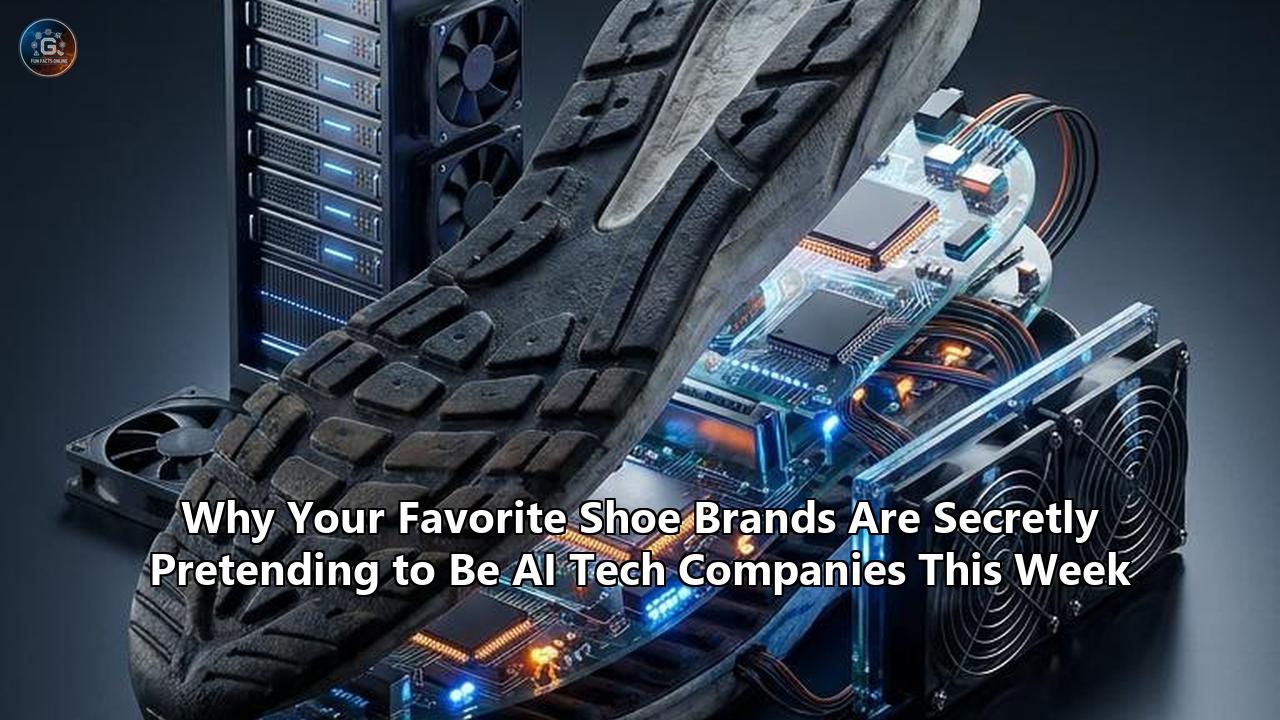
A corporate transformation occurring in the public markets right now highlights a bizarre and telling intersection of consumer fashion and high-finance speculative tech. Allbirds, the once-ubiquitous maker of minimalist merino wool sneakers that came to define the uniform of the Silicon Valley venture capital class, is preparing for a virtual special meeting of stockholders on June 3, 2026. The vote will decide whether the company can legally drop its public benefit charter for environmental conservation, formally change its name to "NewBird AI," and pivot its entire business model to renting graphics processing units (GPUs) as a cloud computing infrastructure provider.
This is the ultimate, absurd evolution of a trend that has been quietly building across the fashion sector. Shoe brands are no longer content with being judged on retail margins, inventory turn rates, or footbed comfort. Caught in a brutal squeeze of skyrocketing customer acquisition costs, declining brand loyalty, and stagnant retail multiples, a growing number of consumer brands are attempting to re-engineer themselves as artificial intelligence platforms.
Some, like Allbirds, are executing complete, literal transformations—trading their intellectual property, factories, and physical store leases for server racks and high-performance computing hardware. Others are operating a quieter, more calculated playbook. They are rebranding consumer profile databases as "biometric training data," casting standard inventory software as "predictive machine learning engines," and transforming creative design studios into "generative product synthesis hubs."
An examination of the mechanics behind these corporate transformations reveals why the line between fashion and software is dissolving, who stands to lose as physical brands become digital shells, and what this means for the future of consumer commerce.
The Great Shoe-to-Server Metamorphosis: Inside the Allbirds Pivot
The catalyst for this sudden shift came to a head on April 15, 2026, when Allbirds released a statement that sent its penny-stock valuation into a vertical ascent. Only weeks after quietly agreeing to sell off its entire footwear brand, intellectual property, inventory, and customer relationships to the American Exchange Group for a modest $39 million, the remaining corporate entity announced it had secured a $50 million convertible financing facility from an unnamed institutional investor.
The purpose of the capital? To fund a total pivot into AI compute infrastructure. The company, trading under the ticker symbol BIRD, stated its long-term vision was to establish itself as a fully integrated GPU-as-a-Service (GPUaaS) and AI-native cloud solutions provider under the moniker "NewBird AI".
The market response was immediate and chaotic. A stock that had been steadily sliding for years, trading at just $2.49 with a total market capitalization of roughly $21 million, surged by more than 580% in a single trading session, reaching an intraday high of $24.30 on massive volume. It was a head-spinning turnaround for a business that had debuted on the public markets in 2021 at $15 a share, briefly touching a $4 billion valuation before losing 99% of its value amidst compounding operational losses.
Allbirds (BIRD) Valuation Journey:
$4 Billion (2021 IPO Peak) ──> $21 Million (March 2026 Low) ──> 582% Single-Day Surge (April 15, 2026 Announcement)
However, the transition is not as simple as swapping sneakers for servers. To legally close the $50 million financing deal and finalize the corporate relaunch, Allbirds must secure shareholder approval at its upcoming June 3, 2026 meeting.
The proxy filings made with the Securities and Exchange Commission (SEC) reveal a highly symbolic demand: shareholders are being asked to vote on an amendment to the company’s certificate of incorporation to remove "references to the company being operated for the environmental conservation public benefit".
The Merino wool, the castor bean oil soles, and the low-carbon manufacturing footprint that built the brand’s identity are being discarded to make way for the power-hungry, high-emission reality of AI data centers.
          [ THE "NEWBIRD AI" RESTRUCTURE ]

  +─────────────────────────────────────────────+
  |              Allbirds, Inc.                 |
  +──────────────────────┬──────────────────────+
                         │
        ┌────────────────┴────────────────┐
        ▼                                 ▼
+─────────────────────────────────+ +─────────────────────────────────+
|      IP & FOOTWEAR ASSETS       | |    LISTED CORPORATE SHELL       |
|  Sold to American Exchange Group| |  (Keeps Nasdaq Ticker Symbol)   |
|         for $39 Million         | |  Pivoting to GPU-as-a-Service   |
+─────────────────────────────────+ +─────────────────────────────────+
                                                  │
                                                  ▼
                                    +─────────────────────────────────+
                                    |          NewBird AI             |
                                    |     $50M Convertible Debt       |
                                    |    Purchasing Nvidia GPUs       |
                                    +─────────────────────────────────+
The Valuation Formula: Why Leather is Squeezed and Compute is Gold
To understand why a footwear company would choose to self-immolate its core brand and re-emerge as a technology infrastructure middleman, one must analyze the stark divergence in valuation multiples between traditional consumer retail and generative technology.
During the peak of the direct-to-consumer (DTC) investment thesis, roughly spanning 2015 to 2021, consumer brands like Allbirds, Everlane, and Outdoor Voices were valued by venture capitalists not as manufacturing companies, but as technology companies. They were rewarded with high Price-to-Sales (P/S) multiples based on the assumption that digital-first distribution, customer data loops, and localized marketing would yield scale and margins comparable to software-as-a-service (SaaS) businesses.
| Metric | Peak DTC Era (2015–2021) | The 2026 Reality |
|---|---|---|
| Valuation Metric | Price-to-Sales (P/S) Multiple | Enterprise Value-to-EBITDA (EV/EBITDA) |
| Typical Multiples | 5x to 15x Revenue | 0.8x to 2x Revenue (Distressed Retail) |
| Primary Growth Driver | Low-Cost Digital Customer Acquisition | Profitability and Real Unit Economics |
| Market Sentiment | Growth at All Costs | Flight to Technical Infrastructure |
By 2026, that thesis has collapsed. The rising cost of digital advertising, combined with systemic changes to mobile privacy tracking, has made online customer acquisition prohibitively expensive.
Allbirds’ annual revenue dropped from $298 million in 2022 to just $152 million in 2025, racking up a net loss of $77 million along the way.
The limits of this sustainability-led model were further underscored on May 17, 2026, when reports surfaced that Everlane—another pillar of the 2010s ethical DTC movement—was being acquired by ultra-fast-fashion giant Shein in a deal valuing the brand at a modest $100 million, leaving common shareholders with zero payout.
When traditional retail metrics offer distressed companies an Enterprise Value-to-EBITDA multiple of next to nothing, the public market shell itself becomes the most valuable asset. A listed shell on the Nasdaq has immense utility if it can be stuffed with a hot narrative.
In the capital markets of 2026, there is an insatiable appetite for AI infrastructure. Organizations are locked in a structural race to secure graphics processing units (GPUs) and server space.
By rebranding as a "neocloud" provider, a failing shoe company can instantly transform its market positioning. Instead of competing with the likes of Nike, Hoka, or On Running for limited consumer dollars, it positions itself as a supplier of rare digital oil to the tech industry.
It is a corporate arbitrage play that echoes the speculative mania of the late 1990s dot-com boom, or the 2017 blockchain gold rush, when the Long Island Iced Tea Corporation famously rebranded as "Long Blockchain," causing its shares to surge by over 200% in a single day.
Who is Affected: A Systematic Impact Analysis
A corporate pivot of this scale is never a victimless maneuver. It creates a ripple effect that alters the economics of brand management, disrupts retail workforces, and shifts risk onto public market investors.
                      [ SYSTEMIC IMPACT MATRIX ]

     Consumers                   Workforce                  Investors
  +──────────────+            +──────────────+            +──────────────+
  | original brand |          | retail & IP  |            | high-risk    |
  | soul is lost;|          | designers    |            | dilution vs. |
  | replaced by  |          | laid off;    |            | speculative  |
  | mass-licensing |          | tech hired   |            | meme returns |
  +──────────────+            +──────────────+            +──────────────+
The Displaced Consumer
For the loyal consumers who bought Allbirds for their low-carbon footprints, minimalist style, and comfortable fit, the brand they knew has effectively ceased to exist. While the footwear line itself will technically survive under the stewardship of the American Exchange Group, its operational engine has been replaced.
The American Exchange Group specializes in brand acquisition and licensing, managing nameplates like Aerosoles and Ed Hardy. Under this management model, the focus typically shifts from high-concept material innovation and custom manufacturing to high-volume distribution and price optimization.
Consumers have already noted the shift: shoes that once commanded a premium price tag of over $100 are regularly cleared out for as little as $30 on discount digital storefronts. The premium, eco-conscious identity has been hollowed out, leaving the brand name as a mere label stitched onto mass-produced footwear.
The Displaced Retail and Creative Workforce
The human toll of these corporate transitions is substantial. As part of its wind-down and preparation for the NewBird AI pivot, Allbirds shuttered its entire full-price physical retail footprint in the United States.
This translated to immediate job losses for hundreds of store managers, retail associates, and localized logistics staff.
Furthermore, because the footwear IP was sold, the design teams, material scientists, and product developers who built the company's trademark wool-processing technologies were let go.
The jobs that are replacing them are radically different. The new capital facility of $50 million will go toward buying hardware and hiring a tiny, elite team of data center systems architects, neocloud engineers, and high-performance compute sales executives.
This is a stark illustration of structural economic displacement: labor-intensive, human-centric retail and manufacturing roles are being liquidated to finance capital-intensive, automated digital infrastructure.
The Retail and Institutional Investor Matrix
The mechanics of the $50 million convertible debt facility, placed by investment bank Chardan, introduce complex risks for retail investors who piled into the stock during its 580% surge.
Convertible financing allows the institutional lender to convert their debt into equity at a future date. If the company's stock remains highly volatile or experiences another speculative run, the conversion of these notes into new Class A shares will result in massive dilution for existing retail shareholders.
For retail traders, the stock has essentially become a high-risk meme instrument, detached from any immediate underlying business reality. NewBird AI is entering the cloud compute market with zero existing data center facilities, zero proprietary software layers, and zero established customer contracts.
Institutional capital gains a highly structured option play on AI hype, while retail investors carry the downside risk of a company that has liquidated its operational past but has yet to build its digital future.
Inside the Footwear Tech Stack: How Brands are Integrating AI
While the NewBird AI pivot is the most extreme case of a shoe company abandoning leather for silicon, it is the visible tip of an iceberg. Beneath the surface of the global footwear market, legitimate shoe brands using AI are fundamentally restructuring how physical products are conceptualized, prototyped, and brought to market.
                 [ THE FOOTWEAR AI TECH STACK ]

     Product Design                Manufacturing                 Fitting & Retail
  +──────────────────+          +──────────────────+          +──────────────────+
  | - Generative AI  |          | - Demand Predict |          | - 3D Foot Scan  |
  | - Athlete AIR    |          | - Robot Cutting  |          | - Virtual Try-On |
  | - 3D Printing    |          | - Waste Control  |          | - Returns Cut 50%|
  +──────────────────+          +──────────────────+          +──────────────────+
Rather than executing a complete corporate pivot, major footwear labels are integrating advanced artificial intelligence models across three core pillars: generative design, predictive supply chains, and biometric personalization.
1. Generative Design and Athlete-Centric Co-Creation
Historically, designing a new athletic shoe was a laborious process involving hand-drawn sketches, physical pattern drafting, and months of physical prototyping. The average development cycle for a premium athletic sneaker routinely stretched from 12 to 18 months.
In 2026, major footwear manufacturers are deploying generative design algorithms to compress these timelines down to a matter of weeks. Nike’s Athlete Imagined Revolution (A.I.R.) project, showcase-debuted ahead of the Paris Olympics, utilizes proprietary generative AI models trained on biomechanical data and personal aesthetic preferences of elite athletes like Victor Wembanyama, Sha'Carri Richardson, and Kylian Mbappé.
By entering specific performance parameters—such as lateral stability requirements, ankle articulation angles, and weight thresholds—designers use generative algorithms to synthesize thousands of distinct outsole and upper configurations in minutes.
                     [ Nike A.I.R. Pipeline ]

  +─────────────────────────────────────────────────────────────+
  |              Proprietary Biomechanical Data                 |
  |             (Athlete Gait, Weight, Pressure)                |
  +──────────────────────────────┬──────────────────────────────+
                                 │
                                 ▼
  +─────────────────────────────────────────────────────────────+
  |               Generative AI Design Engine                   |
  |              (Synthesizes 1000s of Options)                 |
  +──────────────────────────────┬──────────────────────────────+
                                 │
                                 ▼
  +─────────────────────────────────────────────────────────────+
  |                 3D Printing / Prototyping                   |
  |                 (Immediate Physical Test)                   |
  +─────────────────────────────────────────────────────────────+
Similarly, Puma has integrated generative AI design software that has cut its overall design iteration cycle by 60%. Puma’s design teams can now generate and refine up to 150 unique shoe designs per quarter, enabling the brand to respond to micro-trends trending on social media platforms in near-real-time.
These AI design tools are not just drawing flat pictures; they are outputting production-ready 3D assets. By utilizing pattern intelligence platforms like FashionINSTA, designers can automatically convert a generative design concept into a production-ready, 2D pattern digital file compatible with CAD software like CLO3D or Browzwear, reducing pattern-making time from six hours to just ten minutes.
2. Supply Chain Optimization and Predictive Demand Forecasting
Overproduction is the structural bane of the fashion industry, leading to billions of dollars in unsold inventory and massive environmental waste. Under the hood, leading shoe brands using AI are turning to predictive machine learning models to solve this allocation problem before a single shoe is stitched.
- Nike's Predictive Supply Chain: Nike uses deep learning demand-forecasting models to analyze historical sales data, local macroeconomic indicators, and digital browsing behaviors. In past operating cycles, these systems predicted global demand for over 50 million shoe pairs with a documented 92% accuracy rate, allowing Nike to scale back production on unpopular lines and prevent stock gluts.
- Puma's Automated Inventory Management: Puma’s machine learning systems analyze inventory levels across global distributors, reducing inventory stockouts by 60% across 5 million units.
- Laser-Guided Digital Cutting: Heritage brands like Clarks have replaced physical metal cutting dies with laser-guided digital cutting systems controlled by AI computer vision models. The AI calculates the most efficient nesting pattern for leather uppers on a raw hide, reducing premium leather waste by up to 60%.
3. The Biometric Fit Revolution
One of the primary friction points of online shoe retail is sizing inconsistency. Upwards of 72% of consumers are currently wearing shoes that do not fit their feet properly, leading to systemic physical hotspots, blisters, and high product return rates.
To counter this, brands are shifting from static, arbitrary sizing charts (e.g., Size 10, Size 11) to AI-assisted biometric scan models.
                   [ BIOMETRIC SIZING VS. STATIC ]

        Static Sizing                       Biometric AI Sizing
  +─────────────────────────+         +─────────────────────────+
  | Single arbitrary number |         | -Forefoot shape & width |
  | (e.g., US Men's 10)     |   VS.   | -Arch height & volume   |
  | High rate of poor fit   |         | -Heel morphology        |
  | and e-commerce returns  |         | -Pressure load vectors  |
  +─────────────────────────+         +─────────────────────────+
A prime example is IAMBIC, an emerging footwear developer using NASA-grade, AI-assisted design technology to address fit systemic failure. By prompting consumers to take a simple three-image scan of their feet via smartphone, IAMBIC's AI models analyze over 20 distinct biometric variables.
The system measures forefoot shape, ball girth, instep volume, arch height, and heel morphology to build an accurate, individual digital foot model.
This data is then run through predictive algorithms to construct a customized shoe built specifically for the wearer's unique foot structure and pressure load vectors.
For larger brands, tools like Nike Fit utilize augmented reality (AR) and computer vision to capture a 13-point measurement of a customer's foot via their smartphone camera. This digital twin is then matched against Nike’s global database of customer fit profiles to suggest the optimal shoe size for specific athletic activities, contributing to a 35% increase in online conversion rates and a significant reduction in returns.
The Strategic Playbook of the "AI Tech" Pivot
When a traditional consumer brand decides to reposition itself as an AI technology player, it must follow a precise strategic playbook. This corporate alchemy converts physical, low-margin liabilities into high-margin, high-multiple digital assets.
       [ THE "AI TECH" RE-ENGINEERING PLAYBOOK ]

   Phase 1: Data Alchemy  ───>  Phase 2: Asset Stripping
   (Rebrand databases           (Sell retail, keep shell
   as proprietary training)     and ticker symbol)
             │
             ▼
   Phase 3: Compute Sourcing ──> Phase 4: Narratives & Hype
   (Secure GPUs with debt       (Promote GPUaaS at tech
   and neocloud plans)          events like Shoptalk)
Phase 1: Data Alchemy
The first step in the playbook is the recharacterization of existing customer databases. A brand’s list of customer purchase histories, email addresses, and sizing preferences is valuable, but valued under retail multiples, it is worth very little.
By running these files through simple machine learning pipelines, a brand can rebrand this information as "proprietary biometric training data." This allows executive teams to claim they possess a unique, defensible data asset that can be used to train specialized consumer AI models.
Phase 2: The Asset-Stripping Shell Strategy
To transition into a high-multiple tech firm, a company must aggressively prune its low-margin physical liabilities. This is the exact strategy executed by Allbirds:
- Sell the Brand and IP: Sell the physical inventory, trademark rights, and physical store leases to a brand-management firm (like American Exchange Group) for cash. This removes low-margin, high-overhead operations from the balance sheet.
- Retain the Corporate Shell: Retain the public listing and the exchange ticker symbol.
- Raise Tech Debt: Use the clean corporate shell and the brand’s remaining notoriety to secure fresh, highly structured debt (such as the $50 million convertible note).
- Rebrand: Change the corporate name to include "AI" or "Compute," signaling a clean break to Wall Street algorithmic traders.
Phase 3: Hardware and Compute Sourcing
With the cash secured from the asset sale and new debt facilities, the transformed shell enters the hardware market to buy compute.
By purchasing graphics processing units (such as Nvidia H100s or newer Blackwell architectures) and placing them in leased third-party data center spaces, the company establishes a "neocloud" business model.
This allows them to sell processing power on a subscription or pay-as-you-go basis (GPUaaS) to generative AI startups who cannot secure allocations directly from massive hyperscalers like Amazon Web Services or Microsoft Azure.
Phase 4: High-Concept Narrative Building at Industry Conferences
To cement the transition, executives must take the stage at major retail and technology conferences to present their new vision.
At events like Shoptalk Spring, themed around "Retail in the Age of AI," the conversation has shifted dramatically from experimental pilots to operational, live-production deployment.
Brands must showcase that they possess a sophisticated, active AI strategy, presenting themselves as digital-native platforms rather than simple product manufacturers.
Short-Term Consequences: Market Disruption and Capital Reallocation
The immediate, short-term fallout of these corporate maneuvers is characterized by extreme financial volatility, regulatory pushback, and a fundamental shift in how e-commerce platforms operate.
Extreme Share Price Volatility and "Meme-Stock" Trading
When a struggling consumer company announces an AI pivot, its stock enters a highly speculative, sentiment-driven feedback loop. Because the market caps of these distressed retail companies are often depressed to under $30 million, they are highly sensitive to sudden inflows of retail capital.
                [ THE HYPED VALUE CYCLE ]

   Value Crater  ───>  AI Pivot News  ───>  600% Price Pump
  (Distressed DTC       (Press release       (Speculative retail
    at $2.49/sh)         rebrand plan)         buying to $24.30)
                                                    │
                                                    ▼
   SEC Scrutiny  <───  Reality Check  <───  35% Sell-off
   (AI Washing         (No hardware yet;     (Profit taking and
    investigation)      dilution risk)        market cooling)
As observed with Allbirds (NewBird AI), the stock jumped 582% in a single day, only to shed 30% to 35% of those gains over the following 48 hours as early speculative traders took profits.
This creates a highly unstable trading environment where stock prices are disconnected from underlying cash flows, balance-sheet fundamentals, or operational metrics, operating instead on narrative momentum.
The Regulatory Crackdown on "AI Washing"
As the corporate playbook of renaming failing retail businesses to ride the AI wave becomes more common, financial regulators are stepping up their scrutiny. The SEC has issued direct warnings regarding "AI Washing"—the practice of making misleading claims about a company’s use or development of artificial intelligence to pump stock prices.
                       [ "AI WASHING" RED FLAGS ]

  +─────────────────────────────────────────────────────────────+
  |  1. Broad, unspecific claims of "AI-native cloud platforms"  |
  |     without owning physical data center infrastructure.     |
  +─────────────────────────────────────────────────────────────+
  |  2. Securing convertible debt facilities that carry severe  |
  |     long-term dilution risk for retail shareholders.        |
  +─────────────────────────────────────────────────────────────+
  |  3. Rebranding standard legacy algorithms or customer databases|
  |     as "proprietary machine learning models."               |
  +─────────────────────────────────────────────────────────────+
Regulators are actively investigating whether companies transitioning from consumer products to computing infrastructure have secured concrete allocation contracts for physical hardware and energy grid access before promoting their GPUaaS models to public investors.
For companies that announce transitions without verified hardware procurement pipelines, the risk of regulatory enforcement actions and subsequent Nasdaq delistings is elevated.
The Shift to Agentic Commerce
As shoe brands transition into data-rich technology companies, the nature of digital retail is undergoing a quiet change. Traditional e-commerce relied on human consumers searching websites, scrolling through galleries of physical products, and clicking "Add to Cart."
At retail technology showcases in 2026, the focus has shifted to Agentic Commerce. Under this model, consumer purchasing decisions are increasingly delegated to automated personal AI agents.
A customer's digital assistant can autonomously query product APIs, compare exact performance specs, and execute checkouts without the human consumer ever looking at an ad.
To survive in this new framework, shoe brands are rebuilding their e-commerce architecture to be "agent-readable". This requires structuring product metadata—including exact biometric measurements, material sustainability scores, and localized shipping timelines—so that AI search agents can instantly digest, analyze, and select their brand over competitors.
Long-Term Consequences: The Restructuring of Consumer Fashion
Over a multi-year horizon, the trend of shoe brands mimicking, integrating, or pivoting to artificial intelligence will fundamentally reshape the cultural, environmental, and physical landscape of the fashion industry.
                  [ LONG-TERM SYSTEMIC TRANSITIONS ]

   Environmental                     Personalization               Market Structure
  +────────────────+              +──────────────────+          +──────────────────+
  | High-emission  |              | The absolute     |          | Bifurcation:     |
  | GPU clouds replace|    AND     | death of standard|   AND    | Algorithmic mass |
  | eco-conscious  |              | shoe sizing;     |          | production vs.   |
  | low-carbon goals|              | on-demand mesh   |          | human artisan craft|
  +────────────────+              +──────────────────+          +──────────────────+
1. The Environmental and Carbon Paradox
The most profound, long-term irony of the sustainable fashion movement's decline is the environmental cost of its technological replacement.
Brands like Allbirds originally built their entire cultural cachet on "sustainability in every step," marketing shoes made of renewable merino wool, natural sugarcane foam, and organic cotton.
By selling off these low-carbon footwear assets to pivot to GPU computing, the remaining corporate entity is entering one of the most power-hungry, carbon-intensive sectors on earth.
The exponential growth of generative AI development has strained municipal energy grids globally, with data centers consuming vast quantities of electricity and clean water for cooling systems.
The transition of NewBird AI from "making good shoes for the planet" to operating GPU cluster farms—requiring the formal removal of its environmental public conservation charter—serves as a stark reminder of how sustainability initiatives are easily abandoned when capital incentives favor raw computing power.
2. The Absolute Death of Standard Shoe Sizing
As biometric AI scanning technology and localized, additive manufacturing become standard across high-performance footwear, the traditional concept of static shoe sizing will go obsolete.
[ Traditional Sizing Model ]
Design ──> Mass Manufacture (Sized 6-13) ──> Long-Term Storage ──> High Return Rates (72% misfit)

[ AI-Driven Biometric Model ]
Smartphone Scan (3 Photos) ──> 20+ Biometric Variables ──> Custom AI Digital Mesh ──> On-Demand 3D Printing / Knitting
In this model:
- The concept of a "Size 10" or "Size 43" is replaced by a personalized AI-driven biometric digital mesh unique to each customer’s feet.
- When a customer purchases a new shoe, the brand does not pull a pre-manufactured box from a warehouse shelf. Instead, the custom digital mesh is sent directly to a localized, automated manufacturing unit.
- The shoe’s upper is knitted on-demand using 3D knitting machines (like Nike's Flyknit automated lines), and the midsole is 3D printed to match the exact density and load-bearing requirements of the consumer's gait.
- This transition eliminates the need for massive warehousing space, drastically reduces prototype and material waste, and practically eliminates fit-related product returns.
3. The Bifurcation of the Footwear Industry
The widespread integration of AI-assisted design and automated manufacturing will split the global footwear market into two highly distinct, polarized segments.
The Algorithmic Mass Market
The first segment is dominated by highly optimized, hyper-efficient, algorithmically directed mega-brands. In this tier, AI models analyze social media imagery, search trends, and real-time consumer clickstream data to design, manufacture, and market footwear with minimal human intervention.
Uppers are knitted by robots, quality control is monitored by computer vision cameras, and shipping routes are optimized by predictive logistics software.
These shoes are cheap, highly functional, and designed to match shifting cultural aesthetics instantly, but they carry little individual artistic identity.
The Human-Centric Heritage Market
The second segment will emerge as a direct, cultural backlash against algorithmic optimization. As AI-generated designs saturate the market, consumer demand will grow for footwear that is explicitly marketed as "human-designed" and "hand-crafted".
These premium, artisanal brands will reject automated patterns, focusing instead on traditional hand-stitching, organic material sourcing, and human-to-human design collaboration.
Similar to the luxury market's embrace of mechanical watches over smartwatches, these human-heritage shoes will command premium prices based on their deliberate inefficiency, artistic imperfection, and authentic cultural roots.
Technical Appendix: The Mechanics of AI Design and Fit Tools
For a deeper understanding of how these technologies work under the hood, we can examine the specific algorithmic frameworks and physical machinery deployed by modern footwear developers.
1. Generative Adversarial Networks (GANs) in Sole Pattern Synthesis
To generate optimized sole patterns and traction surfaces, design platforms utilize a subclass of machine learning frameworks known as Generative Adversarial Networks (GANs).
                    [ GAN DESIGN FRAMEWORK ]

   +─────────────────────────────────────────────────────────────+
   |                       Generator                             |
   |   (Synthesizes experimental sole patterns and traction maps)|
   +──────────────────────────────┬──────────────────────────────+
                                  │
                                  ▼
   +─────────────────────────────────────────────────────────────+
   |                     Discriminator                           |
   | (Evaluates designs against physical parameters like weight, |
   |      manufacturing tolerances, and biomechanical stress)     |
+─────────────────────────────────────────────────────────────+- The Generator: This network synthesizes experimental sole patterns and traction maps based on specified inputs.
- The Discriminator: This network evaluates these generated designs against a set of real-world physical parameters. These include material weight constraints, 3D printing manufacturing tolerances, and biomechanical stress tolerances calculated from athlete gait trials.
- The Loop: The generator and discriminator train against each other in a continuous feedback loop. The generator attempts to create designs that bypass the discriminator's rules, while the discriminator gets better at identifying structural weak points.
Over millions of iterations, the system outputs optimal, high-performance patterns—such as the specialized lattice structures used in Adidas's 3D-printed midsoles—that would be impossible for a human designer to model manually using standard CAD software.
2. Biomechanical Load Vector Sizing Algorithms
Startups like IAMBIC deploy deep learning neural networks to analyze physical foot scans. When a user takes three photos of their foot via a smartphone camera, the system does not just measure length and width.
The computer vision model uses a convolutional neural network (CNN) trained on thousands of physical foot castings and orthotic datasets to estimate a 3D volume mesh.
Once the 3D volume mesh is synthesized, a biomechanical load-vector algorithm estimates how pressure is distributed across the foot during normal locomotion. The algorithm calculates:
$$\text{Load Distribution} = f(\text{Forefoot Width}, \text{Arch Volume}, \text{Heel Morphology}, \text{Body Weight})$$
This enables the model to predict where physical hotspots and pressure concentrations will occur.
The custom midsole is then engineered with variable density zones, using stiffer materials to support high-pressure areas (like the arch) and softer, cushioning materials under the heel and metatarsals, delivering a precise fit that matches the customer's unique walking mechanics.
Future Outlook: Milestones and Key Trends to Watch
As we look toward the remainder of 2026 and beyond, several critical milestones will determine whether the "shoe-to-compute" pivot is a sustainable financial model or a short-lived corporate curiosity.
The NewBird AI Shareholder Vote (June 3, 2026)
The immediate next step is the virtual special meeting of Allbirds shareholders scheduled for June 3, 2026.
The outcome of this vote will be a bellwether for the public markets.
If shareholders overwhelmingly approve the removal of the environmental charter and the pivot to GPU leasing, it will validate a new method for distressed consumer brands to recapitalize themselves using AI hype.
If the vote fails, or if the convertible debt financing is rejected, it could push the remaining corporate entity into rapid liquidation, serving as a cautionary tale for companies attempting to escape retail realities through narrative pivots.
Will Other Distressed Retailers Copy the Playbook?
If NewBird AI manages to establish a functioning, profitable GPU leasing business, it is highly likely that other distressed DTC brands from the 2010s cohort will attempt similar transitions.
Market analysts are closely watching other publicly traded or private apparel, homeware, and lifestyle brands that are struggling with high customer acquisition costs and mounting debt.
Any retail shell with a clean listing on a major exchange and a depressed valuation could theoretically serve as the launchpad for a new "neocloud" infrastructure provider.
The Limits of the GPU-as-a-Service Bubble
The long-term viability of the shoe-to-compute pivot relies entirely on the structural deficit of high-performance GPUs.
As massive new semiconductor manufacturing facilities come online through 2026 and 2027, the supply of specialized processing units will eventually catch up to global demand.
       [ NEOCLOUD PROFITABILITY PROJECTION ]

  High Compute Deficit  ───>  Hardware Supply Catches Up  ───>  Margins Compress
(Small-scale GPUaaS is      (Hyperscalers build capacity;      (Unspecialized neoclouds
 highly profitable)          silicon shortage ends)              face steep losses)
Once this hardware bottleneck eases, cloud computing margins will compress.
Small-scale "neoclouds" that lack proprietary software layers, enterprise security integrations, or custom developer toolkits will find it increasingly difficult to compete on price with massive hyperscalers like AWS, Google Cloud, and Microsoft Azure.
The companies that transitioned from consumer retail into unspecialized GPU leasing may find themselves trapped in another low-margin commodity business, having sacrificed their original brand legacies for a temporary market narrative.
The convergence of artificial intelligence and the footwear industry has moved far past simple e-commerce personalization. It has become a structural force that is rewriting corporate identities, dismantling traditional manufacturing timelines, and challenging our definitions of consumer brands.
Whether these companies are legitimately using advanced machine learning to build custom-fit footwear or are simply using the promise of computing power to escape the difficult economics of physical retail, one thing is certain: the shoe business is no longer just about stitching leather and gluing rubber—it is a high-stakes play for data, hardware, and speculative capital.
Reference:
- https://www.tipranks.com/news/company-announcements/allbirds-sets-virtual-special-meeting-to-vote-on-asset-sale-and-capital-moves
- https://ir.allbirds.com/news-releases/news-release-details/allbirds-inc-executes-50m-convertible-financing-facility
- https://www.binance.com/en/square/post/313032038135393
- https://www.cbsnews.com/news/allbirds-ai-pivot-sells-footwear-brand-stock-soars/
- https://www.kucoin.com/news/flash/allbirds-shuts-down-shoe-business-rebrands-as-ai-firm-stock-surges-582
- https://www.theguardian.com/business/2026/apr/15/allbirds-stock-ai-pivot
- https://medium.com/@ignacio.de.gregorio.noblejas/allbirds-from-trendy-shoes-to-ai-company-a056d1bf1089
- https://www.forbes.com/sites/jonmarkman/2026/04/20/how-39-million-shoe-company-allbirds-turned-in-to-an-ai-company/
- https://ir.allbirds.com/news-releases/news-release-details/allbirds-inc-executes-50m-convertible-financing-facility
- https://za.investing.com/news/company-news/allbirds-secures-50m-financing-plans-pivot-to-ai-infrastructure-93CH-4213028
- https://www.thestar.com.my/tech/tech-news/2026/04/16/sneaker-company-allbirds-plans-to-pivot-to-ai-yes-ai
- https://www.panewslab.com/en/articles/019d9408-9abe-724c-8176-db425b6fd18e
- https://www.glossy.co/fashion/everlanes-sale-to-shein-shows-the-limits-of-sustainability-led-fashion-brands/
- https://www.investing.com/analysis/allbirds-exits-shoes-pivots-to-ai-with-newbird-rebrand-200678886
- https://aimagazine.com/news/whats-behind-allbirds-complete-pivot-from-shoes-to-ai
- https://www.theguardian.com/business/2026/apr/15/allbirds-stock-ai-pivot
- https://zipdo.co/ai-in-the-shoe-industry-statistics/
- https://fashioninsta.ai/blog/ai-fashion-design-revolution-brands-accelerate-development-2026
- https://fashioninsta.ai/blog/top-fashion-brands-using-ai-2026-how-fashioninsta-leads
- https://digitaldefynd.com/IQ/ways-nike-use-ai/
- https://www.digitalcommerce360.com/2025/10/09/how-nike-is-using-ai/
- https://firework.com/blog/footwear-brangs-using-ai
- https://footwearmakingmachines.com/9-global-shoe-brands-using-next-gen-footwear-making-technology/
- https://www.forbes.com/sites/annahaines/2025/09/29/the-footwear-brand-using-ai-to-revolutionize-shoemaking/
- https://www.modernretail.co/technology/in-2026-ai-talk-at-retail-events-shifts-to-proving-real-results-building-strategy/
- https://retailtechinnovationhub.com/home/2026/2/4/focus-on-ai-as-shoptalk-announces-initial-speakers-for-its-2026-spring-event-in-las-vegas
- https://www.digitalapplied.com/blog/shoptalk-2026-recap-retail-age-ai-key-announcements
- https://futurism.com/artificial-intelligence/failing-shoe-brand-pivot-to-ai
- https://fibbl.com/best-virtual-try-on-software-footwear/
- https://www.youtube.com/watch?v=-aw7oOSfBxc