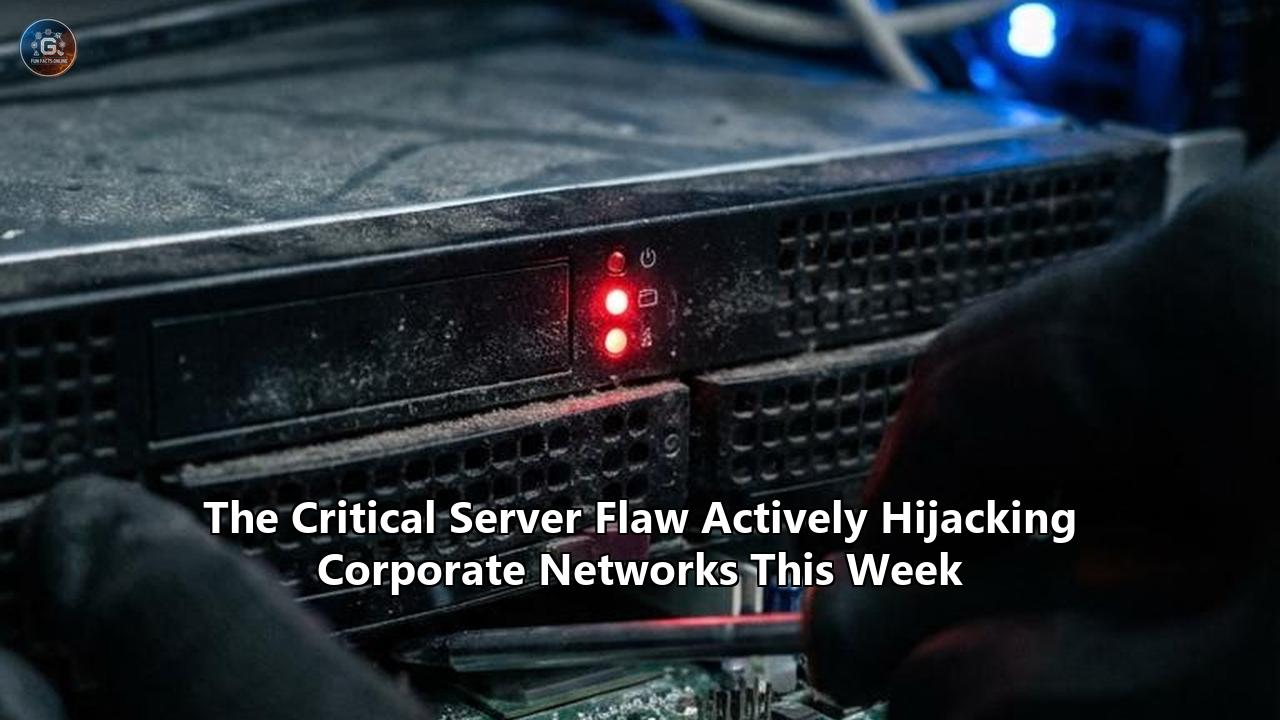
Threat actors are actively exploiting a critical zero-day vulnerability in Fortinet’s FortiClient Endpoint Management Server (EMS), leveraging an access control bypass to infiltrate enterprise environments. Disclosed over the Easter holiday weekend, the defect—tracked as CVE-2026-35616—allows unauthenticated remote code execution. On Monday, April 6, 2026, the U.S. Cybersecurity and Infrastructure Security Agency (CISA) added the exploit to its Known Exploited Vulnerabilities (KEV) catalog, placing federal agencies on a strict deadline to mitigate the threat and prompting private sector security teams into immediate action.
Fortinet was forced to rush out an emergency hotfix for versions 7.4.5 and 7.4.6, as threat intelligence firms confirmed hackers had been probing and exploiting the system since at least late March. Shadowserver foundation scans revealed approximately 2,000 publicly exposed FortiClient EMS instances globally during the initial scanning phase, leaving a massive attack surface for malicious actors. Security firm watchTowr reported that their honeypot infrastructure captured active exploitation attempts on March 31, days before the public advisory.
The timing of the assault was entirely deliberate. By ramping up exploitation during a major global holiday weekend, attackers capitalized on reduced IT staffing levels, delayed incident response times, and distracted on-call engineers.
The Mechanics of the Breach
To understand the severity of this corporate network server flaw, one must look at the exact function of an Endpoint Management Server. FortiClient EMS is effectively the central nervous system for an organization's distributed security architecture. It is software used to centrally manage, provision, and monitor endpoints across a vast corporate fleet. It dictates Virtual Private Network (VPN) configurations, enforces application firewall rules, pushes security patches, and controls zero-trust network access policies.
When an adversary compromises the EMS, they are not just breaching a single server; they are seizing the control panel that dictates the security posture of every employee laptop, desktop, and mobile device connected to the corporate grid.
CVE-2026-35616 carries a critical severity score of 9.8 out of 10 on the Common Vulnerability Scoring System (CVSS). The vulnerability itself is rooted in improper access control within the FortiClient EMS Application Programming Interface (API). APIs serve as the communication bridges between different software components, relying on strict authentication protocols to ensure that only authorized users or systems can issue commands.
According to researchers at the vulnerability firm Defused, who identified the in-the-wild exploitation via honeypots, attackers bypass these protections by spoofing a specific access header within their HTTP requests. In normal operations, the server checks this header to verify the user's identity and permission level. However, due to the flaw in how FortiClient EMS processes these headers, a maliciously crafted request tricks the back-end system into believing the unauthenticated external attacker possesses administrative privileges.
Once the authentication mechanism is bypassed, the attacker achieves Remote Code Execution (RCE). RCE is the worst-case scenario in cybersecurity. It means the attacker can execute arbitrary commands directly on the underlying server operating system. They do not need stolen passwords, they do not need to trick an employee into clicking a phishing link, and they do not need physical access to the building. They simply send a targeted web request, and the server opens its doors.
Think of the API as a security checkpoint at a highly restricted facility. The guard is supposed to check both the physical badge and the biometric data of anyone trying to enter. This vulnerability is the equivalent of an intruder handing the guard a blank piece of paper, whispering a specific phrase, and the guard immediately handing over the master keys to the entire facility without further verification.
The Strategy Behind Holiday Weekend Exploitation
The timeline of CVE-2026-35616 reveals a highly coordinated approach by threat actors. Attackers rarely deploy zero-day exploits haphazardly. A zero-day—a vulnerability unknown to the software vendor and therefore lacking a patch—is a valuable commodity. Once an attacker uses it against a monitored target, cybersecurity firms will eventually detect the anomalous behavior, capture the exploit payload, and alert the vendor, starting the clock on a patch.
Because the window of utility for a zero-day is limited, attackers maximize their return on investment by striking when defensive capabilities are at their lowest.
"Attacker Eye sensors first captured exploitation activity on March 31st, days before today's public disclosure, in what appeared to be early probes ahead of a full ramp-up," said Benjamin Harris, CEO and founder of watchTowr. "The timing of the ramp-up of in-the-wild exploitation of this zero-day is likely not coincidental. Attackers have shown repeatedly that holiday weekends are the best time to move. Security teams are at half strength, on-call engineers are distracted, and the window between compromise and detection stretches from hours to days".
The initial probes in late March were likely automated scripts designed to map the internet for vulnerable FortiClient EMS instances. Attackers cataloged the IP addresses of the 2,000 publicly exposed servers identified by organizations like Shadowserver. Once the Easter weekend arrived, they shifted from reconnaissance to active exploitation, deploying the RCE payload to establish persistence on as many servers as possible before the holiday ended.
Why This Specific Corporate Network Server Flaw is Highly Prized
Gaining control over an endpoint management system provides threat actors with unparalleled leverage over an enterprise environment. The immediate risk is not just the theft of data residing on the EMS itself, but the ability to weaponize the EMS against the organization it was built to protect.
Once inside, attackers can execute several high-impact maneuvers:
1. Pushing Malicious Payloads to Endpoints: Because the EMS is trusted by every employee device to deliver legitimate software updates and security policies, attackers can use the server to push malware, ransomware, or spyware down to the entire corporate fleet simultaneously. This bypasses local antivirus solutions because the payload originates from a trusted internal authority. 2. Altering VPN and Firewall Rules: Attackers can silently rewrite zero-trust access policies, creating persistent backdoors. They can configure the system to allow external access from attacker-controlled IP addresses, ensuring they retain a foothold in the network even if the original EMS vulnerability is eventually patched. 3. Lateral Movement: The EMS sits in a privileged position within the network topology. Attackers use it as a staging ground to scan internal subnets, access active directory domain controllers, and compromise databases that are entirely walled off from the public internet.This is not an isolated incident for Fortinet customers in 2026. The April discovery marks the second critical unauthenticated RCE vulnerability found in FortiClient EMS this year. In February, Fortinet disclosed CVE-2026-21643, an SQL injection defect that also allowed unauthenticated attackers to execute arbitrary commands. That vulnerability was similarly exploited in the wild. The recurring nature of these critical defects suggests that advanced persistent threat (APT) groups and ransomware syndicates are aggressively dedicating resources to reverse-engineer Fortinet's codebase, searching for any structural weaknesses in the API access controls.
The Amplification of Vulnerability Discovery
The sheer volume of critical zero-days in early 2026 points to a broader shift in the cybersecurity landscape: the methods used to discover these vulnerabilities are accelerating.
Just days after the Fortinet zero-day became public knowledge, AI research lab Anthropic published the results of "Project Glasswing," an initiative utilizing advanced large language models to secure critical software. The findings provided a stark look at the current reality of software security. Anthropic's "Mythos Preview" model autonomously analyzed millions of lines of code and uncovered thousands of high-severity vulnerabilities across major operating systems and web browsers.
The model found a 27-year-old vulnerability in OpenBSD—widely considered one of the most secure operating systems available—and a 16-year-old flaw in the FFmpeg video software, a bug that automated testing tools had analyzed five million times without detecting.
While Anthropic is using these capabilities defensively to aid open-source maintainers and infrastructure providers, the reality is that well-funded nation-state actors and cybercriminal syndicates possess similar, highly capable AI models tailored for offensive operations. The barrier to entry for vulnerability discovery has plummeted. Threat actors no longer need a team of elite human reverse-engineers spending months analyzing a single application. They can feed the binaries of enterprise software into specialized AI tools that rapidly identify memory corruption flaws, logic bypasses, and improper access controls—exactly the type of API defect seen in FortiClient EMS.
This dynamic explains why organizations are facing a relentless barrage of zero-day attacks. The time between a software update being released and an attacker finding a new way to break it has compressed from months to days.
The CISA Mandate and the Challenge of Hotfixes
When a vulnerability is officially confirmed to be active in the wild, CISA adds it to the Known Exploited Vulnerabilities catalog. Under Binding Operational Directive (BOD) 22-01, federal civilian executive branch agencies are legally mandated to remediate the vulnerability within a specific timeframe, usually 21 days.
While the directive only applies to federal agencies, the KEV catalog has become the gold standard for prioritizing patches in the private sector. Corporate security teams are flooded with thousands of Common Vulnerabilities and Exposures (CVEs) every month. Most of these are theoretical—flaws discovered by researchers in controlled laboratory settings that have never been used in a real attack. The KEV catalog cuts through the noise, highlighting the specific defects actively causing damage right now.
However, mitigating a corporate network server flaw of this magnitude is rarely as simple as clicking an "update" button.
Because Fortinet was caught off guard by the active exploitation, they did not have a full, comprehensively tested software patch ready. Instead, they released an emergency "hotfix" for specific versions (7.4.5 and 7.4.6). A hotfix is a targeted piece of code designed specifically to plug a single hole. It is developed rapidly and pushed out to stop the bleeding while the vendor works on a full point release (in this case, the upcoming FortiClient EMS 7.4.7).
For enterprise IT teams, applying hotfixes carries inherent operational risks. Unlike standard patches which undergo rigorous quality assurance testing to ensure they do not break existing software integrations, hotfixes are rushed. Deploying an untested hotfix to a critical management server can sometimes cause system instability, disrupting VPN access for thousands of remote workers.
Consequently, security teams must make a rapid, high-stakes calculation: risk leaving the server vulnerable to a known, actively exploited RCE attack, or risk breaking endpoint connectivity by applying an emergency hotfix. Given the severity of CVE-2026-35616, experts universally advise applying the hotfix immediately, as the consequences of a compromised EMS far outweigh the potential for temporary operational downtime.
The Lifecycle of an Enterprise Compromise
What happens to the organizations that failed to apply the hotfix before the attackers arrived? The lifecycle of a breach stemming from this type of vulnerability usually follows a predictable, highly destructive path.
First, the attacker uses the API access control bypass to execute their initial payload. This payload is typically a lightweight "dropper" or web shell, designed to establish a persistent connection back to the attacker's command and control (C2) server.
Once persistence is achieved, the threat actors enter the reconnaissance phase. They deploy automated scripts to map the internal network, identifying high-value targets such as domain controllers, financial databases, and source code repositories. During this phase, they will attempt to harvest credentials stored in memory on the compromised EMS server, looking for administrator accounts that allow them to move laterally without relying entirely on the initial vulnerability.
After securing broad access, the monetization phase begins. If the attacker is a nation-state actor, they will focus on silent data exfiltration, siphoning intellectual property, strategic communications, or citizen data out of the network over encrypted channels. They will intentionally move "low and slow" to avoid triggering data loss prevention (DLP) alarms.
If the attacker is a financially motivated cybercriminal group—such as a ransomware syndicate—the outcome is much louder. They will exfiltrate a massive trove of sensitive data to use for extortion. Then, they will use the compromised EMS to distribute ransomware payloads directly to every connected employee endpoint. Because the EMS has administrative rights over those endpoints, the ransomware executes seamlessly, encrypting local hard drives and network file shares simultaneously. The organization is paralyzed, facing demands for millions of dollars in cryptocurrency to decrypt the files and prevent the stolen data from being leaked on the dark web.
The fallout from an unpatched corporate network server flaw extends far beyond the IT department. It halts supply chains, delays manufacturing, disrupts customer service, and incurs massive financial losses through regulatory fines, forensic investigation costs, and sheer operational downtime.
Defending Against the Next Zero-Day
The exploitation of FortiClient EMS highlights a critical structural weakness in how organizations approach network security. Relying heavily on edge devices and management servers to act as impenetrable fortresses is a failing strategy. When the fortress wall itself contains a hidden door, the entire security model collapses.
The industry is gradually acknowledging that determined attackers will inevitably find a way inside. The focus is shifting from pure prevention to rapid detection, isolation, and systemic resilience.
Organizations are increasingly adopting true Zero Trust Architectures (ZTA). In a strict zero-trust model, compromising an endpoint management server would not automatically grant an attacker unrestricted access to the rest of the internal network. Every subsequent request for data or access to a new server would require independent authentication and authorization, severely limiting the blast radius of a single compromised appliance.
Furthermore, defensive strategies are evolving to match the speed of the attackers. Integrating threat intelligence feeds directly into security information and event management (SIEM) systems allows organizations to detect the specific indicators of compromise (IoCs)—such as the anomalous API requests seen in this Fortinet attack—before the attacker can fully deploy their secondary payloads.
What to Watch for Next
The immediate priority for any organization utilizing FortiClient EMS is applying the 7.4.5 or 7.4.6 hotfixes. Network administrators must also scrutinize their server logs dating back to at least mid-March, looking for unauthorized API access attempts, unexplained modifications to endpoint policies, or the creation of unknown administrative accounts. Applying the hotfix today will close the door, but it will not evict an attacker who has already established a foothold inside the network.
The cybersecurity community is eagerly awaiting the full release of FortiClient EMS 7.4.7, which will contain the comprehensive patch for this architectural defect. In the coming weeks, incident response firms will likely begin publishing post-mortem reports on the breaches facilitated by CVE-2026-35616. These reports will shed light on exactly which threat groups utilized the zero-day, what their ultimate objectives were, and just how deeply they managed to burrow into global enterprise networks during the narrow window when the vulnerability remained entirely unknown to the defense.
The most pressing unresolved question is the true scale of the damage. With 2,000 servers publicly exposed during a holiday weekend, the number of organizations actively breached may not become fully apparent until the data exfiltration and extortion campaigns surface in the public eye over the next several months. As artificial intelligence continues to accelerate the rate at which legacy code flaws are uncovered, security teams must adapt to an environment where emergency weekend patching is no longer an anomaly, but a standard operational requirement.
Reference:
- https://www.csoonline.com/article/4155221/fortinet-releases-emergency-hotfix-for-forticlient-ems-zero-day-flaw.html
- https://cyberscoop.com/fortinet-forticlient-ems-zero-day-cve-2026-35616-hotfix-known-exploited/
- https://www.cyberdaily.au/security/13426-act-now-fortinet-responds-to-actively-exploited-critical-zero-day-cve-2026-35616
- https://www.cybersecuritydive.com/news/critical-flaw-forticlient-ems-exploitation/816699/
- https://watchtowr.com/resources/fortinet-forticlient-ems-zero-day-cve-2026-35616-active-exploitation-underway/
- https://www.anthropic.com/glasswing
- https://www.cisa.gov/news-events/alerts/2026/02/17/cisa-adds-four-known-exploited-vulnerabilities-catalog
- https://darknetsearch.com/knowledge/news/en/cisa-known-exploited-vulnerabilities-5-urgent-threats-revealed/