The 3:00 AM Cascade
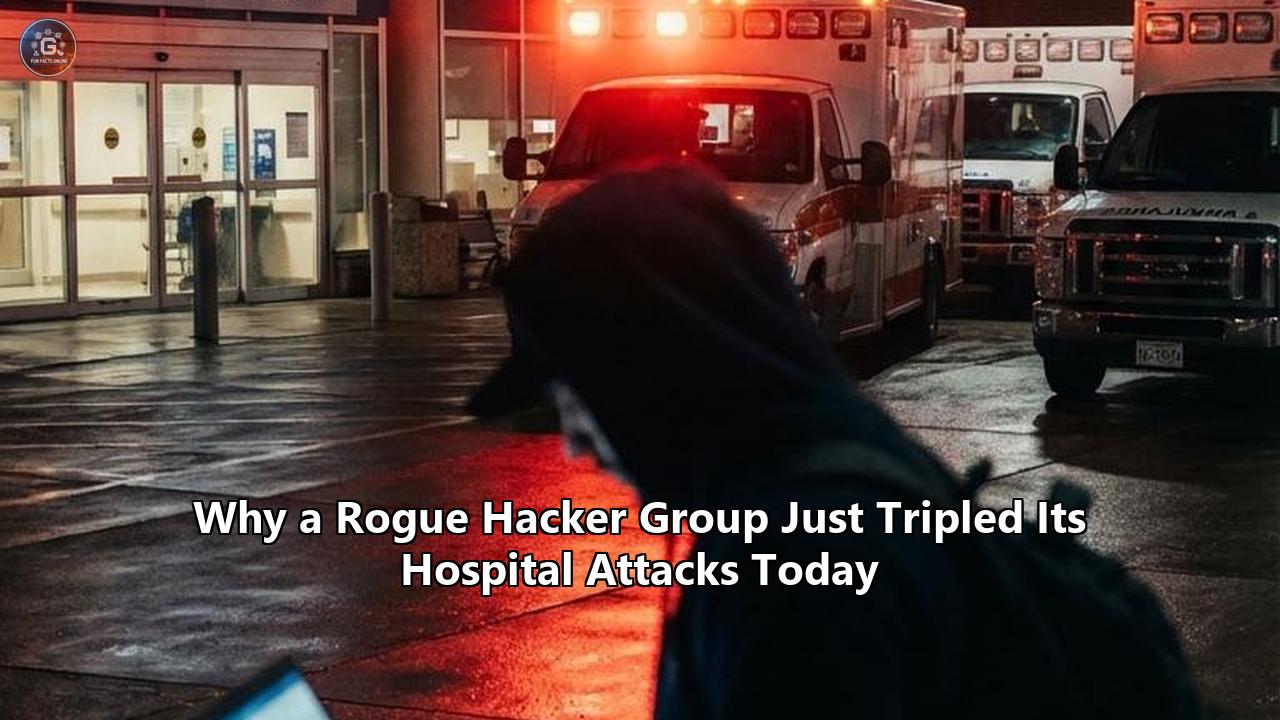
At 3:14 AM Eastern Time on April 10, 2026, the telemetry monitors in the intensive care unit at St. Jude’s Regional Medical Center in Ohio began to freeze. One by one, the rolling green waveforms indicating patient heart rates and oxygen levels locked into static lines. Down the hall, the automated medication dispensing cabinets abruptly rebooted, locking their steel doors. In the basement, the radiology department’s Picture Archiving and Communication System (PACS) server went dark.
Within four minutes, every networked printer in the facility woke from sleep mode. They began churning out thousands of pages of stark, monospaced text.
Your network has been compromised. Your patient databases, including psychiatric evaluations, oncology records, and unreleased diagnostic imagery, are encrypted and exfiltrated. Do not attempt to reboot your servers. Contact us via the provided Tor portal within 24 hours, or the data will be published, and decryption keys will be permanently destroyed.St. Jude’s was not an isolated target. By dawn, emergency incident response teams across the globe realized they were witnessing an unprecedented coordinated offensive. Over the last 24 hours, a highly organized ransomware syndicate known as Qilin-Omega struck 47 different healthcare networks across the United States, the United Kingdom, and Australia.
This morning’s blitz effectively tripled the global daily average of hospital cyber attacks, plunging emergency rooms into chaos, forcing immediate ambulance diversions, and leaving critical care teams flying blind without digital charts or diagnostic histories.
Law enforcement and threat intelligence analysts immediately recognized the digital fingerprints of Qilin-Omega, a notorious offshoot of the Russian-speaking Qilin syndicate that had previously targeted mid-sized clinics in early 2026. But the scale, speed, and aggression of today’s assault defied standard operating procedures. Ransomware groups historically space out their high-profile targets to avoid drawing the immediate, concentrated fury of international law enforcement. Striking 47 hospitals simultaneously is not a sustainable business model; it is a declaration of war.
To understand why a sophisticated cybercriminal enterprise would suddenly abandon stealth for a loud, high-risk mass extortion event, investigators had to look past the hospital networks and peer into the volatile economics of the dark web. The evidence trail reveals a startling reality: today’s attacks were not a display of strength, but a frantic, scorched-earth exit strategy driven by a fracturing criminal underworld.
The Autopsy of a Zero-Day
The immediate question for incident responders was how Qilin-Omega managed to breach 47 distinctly managed, geographically scattered networks in a matter of hours. The answer lay in the hidden digital supply chain that powers modern medicine.
Most major hospitals do not build their own software. They rely on third-party vendors for everything from billing to blood bank management. By 8:00 AM today, analysts at several major cybersecurity firms pinpointed the intrusion vector: a critical, previously unknown vulnerability—a "zero-day"—in a widely used cloud-based medical imaging gateway.
Marcus Vance, Director of Threat Intelligence at a prominent private security firm, spent the morning analyzing the exploit code pulled from a compromised server in London.
"What we are looking at is an absolute masterpiece of malicious engineering," Vance explained. "The vulnerability, which we are tracking as CVE-2026-0410, bypasses authentication in the API gateway of this specific radiological software. The attackers didn't need to steal an employee's password or send a convincing phishing email. They just sent a specially crafted packet to the hospital's internet-facing server, and they had system-level access in milliseconds."
Once inside, Qilin-Omega executed a highly automated attack chain:
- Initial Exploitation: Bypassing the API gateway and executing remote code.
- Privilege Escalation: Harvesting active directory credentials from memory to gain administrator rights.
- Lateral Movement: Disabling endpoint detection and response (EDR) software across the hospital's internal network.
- Data Exfiltration: Silently siphoning terabytes of patient data via encrypted tunnels to offshore servers.
- Encryption: Deploying a custom variant of their ransomware payload to lock the original files.
Historically, ransomware actors maintained a "dwell time" of weeks or even months inside a network before encrypting files. They would slowly map the infrastructure, identify the most sensitive databases, and locate the backup servers to destroy them. Today, Qilin-Omega shrank that dwell time to less than three hours.
"They automated the entire kill chain," Vance noted. "They used scripts to automatically hunt for files containing the word 'backup' or extensions related to virtual machine snapshots, wiped them, and deployed the locker. It was a smash-and-grab operation executed at the speed of software."
The Dark Web Bank Run
If the technical execution of the attack was a marvel of automation, the motive behind it was rooted in pure financial panic.
Ransomware is no longer the domain of lone hackers operating in basements. It is a highly structured, multibillion-dollar industry operating on a "Ransomware-as-a-Service" (RaaS) model. In this ecosystem, the core developers write the malware and maintain the payment portals, while freelance "affiliates" do the actual hacking. When a ransom is paid, the core group takes a 20% cut, and the affiliate keeps 80%.
For the past three years, this model has generated massive profits. The ALPHV/Blackcat attack on Change Healthcare in early 2024 reportedly yielded a staggering $22 million ransom. In 2025, the FBI tracked hundreds of healthcare ransomware attacks, with the sector suffering disproportionately due to its low tolerance for downtime. But the massive payouts also brought intense pressure from international law enforcement. Operations against groups like BlackSuit and ALPHV led to seized servers, confiscated cryptocurrency, and arrested affiliates.
Over the last month, rumors began circulating on dark web forums that the primary cryptocurrency mixing service used by Qilin-Omega to launder their illicit profits—a service known on the underground as "ShadowMix"—had been compromised by a joint task force of the FBI and Europol.
Elena Rostova, a veteran ransomware negotiator who has handled dozens of high-stakes extortions, observed the shift in the group's behavior firsthand.
"For the last two weeks, the chatter on the Russian-speaking forums has been paranoid," Rostova said. "Affiliates were complaining that their cryptocurrency payouts were being delayed. The core developers of Qilin-Omega claimed it was a technical glitch, but everyone knew what it meant. The feds were closing in on their infrastructure."
When a ransomware group realizes its days are numbered, they do not quietly disband. They execute a "cash grab" or an "exit scam." They purchase bulk access to compromised networks from Initial Access Brokers (IABs)—specialized hackers who break into networks and sell the access keys—and deploy their ransomware as widely as possible, hoping to collect a few final massive payouts before disappearing and rebranding under a new name.
Today's tripling of hospital cyber attacks was the digital equivalent of a bank run. Qilin-Omega burned their newly acquired zero-day exploit, knowing it would be patched within days, to extort as much capital as possible before their laundering infrastructure is inevitably taken offline by federal authorities.
Quadruple Extortion: Weaponizing the Patient
As hospitals scrambled to assess the damage this morning, Qilin-Omega unveiled a new, deeply disturbing escalation in their extortion tactics.
The ransomware industry has continuously evolved its methods of applying pressure. Five years ago, "single extortion" was the norm: attackers simply encrypted the data and demanded payment for the decryption key. When hospitals began maintaining robust, offline backups to avoid paying, the hackers pivoted to "double extortion," threatening to leak the stolen patient data on the dark web if the ransom was ignored. Soon after, "triple extortion" emerged, with attackers launching Distributed Denial of Service (DDoS) attacks to shut down hospital communication systems during the negotiation process.
Today, Qilin-Omega introduced quadruple extortion: the direct, psychological weaponization of the patient.
At 9:30 AM, thousands of patients affiliated with the compromised hospitals received SMS text messages directly to their personal smartphones. The messages included their full legal names, their primary care physicians, and highly sensitive details of their recent medical procedures.
One message, shared with investigators by a patient in Ohio, read:
St. Jude’s Medical Center has allowed your confidential oncology records to fall into our hands. They are refusing to pay to secure your privacy. If they do not pay within 24 hours, your full medical history will be published online. Call your hospital administrator immediately."We have crossed a terrifying threshold," said Dr. Aris Thorne, a cybersecurity ethicist and former incident responder. "The attackers are no longer just holding the hospital hostage; they are drafting the patients into the extortion scheme, using their fear and outrage as a lever against the hospital board."
Worse still, Qilin-Omega has hinted at data manipulation. In a post on their dark web leak site published early this afternoon, the group claimed they had not just stolen the data, but had selectively altered critical medical information before encrypting the main databases. They claimed to have changed blood types, removed severe penicillin allergies from patient profiles, and modified chemotherapy dosages in the digital charts.
"We have no way to verify if they actually altered the clinical data or if they are just bluffing to force a rapid payout," Thorne noted. "But from a clinical standpoint, a bluff is just as effective. You cannot put a patient on an operating table if you cannot trust the blood type listed in their chart. The integrity of the data is just as vital as the availability of the data. By casting doubt on the clinical records, the attackers have effectively paralyzed the medical staff."
The Human Cost on the Ground
While cybersecurity analysts track packets and blockchain flows, the true cost of today's events is measured in human suffering on hospital floors.
At Mercy-General, a 400-bed trauma center in Pennsylvania that was swept up in the morning's attack, the reality of a sudden digital blackout was devastating. Modern medicine is entirely dependent on interconnected technology. When the systems die, the hospital regresses to the medical practices of the 1980s, but with staff who have never been trained to operate without computer assistance.
Dr. Sarah Jenkins, an attending emergency physician, was halfway through her shift when the network collapsed.
"The silence was the first thing I noticed," Jenkins recalled. "The constant hum of the telemetry alarms, the paging system, the automated dispatch—it all just stopped. Then the charge nurse came running down the hall with a stack of blank paper. We had to go to 'Code Dark' protocols instantly."
Within thirty minutes, the hospital had to declare a total internal disaster. Ambulances carrying stroke and heart attack victims were diverted to facilities up to fifty miles away, squandering the critical "golden hour" where rapid medical intervention dictates whether a patient lives or dies. Historical data paints a grim picture of these diversions. Studies analyzing the aftermath of attacks like the 2020 Düsseldorf incident—where a patient died after her ambulance was rerouted due to a ransomware attack—show that mortality rates spike significantly when critical care is delayed by cyber disruption.
Inside the hospital, the logistical nightmare compounded by the minute. Without the electronic health record (EHR) system, nurses could not verify which medications had been administered during the previous shift. The automated pneumatic tube systems used to transport blood samples to the lab shut down, forcing staff to physically run vials up and down four flights of stairs. Pharmacists had to manually calculate weight-based dosages for pediatric patients, introducing a severe risk of human error.
"We had a patient scheduled for an emergency appendectomy," Jenkins said, her voice strained. "But the preoperative labs were locked in the system. The CT scans were inaccessible. The anesthesiologist couldn't view the patient's cardiac history. We had to delay the surgery for six hours while we desperately tried to track down paper records from the patient's primary care doctor. You cannot quantify the anxiety of sitting with a patient whose appendix might rupture, knowing you have the skills and the operating room to fix them, but you are blocked by a blinking cursor on a black screen."
Unlike traditional corporate data breaches, where the worst outcome is identity theft or financial fraud, hospital cyber attacks represent an immediate, kinetic threat to human life. The attackers sitting at keyboards half a world away are effectively reaching into the sterile environment of an operating room and unplugging the life support.
The Legacy of Neglect and Policy Paralysis
The magnitude of today's crisis has immediately reignited furious debates in Washington, London, and Canberra about the systemic failure to protect critical healthcare infrastructure. Why, despite years of escalating threats, are hospitals still so vulnerable?
The answer is a toxic combination of massive technical debt, chronic underfunding, and legislative paralysis.
Following the devastating Change Healthcare attack in 2024, which crippled prescription processing and billing for thousands of providers across the United States, regulators promised sweeping reforms. The Department of Health and Human Services (HHS) introduced voluntary cybersecurity performance goals for the healthcare sector. But voluntary measures have proven entirely insufficient against highly motivated, financially backed criminal syndicates.
"We are fighting a modern cyber war with the digital equivalent of wooden shields," said former CISA Director Christopher Krebs during an emergency media briefing this afternoon. "Hospitals run on razor-thin margins. When a hospital administrator has to choose between buying a new MRI machine that will directly generate revenue and save lives, or spending three million dollars to overhaul their active directory architecture and segment their legacy networks, they buy the MRI machine every time. Cybersecurity is viewed as a sunk cost until the day the screens go black."
Furthermore, healthcare networks are incredibly complex and heavily decentralized. A single hospital might have tens of thousands of connected devices, ranging from modern iPads used by doctors to legacy ultrasound machines running outdated, unsupported versions of Windows operating systems that cannot be patched.
Lawmakers have repeatedly debated banning the payment of ransoms entirely. The logic is straightforward: if you cut off the financial incentive, the attacks will eventually stop. However, imposing a strict ban on ransom payments places healthcare providers in an impossible moral dilemma.
"It is very easy for a politician in a secure government building to say we should never negotiate with terrorists," Rostova, the negotiator, observed. "It is an entirely different reality when you are a hospital CEO, you have premature infants in the NICU relying on machines that are malfunctioning, your trauma center is shut down, and the attackers are demanding a million dollars to turn the lights back on. In that moment, paying the ransom isn't funding terrorism; it is a triage decision to save lives."
Until regulators mandate strict, heavily subsidized minimum security standards and provide federal funding to help rural and under-resourced hospitals retire their vulnerable legacy systems, the healthcare sector will remain the path of least resistance for cybercriminals.
Following the Digital Breadcrumbs
While hospital IT teams frantically work to restore systems from offline backups, a different kind of forensic battle is unfolding on the blockchain.
Despite the panic, at least three of the hospitals targeted this morning have quietly initiated ransom payments, transferring millions of dollars in cryptocurrency in desperate bids to recover their systems and prevent the release of patient data.
Federal agencies and private blockchain analytics firms like Chainalysis and TRM Labs are currently tracking the digital exhaust of these transactions in real time. Because the Bitcoin ledger is public, investigators can watch the exact moment a hospital transfers funds to Qilin-Omega's wallet.
"The challenge isn't seeing the payment; the challenge is following it after it hits the attackers' wallet," explained a senior analyst at a major blockchain intelligence firm. "In the past, attackers would send the Bitcoin to a centralized exchange and cash out for fiat currency. Today, they use a highly complex methodology to obfuscate the trail."
Within minutes of receiving the ransom payments this morning, Qilin-Omega began executing "chain-hopping" techniques. They rapidly traded the Bitcoin for privacy-focused cryptocurrencies like Monero, which obscure the sender, receiver, and transaction amount. They then moved the funds through decentralized cross-chain bridges, essentially splitting the money into thousands of micro-transactions, bouncing them across different blockchains, and reassembling them in new wallets.
"They are moving with extreme urgency," the analyst noted. "Usually, a ransomware group will sit on the funds for weeks, slowly washing them to avoid alerting the algorithmic triggers at major crypto exchanges. The fact that Qilin-Omega is rapidly liquidating their funds through high-fee decentralized bridges confirms the exit-scam hypothesis. They are trying to cash out before law enforcement can freeze the tethered assets or seize the infrastructure of their remaining mixing services."
This frantic financial movement provides a rare, narrow window for international law enforcement. As fragmentation pushes operators to rely on service providers with weaker operational security, their financial behavior becomes observable. If Europol and the FBI can identify the specific dark web fiat off-ramps the group is attempting to use, they may be able to freeze the funds before they are withdrawn as cash, essentially robbing the bank robbers in mid-stride.
The Next 48 Hours
As the sun sets on one of the most disruptive days in the history of medical cybersecurity, the immediate future remains highly volatile. The 47 affected hospitals are entering the most critical phase of the crisis.
For the facilities that refused to pay the ransom, the next 48 hours will be a grueling test of endurance. IT teams will work in round-the-clock shifts, physically wiping infected servers, reinstalling operating systems from scratch, and painstakingly attempting to restore data from immutable offline backups. Clinical staff will face days, if not weeks, of operating on paper records, meaning ambulance diversions will likely remain in effect through the weekend, straining neighboring hospitals that are now forced to absorb the overflow of critical patients.
For the facilities that chose to pay, their nightmare is far from over. Receiving a decryption key is not a magic wand. The keys provided by ransomware actors are notoriously clunky and prone to crashing. Decrypting terabytes of heavily fragmented databases can take weeks, and data corruption is a frequent byproduct of the process. Furthermore, there is no guarantee that Qilin-Omega will honor their promise to delete the stolen data, leaving the hospitals exposed to massive class-action lawsuits and regulatory fines for HIPAA violations in the coming months.
Behind the scenes, the global cyber defense apparatus has mobilized. The Cybersecurity and Infrastructure Security Agency (CISA), working alongside international partners, has already begun distributing the specific Indicators of Compromise (IOCs)—the IP addresses, file hashes, and malicious domains associated with today's attack—to the broader healthcare sector. Firewalls are being updated, network logs are being scrutinized, and patch deployments for the CVE-2026-0410 vulnerability are being rushed into production.
But the broader implications of today's events cast a long, dark shadow over the future of digital medicine. Qilin-Omega has proven that a coordinated, mass-casualty digital strike on critical infrastructure is not only possible but highly lucrative. They have demonstrated that weaponizing patients directly through SMS extortion is an effective pressure tactic. Even if Qilin-Omega's core members are identified, indicted, and arrested in the coming weeks, the blueprints for today's attack are already circulating in the digital underground.
The fundamental equation remains unbalanced. As long as medical facilities rely on vulnerable, deeply interconnected digital infrastructure, and as long as the ethical mandate to save lives forces administrators to pay astronomical ransoms, the healthcare sector will remain in the crosshairs. The monitors at St. Jude’s Regional Medical Center may be frozen today, but the arms race between the guardians of public health and the syndicates of the dark web is accelerating faster than ever.
Reference:
- https://www.aha.org/news/headline/2025-08-11-doj-announces-disruption-blacksuit-ransomware-group
- https://www.dexpose.io/qilin-ransomware-targets-neurologic-associates-of-central-brevard/
- https://hyperproof.io/resource/understanding-the-change-healthcare-breach/
- https://medicalbuyer.co.in/us-healthcare-most-targeted-by-ransomware-groups/
- https://www.beckershospitalreview.com/healthcare-information-technology/cybersecurity/feds-dismantle-ransomware-group-that-targeted-hospitals/
- https://therecord.media/change-healthcare-ransomware-attack-blackcat-alphv
- https://www.trmlabs.com/resources/blog/new-disruption-opportunities-in-the-evolving-ransomware-ecosystem
- https://www.hipaajournal.com/blacksuit-ransomware-poses-a-credible-threat-to-the-hph-sector/
- https://www.sangfor.com/blog/cybersecurity/hospitals-under-cyber-attack-symptoms-diagnosis-some-prescriptions
- https://www.techtarget.com/whatis/feature/The-Change-Healthcare-attack-Explaining-how-it-happened