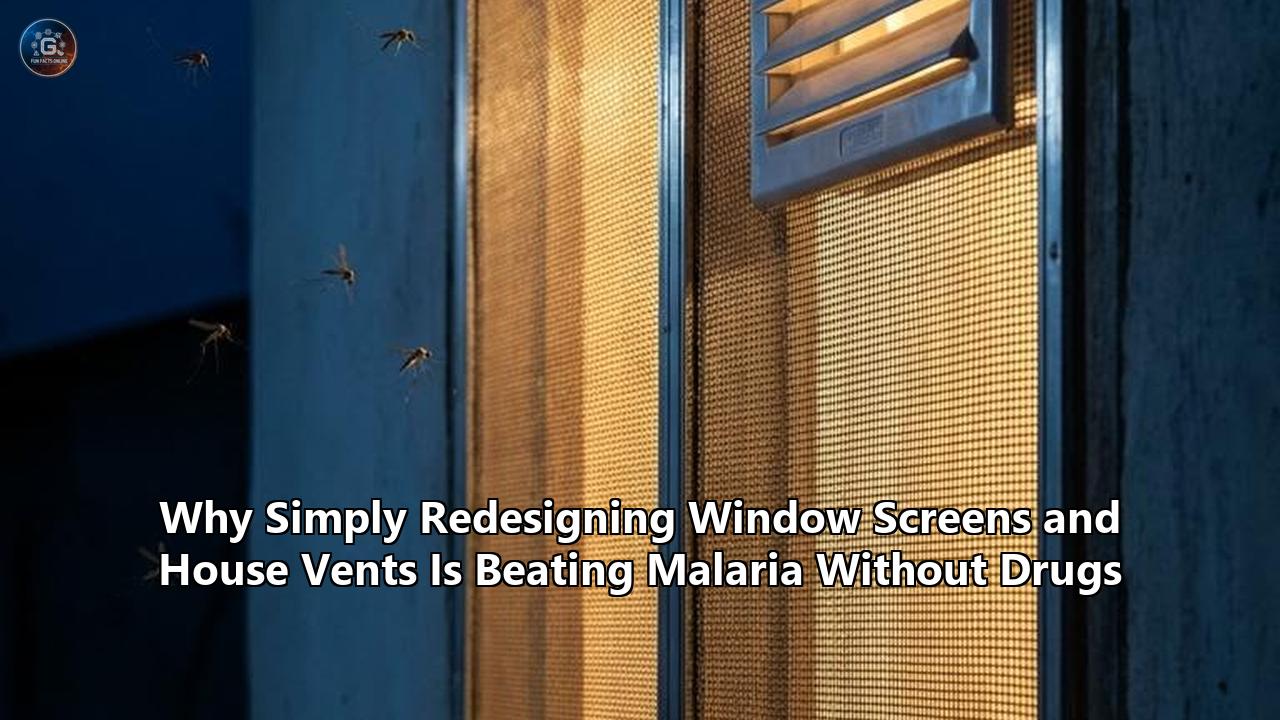
In the high-transmission villages of Mtwara in southeastern Tanzania, a quiet architectural revolution has accomplished what pharmaceutical pipelines and chemical sprays have struggled to sustain for decades. Results from a landmark three-year randomized controlled trial published in Nature Medicine reveal that children living in newly designed, insect-proof, two-story dwellings experienced a staggering 44% reduction in clinical malaria. Known as "Star Homes," these prefabricated houses feature elevated bedrooms, permeable mesh walls, and self-closing doors. They are proving that physical barriers and thermodynamic design can suppress transmission more reliably than traditional medical and chemical tools.
This architectural breakthrough coincides with a series of major trial results from across sub-Saharan Africa. In Cameroon, a pilot study published in Experimental Parasitology demonstrated that simple, low-cost wire mesh retrofitted onto house eaves resulted in a 5.5-fold reduction in the Entomological Inoculation Rate (EIR)—the number of infectious bites a person receives per year. Meanwhile, a 16-month randomized controlled trial in Ethiopia’s Jabi Tehnan district showed that wrapping windows, doors, and eaves in simple wire mesh led to a six-fold decline in malaria prevalence.
These developments come at a critical moment. For more than two decades, the global campaign against malaria has rested on a clinical-chemical paradigm: treating infected patients with artemisinin-based drugs and shielding sleepers with insecticide-treated bed nets. However, this chemical shield is cracking under the pressure of rapid biological evolution. By shifting focus from the biochemistry of the parasite to the physical architecture of the human dwelling, researchers and engineers are demonstrating that smart, passive house designs can neutralize transmission before a mosquito ever makes contact with human skin.
The Crisis of Chemistry: Why Standard Interventions Are Faltering
The rise of structural vector control is born out of necessity. For years, standard malaria prevention methods like insecticide-treated bed nets (ITNs) and indoor residual spraying (IRS) were highly effective. Between 2000 and 2015, they drove a historic decline in global malaria deaths. However, that progress has stalled, and in some areas, reversed. The primary driver of this stagnation is a double wall of physiological and behavioral resistance that has left public health authorities with dwindling chemical options.
Physiological Resistance to Insecticides and Drugs
For decades, the global fight against malaria has relied almost entirely on a single class of chemicals for bed nets: pyrethroids. Because pyrethroids are highly effective, low-toxic to humans, and fast-acting, they were coated onto billions of long-lasting insecticidal nets distributed across the globe.
Predictably, this massive, uniform selective pressure triggered rapid evolutionary pushback. Today, Anopheles mosquito populations across Africa have developed widespread physiological resistance to pyrethroids. In many areas, mosquitoes can land on pyrethroid-treated nets for hours without absorbing a lethal dose.
At the same time, the malaria parasite itself, Plasmodium falciparum, is evolving resistance to our frontline clinical defense. Artemisinin partial resistance, once confined to the Greater Mekong Subregion in Southeast Asia, has firmly established itself in East African nations, including Uganda, Rwanda, and Eritrea. The prospect of dual resistance—where mosquitoes ignore insecticides and parasites survive drugs—threatens to unleash an unprecedented public health crisis.
The Shift in Vector Behavior
Even when insecticides remain chemically active, mosquitoes are changing their behavior to bypass them. Traditional vector control assumes that malaria-carrying mosquitoes are endophagic (feeding indoors) and endophilic (resting indoors after feeding). Because Anopheles gambiae and Anopheles funestus typically bite late at night when people are asleep, bed nets were the perfect defense.
However, under pressure from bed nets, mosquito populations have undergone a profound behavioral shift:
- Early-Evening Biting: Vectors increasingly bite earlier in the evening, between 6:00 PM and 9:00 PM, before families retreat to their bed nets.
- Outdoor Feeding (Exophagy): Mosquitoes are shifting their feeding habits outdoors, preying on people as they cook, socialize, or study in open yards.
- Daytime Activity: In some regions, researchers report rising daytime feeding activity, completely neutralizing the protective value of nighttime bed nets.
The Urban Threat of Anopheles stephensi
Adding to this crisis is the rapid, invasive spread of Anopheles stephensi across Africa. Historically a South Asian vector, An. stephensi was first detected in Djibouti in 2012 and has since expanded to Ethiopia, Sudan, Somalia, Kenya, Nigeria, and Yemen.
Unlike native African malaria vectors, which thrive in clean, rural rainwater pools, An. stephensi is highly adapted to urban concrete environments. It breeds in artificial containers, overhead water tanks, gutters, and deep wells, making it incredibly difficult to target with traditional larval source management.
Furthermore, An. stephensi is highly resistant to multiple classes of insecticides and exhibits highly flexible biting patterns, feeding both indoors and outdoors on both humans and animals. Because of this, finding highly sustainable, alternative malaria prevention methods has become an urgent clinical and architectural priority.
The Thermodynamics of Vector Entry: How Homes Attract Mosquitoes
To understand why physical house redesigns are proving so successful, it is necessary to examine the physics and sensory biology of how a mosquito locates its host at night.
The Convective Scent Plume
Human beings are constant heat engines. A resting adult human generates approximately 100 watts of metabolic heat, warming the air immediately surrounding their body. This warmed air expands, becomes less dense, and rises, creating a continuous convective plume that flows upward over the skin.
As this convective air current rises, it carries with it a potent cocktail of chemical cues:
- Carbon Dioxide ($CO_2$): Exhaled from the lungs in concentrated pulses.
- Lactic Acid and Ammonia: Secreted by sweat glands.
- Volatile Organic Compounds (VOCs): Produced by the metabolic processes of skin-dwelling bacteria.
Inside a standard house in sub-Saharan Africa, this warm, human-scented air rises toward the ceiling. In traditional dwellings, which often feature thatch or corrugated iron roofs resting on mud-and-wattle walls, there is a deliberate, open gap left between the top of the wall and the roof. This gap is called the eave.
    Convective Plume Dynamics inside a Traditional House

          [Corrugated Iron / Thatch Roof]
         /                               \
        /      ~~~~~~~~~~~~~~~~~~~~~      \  <-- Warm, scented air escapes
  =====/       ( Scent & CO2 Plume )       \=====  through open eaves (Chimney Effect)
 [Wall]               ^   ^               [Wall]
                      |   |
                   [ Host Sleeping ]
The Eave as an Olfactory Chimney
The eave is designed to let hot air escape, providing essential ventilation in tropical climates. However, this creates a chimney effect. The rising column of warm, $CO_2$-laden, human-scented air is funneled directly out of the open eaves and into the night air.
To a host-seeking female Anopheles mosquito flying upwind, this escaping scent plume is an irresistible beacon. Using highly sensitive olfactory receptors on their antennae, mosquitoes detect the thermal and chemical trail from dozens of meters away. They fly toward the source, tracing the plume back to the house.
Once they reach the exterior wall, they follow the thermal currents upward, easily entering the home through the open eaves. After feeding, the engorged mosquitoes seek resting sites on the interior walls before exiting the next morning. By leaving these eaves entirely open, modern and traditional builders have accidentally engineered houses to act as highly efficient vector collection traps.
Retrofitting the Envelope: The Simplicity of House Screening
The most direct solution to this physical design flaw is surprisingly straightforward: close the entry points. Rather than attempting to kill mosquitoes with chemicals after they have already entered the bedroom, physical house screening (HS) establishes an absolute mechanical barrier at the building's envelope.
Two major randomized trials published in 2025 have provided the gold-standard epidemiological data needed to prove that low-cost structural retrofits can beat back malaria without the use of drugs.
+------------------+--------------------------+----------------------------+
| Parameter        | Cameroon Pilot (2025)    | Ethiopia RCT (2025)        |
+------------------+--------------------------+----------------------------+
| Study Duration   | Pilot Phase              | 16-Month Follow-Up         |
| Intervention     | Wire eave screening only | Wire mesh doors/windows/   |
|                  |                          | eaves + ITNs               |
| Control Group    | Unscreened houses        | ITNs only                  |
| Cost per House   | $23.60 USD               | ~$116.00 USD (Societal)    |
| EIR Reduction    | 5.5-fold drop            | Significant indoor density |
|                  | (37.70 to 6.90 ib/p/y)   | reduction                  |
| Prevalence Drop  | N/A                      | 6-fold reduction           |
|                  |                          | (4.3% down to 0.7%)        |
+------------------+--------------------------+----------------------------+
The Cameroon Eave Screening Trial (September 2025)
Published in Experimental Parasitology, this pilot study investigated a highly localized, low-cost approach to retrofitting homes in a deeply forested, high-transmission area of southern Cameroon.
At baseline, the region faced immense transmission pressure. The Entomological Inoculation Rate (EIR) was recorded at a staggering 73 infected bites per person per year, driven primarily by Anopheles gambiae. This local vector population was fully resistant to bendiocarb and standard pyrethroids. Even though net ownership was high (89.6%), clinical malaria cases remained rampant because the mosquitoes simply bypassed the insecticidal nets.
The intervention was deceptively simple:
- Local carpenters constructed wood lathe strips.
- Durable, low-cost wire insect mesh was stapled directly to these strips.
- The assemblies were secured to the exterior walls, completely sealing the open eaves while still allowing air to pass through the mesh.
- Windows and doors were screened where feasible.
The results were immediate. By closing the eave gap with physical mesh, the intervention led to a 5.5-fold reduction in the EIR inside the improved houses, dropping from 37.7 to just 6.9 infected bites per person per year. The entire modification cost an average of $23.60 per house. It required no complex chemical supply chains, no behavioral compliance from the residents, and offered permanent protection that does not degrade with rain or sun.
The Ethiopia Agroecological Trial (May 2025)
In northwestern Ethiopia’s Jabi Tehnan district, researchers launched a comprehensive 16-month randomized controlled trial across three distinct agroecological zones: dry mountain, plateau highland, and semi-arid plains. The objective was to determine if physical house screening could protect families across diverse climates and environmental conditions.
The trial compared two groups:
- Intervention Group: Houses equipped with wire-mesh screening on doors, windows, and eaves, in combination with standard long-lasting insecticide-treated nets (ITNs).
- Control Group: Houses receiving standard ITNs only.
Over 16 months of continuous active surveillance, the physical screens transformed the local epidemiology. The screened homes experienced a 2.3-fold reduction in indoor malaria vector density. Crucially, the number of blood-fed (engorged or gravid) mosquitoes caught indoors was dramatically lower in the screened houses (66 caught) compared to the unscreened controls (362 caught).
This reduction in successful mosquito feeding translated directly into a six-fold decline in malaria prevalence, which plummeted to just 0.7% in the screened homes, compared to 4.3% in the control homes. This study confirmed that simple house screening is one of the most powerful, climate-resilient vector control options available.
The "Lethal House Lure": Turning Dwellings into Vector Interceptors
While physical screening is highly effective, simply blocking entry points can sometimes divert host-seeking mosquitoes to neighboring, unscreened houses. To prevent this "diversion effect," scientists at Pennsylvania State University, the London School of Hygiene & Tropical Medicine, and Dutch partner In2Care developed an ingenious hybrid intervention.
Known as Screening + Eave Tubes (SET), or the "lethal house lure," this approach does not just block mosquitoes—it turns the entire house into a target-killing vector interceptor.
               The In2Care Eave Tube Design

                    [Corrugated Roof]
         ___________________|___________________
        [                                       ]
        [  (Sealed Eaves - Mud/Cement/Mesh)     ] <-- Gaps blocked
        [                                       ]
        [    ======                       ======]
        [   [ PVC  ]                     [ PVC  ] <-- 6-inch PVC Tubes
        [   [ Tube ]===(Electrostatic)===[ Tube ]     inserted in wall
        [   [______]     Mesh Insert     [______]
        [                                       ]
The Mechanics of the Eave Tube
The system relies on a combination of physical exclusion and highly targeted, resistance-breaking biochemistry.
First, the house is completely sealed. All open eaves are bricked up, plastered with mud, or sealed with cement. Windows and doors are retrofitted with durable, untreated screens. This eliminates all random entry points for vectors.
Second, workers install specialized, 6-inch-diameter polyvinyl chloride (PVC) pipes directly into the walls at eave level, spaced at intervals of 1.5 to 2.3 meters.
Because the rest of the house is sealed, the warm, human-scented air inside the home is forced to escape exclusively through these PVC tubes. The tubes act as concentrated chimneys, blowing out a highly potent stream of human odors. Host-seeking mosquitoes are drawn straight to these pipes.
The Physics of Electrostatic Netting
When a mosquito flies into the PVC tube, it is blocked by a removable plastic insert containing a piece of specialized netting. This is no ordinary mesh; it is treated with a patented electrostatic coating developed by In2Care.
Traditional insecticide-treated bed nets rely on liquid, chemical binders to stick insecticide crystals to polyester fibers. These binders act like glue, enclosing the insecticide and reducing its "bioavailability". To get a lethal dose, a mosquito must rest on a traditional net for minutes, allowing the chemical to slowly dissolve and penetrate its tarsal membranes (feet).
Electrostatic netting operates on a completely different physical principle:
- The mesh fibers carry a permanent static charge.
- Instead of liquid binders, dry, insecticidal powder formulations are applied directly to the net.
- The powder particles bind strongly to the mesh via simple electrostatic polarity, leaving the insecticide crystals completely exposed and highly bioavailable.
When a mosquito makes contact with this electrostatic netting—even for as little as 3 to 5 seconds—the static charge forces the dry chemical particles to transfer aggressively and instantly onto the mosquito's legs and body. This rapid transfer delivers a massive, lethal dose of active ingredient, killing the vector within hours.
Breaking Pyrethroid Resistance
The electrostatic eave tube system is a game-changer for resistance management. Because the tubes are installed high up on the exterior walls, completely out of reach of children, infants, and domestic animals, public health officials can deploy a wide variety of highly potent, non-pyrethroid insecticides:
- Bendiocarb and Pirimiphos-methyl: Organophosphates and carbamates that bypass pyrethroid metabolic resistance pathways.
- Chlorfenapyr: A pyrrole class insecticide that disrupts cellular energy production.
- Biological Agents: Spores of the entomopathogenic fungus Beauveria bassiana, which germinate on the mosquito's cuticle and kill it slowly, preventing the development of behavioral or chemical resistance.
In laboratory and semi-field trials, electrostatic netting treated with standard public health insecticides achieved 100% mortality even against mosquito strains that were more than 1,000-fold resistant to pyrethroids.
Epidemiological Proof: The Côte d'Ivoire Cluster-RCT
The real-world impact of the "lethal house lure" was demonstrated in a massive, multi-year cluster-randomized controlled trial funded by the Bill & Melinda Gates Foundation in central Côte d'Ivoire.
The trial spanned 40 village-level clusters, tracking cohorts of children aged 6 months to 10 years over two years. Every household in the trial received standard long-lasting insecticidal bed nets. In the intervention villages, suitable homes were additionally retrofitted with physical window screening and In2Care Eave Tubes treated with a 10% powder formulation of the pyrethroid $\beta$-cyfluthrin.
The findings, published in The Lancet, were definitive:
- In villages where eave tube coverage reached 70% or higher, the incidence of clinical malaria in children was reduced by 47% compared to control villages.
- Overall, across all intervention villages, children experienced a 38% drop in clinical malaria cases.
- Active case detection showed that the intervention also slashed overall malaria infection prevalence by 36% to 50%.
By turning the home envelope into a community-wide interceptor, the SET system effectively reduced the overall vector population, protecting even those families in the village who did not have eave tubes installed in their homes.
The Tanzania "Star Homes" Trial: A Masterclass in Healthy Architecture
While retrofitting existing houses with screens and eave tubes is a highly cost-effective intervention, the ultimate goal is to design malaria prevention directly into the fabric of new residential construction.
In April 2026, an international consortium of researchers from the Royal Danish Academy, the Mahidol-Oxford Tropical Medicine Research Unit (MORU) at the University of Oxford, Durham University, the Ifakara Health Institute, and CSK Research Solutions published the results of the "Star Homes" project in Nature Medicine.
This landmark study represents the first household-randomized controlled trial of a purpose-built, climate-optimized, healthy house designed specifically to eliminate childhood diseases in rural Africa.
               The Star Home Architectural Blueprint

                    [Ventilated Metal Roof]
                   /                       \
                  /      _______________    \
                 /      |  UPPER FLOOR  |    \
                /_______|  BEDROOMS     |_____\  <-- Sleeping quarters elevated
               [        | (Mesh Walls)  |      ]     above mosquito flight paths
               [        |_______________|      ]
               [               | |             ]
               [               | |             ] <-- Stairs
               [         ______|_|______       ]
               [        |  GROUND FLOOR |      ] <-- Elevated concrete slab for
               [________|  (Living/Sani)|______]     hygiene & easy cleaning
The Architectural Blueprint of the Star Home
The Star Home was conceived by Danish architect Jakob Knudsen. Instead of utilizing standard, single-story, poorly ventilated concrete block designs, Knudsen developed a lightweight, two-story, prefabricated home that uses passive design strategies to keep occupants cool, dry, and insect-free.
Its core architectural features include:
- Double-Story Layout: The home’s bedrooms are located entirely on the upper floor. This is a critical biological intervention. Anopheles mosquitoes are low-flying vectors; they typically forage and fly within 1 to 1.5 meters of the ground. By elevating the sleeping quarters to the second floor, the design physically removes sleeping children from the primary vector foraging zone.
- Permeable Mesh Walls and Cross-Ventilation: To address the intense heat of tropical sub-Saharan Africa, the upper floor features walls constructed of durable, breathable shade netting instead of solid mud or brick. This allows continuous, 360-degree cross-ventilation, dramatically lowering the indoor temperature.
- Passive Cooling ("Cool-Roof" Dynamics): Standard corrugated iron roofs turn traditional homes into virtual ovens during the day, absorbing solar radiation and radiating heat long after sunset. The Star Home incorporates a light-colored, ventilated metal roof that reflects solar radiation and prevents heat transfer. Because the upper sleeping deck cools down rapidly after sunset, residents can sleep comfortably under bed nets without throwing them off due to heat exhaustion.
- Self-Closing Doors and Insect-Proof Windows: All entryways are equipped with high-durability screens and self-closing hinges, ensuring that doors are never left propped open to let vectors slip inside.
- Raised Concrete Ground Floors: The ground floor is a solid, elevated concrete slab. This eliminates the damp dirt floors of traditional homes, which are hotbeds for soil-transmitted helminths and bacterial pathogens.
- Integrated Clean Water and Sanitation: The home is equipped with a rooftop rainwater harvesting system, a secure, fly-proof ventilated improved pit (VIP) latrine, and a smoke-free cooking area to prevent indoor air pollution.
The Staggering Clinical Results
To test the efficacy of the design, the research team conducted a massive, three-year cluster-randomized trial across 70 villages in the highly malaria-endemic Mtwara region of southern Tanzania. The study followed children under the age of 13, randomly allocating families to either live in one of 110 purpose-built Star Homes or to remain in their traditional mud-and-thatch houses (513 control homes).
The results of active, weekly clinical surveillance over three years were extraordinary:
- Malaria Case Reduction: Children living in the Star Homes experienced a 44% reduction in clinical malaria incidence compared to those in traditional homes (Incidence Rate Ratio [IRR]: 0.56; 95% Confidence Interval: 0.43 to 0.72).
- Diarrheal Disease Reduction: Incidences of diarrhea fell by 30% (IRR: 0.70), driven by the elevated, easy-to-clean concrete floors and integrated rainwater systems.
- Acute Respiratory Infection (ARI) Reduction: Cases of pneumonia and other respiratory infections fell by 18% (IRR: 0.82), thanks to the elimination of smoky indoor cooking fires and the vastly improved cross-ventilation.
- Reversal of Childhood Stunting: Most remarkably, children under five years of age living in the Star Homes showed significantly greater height-for-age growth trajectories. By shielding children from the chronic, systemic inflammation caused by repeated bouts of malaria and gut infections, the physical design of the home successfully prevented childhood stunting.
"Malaria, diarrhea, and respiratory infections have been killing children in sub-Saharan Africa for generations," noted Lorenz von Seidlein, professor at the Mahidol-Oxford Tropical Medicine Research Unit and principal investigator of the study. "Our results show that thoughtful house design—insect-proof, smoke-free, cooler, and with clean water—can protect children from all three at once."
Environmental and Economic Co-Benefits: Why Architecture Wins
While the primary argument for structural vector control is its clinical efficacy, its economic, environmental, and behavioral co-benefits make it a far more sustainable long-term investment than continuous, chemical-first campaigns.
Comparative Economic Cost-Effectiveness
Traditional malaria prevention methods are consumable, short-term solutions. Long-lasting insecticidal bed nets degrade, tear, and must be completely replaced every three years. Indoor residual spraying must be re-applied every 6 to 12 months, requiring massive logistics, trained spray teams, and ongoing chemical procurement. Mass drug administration and seasonal malaria chemoprevention require millions of dollars in annual drug purchases and clinical monitoring.
In contrast, structural house modifications represent long-lasting capital improvements. A comprehensive costing study published in late 2025 evaluated the long-term economics of these architectural interventions.
+---------------------------+------------------------+---------------------------+
| Intervention              | Upfront Cost per House | Annualized Cost per       |
|                           | (2022 USD)             | Person Protected (5-Yr)   |
+---------------------------+------------------------+---------------------------+
| Full House Screening (HS) | $116.00                | $4.22                     |
| In2Care Eave Tubes        | $50.00                 | $3.03                     |
+---------------------------+------------------------+---------------------------+
When annualized over a conservative five-year lifespan, physical window and door screening cost just $4.22 per person protected per year. Installing In2Care Eave Tubes cost a mere $3.03 per person protected per year.
Furthermore, because these structural interventions are passive, they require absolutely no behavioral compliance from the occupants. There are no bed nets to hang, no hot rooms to endure, and no complex pharmaceutical regimens to follow. Once installed, the physical barrier protects everyone in the house, every single night, for years.
Decarbonizing the Built Environment
As sub-Saharan Africa experiences rapid population and economic growth, millions of new homes will be constructed in the coming decades. If these homes are built using traditional, energy-intensive concrete block construction and unventilated corrugated iron roofs, they will lock in massive carbon footprints and turn residential neighborhoods into virtual ovens.
The Star Home design offers a powerful blueprint for sustainable, climate-resilient development:
- 73% Less Concrete: By utilizing lightweight steel frames and tensioned shade-netting facades, the Star Home uses nearly three-quarters less concrete than a standard cement-block house.
- 57% Less Embodied Carbon: The total carbon emissions released during the manufacture, transport, and assembly of a Star Home are less than half of a conventional modern African home.
- Deforestation Reduction: By replacing traditional mud-and-wattle walls (which require harvesting large amounts of local timber for wall frames and burning wood to fire clay bricks), prefabricated architectural components actively prevent localized deforestation.
                     Environmental Impact Comparison

                 [ Standard Cement-Block House ]
 Concrete Use:   ========================================= 100%
 Carbon Footprint: ======================================= 100%

                 [ The Prefabricated Star Home ]
 Concrete Use:   =========== 27% (73% Reduction)
 Carbon Footprint: =================== 43% (57% Reduction)
Climate Change Adaptation: Passive Cooling
The rapid increase in global temperatures represents a dual threat to health in Africa. Hotter nights make standard homes unbearable, forcing residents to discard their insecticidal bed nets in search of cooler air, which drastically increases their exposure to mosquito bites.
A randomized pilot field study published in Nature Medicine in January 2026 evaluated the feasibility of combining passive cooling with vector proofing in rural African households. The study compared several passive cooling retrofits, including "cool-roofs" (applying reflective coatings to standard metal roofs) and physical screening.
The results showed that houses retrofitted with cool-roofs and screens experienced a daytime temperature drop of 3.3°C and a nighttime drop of 2.4°C. Crucially, the physical screening simultaneously reduced the number of female Anopheles funestus mosquitoes trapped indoors by 77% and Culex mosquitoes by 58%.
This demonstrates that passive structural modifications solve two critical crises at once: they adapt households to a warming climate while physically suppressing vector transmission.
Overcoming the Barriers: Scaling Up Structural Vector Control
Despite the clear epidemiological, economic, and environmental benefits, shifting the global malaria paradigm from clinical chemistry to healthy architecture is not without its challenges. For screening and passive house designs to achieve their full potential, leaders in public health, architecture, and international finance must address several key barriers.
1. Reforming National Building Codes
Currently, the vast majority of municipal and national building codes in sub-Saharan Africa do not include vector proofing or passive cooling requirements. Homes are built to minimal structural standards, with little regard for how design decisions impact disease transmission.
Governments must urgently integrate mosquito-proofing into national housing policies and building regulations. Simple mandates—such as requiring all new residential constructions to feature screened windows, sealed eaves, and self-closing doors—can lock in decades of health protection at a fraction of the cost of post-construction retrofits.
2. Strengthening Local Supply Chains
For house screening and eave tubes to scale, the raw materials must be affordable and locally available. Currently, high-quality, durable, UV-resistant wire mesh and specialized eave tube inserts must often be imported, driving up the cost for low-income households.
Establishing local manufacturing hubs for insect screening, durable PVC components, and electrostatic meshes can dramatically reduce costs, create local jobs, and ensure that vector-proofing materials are as easily accessible in rural markets as standard cement and corrugated iron.
3. Fostering Community Ownership
For any architectural intervention to succeed, it must align with the cultural practices, lifestyle preferences, and socioeconomic realities of the community.
Qualitative sociological studies accompanying the Star Homes trial highlighted important implementation details:
- The "Cooking Fire" Dilemma: In the Star Homes, families were provided with improved, smoke-free indoor stoves. However, many residents preferred their traditional, three-stone outdoor open cooking fires. This led to families spending more time outdoors in the early evening, exposing them to bites from outdoor-foraging vectors.
- Daytime Open Doors: In some trial villages, residents frequently propped screened doors open during the day to allow children and livestock to move freely. This allowed mosquitoes to enter the home during the day, resting indoors until nightfall.
- Sleeping Preferences: Some residents occasionally chose to sleep on the cooler ground floor rather than the elevated upper deck, inadvertently placing themselves back into the mosquito foraging zone.
These findings highlight that physical malaria prevention methods cannot simply be "installed" and forgotten. They must be accompanied by robust, community-led education and social behavior change campaigns. Local builders and health workers must work closely with families to ensure that screened homes are used correctly and maintained over time.
A New Frontier in Global Health
The historic breakthroughs of 2025 and 2026 have made one thing abundantly clear: we cannot medicate or spray our way out of the malaria epidemic. The biological capacity of mosquitoes to develop resistance to chemical insecticides, and of the malaria parasite to survive clinical drugs, will always outpace our pharmaceutical development cycles.
By shifting our focus to the physical environment, we are tapping into a clean, permanent, and highly resilient form of defense. Physical wire screening, electrostatic eave tubes, and passive two-story designs are demonstrating that we can systematically intercept and eliminate malaria vectors using the basic laws of thermodynamics and materials science.
The transition to architectural vector control represents a profound philosophical shift. It reframes the home not merely as a passive shelter from the elements, but as an active, structural shield for human health. As global health organizations and funding bodies re-evaluate their strategies to meet the Sustainable Development Goals, physical housing modifications are poised to take their rightful place at the absolute forefront of global malaria prevention methods.
Ultimately, the most sustainable drug in our fight against malaria may not be a chemical compound synthesized in a laboratory, but the very walls, windows, and roofs we build around our families.
Reference:
- https://www.tropicalmedicine.ox.ac.uk/news/innovative-housing-design-cools-homes-saves-lives-in-africa
- https://malariaworld.org/scientific-articles/a-low-cost-house-eave-screening-technique-complements-insecticide-treated-nets-in-reducing-indoor-human-exposure-to-the-bites-of-anopheles-mosquitoes-in-a-malaria-endemic-area-of-south-forested-cameroon-results-from-a-pilot-study
- https://pmc.ncbi.nlm.nih.gov/articles/PMC12095629/
- https://cordis.europa.eu/article/id/31217-house-screening-can-cut-malaria-cases-study-reveals
- https://www.researchgate.net/figure/Eave-tube-prototypes-Originally-electrostatic-netting-was-fitted-over-the-PVC-pipe_fig2_318195782
- https://www.malariaworld.org/scientific-articles/housing-modification-for-malaria-control-impact-of-a-lethal-house-lure-intervention-on-malaria-infection-prevalence-in-a-cluster-randomised-control-trial-in-cote-d-ivoire
- https://www.lshtm.ac.uk/newsevents/news/2016/_10.2m_project_to_investigate_eave_tubes_malaria_prevention_method.html
- https://www.biorxiv.org/content/10.1101/2023.07.05.547882v1.full-text
- https://research.itg.be/en/projects/control-of-urban-malaria-transmitted-by-anopheles-stephensi-in-et/
- https://reliefweb.int/report/world/invasive-mosquito-species-could-bring-more-malaria-africa-s-urban-areas
- https://iris.who.int/server/api/core/bitstreams/e8019fc7-47ad-40e2-ad6e-6f984b538938/content
- https://www.malariaworld.org/scientific-articles/investigating-the-association-between-household-exposure-to-anopheles-stephensi-and-malaria-in-sudan-and-ethiopia-a-case-control-study-protocol
- https://royalsocietypublishing.org/rstb/article/376/1818/20190814/31454/Recommendations-for-building-out-mosquito
- https://pmc.ncbi.nlm.nih.gov/articles/PMC9536247/
- https://malariaworld.org/malariaworld-journal/opinion-maximising-impact-house-modification-eave-tubes-malaria-control-africa
- https://www.cochranelibrary.com/cdsr/doi/10.1002/14651858.CD013398/
- https://www.researchgate.net/publication/394873411_A_low-cost_house_eave_screening_technique_complements_insecticide-treated_nets_in_reducing_indoor_human_exposure_to_the_bites_of_Anopheles_mosquitoes_in_a_malaria_endemic_area_of_South_forested_Camero
- https://www.cochrane.org/about-us/news/featured-review-house-modifications-preventing-malaria
- https://pmc.ncbi.nlm.nih.gov/articles/PMC10021308/
- https://pmc.ncbi.nlm.nih.gov/articles/PMC4982263/
- https://journals.plos.org/globalpublichealth/article?id=10.1371/journal.pgph.0000030
- https://www.in2care.org/eave-tubes/
- https://www.springermedizin.de/housing-modification-to-prevent-malaria-in-uganda-an-analysis-of/51858718
- https://pmc.ncbi.nlm.nih.gov/articles/PMC5545004/
- https://pmc.ncbi.nlm.nih.gov/articles/PMC4593083/
- https://www.in2care.org/wp-content/media/2015-Andriessen-Electrostatic-coating-enhances-bioavailability-of-insecticides-and-breaks-pyrethroid-resistance-in-mosquitoes.pdf
- https://pmc.ncbi.nlm.nih.gov/articles/PMC8480128/
- https://pmc.ncbi.nlm.nih.gov/articles/PMC7910282/
- https://www.psu.edu/news/research/story/lethal-house-lures-help-reduce-incidence-malaria-children
- https://www.york.ac.uk/yesi/news/2021/lethal-house-lures-reduce-malaria-in-children/
- https://www.durham.ac.uk/news-events/latest-news/2026/04/star-homes/
- https://www.gavi.org/vaccineswork/better-designed-homes-could-cut-three-major-child-diseases-44-tanzania-trial
- https://malariaworld.org/scientific-articles/housing-modifications-for-heat-adaptation-thermal-comfort-and-malaria-vector-control-in-rural-african-settlements
- https://www.cabidigitallibrary.org/doi/10.1079/9781789248845.0008
- https://www.sciencenews.org/article/house-design-malaria-diarrhea-africa
- https://www.researchgate.net/publication/404031458_A_sustainable_house_design_to_improve_child_health_in_rural_Africa_a_cluster-randomized_controlled_trial
- https://www.researchgate.net/publication/388276677_Community_responses_to_a_novel_house_design_A_qualitative_study_of_Star_Homes_in_Mtwara_southeastern_Tanzania