A landmark study published in the journal Psychedelic Medicine has revealed that the broader national atmosphere during a psychedelic experience can fundamentally alter how the trip shapes an individual's political beliefs and attitudes toward societal conflict. Led by Dr. Otto Simonsson of Sweden’s Karolinska Institutet, the research team analyzed data from a massive longitudinal study of 21,990 U.S. adults to track how naturalistic psychedelic use during key historical moments impacts support for partisan violence.
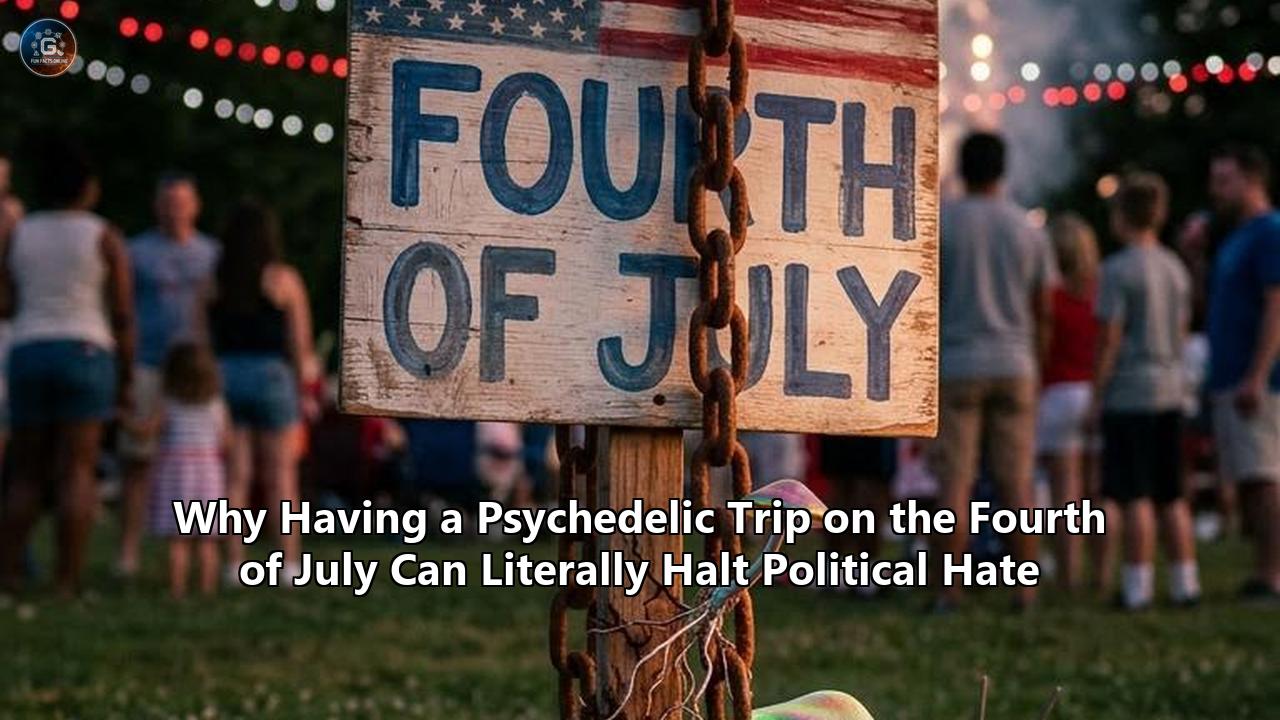
The central finding is as striking as it is unexpected: individuals whose most intense psychedelic experience occurred on the Fourth of July—a holiday traditionally associated with national unity, shared history, and collective celebration—showed a significant, long-term decrease in their support for political and partisan violence.
Conversely, this protective psychological pattern completely reversed for individuals who tripped during highly polarized, high-stakes political events, such as national party conventions or in the immediate countdown to Election Day. In those politically charged settings, naturalistic psychedelic use was associated with an increase in support for partisan violence.
The study offers the first robust empirical evidence of what researchers are calling "sociocultural set and setting"—the idea that the collective national mood and the surrounding cultural calendar act as a major component of the psychedelic experience itself. With the therapeutic and recreational use of these compounds expanding rapidly, the research carries profound implications for clinical psychology, public safety, and the ongoing struggle against democratic polarization.
The Fourth of July vs. The Party Conventions: What the Data Shows
To test whether a whole society's mood could color a psychedelic trip, Dr. Simonsson and his co-authors—Peter S. Hendricks, Walter Osika, and Simon B. Goldberg—turned to a natural experiment. They recruited a geographically and demographically diverse sample of nearly 22,000 U.S. adults, surveying them twice over a two-month period. Crucially, the participants did not know the study was focused on psychedelics, preventing the self-selection bias that often skews research within the enthusiast community.
Of the participants who completed the follow-up, 505 reported using a classic psychedelic (such as psilocybin mushrooms, LSD, or DMT) during the study window. Among them, 19 individuals had their most intense experience on the Fourth of July, while 486 tripped on ordinary days.
Despite the small size of the holiday-specific cohort, the statistical signal was remarkably clear:
- The July 4 Drop: On a standardized psychological scale measuring support for partisan violence ranging from -100 to +100, those who tripped on the Fourth of July reported a drop of approximately 11 points further than those who tripped on standard days. This drop was highly concentrated among the nine out of ten participants in that group who reported actively celebrating the holiday.
- The Election Season Reversal: For those who tripped during national party conventions or close to Election Day, the opposite occurred. Their support for partisan violence actually rose, matching the heightened political conflict in the atmosphere.
- The July 13 Anomaly: The researchers also tracked an exploratory group who tripped on July 13, 2024—the day of the first assassination attempt on Donald Trump. Interestingly, support for partisan violence among this group also softened, particularly among self-identified Republicans. This aligned with a broader, temporary dip in violent sentiments across the general public immediately following the event, suggesting the psychedelic experience amplified the collective shock and subsequent call for de-escalation.
This study shifts the baseline of psychedelic science. For decades, researchers have understood that "set" (a person's internal mindset) and "setting" (their immediate physical environment) dictate the outcome of a trip. Dr. Simonsson’s work proves that the calendar and the news headlines are not mere background noise; they are active ingredients that can bend the trajectory of a trip's psychological aftermath.
The Biological Mechanism: The Hyper-Suggestible Brain
To understand how a national holiday can alter a person’s political tolerance, it is necessary to examine how classic psychedelics interact with human biology. Compounds like psilocybin and LSD act primarily as agonists at the 5-HT2A serotonin receptors in the brain. This activation triggers a cascade of neuroplasticity, temporarily destabilizing rigid, deeply ingrained neural pathways.
A key neurological change during this process is the downregulation of the Default Mode Network (DMN). The DMN is the brain's information hub, responsible for maintaining our ego, our sense of narrative self, and our social sorting systems—the mental boundaries that define "us" versus "them." When the DMN is suppressed, the boundaries of the ego dissolve, leading to a state of profound connectedness.
This state of ego dissolution is directly linked to the relationship between psychedelics and empathy. Under normal circumstances, our empathy is highly selective, often restricted to our in-group (our family, our political party, or our demographic).
When the neurological systems that maintain these boundaries are disrupted, the brain enters a state of hyper-suggestibility. In this highly plastic state, the mind acts like a sponge, absorbing and amplifying the surrounding emotional cues.
| Macro-Setting (Societal Context) | Neurological State | Direction of Empathy | Impact on Political Views |
|---|---|---|---|
| Unifying Holiday (e.g., July 4th) | Ego Dissolution & Hyper-Suggestibility | Broadened outward to include the political outgroup | Decreased support for partisan violence and hostility |
| Polarized Event (e.g., Party Conventions) | Ego Dissolution & Hyper-Suggestibility | Directed inward, reinforcing tribal boundaries | Increased support for partisan violence and hostility |
When an individual's brain is highly receptive, a macro-setting steeped in fireworks, collective relaxation, and shared cultural narratives of unity sends a powerful pro-social signal. The heightened state of psychedelics and empathy is channeled outward, allowing the individual to see political opponents as fellow citizens rather than existential enemies.
However, if that same hyper-suggestible state occurs during a national party convention or a tense election week, the ambient cultural anxiety and tribal defense mechanisms are amplified instead. The openness of psychedelics and empathy is co-opted by an "us-versus-them" narrative, reinforcing in-group loyalty and driving up hostility toward the political outgroup.
The Systemic Shift: Who Is Affected?
The discovery that the macro-setting shapes the long-term psychological outcomes of psychedelic use has immediate consequences across several sectors of society.
Naturalistic and Recreational Users
The vast majority of people who consume psychedelics do so outside of clinical trials. According to the May 2026 UC Berkeley Psychedelics Survey, roughly 57% of U.S. voters report having used psychedelics themselves or knowing someone close to them who has.
For this massive population of naturalistic users, the timing of a trip is no longer a matter of personal convenience. Tripping on a quiet holiday like the Fourth of July can act as a stabilizing, unifying experience.
Conversely, tripping during highly polarized political moments may carry unforeseen psychological risks, potentially leaving users more anxious, tribal, and hostile without them realizing that the national mood drove the shift.
The Clinical and Therapeutic Community
The clinical implications of this research are highly significant for the growing field of psychedelic-assisted psychotherapy. Therapists do not treat patients in a sterile vacuum.
If a patient undergoes psilocybin therapy for trauma or depression during a stressful election cycle, the surrounding societal anxiety can bleed directly into the clinical space.
[Collective Cultural Trauma/Anxiety]
       │
       ▼ (Bleeds into)
[The Clinical Space] ────► [Hyper-Suggestible Patient] ────► [Altered/Warped Healing Outcome]
Clinical trials and therapeutic sessions must now account for this. A therapist may carefully prepare a client and curate a peaceful room with soft lighting and music, but if the patient's brain is highly open to suggestion, a major political crisis or a highly contested election taking place outside the clinic walls can disrupt the integration process.
Political Ideologies and Demographics
The UC Berkeley survey also highlighted a major shift in who is using these substances. Proximity to psychedelics is rising fastest among conservative, older, and Black voters.
Specifically, the proportion of self-reported political conservatives with proximity to psychedelics rose from 43% to 50% between 2023 and 2025/2026, while liberals held steady at around 65%.
Proximity to Psychedelics (2023 vs. 2025/2026):
Conservatives: 43% ───────► 50% (Significant Rise)
Liberals:      65% ───────► 65% (Holding Steady)
As psychedelic use moves beyond progressive circles and becomes more common among moderate and conservative Americans, the interactions between these substances and cultural events will have a more direct impact on the national political landscape.
Rather than pushing users toward a specific side of the political spectrum, the psychedelic experience acts as a lens that focuses and intensifies the surrounding cultural atmosphere.
What Changes: Re-defining "Set and Setting" for the Modern Era
The realization that macro-setting is an active variable changes our understanding of psychedelic safety, clinical trial design, and public policy.
1. The Redefinition of Clinical Controls
Historically, clinical trials for psilocybin, MDMA, and LSD have focused on controlling the micro-environment. Researchers document the dosage, the therapist's credentials, the eye-mask usage, and the music playlist.
However, they rarely control for the date on the calendar. If a major trial is conducted during a peaceful, stable period, the therapeutic outcomes might be highly positive.
If the same trial is run during a highly polarized national election, the ambient stress could lower the therapy's success rate. Future clinical trials will need to treat the macro-setting as a key variable, recording the social and political context of dosing sessions to ensure accurate data.
2. The Rise of "Macro-Harm Reduction"
As more states and countries move toward regulated access to psychedelics, public safety programs must expand their focus. Traditional harm reduction emphasizes physical safety, correct dosing, and having a sober trip sitter.
The Karolinska Institutet study suggests a need for "macro-harm reduction" guidelines. Educational resources will likely begin advising users to consider the sociopolitical calendar when planning a high-dose experience.
Just as one might avoid tripping during a personal crisis, it may become standard advice to avoid doing so during major national crises, highly contested elections, or highly polarized media events.
3. The Re-evaluation of Psychedelic Exceptionalism
For decades, a belief known as "psychedelic exceptionalism" has persisted—the idea that these compounds are inherently anti-authoritarian and will naturally foster liberal, peaceful, and ecological values. This theory was built on early, small-scale studies linking lifetime psychedelic use to lower scores on authoritarianism scales.
However, recent research published in the Journal of Psychopharmacology in June 2026 systematically re-evaluated this link. Across three separate studies—ranging from naturalistic observations to randomized controlled trials—researchers found no reliable changes in authoritarian political views following psychedelic use.
Dr. Simonsson’s latest study builds on this by showing that psychedelics are politically neutral. They do not carry a pre-programmed political direction; instead, they are non-specific amplifiers of the surrounding cultural and political climate.
Short-Term and Long-Term Consequences
The systematic exploration of how macro-setting influences the psychedelic experience reveals a series of critical short-term and long-term consequences for society.
Short-Term Consequences: Clinical Practice and Public Health
In the near term, the clinical and recreational communities must adjust their practices to account for the surrounding political climate.
- Clinical Screening for Societal Stress: Psychedelic-assisted therapists will need to incorporate macro-environmental factors into their intake and preparation protocols. Before administering a dose, clinicians should assess how much a patient is affected by current events, political anxiety, or cultural polarization. If a patient is highly stressed by an upcoming election, it may be beneficial to postpone the session or focus the preparation on filtering out external societal noise.
- The "Psychedelic Weather Report": Educational and harm reduction organizations are likely to develop public tools that act as "psychedelic weather reports." These guides would map out the upcoming cultural and political calendar, advising users on dates that are conducive to a unifying, peaceful trip (such as low-conflict national holidays or periods of political calm) and warning against dates marked by high tension.
- Adjustments to Public Policy and Legal Frameworks: As states like Oregon and Colorado expand their regulated therapeutic systems, regulators may need to consider how public messaging and localized political events affect patients. Setting up state-sanctioned centers far from politically active metropolitan hubs, or ensuring clinics are insulated from the daily news cycle, could become standard practice.
Long-Term Consequences: Cultural Rituals and Political Risk
Over the long term, this research challenges our understanding of how societies can heal or fracture, highlighting both positive potentials and significant risks.
- Designing Collective Rituals for Depolarization: If the national atmosphere on the Fourth of July can consistently reduce support for political violence, societies could theoretically design intentional, collective rituals to help scale down deep political polarization. By pairing unifying national milestones with structured, prosocial frameworks, we could leverage the natural relationship between psychedelics and empathy to help rebuild trust across political divides. Historically, this approach has shown promise in small-scale, cross-cultural settings, such as rituals where Israelis and Palestinians drink ayahuasca together to find common ground.
[Unifying Collective Ritual] ──► [Structured Pro-Social Framework] ──► [Broadened Outgroup Empathy]- The Risk of Weaponized Suggestibility: The hyper-suggestible state induced by psychedelics is a double-edged sword. If these substances are used in highly polarized, echo-chamber environments, they can be co-opted to deepen radicalization. Extremist groups, cults, or authoritarian movements could leverage the neuroplastic window of a trip during a highly combative political event to deeply entrench "us-versus-them" dogmas and justify violence. This highlights a serious long-term risk: as psychedelics become more accessible, they could be used to worsen societal divisions if they are integrated into hostile, tribal frameworks.
- A Shift in Political Science and Sociology: For generations, political scientists have studied polarization through the lens of media consumption, economic disparity, and gerrymandering. This new research introduces a biological and psychopharmacological dimension to political behavior. It suggests that the mental openness of a population, combined with the timing of major cultural events, plays a tangible role in shaping political attitudes and reducing support for violence.
The Public View: Support and Safety Concerns
To understand how these findings might translate to the real world, we must look at how the American public views psychedelics. The 2026 UC Berkeley Psychedelics Survey provides valuable context on this shifting landscape:
- Therapeutic Access vs. Decriminalization: There is a clear distinction in public opinion. While 72% of U.S. voters support legal, supervised therapeutic access to psychedelics, only 25% support broad decriminalization of personal use and possession.
- Perceptions of Safety: Despite growing interest, safety concerns remain high. Only 20% of voters believe psychedelics are safer than alcohol or tobacco. However, this number rises to 34% when the question specifies that the psychedelics are used in a supervised, clinical setting.
- Bipartisan Shifts: Support for psychedelic research is increasingly bipartisan. Proximity to these substances is growing across all political groups, suggesting that the dialogue around psychedelics is gradually moving away from traditional culture-war divisions.
U.S. Voter Attitudes Toward Psychedelics (2026):
[███████████████████████████████░░░] 72% Support Legal Therapeutic Access
[████████░░░░░░░░░░░░░░░░░░░░░░░░░░] 25% Support Personal Decriminalization
[██████░░░░░░░░░░░░░░░░░░░░░░░░░░░░] 20% Believe Safer Than Alcohol/Tobacco (General)
[██████████░░░░░░░░░░░░░░░░░░░░░░░░] 34% Believe Safer Under Supervision
These numbers indicate that while the public is cautious about unsupervised use, there is strong, bipartisan support for structured, therapeutic applications.
If clinical systems can safely incorporate these new insights about macro-setting and timing, they may find a highly receptive public ready to support new approaches to mental health and societal healing.
Looking Forward: Unresolved Questions in Psychedelic Science
Dr. Simonsson's study has opened up a brand new area of study within psychedelic science, leaving several critical questions for future research to answer.
First, how long do these changes in political attitudes last? The Karolinska Institutet study tracked participants over a two-month window, but it remains unclear whether a single, holiday-timed trip can permanently reduce support for partisan violence, or if the effect fades as the individual returns to their daily routine and media consumption. Longitudinal studies tracking participants over several years will be necessary to determine the long-term durability of these shifts.
Second, does this "macro-setting" effect apply to other cultural milestones? While the Fourth of July stands out as a unifying holiday in the United States, researchers have yet to study how similar collective events—such as Thanksgiving, major sporting events like the Super Bowl, or global celebrations like New Year's Eve—influence the outcome of a psychedelic experience. Exploring these dynamics in different countries with different national holidays will help determine whether this is a universal human phenomenon or one specific to American cultural myths.
Finally, can these insights be intentionally applied to clinical trials? As researchers plan the next generation of psychedelic therapies, they may begin to actively test how scheduling dosing sessions in relation to the cultural calendar affects treatment outcomes.
The ultimate lesson of the Fourth of July study is that psychedelics do not hold a pre-packaged moral direction; they are mirrors of the worlds we build around them. If we want to use these tools to foster empathy and heal deep societal fractures, we must pay close attention to the cultural and political environments we choose to bring into the experience.
References
- [1] Simonsson, O., Hendricks, P. S., Osika, W., & Goldberg, S. B. (2026). Politically Salient Events May Modulate Effects of Naturalistic Psychedelic Use on Support for Partisan Violence. Psychedelic Medicine. DOI: 10.1177/28314425261444135.
- [2] UC Berkeley Center for the Science of Psychedelics. (2026). A Rising Tide of Cautious Support: The Second UC Berkeley Psychedelics Survey.
- [3] Nour, M. M., Evans, L., & Carhart-Harris, R. L. (2017). Psychedelics, Personality and Political Perspectives. Journal of Psychoactive Drugs, 49(3), 182-191.
- [4] Journal of Psychopharmacology. (2026). Evaluating the Relationship Between Psychedelic Use and Authoritarian Attitudes across Three Diverse Studies.
Reference:
- https://neurosciencenews.com/psychedelics-cultural-political-psychology-30993/
- https://www.earth.com/news/people-who-took-psychedelics-on-the-fourth-of-july-later-reported-a-shift-in-political-attitudes/
- https://www.researchgate.net/scientific-contributions/Otto-Simonsson-2179503871
- https://thesporereport.com/this-new-study-found-that-the-same-psychedelic-trip-can-make-you-more-peaceful-or-more-divided-depending-on-one-surprising-factor/
- https://www.researchgate.net/publication/407545587_Politically_Salient_Events_May_Modulate_Effects_of_Naturalistic_Psychedelic_Use_on_Support_for_Partisan_Violence
- https://www.psypost.org/new-research-challenges-the-idea-that-psychedelics-reduce-authoritarian-attitudes/
- https://www.beckleyfoundation.org/2017/05/18/can-psychedelics-change-political-perspective/
- https://www.researchgate.net/publication/383089137_Understanding_Factors_Explaining_Social_Workers'_Empathy_towards_Sex_Offenders
- https://psychedelicalpha.com/resources/the-psychedelics-perceptions-tracker/
- https://neurosciencenews.com/psychedelics-cultural-political-psychology-30993/
- https://www.drugscience.org.uk/what-u-s-voters-really-think-about-psychedelics-an-interview-with-the-co-author-of-a-new-uc-berkel
- https://psychedelics.berkeley.edu/five-big-takeaways-2025-uc-berkeley-psychedelics-survey/
- https://www.earth.com/news/people-who-took-psychedelics-on-the-fourth-of-july-later-reported-a-shift-in-political-attitudes/
- https://www.eurekalert.org/news-releases/1134203