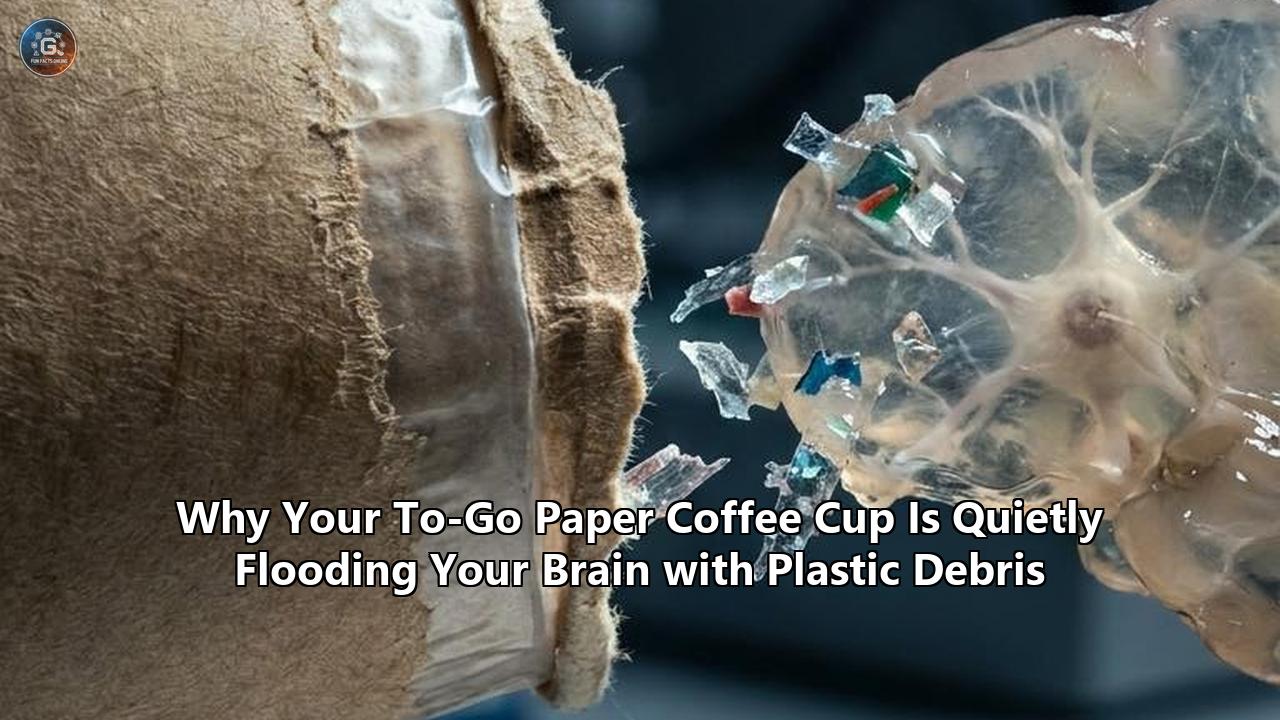
A series of analytical studies has exposed a troubling connection between daily conveniences and neurological health, revealing that the humble disposable paper coffee cup is a major vector for plastic contamination in the human brain.
A pivotal study published in Nature Medicine by toxicologist Dr. Matthew Campen and his team at the University of New Mexico Health Sciences revealed that microplastics and nanoplastics are bypassing human defense systems and accumulating in brain tissue at alarmingly high rates. The researchers analyzed human brain samples collected during autopsies and found that the brain tissue contained plastic concentrations seven to 30 times higher than those found in primary filtration organs like the liver and kidneys.
The study's most striking finding was that brain specimens from 2024 contained nearly 5,000 micrograms of plastic per gram of brain tissue—representing roughly 0.5% of the brain's total weight and marking a 50% increase from samples dating back to 2016. The predominant polymer identified in these neural samples was polyethylene, the exact synthetic compound used to line single-use paper cups.
Average Microplastic Concentration in Human Organs
(Micrograms of plastic per gram of tissue)

Brain:   [██████████████████████████████] 5,000 μg/g (0.5% by weight)
Kidneys: [███] 500 μg/g
Liver:   [██] 350 μg/g
This neurological bioaccumulation aligns with separate research from the University of Birmingham, published in Science of the Total Environment, which analyzed synthetic particle concentrations in everyday commercial beverages. The researchers determined that hot drinks served in disposable to-go cups contain significantly higher concentrations of microplastics than cold drinks, pointing to heat as the primary driver of polymer degradation and particle release.
As hot liquids interact with plastic-lined containers, they release tens of thousands of microscopic synthetic particles, highlighting the unrecognized risk of microplastics in coffee cups.
The Paper Cup Illusion: What Lies Beneath the Cardboard Exterior
The commercial appeal of the paper coffee cup relies on a widespread environmental and health misconception: the belief that these containers are made entirely of biodegradable paper. Uncoated paper cannot hold hot liquids without immediately losing its structural integrity, turning soggy, and leaking. To prevent this, manufacturers apply a thin, hydrophobic plastic barrier to the inner wall of the cup.
This lining is typically composed of low-density polyethylene (LDPE) or, in some specialty "eco-friendly" cups, polylactic acid (PLA). Applied under high pressure, this microscopic plastic film remains stable at room temperature but degrades rapidly when subjected to the temperatures required for commercial hot beverages.
 Anatomy of a Single-Use Paper Cup

  │   │  ◀─── Hot Liquid (85°C – 90°C)
  │ █ │  ◀─── Microscopic LDPE Lining (0.02 mm thick)
  │ █ │       [Thermal stress degrades polymer chains]
  │ █ │  ◀─── Bleached Paperboard Outer Wall
  ▼   ▼
Research from the Indian Institute of Technology (IIT) Kharagpur demonstrated the physical instability of this plastic barrier. When hot water between 85°C and 90°C—the standard temperature range for brewing coffee—is poured into a standard plastic-lined paper cup and allowed to sit for 15 minutes, the inner lining undergoes physical degradation.
The high-temperature liquid weakens the cohesive forces within the polyethylene film, causing the plastic to crack and shed particles. This process releases approximately 25,000 micron-sized microplastic particles into a single 100-milliliter serving.
Furthermore, a study from China Jiliang University testing commercial single-use cups showed that polyethylene-coated paper cups can release up to 5,984 microplastic particles per liter, alongside billions of smaller, sub-micron nanoplastics.
Subsequent structural analyses published in the Journal of Hazardous Materials: Plastics used advanced scanning electron microscopy to examine these inner linings before and after thermal exposure. Under cold conditions, the polyethylene lining remained relatively intact.
However, after exposure to hot water, the surface of the plastic lining became noticeably rougher and developed micro-fractures. This physical degradation occurs because hot liquids cause the polymer chains to expand and separate, making them highly susceptible to shedding.
While chemical analysis confirms that the lining remains chemically stable, its physical structure breaks down. This structural erosion allows millions of nano-sized fragments to shear off into the beverage, providing researchers with a clearer understanding of the physical release rate of microplastics in coffee cups.
A Cellular Highway: From the Gut to the Glia
Once a consumer swallows a hot beverage contaminated with microplastics, the particles begin a complex physiological journey. While larger microplastics (ranging from 10 to 1000 micrometers) are generally excreted through the gastrointestinal tract, smaller microplastics and nanoplastics (particles measuring under 100 nanometers) behave very differently inside the body.
Because of their microscopic size, nanoplastics easily penetrate the biological barriers designed to protect vital organs.
  Ingestion of Contaminated Hot Beverage
                 │
                 ▼
     Gastrointestinal Tract
  (Nanoplastics penetrate gut lining)
                 │
                 ▼
         Circulatory System
  (Polyethylene particles travel via bloodstream)
                 │
                 ▼
       Blood-Brain Barrier (BBB)
  (Particles under 200nm bypass the BBB)
                 │
                 ▼
          Brain Tissue
  (Accumulation in lipid-rich frontal cortex)
First, these nanoplastics pass through the epithelial lining of the gut via transcytosis, a cellular transport process that allows foreign particles to migrate directly into the lymphatic and circulatory systems. Once in the bloodstream, these particles circulate freely throughout the body.
The brain is protected from circulating pathogens and toxins by the blood-brain barrier (BBB)—a highly selective semipermeable border of endothelial cells. However, recent toxicological models show that the blood-brain barrier is highly vulnerable to particles measuring 200 nanometers or less.
Because nanoplastics are extremely small, they bypass the tight junctions of the blood-brain barrier. They can cross either by diffusing directly through cell membranes or by piggybacking on apolipoproteins, which are natural fat-transporting proteins that the brain actively imports.
Once inside the central nervous system, these plastic particles face a unique environment. The human brain is highly lipid-rich, with fat making up roughly 60% of its structural weight.
Polyethylene, the primary polymer found in both paper cup linings and brain autopsies, is highly lipophilic. This chemical affinity means that once polyethylene nanoplastics cross the blood-brain barrier, they naturally bind to the lipid-rich myelin sheaths and cell membranes of neurons, rather than remaining in suspension where they could be filtered out.
As a result, habitual consumers of hot take-out drinks remain largely unaware of how microplastics in coffee cups bypass traditional digestive filters, traveling directly from the stomach to the brain.
Who Is Most Vulnerable to this Synthetic Accumulation?
The health risks of brain contamination from microplastics do not affect all populations equally. Susceptibility depends heavily on lifestyle habits, age, and existing physiological conditions.
Vulnerability Matrix: Microplastic Bioaccumulation Risks

┌──────────────────────┬───────────────────────────────┬────────────────────────────────┐
│ Population Segment   │ Primary Exposure Pathway      │ Neurological Risk Profile      │
├──────────────────────┼───────────────────────────────┼────────────────────────────────┤
│ Corporate &          │ Habitual daily consumption    │ Accelerated accumulation       │
│ Professional Workers │ of hot take-out coffee/tea    │ in prefrontal cortex           │
├──────────────────────┼───────────────────────────────┼────────────────────────────────┤
│ Elderly & Aging      │ Decades of environmental      │ Aggravated neuroinflammation;   │
│ Populations          │ exposure; age-weakened BBB    │ links to cognitive decline     │
├──────────────────────┼───────────────────────────────┼────────────────────────────────┤
│ Prenatal &           │ Maternal transfer of nano-    │ Developmental neurotoxicity;   │
│ Developing Brains    │ particles through placenta    │ altered neural pathways        │
└──────────────────────┴───────────────────────────────┴────────────────────────────────┘
The Daily Consumer
The most heavily exposed group consists of corporate employees, students, and urban professionals who drink hot take-out beverages every day. A person who drinks two or three cups of coffee or tea daily from disposable cups is estimated to ingest over 75,000 microplastic particles each day.
Over a year, this habit results in the ingestion of tens of millions of synthetic particles. This continuous, low-dose exposure ensures that the bloodstream carries a constant supply of nanoplastics, keeping the blood-brain barrier under steady pressure and driving up accumulation rates in the brain.
Elderly and Aging Populations
Older adults face a dual vulnerability. First, they have lived through decades of global plastic production, meaning their lifetime bioaccumulation is naturally higher than that of younger generations.
Second, the blood-brain barrier naturally weakens with age, becoming more permeable and less efficient at filtering out foreign substances. Dr. Matthew Campen noted that this compromised barrier integrity allows nanoplastics to slip into the neural tissue of elderly individuals much more easily, accelerating cognitive issues and compounding existing neurological vulnerabilities.
Prenatal and Developing Brains
Developing fetuses and infants are also at high risk. Research has already confirmed that nanoplastics can cross the human placenta, entering the fetal circulatory system and accumulating in developing organs.
Because a fetus’s blood-brain barrier is still forming, it offers minimal defense against circulating synthetic particles. Ingesting nanoplastics during pregnancy can expose the developing fetal brain to these particles during critical windows of neural mapping, which may permanently alter brain development and increase the risk of behavioral or cognitive disorders later in life.
Short-Term Disruptions: Inflammation and Energy Crisis in Neural Tissue
While the long-term clinical outcomes of brain plastic accumulation are still being mapped, cellular and animal models have identified several immediate, acute consequences of nanoplastic exposure in the central nervous system.
     Nanoplastic Entry into Brain Tissue
                      │
           ┌──────────┴──────────┐
           ▼                     ▼
  Microglial Activation     Mitochondrial Damage
  (Chronic neuro-          (Neuronal energy crisis;
   inflammation)            cellular stress)
The human brain relies on a specialized immune defense system composed of microglia—highly sensitive cells that act as macrophages to clear pathogens and cellular debris. When nanoplastics enter brain tissue, microglia recognize them as foreign, non-biological invaders.
However, unlike organic debris or bacteria, synthetic polymers like polyethylene cannot be broken down by the enzymes inside microglia. This leads to a persistent "frustrated phagocytosis" loop, where microglia remain locked in an active, pro-inflammatory state.
In this activated state, microglia continuously release pro-inflammatory cytokines, chemokines, and reactive oxygen species (ROS). This constant immune response damages nearby healthy neurons, causing chronic, low-grade neuroinflammation that impairs neurotransmitter pathways and disrupts normal brain function.
Beyond triggering an immune response, nanoplastics also disrupt the internal machinery of neurons. Within cells, these particles migrate toward mitochondria, the organelles responsible for producing cellular energy in the form of adenosine triphosphate (ATP).
By binding to mitochondrial membranes, nanoplastics disrupt the electron transport chain, reducing cellular energy production and causing mitochondrial dysfunction. This energy deficit leaves neurons vulnerable to stress, compromises synaptic transmission, and impairs short-term cognitive processes, including working memory, focus, and executive function.
By understanding the biological path of microplastics in coffee cups, researchers can better trace how these physical changes in brain tissue occur.
Long-Term Fallout: The Tragic Intersection of Plastic and Pathology
Over years of continuous exposure, the accumulation of plastics in the brain poses more serious, systemic risks. The long-term bioaccumulation of these synthetic materials is increasingly linked by researchers to chronic, irreversible neurodegenerative diseases.
Hypothesized Mechanism of Plastic-Induced Neurodegeneration

┌────────────────────────┐      ┌────────────────────────┐      ┌────────────────────────┐
│ Chronic Low-Grade      │ ───► │ Accelerated Protein    │ ───► │ Severe Cognitive       │
│ Neuroinflammation      │      │ Misfolding & Plaques   │      │ Decline & Dementia     │
│ (Activated Microglia)  │      │ (Amyloid-Beta & Tau)   │      │ (Up to 10x plastic load)│
└────────────────────────┘      └────────────────────────┘      └────────────────────────┘
The most concerning finding from the 2025 Nature Medicine study was the stark difference in plastic concentrations between healthy brains and those with neurodegenerative diseases. The researchers examined brain samples from 12 individuals who died with dementia, including Alzheimer’s disease, and found that their brains contained three to 10 times more plastic by weight than those of neurologically healthy individuals.
While this correlation does not prove that plastics cause dementia, it highlights a dangerous biological relationship. There are two primary hypotheses for this connection:
- The Catalyst Hypothesis: The chronic neuroinflammation and oxidative stress caused by decades of plastic accumulation accelerate the onset of Alzheimer’s disease. The physical presence of nanoplastics may act as a scaffold that speeds up the misfolding and aggregation of amyloid-beta proteins and tau tangles, the pathological hallmarks of Alzheimer's.
- The Clearance Deficit Hypothesis: Dementia itself impairs the brain's glymphatic system—the waste-clearance pathway that flushes out metabolic toxins during sleep. When this clearance mechanism fails, the brain loses its ability to remove microplastics, allowing them to accumulate rapidly.
Comparison of Plastic Accumulation in Brain Samples
(Micrograms of plastic per gram of prefrontal cortex tissue)

Healthy Brains:    [████████] 5,000 μg/g (Median)
Dementia Patient:  [████████████████████████████████████████] 25,000 - 50,000 μg/g
The long-term risks are further compounded by the chemicals used in the manufacturing of these plastics. Single-use paper cups and lids often contain chemical additives like plasticizers, flame retardants, and manufacturing byproducts like benzophenone.
As the polyethylene lining degrades, these toxic compounds leach directly into the beverage. Once in the body, they act as endocrine disruptors, mimicking hormones, altering cellular signaling, and causing systemic toxicity that can affect both metabolic and neurological health.
Estimates suggest that the average single-use cup user ingests roughly 54 grams of microplastics over their lifetime—equivalent to a quarter-cup of pure plastic debris. This volume of synthetic material is more than enough to disrupt delicate biological systems over time.
Breaking the Habit: Systemic Alternatives and the Path Forward
As the health risks of brain plastic contamination become clearer, the focus is shifting toward practical solutions and systemic alternatives. Swapping out disposable cups is the single most effective way for individuals to reduce their daily exposure.
Safety Hierarchy of Hot Beverage Containers

[ MOST HAZARDOUS ]  Disposable Plastic Cups (Pure PE / Polystyrene)
                    Disposable Lined Paper Cups (LDPE / PLA Coated)

[ MODERATE RISK  ]  PLA-Coated Paper Cups (Slower breakdown, but still sheds)
                    Certified Home-Compostable PHA-Lined Cups

[ SAFEST CHOICE  ]  Borosilicate Glass / Food-Grade Stainless Steel
                    Lead-Free Glazed Ceramic Vessels
Using glass, food-grade stainless steel, or lead-free ceramic containers completely eliminates the risk of plastic contamination. These materials are highly stable at boiling temperatures, meaning they do not degrade or leach particles into hot beverages.
For consumers who rely on takeaway coffee, bringing a reusable travel mug is a highly effective way to eliminate the shedding of microplastics in coffee cups altogether.
For the commercial food service industry, switching away from traditional plastics is a more complex challenge. However, new packaging technologies offer some promising alternatives:
- Polyhydroxyalkanoates (PHA): PHA is a bio-polyester produced naturally by bacterial fermentation. It provides a highly effective water barrier for paper cups but is home-compostable and degrades naturally in the environment without breaking down into persistent, toxic microplastics.
- Aqueous-Coated Board: This technology uses water-based polymer dispersions applied as a thin coating. It provides a reliable moisture barrier that can be recycled directly back into paper mills, eliminating the need for a separate plastic lining.
Comparison of Lining Materials for Hot Beverage Cups

┌───────────────────┬───────────────────┬───────────────────┬───────────────────┐
│ Material Type     │ Source Material   │ Biodegradability  │ Heat Stability    │
├───────────────────┼───────────────────┼───────────────────┼───────────────────┤
│ Low-Density       │ Petroleum-based   │ Non-biodegradable;│ High degradation  │
│ Polyethylene (PE) │ synthetic polymer │ fragments into    │ and shedding      │
│                   │                   │ microplastics     │ at hot temps      │
├───────────────────┼───────────────────┼───────────────────┼───────────────────┤
│ Polylactic Acid   │ Cornstarch or     │ Industrially      │ Slower breakdown, │
│ (PLA)             │ sugarcane         │ compostable only; │ but still sheds   │
│                   │                   │ still sheds       │ under heat        │
├───────────────────┼───────────────────┼───────────────────┼───────────────────┤
│ Polyhydroxy-      │ Bacterial         │ Fully marine and  │ Highly stable;    │
│ alkanoates (PHA)  │ fermentation      │ soil biodegradable│ minimal shedding  │
│                   │                   │ in weeks          │ risk              │
└───────────────────┴───────────────────┴───────────────────┴───────────────────┘
The transition to safer alternatives will require more than just individual lifestyle changes; it will require broader policy reforms. In response to this growing body of research, regulatory agencies are beginning to re-evaluate what materials are allowed to come into contact with our food and drinks.
Regulatory bodies have historically treated polyethylene lining as biologically inert, but this classification is increasingly outdated. Public health experts are calling for updated safety testing that measures not just macro-chemical stability, but also physical particle release under high temperatures.
Until these industrial standards are updated and enforced, consumers must rely on their own awareness to protect their health. By choosing reusable, non-plastic containers, coffee lovers can enjoy their daily brew without unintentionally flooding their brains with synthetic debris.
References
"Hot coffee served in disposable to-go cups contains significantly higher concentrations of synthetic microplastics..." Refreshment Magazine. September 8, 2025. https://vertexaisearch.cloud.google.com/grounding-api-redirect/AUZIYQH4CaO-aVPyp0ydgKOC9_w8EyJEKubps5L91Q-8A8P4Y7SQTQU9Km-AMZA_3OLIdIIX5PcbuKMJZAiDvkbAlM6j8FatifTZEz1tizN3uC8XnLSdkcliGJ_XTdL5CFoenOm0KryT6ztBx6Ro9a06nvEpPrz0INLL0DAZfdWrLBMCH1aE2otx5IXLvabLc80K9SLZVOfWCVMo7c0bSnywDadaW5KyCpwjfGIW-53YCsMfLiWMnT7km1bqGd8=
Goel, S., et al. "Disposable paper cups are not safe for drinking tea and a person drinking three cups of tea in them will end up ingesting 75,000 tiny microplastic particles..." The Hindu. November 8, 2020. https://vertexaisearch.cloud.google.com/grounding-api-redirect/AUZIYFrd--TZ9CetDwsJIcRiHRkB4DHDRPXYtOi4t1iNMY9QbysPIbxshxi7TXTvv3NxlH5QQEihPrHRlse5FWrgo_CMghDUo8jqxQq8DFtSahRdvQsgMOW3eczo-GW_SfLRip1X9DhLOegskaCtg8SVJBuHMA1l1YvqdFYWrRm5QQIteV_flAQDaKAunmlm4Dl1IMn1nxq3cRT17WVNDiMPxmfsh46pFo8PZTd0mvpl77ZHaLPD0bNzK1k-i_Ovm9AuLgcA4sxB9ftbeF-rSGqt4JLGm1NaulPirLGAQ0F
"Testing of 90 commercial disposable cups showed substantial plastic debris release, with polyethylene-coated paper cups releasing 675 to 5,984 particles per liter..." University of New Mexico Newsroom. July 9, 2025. https://vertexaisearch.cloud.google.com/grounding-api-redirect/AUZIYQFEs3pThIjwIyD1WgC325mSoacc0iDdmY8tqezbHxUc7nvpwZdz8c-6JCOkpGbgK7nMKHxuYHmzfU3PRFS5K3Z6Uqj_ZfNHbUlE0LTczrQdZzfW66xIyw8bfA6alMxIdATQK9QEsdVGeU6SI2UsfiN5Ek1ih02vO5P8xsdBkjCxxQuKy89ZAgFzXXEXaX_ogcvhNk9fbrTQIu3Pqb_PXXPFQzCEUA==
Schimelpfening, N. "To-Go Coffee Cups Release Thousands of Microplastics: How to Stay Safe." Healthline. January 26, 2026. https://vertexaisearch.cloud.google.com/grounding-api-redirect/AUZIYQExHkwSO9oIvZh0vE18uUqIZzaVNGjhxulz_fnj08CQ_0jOMQO85TlSHjM0hbKMPcSB1nEd-CjOgS5fC3rWLb5pj0QkFu7cc-lm1MViCcpOkYEZdTpVVhHcmG1EKg7GyVwmTz45YqVOfeck7MCSHcYmLTpsCq0TK1s9iORzkFtpasuev-dcr-cafdrwUlryJw==
Main, D. "High levels of microplastics found in human brains." The New Lede. February 3, 2025. https://vertexaisearch.cloud.google.com/grounding-api-redirect/AUZIYQGQolyVg1BUC0tdzlvqGqyNgMMCAD1lBiIyJ0mxP3CUTT8reCo8P2YC9Zr4ByWHNPPrIe0jZcO3m-vyvVV3Q2iSMGXNZetGtwE7syj500DfshJwgur-_PnC9A8JlW2czXObHJs6bW9ZLBUzIn1J6YQzCfkr5cd1E0hGILAhbPzyrglvQwpnLD--OaK7ckVhi8Dp
"Several grams of microplastics in human brains; More in people with dementia: study." NL Times. February 4, 2025. https://vertexaisearch.cloud.google.com/grounding-api-redirect/AUZIYQETaC4wSObNOxnsD7wPRjdLPzlpI3rBsGM2epnXURsngaixGBOfpxmxOmE5NVjRrlFLaGu8jBp3RZ67suTgzyixergSXaEr4IN5lnJTClMA2pv0bPwj89xFjJwkFPIRdEPrQ_W3pbGwT7iSJjmKXPaRDsQBwPjjehZBKGi8YKz_LzkyarVIhdgstBvliHDtZHsOpFtWwk9P
Campen, M. "Bioaccumulation of microplastics in human brains." Presentation at Health Watch USA. October 18, 2025. https://vertexaisearch.cloud.google.com/grounding-api-redirect/AUZIYQHC180W1boqydkH5pxEPFsm0fcuxul-rfece2MdgUZfZW-w2zcfxTaZIqsA4zdasQyfhmx8kMUquVI9DLnNXq4eexcHmjzQJmr6IRBMXW83lOEJvnn17SiujQNBdvpRUcISERz4yeY=
Osaka, S. "A new study shows that microplastics have crossed the blood-brain barrier — and that their concentrations are rising." The Washington Post. February 3, 2025. https://vertexaisearch.cloud.google.com/grounding-api-redirect/AUZIYQEf28tdnfsjnjOBisGZP-c9G6LrUGINjm0ImnVsY_caU0ZJJYfTZjgURnQyXEsBDGNW5YWXDKI-9IqguMtyjDVhbBJtpp8S0YpJoxaFVad6Sty2Kn5QkNx16WHh1QwQcGIBp3zrm2UjS9IdyBz32Kv_zz9dbfpWm2WX3h8FU6tb6dGMpGUF5XU_-zHS0iECIsIn5TaTc5tPFabpc0c=
Haederle, M. "UNM Researchers Find Alarmingly High Levels of Microplastics in Human Brains – and Concentrations are Growing Over Time." University of New Mexico Health Sciences Newsroom. February 28, 2025. https://vertexaisearch.cloud.google.com/grounding-api-redirect/AUZIYQE88WLi9aKqvKx3-4869MQBYwzfEJFzRJ24dtJIanFj1K9aNJuPVv8RuGoqdElfX3BDzTif6GDOc3AbFIxsKEU9kkpLlx2PgMUmV2nWO87AM2QrwJsu3N7VlPmSl1_smSQnz6XqGn6RX1CXbTjNN_D_D06729LPZyhI0XiFZpFyhCV4yHw=
"Microplastics accumulate in human brain tissue at concentrations 7-30 times higher than in other organs..." GlobalRPH. March 20, 2026. https://vertexaisearch.cloud.google.com/grounding-api-redirect/AUZIYQHh7oFYbXT4fuVyWK7MLRtwXTDLvD2Y-0BayNdi9SSZ4V57ZnKr-mhTGyCrHSIEjAqHVDeA8E1NTcLNvCjHAJtfnTJJ0Krrqwq3nqeuWLhD1ZlkkP1K9Fej6Cwnvz33nMbIwQwUNKumO9zazb2wuc-IasSz5oSYPfoVOEbTB63uTJpvR6H9iG00eGpZlYSaZRjvxMkCCja9gZD08cnLVO-kHNMh5AYjPh-R
Chui, S. "Hot drinks in paper cups release microplastics linked to brain damage and dementia risk, nutritionist warns." The Standard Hong Kong. May 25, 2026. https://vertexaisearch.cloud.google.com/grounding-api-redirect/AUZIYQEHQ1l8Gr0Tn24Wn0JpBwKMDxOy3iMDY5CNxQbD2GaC2UJQ6DKNfuH2E9jytmuX9TTzs55hp_GdbBsnNbCvf8_Yz5mi_g1e-Av7ptDvaWloTFnUKSWI3esx1GjRNMzWxpdPZb2pNSfF1ywbOBFa93VQPP87F3g-1ytvhV90Y9AG0RV7Y7s8QcOqQGxpt1AlcfLAWcKO1cvawN5aT9wQlFlYGxcqgMcxfc1dBu7tsEjib0naSkO86xU4479pzpRNuK9q9Nt6TC8fhmE-00WrJmP7MfVtoD3Fl2STyfLA4g==
Joseph, J. "Scientists warn that your morning cup of coffee or tea is likely full of invisible microplastics." Earth.com. September 22, 2025. https://vertexaisearch.cloud.google.com/grounding-api-redirect/AUZIYQFqOr7QiNj4vNMupWkeM0ZoiWb5SAl4qo1GmtSVdndwa2gSkq03tzUZW175h34uXGRn-kQQYWen28xIaaseLsvLZgRu-dsONAIQvWApVTGue-Mc8zaatpb4IykkDG3jIprDhXPCajnQsS2ODhnI8l5k9I0MLR7nKd5kTHxs9FQAandW7H27-KK30nAGCtoBo6_ljRnGftTa0tBOIRE0N2CKIzU=
"Microplastics from everyday containers can harm not only the environment but also the human brain..." Radboud University Blog. August 25, 2025. https://vertexaisearch.cloud.google.com/grounding-api-redirect/AUZIYQHTeGdUwCbvroCbu-_I3z9DkPKJ4oj7sTe9IKrsOzJeDPW1FRBqs4XToglE3dbc5yxGTgWy8sIx2FQyIC-09PQTwGRz9l6eQ6u471PfbxNH157XRsG-73Srlc43IClXdYkNNpDIqXaljAZUIRgT-H-2ydpi03gYKUMWZuTOxH6bghdXeRdFM6k_S-v6buySkin0Ow_9dybCwAU9JUS5BI9gInDq_o4=
"Nanoplastics can also be released into food and drink from food packages such as paper cups..." University of Wisconsin-Madison Environmental Health Sciences. May 27, 2025. https://vertexaisearch.cloud.google.com/grounding-api-redirect/AUZIYQELyS3WYMdDIqGr82by6ZroOXaMrYEBeaMz_D_FitL81Nf3y2GDubuyGoUGSXujMmpjgNCSbXOA-xFUoPdJNM_Sh6ucQa1OKyfA0fmlLtS_Yi6MlDiBnanbVVij1B7WyX1z_vHFEiAdkqQxlzjQ_d5AmH7PTmtGgqwzJaGmWraVAZzJ0UmAkaQBg_OKQlQULaKqBkYG
Reference:
- https://hscnews.unm.edu/news/hsc-newsroom-post-microplastics-human-brains
- https://globalrph.com/2026/03/microplastics-in-coffee-pods-current-evidence-and-potential-health-implications/
- https://www.thenewlede.org/2025/02/microplastics-found-in-human-brains-in-high-levels/
- https://nltimes.nl/2025/02/04/several-grams-microplastics-human-brains-people-dementia-study
- https://www.thestandard.com.hk/wellness/article/332219/Hot-drinks-in-paper-cups-release-microplastics-linked-to-brain-damage-and-dementia-risk-nutritionist-warns
- https://www.refreshmentmag.com/news/hot-coffee-in-to-go-cups-found-to-contain-elevated-levels-of-microplastics-uk-study-reveals
- https://hscnews.unm.edu/news/cup-contamination-research-reveals-alarming-microplastic-levels-in-beverages
- https://www.thehindu.com/news/national/other-states/iit-study-cites-risk-of-plastic-contamination-in-drinking-tea-from-disposable-paper-cups/article33052195.ece
- https://www.healthline.com/health-news/to-go-coffee-cups-release-microplastics-study
- https://blog.susnano.wisc.edu/2025/05/27/can-nanoplastics-breach-the-blood-brain-barrier/
- https://www.earth.com/news/your-morning-cup-of-coffee-or-tea-is-likely-full-of-invisible-microplastics/
- https://www.youtube.com/watch?v=3dJQpEFA7bc
- https://blog.donders.ru.nl/from-your-coffee-cup-to-your-brain-the-hidden-journey-of-microplastics/?lang=en