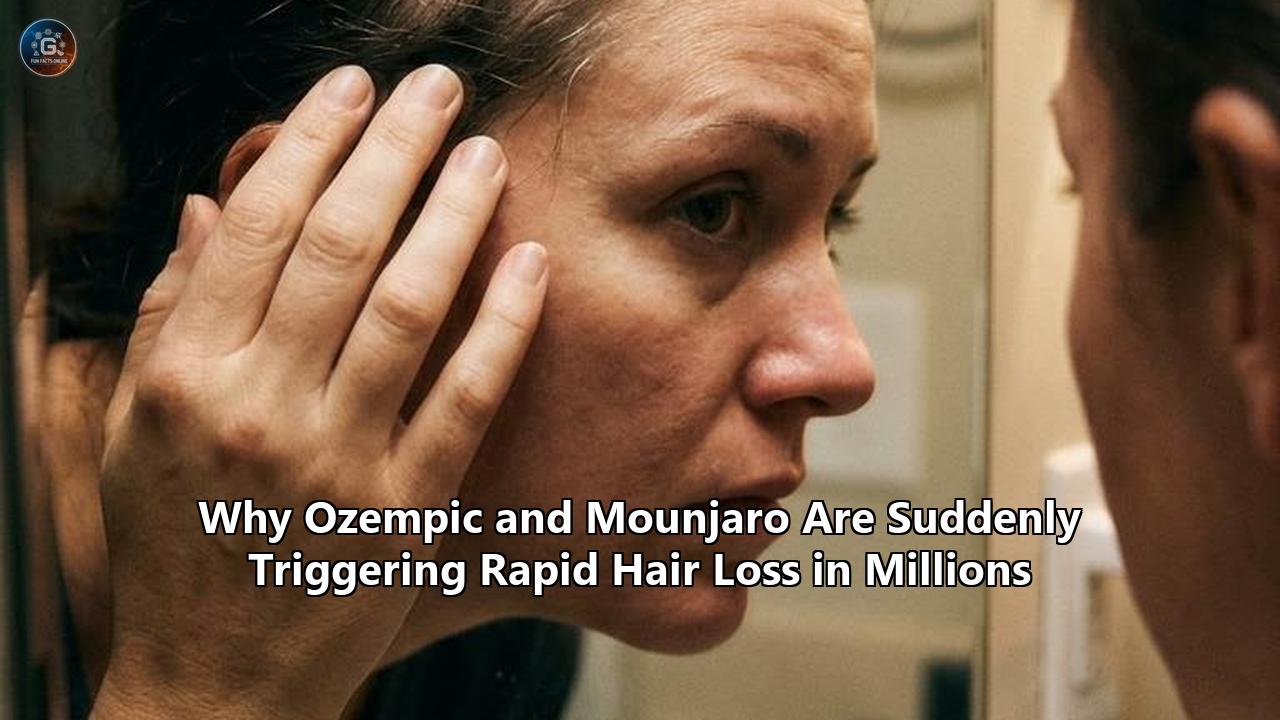
The U.S. Food and Drug Administration (FDA) has formally initiated a safety signal evaluation to examine reports of significant hair shedding in patients taking incretin-based metabolic therapies. The regulatory scrutiny follows the publication of a landmark population-based study in The BMJ, which confirmed that adults with type 2 diabetes prescribed glucagon-like peptide-1 (GLP-1) receptor agonists face a 37% higher risk of being diagnosed with non-scarring hair loss compared to those taking sodium-glucose cotransporter-2 (SGLT-2) inhibitors, and a 68% higher risk compared to those on dipeptidyl peptidase-4 (DPP-4) inhibitors.
The findings build upon a multicenter cohort study led by researchers at George Washington University. Analyzing electronic health records from nearly 550,000 patients across 67 healthcare organizations, that investigation revealed statistically elevated odds of both telogen effluvium (acute resting-phase shedding) and unmasked androgenetic alopecia (pattern hair loss) within 12 months of starting GLP-1 therapy—even after controlling for baseline body mass index (BMI), age, sex, and underlying diabetes status.
As prescriptions for semaglutide (marketed as Ozempic and Wegovy) and tirzepatide (marketed as Mounjaro and Zepbound) top tens of millions globally, reports of hair thinning—dubbed "Ozempic hair" in popular parlance—have shifted from scattered online support group complaints to a validated clinical phenomenon. While clinical trials originally recorded alopecia in only 3% to 5% of participants, real-world practice surveys and specialized hair clinics report that up to 25% to 33% of patients experience noticeable shedding during the peak phase of their weight loss.
This medical reality has created a clear divide across endocrinology, dermatology, and metabolic health. Clinicians are grappling with a core clinical dilemma: Is rapid hair loss an inevitable secondary byproduct of rapid caloric deficit, or are high-dose incretin mimetics directly altering hair follicle kinetics through molecular and endocrine pathways?
The Biological Battleground: Metabolic Shock vs. Direct Drug Action
To understand why millions of GLP-1 users are experiencing hair shedding, dermatologists and endocrinologists are evaluating two competing biological models. The clinical distinction between these mechanisms determines whether hair loss should be managed through dietary modification, dosage adjustments, or targeted hair-restoration pharmacotherapy.
                          PATIENT INITIATES GLP-1 / GIP THERAPY
                                            │
                    ┌───────────────────────┴───────────────────────┐
                    ▼                                               ▼
         HYPOTHESIS A: METABOLIC SHOCK                    HYPOTHESIS B: DIRECT MOLECULAR ACTION
      (Systemic Energy Deficit Model)                   (Follicular & Endocrine Shift Model)
                    │                                               │
    ┌───────────────┴───────────────┐               ┌───────────────┴───────────────┐
    ▼                               ▼               ▼                               ▼
Rapid Caloric       Micronutrient Depletion   GLP-1 Receptor           Transient Androgen Shifts
Deficit             (Ferritin, Zinc, Protein) Activation in Scalp      & Hormonal Fluctuations
    │                               │               │                               │
    └───────────────┬───────────────┘               └───────────────┬───────────────┘
                    ▼                                               ▼
        Telogen Effluvium Trigger                       Follicular Phase Acceleration
  (30–50% of follicles shift to resting)          (Catagen induction & matrix apoptosis)
                    │                                               │
                    └───────────────────────┬───────────────────────┘
                                            ▼
                               DIFFUSE HAIR SHEDDING & THINNING
Hypothesis A: The Systemic Energy Deficit Model (Telogen Effluvium)
The prevailing explanation among endocrinologists attributes hair loss to telogen effluvium—a physiological shedding process triggered when the body experiences acute physical stress, surgical trauma, or rapid weight reduction.
Under normal physiological conditions, approximately 85% to 90% of scalp hair follicles reside in the anagen (active growth) phase, which lasts between two and six years. The remaining follicles are split between the catagen (transition) phase and the telogen (resting) phase, which lasts roughly three to four months before the hair shaft is naturally shed.
When a patient begins taking high-dose semaglutide or tirzepatide, appetite suppression can lead to a caloric reduction of 30% to 50% within days. The human body perceives this rapid drop in bioavailable energy as a metabolic crisis. In response, homeostatic mechanisms prioritize energy delivery to vital organs—such as the heart, brain, and liver—at the expense of metabolically demanding, non-essential structures like hair follicles.
This physiological shift prematurely pushes 30% to 50% of active anagen hair follicles into the telogen phase. Because the telogen phase lasts approximately 90 to 120 days, patients typically do not notice increased shedding until two to four months after initiating the medication or reaching a higher dose.
- The Caloric Cliff Effect: Losing more than two pounds per week creates a metabolic deficit that accelerates hair follicle regression.
- Nutritional Diversion: Essential amino acids and minerals are diverted from keratin synthesis to preserve core organ function.
- Reversibility: Once the patient's weight stabilizes and energy balance is restored, follicles re-enter the anagen phase, though full regrowth can take 6 to 12 months.
Hypothesis B: Direct Molecular and Endocrine Disruption
While the systemic energy deficit model accounts for classical telogen effluvium, emerging research suggests that GLP-1 and glucose-dependent insulinotropic polypeptide (GIP) receptor signaling may exert direct effects on hair follicle microenvironments.
The George Washington University multicenter study revealed that GLP-1 users exhibited elevated rates of non-scarring hair loss even after controlling for the pace and magnitude of weight loss. This suggests that metabolic shock alone may not fully account for all reported clinical cases.
Researchers investigating direct pharmacological pathways highlight several potential cellular mechanisms:
- Scalp Microvascular Changes: Incretin receptors are expressed throughout the vascular endothelium. Rapid changes in systemic blood pressure, peripheral perfusion, or localized nitric oxide production may transiently reduce blood flow to the microvascular papillary dermis, starving high-energy hair matrix cells of oxygen and nutrients.
- Rapid Hormonal Shifts: GLP-1 receptor agonists induce sharp reductions in circulating visceral fat, leading to abrupt decreases in peripheral aromatase activity. In genetically predisposed individuals, this sudden shift in the estrogen-to-androgen ratio can increase localized follicle sensitivity to dihydrotestosterone (DHT), accelerating the unmasking of underlying androgenetic alopecia.
- Incretin Receptors in the Dermal Papilla: Preliminary histological studies are investigating whether functional GLP-1 or GIP receptors are expressed directly on human dermal papilla cells or hair follicle stem cells, potentially altering Wnt/β-catenin signaling pathways that control the anagen-to-catagen transition.
| Feature / Dimension | Systemic Energy Deficit Model (Telogen Effluvium) | Direct Molecular Disruption Model |
|---|---|---|
| Primary Cause | Acute caloric restriction and rapid weight reduction | Direct GLP-1/GIP receptor signaling & microvascular shifts |
| Onset Timing | 8 to 16 weeks post-weight loss onset | Variable; can occur early during dose escalation |
| Shedding Pattern | Diffuse, generalized thinning across the entire scalp | Diffuse shedding often combined with pattern loss (crown/temples) |
| Primary Biomarkers | Low serum ferritin, total protein, zinc, and vitamin D | Altered free testosterone, sex hormone-binding globulin (SHBG) |
| Dermatological Type | Reversible non-scarring telogen effluvium | Non-scarring; may accelerate unmasked androgenetic alopecia |
| Primary Strategy | Protein/micronutrient repletion & weight stabilization | Pharmacological follicle support (Minoxidil/anti-androgens) |
Semaglutide vs. Tirzepatide: Molecule-Specific Hair Loss Profiles
As clinicians analyze cases of Ozempic hair loss, comparative data reveal distinct differences in the shedding profiles associated with single-receptor agonists (semaglutide) versus dual-receptor agonists (tirzepatide).
SEMAGLUTIDE (Ozempic / Wegovy)                 TIRZEPATIDE (Mounjaro / Zepbound)
Selective GLP-1 Receptor Agonist               Dual GLP-1 + GIP Receptor Agonist
─────────────────────────────────             ───────────────────────────────────
• Moderate weight loss velocity                • Accelerated weight loss velocity
  (~15% total body weight)                       (~20-25% total body weight)
• Dose-dependent shedding signal               • Higher overall shedding rate in trials
  (elevated at >2.0mg/week)                      (up to 5.7% vs 3.0% for semaglutide)
• Slower, steady metabolic transition          • Acute, abrupt metabolic shock window
Semaglutide: Selective GLP-1 Agonism and Dose-Dependent Risk
Semaglutide acts exclusively as a GLP-1 receptor agonist, slowing gastric emptying, increasing central satiety, and enhancing glucose-dependent insulin secretion. In clinical trials for diabetes management (Ozempic, dosed up to 1.0 mg or 2.0 mg weekly), hair loss was rarely noted as a statistically significant adverse event.
However, in the higher-dose obesity management trials (Wegovy, dosed at 2.4 mg weekly), hair loss was formally recorded in approximately 3% of adult participants compared to 1% in the placebo arm. Pediatric trials for Wegovy noted an even higher incidence rate of 4%.
Systematic reviews confirm that semaglutide-induced shedding exhibits a strong dose-dependency:
- Low Doses (< 1.0 mg/week): Minimal hair loss reported; incidence rates mirror control populations in type 2 diabetes cohorts.
- High Doses (2.4 mg/week): Marked increase in reported telogen effluvium, correlating directly with the rapid phase of body weight reduction during weeks 12 to 28.
Tirzepatide: Dual GLP-1/GIP Agonism and Rapid Weight Loss Velocity
Tirzepatide combines GLP-1 receptor agonism with GIP receptor activation, producing synergistic effects on fat metabolism and appetite suppression. This dual action yields higher average total body weight loss—frequently exceeding 20% to 25% of baseline body mass in trial cohorts—at a faster rate than selective GLP-1 monotherapy.
This accelerated rate of weight loss corresponds with higher reported rates of hair loss in clinical trials. In the SURMOUNT-1 trial for tirzepatide (Zepbound), hair loss occurred in 4.9% to 5.7% of patients receiving 5 mg, 10 mg, or 15 mg weekly doses, compared to 0.9% in the placebo group.
The gender breakdown within tirzepatide cohorts is particularly pronounced:
- Female Patients: Up to 7.1% reported hair shedding during clinical management.
- Male Patients: Only 0.5% formally reported hair shedding in the same trial cohorts.
This difference is likely driven by a combination of higher baseline rates of iron store depletion (ferritin) among premenopausal women and greater cosmetic sensitivity to diffuse thinning compared to male-pattern recession.
Comparative Trial Data vs. Real-World Evidence
While randomized controlled trials (RCTs) reported alopecia rates between 3% and 6% for high-dose incretins, real-world pharmacovigilance databases and retrospective cohort studies tell a broader story.
REPORTED INCIDENCE OF HAIR LOSS: CLINICAL TRIALS VS. REAL-WORLD DATA

Clinical Trials (RCTs - STEP & SURMOUNT)
[███░░░░░░░░░░░░░░░░░] 3.0% - 5.7%

Real-World Cohort Registries (BMJ / JAAD 2026 Data)
[███████░░░░░░░░░░░░░] 6.5 - 6.9 cases per 1,000 person-years (37-68% relative risk increase)

Patient-Reported Clinical Surveys (Dermatology Clinics)
[███████████████████░] 25.0% - 33.0% (Mild-to-moderate noticeable shedding)
RCTs often underreport mild-to-moderate hair loss because clinical trials register adverse events through voluntary patient reporting or clinician observation, prioritizing life-threatening or organ-system toxicities.
By contrast, real-world cohort studies utilizing electronic health records capture formal diagnostic coding (ICD-10 codes for telogen effluvium and alopecia) over extended follow-up periods, revealing a broader clinical footprint.
The Micronutrient Vacuum: Nutritional Deficiencies Under Incretin Therapy
A primary driver of incretin-induced hair loss is the severe micronutrient depletion caused by reduced food intake. When patients reduce their daily intake from 2,500 calories to 1,200 calories or fewer, overall nutrient intake drops proportionally unless carefully managed.
Incretin medications also slow gastric emptying and alter intestinal motility, which can affect the absorption of key vitamins and trace minerals vital for maintaining the hair matrix.
                   INCRETIN-INDUCED NUTRITIONAL DEPLETION
                                     │
           ┌─────────────────────────┼─────────────────────────┐
           ▼                         ▼                         ▼
   PROTEIN DEFICIT            IRON & FERRITIN           MICRO-MINERALS
   (Keratin Deficit)         (Matrix Anoxia)         (Enzymatic Failure)
           │                         │                         │
  • Decreased building      • Ferritin drops          • Zinc deficiency
    blocks for hair           below 50 ng/mL            impairs synthesis
    shaft structure         • Reduced oxygen          • Vitamin D drops
  • Reduced shaft             delivery to dermal        impairing follicle
    diameter & strength       papilla cells             cycling
           │                         │                         │
           └─────────────────────────┼─────────────────────────┘
                                     ▼
                      FOLLICULAR RESTING PHASE SHIFT
                            (Telogen Effluvium)
1. Serum Ferritin Depletion and Follicular Anoxia
Iron is a critical cofactor for ribonucleotide reductase, an enzyme required for DNA synthesis in rapidly dividing cells—including those in the hair follicle matrix. Serum ferritin reflects total body iron storage.
- Normal Reference Range: 15 to 150 ng/mL for women; 30 to 300 ng/mL for men.
- Optimal Threshold for Hair Growth: Dermatologists recommend maintaining serum ferritin levels above 50 to 70 ng/mL to support active anagen growth.
- The Incretin Impact: Reduced intake of red meat and iron-rich foods, coupled with lower stomach acid production from delayed gastric motility, often causes serum ferritin to fall below 30 ng/mL. This triggers localized hypoxia in the dermal papilla, forcing follicles out of the active growth phase.
2. Amino Acid Starvation and Keratin Synthesis
The hair shaft is composed of approximately 85% to 90% keratin, a fibrous protein rich in the sulfur-containing amino acid cysteine. When patients experience severe nausea or loss of appetite on semaglutide or tirzepatide, protein intake often drops well below recommended levels.
When daily protein intake falls below 0.8 to 1.2 grams per kilogram of ideal body weight, the body conserves available amino acids for muscle preservation, cardiac tissue repair, and hepatic enzyme production. Hair follicles are deprived of structural building blocks, resulting in thinner hair shaft diameters, increased brittleness, and accelerated shedding.
3. Zinc, Vitamin D, and B-Complex Deficiencies
Beyond iron and protein, three additional micronutrients frequently drop during incretin-assisted weight loss:
- Zinc: Acts as a catalyst for protein synthesis and cellular division in hair matrix keratinocytes. Zinc deficiency is directly linked to structural hair shaft defects and telogen effluvium.
- Vitamin D: Regulates keratinocyte gene expression and cycling. Low levels prevent stem cells in the hair follicle bulge from initiating new anagen growth cycles.
- Biotin (Vitamin B7) and Vitamin B12: Essential for cellular metabolism and red blood cell formation. While isolated biotin deficiency is rare, broad B-complex depletion from reduced food volume compromises follicular health.
Clinical Management Frameworks: Slow Titration vs. Rapid Escalation
The emergence of Ozempic hair loss as a widespread safety signal has prompted a debate between two clinical paradigms for prescribing GLP-1 and GIP medications.
PARADIGM 1: RAPID ESCALATION PROTOCOL (Standard Weight-Loss Model)
Dose (mg)
  │                                     ┌─── Max Dose Target (2.4mg / 15mg)
  │                               ┌─────┘
  │                         ┌─────┘
  │                   ┌─────┘
  │             ┌─────┘
  │       ┌─────┘
  └───────┴─────┴─────┴─────┴─────┴─────┴─────► Time (Weeks)
          Wk 0  Wk 4  Wk 8  Wk 12 Wk 16 Wk 20
          [ HIGH WEIGHT-LOSS VELOCITY ] ──► [ ELEVATED TE RISK ]

───────────────────────────────────────────────────────────────────

PARADIGM 2: MICRO-TITRATION & NUTRIENT-BUFFERED PROTOCOL
Dose (mg)
  │                                     ┌─── Customized Plateau Dose
  │                               ┌─────┘
  │                         ──────┘ (Sustained Rate: ~1 lb/week)
  │                   ┌─────┘
  │             ──────┘
  │       ┌─────┘
  └───────┴─────┴─────┴─────┴─────┴─────┴─────► Time (Weeks)
          Wk 0  Wk 4  Wk 8  Wk 12 Wk 16 Wk 20
          [ MODERATE WEIGHT-LOSS VELOCITY ] ──► [ FOLLICULAR STABILITY ]
Approach 1: Rapid Escalation Protocol (The Standard Clinical Model)
The standard manufacturer-recommended titration schedule increases the drug dose every four weeks (e.g., semaglutide escalated from 0.25 mg to 0.5 mg, 1.0 mg, 1.7 mg, and finally 2.4 mg) until the maximum tolerated dose is achieved.
- Clinical Goal: Maximize total weight reduction and rapid metabolic improvements (e.g., fast HbA1c reduction, rapid hepatic fat reduction).
- Tradeoffs: Drives rapid initial weight loss (often exceeding 3 to 4 pounds per week), which increases the risk of acute telogen effluvium and noticeable hair thinning.
- Patient Impact: While cardiometabolic improvements are fast, cosmetic side effects can reduce patient adherence, causing some individuals to discontinue treatment prematurely.
Approach 2: Micro-Titration and Nutrient-Buffered Protocol
To address side effects, a growing number of obesity medicine specialists and dermatologists advocate for a customized, weight-stabilized titration protocol.
- Clinical Goal: Cap weight loss velocity at 1.0 to 1.5 pounds per week (~0.5% to 1.0% of total body weight per week) to minimize systemic metabolic stress.
- Methodology: The physician holds the patient at the lowest effective dose that maintains steady, gradual weight loss rather than automatically escalating every four weeks. If rapid shedding begins, the dose may be reduced temporarily to allow hair follicles to stabilize.
- Proactive Nutritional Buffering: Before initiating treatment, the provider measures baseline serum ferritin, zinc, vitamin D, and total protein, prescribing targeted supplementation before rapid weight loss begins.
- Tradeoffs: Overall weight loss occurs over a longer period, requiring extended patient coaching and ongoing compliance. However, lean body mass and hair follicle integrity are better preserved.
| Protocol Parameter | Rapid Escalation Protocol | Micro-Titration Protocol |
|---|---|---|
| Dose Escalation Pace | Mandatory step-up every 4 weeks | Flexible; based on weight loss velocity |
| Weight Loss Target Velocity | > 2.0 to 4.0 lbs per week | 0.5 to 1.5 lbs per week |
| Baseline Biomarker Screening | Basic metabolic panel + HbA1c | Full panel: Ferritin, Zinc, Vit D, Protein |
| Dose Adjustments for Hair Loss | Rarely adjusted for hair loss | Dose lowered or held if shedding exceeds threshold |
| Telogen Effluvium Incidence | Higher (Estimated 5% to 10%+) | Lower (Estimated < 2%) |
| Cardiometabolic Improvement Rate | Accelerated (Weeks to Months) | Gradual (Months to Years) |
Interventions: Pharmacological vs. Lifestyle Approaches
When managing GLP-1-associated hair loss, clinicians draw from two primary categories of interventions: pharmacological therapies aimed at stimulating hair growth, and lifestyle or nutritional strategies focused on supporting the hair growth cycle.
                     MANAGEMENT STRATEGIES FOR GLP-1 HAIR LOSS
                                         │
        ┌────────────────────────────────┴────────────────────────────────┐
        ▼                                                                 ▼
PHARMACOLOGICAL INTERVENTIONS                                   NUTRITIONAL & LIFESTYLE INTERVENTIONS
  • Minoxidil (Oral: 0.625-2.5mg or Topical 5%)                   • High Protein Intake (1.2-1.5g/kg body weight)
  • Anti-Androgens (Finasteride/Spironolactone)                   • Targeted Ferritin Repletion (Goal > 50-70 ng/mL)
  • Platelet-Rich Plasma (PRP) Therapy                            • Zinc & Biotin Supplementation
  • Topically Applied Peptide Complexes                           • Caloric Stabilization & Gradual Weight Loss
1. Pharmacological Strategies
For patients experiencing persistent shedding or those with underlying pattern hair loss unmasked by weight loss, dermatologists often recommend targeted medical therapies:
Low-Dose Oral Minoxidil (LDOM) vs. Topical Minoxidil
- Topical Minoxidil (5% solution/foam): Re-opens ATP-sensitive potassium channels in dermal papilla cells, extending the anagen phase and stimulating blood flow to the follicle. However, compliance can be challenged by scalp irritation or oily residue.
- Low-Dose Oral Minoxidil (0.625 mg to 2.5 mg daily): Offers systemic coverage with higher adherence rates. It converts to its active sulfated form in the liver and hair follicle, stimulating diffuse hair growth across the scalp.
- Tradeoff: Minoxidil can cause a temporary initial shedding phase (2 to 6 weeks after starting treatment) as resting hairs are pushed out to make way for new growth, requiring clear patient communication.
Anti-Androgens (Finasteride, Dutasteride, Spironolactone)
- Application: Indicated when rapid weight loss unmasks underlying androgenetic alopecia.
- Mechanism: 5-alpha reductase inhibitors (Finasteride/Dutasteride) prevent the conversion of testosterone into DHT. Spironolactone blocks androgen receptors in female patients.
- Tradeoff: These medications target androgen-mediated follicle miniaturization rather than nutritional telogen effluvium. They are ineffective for pure, isolated nutritional deficiency shedding.
2. Nutritional and Lifestyle Interventions
Preventing and reversing nutritional shedding requires addressing baseline nutrient gaps:
Targeted Iron and Ferritin Repletion
- Protocol: Ferrous bisglycinate or elemental iron (65 mg to 130 mg daily) combined with 500 mg of Vitamin C to enhance absorption.
- Goal: Elevate serum ferritin levels above 50 to 70 ng/mL.
- Monitoring: Repeat iron panels every 8 to 12 weeks to prevent iron overload.
High-Density Protein Supplementation
- Protocol: Consuming 1.2 to 1.5 grams of protein per kilogram of target body weight daily.
- Strategy: Patients facing appetite suppression often use liquid protein supplements (e.g., whey isolate, collagen peptides, or plant-based protein powders) to hit daily intake goals without requiring large meals.
Trace Mineral and Vitamin Fortification
- Zinc Picolinate: 15 mg to 30 mg daily to support cellular matrix enzymes.
- Vitamin D3: 2,000 IU to 5,000 IU daily (adjusted based on serum 25-hydroxyvitamin D levels).
- B-Complex: Ensuring adequate B6, B12, and folate intake to maintain cellular energy production.
Diagnostic Protocols: Evaluating Hair Loss During Incretin Therapy
When a patient taking Ozempic, Wegovy, Mounjaro, or Zepbound presents with hair loss, a structured diagnostic evaluation helps differentiate temporary telogen effluvium from other forms of hair loss.
STEP 1: CLINICAL HISTORY & TIMELINE EVALUATION
  • Onset of shedding relative to GLP-1 initiation (typically 8–16 weeks post-start)
  • Total weight lost & rate of loss (lbs/week)
  • Family history of androgenetic alopecia

                     │
                     ▼

STEP 2: DERMATOLOGICAL DIAGNOSTICS
  • Scalp Dermoscopy (Trichoscopy): Check for miniaturization vs. empty follicles
  • Hair Pull Test: Assess shedding severity across vertex, temporal, and occipital regions
  • Scalp Biopsy (Rarely needed): Differentiate scarring vs. non-scarring alopecia

                     │
                     ▼

STEP 3: COMPREHENSIVE LABORATORY PANEL
  • Complete Blood Count (CBC) & Serum Ferritin (Target > 50-70 ng/mL)
  • Comprehensive Metabolic Panel (CMP) & Total Protein/Albumin
  • Thyroid Panel (TSH, Free T3, Free T4)
  • Micronutrient Levels: Zinc, Vitamin D (25-OH), Vitamin B12
  • Hormone Panel (If androgenetic unmasking suspected): Free/Total Testosterone, DHEAS, SHBG
Key Diagnostic Markers Explained
- Trichoscopy (Scalp Dermoscopy):
Telogen Effluvium Sign: Presence of short, upright regrowing hairs with uniform diameter across the scalp; absence of significant follicular miniaturization.
Androgenetic Alopecia Sign: Variation in hair shaft diameter exceeding 20% (anisotrichosis), along with increased single-hair follicular units around the crown and hairline.
- Hair Pull Test:
A gentle pull on a bundle of approximately 50 to 60 hairs. Extracting more than 4 to 6 hairs per pull indicates active telogen shedding.
- Comprehensive Metabolic & Nutrient Biomarkers:
Evaluating thyroid function (TSH) is critical, as incretin-induced weight loss can alter thyroid hormone conversion. Unmanaged hypothyroidism can exacerbate hair shedding independently of drug action.
Psychological Impact, Adherence, and Patient Care
While medical providers often view temporary hair shedding as a benign tradeoff for cardiometabolic improvements, hair loss can carry a significant psychological toll.
                     THE PATIENT DISCONTINUATION CYCLE

   Initiation of GLP-1 Therapy
               │
               ▼
   Rapid Weight Loss Phase
               │
               ▼
   Acute Hair Shedding Onset (Months 2–4)
               │
               ▼
   Psychological Distress & Body Image Anxiety
               │
               ▼
   Unadvised Drug Discontinuation (Without Clinical Guidance)
               │
               ▼
   Rebound Appetite & Weight Regain ──► Loss of Metabolic Benefits
The Discontinuation Risk
Hair loss can strongly affect body image and quality of life. When patients notice large amounts of hair shedding without prior counseling, panic often ensues.
A subset of patients choose to stop taking their GLP-1 or GIP medication without medical consultation to stop the hair loss. However, abruptly discontinuing therapy often leads to a rapid return of appetite, weight regain, and loss of cardiometabolic improvements, while doing little to stop shedding that has already been triggered.
Bridging the Prescriber-Dermatologist Gap
Addressing this issue requires closer coordination between endocrinologists, primary care providers, and dermatologists:
- Pre-Treatment Counseling: Physicians should inform patients about the possibility of temporary shedding before starting GLP-1 therapy. Knowing that shedding is a well-understood, reversible reaction helps manage expectations and reduces anxiety.
- Proactive Nutrition Planning: Integrating registered dietitians into weight-loss programs helps ensure patients meet their daily protein and micronutrient targets from day one.
- Reassurance of Reversibility: Clinicians should emphasize that non-scarring telogen effluvium does not destroy the hair follicle. Once body weight stabilizes, hair follicles resume normal growth cycles.
What to Watch Next
As regulatory agencies evaluate hair loss safety signals and new research continues to emerge, several key developments will shape the management of GLP-1-associated hair shedding:
- FDA and EMA Regulatory Outcomes: The FDA's ongoing evaluation will determine whether updated warnings regarding non-scarring alopecia and telogen effluvium are added to prescribing labels for semaglutide and tirzepatide.
- Next-Generation Incretin Trials: Clinical trials for triple-receptor agonists (e.g., retatrutide, targeting GLP-1, GIP, and glucagon) and novel oral agents (e.g., orforglipron) are actively tracking hair loss profiles. Researchers are observing whether the even faster weight loss associated with triple-agonists further increases hair shedding rates.
- Dedicated Prevention Protocols: Clinical studies are evaluating preventive strategies—such as starting low-dose oral minoxidil or targeted nutritional supplementation alongside incretin therapy—to assess whether hair density can be preserved during active weight loss.
- Long-Term Follicular Recovery Data: Multi-year registry data will provide clearer timelines on how long hair takes to fully regrow after weight stabilization, helping clinicians refine long-term care plans.
For patients and prescribers, understanding the mechanics of Ozempic hair loss helps shift the conversation from alarm to proactive care. By monitoring weight loss velocity, optimizing nutritional intake, and utilizing dermatological support when needed, patients can achieve their metabolic goals while protecting their long-term hair health.
References & Data Sources
- The BMJ (July 2026): Risk of Alopecia Associated with GLP-1 Receptor Agonists in Adults with Type 2 Diabetes: A Target Trial Emulation Study. Penn Medicine Electronic Health Record Analysis.
- Journal of the American Academy of Dermatology International (Feb 2026): Incidence and Odds of Non-Scarring Alopecia Among Users of Incretin-Based Therapies: A Multicenter Cohort Analysis of 550,000 Patients. George Washington University School of Medicine.
- Science Progress / NIH Systematic Review (2026): Incretin-Based Therapies and Follicular Cycling: Systematic Review and Meta-Analysis of Pharmacovigilance Signals.
- FDA Adverse Event Reporting System (FAERS): Safety Signal Evaluation: Incretin Agonist-Induced Alopecia and Telogen Effluvium Updates.
- Clinical Trial Data Archives: STEP (Semaglutide) and SURMOUNT/SURPASS (Tirzepatide) Registration Studies.
Reference:
- https://drkumardiscovery.com/news/large-bmj-links-glp-1-drugs-higher-hair-loss-risk-fda/
- https://pubmed.ncbi.nlm.nih.gov/42249225/
- https://mediarelations.gwu.edu/study-links-popular-glp-1-weight-loss-drugs-increased-risk-hair-loss
- https://health.clevelandclinic.org/does-ozempic-cause-hair-loss
- https://darrellkilcupdc.com/2026/06/hair-loss-on-ozempic-and-wegovy/
- https://www.goodrx.com/ozempic/does-ozempic-cause-hair-loss
- https://www.drugs.com/medical-answers/ozempic-wegovy-mounjaro-cause-hair-loss-3575019/
- https://pmc.ncbi.nlm.nih.gov/articles/PMC13100445/
- https://plexusdx.com/blogs/learn/is-losing-hair-a-side-effect-of-mounjaro-plexusdx
- https://www.sciencealert.com/common-weight-loss-drugs-have-been-linked-to-a-higher-risk-of-hair-loss
- https://plexusdx.com/blogs/learn/does-mounjaro-cause-hair-loss
- https://www.bmj.com/content/394/bmj-2026-100077