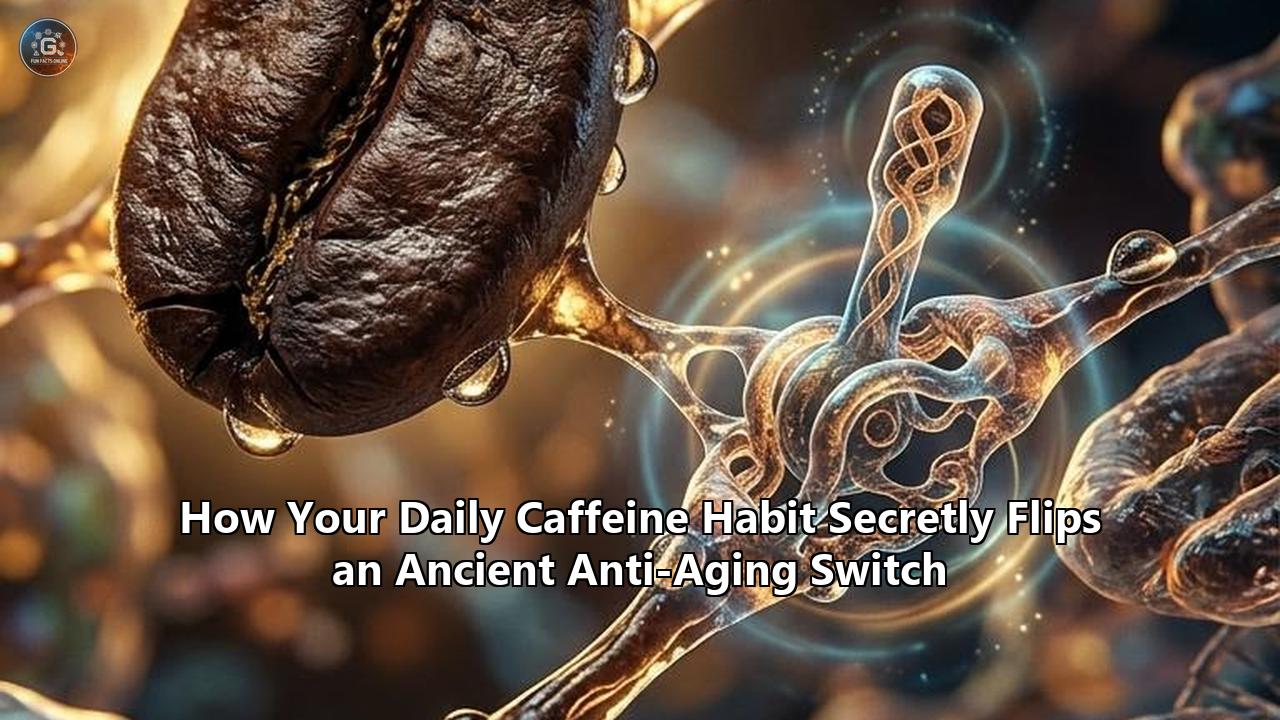
LONDON — In a discovery that redefines our understanding of the world’s most widely consumed psychoactive substance, molecular biologists have identified the precise mechanism through which caffeine slows down cellular senescence. The findings, published in Microbial Cell by a research team at Queen Mary University of London and the Francis Crick Institute, reveal that caffeine directly activates AMP-activated protein kinase (AMPK) — the master energy sensor and metabolic "fuel gauge" that governs cellular survival across all eukaryotic life.
The revelation upends a decade-old consensus in biogerontology. Until now, researchers believed caffeine’s observed life-extending properties were driven by direct inhibition of TOR (Target of Rapamycin), the central nutrient-sensing pathway responsible for cellular growth and aging. Instead, the London-based team discovered that caffeine acts upstream, flipping the ancient AMPK switch to quietly throttle TOR activity from behind the scenes. This enzymatic handoff forces the cell to suspend rapid expansion, accelerate DNA repair, and launch aggressive internal sanitation routines.
In laboratory models sharing fundamental genetic architecture with humans, this chemical intervention extended chronological lifespan by up to 24 percent.
The finding lands at a pivotal moment for longevity science. For years, epidemiologists have documented a stubborn correlation: individuals who drink two to four cups of coffee daily consistently demonstrate lower rates of cardiovascular disease, neurodegenerative decline, type 2 diabetes, and all-cause mortality. Yet clinical medicine has remained skeptical of these statistical patterns, often dismissing them as lifestyle artifacts or attributing them vaguely to the complex mix of polyphenols found in coffee beans.
By pinpointing AMPK as caffeine's primary target, the new research provides the missing causal link. It positions caffeine alongside elite pharmaceutical candidates like metformin and rapamycin — compounds currently undergoing human trials to determine if pharmacology can decelerate the biological clock. For the hundreds of millions of people who reach for an espresso, drip coffee, or morning tea, this research reveals that their daily ritual is not merely an adrenal pick-me-up; it is an active biochemical intervention that tricks human cells into entering an evolutionary survival state.
Understanding the full scope of caffeine anti-aging benefits requires peeling back layers of evolutionary biology, cellular housekeeping, systemic immunology, and human genetics.
The 500-Million-Year-Old Molecular Switchboard
To decode how a daily chemical habit manipulates biological age, researchers look back hundreds of millions of years. Every living cell must make a fundamental resource-allocation decision: Should it spend energy on growth and reproduction, or should it invest in maintenance, defense, and repair?
That decision is governed by two opposing molecular arbiters:
- TOR (Target of Rapamycin / mTOR in mammals): The accelerator pedal of the cell. When nutrients like glucose and amino acids are plentiful, TOR activates. It commands the cell to build proteins, synthesize lipids, and divide. Under sustained TOR activation, however, cells run hot. They accumulate misfolded proteins, suffer genetic damage, and age prematurely.
- AMPK (AMP-activated Protein Kinase): The brake pedal and fuel gauge. When energy drops — specifically when adenosine triphosphate (ATP) is depleted and converts into adenosine monophosphate (AMP) — AMPK awakens. It halts high-energy manufacturing, dials down TOR, and routes all available power into cellular preservation and damage control.
                [ Nutrient Excess ]
                         │
                         ▼
                   Active mTORC1  ──► Accelerated Growth & Senescence
                         ▲
                         │ (Inhibition)
                         │
  Caffeine ──► [ AMPK Activation ]
                         │
                         ▼
                Downstream Longevity
           (Autophagy, Mitophagy, DNA Repair)
"When your cells are low on energy, AMPK kicks in to help them cope," explained Dr. Charalampos "Babis" Rallis, Reader in Genetics, Genomics, and Fundamental Cell Biology at Queen Mary University of London and senior author of the study. "And our results show that caffeine helps flip that switch".
The team, led by postdoctoral researcher Dr. John-Patrick Alao, conducted experiments using fission yeast (Schizosaccharomyces pombe). While a single-celled fungus might seem worlds apart from human physiology, fission yeast is one of medicine’s most respected genetic stand-ins. It shares more than 70 percent of its basic survival and cell-division machinery with human cells, including identical nutrient-sensing cascades.
Through genetic knockouts and fluorescent microscopy, the London investigators isolated the exact proteins responding to caffeine exposure. They monitored the kinases Ssp1 and Ssp2, alongside the regulatory subunit Amk2 — components that correspond directly to the liver kinase B1 (LKB1) and AMPK complexes in human tissues.
The data was unequivocal: caffeine does not lock onto the TOR machinery directly. Instead, it triggers phosphorylation of the AMPK catalytic subunit. Once AMPK is switched on, it phosphorylates the tuberous sclerosis complex (TSC1/TSC2) and raptor, effectively cutting the power lines to mTOR Complex 1 (mTORC1).
The cell, misinterpreting the chemical signal as a sign of environmental scarcity, stops allocating resources toward unsustainable expansion and initiates a total internal overhaul.
"These findings help explain why caffeine might be beneficial for health and longevity," stated Dr. Alao. "And they open up exciting possibilities for future research into how we might trigger these effects more directly — with diet, lifestyle, or new medicines".
Autophagy and the Janitorial Overhaul
When caffeine trips the AMPK switch and pulls the handbrake on TOR, the immediate downstream consequence is the activation of autophagy.
Coined from the Greek words for "self-eating," autophagy is the body's internal recycling mechanism. Over months and years of metabolic life, cells accumulate cellular sludge: misfolded protein aggregates, damaged fragments of the endoplasmic reticulum, and defunct structural components. If left unmanaged, this detritus clumps together, interfering with normal cellular traffic and contributing to neurodegenerative disorders like Alzheimer's and Parkinson's, as well as systemic tissue decline.
Under baseline conditions, especially in societies marked by continuous caloric surplus, mTOR remains chronically elevated, suppressing autophagic clean-up. By activating AMPK, caffeine releases this inhibition.
AMPK directly phosphorylates the serine/threonine protein kinase ULK1 at specific residues (including Ser317 and Ser777), initiating the assembly of the phagophore — a double-membrane envelope that patrols the interior of the cell. The phagophore engulfs molecular debris, fuses with a lysosome, and breaks the waste down into raw amino acids and fatty acids that the cell can reuse to regenerate itself.
+--------------------------------------------------------------------------+
|                      THE CELLULAR RECYCLING AXIS                         |
|                                                                          |
|   1. Caffeine intake activates AMPK catalytic subunits.                  |
|   2. AMPK phosphorylates ULK1 and suppresses mTORC1.                     |
|   3. Phagophore formation engulfs lipofuscin & misfolded proteins.       |
|   4. Lysosomal fusion degrades debris into reusable building blocks.     |
|   5. Mitophagy clears dysfunctional, ROS-leaking mitochondria.           |
+--------------------------------------------------------------------------+
This janitorial overhaul extends to the cell’s energetic heart: the mitochondria. Aging is characterized by the slow breakdown of mitochondrial quality control. Aged, dysfunctional mitochondria produce diminishing amounts of ATP while spewing excessive reactive oxygen species (ROS) into the cytoplasm, damaging genomic DNA and lipid membranes.
Through AMPK stimulation, caffeine upregulates peroxisome proliferator-activated receptor gamma coactivator 1-alpha (PGC-1α) and coordinates with the PINK1/Parkin signaling pathway to initiate mitophagy — the selective destruction of defective mitochondria. Old, leaky power plants are consumed and replaced by pristine, biochemically efficient organelles.
By simultaneously clearing cellular debris and replenishing the mitochondrial network, daily caffeine exposure preserves energetic efficiency in metabolic tissues, delaying one of the hallmark drivers of physical aging.
The Inflammasome Shield: Dampening "Inflammaging"
Aging is not merely a cellular maintenance failure; it is also an immunological fire. Gerontologists describe "inflammaging" as the slow, chronic, sterile low-grade inflammation that spreads throughout human tissues in the later decades of life, quietly degrading arteries, joint cartilage, and brain matter.
While the Queen Mary team solved the intracellular AMPK riddle, parallel discoveries at Stanford University School of Medicine revealed caffeine’s profound capacity to extinguish this immunological fire.
A multiyear research initiative directed by Dr. David Furman and Dr. Mark Davis analyzed longitudinal blood samples and genetic registries from the Stanford-Ellison cohort, examining healthy individuals aged 20 to 30 alongside adults older than 60. Their initial goal was to uncover why some elderly individuals develop severe arterial stiffness and high systemic inflammation while others remain biologically resilient.
The Stanford team identified two clusters of genes that become hyperactive in individuals experiencing accelerated vascular aging. These genes drive the production of the NLRP3 inflammasome, a multiprotein platform that manufactures interleukin-1 beta (IL-1β), a potent inflammatory cytokine. In older adults showing excessive inflammasome activity, the researchers detected elevated levels of circulating nucleic acid metabolites — fragments of broken DNA and RNA floating freely in the bloodstream, triggering immune sensors as if a chronic microbial invasion were taking place.
When the investigators compared those suffering from hyperactive inflammasomes against the cohort's healthiest, most resilient participants, a clear pattern emerged: the protected individuals regularly consumed caffeine.
"More than 90 percent of all noncommunicable diseases of aging are associated with chronic inflammation," Dr. Furman observed during the publication of the findings in Nature Medicine. "It's also well-known that caffeine intake is associated with longevity. Many studies have shown this association. What we've found here is a possible molecular reason why".
Circulating Nucleic Acid Metabolites (Cell Damage)
                    │
                    ▼
          [ NLRP3 Inflammasome ]
                    │
                    ▼
          Production of IL-1β  ──► Arterial Stiffening & Frailty
                    ▲
                    │ (Direct Inhibition)
                    │
     Caffeine & Downstream Metabolites
   (Theophylline, Theobromine, Paraxanthine)
Furman and Davis took human white blood cells, placed them in culture plates, and flooded them with the circulating nucleic acid fragments that ignite the NLRP3 inflammasome. Left alone, the immune cells unleashed high levels of inflammatory compounds. But when researchers added caffeine, the inflammation stopped.
The primary breakdown products of caffeine — theophylline, theobromine, and paraxanthine — bound to the inflammatory machinery and blocked the chemical cascade. In rodent trials, administering these caffeine metabolites neutralized the inflammatory cascade, lowered blood pressure, and prevented arterial stiffening.
This immunologic shield works hand-in-hand with the intracellular AMPK trigger. While AMPK purges damaged internal matter before it can burst through decaying cell walls, circulating methylxanthines patrol the bloodstream, disarming the immune system's alarm bells whenever degraded cellular debris leaks out.
From Yeast Plates to Human Cohorts: The Epidemiological Evidence
The biochemical data emerging from Queen Mary and Stanford provides a concrete framework for observations that public health researchers have collected for three decades. Large human epidemiological trials have repeatedly captured the footprint of caffeine anti-aging benefits, yet clinicians long questioned whether the data was strong enough to support everyday guidance.
The scale of modern population databases has put that uncertainty to rest.
Consider the UK Biobank, an exhaustive biomedical database tracking more than 500,000 British adults over decades. A team of researchers evaluated coffee-drinking habits against comprehensive clinical outcomes across 468,629 participants. The findings showed that those who drank two to three cups of coffee per day experienced an all-cause mortality reduction of 12 percent compared to non-drinkers, with cardiovascular mortality falling by 17 percent.
Parallel findings emerged from the Harvard T.H. Chan School of Public Health, where investigators tracked more than 200,000 healthcare professionals across the Nurses’ Health Study and the Health Professionals Follow-Up Study for more than 30 years. Led by Dr. Frank Hu, chair of the Department of Nutrition, the Harvard team found that moderate coffee consumption — roughly three to five cups daily — was linked to lower risks of cardiovascular disease, stroke, Parkinson's disease, and suicide.
Critically, the longevity curves in these cohorts consistently display a distinct non-linear profile:
  Mortality Risk
        ▲
   1.00 ┼─────\                                     /─────
        │      \                                   /
   0.90 ┼       \                                 /
        │        \                               /
   0.85 ┼         \─── Minimum Mortality Zone ──/
        │              (2 - 4 Cups Daily)
   0.80 ┼─────────────────────────────────────────────────►
        0        1        2        3        4        5+   Cups/Day
The health benefits do not climb endlessly with higher doses. Mortality drops steadily as intake climbs from one cup to two or three cups per day, holds steady around four cups, and begins to rise again past five or six cups daily.
For years, nutritionists debated why this J-shaped curve occurred, often crediting coffee’s abundant polyphenols, such as chlorogenic acids, cafestol, and trigonelline. Chlorogenic acids are potent antioxidants that scavenge free radicals and improve endothelial nitric oxide bioavailability.
Yet studies evaluating decaffeinated versus caffeinated beverages uncovered a nuanced divergence: while decaffeinated coffee provides noticeable cardiovascular protection, caffeinated preparations yield stronger outcomes in metabolic flexibility, neuroprotection, and all-cause survival.
The Queen Mary discovery supplies the physiological answer: chlorogenic acids deliver the antioxidant payload, but pure caffeine operates the mechanical lever that activates AMPK, suppresses mTOR, and mobilizes cellular cleanup. Without caffeine, the biochemical signal to switch on repair systems is incomplete.
The Metformin and Rapamycin Parallels
The discovery that caffeine operates through AMPK and TOR aligns everyday dietary behavior with modern geroscience.
Over the past decade, the quest to decelerate human aging has centered around two candidate molecules:
- Metformin: A safe, inexpensive biguanide drug prescribed to hundreds of millions of patients for type 2 diabetes. Large retrospective studies showed that diabetics on metformin frequently lived longer than non-diabetics without the disease. This led to the launch of the Targeting Aging with Metformin (TAME) trial, designed by Dr. Nir Barzilai at the Albert Einstein College of Medicine to determine if a drug could treat aging as a primary medical indication. Metformin achieves these outcomes by inhibiting Complex I of the mitochondrial respiratory chain, elevating cellular AMP levels, and activating AMPK.
- Rapamycin: A macrolide compound discovered in the soil of Rapa Nui (Easter Island) that selectively locks onto and inhibits mTOR. In the National Institute on Aging’s Interventions Testing Program (ITP), rapamycin reliably extended the lifespan of genetically heterogeneous mice across multiple dosing regimens and treatment timelines.
Caffeine occupies an intriguing middle ground between these two therapies.
| Biological Marker | Metformin | Rapamycin | Dietary Caffeine |
|---|---|---|---|
| Primary Target | Mitochondrial Complex I / AMPK | mTORC1 Direct Binding | AMPK Upstream Activation |
| Autophagy Induction | Moderate to High | Very High | Moderate, Consistent |
| Inflammatory Response | Reduces NF-κB | Modulates T-Cell Activation | Suppresses NLRP3 Inflammasome |
| Availability | Prescription Only | Prescription Only | Over-the-Counter Dietary Compound |
| Primary Clinical Risks | Lactic acidosis, B12 deficiency | Immunosuppression, dyslipidemia | Tachycardia, sleep disruption, anxiety |
"Interestingly, AMPK is the same molecular target of metformin," the Queen Mary researchers emphasized upon releasing their results.
Caffeine functions as an over-the-counter caloric-restriction mimetic. During prolonged fasting or grueling endurance exercise, the depletion of intracellular glycogen drives up the AMP/ATP ratio, recruiting AMPK to preserve metabolic homeostasis. Caffeine triggers that exact defensive network through an alternative chemical route — generating mild energetic stress that forces the cell to repair itself without demanding actual starvation.
This dynamic illustrates the biological concept of mitohormesis: what does not kill the cell makes it stronger. Caffeine serves as a controlled, mild xenobiotic stressor. In high single doses, it is toxic to micro-organisms and insects (its original evolutionary purpose in plants). In the human body, moderate, repeated exposure prompts an adaptive response that equips tissues to endure broader metabolic and oxidative challenges over decades of life.
The Genetic Roulette: Who Benefits and Who Suffers?
Caffeine’s biological advantages are not distributed equally across the population. While yeast models show uniform responses on nutrient-controlled plates, human biology is shaped by deep genetic variation that alters how caffeine is absorbed, metabolized, and cleared.
                      [ Caffeine Ingestion ]
                                │
                                ▼
                   Hepatic CYP1A2 Enzyme
                                │
               ┌────────────────┴────────────────┐
               ▼                                 ▼
       Fast Metabolizers                 Slow Metabolizers
       (rs762551 AA Allele)              (rs762551 AC/CC Alleles)
               │                                 │
     • Rapid clearance                 • Extended systemic half-life
     • Short-lived vascular stress     • Prolonged vasoconstriction
     • Pronounced AMPK signaling       • Cortisol & blood pressure spikes
     • Reduced cardiac risk            • Increased cardiac risk at >3 cups
The primary checkpoint is the liver, specifically the cytochrome P450 1A2 enzyme encoded by the CYP1A2 gene. This enzyme processes more than 95 percent of all caffeine entering the human body.
A single nucleotide polymorphism (SNP) at position -163A>C (rs762551) determines metabolic speed:
- Fast Metabolizers (AA Genotype): Individuals carrying two copies of the "A" allele synthesize large amounts of active CYP1A2 enzyme. They clear caffeine rapidly, their systemic half-life averages three to four hours, and their arterial system experiences only a brief, harmless spike in vascular tone.
- Slow Metabolizers (AC or CC Genotype): Individuals carrying the "C" variant metabolize caffeine much slower. The chemical half-life can stretch to eight, ten, or twelve hours, leaving the molecule circulating in their blood throughout the day and deep into the night.
Dr. Ahmed El-Sohemy, Professor of Nutritional Sciences at the University of Toronto, demonstrated the clinical importance of this divide through landmark cardiovascular trials.
In slow metabolizers, drinking more than two to three cups of coffee daily was linked to an increased risk of hypertension, non-fatal myocardial infarction, and arterial stiffness. The slow clearance exposes delicate endothelial tissue to extended vasoconstriction and elevated systemic catecholamines.
In fast metabolizers, the inverse occurred: higher coffee consumption (three to four cups daily) was strongly protective against myocardial infarction and cardiovascular mortality. Their systems clear the stimulant quickly, allowing tissues to enjoy AMPK activation and inflammasome suppression without enduring prolonged adrenergic strain.
A secondary genetic axis involves the ADORA2A gene, which encodes the adenosine A2A receptor in brain tissue. Polymorphisms in ADORA2A govern nervous system sensitivity to caffeine.
Individuals with high-affinity variants experience severe anxiety, tremors, and nervous overstimulation at low doses, driving up cortisol production. Chronically elevated cortisol accelerates muscle catabolism, prompts visceral fat storage, and blunts immune function — counteracting the caffeine anti-aging benefits observed inside resting cells.
The Telomere Paradox and Sleep Degradation
The connection between caffeine and aging becomes even more nuanced when examining telomeres — the protective nucleoprotein caps sitting at the ends of linear chromosomes.
Often compared to the plastic tips on shoelaces, telomeres shorten slightly with each round of somatic cell division. When they fall below a critical threshold, the cell triggers a permanent growth arrest known as replicative senescence, becoming a non-dividing "zombie cell" that secretes destructive pro-inflammatory cytokines into surrounding tissues. Because of this dynamic, leukocyte telomere length (LTL) serves as a primary surrogate marker for biological age.
Recent human trials investigating coffee’s relationship to telomeres have delivered striking, seemingly contradictory findings:
+----------------------------------------------------------------------------+
|                          THE TELOMERE TENSION                              |
|                                                                            |
|  * BMJ Mental Health (2025): Consuming 3 to 4 cups of coffee daily         |
|    correlated with longer leukocyte telomeres, equivalent to 5 fewer years |
|    of biological aging compared to non-drinkers.            |
|                                                                            |
|  * UK Biobank Mendelian Randomization: Heavy intake, particularly of       |
|    instant coffee, demonstrated a causal relationship with accelerated     |
|    telomere shortening (0.38 years per cup).                |
|                                                                            |
|  * The Reconciling Mechanism: Pure filtered coffee protects telomeric      |
|    DNA from oxidative attrition; however, heavy instant coffee consumption|
|    introduces acrylamides and overrides the Rad3/ATR genomic checkpoint.   |
+----------------------------------------------------------------------------+
A comprehensive study published in BMJ Mental Health evaluated coffee consumption patterns and extracted leukocyte telomere length from broad clinical cohorts. After rigorous adjustments for chronological age, sex, tobacco use, and pharmaceutical treatments, the results revealed a distinct J-shaped relationship: individuals drinking three to four cups of coffee daily showed telomeres comparable to individuals five years younger biologically than non-consumers. Consuming five or more cups, however, eroded the longevity advantage entirely.
Conversely, an extensive Mendelian randomization analysis using UK Biobank genetic data, conducted by Dr. Yudong Wei and colleagues, revealed that high overall coffee intake — and instant coffee consumption in particular — was casually associated with accelerated telomere shortening. Each additional daily cup of instant coffee accounted for roughly 0.38 years of accelerated telomeric aging.
This divergence is rooted in chemical preparation and DNA damage checkpoints. Instant coffee is processed under intense thermal conditions that generate significant amounts of acrylamide, a known neurotoxin and mutagen. Moreover, unfiltered coffee contains substantial concentrations of diterpenes (cafestol and kahweol), which raise serum LDL cholesterol and elevate oxidative stress across the vascular endothelium.
At the molecular scale, earlier yeast research from the Queen Mary group confirmed that caffeine overrides the Rad3/ATR protein kinase pathway. Rad3 functions as an emergency brake that halts cell division whenever damaged DNA is detected. Under intense caffeine saturation, cells ignore these checkpoints and push forward into mitosis with damaged genomic strands, accelerating telomeric erosion.
To protect chromosomal integrity, caffeine must be consumed in moderate doses that stimulate AMPK without overwhelming the body's DNA damage surveillance networks.
The second major trade-off centers on sleep architecture.
Adenosine Accumulation ──► Sleep Pressure
           ▲
           │ (Blocked)
           │
       Caffeine ──► Suppressed Slow-Wave Sleep ──► Impaired Glymphatic Clearance
Caffeine works by acting as an antagonist at adenosine A1 and A2A receptors in the brain. Adenosine is the molecular currency of fatigue: it accumulates in the central nervous system throughout waking hours, creating "sleep pressure." By slotting into adenosine receptors without activating them, caffeine masks exhaustion.
If caffeine remains in the system at bedtime, it degrades slow-wave sleep (deep NREM stage 3 sleep). During slow-wave sleep, the brain’s glymphatic system expands, flushing out metabolic waste products that accumulate during waking hours, including beta-amyloid plaques and hyperphosphorylated tau proteins.
Sacrificing deep sleep to an afternoon caffeine hit undermines the body's longevity defenses: the cellular renewal sparked by AMPK is undone by the neurological decay caused by impaired brain clearance.
Optimizing the Switch: Evidence-Based Protocols
Translating these molecular insights into daily habits requires an intentional approach to dosage, timing, and preparation. To harness caffeine's metabolic benefits while avoiding sleep disruption and genetic risks, researchers recommend several clear guidelines:
1. Calibrate to the Molecular Sweet Spot
- Target: 150 mg to 300 mg of caffeine daily (equivalent to two or three standard 8-ounce cups of brewed coffee or three single shots of espresso).
- The Biology: This intake level achieves a serum concentration that reliably activates AMPK without triggering excessive sympathetic drive or overwhelming the Rad3/ATR genomic repair checkpoints.
2. Delay the Morning Dose by 60 to 90 Minutes
- Protocol: Avoid consuming caffeine within the first hour after waking.
- The Biology: Upon waking, circulating cortisol naturally spikes (the cortisol awakening response) to mobilize energy reserves and clear residual adenosine. Flooding the system with caffeine immediately upon waking blunts this natural rhythm, builds rapid chemical tolerance, and exacerbates the mid-afternoon energy crash. Waiting allows adenosine clearance to complete, stabilizing daytime energy and preserving hormonal balance.
3. Maintain a Strict Afternoon Cutoff
- Protocol: Stop all caffeine intake at least 9 to 10 hours before your intended bedtime (typically between 12:00 PM and 2:00 PM).
- The Biology: Even among fast CYP1A2 metabolizers, caffeine’s average elimination half-life spans three to seven hours. Clearing the compound from adenosine receptors before bedtime protects slow-wave sleep and supports nighttime glymphatic brain clearance.
       TYPICAL DAILY CAFFEINE SCHEDULE

07:00 AM ─ Wake up (Cortisol Awakening Response)
07:00-08:30 AM ─ Hydration, Natural Light (Adenosine Clearance)
08:30 AM ─ First Cup (AMPK Activation Window Opens)
11:30 AM ─ Second Cup / Espresso (Peak Metabolic Priming)
01:30 PM ─ STRICT CUTOFF (Clearance Phase Begins)
10:30 PM ─ Deep Slow-Wave Sleep (Glymphatic Wash Enabled)
4. Select Paper-Filtered Preparations
- Protocol: Choose pour-over, auto-drip, or AeroPress methods that use paper filters over French press, boiled Turkish coffee, or spray-dried instant powders.
- The Biology: Paper filters capture the diterpenes cafestol and kahweol, preventing unwanted spikes in LDL cholesterol while letting pure caffeine and longevity-promoting chlorogenic acids pass through. Avoiding instant coffee also reduces unnecessary exposure to processing contaminants like acrylamide.
5. Pair with Fasting or Morning Training
- Protocol: Take your morning coffee black during an intermittent fasting window or 30 minutes before low-to-moderate intensity aerobic exercise.
- The Biology: Nutrient absence naturally elevates AMP levels. Introducing caffeine during a fasted state creates synergistic AMPK activation, accelerating liver autophagy and fat oxidation while keeping mTORC1 suppressed until your first meal.
The Longevity Research Horizon
The identification of caffeine as an indirect regulator of the AMPK-TOR axis marks an important milestone, but biogerontologists emphasize that crucial questions remain.
The primary experimental challenge is translation. While fission yeast provides a proven blueprint of eukaryotic nutrient-sensing pathways, human beings are vastly more complex. They possess specialized tissues, intricate endocrine systems, and unique organ systems that react differently to chemical exposures.
To bridge this gap, clinical researchers are deploying advanced diagnostic tools:
- Human Tissue Biopsies: Next-generation clinical trials are harvesting skeletal muscle and subcutaneous adipose tissue biopsies from human volunteers before and after targeted caffeine administration, directly measuring AMPK phosphorylation (specifically at the Thr172 residue) and downstream ULK1 autophagic flux.
- Epigenetic Aging Clocks: Researchers are tracking large cohorts using DNA methylation algorithms like GrimAge2, Horvath's Clock, and DunedinPACE to determine if pure caffeine intake alters the pace of biological aging at the methylome level, parsing its impact from overall dietary confounding.
- Novel Chemical Analogs: Medicinal chemists are exploring methylxanthine derivatives that selectively trigger peripheral AMPK activation and NLRP3 inflammasome suppression without crossing the blood-brain barrier. Such compounds could offer the longevity benefits of caffeine without disrupting sleep architecture or elevating heart rates in vulnerable populations.
Future clinical research will focus on fine-tuning these mechanisms for personalized medicine. As commercial genetic profiling and wearable metabolic trackers become commonplace, the one-size-fits-all approach to daily coffee consumption will inevitably give way to individualized protocols based on a person's CYP1A2 genotype, baseline inflammatory status, and sleep metrics.
For now, the Queen Mary discovery brings welcome scientific clarity to our most widespread morning ritual. The humble coffee mug is neither a guilty vice nor a magical cure-all. It is an evolutionary lever — a biochemical tool that, when wielded with intention, quietly activates an ancient metabolic defense system to help cells withstand the pressures of aging.
Reference:
- https://www.sciencedaily.com/releases/2026/09/260907201609.htm
- https://www.qmul.ac.uk/news/latest-news/2025/science-and-engineering/se/caffeine-could-slow-cellular-ageing-new-research-shows-how.html
- https://dailycoffeenews.com/2025/08/19/new-research-suggests-longevity-from-coffee-tied-to-ancient-cellular-trigger/
- https://www.sciencealert.com/caffeine-flips-a-cellular-switch-that-may-slow-aging-scientists-discover
- https://www.facebook.com/euronews/posts/scientists-have-identified-a-mechanism-through-which-coffee-compounds-can-help-t/1343846041124056/
- https://scitechdaily.com/new-research-reveals-that-your-morning-coffee-activates-an-ancient-longevity-switch/
- https://pmc.ncbi.nlm.nih.gov/articles/PMC12658549/
- https://drclarkstore.com/blogs/news/caffeine-and-aging-a-deep-dive-into-the-cellular-switches-that-may-link-your-coffee-habit-to-longevity
- https://www.rapamycin.news/t/researchers-discover-how-caffeine-could-slow-cellular-aging/20397
- https://med.stanford.edu/news/all-news/2017/01/caffeine-may-counter-age-related-inflammation-study-finds.html
- https://pmc.ncbi.nlm.nih.gov/articles/PMC10055626/
- https://bmjgroup.com/daily-coffee-drinking-may-slow-biological-ageing-of-people-with-major-mental-illness/
- https://www.ukbiobank.ac.uk/publications/instant-coffee-is-negatively-associated-with-telomere-length-finding-from-observational-and-mendelian-randomization-analyses-of-uk-biobank/
- https://research.monash.edu/en/publications/instant-coffee-is-negatively-associated-with-telomere-length-find/
- https://www.sciencedaily.com/releases/2026/09/260907201609.htm