A Statistical Sieve for Extraterrestrial Chemistry
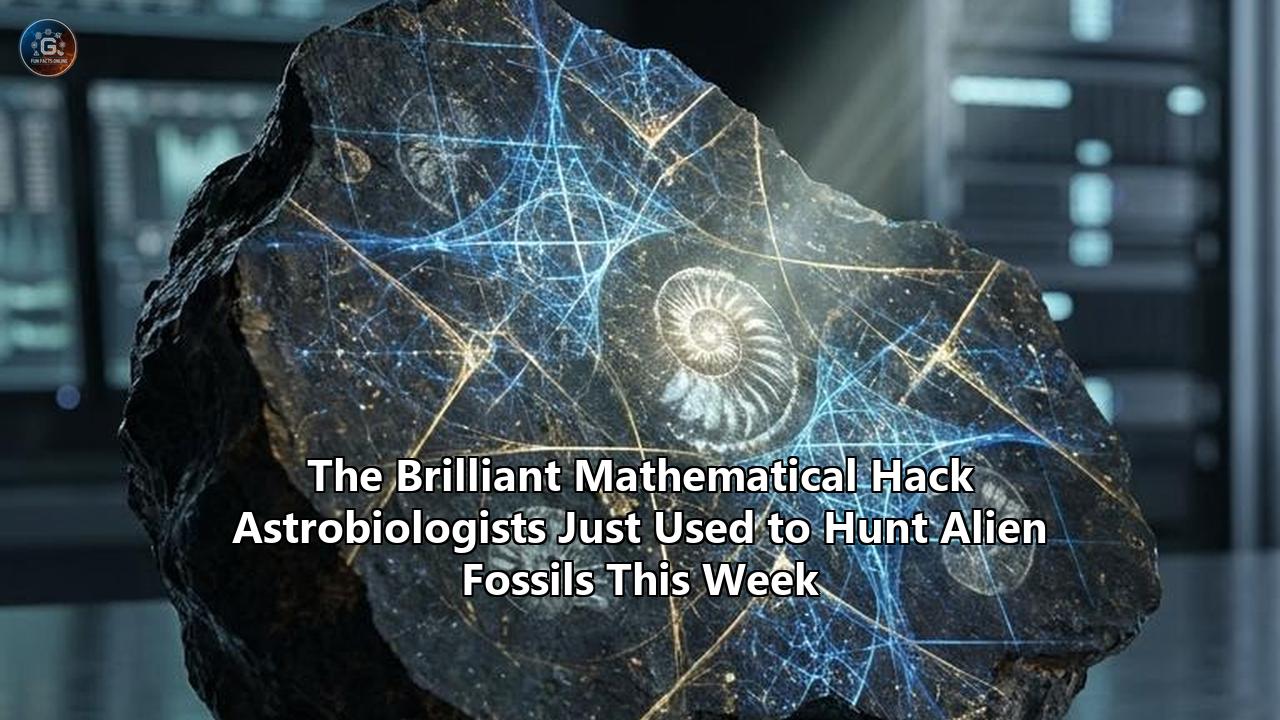
This week, planetary scientists published a methodology in Nature Astronomy that fundamentally alters how humanity will search for extraterrestrial life. Rather than deploying rovers and probes to hunt for specific biological molecules—a strategy that has repeatedly stalled due to the chemical ambiguity of the cosmos—researchers have successfully borrowed a mathematical framework from terrestrial ecology to identify the structural fingerprints of life.
Led by Gideon Yoffe, a postdoctoral researcher at the Weizmann Institute, and Fabian Klenner, a planetary scientist at the University of California, Riverside, the research team demonstrated that biological systems leave behind a distinct, measurable organizational pattern in their organic chemistry. By applying statistical indices normally used to measure species biodiversity in rainforests or coral reefs, the team successfully separated biotic compounds from abiotic ones across roughly 100 diverse datasets.
The analytical method proved so robust that it detected the mathematical ghost of biology even in severely degraded organic matter, such as fossilized dinosaur eggshells. This development arrives precisely as space agencies are sifting through massive caches of chemical data from Mars and preparing to launch complex mass spectrometers to the icy moons of Jupiter and Saturn. Because the technique relies entirely on statistical analysis rather than requiring new, specialized hardware, it immediately equips astrobiologists with a new operational tool. Scientists can now retroactively apply this mathematical hack to legacy data beamed back from existing space missions, effectively upgrading our interplanetary search capabilities through software and mathematics alone.
The Ambiguity of Molecules: Defining the Analytical Challenge
The core difficulty in isolating genuine astrobiology alien fossils lies in the inherent noise of planetary chemistry. For decades, the public perception of the search for extraterrestrial life has been characterized by a binary expectation: either a rover finds organic molecules and proves life exists, or it finds nothing. The reality of planetary science is far more ambiguous.
Organic molecules—compounds built primarily of carbon and hydrogen—are ubiquitous throughout the universe. They form in the freezing vacuum of interstellar clouds, they are forged by intense ultraviolet radiation striking icy comets, and they are synthesized in the crushing heat of hydrothermal vents. The famous Murchison meteorite, which fell to Earth in Australia in 1969, contained over 70 different extraterrestrial amino acids. None of them were created by living organisms; they were forged by the blind, abiotic chemistry of the early solar system.
When a multi-billion-dollar rover drills into the Martian regolith and detects simple organic carbon chains, mission controllers are forced to confront a brutal forensic reality. How do you distinguish a simple organic molecule created by a lifeless geochemical reaction from the exact same molecule left behind by an ancient, extinct Martian microbe?
"Astrobiology is fundamentally a forensic science," Yoffe explained following the publication of the team's findings. "We're trying to infer processes from incomplete clues, often with very limited data collected by missions that are extraordinarily expensive and infrequent".
The analytical challenge is compounded by the ravages of deep time. The surface of Mars has been bombarded by cosmic radiation and bathed in highly oxidative chemicals like perchlorates for billions of years. Any biological material that might have existed in the ancient lakes of Jezero Crater or Gale Crater has been subjected to relentless degradation. Finding an intact cell wall or a pristine strand of alien DNA is virtually impossible. Instead, scientists are looking for the fragmentary chemical residue of life. Without a reliable way to differentiate between degraded biological residue and standard abiotic organic matter, the search for life risks becoming bogged down in an endless cycle of false positives and unresolvable debates.
Where the Search Stumbled: The Trap of Specific Biomarkers
To understand the magnitude of this week's mathematical intervention, one must examine why previous chemical hunting strategies stumbled. Historically, the search for extraterrestrial biology has been constrained by the "n=1 problem"—the fact that Earth provides our only known example of a biosphere. Because terrestrial life relies on a specific set of 20 amino acids to build proteins and specific lipid chains to build cell membranes, astrobiologists naturally prioritized the search for these exact same molecules on other worlds.
This approach led to major scientific bottlenecks. The most famous example occurred during the 1976 Viking missions to Mars. The Viking landers conducted a series of automated chemistry experiments on the Martian soil. One experiment, the Labeled Release test, yielded data that initially looked exactly like the metabolic respiration of living microbes. However, the lander's gas chromatograph-mass spectrometer failed to detect organic molecules in the necessary concentrations. Decades of fierce debate followed, with the eventual consensus landing on the explanation that abiotic, highly reactive oxidants in the soil mimicked the chemical signatures of life.
A similar crisis of ambiguity occurred in 1996 with the Martian meteorite ALH84001. Researchers announced they had found microscopic morphological structures resembling nanobacteria, alongside organic molecules and magnetite crystals. The scientific community spent the next twenty years demonstrating how high-velocity impacts, thermal fracturing, and non-biological mineral precipitation could create those exact same shapes and chemical signatures without any biological intervention.
The overarching failure mode in these historical cases was the reliance on specific, rigid biomarkers. Looking for a specific molecule, or a specific shape, assumes that extraterrestrial life will solve the problem of survival using the exact same biochemical architecture as Earth life. Furthermore, relying on the mere presence of an organic molecule ignores the context of how that molecule was assembled.
Life does not just randomly produce organic molecules; it engineers them for specific purposes. Biology is highly selective, energetically efficient, and fiercely organized. Abiotic chemistry, by contrast, is governed by the chaotic laws of thermodynamics, producing whatever molecules are energetically easiest to form in whatever quantities the raw materials permit. The failure of early astrobiology was searching for the building blocks themselves, rather than searching for the architectural discipline required to assemble them.
Borrowing from Ecology: The Mathematical Solution
The breakthrough published this week circumvents the n=1 problem by ignoring the specific identities of the molecules and focusing entirely on their statistical distribution. Yoffe, drawing on his doctoral background in statistics and data science, recognized that the organizational principles of life are universal, regardless of the underlying chemistry.
To quantify this organization, the research team adapted a statistical model routinely used by ecologists to measure the health and complexity of macroscopic ecosystems. In terrestrial ecology, biodiversity is measured using two primary attributes: richness and evenness. Richness refers to the total number of different species present in an environment. Evenness measures the relative abundance of those species—how uniformly the population is distributed among the different types. A healthy tropical rainforest exhibits both high richness (thousands of species) and high evenness (population sizes are relatively balanced). A commercial pine plantation, conversely, might have moderate richness (a few weed and insect species) but terrible evenness (99% of the biomass is a single species of pine tree).
Yoffe, Klenner, and their colleagues applied this exact ecological logic to extraterrestrial chemistry. Instead of counting species of animals or plants, they counted species of molecules.
The team compiled and analyzed close to 100 distinct datasets drawn from a massive variety of sources: living microbes, terrestrial soils, ancient fossils, meteorites, asteroids, and synthetic abiotic samples generated in laboratory conditions. They fed the molecular concentrations of amino acids and fatty acids into the ecological algorithms to see if a mathematical boundary separated the living from the dead.
The results revealed a stark, consistent pattern. When analyzing amino acids, the biological samples demonstrated both higher richness and a vastly more even distribution than the abiotic samples. Because biological organisms require a diverse toolkit of complex amino acids to fold proteins into intricate three-dimensional shapes, life synthesizes these varied molecules in relatively balanced, deliberate quantities.
Abiotic amino acids, such as those found on the Murchison meteorite, displayed the exact opposite pattern. Without the directing hand of biological enzymes, nonliving chemistry takes the path of least thermodynamic resistance. Abiotic processes churn out massive quantities of the simplest, shortest amino acids (like glycine) while the production of heavier, more complex amino acids drops off a cliff. The resulting statistical distribution is highly uneven.
When the team applied the algorithm to fatty acids, they discovered a reversed but equally distinct mathematical signature. Biological organisms synthesize fatty acids to construct cell membranes. To ensure a membrane remains stable, impermeable, and structurally sound, life selectively produces fatty acids of very specific chain lengths—typically 16-carbon or 18-carbon chains—while strictly avoiding intermediate lengths. This extreme biological selectivity results in an uneven, highly spiked statistical distribution.
Conversely, abiotic processes generate fatty acids indiscriminately, adding carbon atoms one by one in a random cascade. This lifeless process produces a smooth, continuous, and highly even distribution of fatty acid chain lengths.
By quantifying how evenly these molecules are distributed across a sample, the researchers built a statistical sieve capable of separating biological chemistry from abiotic chemistry with remarkable accuracy. It does not matter if the lifeform is an Earth microbe or an unrecognizable alien extremophile; if a system is selectively engineering molecules for functional survival, that deliberate organization will inevitably reveal itself in the mathematics of richness and evenness.
The Dinosaur Eggshell Stress Test
A theoretical algorithm is only valuable if it survives contact with the physical realities of geology. For planetary scientists, the ultimate test of any biosignature is its durability over deep time. It is relatively easy to detect the organizational structure of a living, breathing microbe; it is exponentially more difficult to detect that same organization after the microbe has been crushed under sediment, baked by geothermal heat, and subjected to millions of years of chemical decay.
To prove their model could function under the harsh parameters of planetary exploration, the researchers deliberately stress-tested their algorithm against heavily degraded biological material. The goal was to determine if identifying genuine astrobiology alien fossils would be mathematically viable when the underlying chemistry had been largely obliterated by time.
The team applied their statistical model to the chemical residue extracted from fossilized dinosaur eggshells. These samples had undergone tens of millions of years of diagenesis—the physical and chemical changes that occur as organic material is compressed into rock. The original protein structures of the eggshells had long since collapsed. The organic matrix had been shattered, the amino acids had racemized and leached away, and the remaining organic carbon had been heavily altered by surrounding minerals. To a traditional targeted biomarker search, the chemical profile would appear as a chaotic, degraded mess.
Yet, when the remaining molecular fragments were fed into the ecological algorithm, the ghost of biological organization emerged from the noise. Even though the absolute quantities of the molecules had plummeted, the relative distribution—the proportional relationship between the surviving amino acids—retained the distinct mathematical fingerprint of biological richness and evenness. The structural discipline imposed by the living dinosaur tens of millions of years ago had permanently imprinted itself on the statistical ratios of the surviving chemical residue.
This finding fundamentally changes how scientists view geological degradation. “That was genuinely surprising,” Klenner noted regarding the eggshell data. “The method captured not only the distinction between life and nonlife, but also degrees of preservation and alteration”.
By charting these degrees of preservation, the researchers established a recognizable continuum between intact biological states and heavily degraded states. This allows planetary geologists to track exactly how life-related signatures evolve and decay over time. When future rovers extract highly weathered rocks from the Martian subsurface, scientists will not be forced to guess if the fragmented organics are biological or abiotic. They can map the broken data onto this established continuum, tracing the degraded mathematical pattern backward in time to see if it converges on a biological origin. This statistical continuity provides the exact forensic framework necessary to confidently classify astrobiology alien fossils that have been battered by billions of years of planetary evolution.
Deploying the Algorithm: From Legacy Data to Icy Moons
The immediate power of this mathematical breakthrough lies in its retroactive applicability. Because the technique relies on data processing rather than new hardware, space agencies do not have to wait a decade to design, fund, and launch a new rover to put this theory to the test. The algorithm is already being deployed by experts to analyze the vast archives of legacy data beamed back by instruments currently operating in deep space.
On Mars, NASA’s Curiosity rover has spent over a decade exploring Gale Crater, utilizing its Sample Analysis at Mars (SAM) instrument suite to vaporize Martian rock and catalog the resulting organic fragments. Thousands of miles away in Jezero Crater, the Perseverance rover is utilizing its SHERLOC (Scanning Habitable Environments with Raman & Luminescence for Organics & Chemicals) instrument to map the spatial distribution of organic minerals in an ancient river delta. Until this week, the organic data returned by both rovers has been treated with extreme caution, categorized broadly as potential building blocks of life but frustratingly inseparable from abiotic background noise.
Now, mission data scientists are running these chemical inventories through the new ecological models. By evaluating the richness and evenness of the Martian organics against the newly established baselines for biotic and abiotic distributions, researchers can finally determine if the organic carbon in Jezero Crater possesses the organizational architecture of biology.
The algorithm is also dictating the analytical protocols for the next era of deep space exploration, which is pivoting away from the dry rock of Mars and toward the subsurface oceans of the outer solar system. Later this decade, NASA’s Europa Clipper mission will arrive at Jupiter's icy moon, equipped with high-resolution mass spectrometers like MASPEX and SUDA (Surface Dust Analyzer). As Europa Clipper flies through the tenuous exosphere and samples the ice grains ejected from the moon's subsurface ocean, it will capture a snapshot of Europa’s chemical inventory.
Similarly, future missions proposed for Saturn’s moon Enceladus aim to fly directly through the massive water plumes erupting from the moon's south pole. The chemical data collected in these fleeting orbital passes will be inherently sparse and fragmentary.
By utilizing the newly published statistical framework, astrobiologists can maximize the utility of this limited data. If the mass spectrometers on Europa Clipper detect amino acids or fatty acids locked within the ice grains, the ecological algorithm will instantly measure the evenness of their distribution. If the Enceladus plume contains fatty acids with a highly uneven, selectively spiked chain-length distribution, it will provide massive, mathematically quantifiable evidence that an organized biological system is actively engineering cell membranes in the dark oceans beneath the ice.
“Our approach is one more way to assess whether life may have been there,” Klenner explained. “And if different techniques all point in the same direction, then that becomes very powerful”.
The Next Horizon in Planetary Forensics
As planetary exploration enters an aggressive new phase of data collection, the realization that life leaves a mathematical signature rather than just a chemical one is reshaping the broader theoretical landscape of astrobiology.
Experts and mission planners are already looking at how to integrate this statistical sieve with other agnostic biosignature models currently being developed. For instance, recent white papers submitted to the 2025/2026 NASA Decadal Astrobiology Research and Exploration Strategy (DARES) emphasize the critical need for "Foundation Models" in astrobiology—multimodal frameworks that utilize machine learning to cross-reference chemical, morphological, and spatial data. The ecological algorithm published this week provides the perfect computational anchor for these foundation models.
Furthermore, researchers are connecting this mathematical approach to broader origins-of-life frameworks, such as the UV Threshold Hypothesis. This hypothesis suggests that a specific minimum flux of near-ultraviolet radiation is required to kickstart the abiogenesis of early cells. By using the new statistical models to analyze the molecular diversity of exoplanet atmospheric data, or the chemical residue on varied planetary bodies, scientists can begin to test whether environments that met this UV threshold genuinely produced higher organizational complexity than those that remained in the dark.
The challenge of discovering extraterrestrial life has always been hampered by the vastness of the cosmos and the microscopic scale of the evidence. Scientists will likely never find a fully intact alien organism perfectly preserved in the rocks of another world. They will find shattered molecules, altered isotopes, and missing data. The hunt for astrobiology alien fossils requires a methodology that accepts this degradation not as a failure of data collection, but as a feature of deep time that can be mathematically mapped and decoded.
By borrowing the mathematical laws of biodiversity from terrestrial ecology and applying them to the chaotic chemistry of the solar system, scientists have fundamentally upgraded their diagnostic toolkit. They have transitioned from searching for the isolated building blocks of life to detecting the underlying architectural rhythm that governs their assembly. As new data streams in from the Martian surface and the icy expanses of the outer solar system, astrobiologists are no longer just looking for organic molecules; they are listening for the mathematical heartbeat of biological organization.
Reference:
- https://www.independent.co.uk/space/alien-life-extraterrestrial-science-b2975384.html
- https://www.primetimer.com/features/new-study-suggests-patterns-in-molecules-could-help-scientists-identify-alien-life
- https://nautil.us/a-powerful-new-tool-to-find-alien-life-1280683
- https://pubmed.ncbi.nlm.nih.gov/40770982/
- https://www.eurekalert.org/news-releases/1127684
- https://astrobiology.com/2025/04/bioverse-potentially-observable-exoplanet-biosignature-patterns-under-the-uv-threshold-hypothesis-for-the-origin-of-life.html
- https://www.sciencedaily.com/releases/2026/05/260511213146.htm
- https://www.eurekalert.org/news-releases/1123571
- https://www.nasa.gov/wp-content/uploads/2025/05/felton-ryan-1-rfi.pdf
- https://royalsocietypublishing.org/rstb/article/380/1931/20240098/235001/Modelling-exo-biospheres-for-biosignature