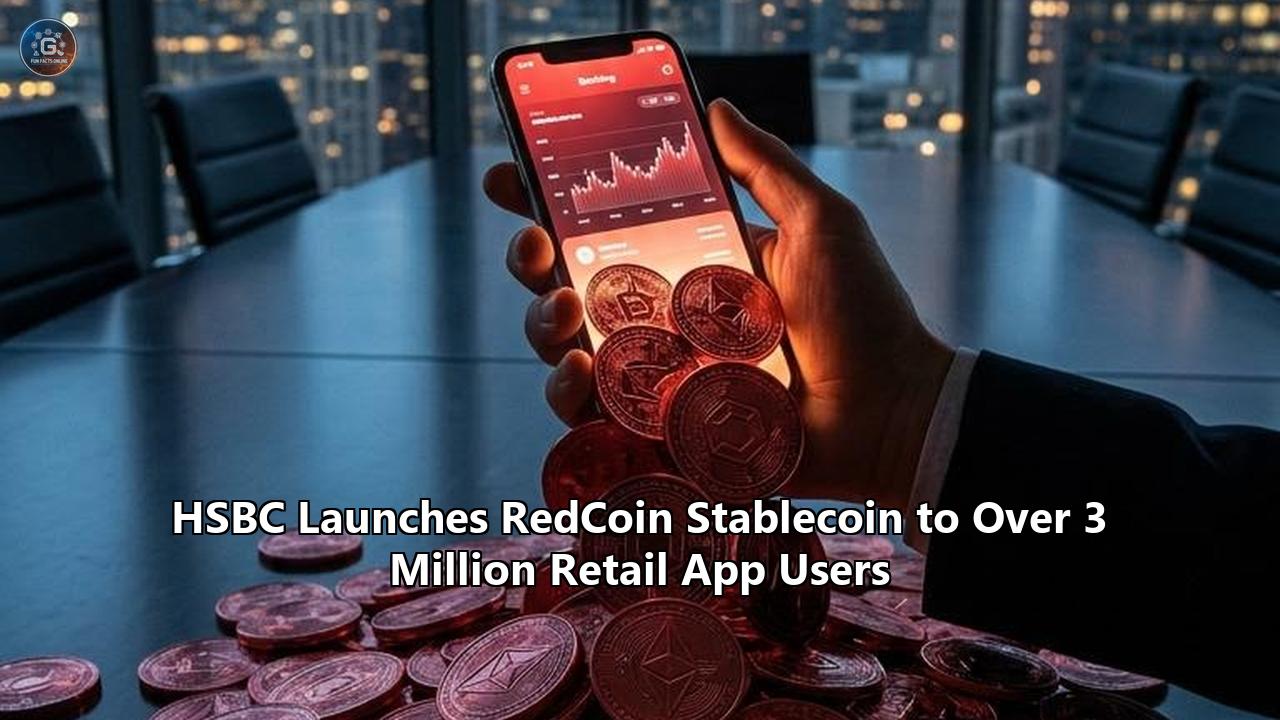
The Hongkong and Shanghai Banking Corporation (HSBC) has officially deployed its first fiat-referenced digital currency, the HSBC RedCoin stablecoin (ticker: RCHKD), directly to consumer wallets via its PayMe payment application in Hong Kong.
The rollout places a bank-issued, fully regulated digital currency in front of PayMe's existing base of over 3.3 million registered users and across a network of more than 100,000 retail merchants. Users are being enabled to activate a dedicated stablecoin wallet within the app, allowing instant peer-to-peer (P2P) fund transfers and direct peer-to-merchant (P2M) settlement without leaving the PayMe interface.
Denominated in Hong Kong dollars and maintaining a strict 1:1 backing with segregated fiat reserves, RedCoin operates under an official stablecoin issuer licence granted by the Hong Kong Monetary Authority (HKMA) under the city's statutory Stablecoins Ordinance. The deployment represents the first instance globally where a Global Systemically Important Bank (G-SIB) has introduced a proprietary, fiat-pegged token directly into an established retail digital payments ecosystem, bypassing the friction points that have traditionally confined digital asset adoption to speculative traders and crypto-native exchanges.
"Money, assets and information are moving from traditional infrastructure to always-on, data-rich and increasingly programmable digital networks," stated Maggie Ng, Chief Executive Officer, Hong Kong, and Head of Retail Banking and Wealth at HSBC. "We have an opportunity to help customers in Hong Kong manage this shift with practical products and services that support the real economy, backed by the trust and security of a global bank."
The consumer launch is not an isolated experiment. HSBC plans to extend RedCoin functionality to its core Hong Kong Mobile Banking App before the end of the year, pairing everyday payment utility with direct access to tokenized investments. Consumers will soon be allowed to deploy the HSBC RedCoin stablecoin into on-chain money market funds with entry minimums as low as HK$100 ($12.75).
The arrival of RedCoin on consumer smartphones marks the culmination of a four-year escalation that saw HSBC move methodically through wholesale bonds, vaulted gold, interbank plumbing, and legislative lobbying to assemble an integrated digital asset architecture.
CHRONOLOGICAL ESCALATION ARCHITECTURE (2022–2026)
---------------------------------------------------------------------------------------------------------
[2022–2023] Foundation: Institutional Experiments & Architecture
   │ • HKMA Stablecoin Discussion Paper (Jan 2022) sets policy perimeter
   │ • Launch of HSBC Orion DLT platform (Feb 2023)
   │ • Phase 1 e-HKD Pilot: Testing programmable deposits in controlled sandboxes
   ▼
[Early 2024] Asset Proving Ground: Multi-Currency Bonds & Gold Token
   │ • HK$6B-equivalent multi-currency digital sovereign green bond issued via Orion
   │ • SFC-authorized HSBC Gold Token launches for Hong Kong retail banking customers
   ▼
[Mid 2024 – Early 2025] Wholesale Settlement: Project Ensemble & Tokenized Deposits
   │ • HKMA Project Ensemble Sandbox launched; HSBC, Hang Seng, & Ant test PvP/DvP
   │ • Launch of HSBC Tokenised Deposit Service (TDS) for wholesale corporate treasury
   ▼
[Mid-2025] Regulatory Codification: The Stablecoins Ordinance (Cap. 656)
   │ • Hong Kong Legislative Council passes Stablecoins Bill (May 2025)
   │ • Statutory regime enters into force (Aug 1, 2025); 36 applicants submit dossiers
   ▼
[Early–Mid 2026] The Institutional Filter & Closed Trials
   │ • HKMA grants only two issuer licences (Apr 2026); HSBC secures licence FRS02
   │ • Internal staff pilot tests end-to-end minting, wallet flows, and merchant POS
   ▼
[October 23, 2026] Retail Climax: Full Market Deployment
   └─► HSBC RedCoin (RCHKD) launches across 3.3M PayMe users and 100,000+ merchants
2022–2023: Institutional Experiments and Architecture
The operational blueprint for RedCoin was drafted in the wake of systemic shocks across the decentralized asset landscape. In January 2022, the HKMA released an initial discussion paper addressing crypto-assets and stablecoins, signalling that payment-related stablecoins would eventually face regulatory requirements equivalent to those governing traditional deposit-taking institutions. Hong Kong regulators aimed to establish a regulated corridor for digital assets, shielding the territory from unbacked algorithmic failures while fostering enterprise-grade financial innovation.
HSBC recognized that participating in this ecosystem required building institutional-grade Distributed Ledger Technology (DLT) in-house rather than relying on volatile, permissionless public blockchains. In February 2023, the lender unveiled HSBC Orion, its proprietary DLT platform designed to tokenize financial assets and support digitally native debt issuances. Rather than functioning as a synthetic mirror of paper certificates, Orion was constructed to serve as the definitive legal registry for digital instruments, ensuring that on-chain records represented unencumbered, directly enforceable legal titles.
The platform’s inaugural stress test came when the HKMA selected Orion to facilitate the Hong Kong government's inaugural HK$800 million tokenized green bond, cutting settlement cycles from the industry-standard five business days (T+5) down to one business day (T+1).
Traditional Settlement Architecture (T+5)
[Issuer] ──► [Clearing House / CMU] ──► [Custodian Bank] ──► [Dealer / Broker] ──► [End Investor]
              (Sequential ledger updates, manual reconciliation, delayed cash settlement)

HSBC Orion Digital Native Architecture (T+1 / Atomic)
┌────────────────────────────────────────────────────────────────────────┐
│                        HSBC Orion DLT Platform                         │
│  [Digital Bond Registry]  ◄───►  [Tokenized Commercial Bank Money]     │
│                 Atomic Delivery vs. Payment (DvP)                      │
└───────────────────────────────────┬────────────────────────────────────┘
                                    │
                                [Investor]
Concurrently, the HKMA initiated Phase 1 of its e-HKD Pilot Programme in May 2023. HSBC participated by running sandbox trials examining programmable money, merchant payments, and tokenized commercial deposits. These technical exercises demonstrated that while a central bank digital currency (CBDC) could provide baseline sovereign settlement, commercial banks would still need to provide customer-facing transaction instruments that preserve client lending margins and commercial deposit funding models. The bank concluded that an institution-backed tokenized deposit and a fiat-referenced stablecoin were both necessary to bridge retail payments and capital markets.
Early 2024: Tangible Tokenization and the Retail Sandbox
The escalation shifted from theoretical modeling to live financial transactions in the opening months of 2024. In February, the Hong Kong SAR government completed a HK$6 billion-equivalent multi-currency digital green bond offering spanning Hong Kong dollars, offshore renminbi (CNH), US dollars, and euros. HSBC Orion served as the platform for this issuance, which established a benchmark for cross-border digital bond execution.
Having demonstrated operational stability with institutional debt, the bank directed its distributed ledger infrastructure toward retail banking clients.
On March 27, 2024, the lender launched the HSBC Gold Token for personal wealth management accounts in Hong Kong. Authorized by the Securities and Futures Commission (SFC), it became the first retail-focused tokenized real-world asset (RWA) sponsored by a multinational bank.
┌─────────────────────────────────────────────────────────────────────────┐
│               HSBC GOLD TOKEN RETAIL OPERATING MECHANISM                │
└─────────────────────────────────────────────────────────────────────────┘
                                   │
              ┌────────────────────┴────────────────────┐
              ▼                                         ▼
   Physical Vault Layer                     DLT Settlement Layer
┌─────────────────────────┐              ┌─────────────────────────┐
│ HSBC Physical Vault     │              │ HSBC Orion Ledger       │
│ London, England         │              │ (Private Permissioned)  │
│ Loco London 400 oz Bars │              │ 1 Token = 0.001 oz Gold │
└─────────────┬───────────┘              └─────────────┬───────────┘
              │                                        │
              └────────────────────┬───────────────────┘
                                   │
                                   ▼
                      Retail Distribution Rail
                    ┌───────────────────────────┐
                    │ HSBC HK Mobile Banking    │
                    │ 24/7 Fractional Trading   │
                    │ Cash Settlement in HKD    │
                    └───────────────────────────┘
The underlying mechanics revealed how HSBC intended to marry real assets with distributed ledgers:
- Asset Backing: Each digital token represents fractional ownership of 0.001 troy ounce of Loco London gold, held physically within HSBC’s secure commercial vaults in London.
- Execution & Pricing: Real-time trading was built into the existing HSBC HK Mobile Banking App, denominated in Hong Kong dollars and derived from global spot gold rates.
- Regulatory Ring-Fencing: The product was isolated within an authorized collective investment structure governed by the SFC, demonstrating that retail tokenization could adhere to investor protection mandates.
The market response dispelled assumptions that consumer tokenization would remain an esoteric niche. By late 2026, the HSBC Gold Token had executed more than 390,000 retail transactions with aggregate turnover exceeding $2.5 billion.
"We acknowledge the rising demand for digital assets and the existing familiarity of our customers with gold investment," Maggie Ng observed during the gold product's launch. The infrastructure established through this project—linking real-time core banking systems, identity-verified accounts, and a distributed ledger—became the template for what would become RedCoin.
Mid-2024 to Early 2025: Wholesale Plumbing and Project Ensemble
With the retail gold token operational, the institutional architecture faced an unresolved bottleneck: interbank settlement. While tokens could move instantaneously within HSBC's internal ledgers, cross-institutional transfers still had to rely on legacy batch-clearing systems.
In March 2024, the HKMA introduced Project Ensemble, an initiative aimed at building financial market infrastructure (FMI) to support the settlement of tokenized deposits and real-world assets using wholesale CBDC (wCBDC). In August 2024, the central banking authority launched the Project Ensemble Sandbox, naming HSBC as a founding architecture community participant.
┌────────────────────────────────────────────────────────────────────────┐
│                        PROJECT ENSEMBLE SANDBOX                        │
│                Wholesale Settlement Interoperability                   │
└────────────────────────────────────────────────────────────────────────┘
          ┌──────────────────────────────────────────────┐
          │      EnsembleTX Interoperability Layer       │
          │             (Wholesale CBDC Rail)            │
          └───────┬──────────────────────────────┬───────┘
                  │                              │
         Payment vs. Payment            Delivery vs. Payment
                (PvP)                          (DvP)
                  │                              │
     ┌────────────┴───────────┐         ┌────────┴───────────┐
     ▼                        ▼         ▼                    ▼
┌──────────────┐     ┌──────────────┐ ┌──────────────┐ ┌──────────────┐
│ HSBC Internal│     │Hang Seng Bank│ │  HSBC Orion  │ │  Tokenized   │
│Tokenised Dep.│     │Tokenised Dep.│ │Digital Bonds │ │ Real Estate/ │
│  (Hyperledger│     │ (Hyperledger │ │  Settlement  │ │  Cargo eBLs  │
│    Besu)     │     │    Besu)     │ │              │ │  (Ant/GSBN)  │
└──────────────┘     └──────────────┘ └──────────────┘ └──────────────┘
Working with digital infrastructure partner Kaleido, HSBC deployed Hyperledger Besu-based network instances within its enterprise cloud environment. The bank used the sandbox to validate three core proofs-of-concept:
- Bond Purchase Settlement via DvP: Settling digital bonds issued on HSBC Orion using experimental tokenized commercial deposits.
- Interbank Liquidity Transfers via PvP: Transferring tokenized deposit liabilities between HSBC and Hang Seng Bank, settled atomically using wholesale central bank balances without counterparty credit exposure.
- Trade Finance Modernization: Real-time settlement of electronic bills of lading (eBL) by coordinating with Ant Digital Technologies and the Global Shipping Business Network (GSBN).
"Tokenised deposits, when supported by regulated financial institutions, can offer a safe and fully compliant approach to improving payments, and accelerating digital asset development," stated Lewis Sun, Global Head of Domestic and Emerging Payments at HSBC.
The technical architecture proved capable of handling high transaction throughput, minimal latency, and full auditability under institutional enterprise conditions.
The lessons from Project Ensemble materialized into corporate offerings. In May 2025, HSBC formally launched its Tokenised Deposit Service (TDS) for enterprise clients in Hong Kong. Corporate treasuries, beginning with cross-border commerce giant Ant International, leveraged the service to convert liquid bank deposits into digital tokens on a permissioned ledger. Corporate treasurers could move multi-currency capital 24 hours a day, 7 days a week, replacing rigid traditional banking cut-off windows.
By November 2025, the bank transitioned TDS into EnsembleTX, the live pilot iteration of the HKMA infrastructure, completing an HK$3.8 million cross-bank transfer for Ant International. The wholesale plumbing was now tested, reliable, and functional. However, the critical mass required for a digital currency ecosystem could only be unlocked by bringing the technology to mainstream retail commerce.
Mid-2025: The Stablecoins Ordinance and the Regulatory Sieve
While the banking sector finalized its back-end infrastructure, the regulatory apparatus completed a statutory overhaul. Hong Kong authorities sought to avoid the light-touch, fragmented rules that had allowed under-capitalized offshore stablecoins to flourish elsewhere.
On May 21, 2025, the Legislative Council passed the Stablecoins Bill, which was officially gazetted as the Stablecoins Ordinance (Cap. 656) on May 30 and entered into full legal effect on August 1, 2025.
                     HONG KONG STABLECOINS ORDINANCE (CAP. 656)
                       Mandatory Regulatory Requirements
┌─────────────────────────────────────────────────────────────────────────────────┐
│ 100% High-Quality Reserve Assets                                               │
│ • Cash deposits in approved banks or short-term sovereign debt securities.      │
│ • Complete segregation of client reserve assets through statutory trusts.       │
│ • Regular third-party reserve attestations and ongoing portfolio transparency.  │
├─────────────────────────────────────────────────────────────────────────────────┤
│ Par-Value Legal Redemption                                                      │
│ • Statutory right for any verified token holder to redeem 1:1 against the fiat  │
│   pegged currency within reasonable contractual turnaround windows.             │
├─────────────────────────────────────────────────────────────────────────────────┤
│ Universal KYC & AML Compliance                                                  │
│ • Full identity verification across all token holders; strict prohibition of    │
│   anonymous, un-hosted bearer-wallet transactions within the retail regime.    │
├─────────────────────────────────────────────────────────────────────────────────┤
│ Minimum Paid-Up Capital & Governance                                            │
│ • Minimum paid-up equity capital of HK$25 million (or 2% of circulating coins). │
│ • Local management presence, designated stablecoin managers, and auditing.      │
└─────────────────────────────────────────────────────────────────────────────────┘
The Ordinance introduced severe civil and criminal penalties for the unlicensed promotion, marketing, or issuance of fiat-referenced stablecoins targeting Hong Kong residents. The law established that only licensed issuers could distribute stablecoins to retail consumers.
The HKMA opened a license application window that closed on September 30, 2025, prompting 36 separate entities—consortia of venture-backed web3 firms, international trading houses, virtual banks, and traditional financial institutions—to submit formal applications.
The HKMA opted for strict selectivity rather than broad market access. Chief Executive Eddie Yue warned market participants that initial approvals would be heavily restricted, emphasizing capital adequacy, anti-money laundering (AML) protocols, liquidity safeguards, and systemic risk containment over industry expansion speed.
The statutory requirement for strict end-to-end KYC presented a structural barrier for decentralized, public-blockchain stablecoin issuers. Tracking every wallet holder in a public ecosystem required complex off-chain identity solutions. For HSBC, this regulatory constraint became a competitive advantage.
Because the bank already maintained verified identity records, financial crime screening frameworks, and tiered risk parameters across its consumer accounts, it was uniquely positioned to satisfy the Ordinance’s compliance standards without disrupting the user experience.
Late 2025 to Early 2026: The Licensing Cull and Closed Trials
Over the winter of 2025, the HKMA conducted its review of the 36 license applications. While cryptocurrency startups pushed for concessions on open-loop transfers and self-custodial wallets, the monetary authority held firm to its reserve segregation and identity mandates.
On April 10, 2026, the HKMA granted its first stablecoin issuer licences under the Stablecoins Ordinance. Reflecting an initial approval rate of just 5.6%, only two entities were authorized:
- Anchorpoint Financial Limited: A joint consortium backed by Standard Chartered Bank, HKT (Hong Kong Telecom), and web3 investor Animoca Brands, focused primarily on institutional cross-border settlements and corporate payments.
- The Hongkong and Shanghai Banking Corporation Limited: Granted stablecoin licence FRS02, covering the bank's internal, proprietary consumer and commercial token ecosystem.
┌────────────────────────────────────────────────────────────────────────┐
│             HKMA FIRST-ROUND STABLECOIN LICENSING CULL                 │
│                          (April 10, 2026)                              │
└────────────────────────────────────────────────────────────────────────┘
  Total Submitted Dossiers: 36 Applicants
  Rejected / Deferred:      34 Applicants (94.4%)
  Approved Licences:        2 Applicants (5.6%)
                            ├── Anchorpoint Financial (Standard Chartered/HKT)
                            └── HSBC (Licence No. FRS02)
With regulatory authorization secured, HSBC initiated an operational trial. Instead of an immediate public rollout, the bank organized a closed-loop internal pilot involving nearly 100 staff members.
The pilot tested the end-to-end customer journey:
- Triggering real-time fiat minting directly from HKD bank deposits.
- Activating digital wallets through biometrics.
- Executing P2P micro-transactions.
- Simulating in-store point-of-sale merchant checkouts using dynamic QR codes.
- Validating automated ledger burn functions during redemptions back to fiat.
The staff pilot completed testing without a single reserve-mismatch or ledger-desynchronization incident.
Concurrently, HSBC evaluated consumer interest. In June 2026, the bank conducted an empirical study surveying 1,060 HSBC retail customers across Hong Kong aged 18 to 64. The findings revealed that 53% of respondents believed a regulated, Hong Kong dollar-pegged stablecoin would reinforce the city's economic competitiveness by enabling around-the-clock commercial settlements.
Crucially, the survey showed that consumers were unwilling to adopt stablecoins if doing so required managing complex private keys, self-custodial seed phrases, or unfamiliar decentralized exchanges. The primary drivers of adoption identified by respondents were fast settlement, complete deposit security, and seamless accessibility through their existing mobile banking apps.
           HSBC HONG KONG STABLECOIN STUDY (JUNE 2026)
                 Key Consumer Adoption Drivers
┌────────────────────────────────────────────────────────────────────────┐
│ Integration with Existing Payment Apps                │ 68% Preference │
│ Absolute 1:1 Bank-Guaranteed Backing                  │ 64% Preference │
│ Instant Round-the-Clock Settlement                    │ 57% Preference │
│ Belief in Bolstering HK Economic Competitiveness      │ 53% Agreement  │
│ Willingness to Manage External Private Seed Phrases   │ 11% Acceptance │
└────────────────────────────────────────────────────────────────────────┘
The data confirmed HSBC's go-to-market strategy. To achieve mainstream retail adoption, the stablecoin could not be introduced as an intimidating, speculative product. It had to be delivered as an intuitive upgrade within an application users already used every day.
In September 2026, the bank registered the brand name and announced its chosen ticker: the HSBC RedCoin stablecoin (RCHKD).
The Climax: Retail Deployment on PayMe
On Friday, October 23, 2026, HSBC went live. Rather than requiring consumers to download an independent web3 wallet or register with a crypto brokerage, the bank distributed the HSBC RedCoin stablecoin straight into PayMe by HSBC.
Launched natively in 2017, PayMe has expanded to become a dominant mobile payment system in Hong Kong, serving over 3.3 million personal users and accepted across a network of more than 100,000 retail merchants, from neighborhood wet markets to multinational luxury department stores. By embedding the stablecoin into PayMe, HSBC introduced regulated digital currency to nearly half of Hong Kong’s resident population overnight.
┌────────────────────────────────────────────────────────────────────────┐
│              PAYME RETAIL INTEGRATION ARCHITECTURE                     │
│               3.3 Million Users & 100,000+ Merchants                   │
└────────────────────────────────────────────────────────────────────────┘
                                   │
              ┌────────────────────┴────────────────────┐
              ▼                                         ▼
   Peer-to-Peer Transactions                 Peer-to-Merchant Payments
┌─────────────────────────────┐           ┌─────────────────────────────┐
│ PayMe User A ──► User B     │           │ PayMe User ──► Merchant POS │
│ • Instant RedCoin transfer  │           │ • QR code scan at counter   │
│ • Zero fee settlement       │           │ • Sub-second ledger clearing│
│ • Integrated phone contacts │           │ • Merchant saves card fees  │
└─────────────────────────────┘           └─────────────────────────────┘
              │                                         │
              └────────────────────┬────────────────────┘
                                   │
                                   ▼
             ┌───────────────────────────────────────────┐
             │       HSBC RedCoin Ledger Infrastructure  │
             │   1:1 Hong Kong Dollar Cash-Backed Token  │
             │   Safeguarded by HSBC Digital Custody     │
             └───────────────────────────────────────────┘
Operational Capabilities at Launch
- Integrated In-App Wallet Activation: PayMe users can activate an in-app digital asset wallet with biometric authentication. The wallet functions alongside traditional balances, with KYC checks completed in the background using the user's existing bank-verified identity.
- Instant Micro-Payments: Users can send RCHKD tokens directly to friends and family in real time. Because transactions settle on the bank's high-speed distributed ledger, funds clear instantly regardless of banking clearing cycles, holidays, or weekends.
- Retail Merchant Acceptance: Over 100,000 merchants displaying PayMe QR codes can accept RedCoin at the point of sale. For retailers, the stablecoin cuts the clearing lag and interchange fees associated with traditional credit card payment rails.
- RewardCash Incentives: To encourage initial consumer activation, HSBC linked the stablecoin rollout to its RewardCash loyalty points program, offering discounts and transaction rebates for purchases settled using RCHKD.
"HSBC RedCoin extends this foundation to everyday retail payments and transactions," said John O'Neill, Managing Director, Digital Assets and Currencies at HSBC. "This is only the beginning. We will soon add more products, including expanding into wholesale corporate and institutional use cases."
┌────────────────────────────────────────────────────────────────────────┐
│             REDCOIN (RCHKD) CORE ARCHITECTURAL METRICS                 │
└────────────────────────────────────────────────────────────────────────┘
  Ticker Symbol:             RCHKD
  Issuing Legal Entity:      The Hongkong and Shanghai Banking Corp Ltd
  Regulatory Jurisdiction:   Hong Kong Monetary Authority (HKMA)
  Licence Number:            FRS02 (Under Stablecoins Ordinance Cap. 656)
  Peg Ratio & Target:        1:1 against the Hong Kong Dollar (HKD)
  Reserve Structure:         Segregated cash deposits, HKMA exchange bills
  Custody Provider:          HSBC Digital Assets Custody
  Immediate Market Reach:    3.3+ Million PayMe retail app accounts
  Merchant Footprint:        100,000+ commercial terminals and locations
  Target Subscriptions:      On-chain Money Market Funds (min. HK$100)
Architectural Mechanics: Closed-Loop Assurance vs. Public Chains
The deployment of the HSBC RedCoin stablecoin highlights a major design question in enterprise finance: the choice between open, public blockchains and permissioned, regulated ledgers.
Decentralized stablecoins such as Tether (USDT) and Circle’s USD Coin (USDC) rely on public blockchains like Ethereum, Tron, or Solana. While this architecture enables cross-application composability across decentralized finance (DeFi), it poses persistent compliance challenges under strict regulatory regimes:
- Identity Attribution: Public blockchains use pseudonymous wallet addresses, making real-time compliance with the Financial Action Task Force (FATF) Travel Rule technically complex and prone to friction.
- Gas Volatility and Network Congestion: Sudden spikes in network traffic can push transaction fees to levels that make small consumer retail payments uneconomical.
- Sanctions & Illicit Flow Exposure: Token issuers face recurring counterparty contamination risks when assets pass through high-risk addresses, crypto mixers, or sanctioned entities.
Public Stablecoin Topology (Open, Variable Friction)
[User Wallet] ──(Gas Fee Spike)──► [Public Mempool] ──► [Miner/Validator] ──► [Counterparty]
                                          ▲
                                          │ (Exposure to tainted pools / mixers)
                                  [Compliance Risk]

HSBC RedCoin Topology (Bank-Grade, Zero Contamination Risk)
[PayMe Verified User] ──► [HSBC Private Ledger Engine] ──► [100,000+ Verified Merchants]
        │                                  │                                   │
        ▼                                  ▼                                   ▼
 [Bank Tier-1 KYC]             [Deterministic Sub-Second]             [Direct Bank Settlement]
                              [Settlement & Zero Gas Fee]
HSBC addressed these hurdles by deploying RedCoin within a closed-loop, bank-guaranteed distributed architecture.
By maintaining strict control over wallet whitelisting through the PayMe application, the bank ensures that every actor on the network—payer and payee—is thoroughly identity-verified and screened against international AML and CFT watchlists. Transaction throughput is deterministic, processing sub-second settlements with zero network gas fees paid by the consumer.
Asset backing is managed through the bank's balance sheet under statutory trust arrangements. Reserves are held in segregated accounts composed solely of Hong Kong dollar deposits and ultra-liquid short-term debt instruments directly eligible for HKMA rediscount operations. Physical and cryptographic key custody is managed by HSBC Digital Assets Custody, protecting retail holders from the private-key loss risks that continue to affect consumer participation across the broader cryptocurrency sector.
Commercial Strategy: Defending Payment Rails and the Tokenized Fund Bridge
Behind the technical rollout of the HSBC RedCoin stablecoin lies a calculated defensive and offensive business strategy.
Domestically, HSBC has faced intensifying competition from Chinese fintech giants Ant Group (AlipayHK) and Tencent (WeChat Pay HK), both of which have secured major market share in consumer payments and cross-border spending throughout the Greater Bay Area. By turning PayMe into a programmable stablecoin environment, HSBC achieves two vital objectives:
- Merchant Retention and Fee Optimization: Traditional credit and debit card payment networks impose interchange fees that typically range from 1.5% to 2.8% per transaction. By steering retail transactions across an internal distributed ledger, HSBC can significantly reduce point-of-sale interchange costs for merchants, making the PayMe business ecosystem an attractive proposition for Hong Kong retailers.
- Deposit Defense: Traditional non-bank digital wallets take customer funds away from bank balance sheets, parking liquidity in specialized stored-value facilities. RedCoin maintains the deposit liability inside the HSBC banking umbrella, preserving institutional funding liquidity.
               TRADITIONAL CARD PAYMENT VS. REDCOIN SETTLEMENT
┌──────────────────────────────────────┬──────────────────────────────────────┐
│ Traditional POS Card Transaction     │ HSBC RedCoin on PayMe                │
├──────────────────────────────────────┼──────────────────────────────────────┤
│ 1.5% to 2.8% Merchant Interchange Fee│ Negligible internal ledger fee       │
│ Batch settlement (T+1 to T+3 days)   │ Instantaneous atomic clearing (T+0)  │
│ External routing intermediaries      │ Direct bank-to-merchant verification │
│ Rigid, static payment data           │ Programmable, smart-contract capable │
│ Card fraud and chargeback overhead   │ Cryptographically finalized transfer │
└──────────────────────────────────────┴──────────────────────────────────────┘
The bank's ambitions also extend beyond everyday merchant checkout. The strategic expansion path involves building an on-chain bridge to wealth management products.
According to product roadmaps outlined during the launch, HSBC will integrate RedCoin into the primary HSBC HK Mobile Banking App before the end of the fourth quarter of 2026. The integration will unlock programmable investment distribution: users will be able to subscribe directly to tokenized asset products via the HSBC RedCoin stablecoin.
The first planned integration will feature an on-chain share class of HSBC's long-established HKD liquidity and money market fund.
Traditionally, retail access to high-yielding institutional commercial paper and short-term debt instruments requires high minimum subscription thresholds (often HK$50,000 or more) and fixed fund-clearing cutoff times. By tokenizing fund shares and using RedCoin as the automated cash leg for fractional Delivery vs. Payment (DvP), HSBC plans to lower the minimum entry point to HK$100.
┌─────────────────────────────────────────────────────────────────────────┐
│        UPCOMING REDCOIN WEALTH BRIDGE: PROGRAMMABLE INVESTMENTS         │
└─────────────────────────────────────────────────────────────────────────┘
                                   │
              ┌────────────────────┴────────────────────┐
              ▼                                         ▼
   Everyday Liquid Checking                  Tokenized Investment Layer
┌─────────────────────────────┐           ┌─────────────────────────────┐
│ PayMe / Retail Checking     │           │ HSBC Orion Liquidity Hub    │
│ • Holds liquid RCHKD        │           │ • Tokenized Money Market    │
│ • Instant retail checkout   │           │   Fund Shares               │
│ • Zero interest yield       │           │ • Low entry floor: HK$100   │
└──────────────┬──────────────┘           └──────────────┬──────────────┘
               │                                         │
               └───► Auto-Sweeping Smart Contract Engine ◄┘
                     • Real-time fractional allocation
                     • Instant intraday yield generation
                     • Auto-redemption at POS checkout
This structural link establishes a complete closed-loop financial ecosystem:
- An individual receives salary income or consumer funds via PayMe in the form of RedCoin.
- An automated smart-contract rule transfers idle balances into tokenized money market funds overnight to earn interest.
- When the user scans a PayMe QR code at a grocery store, a fraction of the tokenized fund automatically redeems in real time to settle the bill at par.
By unifying everyday retail spending, institutional asset custody, and asset-management distribution within a single digital ecosystem, the bank addresses the long-standing divide between cash balances and yield-bearing wealth management products.
Market Reactions and Competitive Landscape
The launch of the HSBC RedCoin stablecoin has altered the competitive dynamics of the digital asset market in the Asia-Pacific region.
For years, non-bank fintech issuers like Tether and Circle have operated without direct competition from major global banks in consumer payments. While USDT and USDC remain dominant in crypto-exchange liquidity and cross-border decentralized protocols, their regulatory uncertainty across key Asian jurisdictions has left an opening for licensed, bank-issued alternatives.
Standard Chartered’s joint venture, Anchorpoint Financial, which secured Hong Kong’s other inaugural stablecoin license in April 2026, launched a beta test of its HKDAP stablecoin targeting institutional treasuries and professional market participants. Anchorpoint prioritized business-to-business (B2B) trade invoicing and cross-border interbank clearing. HSBC took the opposite approach, testing its enterprise infrastructure with corporate clients like Ant International before moving directly to activate millions of consumer retail wallets.
                HONG KONG LICENSED STABLECOIN LANDSCAPE
┌─────────────────────┬──────────────────────────┬────────────────────────────┐
│ Attribute           │ HSBC RedCoin (RCHKD)     │ Anchorpoint (HKDAP)        │
├─────────────────────┼──────────────────────────┼────────────────────────────┤
│ Target Audience     │ 3.3M+ Consumers, Retail  │ Institutional, B2B, Wealth │
│ Primary Interface   │ PayMe App, HK Mobile App │ Institutional Portal / API │
│ Core Use Case       │ P2P, Retail POS, Funds   │ Interbank, Cross-Border    │
│ Underlying Ledger   │ Enterprise DLT (Private) │ Multi-Chain Infrastructure │
│ Launch Partner      │ Proprietary Ecosystem    │ StanChart, HKT, Animoca    │
│ Licensing ID        │ FRS02                    │ FRS01                      │
└─────────────────────┴──────────────────────────┴────────────────────────────┘
The retail rollout has prompted reactions across the regional financial sector:
- Traditional Commercial Banks: Competing retail lenders in Hong Kong, including Bank of China (Hong Kong) and Hang Seng Bank, are evaluating plans to either join the Project Ensemble interoperability network or submit their own stablecoin issuer applications under round two of the HKMA licensing process.
- Payment Processors: Payment aggregators that rely on high merchant processing margins now face pressure to support low-cost digital token clearing or risk merchant attrition to the PayMe network.
- International Regulators: Central banks and market authorities in Singapore, the United Kingdom, and Japan are tracking the RedCoin deployment closely. The project provides live empirical data on whether a globally systemic bank can operate an on-chain digital currency without destabilizing traditional consumer deposit protections or running afoul of strict AML frameworks.
Escalation Vectors and Forward Milestones
The launch of RedCoin on PayMe establishes a new precedent for bank-issued digital currencies, but key operational and strategic questions remain.
UPCOMING MILESTONES (LATE 2026 – MID 2027)
═════════════════════════════════════════════════════════════════════════
• Late 2026: Mobile Banking App Launch
  Full integration into the primary HSBC HK Mobile Banking App.

• Late 2026: Tokenized Fund Infrastructure
  Launch of HK$100-minimum on-chain Money Market Fund subscriptions.

• Early 2027: Cross-Border Greater Bay Area Piloting
  Exploration of regulated mBridge connectivity and digital yuan (e-CNY)
  cross-border consumer settlements.

• Mid-2027: Public-Chain Interoperability
  Technical reviews examining secure, compliant bridging gateways between
  HSBC Orion and regulated public layer-1 and layer-2 blockchains.
═════════════════════════════════════════════════════════════════════════
The forward path for the HSBC RedCoin stablecoin involves four key milestones:
- Wallet Activation vs. Realized Velocity: The 3.3 million figure reflects PayMe's existing retail user base. The true test of adoption will depend on how many users actively enable the in-app stablecoin wallet and deploy RCHKD for daily transactions instead of defaulting to legacy linked accounts.
- Public-Chain Interoperability: RedCoin currently functions within a closed, permissioned ecosystem managed by HSBC. To capture international decentralized market liquidity, the bank will eventually need to determine how its token can interact with public smart-contract environments without compromising the identity requirements mandated by the HKMA.
- Cross-Border Expansion across the Greater Bay Area: The natural regulatory evolution involves connecting Hong Kong’s domestic tokenized payments with cross-border trade rails. Market analysts are monitoring whether the HKMA will approve pilots connecting RedCoin to the multilateral mBridge platform or allow interoperability with mainland China's digital yuan (e-CNY) infrastructure.
- Macroeconomic Reserve Yield Distribution: Under current terms, retail users do not earn interest yields simply by holding unencumbered RedCoin balances in their wallets. If short-term interest rates fluctuate, market forces may push consumer funds toward the upcoming tokenized money market funds, testing how rapidly liquidity moves between static payment tokens and yield-bearing investment shares.
The deployment of the HSBC RedCoin stablecoin marks a decisive shift in digital asset adoption. By bringing a regulated, fiat-backed digital currency directly into a mainstream payment app used by more than 3 million consumers, HSBC has moved blockchain out of speculative trading venues and into the everyday retail economy.
Reference:
- https://www.altcoinbuzz.io/hsbc-launches-redcoin-hkd-stablecoin-for-3-3m-payme-users
- https://www.about.hsbc.com.hk/news-and-media/hsbc-redcoin-launches-today
- https://www.kucoin.com/news/flash/hsbc-launches-regulated-hkd-stablecoin-redcoin-on-payme-for-3-3m-users-and-100k-merchants
- https://www.ledgerinsights.com/hsbc-goes-live-with-redcoin-stablecoin/
- https://www.scmp.com/business/cryptocurrency/article/3371805/hsbc-redcoin-stablecoin-launches-33-million-payme-users-hong-kong
- https://bitcoinke.io/2026/10/hsbc-launches-redcoin/
- https://www.hkma.gov.hk/eng/key-functions/international-financial-centre/stablecoin-issuers/
- https://www.dqsglobal.com/en/explore/blog/hong-kong-stablecoin-regulation-2025
- https://49thparallelwealthmanagement.com/tokenized-gold/
- https://bnvda.com/asset-classes/tokenized-bonds-market/
- https://www.binance.com/en/square/post/24698004937897
- https://www.about.hsbc.com.hk/news-and-media/hsbc-supports-hksar-government-on-worlds-largest-digital-bond-issuance
- https://www.kitco.com/news/article/2024-03-28/hsbc-launches-retail-tokenized-gold-hong-kong-amid-push-digitization
- https://www.about.hsbc.com.hk/news-and-media/hsbc-completes-three-proof-of-concept-use-cases-within-hkmas-project-ensemble-sandbox
- https://www.about.hsbc.com.hk/-/media/hong-kong/en/news-and-media/240412-introducing-hsbc-gold-token-en.pdf
- https://www.scmp.com/business/banking-finance/article/3256859/hsbc-launches-tokenised-gold-retail-customers-hong-kong-government-pushes-publicly-accessible
- https://news.bitcoin.com/stablecoins/hsbc-first-stablecoin-hong-kong-dollar-payments-3-3m-users/
- https://www.hkma.gov.hk/media/eng/doc/key-functions/ifc/fintech/cbdc/Project-Ensemble-Business-Use-Case-Report.pdf
- https://iq.wiki/wiki/project-ensemble
- https://www.kaleido.io/customer-stories/hkma-project-ensemble
- https://www.about.hsbc.com.hk/news-and-media/hsbc-completes-first-live-cross-bank-transaction-in-ensembletx
- https://www.business.hsbc.com/en-gb/campaigns/future-of-finance
- https://cryptoslate.com/crypto-laws/hong-kong-stablecoins-ordinance-cap-656/
- https://fintechlaw.ai/blog/hong-kong-stablecoin-regulation-two-licenses-36-applicants
- https://www.davispolk.com/insights/client-update/hong-kong-s-licensing-and-regulatory-framework-stablecoins-now-effect
- https://www.marketsmedia.com/hsbc-launches-its-first-stablecoin/
- https://www.pymnts.com/blockchain/2026/hsbc-launches-hong-kong-dollar-stablecoin-for-everyday-payments/