When emergency medicine physicians at Northwestern Memorial Hospital in Chicago began cataloging a sharp spike in healthy young adults arriving with sudden, crushing panic attacks, the cases shared a perplexing profile. The patients were not suffering from cardiac arrests, despite resting heart rates exceeding 140 beats per minute, nor were they first-time drug experimenters overwhelmed by an unexpected edible. Most were regular cannabis consumers who had used the plant for months or years specifically to decompress. Then, without warning, a single inhalation of their usual product flipped an invisible switch, sending them into an unrelenting spiral of terror that hospital sedatives struggled to quell.
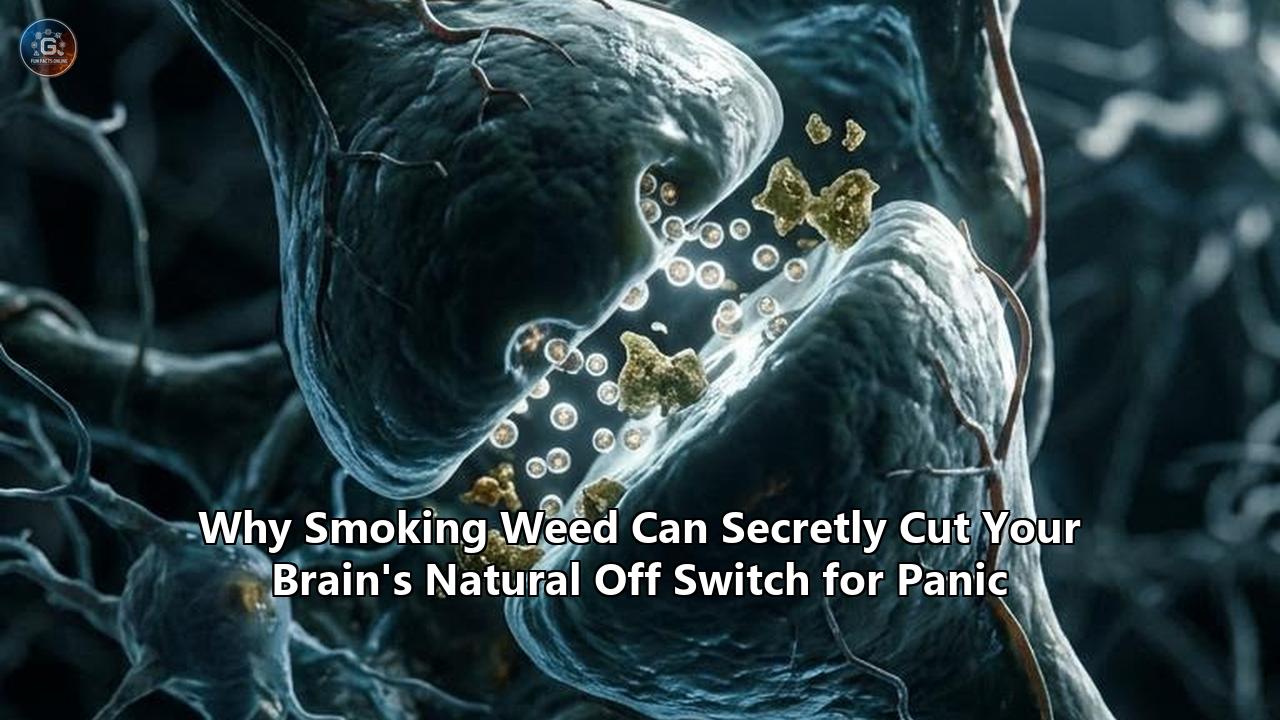
A laboratory study published in Nature Communications explains what went wrong. Led by neuroscientists at the Northwestern University Feinberg School of Medicine, the research pinpoints the precise cellular mechanism by which cannabinoids disable the brain’s endogenous brake on fear. Rather than acting as a universal sedative, tetrahydrocannabinol (THC) and its synthetic analogs can systematically silence the inhibitory circuits that protect the brain from runaway panic.
By deploying miniature implanted microscopes to monitor deep-brain activity in real time, the Northwestern team watched this neural security failure unfold. Under baseline conditions, the brain relies on specialized interneurons to suppress catastrophic alarm signals. But when cannabinoids flood the system during periods of environmental or physiological stress, they selectively disinhibit a cluster of fear-processing cells in the amygdala. The biological brake fails, leaving the panic engine running at full throttle.
This discovery resolves a long-standing medical contradiction while pointing to a quiet public health crisis. Across dispensaries nationwide, commercial cannabis has reached potency levels never anticipated by human biology. As millions turn to high-potency concentrates to calm their nerves, the pharmacology indicates that chronic, heavy exposure does not merely induce occasional paranoia—it actively dismantles the neural machinery required to switch fear off.
The Anomaly in the Triage Bay
In the emergency department at Denver Health, clinical toxicologists have tracked the downstream fallout of this neurological short circuit for over a decade. Dr. Andrew Monte, an emergency medicine physician and medical toxicologist, has watched the character of cannabis-induced admissions shift from mild sensory confusion to acute autonomic crises.
"Patients present with profound terror, hyperventilation, chest tightness, and a visceral conviction that they are dying," Dr. Monte explains. "When you take their history, the standard line is: 'I smoke every day to manage my stress. I don't understand why this happened tonight.' They assume they bought a contaminated batch. In reality, their brain's neurochemical buffer simply gave out."
The clinical literature on cannabis and anxiety has long grappled with this paradox: cannabis is simultaneously marketed as an anxiolytic and clinically recognized as a potent anxiogenic. To track how a calming substance transforms into a driver of panic, investigators had to follow the evidence deep into the limbic system, peeling back the layers of how the human brain calculates and suppresses threat.
THE AMYGDALA PANIC CIRCUIT
========================================================================
Sensory Threat Input
        │
        ▼
[Basolateral Amygdala (BLA)] ──► Evaluates stimulus intensity
        │
        ▼
[Central Amygdala (CeA)] ────► Drives autonomic panic (Heart rate, freezing)
   ▲         ▲
   │         │
[GABA Brake] [Somatostatin Neurons]
 (Silenced     (Overactive / Uncontrolled)
 by THC)
========================================================================
At the core of this circuit sits the amygdala, an almond-shaped cluster of nuclei buried within the temporal lobe. The amygdala functions as the brain's central alarm router. When an individual encounters a sudden threat—a screeching tire, a sudden physical pain, or a surge of adrenaline—the basolateral amygdala evaluates the sensory incoming data and relays signals to the central amygdala, which orchestrates the body's acute fight-or-flight response.
Under normal circumstances, the human central amygdala possesses an internal governor: a network of inhibitory interneurons that produce gamma-aminobutyric acid (GABA), the primary calming neurotransmitter of the central nervous system. This inhibitory network acts as an off switch, preventing the alarm from echoing endlessly once the immediate danger has passed.
The Northwestern investigation revealed that cannabinoids selectively target this governor, cutting the lines before the off signal can be sent.
Layer 1: The Disinhibition of the Central Amygdala
To uncover the precise cellular sequence, the Northwestern team focused on a specific subpopulation of brain cells: somatostatin-expressing interneurons housed inside the central amygdala. These cells act as micro-switches in fear conditioning, regulating whether threat responses are unleashed or restrained.
In the preclinical trials, researchers exposed subjects to synthetic cannabinoids alongside a mild environmental stressor: an aversive predator odor. Under normal conditions, healthy subjects investigate the odor with measured caution, their behavioral circuits balancing vigilance with exploration. But subjects exposed to cannabinoids froze, retreated, and displayed severe, persistent avoidance.
THE DISINHIBITION MECHANISM
------------------------------------------------------------------------
1. Baseline State:
   Inhibitory Interneurons ──[GABA]──► Somatostatin Neurons (Suppressed)
   Outcome: Measured threat response, panic prevented.

2. Acute THC Flooding:
   THC ──► CB1 Receptors on GABA Terminals ──► GABA Release Blocked
   Outcome: Somatostatin Neurons Fire Unchecked ──► Panic Activated.
------------------------------------------------------------------------
When the researchers looked through implanted lenses into the living tissue, the mechanism became clear. Somatostatin neurons were firing in sustained, chaotic bursts.
"The results of this study could explain why a good trip can turn bad pretty quickly if people consume too much cannabis or the situation they are in turns stressful or scary," said Dr. Sachin Patel, senior author of the study and chair of psychiatry and behavioral sciences at Northwestern University Feinberg School of Medicine.
Patel's laboratory proved that cannabinoids did not directly activate the fear-producing cells. Instead, they executed a flanking maneuver known in neurophysiology as disinhibition. Cannabinoids targeted the cannabinoid type 1 (CB1) receptors resting on the upstream inhibitory neurons that normally suppress the somatostatin cells. By turning off the cells that turn off fear, the cannabinoids allowed the central amygdala's panic machinery to run wild.
"Higher doses of cannabinoids and environmental stress worked together to synergistically release the 'brake' on the central amygdala, which in turn drove excessive anxiety," Patel explained.
To verify their hypothesis, the investigators introduced a chemogenetic tool designed to silence these somatostatin neurons on command. When those overactive cells were quieted, the drug-induced panic vanished. The behavioral freezing stopped, and the subjects returned to normal exploratory behavior despite the presence of both the predator odor and the cannabinoid compounds.
The experiment identified the physical switch. It also exposed why consumers who use cannabis to self-soothe in moments of acute life stress are stepping into a biological trap: stress hormones and exogenous cannabinoids compound one another at the synapse, systematically disabling the brake just when the brain requires it most.
Layer 2: The Biphasic Trap and the Receptor Imbalance
The discovery of the central amygdala switch helps clarify a property of cannabis that has puzzled pharmacologists for decades: its biphasic dose-response curve.
A substance with a linear dose-response curve produces more of the same effect as the dose rises—more ibuprofen provides greater pain relief until reaching a plateau. Cannabis, however, exhibits opposing effects at opposite ends of its dosage spectrum. A low dose can act as an anxiolytic, lowering heart rate and promoting muscle relaxation, whereas a high dose often triggers severe panic, depersonalization, and elevated autonomic arousal.
This distinct biphasic response forms the crux of why research into cannabis and anxiety yields such contradictory findings. The answer lies in the asymmetric distribution of CB1 receptors across different neuronal classes.
THE BIPHASIC THRESHOLD: DUAL RECEPTOR POPULATIONS
========================================================================
[Low THC Concentration]
  │
  ▼
Target: Glutamatergic Synapses (High-Affinity CB1 Receptors)
Effect: Suppresses Excitatory Signals
Clinical Result: Calm, Sedation, Anxiolysis

────────────────────────────────────────────────────────────────────────

[High THC Concentration]
  │
  ▼
Target: GABAergic Synapses (Lower-Affinity CB1 Receptors)
Effect: Suppresses Inhibitory Signals (Disinhibition)
Clinical Result: Runaway Amygdala Firing, Panic, Tachycardia
========================================================================
CB1 receptors are among the most abundant G protein-coupled receptors in the mammalian brain, but they do not sit on a single type of cell. They populate both glutamatergic neurons, which transmit excitatory signals using glutamate, and GABAergic neurons, which transmit calming signals using GABA.
Crucially, these two populations possess different binding affinities:
- Glutamatergic Terminals: Express CB1 receptors that bind cannabinoids with high sensitivity. At trace or low doses, THC binds predominantly here, dampening excitatory transmission and lowering limbic volume. The subjective result is a tranquil, mildly sedated state.
- GABAergic Terminals: Require higher concentrations of cannabinoids to reach extensive receptor occupancy. When a consumer uses a high-potency product, THC saturates the high-affinity glutamatergic sites and cascades onto the GABAergic terminals. Here, it suppresses the release of the brain's calming neurotransmitter.
Once GABA release is shut down, the brain loses its primary chemical stabilizer. Glutamatergic activity, freed from local inhibitory regulation, fires unchecked. The delicate equilibrium between excitation and inhibition—the balance that keeps human consciousness anchored and calm—collapses into acute neural excitability.
The user experiences this shift as a sudden, subjective shock. One puff delivers relaxation; the second or third pushes tissue concentrations past the biphasic tipping point. The brain's natural off switch is overridden, and the limbic system slips into an uncontrolled firing cycle.
Layer 3: Receptor Eviction and Endocannabinoid Erasure
The acute biphasic flip explains why an individual might have an isolated panic attack on a Saturday night. It does not explain why chronic, daily consumers suddenly begin experiencing spontaneous panic attacks on Tuesday afternoons while entirely sober.
To understand that progression, the evidence trail shifts from acute synaptic firing to neuroplastic down-regulation—the process by which the brain alters its physical architecture to defend itself against chemical overload.
Inside the human body, the endocannabinoid system operates strictly on demand. The brain does not store its native cannabinoids—anandamide and 2-arachidonoylglycerol (2-AG)—in vesicles waiting to be dumped into synapses. Instead, it synthesizes them on the spot when a postsynaptic neuron becomes over-excited. These lipid messengers travel backward across the synaptic cleft, bind to presynaptic CB1 receptors, and act as a temporary shutoff valve, telling the sending neuron to halt transmission.
Once the signal is delivered, enzymes such as fatty acid amide hydrolase (FAAH) and monoacylglycerol lipase (MAGL) degrade anandamide and 2-AG within seconds. The system is precise, ultra-localized, and fast.
ENDOGENOUS VS. EXOGENOUS CANNABINOID ACTION
------------------------------------------------------------------------
Endogenous (Anandamide / 2-AG):
* Synthesized on demand in response to localized stress.
* Degraded within seconds by metabolic enzymes (FAAH, MAGL).
* Result: Precise, temporary homeostatic braking.

Exogenous (Inhaled THC):
* Floods the entire brain non-selectively.
* Lipophilic; resists immediate degradation, lingering for hours.
* Chronic exposure triggers GRK phosphorylation and β-arrestin-2 recruitment.
* Result: CB1 receptors are internalized into lysosomes and degraded.
------------------------------------------------------------------------
When an individual inhales high-potency cannabis, this localized system is flooded by an exogenous agonist. THC is lipophilic, distributes broadly across brain tissue, and binds indiscriminately to every available CB1 receptor for hours.
Faced with this constant chemical stimulation, the brain initiates a homeostatic defense:
- Receptor Phosphorylation: G-protein coupled receptor kinases (GRKs) attach phosphate groups to the intracellular tails of the CB1 receptors.
- Beta-Arrestin Recruitment: Specialized scaffolding proteins called beta-arrestin-2 are recruited to the phosphorylated receptor, blocking its ability to talk to downstream G-proteins. The receptor becomes functionally silenced, or desensitized.
- Internalization and Degradation: The cell pulls the desensitized receptor inward through endocytosis. Once inside, the receptor is either sequestered or transported to lysosomes, where it is broken down.
Positron emission tomography (PET) neuroimaging studies using radiotracers specific to CB1 receptors have documented this receptor clearing in real time. In regular cannabis consumers, CB1 receptor availability drops significantly across the cortex, hippocampus, and amygdala.
This reduction carries serious consequences. When a chronic consumer steps away from cannabis, or when their blood levels drop between doses, they are left with an endocannabinoid system that lacks the receivers needed to function.
If that individual then encounters an ordinary, everyday stressor—a difficult email from an employer, an argument with a partner, or a spike in cortisol—the brain synthesizes anandamide to calm the amygdala, just as it was evolved to do. But there are far fewer functional CB1 receptors remaining on the cell surface to receive the signal.
The brain's endogenous off switch has been physically removed from the wall. The individual is left with an unprotected amygdala, vulnerable to hyper-reactivity and spontaneous panic that their own neurochemistry can no longer quiet.
Layer 4: The Extinction Deficit (Trapping the Memory of Terror)
When a panic attack strikes, it does not simply cause temporary physiological distress; it leaves a mark on the brain's memory architecture.
The human survival strategy depends on two complementary processes: fear conditioning and fear extinction. In fear conditioning, the basolateral amygdala pairs a stimulus with an aversive outcome. If a person walks down a dark path and is attacked by an animal, the sights, smells, and sensations of that path are instantly mapped as dangerous.
To survive in a changing world, however, the brain must also master fear extinction. When the person later walks down that same path repeatedly and nothing bad happens, the ventromedial prefrontal cortex (vmPFC) constructs a new, inhibitory memory. This safety memory suppresses the old fear trace. The original memory is not deleted; it is held in check by active, prefrontal inhibition.
FEAR EXTINCTION CIRCUITRY
========================================================================
[Prefrontal Cortex (vmPFC)] ───► Evaluates safety / updates context
          │
          │ (Requires functional CB1 signaling)
          ▼
[Basolateral Amygdala (BLA)] ──► Holds original threat memory
          │
          ▼
[Central Amygdala (CeA)] ────► Triggers panic output
========================================================================
* In healthy brains: vmPFC signals BLA via CB1 to extinguish fear.
* In chronic cannabis users: CB1 downregulation blocks extinction recall.
* Result: A single panic episode becomes permanently sensitized.
Preclinical and clinical research shows that fear extinction is heavily dependent on the endocannabinoid system. Mice engineered without CB1 receptors can easily learn to fear a sound paired with a shock, but they can never unlearn it; even after hundreds of trials where the sound occurs without the shock, they continue to freeze in terror. The endocannabinoid signal inside the basolateral amygdala is the precise molecular messenger that cements the new safety memory.
A study examining fear extinction paradigms in adults confirmed that this deficit occurs in human consumers as well. Using differential fear-conditioning tasks paired with skin conductance measurements, researchers evaluated how efficiently chronic cannabis users could extinguish conditioned fear responses compared to non-using controls.
The results were clear: chronic cannabis use was associated with marked impairments in both within-session fear extinction and between-session extinction retention. While non-users learned that a previously threatening cue was now safe within a few trials, the regular cannabis users maintained elevated autonomic fear responses.
This dynamic reveals why cannabis-induced panic attacks often mark the beginning of chronic anxiety disorders. When an individual suffers an acute limbic panic attack during cannabis intoxication, their prefrontal cortex and hippocampus encode that moment with extreme clarity.
Because their heavy cannabis consumption has downregulated CB1 receptors throughout the frontolimbic network, their brain lacks the functioning molecular infrastructure required to extinguish the fear of the panic attack itself.
The consumer becomes terrified of their own physical sensations—their baseline heart rate, a fleeting feeling of shortness of breath, or the physical environment where the attack occurred. Rather than rationalizing these sensations as a temporary drug effect, the sensitized amygdala perceives them as evidence of immediate danger.
This cycle points to a central issue in the relationship between cannabis and anxiety: the drug may provide short-term symptomatic relief while gradually eroding the brain's capacity for long-term emotional adaptation.
Layer 5: The Commercial Blind Spot and the Loss of CBD
How did a drug traditionally classified as a mild euphoric relaxant transform into a clinical driver of panic disorders and emergency room admissions? The answer lies in the radical transformation of the plant itself over the past three decades.
For thousands of years, wild-type Cannabis sativa was a balanced botanical organism. Historical chemical profiles from seized contraband in the 1970s and 1980s show that typical dried flower contained between 1% and 4% THC. Critically, that modest THC concentration was almost always accompanied by comparable ratios of cannabidiol (CBD).
THE EVOLUTION OF THE CANNABIS PHARMACOLOGICAL PROFILE
------------------------------------------------------------------------
1970s–1980s Domestic Cannabis:
* THC Potency: 1% – 4%
* CBD Content: Substantial / Balanced (1:1 or 2:1 ratios)
* Receptor Action: CBD acts as a negative allosteric modulator on CB1.
* Panic Risk: Very low.

Modern Commercial Dispensary Products:
* Dried Flower: 25% – 35% THC
* Concentrates (Vapes, Dabs, Wax): 70% – 95% THC
* CBD Content: Frequently below 0.2% (Bred out to maximize psychoactivity)
* Receptor Action: Pure, unmitigated orthosteric flooding of CB1.
* Panic Risk: High; rapid disinhibition of limbic fear circuits.
------------------------------------------------------------------------
From a pharmacological perspective, CBD serves as a built-in safety net against THC-induced panic. CBD is a negative allosteric modulator of the CB1 receptor. It does not bind to the primary active site where THC docks; instead, it binds to a secondary, adjacent site on the receptor surface.
When CBD binds to this allosteric pocket, it subtly changes the physical shape of the receptor, making it considerably harder for THC to bind and trigger its downstream signaling cascade. In essence, natural CBD acts as a molecular shock absorber, capping the intensity of THC's effect on amygdala disinhibition.
Over thirty years of intensive, unlicensed, and eventually commercial breeding, growers prioritized a single commercial metric: total THC percentage. To drive THC concentrations above 25% or 30% in dried flower, agricultural breeders inadvertently bred CBD out of the plant entirely. On modern dispensary shelves, dried flower rarely contains more than a fraction of one percent CBD.
The shift is even starker in the concentrates market, which accounts for an increasingly dominant share of legal sales. Distillate cartridges, live resins, and dabbable waxes routinely test between 75% and 95% pure delta-9-THC.
Consuming a 90% THC vapor cartridge with near-zero CBD is not a modern iteration of smoking a 3% joint in 1978. It is an entirely different pharmacological challenge—one that delivers an intense agonist load directly to the central nervous system without the balancing molecules that once protected users from panic.
Dr. Yasmin Hurd, a neuroscientist and director of the Addiction Institute at Mount Sinai in New York, has spent decades researching the neurodevelopmental and synaptic impacts of high-potency cannabis.
"The human brain did not evolve to manage sustained, high-occupancy stimulation of the CB1 receptor system," Dr. Hurd points out. "When you strip away the natural botanical matrix and administer isolated, ultra-high-potency THC to the brain, you are overwhelming delicate neuromodulatory systems that are responsible for maintaining emotional balance."
This commercial shift has opened a clinical gap. Consumers treat commercial concentrates as an everyday wellness tool, assuming that because it originates from a plant, it carries the gentle safety profile of historic cannabis.
When chronic consumers find themselves waking up with racing pulses, trembling hands, and pervasive dread, they rarely suspect their nightly vape pen. Instead, they interpret these sensations as symptoms of an unaddressed psychiatric illness—and frequently use more high-potency concentrate to cope, fueling the very cycle that caused the issue.
THE CANNABIS-INDUCED ANXIETY TRAP
========================================================================
[1. Baseline Stress / Anxiety]
        │
        ▼
[2. Heavy Consumption of High-THC Product]
        │
        ▼
[3. CB1 Receptor Internalization & Amygdala Disinhibition]
        │
        ▼
[4. Loss of the Brain's Natural Inhibitory "Off Switch"]
        │
        ▼
[5. Spontaneous Panic / Heightened Interoceptive Dread]
        │
        ▼
[6. Self-Medication with Higher Potency Cannabis]
        │
        └───► (Loop repeats and deepens)
========================================================================
This self-reinforcing dynamic explains why general psychiatric practices are seeing an influx of young adults presenting with treatment-resistant panic disorder that only resolves once cannabis consumption stops. The ongoing dialogue surrounding cannabis and anxiety must move beyond ideological debates over whether the plant is safe or dangerous, and instead examine the biological realities of modern product potencies.
Rebuilding the Broken Circuit
The central question facing clinicians and patients dealing with this form of nervous system dysregulation is simple: can the brain's off switch be restored, or is this limbic recalibration permanent?
Fortunately, clinical neuroimaging offers a reassuring answer. The human brain’s capacity for homeostatic recovery is remarkably resilient, provided the pharmacological pressure is removed entirely.
In longitudinal PET imaging studies tracking human cannabis users through monitored abstinence, researchers observed a clear timeline of neuroreceptor recovery:
- Within 48 hours: The absolute density of functional CB1 receptors on the neuronal surface begins to rise as the internal sequestration of receptors reverses.
- By Day 14: Significant receptor recovery is visible across primary cortical and subcortical structures, including the hippocampus and anterior cingulate cortex.
- By Day 28: CB1 receptor availability in the majority of brain regions returns to levels comparable to non-using control subjects.
NEURORECEPTOR RECOVERY TIMELINE FOLLOWING CESSATION
------------------------------------------------------------------------
Days 1–5:   Acute Withdrawal Phase
            - Receptors remain internalized.
            - Endogenous tone at lowest point; rebound anxiety, insomnia,
              and visceral panic symptoms peak.

Days 7–14:  Early Re-expression
            - Significant re-insertion of CB1 receptors into synaptic
              membranes.
            - Autonomic resting tone begins to stabilize.

Days 21–28: Structural Normalization
            - CB1 receptor density normalizes across limbic structures.
            - Endogenous endocannabinoid braking (anandamide/2-AG)
              regains regulatory control over GABA/Glutamate pathways.

Post-30:    Extinction Re-learning
            - Prefrontal-amygdala connectivity recovers.
            - Patients regain the neural capacity to successfully
              extinguish conditioned panic memories.
------------------------------------------------------------------------
While the receptor architecture can recover within roughly a month of complete abstinence, the psychological recovery often takes longer. The panic memories encoded while the off switch was disabled do not immediately disappear just because the receptors have returned.
Because the amygdala learned to associate normal somatic sensations—such as an elevated heart rate or a momentary dizzy spell—with impending catastrophe, patients often require targeted cognitive behavioral therapy and exposure protocols to extinguish those conditioned associations.
At the same time, the broader scientific community is turning the discoveries from the Northwestern study into novel psychiatric targets.
"Suppressing the activity of somatostatin neurons in the central amygdala could represent a final pathway for reducing anxiety symptoms, not just in the context of cannabis side effects," Dr. Sachin Patel noted following the publication of his team's findings.
Rather than washing the whole brain in exogenous plant cannabinoids that risk disinhibition and receptor degradation, future medications may target the specific downstream enzymatic pathways within those somatostatin interneurons. Therapeutic strategies currently under early-phase development include:
- Targeted FAAH and MAGL Inhibitors: Compounds designed to slow down the degradation of natural endocannabinoids only when and where they are released, preserving the brain's targeted on-demand braking system without causing widespread receptor downregulation.
- Somatostatin-Specific Modulators: Pharmacological tools designed to selectively restore the inhibitory brake on central amygdala microcircuits, providing panic relief without the cognitive fog or addiction risks of classic benzodiazepines.
- Potency Caps and Regulatory Testing: Public health initiatives in several jurisdictions considering mandatory testing and caps on THC concentration, paired with mandatory minimum CBD ratios, to safeguard the brain's endogenous regulatory systems.
For the millions of consumers navigating an evolving commercial landscape, these findings challenge the assumption that cannabis is an unconditionally benign relaxant. The brain regulates human emotion through a precise neurochemical balance. When external compounds disrupt the systems that balance that network, the brain's natural off switch for fear can be disabled—leaving panic to burn through the limbic system unchecked.
Recovery requires understanding that the anxiety felt after heavy cannabis use is not an inexplicable personal failure. It is the predictable, cellular consequence of a biological brake that was quietly overwhelmed.
Reference:
- https://www.techexplorist.com/cannabis-you-feel-calm-one-moment-terrified-next/105665/
- https://news.feinberg.northwestern.edu/2026/10/05/study-reveals-brain-cells-that-drive-anxiety-after-cannabinoid-exposure/
- https://neurosciencenews.com/thc-anxiety-endocannabinoids-31287/
- https://www.sciencedaily.com/releases/2026/10/261003234021.htm
- https://pmc.ncbi.nlm.nih.gov/articles/PMC6665931/
- https://news.tulane.edu/pr/how-can-stress-cause-anxiety-blame-brains-cannabis
- https://automationstechnik.com.pl/amphtml/history/story/discovery-vakali-lika-sa%C3%BAde-kokeba
- https://www.facebook.com/earth.com/posts/a-cannabis-like-drug-activated-fear-related-brain-cells-in-mice-offering-clues-t/1543930827777432/
- https://breakthroughsforphysicians.nm.org/psychiatry-research-video-cannabinoids-key-to-reducing-excessive-fear-responses.html
- https://pmc.ncbi.nlm.nih.gov/articles/PMC13274765/
- https://pmc.ncbi.nlm.nih.gov/articles/PMC13189260/
- https://etd.auburn.edu/bitstream/handle/10415/9863/Cannon_ThesisDocument_Final.pdf?sequence=2