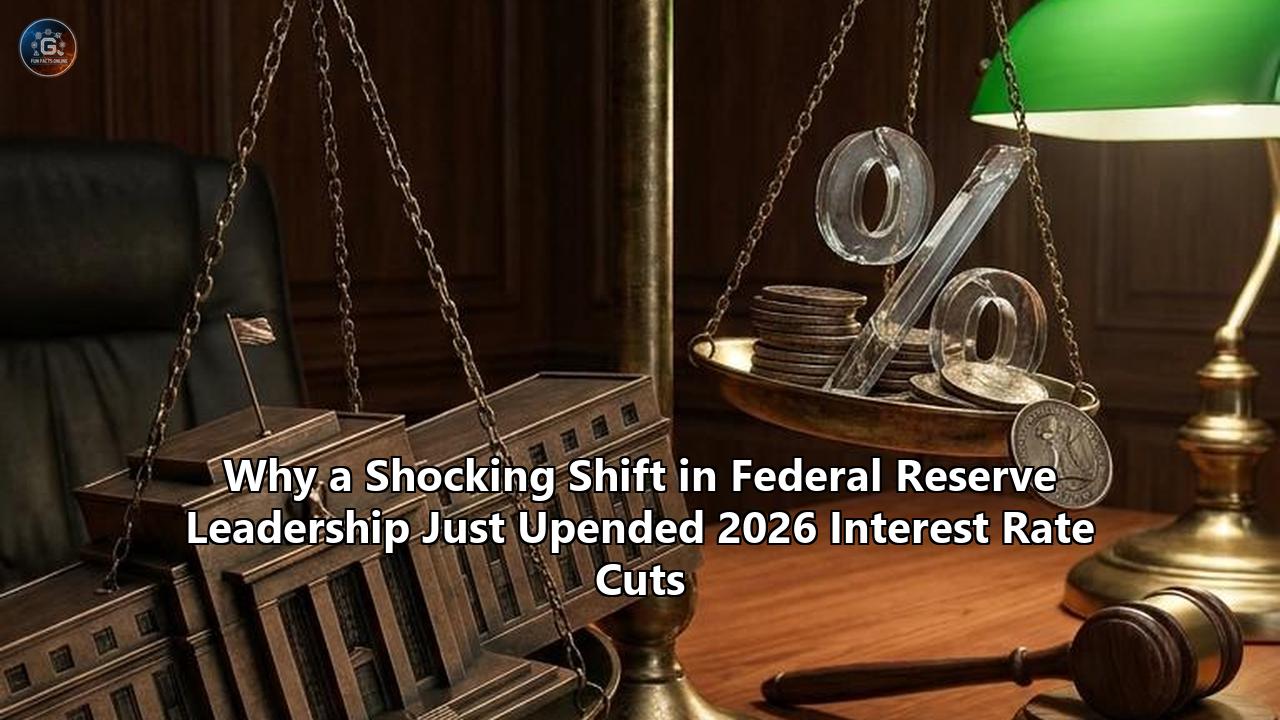
On May 22, 2026, the Oval Office hosted a swearing-in ceremony that symbolized one of the most turbulent handovers in the history of the Federal Reserve. Kevin Warsh, a former Fed governor and Wall Street veteran, took the oath of office as the 17th chair of the central bank, administered by Supreme Court Associate Justice Clarence Thomas. The ceremony concluded a brutal, highly partisan confirmation process and marked the end of Jerome Powell’s eight-year tenure as head of the world’s most powerful monetary institution.
For months, the incoming administration had publicly pressured Powell, demanding aggressive monetary easing to fuel domestic growth. Warsh was nominated under the explicit political expectation that he would act as a "new sheriff" ready to lower borrowing costs. Yet, in a cruel twist of macroeconomic irony, the very moment Warsh assumed leadership, the global financial landscape fractured.
Instead of preparing for a cycle of monetary easing, global markets underwent a violent repricing. Rather than anticipating a series of cuts, traders and bond vigilantes began pricing in a potential interest rate hike by the end of the year. The shocking leadership shift, meant to usher in a new era of cheap capital, has instead upended the outlook for 2026 interest rate cuts.
This case study analyzes this transition to extract critical principles about the limits of political influence over central banking, the multi-dimensional nature of monetary policy, and the structural forces that dictate the actual price of global capital.
The Unprecedented Battle for the Eccles Building
To understand why this leadership shift had such a destabilizing effect, one must examine the extraordinary political and legal warfare that preceded Warsh's arrival at the Fed. The battle for control over the central bank in late 2025 and early 2026 went far beyond typical policy disagreements, involving criminal investigations, constitutional challenges, and tactical resignations.
The Pressure on Jerome Powell
Throughout the second term of the Trump administration, Jerome Powell faced relentless public attacks from the White House, which labeled his policy stance overly restrictive. The conflict escalated dramatically when the Justice Department, led by U.S. Attorney Jeanine Pirro, launched a criminal investigation into Powell. The probe focused on alleged misrepresentations of cost overruns in the $2.5 billion renovation of the Federal Reserve’s Washington headquarters.
Powell and his supporters strongly criticized the investigation. In a blunt video statement released in January 2026, Powell characterized the subpoena as a thin pretext designed to compromise the Fed’s political independence and force his resignation. The investigation was eventually blocked by Chief U.S. District Judge James Boasberg, who found "essentially zero evidence" of criminal wrongdoing and criticized the probe as an improper attempt to pressure the Fed.
Though the Justice Department dropped the criminal probe on April 24, 2026, to clear a path for Warsh’s confirmation, the political damage was done. In a final act of institutional defiance, Powell refused to vacate his seat on the Fed's Board of Governors. Because governors serve fixed, staggered 14-year terms, Powell announced he would remain on the board until his governor term expires in January 2028—ensuring he would be a constant, skeptical presence in the room during Warsh’s chairmanship.
  CHRONOLOGY OF THE 2026 FED TRANSITION

  [Jan 2026] ──> DOJ launches criminal probe into Jerome Powell over Fed HQ renovations
  [Jan 30]   ──> Trump nominates Kevin Warsh as next Fed Chair
  [Apr 24]   ──> DOJ drops Powell probe under bipartisan Senate pressure
  [May 13]   ──> Senate confirms Warsh in historic, divisive 54-45 vote
  [May 14]   ──> Governor Stephen Miran resigns to make way for Warsh on Board
  [May 15]   ──> Powell's term as Chair ends; named Chair pro tempore temporarily
  [May 22]   ──> Kevin Warsh sworn in as 17th Fed Chair at the White House
The Constitutional Crisis Over Lisa Cook
Simultaneously, the administration attempted to fire Federal Reserve Governor Lisa Cook, an appointee of the previous administration. The White House leveled allegations of mortgage fraud against Cook, claiming she had misstated her primary residence on loan documents prior to her confirmation. Cook filed a federal lawsuit to contest her removal, arguing that the President lacked the constitutional authority to dismiss a sitting Fed governor without proving explicit, statutory "cause".
As the case moved toward the Supreme Court, the central bank was caught in a structural gridlock. The administration's attempts to reshape the Fed’s voting board triggered deep institutional anxiety, calling into question the long-standing norm of an independent central bank insulated from political cycles.
The Miran Resignation and the Divisive Confirmation
To allow Warsh to assume the chairmanship, a seat on the seven-member Board of Governors had to be vacated. Stephen Miran, a staunch monetary dove who had been appointed by Trump to fill an unexpired term, stepped down on May 14, 2026. Miran had actively dissented at multiple Federal Open Market Committee (FOMC) meetings, calling for deep interest rate cuts to protect the labor market. His departure paved the way for Warsh's narrow 54-45 confirmation vote on May 13—the most divisive in the central bank's history.
While political observers focused on the intense partisan drama of this transition, global debt markets were focusing on a far more urgent threat: a resurgent inflationary wave that would render any plans for immediate rate cuts obsolete.
Geopolitical Shocks and the Global Bond Revolt
The fundamental premise of the administration’s monetary strategy was that the U.S. economy had entered a structural disinflationary trend. Proponents of this view, including Treasury Secretary Scott Bessent and Warsh himself, argued that domestic productivity gains—particularly those driven by the rapid commercialization of artificial intelligence—would keep inflation low even if the Fed pursued highly stimulative policies.
However, this theory was quickly challenged by a major geopolitical crisis. The escalation of the U.S.-Iran conflict in the Middle East severely disrupted global energy supplies, triggering a sharp increase in oil prices.
           THE STAGFLATIONARY LOOP (MID-2026)

  Geopolitical Conflict (Middle East / Iran War)
         │
         ▼
  Crude Oil Spikes (WTI approaches $100/barrel)
         │
         ▼
  U.S. Headline Inflation Surges (PCE at 4.0%)
         │
         ▼
  Global Bond Sell-Off (Japan & China Liquidate Debt)
         │
         ▼
  30-Year Treasury Yield Surges to 5.198%
         │
         ▼
  Repricing of Capital (All 2026 Rate Cuts Canceled)
The Energy Shock and Resurgent Inflation
By April 2026, the economic data painted a concerning picture. U.S. consumer price index (CPI) inflation surged to 3.8% year-over-year, its highest level in nearly three years. More importantly, the Fed's preferred inflation gauge, the Personal Consumption Expenditures (PCE) price index, hit a year-over-year rate of 4.0%.
Energy prices, which rose by 18% due to shipping bottlenecks and fuel shortages linked to the conflict, accounted for a significant portion of this spike. Rather than experiencing the smooth path toward 2% inflation that policymakers had anticipated, the U.S. economy was suddenly facing a classic stagflationary shock: slowing consumer demand combined with rising, cost-push inflationary pressures.
The 30-Year Yield Spike
Faced with resurgent inflation, international debt markets reacted strongly. Long-term borrowing costs surged globally. On Tuesday, May 19, 2026, the benchmark 30-year U.S. Treasury yield spiked to 5.198%—the highest level recorded since July 2007.
This dramatic move above the key 5% threshold indicated that bond investors were demanding a significantly higher term premium to hold long-term U.S. sovereign debt. They were expressing concern that the Fed might allow inflation to remain elevated or that its independence was being compromised.
  COMPARATIVE GLOBAL BOND YIELDS (MAY 2026 SURGE)

  U.S. 30-Year Treasury  ██████████████████████ 5.198%
  U.K. 30-Year Gilt      █████████████████████████ 6.000% (approx)
  Germany Long-Term      ████████████ 3.100% (Highest since 2011)
Sovereign Debt Liquidations by Foreign Powers
The sharp upward movement in yields was accelerated by a sudden sell-off of U.S. debt by major foreign central banks. As the global energy shock put downward pressure on international currencies, foreign policymakers had to intervene.
Central banks in Japan and China liquidated large volumes of their dollar reserves to defend their depreciating domestic currencies. Japan sold roughly $47 billion in Treasuries, while China reduced its holdings of U.S. sovereign debt to its lowest level since 2008.
This coordinated liquidation created an oversupply of Treasuries in the market, driving bond prices down and yields up. This dynamic meant that even if the Fed wanted to pursue 2026 interest rate cuts, the broader global market was already driving borrowing costs higher.
The Warsh Doctrines: Repricing Capital via Structural Reform
Many market analysts initially assumed that Kevin Warsh, as a nominee of a pro-growth administration, would prioritize immediate rate cuts. However, this view overlooked his long-standing structural philosophy.
Throughout his career at Stanford University’s Hoover Institution and his previous term as a Fed governor, Warsh had expressed deep skepticism about the post-2008 central banking playbook. He had consistently argued that the Fed’s excessive intervention in financial markets had distorted price signals and created artificial bubbles.
Upon taking office, Warsh began implementing a series of structural reforms that fundamentally altered how the market prices capital, neutralizing the impact of any potential short-term rate cuts.
Doctrine 1: The Dismantling of Forward Guidance
The first major structural shift under Warsh was his plan to dismantle the Fed's practice of "forward guidance". Introduced during the Greenspan era and expanded by Bernanke, Yellen, and Powell, forward guidance was designed to manage market expectations by signaling the future path of interest rates. The core of this system was the quarterly Summary of Economic Projections (SEP), widely known as the "dot plot".
  FORWARD GUIDANCE PARADIGM SHIFT

  Powell Era: "Forward-Looking Guidance"
  [FOMC Meeting] ──> [Dot Plot Forecasts] ──> [Market Pricing Anchored] ──> [Lower Volatility]

  Warsh Era: "Data-Driven Discretion"
  [FOMC Meeting] ──> [No Dot Plot / Quiet Signaling] ──> [Market-Driven Price Discovery] ──> [Higher Volatility]
Warsh argued that this approach created a false sense of precision, locking the central bank into projected policy paths and compounding policy errors when economic conditions changed. He believed the Fed should focus on current data rather than trying to manage future expectations.
At his confirmation hearings, Warsh signaled his intention to scale back or completely eliminate the dot plot, starting as early as the mid-June FOMC meeting. For financial markets, this represented a significant change.
Without the dot plot to anchor expectations, investors could no longer rely on the Fed to telegraph its moves months in advance. While this change pleased some in the administration by reducing public forecasts of higher interest rates amid high inflation, it also removed a key mechanism used to stabilize mortgage, credit card, and corporate debt markets. The immediate result was an increase in market volatility as investors adjusted to pricing risk without the Fed’s explicit guidance.
Doctrine 2: Resizing the $6.7 Trillion Balance Sheet
The second structural pillar of the Warsh Fed was an aggressive focus on shrinking the central bank's balance sheet. Since the 2008 financial crisis, the Federal Reserve's portfolio of U.S. Treasuries and mortgage-backed securities had grown from less than $1 trillion to over $6.7 trillion, driven by multiple rounds of quantitative easing (QE).
  FEDERAL RESERVE BALANCE SHEET EXPANSION

  Pre-2008:   █ $800 Billion
  Post-Covid: ██████████████████████████ $6.7+ Trillion
Warsh had long criticized this expanded balance sheet as an unnecessary market distortion that misallocated credit and crowded out private capital. He advocated for a rapid reduction of these assets back toward pre-2008 levels through an aggressive cycle of quantitative tightening (QT).
This balance sheet strategy had a powerful, often overlooked impact on borrowing costs. While the public and the media focused primarily on the federal funds rate, the balance sheet was a highly effective tool for managing long-term interest rates.
When the Fed actively shrinks its balance sheet, it reduces the supply of money in the banking system and increases the supply of bonds that the private market must absorb. This dynamic puts downward pressure on bond prices and upward pressure on yields.
Consequently, even if Warsh eventually bowed to political pressure and approved a token cut to the short-term benchmark rate, his balance sheet liquidation would keep long-term borrowing costs elevated across the broader economy.
Doctrine 3: Reverting to a Strict 2% Inflation Target
The third major reform was a rejection of the "flexible average inflation targeting" (FAIT) framework adopted by Powell in 2020. FAIT allowed inflation to run moderately above the 2% target during economic expansions to compensate for periods when it ran below that level.
Warsh argued that this flexibility had eroded the Fed's credibility, contributing to the persistent inflation seen in the post-pandemic period. He advocated for a return to a strict, hard 2% inflation target.
By committing to a firm 2% ceiling, Warsh made it clear that the Fed would not tolerate elevated inflation to support short-term economic growth. This policy shift sent a clear message to financial markets: as long as inflation remained above 2%, the threshold for any 2026 interest rate cuts would remain exceptionally high.
The AI Capital Conundrum: Debt-Financed Innovation in a High-Rate Era
The collision between the Fed’s leadership shift and the realities of high borrowing costs has had a significant impact on the technology sector, which has been a key driver of domestic equity markets. Throughout late 2025 and early 2026, the S&P 500 and Nasdaq Composite surged to record highs, fueled by intense enthusiasm for artificial intelligence.
However, this growth was built on the assumption that the Fed would soon begin cutting interest rates, lowering the cost of capital for capital-intensive tech projects.
  AI CAPITAL COST IMPACT SPREAD

  Financing Cost (Low-Rate Assumption):  ████ 3.5%
  Actual Financing Cost (QT/High-Yield): ██████████ 7.2%
The Cost of Building AI Infrastructure
The development of AI technology is highly capital-intensive. Building advanced data centers, securing energy supplies, and acquiring high-performance graphics processing units (GPUs) requires billions of dollars in upfront investment. Much of this spending has been funded through corporate debt issuance and complex credit facilities.
In a low-rate environment, the financial return on these investments was highly attractive. However, as the 30-year Treasury yield surged above 5.1% and the prospects for 2026 interest rate cuts faded, the cost of capital changed dramatically.
With corporate borrowing costs rising alongside sovereign yields, the hurdle rate for new tech investments increased significantly. Technology firms were forced to reassess their capital expenditure plans. Multi-billion-dollar data center projects that made financial sense when interest rates were expected to fall were suddenly deemed unviable at higher rates.
The resulting deceleration in capital spending threatened to cool the broader economic expansion and put pressure on tech stock valuations, illustrating how monetary policy changes can quickly impact even the fastest-growing sectors of the economy.
Lessons from the 2026 Federal Reserve Leadership Shift
The dramatic transition from Jerome Powell to Kevin Warsh in the first half of 2026 offers several important lessons for economists, corporate executives, and financial market participants. It serves as a clear illustration of how modern monetary policy, political power, and global economic forces interact.
==================================================================================================
                                    THE THREE CORE LESSONS
==================================================================================================

  Lesson 1: The Primacy of Geopolitical and Structural Realities over Political Mandates
  No matter the political pressure on a central bank, persistent inflation and international debt
  market dynamics will ultimately dictate interest rate policy.

  Lesson 2: The Two-Dimensional Nature of Capital Pricing (Rates vs. Balance Sheet)
  Focusing solely on the federal funds rate ignores the powerful role of balance sheet reduction (QT),
  which can drive long-term borrowing costs up even if short-term rates are cut.

  Lesson 3: The High Volatility Cost of Reducing Central Bank Communication
  Eliminating forward-looking guidance like the "dot plot" reduces policy distortions but increases
  market volatility as investors adjust to pricing risk without explicit central bank signals.
==================================================================================================
Lesson 1: The Primacy of Geopolitical and Structural Realities over Political Mandates
The first and most obvious lesson is that macroeconomic and geopolitical realities will always constrain political ambitions. The administration spent months attempting to install a Fed leadership team that would quickly lower interest rates.
Yet, when faced with an energy price shock and a rise in inflation, the newly appointed leadership had no choice but to prioritize price stability.
If a central bank attempts to cut interest rates in the face of rising inflation and surging bond yields, it risks triggering a severe currency crisis and capital flight.
Global bond vigilantes and foreign central banks possess enormous power; if they believe a central bank is sacrificing inflation discipline for political expediency, they will sell sovereign debt, driving borrowing costs up regardless of the official policy rate.
Ultimately, macroeconomic data and global capital flows dictate the path of monetary policy, regardless of political desires.
Lesson 2: The Two-Dimensional Nature of Capital Pricing (Rates vs. Balance Sheet)
A second key takeaway is that monetary policy cannot be evaluated solely through the lens of short-term interest rates. For years, market participants focused almost exclusively on the federal funds rate as the primary indicator of monetary policy.
The 2026 transition demonstrated that the Fed’s balance sheet is an equally powerful tool. By pursuing an aggressive reduction of its asset portfolio, the Warsh-led Fed showed that it could run a restrictive monetary policy even if it occasionally adjusted short-term rates.
For corporate leaders and long-term investors, this highlights the need to monitor both aspects of monetary policy. A central bank can easily neutralize the stimulative effect of a short-term rate cut by accelerating its asset sales, keeping the long-term cost of capital high.
Lesson 3: The High Volatility Cost of Reducing Central Bank Communication
The third lesson concerns the trade-offs involved in central bank transparency. Warsh’s decision to scale back forward guidance and eliminate the dot plot was intended to restore market discipline and prevent the Fed from distorting asset prices.
However, this transition also demonstrated that forward guidance had served as a powerful stabilizing force for global debt markets. Without the anchor of the dot plot, the variance in long-term bond yields and mortgage rates increased significantly.
While reducing central bank guidance may prevent long-term policy distortions, it also introduces immediate, structural volatility into financial markets. Corporate treasurers and financial institutions must adapt to a world where they can no longer rely on the Fed to telegraph its policy path, requiring more robust risk management and hedging strategies.
What to Watch Next in the Warsh Era
As the second half of 2026 approaches, several key variables will determine whether the Federal Reserve can navigate this period of transition without triggering a severe economic downturn.
1. The June FOMC Meeting and the "Dot Plot" Decision
The first critical test for the Warsh-led Fed will be the FOMC meeting on June 16-17. This meeting will reveal whether Warsh can convince the 12-member voting board to officially abandon the Summary of Economic Projections and the dot plot.
Because monetary policy is set by a committee, Warsh cannot simply dictate these changes; he must build a consensus among governors and regional Fed presidents, many of whom remain committed to the Powell-era communication framework.
If Warsh faces significant dissent, it could signal internal division and complicate the Fed’s policy implementation going forward.
  KEY VARIABLES TO WATCH (Q3-Q4 2026)

  [June 7]     ──> OPEC+ Production Meeting (Will members agree to output hikes?)
  [June 16-17] ──> FOMC Meeting (Will the dot plot be officially abandoned?)
  [July-Aug]   ──> Supreme Court ruling on the attempted firing of Lisa Cook
  [Ongoing]    ──> Powell's actions on the Board of Governors (Will he lead an internal opposition?)
2. Energy Prices and the Fragile Geopolitical Truce
The path of inflation will remain heavily dependent on the geopolitical situation in the Middle East. While a fragile seven-week truce has allowed crude oil shipments to resume through the Strait of Hormuz, the stability of global energy markets remains highly uncertain.
Investors should watch the upcoming OPEC+ meeting on June 7, where member nations are expected to discuss potential production increases to ease global price pressures.
If geopolitical tensions flare up again and oil prices rise toward $100 a barrel, the Fed may be forced to consider interest rate hikes, regardless of the domestic political pressure.
3. The Powell-Cook Friction on the Board
The internal dynamics of the Federal Reserve Board will be an important factor to watch. With Jerome Powell remaining on the Board of Governors until 2028 and Lisa Cook actively contesting her removal, Warsh faces a highly divided and potentially hostile board.
Powell’s presence, in particular, could act as a rallying point for those who favor the traditional, independent policy framework.
If Powell and other dissenting governors choose to publicly challenge Warsh’s structural reforms, it could create significant policy friction, reducing the predictability of Fed actions and increasing market anxiety.
The dramatic leadership shift at the Federal Reserve has demonstrated that in a complex global economy, political mandates are ultimately secondary to macroeconomic realities.
While the new Fed leadership was intended to usher in an era of lower interest rates, the combination of resurgent inflation, global bond market volatility, and structural policy reform has instead forced a fundamental reassessment of the cost of capital, upending expectations for 2026 interest rate cuts and rewriting the financial playbook for years to come.
Reference:
- https://www.youtube.com/watch?v=VU7vZSRlgA0
- https://www.cfr.org/articles/what-to-expect-from-kevin-warshs-fed-in-the-first-100-days
- https://en.wikipedia.org/wiki/Kevin_Warsh
- https://www.theguardian.com/business/2026/may/13/kevin-warsh-federal-reserve-chair
- https://www.youtube.com/watch?v=2LVTV9OqfGU
- https://www.thehindu.com/business/Economy/outgoing-us-federal-reserve-chair-powell-delivers-defense-of-fed-independence/article71046824.ece
- https://www.consumerfinancemonitor.com/2026/05/21/warsh-to-be-sworn-in-as-fed-chair-on-may-22/
- https://www.thestreet.com/fed/investors-drop-bold-fed-rate-cut-signal-to-new-fed-chair-kevin-warsh
- https://goldpricetoday.co.in/us-30-year-treasury-yield-hits-19-year-high-as-global-bond-sell-off-sparks-economic-fears/
- https://www.fxleaders.com/news/2026/05/25/wti-crude-price-forecast-can-triangle-support-save-oil-price-levels-near-91/
- https://www.capradio.org/news/npr/story?storyid=nx-s1-5798661
- https://www.theguardian.com/business/2025/sep/04/lisa-cook-federal-reserve-mortgage-investigation
- https://www.ft.com/content/7a0b2b54-c62b-4498-8b8d-512ef7f2cb5d?syn-25a6b1a6=1
- https://thedailyrecord.com/2026/04/24/doj-closes-investigation-fed-chair-jerome-powell/
- https://www.youtube.com/watch?v=dYRmWCUBDac
- https://www.theguardian.com/business/2026/apr/24/doj-drops-criminal-probe-jerome-powell-fed
- https://www.brookings.edu/articles/who-has-to-leave-the-federal-reserve-next-2/
- https://www.federalreserve.gov/newsevents/pressreleases/other20260514b.htm
- https://www.businesstimes.com.sg/international/fed-names-powell-chair-pro-tempore-until-warsh-sworn
- https://www.federalreserve.gov/newsevents/pressreleases/other20260515a.htm
- https://www.pbs.org/newshour/politics/doj-probing-mortgage-fraud-claims-against-fed-governor-lisa-cook-ap-source-says
- https://www.foxbusiness.com/politics/justice-department-opens-criminal-probe-feds-lisa-cook
- https://www.forexfactory.com/news/1398458-stephen-i-miran-submits-his-resignation-as-a
- https://www.washingtontimes.com/news/2026/feb/4/stephen-miran-federal-reserve-governor-resigns-white-houses-council/
- https://www.thestreet.com/fed/looming-federal-reserve-meeting-shifts-bets-for-2026-interest-rate-cuts-due-to-oil-shock-from-iran-war
- https://www.chase.com/personal/investments/learning-and-insights/article/kevin-warsh-is-the-new-chair-of-the-federal-reserve
- https://www.jmgfinancial.com/market-rotation-or-sell-america/
- https://equitablegrowth.org/what-is-the-relationship-between-inflation-interest-rates-and-economic-growth-and-what-does-it-mean-for-the-new-federal-reserve-chair/
- https://www.cbsnews.com/news/kevin-warsh-federal-reserve-inflation-challenges/
- https://247wallst.com/investing/2026/06/03/kevin-warsh-is-about-to-make-a-major-change-to-the-fed-donald-trump-will-cheer-it-on/
- https://www.businesstimes.com.sg/international/us-feds-kevin-warsh-inherits-economy-increasingly-squeezed-inflation
- https://www.fool.com/investing/2026/06/01/new-fed-chair-kevin-warsh-has-big-plans-they-could/
- https://www.independent.org/article/2026/05/27/kevin-warsh-can-tame-inflation-without-higher-rates/
- https://www.ft.com/content/130d83b7-9479-4ca8-8793-c4684c732296?syn-25a6b1a6=1