On June 9, 2026, the U.S. Food and Drug Administration (FDA) issued Final Administrative Order OTC000039, officially adding the organic ultraviolet (UV) filter bemotrizinol to Over-the-Counter (OTC) Monograph M020. The landmark decision marks the first time in over twenty-five years that a new active sunscreen ingredient has been approved for use in the United States.
The regulatory milestone is a significant development for public health, dermatology, and the cosmetics industry. For decades, American consumers have relied on a stagnant selection of active sunscreen ingredients, while advanced, highly effective UV filters have been widely used across Europe, Asia, Australia, and South America. By authorizing bemotrizinol—often referred to as BEMT—at concentrations up to 6 percent in adult and pediatric formulations (for infants six months of age and older), the FDA has fundamentally reshaped the U.S. sun care market.
This regulatory shift was driven by a combination of public health advocacy, commercial pressure, and a quiet overhaul of the federal framework governing over-the-counter drugs. Understanding the significance of this approval requires exploring the underlying organic chemistry of bemotrizinol, the physics of photoprotection, the legislative history of U.S. drug monographs, and the public health implications of a long-standing "UVA protection gap".
The Chemical Architecture of Bemotrizinol
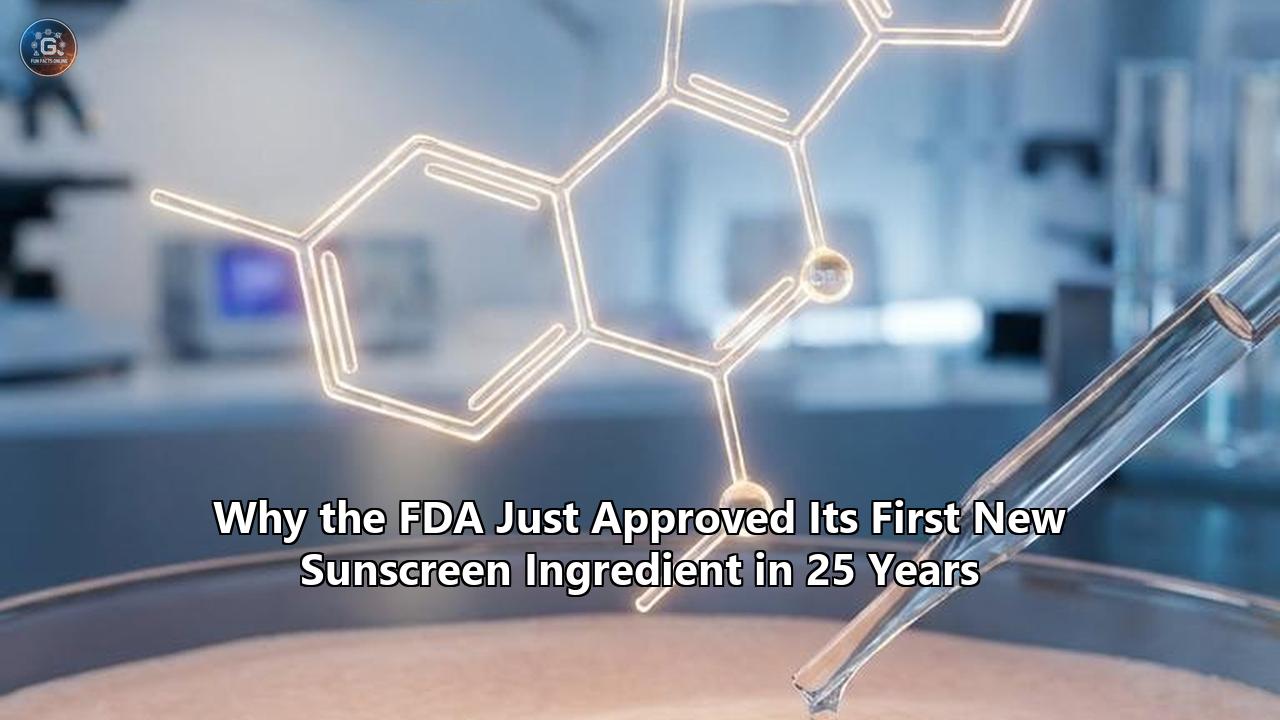
To understand why bemotrizinol is highly regarded by cosmetic chemists and dermatologists, one must first look at its chemical structure. Known systematically by its IUPAC name, 2,2'-[6-(4-methoxyphenyl)-1,3,5-triazine-2,4-diyl]bis{5-[(2-ethylhexyl)oxy]phenol}, bemotrizinol is an oil-soluble organic compound with the molecular formula $C_{38}H_{49}N_{3}O_{5}$.
       O-CH2-CH(Et)-Bu
       |
     [Phenol Ring]
       |
   N===( C )===N
  //           \\
( C )         ( C )---[Phenol Ring]---O-CH2-CH(Et)-Bu
  \             /
   N=========( C )
               |
         [Anisole Ring]
At its molecular core sits a 1,3,5-triazine ring, a symmetric six-membered heterocyclic ring containing three nitrogen atoms alternating with three carbon atoms. This triazine core is flanked by two phenolic groups (which carry 2-ethylhexyloxy chains) and one methoxyphenyl (anisole) group.
This specific arrangement of aromatic rings and functional groups gives bemotrizinol its unique characteristics:
- Dual Absorption Peaks (Broad-Spectrum Coverage): Most organic sunscreen filters are highly specialized, absorbing either short-wavelength UVB rays (which cause sunburn) or long-wavelength UVA rays (which penetrate deeper, driving skin aging and cellular mutation). Bemotrizinol excels because it is a true broad-spectrum absorber. It exhibits two distinct absorption maxima ($\lambda_{max}$): one in the UVB range at approximately 310 nm and another in the UVA range at approximately 340–345 nm. This dual-peak profile allows a single active ingredient to shield the skin from both superficial burning and deep-tissue aging.
- High Extinction Coefficient: The molecular structure of BEMT possesses a highly conjugated system of alternating single and double bonds. This extensive conjugation allows it to absorb UV photons with high efficiency. Formulators can achieve superior Sun Protection Factors (SPF) and UVA Protection Factors using lower total percentages of the active ingredient than would be required with older chemical filters.
- Oil Solubility: Bemotrizinol is highly lipophilic (insoluble in water but highly soluble in cosmetic oils). This property is crucial for formulation stability, as it allows the filter to dissolve seamlessly into the oil phase of emulsions, creating a uniform, water-resistant barrier on the skin.
The Physics of Photostability: Overcoming the Avobenzone Problem
Historically, the formulation of non-mineral (chemical) sunscreens in the United States has been limited by a fundamental vulnerability: photodegradation. To understand why the new sunscreen ingredient fda approval of bemotrizinol is so important, it helps to examine how traditional U.S. chemical filters behave under solar radiation.
Prior to this approval, the primary organic filter available to U.S. formulators for broad-spectrum UVA protection was avobenzone (butyl methoxydibenzoylmethane). While avobenzone is highly effective at absorbing UVA rays, it is chemically unstable when exposed to sunlight.
When avobenzone absorbs a UV photon, it transitions from its stable "enol" tautomer to an excited "keto" state. Without rapid stabilization, this excited molecule undergoes cleavage, breaking down into photo-byproducts. Within an hour of direct sun exposure, avobenzone can lose up to 36% to 90% of its filtering capacity unless it is paired with secondary stabilizing chemicals, such as octocrylene or bemotrizinol itself. These breakdown products can also cause localized skin irritation and contact allergies.
Traditional Filter (e.g., Avobenzone):
UV Photon ---> Excited State ---> Chemical Cleavage ---> Loss of Efficacy + Irritating Byproducts

Bemotrizinol (BEMT):
UV Photon ---> Excited State ---> ESIPT (Keto-Enol) ---> Low-Level Heat ---> Returns Intact
Bemotrizinol operates via a highly efficient, self-stabilizing energy dissipation pathway. When a molecule of BEMT absorbs a ultraviolet photon, the energy is temporarily stored within its conjugated triazine-phenol system. Rather than breaking chemical bonds, the molecule undergoes excited-state intramolecular proton transfer (ESIPT).
During ESIPT, a hydrogen atom (proton) shifts rapidly between an oxygen atom and a neighboring nitrogen atom within the molecule. This shift allows BEMT to transition to an excited keto-tautomer, which then relaxes back to the ground enol-state by releasing the absorbed energy as safe, low-level heat. This process occurs in picoseconds, resetting the molecule so it is ready to absorb another UV photon.
This mechanism makes BEMT exceptionally photostable. Laboratory data submitted to the FDA demonstrated that even after exposure to 50 Minimal Erythemal Doses (MEDs)—a heavy dose of radiation—over 98.4 percent of the bemotrizinol molecule remained chemically intact.
Furthermore, BEMT acts as an excellent photostabilizer for other ingredients. When formulated alongside avobenzone, bemotrizinol can absorb the excess triplet-state energy of the excited avobenzone molecule via singlet-singlet or triplet-triplet energy transfer. This prevents avobenzone from breaking down, allowing the two filters to work synergistically and provide stable, long-lasting broad-spectrum protection.
The Systemic Absorption Dilemma and the Matta Studies
The primary reason it took more than two decades for the FDA to approve a new sunscreen ingredient lies in a fundamental regulatory question: Do chemical sunscreen filters stay on top of the skin, or do they enter the human body?
For years, the general assumption was that sunscreen active ingredients remained inertly on the stratum corneum, the outermost layer of the skin. However, in 2019 and 2020, researchers from the FDA’s Center for Drug Evaluation and Research (CDER) published two landmark clinical trials in the Journal of the American Medical Association (JAMA). Led by Dr. Murali Matta, these studies evaluated the systemic absorption of active ingredients under maximal-use conditions (applying sunscreen to 75% of the body four times daily for several days).
The results of the Matta studies altered the regulatory landscape:
- Systemic Exposure: All six tested organic filters—oxybenzone, avobenzone, octocrylene, homosalate, octisalate, and octinoxate—were rapidly absorbed through the skin and detected in the blood plasma of healthy volunteers.
- Exceeding Thresholds: The concentrations of these chemicals in the blood plasma exceeded the FDA’s established safety threshold of 0.5 nanograms per milliliter (ng/mL) after just a single application.
- Oxybenzone Levels: Most notably, oxybenzone reached plasma concentrations of up to 258 ng/mL—more than 500 times the FDA's threshold of concern.
The FDA established the 0.5 ng/mL threshold not as a line of toxicity, but as a trigger for further safety testing. Any drug ingredient that is absorbed systemically above this level must undergo rigorous, long-term toxicology testing—including developmental, reproductive, and carcinogenicity studies—to prove that systemic presence does not pose a chronic health risk.
Because the manufacturers of legacy chemical filters had never conducted these modern, expensive toxicological evaluations, the FDA proposed reclassifying 12 of the 16 existing U.S. sunscreen ingredients as "Not GRASE" (Generally Recognized as Safe and Effective) due to insufficient safety data. This left only the inorganic mineral blockers, zinc oxide and titanium dioxide, with automatic GRASE status.
---------------------------------------------------------------------------------
Active Ingredient    Molecular Weight (g/mol)    Max Systemic Absorption (ng/mL)
---------------------------------------------------------------------------------
Oxybenzone           228.2                       258.0  (516x FDA Threshold)
Avobenzone           310.4                         7.1  (14x FDA Threshold)
Bemotrizinol (BEMT)  627.8                      < 0.5   (Below FDA Threshold)
---------------------------------------------------------------------------------
* FDA Threshold of Concern for Unstudied Systemic Exposure = 0.5 ng/mL
Why Size Matters: The Molecular Mechanics of BEMT's Non-Absorption
Bemotrizinol was designed to address the skin-absorption issue directly. In organic chemistry, a molecule's ability to penetrate the human skin barrier is dictated by several physical parameters, most notably its molecular weight and its octanol-water partition coefficient ($\log K_{ow}$).
According to the "500 Dalton Rule" in transdermal drug delivery, molecules with a molecular weight of less than 500 Daltons (g/mol) can pass through the stratum corneum, while molecules larger than 500 Daltons are physically blocked.
- Legacy Filters: Oxybenzone (228.2 g/mol), avobenzone (310.4 g/mol), and octinoxate (253.3 g/mol) are well below this 500-Dalton limit, allowing them to slip through intercellular lipid pathways and enter dermal capillaries.
- Bemotrizinol: With a molecular weight of 627.8 g/mol, BEMT is a much larger molecule. Its physical size, combined with a highly hydrophobic partition coefficient ($\log P$ value computed at 10.4), makes it virtually impossible for the molecule to penetrate the stratum corneum under normal conditions.
Skin Barrier (Stratum Corneum)
=========================================
  o   o   o   <-- Oxybenzone (228 g/mol) - Passes through easily
=========================================
  O   O   O   <-- Bemotrizinol (627 g/mol) - Physically blocked due to size
=========================================
Dermal Capillaries (Bloodstream)
To achieve its new sunscreen ingredient fda approval, DSM Nutritional Products submitted extensive data from a human clinical Maximum Usage Trial (MUsT). The trial involved topical applications of a 6% bemotrizinol formulation on participants under conditions reflecting high daily use.
The pharmacokinetic data showed that bemotrizinol met the FDA's safety requirements. Systemic absorption was negligible, with plasma concentrations consistently remaining below the 0.5 ng/mL threshold. The clinical trials also showed excellent dermal tolerability, with few mild adverse events and zero evidence of skin sensitization or photoallergy.
The ingredient also showed no estrogenic or endocrine-disrupting activity in vitro, addressing another key safety concern that has surrounded older chemical filters like oxybenzone.
Bridging the UVA Gap and the Cosmetic Deficit
The clinical approval of bemotrizinol addresses two distinct challenges that have long affected the U.S. sunscreen market: comprehensive UVA protection and cosmetic compliance.
The UVA Protection Gap
The solar radiation that reaches the Earth's surface is split into two primary bands of interest to human health:
- UVB (290–320 nm): These high-energy, shorter wavelengths strike the epidermal layer of the skin, causing sunburns.
- UVA (320–400 nm): These lower-energy, longer wavelengths penetrate deep into the dermis. UVA rays generate reactive oxygen species (ROS) that damage collagen fibers, leading to premature aging (photoaging) and wrinkling. More critically, UVA-induced oxidative stress mutates DNA, contributing to the development of skin cancers, including malignant melanoma.
Traditional U.S. sunscreens are highly effective at blocking UVB rays. However, their ability to filter UVA rays has historically been limited. Because avobenzone is highly photounstable, and other approved chemical UVA absorbers (such as oxybenzone) are less effective at longer wavelengths, many American sunscreens fail to provide balanced protection across the entire UVA-UVB spectrum.
Bemotrizinol provides broad-spectrum protection that covers wavelengths up to 400 nm. Its addition to U.S. formulations allows sunscreens to easily meet the stringent "critical wavelength" metric of over 370 nm, providing a level of UVA protection that was previously difficult to achieve without mineral ingredients.
The Cosmetic Deficit and the "Ghostly White Cast"
The only ingredients previously recognized by the FDA as both safe and effective at blocking the full UVA spectrum were the mineral filters zinc oxide and titanium dioxide. While highly stable and safe, mineral blockers are insoluble metal oxide powders.
When suspended in a lotion, these micro-scale particles act as physical reflectors. However, they also reflect visible light, leaving a visible, chalky white residue on the skin. This "white cast" is cosmetically unappealing and is particularly noticeable on medium to dark skin tones, often making the skin appear pale or ashy.
This aesthetic drawback has been a major barrier to consistent sunscreen use. Studies show that only about 13% of American adults apply sunscreen daily. A primary reason for this low compliance is that many find mineral sunscreens too thick, greasy, or visually prominent, while older chemical sunscreens can cause stinging or irritation.
As an organic chemical filter, bemotrizinol is transparent on the skin. It dissolves cleanly into cosmetic oils, allowing chemists to formulate lightweight, non-greasy sunscreens that dry completely clear on all skin tones. By offering broad-spectrum protection without the chalky appearance of mineral formulations, BEMT addresses a key barrier to daily sunscreen use, particularly for people of color.
The Transatlantic Divide: Cosmetics vs. Over-the-Counter Drugs
Given that bemotrizinol has been used safely in the European Union, Australia, Japan, and South Korea since approximately 1999, consumers often wonder: Why did it take the FDA more than 20 years to approve it?
The answer lies in a fundamental difference in how sunscreen is classified and regulated around the world.
----------------------------------------------------------------------------
Regulatory Domain      Classification           Primary Focus of Oversight
----------------------------------------------------------------------------
European Union (EU)    Cosmetic                 Aesthetic & Public Safety
United States (US)     OTC (Over-The-Counter)   Drug Efficacy & Systemic Safety
----------------------------------------------------------------------------
Sunscreen as a Cosmetic (European Union and Asia)
In the European Union, sunscreen is regulated as a cosmetic product under Regulation (EC) No 1223/2009. The European Scientific Committee on Consumer Safety (SCCS) evaluates UV filters for safety. Once approved, a filter is added to Annex VI of the cosmetics regulations, allowing manufacturers to incorporate it into their products.
This framework allows for rapid updates based on modern scientific developments. European and Asian cosmetics manufacturers have access to approximately 30 approved UV filters, including advanced options like bemotrizinol, bisoctrizole (Tinosorb M), and ecamsule (Mexoryl SX).
Sunscreen as an Over-the-Counter Drug (United States)
In the United States, sunscreens are classified as nonprescription, over-the-counter (OTC) drugs. Because sunscreen products make a therapeutic claim—specifically, that they prevent sunburn and reduce the risk of skin cancer—the FDA regulates them under the same broad drug-safety framework used for ibuprofen, aspirin, and cough suppressants.
Under this drug framework, active ingredients cannot simply be added to cosmetics. Instead, they must be included in a formal OTC drug monograph. The monograph acts as an official "recipe book," detailing the approved active ingredients, precise concentration limits, dosage forms, and labeling requirements under which a drug is Generally Recognized as Safe and Effective (GRASE). If a product conforms to the monograph, it can be manufactured and sold without a pre-market review or a separate New Drug Application (NDA).
Historically, modifying an OTC monograph required the FDA to follow a rigid, three-phase administrative rulemaking process:
- Advance Notice of Proposed Rulemaking (ANPR)
- Tentative Final Monograph (TFM)
- Final Monograph
Each phase required the agency to draft proposals, open them for public comment, review the feedback, and publish formal regulations in the Federal Register. This rulemaking process was slow and resource-intensive.
A draft final sunscreen monograph issued in 1999 was quickly stayed because the FDA needed more data to address emerging questions about long-term systemic absorption, pediatric safety, and environmental impact. Because the monograph remained in a stayed "tentative" status, the regulatory pathway for approving new sunscreen ingredients became essentially blocked.
The Sunscreen Innovation Act of 2014
In response to growing public frustration and rising skin cancer rates, Congress attempted to clear this backlog by passing the Sunscreen Innovation Act (SIA) of 2014. Authored by U.S. Senator Jack Reed, the law directed the FDA to expedite its review of pending sunscreen active ingredients, including bemotrizinol, which had been originally submitted under a Time and Extent Application (TEA) in 2005.
However, the SIA did not achieve its intended goals. While it established strict review timelines, it did not alter the underlying scientific standards or safety requirements. The FDA maintained that the safety data submitted from other countries—often consisting of older epidemiological studies—was insufficient to meet modern U.S. safety standards.
The agency continued to require comprehensive Maximum Usage Trials (MUsT) to rule out systemic safety concerns, a requirement that manufacturers found difficult and expensive to complete under the old regulatory system. As a result, no new ingredients were approved under the Sunscreen Innovation Act.
Modernizing the Monograph: The CARES Act Breakthrough
The regulatory bottleneck was finally resolved in March 2020, when the Coronavirus Aid, Relief, and Economic Security (CARES) Act was signed into law. While primarily known as a pandemic-relief bill, the CARES Act contained a major reform of the U.S. over-the-counter drug system under Subtitle F (OTC Monograph Reform).
Old Regulatory Process (Pre-2020)
---------------------------------
Multi-decade "Notice and Comment Rulemaking"
Requires formal rules, stayed for decades, highly vulnerable to procedural delays.

Modern CARES Act Process (Post-2020)
---------------------------------
Administrative Order Process
Enables both FDA and manufacturers to submit requests.
Proposed Order ---> Public Comment ---> Final Administrative Order (Completed in months)
The CARES Act replaced the old, rigid notice-and-comment rulemaking system with a streamlined administrative order process.
- Administrative Orders: The FDA can now modify OTC drug monographs through a direct administrative order, bypassing the multi-step rulemaking process.
- Industry-Initiated Requests: Manufacturers can formally request modifications to a monograph by submitting an OTC Monograph Order Request (OMOR) along with modern safety and efficacy data.
- Expedited Timelines: The administrative order process requires the FDA to review OMOR submissions, issue a proposed order for public feedback, and issue a final order within clear, predictable timelines.
The Timeline of Bemotrizinol's Approval
Bemotrizinol became the first new active ingredient to successfully navigate this modernized administrative order framework.
- September 23, 2024: DSM Nutritional Products LLC submitted a Tier 1 OTC Monograph Order Request (OMOR) to the FDA. The request was backed by modern safety data, including human Maximum Usage Trials (MUsT) and long-term toxicology studies.
- December 12, 2025: The FDA issued a proposed administrative order proposing to amend OTC Monograph M020 to add bemotrizinol at concentrations up to 6%. The agency opened a public comment period running through January 26, 2026.
- June 9, 2026: Having reviewed public feedback, the FDA finalized its action, issuing Final Administrative Order OTC000039.
This process took approximately seven months from the proposed order to the final order, demonstrating the efficiency of the modernized administrative order process under the CARES Act.
Commercialization, Exclusivity, and the U.S. Sunscreen Economy
While the final administrative order was issued in June 2026, it will take time for consumers to see bemotrizinol on store shelves. The final order officially took effect on August 9, 2026.
Understanding the 18-Month Exclusivity Period
To incentivize drug manufacturers to invest in the expensive clinical trials required for monograph reform, the CARES Act established a marketing exclusivity provision. Under this rule, a manufacturer that successfully submits a Tier 1 OMOR for a new, non-previously marketed active ingredient is granted an exclusive window to market that ingredient.
Because DSM Nutritional Products LLC funded and managed the regulatory process for BEMT, the company has been granted an 18-month exclusivity period.
- During this 18-month period, only DSM can supply bemotrizinol to the U.S. market, which it sells under the brand name Parsol Shield.
- Skincare and cosmetics brands wishing to incorporate bemotrizinol into their formulations must purchase the raw ingredient exclusively from DSM.
- Once the 18-month exclusivity window closes, other major chemical manufacturers—such as BASF, which produces BEMT under the brand name Tinosorb S—can supply BEMT to the U.S. market, increasing competition and lowering formulation costs.
[June 9, 2026] FDA Final Approval
       |
[August 9, 2026] Monograph Update Takes Effect
       |
[Late 2026 - Early 2027] First Parsol Shield Sunscreens Launch on U.S. Market
       |
[Early 2028] 18-Month Exclusivity Ends ---> Market Opens to Competitors (e.g., Tinosorb S)
When Will BEMT Sunscreens Hit the Shelves?
While some manufacturers may attempt to launch formulations by late summer 2026, the first widespread consumer products featuring Parsol Shield are expected to arrive in late 2026 and early 2027.
Because sunscreens are regulated as OTC drugs, skincare brands cannot simply add 6% bemotrizinol to an existing formula. Any new product must undergo stability testing, SPF validation, critical wavelength testing, and scale-up manufacturing under Current Good Manufacturing Practice (cGMP) regulations before it can be distributed.
Technical Specifications for Manufacturers
Under Final Administrative Order OTC000039, the FDA has established strict conditions for the use of bemotrizinol. Sunscreen manufacturers must comply with these technical requirements to utilize the monograph pathway.
1. Concentration and Target SPF
Bemotrizinol is approved as an active ingredient at concentrations up to 6 percent. It is approved for use in sunscreen drug products that have a minimum SPF value of at least 2.
2. Permitted Dosage Forms
The FDA has authorized the use of bemotrizinol in several standard cosmetic formats, including:
- Oils
- Lotions
- Creams
- Gels
- Butters
- Pastes
- Ointments
- Sticks
3. Special Conditions for Sprays
Sunscreens in spray dosage forms are permitted, but they must meet specific safety criteria designed to prevent inhalation risks.
The spray product must be manufactured and packaged with no propellant, or it must use a delivery system where the propellant is isolated from the drug formulation (such as a bag-on-valve system) to ensure that consumers do not inhale aerosolized bemotrizinol particles.
4. Permitted Combinations
Bemotrizinol can be combined with other approved sunscreen active ingredients listed in Monograph M020, as well as certain skin protectants. However, it is explicitly not permitted to be combined with:
- Aminobenzoic acid (PABA)
- Trolamine salicylate
Both of these older ingredients have been classified as "Not GRASE" by the FDA due to safety concerns.
Comparing the Global Filters: What Comes Next?
The approval of bemotrizinol has narrow the long-standing regulatory gap between the United States and the rest of the world, but the U.S. sunscreen monograph still lags behind global standards. In Europe, regulatory bodies have approved 30 distinct UV filters, while the U.S. monograph now lists 17.
-----------------------------------------------------------------------------
UV Filter Name       U.S. Status (2026)      European Union Status
-----------------------------------------------------------------------------
Bemotrizinol (BEMT)  Approved (Up to 6%)     Approved (Up to 10%)
Bisoctrizole         Pending Data            Approved (Up to 10%)
Ecamsule             NDA Only (Mexoryl SX)   Approved (Up to 10%)
Oxybenzone           Proposed "Not GRASE"    Approved (Up to 6%)
-----------------------------------------------------------------------------
The successful approval of bemotrizinol serves as a proof of concept for the modernized OTC monograph system. Skincare brands and chemical manufacturers will be watching to see if this opens the door for other modern UV filters.
- Bisoctrizole (Methylene Bis-Benzotriazolyl Tetramethylbutylphenol): Often paired with bemotrizinol in European and Asian formulations, bisoctrizole is a broad-spectrum organic filter that is insoluble in both oil and water. Instead, it is formulated as a microfine organic powder suspension, reflecting and absorbing UV rays. If a manufacturer submits a successful OMOR for bisoctrizole, it could further expand options for high-UVA-protection products.
- Ecamsule (Terephthalylidene Dicamphor Sulfonic Acid): While L'Oréal obtained FDA approval for ecamsule under a proprietary New Drug Application (NDA) in 2006, the filter is not currently part of the public OTC monograph. This means other manufacturers cannot use ecamsule without completing their own NDA processes. Moving ecamsule into the general OTC monograph remains a priority for many industry formulators.
Ultimately, the addition of bemotrizinol to the FDA's approved list is a major victory for both public health and cosmetic formulation. By providing a safe, photostable, and cosmetically elegant filter, BEMT offers U.S. consumers an effective tool to protect their skin from UV damage, helping to reduce the long-term incidence of skin cancer and photoaging.
Reference:
- https://www.cirs-group.com/en/cosmetics/us-fda-approves-bemotrizinol-as-new-sunscreen-active-ingredient
- https://www.reed.senate.gov/news/releases/reeds-law-leads-to-fda-approving-the-first-new-sunscreen-ingredient-in-25-years
- https://www.findlaw.com/legalblogs/consumer-protection/meet-bemotrizinol-fda-approves-first-new-sunscreen-ingredient-in-25-years/
- https://www.ewg.org/news-insights/news-release/2026/06/major-win-us-consumers-fda-approves-first-new-sunscreen
- https://reason.com/2026/06/10/the-fda-finally-approved-a-new-sunscreen-ingredient-it-only-took-over-25-years/
- https://www.contemporarypediatrics.com/view/new-sunscreen-ingredient-clears-fda-for-the-first-time-since-the-1990s
- https://www.nationalgeographic.com/health/article/fda-new-sunscreen-ingrediant-bemotrizinol
- https://en.wikipedia.org/wiki/Bemotrizinol
- https://pdf.benchchem.com/606/Chemical_and_physical_properties_of_Bemotrizinol.pdf
- https://pubchem.ncbi.nlm.nih.gov/compound/Bemotrizinol
- https://www.kbia.org/2026-06-13/4-things-to-know-about-the-new-sunscreen-ingredient-the-fda-approved
- https://inspecsolutions.com/bemotrizinol-fda-approval-potential/
- https://www.chemicalbook.com/article/bemotrizinol-mechanism-of-action-pharmacokinetics-and-application.htm
- https://time.com/article/2026/06/09/fda-approves-first-new-sunscreen-ingredient-Bemotrizinol/
- https://nutraceuticalbusinessreview.com/fda-approves-bemotrizinol-new-sunscreen-active-ingredient
- https://www.nbinno.com/article/cosmetic-ingredients/optimizing-sunscreen-formulations-bemotrizinol-photostable-uv-filter-hx
- https://www.fda.gov/apology_objects/abuse-detection-apology.html
- https://www.basf.com/global/en/media/news-releases/2026/06/p-26-111
- https://www.pharmacytimes.com/view/fda-adds-a-new-sunscreen-to-the-otc-repertoire
- https://www.accessdata.fda.gov/drugsatfda_docs/omuf/order/supportDoc/OTC000039/2.5_Clinical_Overview/rev_clinical-overview_090026f88e125dd4.pdf
- https://chosenstore.in/blogs/curators-column/sunscreen-absorption-fda-safety-thresholds
- https://mamabella.uk/sunscreen-myths-chemical-white-cast-evidence/
- https://practicaldermatology.com/news/fda-follow-up-study-sunscreen-active-ingredients-are-absorbed-by-bloodstream/2460258/
- https://www.cov.com/en/news-and-insights/insights/2025/12/fda-proposes-groundbreaking-amendment-to-otc-sunscreen-monograph
- https://www.thefdalawblog.com/2021/10/fda-issues-first-orders-and-more-under-the-cares-act-final-administrative-orders-a-sunscreen-proposed-order-and-the-3-year-forecast/
- https://www.dsm-firmenich.com/en/businesses/perfumery-beauty/beauty-care/press-releases/2026/parsol-shield-approved-by-fda-dsm-firmenich-setting-a-new-era-for-us-sun-protection.html
- https://www.contemporarypediatrics.com/view/new-sunscreen-ingredient-clears-fda-for-the-first-time-since-the-1990s
- https://www.cbsnews.com/news/fda-new-sunscreen-ingredient-bemotrizinol/
- https://www.accessdata.fda.gov/scripts/cder/omuf/index.cfm?event=faqs
- https://www.propharmagroup.com/thought-leadership/fda-approves-bemotrizinol-updates-otc-sunscreen-monograph
- https://www.mcdermottlaw.com/insights/cares-act-reforms-to-address-drug-and-device-shortages-and-updates-to-the-otc-drug-monographs-covid/
- https://unblock.federalregister.gov
- https://premier-research.com/perspectives/cares-act-introduces-otc-administrative-order-process/
- https://www.spraytm.com/2026/06/10/fda-expands-sunscreen-options-with-bemotrizinol/
- https://www.agg.com/news-insights/publications/it-is-not-all-about-the-coronavirus-the-cares-act-brings-long-awaited-over-the-counter-otc-monograph-reform/
- https://ca.practicallaw.thomsonreuters.com/w-024-9761?transitionType=Default&contextData=(sc.Default))
- https://www.accessdata.fda.gov/drugsatfda_docs/omuf/order/supportDoc/OTC000039/Final_Administrative_Order.pdf
- https://www.healthline.com/health-news/fda-approves-bemotrizinol-new-sunscreen-ingredient
- https://www.duanemorris.com/alerts/cares_act_package_ushers_changes_otc_drug_review_process_0420.html
- https://www.cirs-group.com/en/cosmetics/us-fda-approves-bemotrizinol-as-new-sunscreen-active-ingredient
- https://www.lachmanconsultants.com/2026/06/sunscreen-ingredient-receives-grase-status/