The Drive Toward High-Albedo Bio-Pavements
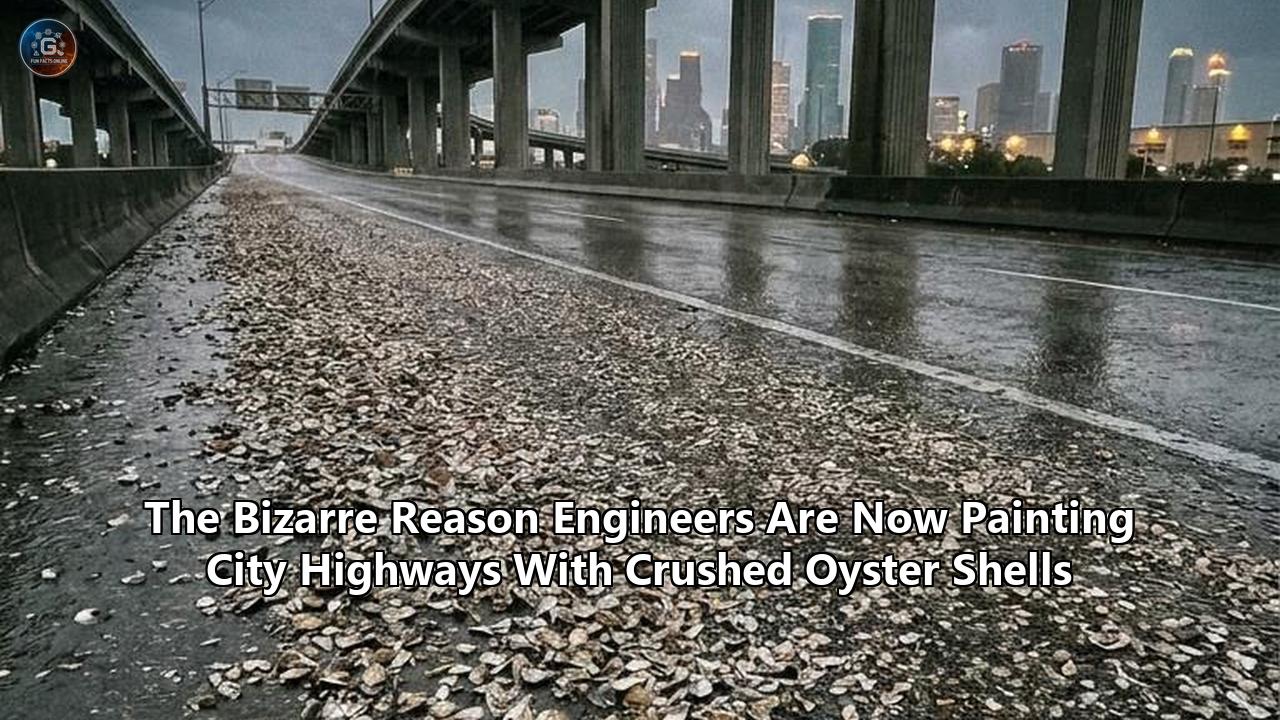
City engineers in major coastal hubs have begun deploying a stark white, bio-based coating across miles of sun-baked asphalt this month. Rather than relying on standard synthetic thermoplastic resins to mark lanes or coat intersections to reflect heat, public works departments are spraying a highly reflective, chemical-trapping compound derived directly from aquaculture waste. The primary ingredient in this widespread infrastructure rollout is calcined calcium carbonate, sourced entirely from discarded oyster shells.
The immediate catalyst for this deployment is twofold: the escalating severity of the urban heat island effect—where dark asphalt absorbs and radiates solar energy, driving up local temperatures—and the mounting crisis of aquaculture waste. Millions of tons of waste oyster shells are generated globally each year, often piled in unregulated coastal landfills where they emit noxious hydrogen sulfide gas as the remnant organic matter decays. By intervening in this waste stream, material scientists have transformed a localized pollution problem into a high-performance infrastructure asset.
Engineers are not just throwing crushed shells into the asphalt mix as a cheap aggregate replacement, a practice that has historical precedent dating back to early coastal settlements. Instead, they are chemically altering the shells through high-heat calcination, converting the raw calcium carbonate into reactive calcium oxide. This resulting powder is blended with water-based binders to create a brilliantly white, highly durable coating. When applied to road surfaces, the material reflects up to 40% more solar radiation than aging asphalt and noticeably outperforms traditional titanium dioxide paints in retaining its reflectivity over time.
The decision to put oyster shells on highways is forcing a structural reevaluation of how municipalities procure road materials. City planners are currently weighing the upfront costs of processing biological waste against the long-term savings in road maintenance and reduced urban cooling demand.
The Material Science of Bivalve Infrastructure
To understand why a mollusk shell is suddenly competing with petroleum-based industrial chemicals, one must look at its chemical architecture. An oyster shell is composed of approximately 95% calcium carbonate (CaCO3), tightly bound by a matrix of organic proteins, primarily chitin. In its raw, natural state, this structure provides the oyster with formidable protection against predators and ocean turbulence. When repurposed for human engineering, that same structural density proves invaluable.
The process of converting these shells into highway-grade paint requires calcination. The raw shells are washed, crushed, and heated in industrial kilns to temperatures exceeding 800°C (1,472°F). This intense heat burns off the residual organic matter and forces a chemical reaction, driving off carbon dioxide and leaving behind calcium oxide (CaO), commonly known as quicklime.
Calcium oxide possesses distinct properties that make it an aggressive competitor in the pavement coating sector. First, it is blindingly white, offering an exceptionally high albedo (the measure of diffuse reflection of solar radiation). Second, it is highly reactive. When the oyster-derived calcium oxide is mixed into a liquid binder and sprayed onto the road, it interacts with moisture and carbon dioxide in the air to slowly cure back into calcium carbonate. This curing process essentially forms a rigid, micro-crystalline shield over the asphalt.
Furthermore, the trace presence of chitin—a natural polymer found in the shell's original structure—acts as an organic bactericide and pollutant neutralizer. Laboratory tests on these new coatings demonstrate that the calcined shell powder actively binds with toxic compounds commonly found in vehicle exhaust, such as formaldehyde and nitrogen oxides, neutralizing them on contact. This active air-purifying characteristic gives the biological coating a functional edge that traditional synthetic paints completely lack.
Competing Responses to the Urban Heat Island
As cities grapple with summer temperatures that routinely threaten power grids and public health, the demand for "cool pavements" has surged. Until the introduction of oyster-based coatings, engineers predominantly relied on two conventional approaches to increase road reflectivity. Comparing these legacy systems against the new bio-based alternative reveals deep contrasts in both environmental impact and functional longevity.
Traditional Thermoplastic Resins
The long-standing industry standard for road markings and reflective coatings is thermoplastic paint. These paints rely on petroleum-derived polymers combined with glass beads for retroreflectivity and mined titanium dioxide to achieve a bright white color.
The primary advantage of thermoplastics is their established scale. Contractors know exactly how to apply them, the supply chains are deeply entrenched, and they cure rapidly, minimizing road closures. However, the tradeoffs are severe. Thermoplastics are heavily reliant on fossil fuels. As they degrade under the friction of heavy truck tires, they shed microplastics directly into municipal storm drains, contributing heavily to the microplastic pollution found in local watersheds. Additionally, the mining and refinement of titanium dioxide is an energy-intensive process with a massive carbon footprint.
Epoxy and Synthetic Cool Pavements
The second prevailing approach involves coating entire intersections or highway stretches with light-colored, epoxy-based seal coats. These synthetic cool pavements effectively lower surface temperatures by 10 to 15 degrees Fahrenheit.
Yet, they suffer from rapid aesthetic degradation. Dark tire marks, motor oil drips, and exhaust soot quickly stain the epoxy surfaces. Within a year, the expensive light-gray coating often fades to a dirty charcoal, losing a significant portion of its reflective capacity. The chemical composition of these epoxies also seals the asphalt completely, preventing the road from "breathing," which can trap moisture underneath and accelerate pothole formation during freeze-thaw cycles.
The Oyster Shell Tradeoff
By contrast, applying oyster shells on highways introduces a highly porous, breathable, and bio-degradable alternative. Because the calcium carbonate matrix is naturally porous, the coating allows trapped moisture in the asphalt to evaporate, reducing structural degradation.
The tradeoff, however, lies in the logistics of supply and application. Thermoplastic paints are ready-to-use industrial commodities. Oyster shell paint requires a localized, circular supply chain. Cities must coordinate with seafood processors and aquaculture farms to divert shells from landfills, wash them, transport them to a calcination facility, and process them into paint. For cities lacking a robust local aquaculture industry, the carbon cost of shipping raw oyster shells hundreds of miles inland negates the environmental benefits of the paint.
The Economics of Aquaculture Upcycling
The financial architecture supporting this infrastructure shift is uniquely complex. Traditional road coatings operate on a simple linear economic model: extract raw materials, manufacture the paint, apply it to the road, and eventually wash the degraded particles into the sea. The oyster shell approach relies on a circular economic model, which shifts where the costs and savings are realized.
The aquaculture industry currently treats waste oyster shells as a liability. Oyster processing plants pay significant tipping fees to dispose of empty shells in specialized landfills, as the pungent smell of decaying organic matter makes them unsuitable for standard municipal dumps. In regions like Hiroshima, Japan, or the Gulf Coast of the United States, shell waste accumulates in mountains, creating immense logistical headaches and soil alkalinity issues in the immediate vicinity of the dumps.
By monetizing this waste stream, the production of oyster shell highway paint effectively subsidizes the aquaculture industry. Paint manufacturers negotiate agreements to take the shells at a fraction of the cost of landfill tipping fees. This lowers overhead for seafood processors while securing a cheap, abundant raw material for the paint producers.
However, the calcination process is highly energy-intensive. Heating kilns to 800°C requires substantial fuel. To ensure the final product remains environmentally competitive with mined limestone or titanium dioxide, processing facilities are increasingly relying on renewable energy grids or capturing waste heat from other industrial processes to fire their kilns. If a facility must burn natural gas or coal to calcine the oyster shells, the carbon footprint of the resulting paint swells, eroding its status as a green alternative.
When analyzing the final cost per mile of application, oyster shell coatings currently command a 15% to 20% premium over standard thermoplastic paints. City engineers justify this upfront premium by calculating the downstream savings. Because the calcined oyster shell coating reflects UV radiation more efficiently, it slows the oxidation and cracking of the underlying asphalt binder. Pavement engineers estimate that maintaining a high-albedo surface can extend the structural lifespan of a highway by three to five years. In a municipal budget, delaying a multi-million-dollar asphalt mill-and-overlay project by half a decade easily covers the premium paid for the bio-based paint.
Examining the Durability Metric
A central point of friction among civil engineers adopting this technology is the durability of calcium carbonate under heavy traffic loads. A highway is an incredibly hostile environment. Surface materials must withstand the shearing force of an 80,000-pound semi-truck braking at high speeds, the corrosive assault of winter de-icing salts, and the expansion and contraction caused by extreme seasonal temperature swings.
Mined limestone is the traditional source of calcium carbonate used in construction. It is geologically compressed and highly uniform. Oyster shells, while chemically identical to limestone, feature a biogenic micro-structure. Under an electron microscope, an oyster shell resembles a complex, layered brick-and-mortar wall, built on a microscopic scale by the living organism.
When crushed and applied as a road coating, this biogenic structure presents unique mechanical behaviors. Traditional synthetic paints form a monolithic film over the road; when stressed beyond their tensile limit, they crack and peel away in large flakes. The oyster shell composite, due to its porous and layered nature, behaves more like a sacrificial shield. It micro-abrades evenly under tire friction.
This abrasion has distinct advantages and disadvantages. The primary disadvantage is that in high-traffic corridors, the bio-paint may require more frequent reapplication than heavy-duty thermoplastics, as the physical material is slowly ground away by passing vehicles.
The advantage is that as the material wears down, it exposes fresh, highly reflective calcium carbonate underneath. This self-renewing surface prevents the rapid darkening that plagues synthetic cool pavements. Furthermore, the dust generated by the abrasion of oyster shells on highways is environmentally benign. Unlike the microplastics and toxic chemical compounds shed by traditional road paints, the calcium carbonate dust simply washes off the road and acts as a mild antacid, helping to neutralize the acidic runoff commonly found in urban storm drains.
Environmental Offsets and Toxic Runoff Mitigation
The contrast in runoff toxicity is one of the most compelling arguments driving the adoption of this technology. Urban stormwater runoff is heavily polluted by infrastructure degradation. The friction of tires on roads tears microscopic fragments of synthetic rubber and petroleum-based road markings, which are then swept into rivers and oceans during rainstorms.
Recent ecological studies have highlighted the devastating impact of these synthetic leachates on aquatic life, particularly the chemical 6PPD-quinone, which is linked to mass die-offs of salmon and other indicator species. Traditional road paints compound this issue by leaching heavy metals and volatile organic compounds (VOCs) into the water table.
By replacing synthetic polymers with biogenic calcium carbonate, engineers are actively reducing the chemical load placed on municipal water treatment systems. The crushed oyster shell matrix contains no petroleum derivatives, no heavy metals, and no synthetic plasticizers.
Moreover, the highly alkaline nature of the crushed shell powder provides a localized buffering effect. When acid rain or acidic vehicle emissions mix with water on the road surface, the calcium carbonate reacts to neutralize the acidity. In coastal cities where highway runoff flows directly into sensitive estuaries, this buffering effect actively combats local ocean acidification. It is a striking irony that the shells of oysters—organisms highly vulnerable to ocean acidification—are being repurposed to neutralize the very acidic runoff that threatens their natural habitats.
Coastal vs. Inland Feasibility
The deployment of this technology exposes a sharp geographic divide in infrastructure strategies. The economics and logistics of oyster shell coatings heavily favor coastal metropolises. Cities like Seattle, New Orleans, Tokyo, and Sydney have ready access to massive volumes of aquaculture waste. For these municipalities, the supply chain is short, transportation costs are negligible, and the circular economy functions flawlessly.
Inland cities face a fundamentally different calculus. Transporting tons of dense oyster shells or pre-mixed calcium carbonate slurry hundreds or thousands of miles via diesel-fueled freight trains or commercial trucks introduces massive financial and environmental penalties. For a city like Phoenix or Denver, which desperately needs high-albedo cool pavements to combat extreme summer heat, the carbon emitted to import oyster shells from the coast would far exceed the environmental benefits of the coating.
This geographic limitation has forced a divergence in how the paving industry approaches the urban heat island problem. Coastal cities are rapidly embracing biogenic, waste-derived calcium carbonate. Inland cities, however, are forced to lean on localized alternatives.
Some inland engineers are attempting to replicate the biological structure of oyster shells by heavily processing locally mined limestone, though this requires destructive quarrying. Others are experimenting with different agricultural waste products, such as incorporating highly reflective rice husk ash into concrete and asphalt mixes. The contrast between these approaches underscores a broader shift in civil engineering: the move away from universal, one-size-fits-all industrial materials toward highly localized, region-specific infrastructure solutions.
Application Methodologies and Curing Times
The physical application of oyster shell paint also diverges from standard industry practices, presenting a distinct set of operational challenges for road crews. Traditional thermoplastic lane markings require specialized heating trucks that melt the plastic blocks at 200°C (400°F) before extruding the molten material directly onto the asphalt. The material sets almost instantly as it cools, allowing traffic to resume within minutes.
The oyster shell composite operates via a chemical cure rather than a thermal phase change. The calcium oxide powder is mixed on-site with a water-based silicate binder, creating a slurry that can be sprayed through standard industrial nozzles or applied via heavy-duty roller trucks for full-lane coverage.
Because the curing process relies on the evaporation of water and the chemical absorption of atmospheric carbon dioxide, the drying time is highly dependent on ambient humidity and temperature. In optimal conditions—a dry, sunny day with low humidity—the bio-coating can cure to a traffic-ready hardness in under 45 minutes. However, in humid, overcast coastal environments, the curing time can stretch to several hours, necessitating longer road closures and complex traffic diversion plans.
To mitigate this, chemical engineers are actively testing organic accelerators that speed up the hydration and carbonation of the calcium oxide without compromising the non-toxic profile of the material. Some municipalities have adopted a hybrid approach, using standard fast-curing thermoplastics for narrow lane dividers that must endure the constant impact of lane-changing tires, while utilizing the oyster shell composite for massive, full-lane applications in intersections, parking lots, and highway shoulders where curing time can be more easily managed.
Market Disruption and the Regulatory Landscape
The abrupt entrance of a biological waste product into the highly regulated, multi-billion-dollar paving material market has exposed the rigidity of municipal building codes. For decades, departments of transportation have maintained strict, highly specific chemical requirements for road paints, essentially mandating the use of specific petroleum resins and titanium dioxide concentrations.
Because the oyster shell composite lacks these legacy chemical markers, early adopters had to file for extensive regulatory variances to apply the material on public roads. Testing laboratories had to develop entirely new metrics to evaluate the performance of biogenic calcium carbonate, as traditional abrasion and retroreflectivity tests were designed specifically for glass-bead-infused plastics.
This regulatory friction highlights a significant barrier to the widespread adoption of green infrastructure. While the technology to replace toxic road materials exists today, the bureaucratic framework required to approve these materials moves at a glacial pace. The coastal cities currently rolling out oyster shell coatings are operating under pilot programs and experimental use permits, absorbing the legal and financial risk to generate the long-term data required to eventually rewrite state and federal paving standards.
The Broader Implications for Pavement Engineering
The decision to place oyster shells on highways represents a fundamental philosophical shift in how humanity manages the built environment. Throughout the 20th century, infrastructure was viewed as a static, inert layer imposed upon the landscape. Roads were paved with petroleum, marked with synthetic plastics, and expected to withstand nature rather than interact with it.
The integration of calcined biogenic materials treats the road surface as an active, breathing membrane. It is a pavement that chemically interacts with the air to absorb pollutants, neutralizes acidic rain, and actively reflects solar radiation back into the atmosphere.
By comparing the lifecycle of an oyster shell to the lifecycle of a thermoplastic resin, the tradeoffs become starkly clear. The synthetic resin offers immediate convenience, uniform consistency, and rapid application, but demands heavy carbon extraction and leaves a legacy of microplastic pollution that persists for centuries. The oyster shell requires localized supply chains, intensive heat processing, and patience during application, but offers a non-toxic, self-renewing surface that actively mitigates urban heat and ocean acidification.
As extreme weather events and rising global temperatures continue to stress aging urban infrastructure, the tolerance for the toxic byproducts of conventional paving materials is rapidly diminishing. Engineers are no longer simply asking how long a road marking will last; they are asking what the material will do to the surrounding ecosystem as it inevitably breaks down.
What to Watch for Next
The current deployment of oyster shell coatings on city highways is just the initial phase of integrating biogenic waste into heavy infrastructure. Moving forward, several critical milestones will determine if this technology remains a niche coastal solution or scales into a global industry standard.
The immediate test will be the material's performance over the next two winter seasons. Pavement engineers will closely monitor how the porous calcium carbonate matrix withstands the freeze-thaw cycle and the abrasive force of snowplows in northern coastal cities like Boston and New York. If the bio-coating requires complete reapplication every spring, the financial model supporting its use will quickly collapse.
Supply chain stabilization is the second major hurdle. Currently, the collection and sorting of waste oyster shells rely on fragmented agreements between individual seafood processors and paint manufacturers. For this market to scale, the aquaculture industry must standardize shell waste processing, creating regional collection hubs that can efficiently supply industrial calcination kilns. Look for significant capital investment in biogenic processing facilities located directly adjacent to major commercial fisheries over the next three years.
Finally, unresolved questions remain regarding the exact carbon accounting of the calcination process. As carbon tax frameworks evolve globally, the energy source used to fire the kilns—whether solar, wind, or natural gas—will heavily dictate the economic viability of the paint. The next major leap in this sector will likely be the development of lower-temperature calcination methods or alternative chemical binding agents that eliminate the need for 800°C kilns entirely.
The sight of engineers spraying crushed marine shells across inland-bound asphalt may seem bizarre today, but it signals the beginning of a larger reckoning. As the hidden ecological costs of synthetic infrastructure become impossible to ignore, the paving industry is being forced to look backward—to the ancient, biological building blocks of the natural world—to construct a resilient future.