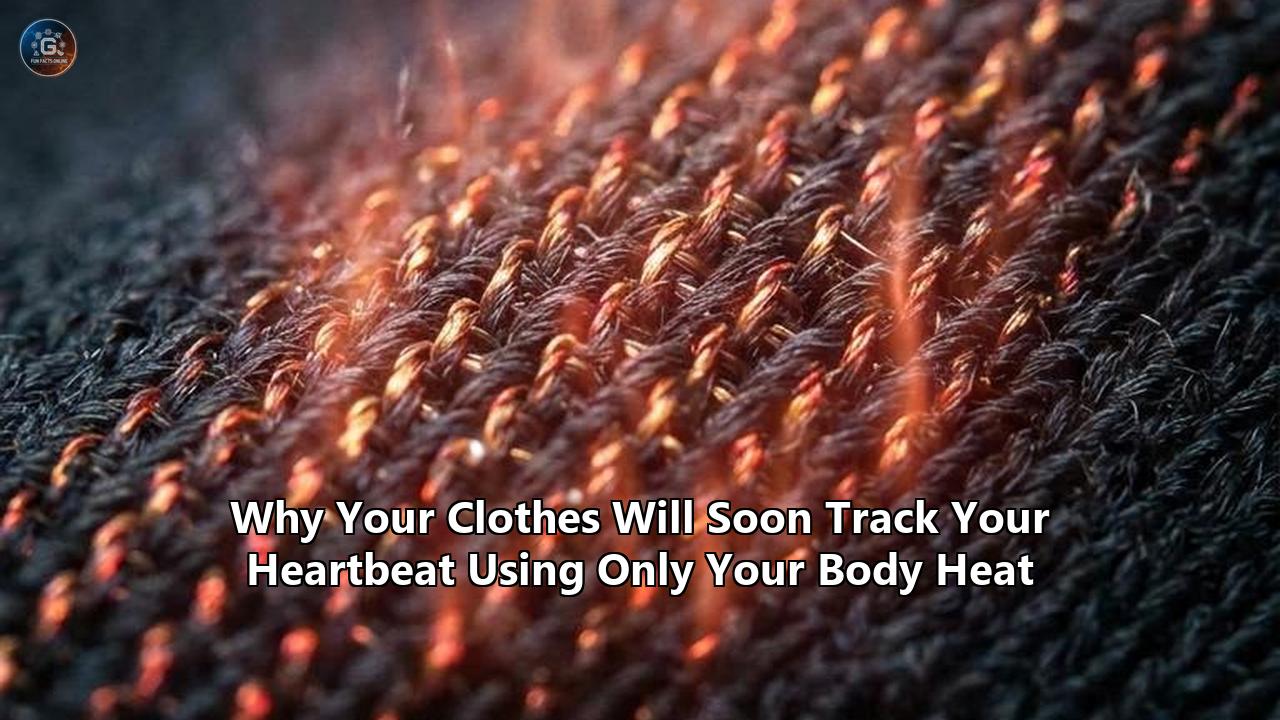
In March 2026, researchers at Seoul National University solved a decades-long bottleneck in wearable engineering, paving the way for a dramatic shift in how we monitor human health. Led by Professor Jeonghun Kwak, the research team unveiled a "pseudo-transverse thermoelectric generator" (TEG) that is completely flat, ultra-thin, and capable of generating continuous electrical current solely from the thermal energy radiating from human skin. By embedding copper nanoparticles into a highly flexible, stretchable silicone base, the team successfully redirected the natural flow of human body heat laterally across a flat plane. This lateral heat transfer creates the temperature gradients necessary to generate electricity without requiring bulky, rigid three-dimensional structures.
Combined with a series of parallel breakthroughs—including the Queensland University of Technology’s (QUT) 0.3-millimeter thermoelectric film capable of generating 35 microwatts per square centimeter, and the University of Waterloo’s self-powering smart fabrics—this new technology represents a pivotal shift. We are transitioning from an era of "wearable gadgets" that must be strapped to the wrist and plugged in overnight to an era where the garment itself is the biosensor, the computer, and the battery. Within the next few years, standard wardrobe staples like undershirts, bras, and socks will continuously track heartbeats and record clinical-grade electrocardiograms (ECGs). They will perform these tasks silently, invisibly, and indefinitely, powered entirely by the warmth of the body wearing them.
This represents a major milestone for smart clothing technology. It is a foundational change in the relationship between humans, textiles, and digital health. By eliminating the heavy, rigid lithium-ion batteries that have historically plagued the smart textile industry, these self-powered thermoelectric systems remove the primary barrier to mass adoption: user friction. To understand how this transition will unfold, we must systematically analyze the physics behind this energy-harvesting breakthrough, evaluate the specific demographics and industries poised for disruption, and examine the short-term and long-term implications of clothing that reads our hearts using only our heat.
The Physics of Body Heat Harvesting: Solving the Vertical Loss Dilemma
To understand why the latest breakthroughs are so significant, it is necessary to examine the physical limitations that previously confined thermoelectric smart garments to speculative laboratory experiments. Thermoelectric generators rely fundamentally on the Seebeck effect: a physical phenomenon where a temperature difference between two distinct materials (typically p-type and n-type semiconductors) produces a proportional electrical voltage. The human body is a continuous thermal engine, typically maintaining an internal core temperature of 37°C (98.6°F) and radiating a steady heat flux of roughly 10 to 100 watts depending on activity levels. Under normal conditions, a significant temperature gradient exists between the warm human skin and the cooler ambient air.
Historically, harvesting this energy required bulky, rigid 3D thermoelectric modules. These modules were structured like miniature pillars arranged perpendicular to the skin. The bottom of the pillar absorbed heat from the body, while the top dissipated heat into the surrounding air, creating a vertical temperature gradient. While highly functional in industrial settings, these rigid, pillar-based structures are entirely unsuited for everyday clothing. They cannot bend, they irritate the skin, they break during movement, and they are destroyed by standard washing machines.
Traditional 3D Thermoelectric Module (Rigid)
       [ Ambient Air (Cool) ]
       [Top Plate (Cold Zone)]
      ||   ||   ||   ||   ||   <-- Semiconductor Pillars
      [Bottom Plate (Warm Zone)]
       [ Human Skin (Warm) ]
* Rigid, bulky, and prone to breaking during movement.

SNU's Pseudo-Transverse Flat Generator (Flexible)
       [ Ambient Air (Cool) ]
=================================== <-- Ultra-thin Flexible Silicone Base
[Cold Zone] -> (Lateral Flow) <- [Warm Zone]
=================================== <-- Printed Copper Nanoparticles
       [ Human Skin (Warm) ]
* Completely flat, print-manufactured, and highly stretchable.
When engineers attempted to resolve this by developing thin, paper-like flexible thermoelectric films, they ran into a fundamental thermodynamic obstacle: vertical heat loss. Because a thin film is, by definition, incredibly thin (often less than a millimeter), heat transfers almost instantly from the skin-facing side to the air-facing side. Without a meaningful physical distance between the warm and cold sides, the temperature difference ($\Delta T$) across the film drops to near zero. According to the laws of thermodynamics, when there is no temperature difference, no electricity can be generated.
The March 2026 Seoul National University study bypassed this thermodynamic dead-end through structural engineering rather than material alteration. Instead of trying to maintain a vertical temperature gradient across a microscopically thin film, Professor Kwak’s team created a "pseudo-transverse" system. By embedding highly conductive copper nanoparticles in alternating patterns within a flexible, stretchable silicone base, they engineered the internal thermal resistance of the film. This structure forces the heat entering the film from the skin to travel sideways (laterally) across the surface of the fabric before dissipating.
By redirecting the heat flow laterally, the flat film establishes adjacent, co-planar warm and cool zones on a single, two-dimensional sheet. This lateral temperature gradient allows the thin film to generate a continuous voltage even when lying completely flat against the skin. Furthermore, because the entire apparatus is manufactured using an ink-based printing process, it is highly flexible, scalable, and inherently modular.
When paired with modern ultra-low-power microcontrollers and conductive yarn-based ECG electrodes, this printed thermoelectric engine can comfortably capture the electrical signature of the human heartbeat. Active smart textiles no longer need to rely on external battery packs or frequent recharging. The wearer's own metabolism serves as a continuous, self-sustaining battery.
Systematically Mapping the Affected Stakeholders
The practical implementation of self-powered biosensing garments will bring significant changes to several distinct groups, completely reshaping personal health, clinical workflows, athletic telemetry, and the global textile supply chain.
Cardiac Patients and the Healthcare System
The most profound and immediate impact of this technology will be felt within clinical cardiology and remote patient monitoring. Currently, patients suspected of harboring cardiac arrhythmias, such as atrial fibrillation or premature ventricular contractions, must wear a Holter monitor. These devices require adhesive chest electrodes connected by physical wires to a bulky recording pack worn on the belt.
Holter monitors are uncomfortable, cannot be easily worn in the shower, cause skin irritation from prolonged adhesive contact, and often lead to poor patient compliance. While newer prescription "patch" monitors (such as the Zio XT) have improved the user experience, they are still single-use, generate medical waste, and must eventually be peeled off and mailed back to a lab.
Self-powered smart clothing technology completely alters this clinical paradigm. A cardiac patient can simply wake up, put on a standard, machine-washable cotton undershirt or bra, and go about their day. Woven into the fibers of the garment are silver- or graphene-coated conductive yarns that function as dry ECG electrodes, resting gently against the skin without adhesives.
The printed, flat thermoelectric arrays embedded in the hem or back panel harvest the patient's body heat to power a tiny, surface-mounted ultra-low-power Bluetooth transmitter. The shirt continuously streams clinical-grade, single-lead ECG data to the patient’s smartphone or directly to an encrypted clinical cloud portal, eliminating the risk of data gaps caused by a dead battery.
Traditional Cardiac Monitoring vs. Thermoelectric Smart Clothing
┌─────────────────────────────────┬─────────────────────────────────┐
│ Feature                         │ Traditional Holter / Patch      │ Thermoelectric Smart Garment     │
├─────────────────────────────────┼─────────────────────────────────┼─────────────────────────────────┤
│ Power Source                    │ Disposable Lithium Battery      │ Human Body Heat (Seebeck Effect)│
│ Attachment Method               │ Chemical Adhesive Hydrogels     │ Dry Conductive Yarns in Fabric  │
│ Wearer Comfort                  │ Low (Bulky, itchy, restrictive) │ High (Identical to normal wear) │
│ Continuous Use Limit            │ 7 to 14 Days (Battery depletes) │ Indefinite (Self-sustaining)    │
│ Environmental Waste             │ High (Disposable plastics/cells)│ Minimal (Washable, long-term)   │
└─────────────────────────────────┴─────────────────────────────────┴─────────────────────────────────┘
For clinics, this means a massive reduction in administrative overhead, an end to the logistics of mailing back physical patches, and access to long-term biometric data. This continuous data makes it possible to detect intermittent cardiac anomalies that might otherwise remain hidden during standard short-term monitoring windows.
Elite Athletes and Fitness Consumers
For athletes and performance coaches, the introduction of self-powered biometric apparel solves the issue of "battery anxiety". Endurance athletes, such as ultramarathoners, triathletes, and mountaineers, frequently push their wearable technology to its absolute limit. GPS watches and optical heart rate straps often deplete their batteries mid-event, leaving athletes without critical telemetry precisely when physical strain is at its peak.
Furthermore, optical heart rate sensors located on the wrist are notoriously prone to "cadence locking"—a physical anomaly where the sensor mistakes the rhythmic swinging of the runner's arm for their actual heart rate.
Thermoelectric sports apparel solves both of these issues simultaneously. By collecting ECG signals directly from the chest via conductive fibers, the garment captures the actual electrical activity of the heart, providing vastly superior accuracy compared to wrist-based optical sensors.
Because the system is powered by body heat, the electrical output of the thermoelectric generator actually scales in direct proportion to the athlete’s exertion level. As the athlete runs faster, their body temperature rises, increasing the temperature gradient between their skin and the ambient air. This spike in metabolic heat increases the power output of the embedded generator, allowing the garment’s sensors to automatically increase their sampling rate and transmit data more frequently during high-intensity efforts.
Defense, First Responders, and Industrial Workers
In high-stress, dangerous environments, monitoring the physiological status of personnel can mean the difference between life and death. Firefighters, search-and-rescue teams, deep-mine operators, and military personnel operate in extreme conditions where charging electronic equipment is physically impossible or structurally impractical.
A soldier deployed on a multi-day reconnaissance mission must carry pounds of heavy backup batteries just to keep their communication, navigation, and health-monitoring equipment functional.
Integrating printed, flat thermoelectric generators into combat uniforms or protective turnout gear allows defense agencies to continuously monitor vital signs—including core body temperature, heart rate, and respiration patterns—without adding weight to the operator’s load.
If a firefighter begins to show early physiological markers of heat exhaustion or cardiovascular distress, the self-powered garment can transmit an automated alert to the incident commander.
Because these systems are entirely self-powered, they remain functional even if a team is cut off from power grids or supply lines for weeks, turning the uniform itself into a rugged biometric lifeline.
What Changes: Redefining the Anatomy of Everyday Wear
The transition to self-powered biometric garments requires a complete re-engineering of the modern clothing supply chain, shifting the focus from passive textiles to integrated, multi-functional material systems.
The Death of the Wearable Charging Port
The most obvious design shift is the elimination of physical charging ports, magnetic cables, and bulky battery compartments. Historically, attempts to create smart clothing resulted in garments that felt more like flexible circuit boards than actual clothes. They featured rigid plastic "pucks" containing batteries and microprocessors that had to be unclipped before washing.
Historical Smart Shirt Design (The "Puck" Method)
  [ Fabric Shirt ] ───> [ Rigid Plastic Snap-on Dock ] ───> [ Lithium Battery Pack ]
                                                                   │
                                                                   └───> Requires manual removal before washing.
                                                                   └───> Creates uncomfortable bulk and friction.

Next-Generation Thermoelectric Smart Shirt
  [ Fabric Blend ] ───> [ Printed Thermoelectric Ink ] ───> [ Direct Energy Harvesting ]
                                                                   │
                                                                   └───> Completely flat and seamless.
                                                                   └───> 100% machine-washable.
By transitioning to printed, pseudo-transverse thermoelectric generators and ultra-low-power printed silicon, the entire garment becomes a single, unified, passive-looking piece of apparel. There are no copper charging pins to oxidize in the wash, no polymer batteries that pose a thermal runaway risk against the chest, and no need to remember to "plug in" one’s clothes at night. The garment is permanently ready to use, activating the moment it makes contact with warm human skin.
The Shift to Yarn-Level and Printed Integration
Rather than sewing prefabricated electronic components onto finished garments, the smart clothing of the late 2020s is built from the fiber level up. Textile manufacturers are increasingly adopting advanced conductive yarns—such as polyester or nylon fibers coated with micro-thin layers of graphene, carbon nanotubes, or silver. These yarns are run directly through standard industrial knitting machines, such as those manufactured by Shima Seiki or Stoll, allowing seamless integration into standard garment patterns.
Layered Architecture of a Self-Powered Smart Textile
┌────────────────────────────────────────────────────────┐
│  Outer Layer: Protective, weather-resistant fabric     │
├────────────────────────────────────────────────────────┤
│  Middle Layer: Printed flat thermoelectric generator   │
│  (Redirects heat laterally to generate current)        │
├────────────────────────────────────────────────────────┤
│  Inner Layer: Skin-facing moisture-wicking weave with  │
│  integrated dry conductive ECG yarn sensors            │
└────────────────────────────────────────────────────────┘
Concurrently, the thermoelectric generators themselves are transitioning to printed electronic inks. Using roll-to-roll screen printing or industrial inkjet technologies, manufacturers can print the stretchable silicone-and-copper thermoelectric structures directly onto the interior surfaces of synthetic and natural fabrics. This means that the technological components add zero perceptible thickness or stiffness to the garment, preserving the natural drape, breathability, and feel of the original fabric.
Overcoming the Washability and Durability Hurdles
Historically, the primary failure point of any smart garment was the washing machine. The aggressive mechanical agitation, exposure to water, and chemical surfactants in laundry detergents quickly caused micro-fractures in conductive traces, oxidized metal contacts, and delaminated bonded electronics.
Modern smart clothing technology addresses this vulnerability through molecular encapsulation. The printed thermoelectric inks and conductive traces are protected by thin, flexible layers of thermoplastic polyurethane (TPU) or highly durable silicone elastomers. These materials act as physical barriers that stretch and flex with the garment while sealing out moisture and chemical detergents.
As of 2026, high-quality self-powered smart garments can easily withstand over 30 to 50 standard machine wash and tumble dry cycles without experiencing any drop in electrical conductivity or thermoelectric power output.
Short-Term Consequences (2026–2029)
As this technology transitions from academic labs to commercial production, several immediate consequences will shape the consumer electronics and healthcare markets over the next three years.
Initial Commercialization in Premium and Niche Markets
Due to the initial high costs of manufacturing printed thermoelectric arrays and conductive yarns at scale, self-powered smart garments will first hit the market as premium, high-end products. The first consumer-facing applications will target elite athletic apparel, high-end wellness garments, and specialized military and industrial safety gear.
Consumers should expect to see these garments debuted by technical athletic brands (such as Under Armour, Adidas, or boutique high-performance apparel companies) as premium "zero-charge" athletic baselayers, priced between $150 and $300.
Simultaneously, medical device companies will introduce self-powered, clinical-grade cardiac monitoring garments directly through prescription channels, where the cost of the garment can be subsidized by health insurance reimbursements.
Market Adoption Timeline: Thermoelectric Smart Clothing
  2026–2027:
  ▲ Elite Athletics & Military Contracts (High-end, specialized gear)
  ▲ Prescription Cardiac Monitoring (Subsidized medical applications)
  │
  2028–2029:
  ▲ Premium Consumer Activewear (Priced at $150–$300)
  ▲ Specialized Workwear (First responders, industrial safety)
  │
  2030+:
  ▲ Mass-Market Ubiquity (Standard everyday undershirts & basics)
  ▲ Direct integration with global apparel brands (Under $50)
Regulatory and Standardization Bottlenecks
Moving biometric tracking from a wrist-based consumer accessory to a chest-integrated, self-powered garment requires navigating a complex regulatory landscape. For a smart garment to be used for diagnostic purposes, such as identifying cardiac arrhythmias, it must secure regulatory clearances (such as FDA 510(k) clearance in the United States).
Regulators must establish testing standards to ensure that:
- The dry textile electrodes maintain a stable connection with the skin during intense physical movement to avoid motion artifacts in the ECG data.
- The thermoelectric generator consistently provides enough power to prevent data dropouts, even when the wearer is in cold environments where vertical heat loss is highly accelerated.
- The printed electronics do not pose any long-term biocompatibility or toxicological risks when held tightly against sweating skin for extended periods.
This regulatory process will temporarily slow the mass rollout of clinical-grade garments, creating a clear dividing line between consumer-grade wellness shirts and true, clinically cleared diagnostic apparel.
Design Adaptations and the "Second Skin" Requirement
Because both thermoelectric energy harvesting and conductive ECG tracking require close, stable contact with the skin, the initial wave of self-powered garments will be restricted to tight-fitting, compression-style clothing. Loose-fitting t-shirts or casual sweaters simply move too much relative to the body to maintain the necessary thermal contact for power generation or a stable electrical connection for heart rate tracking.
Chafing/Movement vs. Biometric Accuracy
  Compression Fit:
  Continuous skin contact = High thermal energy harvest + Stable ECG reading

  Loose Fit:
  Intermittent skin contact = Interrupted power generation + Severe motion artifacts
As a result, early adopters will have to grow comfortable wearing snug base layers, sports bras, or compression shorts. Designers will need to work creatively with elastane, spandex, and advanced seamless knitting techniques to ensure these garments remain comfortable for all-day wear without causing chafing, constriction, or thermal discomfort.
Long-Term Consequences (2030 and Beyond)
Looking further into the future, the maturation and scaling of self-powered smart clothing technology will drive profound societal, environmental, and technological transformations.
The Decentralization of Preventive Medicine
By the early 2030s, manufacturing costs will drop to the point where thermoelectric self-powering capabilities can be integrated into everyday, budget-friendly undergarments. When standard underwear, socks, and undershirts are inherently "smart," personal healthcare will shift from a reactive model to a continuous, passive, and highly preventive one.
Instead of diagnosing heart conditions after a patient suffers a stroke or a syncopal episode, the algorithms running locally on a user's self-powered undershirt can detect the earliest, asymptomatic signs of cardiovascular disease. Subtle shifts in heart rate variability (HRV), resting heart rate, or minor ECG abnormalities can be tracked over months and years.
Using local machine learning models, the shirt can spot a slow decline in cardiac performance or detect intermittent, asymptomatic runs of atrial fibrillation, prompting the user to schedule a preventive clinical visit years before a catastrophic medical event occurs. This continuous, invisible screening has the potential to dramatically lower global rates of stroke and heart failure, saving millions of lives and billions of dollars in acute healthcare costs.
Ecological Benefits: Phasing Out the Lithium-Ion Footprint
The explosive growth of consumer electronics has created a major environmental challenge: e-waste and the resource-intensive extraction of lithium, cobalt, and nickel. Millions of fitness trackers, smartwatches, and wireless earbuds are discarded every year when their internal, non-replaceable lithium-polymer batteries degrade and lose their capacity to hold a charge.
Environmental Comparison: Battery vs. Thermoelectric Wearables
┌─────────────────────────────────┬─────────────────────────────────┬─────────────────────────────────┐
│ Metric                          │ Battery-Powered Wearables       │ Thermoelectric Smart Textiles    │
├─────────────────────────────────┼─────────────────────────────────┼─────────────────────────────────┤
│ Resource Extraction             │ Heavy (Lithium, cobalt, nickel) │ Minimal (Standard textile inks) │
│ Lifespan Limit                  │ 2 to 4 Years (Battery decay)    │ Decades (Limited only by fabric)│
│ E-Waste Footprint               │ High (Hazardous landfill waste) │ Low (Recyclable fabric base)    │
│ Carbon Footprint (Usage)        │ Continuous grid charging        │ Net-zero (Uses human body heat) │
└─────────────────────────────────┴─────────────────────────────────┴─────────────────────────────────┘
Thermoelectric smart garments offer a highly sustainable alternative. By replacing chemical batteries with printed solid-state energy harvesters, we can dramatically extend the useful lifespan of wearable technology. A self-powered smart shirt has no battery to degrade; its energy-harvesting capability is a fundamental physical property of the printed materials, which can last as long as the structural fabric itself.
Furthermore, because these systems are composed of flexible silicon, copper, and common conductive polymers, they are significantly easier to recycle than complex, multi-material battery packs, paving the way for a highly circular, eco-friendly consumer electronics ecosystem.
The Emergence of the "Personal Area Network" (PAN)
As self-powered smart clothing scales, the garment will evolve into the central hub of an ultra-low-power, on-body wireless network. The human body itself can act as a safe, highly secure transmission medium for micro-signals (a concept known as Human Body Communication, or HBC), allowing different self-powered sensors embedded in different parts of a suit to share data instantly.
The On-Body Personal Area Network (PAN)
          [ Smart Glasses / Hearables ]
                     ▲
                     │ (HBC / Low-Power BLE)
                     ▼
          [ Thermoelectric Undershirt ]  <─── (Powered by Body Heat)
          - Chest ECG Electrodes
          - Core Temperature Sensors
                     ▲
                     │ (HBC / Low-Power BLE)
                     ▼
          [ Smart Insoles / Socks ]
          - Pressure & Gait Sensors
In this setup, your self-powered shirt can serve as the primary biometric engine, collecting heart, respiration, and thermal data. It can then transmit this information via ultra-low-power Bluetooth Low Energy (BLE) or HBC to your AR glasses, wireless earbuds, or smart home system.
For example, when you walk into your living room, your self-powered shirt can communicate directly with your smart thermostat, automatically adjusting the ambient room temperature based on your real-time core body temperature, sweat rate, and cardiovascular exertion levels. Technology will blend seamlessly into the background, operating through the clothes we wear every single day.
Supply Chains, Standards, and the Path to Ubiquity
For self-powered smart clothing technology to become a standard consumer expectation, the global electronics and apparel manufacturing supply chains must develop new partnerships and industrial standards. Historically, the apparel and semiconductor industries have operated in completely separate silos with vastly different production processes, quality control standards, and product lifecycles.
Bridging this gap requires a structural integration of manufacturing methodologies, starting with the raw materials and extending to the final assembly.
The Convergence of Textiles and Semiconductors
The manufacturing process for self-powered smart garments requires a multi-tiered supply chain where chemical engineers, semiconductor designers, and textile manufacturers work in close coordination. The production workflow can be divided into three distinct stages:
Smart Garment Production Workflow
  1. Material Synthesis:
     - Graphene, carbon nanotube, and silver nanoparticle coatings applied to synthetic polymer yarns.
     - Formulating highly stable, stretchable thermoelectric inks.
  2. Yarn-Level Knitting & Printing:
     - Industrial knitting machines weave conductive yarns directly into specific anatomical zones of the garment.
     - Roll-to-roll screen printing lines print the flat, pseudo-transverse thermoelectric generator onto the fabric.
  3. Micro-Electronic Bonding:
     - Surface-mount technology (SMT) machines place ultra-low-power microchips onto flexible, textile-compatible circuit boards.
     - The micro-electronics are encapsulated in water-resistant silicone or polyurethane coatings.
Leading materials and electronics companies are already establishing joint ventures to dominate this emerging space. For example, industrial material giants like DuPont and Toray Industries are actively expanding their development of lightweight conductive fibers and durable, stretchable wearable fabrics.
At the same time, contract manufacturers such as Jabil and specialized textile OEMs like Sino Finetex are investing heavily in automated assembly lines designed specifically to handle the delicate process of bonding silicon microchips directly to flexible, stretchable fabric substrates.
The Quest for Ultra-Low-Power Communication Standards
The absolute success of thermoelectric smart garments depends heavily on reducing the power consumption of on-body data transmission. Even the most efficient printed thermoelectric films generate power on the scale of microwatts to a few milliwatts.
While this is more than enough to run passive biosensors and simple microcontrollers, traditional high-bandwidth wireless communication protocols like Wi-Fi or standard Bluetooth classic are far too power-hungry, easily draining the harvested energy in a matter of seconds.
To resolve this power bottleneck, the semiconductor industry is working to optimize and standardize ultra-low-power communication protocols:
- Bluetooth Low Energy (BLE) optimized for energy harvesting: Chipmakers are developing specialized BLE transmitters designed to operate in intermittent "burst" modes. Instead of maintaining a continuous, power-intensive connection, these chips remain in a deep sleep state (consuming less than a microwatt) and only wake up for a fraction of a millisecond to transmit packed biometric data before instantly powering down again.
- Sub-Gigahertz (Sub-GHz) Proprietary Protocols: Operating at lower frequencies (such as 433 MHz or 868 MHz) allows wireless signals to propagate through and around the human body with far less path loss than the standard 2.4 GHz spectrum used by Bluetooth. This allows for reliable data transmission over short distances while consuming a fraction of the power.
- Ambient Backscatter Communication: This emerging technology allows the smart garment to transmit data without generating its own active radio signal. Instead, the embedded antenna dynamically shifts its internal impedance to reflect or "backscatter" the ambient Wi-Fi, cellular, or radio signals already present in the environment. By modulating this reflection, the shirt can transmit high-fidelity heart rate data to a nearby smartphone while consuming practically zero active battery power.
By standardizing these communication protocols, the industry can ensure that self-powered garments from different brands can communicate reliably with any smartphone, medical monitor, or smart home hub.
What to Watch: The Next Milestones for Self-Powered Garments
As we look toward the end of the decade, the rapid evolution of smart clothing technology will be marked by several key indicators that will signal when this technology is ready to transition from a premium novelty to a mainstream consumer standard.
Key Milestones on the Path to Mainstream Ubiquity
  ▲ [ Milestone 1: Multi-Center Clinical Trials ]
    - Watch for large-scale, peer-reviewed clinical validation of self-powered ECG garments in major hospitals.
  ▲ [ Milestone 2: FDA and CE Mark Clearances ]
    - The first official medical clearances for battery-free, body-heat-powered diagnostic smart shirts.
  ▲ [ Milestone 3: Mainstream Brand Integration ]
    - Partnership announcements between semiconductor innovators and major apparel brands (Nike, Uniqlo, etc.).
  ▲ [ Milestone 4: True Mass Production Scale ]
    - Transition of thermoelectric printing from specialized research labs to standard, high-volume apparel factories.
The first sign of progress will be the publication of large-scale, multi-center clinical trials. While current clinical studies have shown that e-textile chest bands can accurately identify arrhythmias like atrial fibrillation, we must monitor upcoming trials to see if entirely self-powered, body-heat-driven shirts can maintain this diagnostic accuracy over months of real-world use and repeated washing cycles.
The second major milestone will be regulatory approval. Once the FDA or European Medicines Agency grants official clearance for a battery-free, thermoelectric diagnostic garment, it will pave the way for widespread medical adoption, insurance coverage, and integration into standard remote patient monitoring programs.
Finally, keep a close eye on partnerships between semiconductor manufacturers and major, mass-market apparel brands. When global clothing brands begin integrating these printed, flat thermoelectric engines into standard, budget-friendly activewear and everyday undershirts, the era of the battery-powered wearable will officially draw to a close.
Our clothes will no longer be passive fabrics designed merely to keep us warm or dry. Instead, powered by the very warmth of our skin, they will serve as continuous, silent guardians of our health, tracking every beat of our hearts.
Reference:
- https://www.ubergizmo.com/2026/03/battery-free-wearables/
- https://www.eurekalert.org/news-releases/1120447
- https://www.drivingeco.com/en/Wearables-will-feed-heat-to-the-human-body-thanks-to-new-technology/
- https://www.sciencedaily.com/releases/2024/08/240814124620.htm
- https://inkkitchen.com/computerized-t-shirts-2026-they-arrived/
- https://vivatech.com/news/the-next-fashion-trend-technology
- https://www.ibsafoundation.org/en/blog/sensors-in-clothes-how-smart-clothing-monitors-movements-and-health
- https://www.researchgate.net/publication/296930463_Smart_clothes_powered_by_body_heat
- https://www.openpr.com/news/4525601/why-are-tech-companies-investing-in-smart-fabric-technologies
- https://www.researchgate.net/publication/389916781_Transforming_healthcare_and_fitness_with_AI_powered_next-generation_smart_clothing
- https://pmc.ncbi.nlm.nih.gov/articles/PMC8544566/
- https://www.athleticbrands.org/energy-harvesting-activewear/
- https://electronics360.globalspec.com/article/8389/internet-of-things-devices-powered-by-body-heat-in-smart-clothing
- https://www.withpower.com/trial/phase-arrhythmias-cardiac-1-2025-7568d
- https://wearablewell.com/smart-clothing-health-guide-2026/
- https://visionarythreadsnyc.com/blogs/news/smart-textiles-2025-exploring-the-future-of-wearable-technology
- https://visionarythreadsnyc.com/blogs/news/smart-textiles-2025-exploring-the-future-of-wearable-technology
- https://www.openpr.com/news/4525601/why-are-tech-companies-investing-in-smart-fabric-technologies
- https://www.media.mit.edu/articles/sensors-woven-into-a-shirt-can-monitor-vital-signs/
- https://www.gminsights.com/industry-analysis/smart-textiles-with-integrated-electronics-market
- https://sinofinetex.com/is-smart-clothing-the-next-38-9b-industry-boom/
- https://www.pristinemarketinsights.com/smart-clothing-market-report
- https://www.risingtrends.co/blog/wearable-technology-trends-2026
- https://buysmartclothing.com/the-future-of-smart-clothing-10-innovations-youll-be-wearing-by-2030/
- https://hexoskin.com/
- https://www.hotbot.com/articles/the-future-of-sports-apparel-in-2026-smart-fabrics-and-sustainable-designs/
- https://www.factmr.com/report/adaptive-temperature-wearables-market
- https://www.jovani.com/blog/prom/prom-fashion-2025-designer-dress-predictions-future-design-concepts-by-jovani/