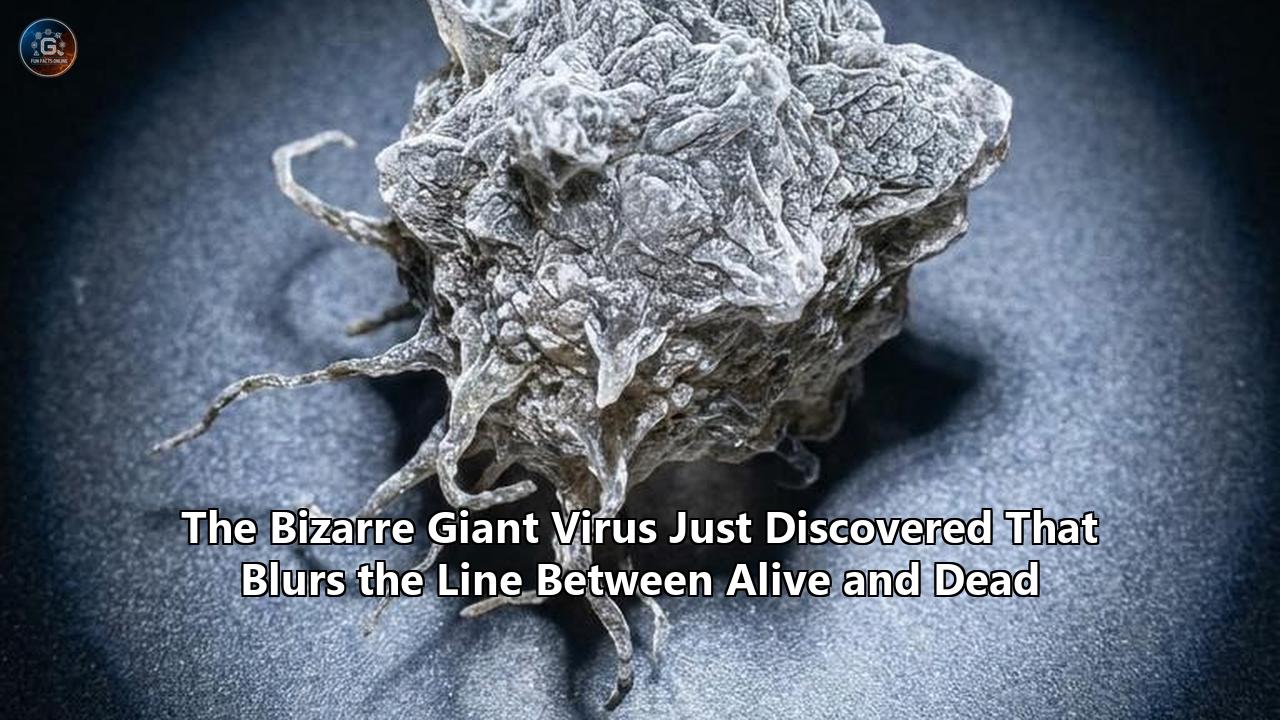
Researchers at the Tokyo University of Science recently isolated a biological entity from the freshwater of Lake Ushiku in Japan’s Ibaraki Prefecture that defies the central tenets of virology. Named ushikuvirus, this massive biological agent infects single-celled amoebae not by simply hijacking them, but by systematically dismantling their nuclear membranes and constructing its own independent "viral factory" inside the host.
The virus carries a genome of 666,605 base pairs, coding for 784 predicted genes—including instructions for molecular functions that viruses are not supposed to possess. Instead of immediately destroying the amoeba, ushikuvirus forces the cell to swell to twice its normal size, keeping it alive and structurally intact for up to six days while it orchestrates a hostile, slow-motion terraforming of the host’s internal architecture.
By seizing control of the host's internal geography and executing complex cellular processes, ushikuvirus operates in a biological gray zone. The taxonomy of life has traditionally been rigid: organisms are alive; viruses are dead. For over a century, viruses were classified as inert biological particles—mere envelopes of RNA or DNA incapable of generating energy, synthesizing proteins, or reproducing without a host cell. They were considered biological code, not living machines.
To understand why this specific giant virus discovery has fractured the foundation of modern biology, we must trace the quiet, chronological escalation of the virosphere over the last three decades. The realization that viruses might be more than inert genetic packages did not happen overnight. It was a slow, escalating creep of anomalies that repeatedly forced scientists to rewrite the rules of cellular life.
1992–2003: The Bacterial Imposter
The first crack in the traditional definition of a virus appeared in a water cooling tower in Bradford, England, in 1992. Researchers investigating an outbreak of pneumonia isolated a microbe inside a local amoeba. Under an optical microscope, it appeared as a large, roughly spherical object that retained a Gram stain. Assuming it was a Gram-positive bacterium, they named it Bradfordcoccus and stored it in a freezer.
It sat there for over a decade. It was not until 2003 that researchers finally analyzed the organism’s genetics and made a startling realization: Bradfordcoccus was not a bacterium at all. It was a virus of unprecedented proportions.
Renamed Mimivirus (for "mimicking microbe"), it boasted a genome of 1.2 million base pairs, completely eclipsing the genetic code of many free-living bacteria. A typical respiratory virus, like influenza, carries around 13,500 base pairs and codes for roughly a dozen proteins. Mimivirus coded for nearly a thousand. Most alarming to virologists, the Mimivirus genome contained genes for translating proteins and synthesizing amino acids—machinery strictly reserved for living, cellular organisms.
Viruses were defined by their lack of this exact machinery. Yet here was a viral particle that carried the blueprints for life-sustaining functions. The discovery provoked immediate, heated debates among biologists. Was Mimivirus a freak anomaly, or the first representative of a hidden viral domain?
2013–2014: The Siberian Resurrection
The answer arrived a decade later, buried deep in the ice.
In 2013 and 2014, virologists Jean-Michel Claverie and Chantal Abergel from Aix-Marseille University began hunting for ancient viruses in the Siberian permafrost. From a soil sample that had remained frozen for 30,000 years, they resurrected Pithovirus sibericum.
The scale of Pithovirus shattered previous records. Measuring 1.5 micrometers in length, the virus was larger than many modern bacteria and visible under a standard laboratory microscope. Unlike typical viruses that unspool their genetic material into a host’s nucleus and wait for the cell to do the work, Pithovirus arrived with its own replication machinery. It carried over 500 genes, many of which were dedicated to complex tasks like repairing DNA and synthesizing proteins.
Around the same time, the same research team discovered Pandoravirus off the coast of Chile. Pandoravirus escalated the genetic arms race even further, possessing a staggering 2,500 genes. But the true shock was not the sheer volume of genetic material—it was the content.
When researchers sequenced these massive genomes, they found that upwards of 90 percent of the genes were "ORFans" (Open Reading Frames with no known homology). This meant their genetic sequences did not match anything in the known biological world. They were entirely alien.
Each giant virus discovery throughout the 2010s stripped away another layer of our biological certainty. These entities were ancient, massive, structurally complex, and largely unmapped. But despite their size, the scientific consensus held firm on one critical barrier: viruses do not have a metabolism.
2020–2023: Stealing the Fire of Life
Metabolism—the chemical processes that occur within a living organism in order to maintain life—is the ultimate dividing line between the living and the dead. To be alive is to process energy.
In the early 2020s, researchers analyzing massive datasets of "viral dark matter" from the world's oceans found that giant viruses were systematically violating this rule. Biologists from Virginia Tech, the University of Massachusetts, and the University of Miami began assembling the genomes of uncultivated marine giant viruses that infect phytoplankton.
When they mapped the genetic code of these oceanic predators, they found genes dedicated to carbon metabolism, nutrient transport, and even photosynthesis.
"We discovered that giant viruses possess genes involved in cellular functions such as carbon metabolism and photosynthesis – traditionally found only in cellular organisms," reported Benjamin Minch, a researcher at the University of Miami's Rosenstiel School.
These viruses were not passively floating until they bumped into a host. Once inside an algal cell, the giant viruses deployed their own metabolic genes to rewire the host’s internal chemistry, optimizing it to process sunlight and carbon more efficiently. By hijacking the host's metabolism, the virus effectively became a metabolizing entity.
"Once viruses infect a cell, we can't think of the cell as being its own autonomous entity anymore," noted biologist Frank Aylward regarding these findings.
This prompted scientists like Patrick Forterre of the Pasteur Institute to popularize the "virocell" concept. Forterre argued that a virus alternates between two states. Outside the cell, it is an inert seed (a virion). But once it breaches a host membrane and its genes activate, the entire infected cell becomes the virus. In this active metabolic state, the virus is undeniably alive.
2023–2025: The Monsters in the Soil
While marine biologists were mapping viral metabolism in the oceans, soil ecologists were discovering that the physical structures of giant viruses were far stranger than anyone had predicted.
In late 2023, expanding into 2025, an unprecedented structural analysis emerged from the Harvard Forest in Petersham, Massachusetts. A collaborative team featuring Jeff Blanchard and Lauren Alteio from UMass Amherst, alongside the Max Planck Institute’s Matthias G. Fischer, had been extracting microbes from the forest soil to study climate change responses.
To isolate the organisms, they suspended the soil microbes in a mild detergent, applied a DNA-binding dye, and utilized fluorescence-activated cell sorting (FACS) to separate individual cells. Because giant viruses contain massive genomes, the sorting machinery captured them right alongside the bacteria.
When Fischer and his colleagues placed these sorted samples under a transmission electron microscope, they bypassed genetics entirely and looked directly at the physical geometry of the viruses. The visual evidence was staggering.
The soil was teeming with colossal, geometrically bizarre viral particles. The researchers documented large icosahedral (20-sided) shapes featuring extreme structural modifications that had never been seen in the viral kingdom. They cataloged viruses with internal channels, multi-layered capsids, thick fibrous coats, and elongated tails.
The visual anomalies were so pronounced the researchers assigned them whimsical names based on their morphotypes: the "Gorgon" (featuring long, tubular appendages resembling snakes), the "Turtle," the "Haircut," and the "Christmas Star". Some particles stretched up to 635 nanometers in width, dwarfing standard pathogens like SARS-CoV-2, which range from just 50 to 140 nanometers.
"The cornucopia of viral morphotypes found in Harvard Forest alone questions our current understanding of the virosphere," the authors wrote, noting that the single patch of Massachusetts soil contained a higher diversity of giant virus shapes than all previously isolated giant viruses combined.
The sheer volume of the Harvard Forest giant virus discovery forced researchers to accept that extreme viral complexity is a global, terrestrial norm. Giant viruses were not just isolated freaks trapped in the ice or floating in the deep ocean; they were directly beneath our feet, utilizing unimagined mechanisms to interact with their environment.
Early 2026: The Ushikuvirus Escalation
All of these escalating threads—bacterial-sized genomes, alien genes, metabolic hijacking, and bizarre structural geometry—have collided in the current breaking discovery out of Japan.
In late 2025 and heavily reported through early 2026, Professor Masaharu Takemura and a team from the Tokyo University of Science published their isolation of ushikuvirus in the Journal of Virology. Sourced from the freshwater of Lake Ushiku, this latest giant virus acts with a level of sophisticated cellular control that has forced biologists to rethink the origin of complex life itself.
Ushikuvirus specifically targets an amoeba called Vermamoeba vermiformis. Most conventional viruses enter a host, immediately flood the cytoplasm with copies of themselves, and burst the cell open in a matter of hours. Ushikuvirus is far more methodical.Under an electron microscope, researchers watched as the virus breached the amoeba. Its outer shell—a 250-nanometer spiky capsid outfitted with unique capped tips and thin surface fibers—latched onto the host. Once inside, the virus initiated a pronounced cytopathic effect. It forced the host cell to halt its own reproduction and swell into a rounded, enlarged state, peaking in size roughly 60 hours after initial infection.
Then, the virus did something extraordinary: it physically disrupted the amoeba's nuclear membrane.
The nucleus is the command center of a eukaryotic cell, protected by a thin biological envelope. Ushikuvirus dismantled this barrier, leaving fragments of the host's original DNA scattered in the cell interior. In its place, the virus constructed its own "viral factory"—a localized, highly organized manufacturing center built to assemble new viral particles.
"Giant viruses can be said to be a treasure trove whose world has yet to be fully understood," Takemura stated regarding the find, noting that ushikuvirus maintains its host in a living, rounded state for up to six days to complete its slow replication cycle.
Genetically, the virus proved equally complex. Its genome spans 666,605 base pairs. While it shares structural similarities with the Mamonoviridae family—specifically the Medusavirus genus known for its icosahedral shape and spiky surface—and aligns closely with the previously discovered Clandestinovirus, its behavior is entirely distinct. A staggering 58 percent of its genes are ORFans, carrying no known evolutionary relatives.
This is not simple biological theft. It is coordinated biological engineering. The virus systematically overrides the host's command center, replaces it with its own architecture, and directs the amoeba's remaining energy toward viral construction—all without killing the host prematurely.
The Culminating Theory: Did We Come From Viruses?
The behavior of ushikuvirus is not just a biological curiosity; it provides critical physical evidence for one of the most provocative hypotheses in evolutionary biology.
Complex life on Earth—from fungi to amoebae to human beings—is composed of eukaryotic cells. The defining feature of a eukaryote is its nucleus, the membrane-bound vault that protects our DNA. Bacteria and archaea do not have nuclei; their genetic material floats freely in the cell.
For decades, evolutionary biologists have debated exactly how the first nucleus formed. In 2001, Professor Takemura and Dr. Philip Bell independently proposed a radical solution: the "viral eukaryogenesis" hypothesis. They suggested that billions of years ago, an ancient, massive DNA virus infected an archaeal cell. But instead of destroying the cell, the giant virus established a permanent viral factory inside it.
Over countless generations, the host cell and the giant virus formed a symbiotic relationship. The viral factory eventually evolved into the modern eukaryotic nucleus, turning a simple archaeon into the first complex cell. If this theory holds true, a giant virus is the direct evolutionary ancestor of the human cellular command center.
For 25 years, this idea was largely speculative. But ushikuvirus provides a living model of exactly how this ancient transition might have occurred. By demonstrating the ability to dismantle a host's existing nuclear membrane and establish an enclosed, highly organized viral factory that functions exactly like a proto-nucleus, ushikuvirus shows that giant viruses possess the mechanical capability to restructure the fundamental design of a cell.
"As a result, it is believed that we will be able to get closer to the mysteries of the evolution of eukaryotic organisms and the mysteries of giant viruses," Takemura explained following the publication of the findings.
The Next Frontier for the Virosphere
With this latest giant virus discovery, the barrier separating a living cell from a supposedly inert genetic package has never been thinner. We have now tracked these entities from the deep permafrost to the terrestrial soil, from the oceanic photic zones to the freshwater lakes of Japan.
They carry genes for metabolism. They construct physical architecture inside their hosts. They boast physical appendages, complex geometries, and genomes that rival the organisms they infect.
As virologists continue to pull environmental samples and sequence "viral dark matter," the immediate scientific priority is mapping the ORFan genes that make up the bulk of these viral genomes. Researchers must determine what these unmapped genes are actively doing while the virus manages its host's metabolism.
Furthermore, the International Committee on Taxonomy of Viruses (ICTV) and the broader biological community will face mounting pressure to address the taxonomy of the virosphere. Some researchers argue that the genetic independence of giant viruses warrants the creation of a "fourth domain" of life, sitting alongside Archaea, Bacteria, and Eukarya.
Whether they are categorized as highly evolved parasites, devolved cellular organisms, or an entirely distinct branch of early life, the narrative is forever altered. Viruses are not merely the pathogens that plague cellular life. They are the architects that may have helped build it.
Reference:
- https://www.sciencealert.com/giant-virus-discovered-in-japanese-pond-may-hint-at-multicellular-lifes-origins
- https://www.earth.com/news/giant-virus-found-in-a-pond-may-help-explain-complex-life/
- https://www.azolifesciences.com/news/20260114/Giant-Virus-with-A-Massive-Genome-and-Unusual-Infection-Strategy.aspx
- https://www.sciencenews.org/article/viruses-alive-coronavirus-definition
- https://microbiologysociety.org/why-microbiology-matters/what-is-microbiology/what-are-viruses/are-viruses-alive.html
- https://www.popularmechanics.com/science/health/a44694559/giant-virus-found-buried-under-massachusetts/
- https://www.quantamagazine.org/were-giant-viruses-the-first-life-on-earth-20140710/
- https://www.iflscience.com/hundreds-of-new-giant-viruses-discovered-throughout-the-worlds-oceans-79566
- https://www.labmanager.com/viruses-dont-have-a-metabolism-but-some-have-the-start-of-one-22235
- https://www.eurekalert.org/news-releases/703727
- https://astrobiology.com/2025/04/amazing-structural-diversity-of-giant-virus-like-particles-in-forest-soil.html
- https://www.iflscience.com/giant-viruses-with-unimaginable-features-discovered-in-massachusetts-soil-70060
- https://scitechdaily.com/new-giant-virus-found-in-japan-may-rewrite-the-origin-of-complex-life/
- https://www.sciencedaily.com/releases/2026/02/260219040814.htm
- https://www.icr.org/content/giant-virus-big-claims-does-ushikuvirus-explain-complex-life