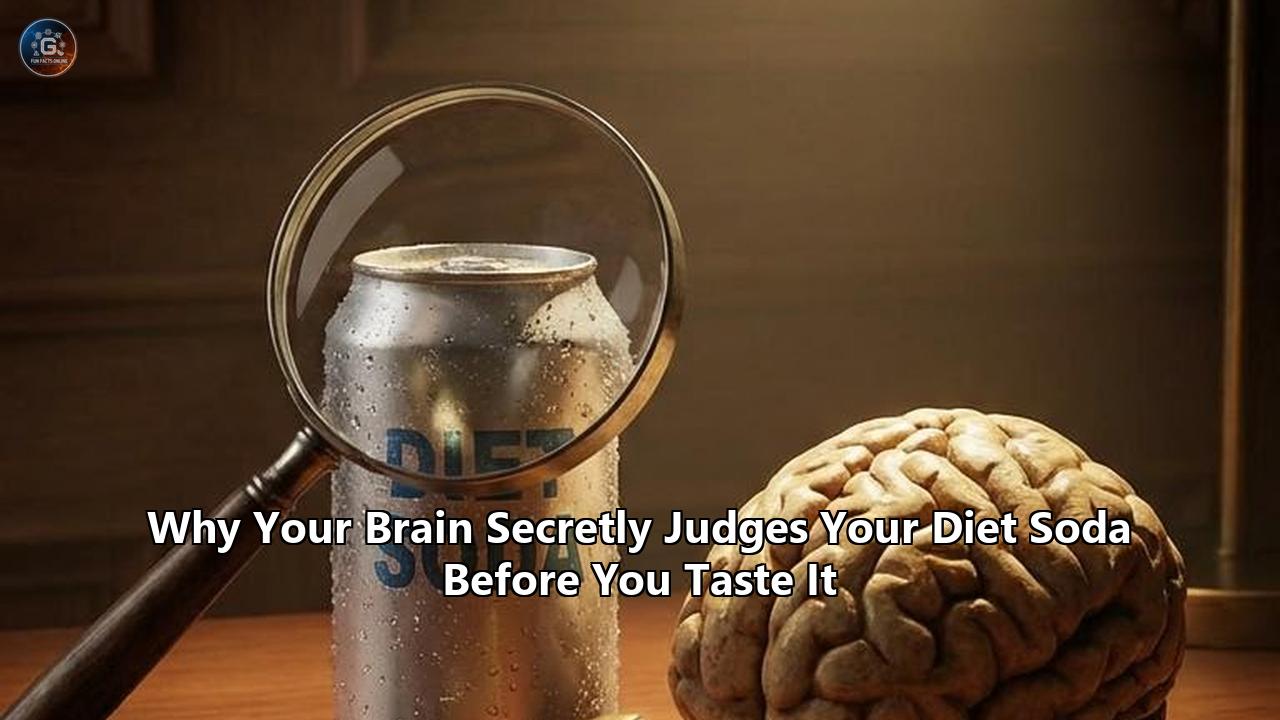
In April 2026, researchers from Radboud University, the University of Oxford, and the University of Cambridge published a study that fundamentally disrupts decades of nutritional science. The team, led by Elena Mainetto and Margaret Westwater, demonstrated that the human brain decides how much it enjoys a sweet beverage before a single drop hits the tongue. By placing 99 healthy adults in functional magnetic resonance imaging (fMRI) machines and subtly altering the labels on their drinks, the researchers proved that expectation dictates flavor. When participants believed they were drinking a beverage sweetened with artificial substitutes, they rated genuinely sugar-laden drinks as significantly less enjoyable. Conversely, when they were told a drink contained real sugar, they reported immense satisfaction—even when the beverage was entirely artificially sweetened.
This neural deception did not just manifest in self-reported surveys. The brain imaging revealed that the dopaminergic midbrain, a core region responsible for processing reward and nutrient value, physically activated based on the label rather than the liquid. When the participants expected sugar, their midbrain fired aggressively, processing the anticipated caloric value that did not actually exist in the diet drink. The findings highlight a stark physiological tradeoff: the tongue measures chemistry, but the brain constructs reality.
The Neural Architecture of Anticipation Versus Chemical Reality
To understand why the brain judges a beverage before tasting it, researchers contrast two distinct biological mechanisms: bottom-up sensory input and top-down predictive coding.
Bottom-up processing relies on physical hardware. When a person takes a sip of a beverage, taste receptors on the tongue—specifically the T1R2 and T1R3 protein receptors—bind to the molecules in the liquid. If the drink is sweetened with aspartame or sucralose, these highly potent synthetic molecules bind to the receptors with hundreds of times the affinity of regular sucrose. The tongue sends a rapid electrical signal up through the cranial nerves to the gustatory cortex, objectively reporting a high level of sweetness.
However, top-down predictive coding operates on a completely different framework. The brain is an energy-expensive prediction engine. It does not wait passively for sensory data to arrive; instead, it actively generates predictions about what it is about to experience based on visual cues, past experiences, and packaging labels. When a consumer opens a can prominently labeled "Diet," the visual cortex signals the dopaminergic midbrain to expect a calorie-void liquid.
The clash between these two systems defines the modern dietary experience. If the tongue reports intense sweetness (bottom-up) but the brain anticipates zero calories (top-down), a neurological mismatch occurs. The April 2026 Oxford and Cambridge study proves that when these two systems collide, the top-down cortical prediction frequently overrules the bottom-up chemical reality. The psychology of diet soda operates entirely on this foundation of predictive coding, proving that flavor is not a fixed chemical property, but a highly subjective neural construction molded by expectation.
Neuroimaging Technology Versus Self-Reported Taste Profiles
The methodologies used to unmask this phenomenon reveal a sharp contrast between subjective human reporting and objective neurological data. For decades, food science relied heavily on blind taste tests and self-reported surveys to formulate low-calorie beverages. Beverage companies would ask focus groups to rate sweetness, mouthfeel, and aftertaste on numerical scales.
The tradeoff of relying solely on self-reported data is that it fails to capture subconscious reward processing. A consumer might report that a diet soda tastes "identical to regular soda," but their brain chemistry tells a conflicting story. Functional MRI technology tracks blood oxygen level-dependent (BOLD) signals in real-time, allowing researchers to watch the brain's reward centers react instantly to stimuli.
In the Mainetto and Westwater study, the fMRI scans showed that the midbrain—a region heavily implicated in sugar-seeking behavior in rodents—reacted vigorously to the expectation of sugar, regardless of the actual chemical composition. When participants knowingly drank an artificial sweetener, this reward center remained relatively quiet. The use of fMRI exposes a critical vulnerability in how we historically engineered diet foods. We formulated them to trick the tongue, but we failed to trick the midbrain. The subjective conscious mind might accept the flavor, but the subconscious neurological architecture recognizes the metabolic bluff, withholding the dopamine release that typically signals caloric satisfaction.
The Cognitive Toll: Artificial Sweeteners Versus Caloric Sugar
While the short-term reward systems of the brain negotiate flavor expectations, a much darker debate has emerged regarding long-term neurological health. Medical professionals are currently forced to weigh the severe, well-documented brain risks of excess sugar consumption against the emerging, highly alarming cognitive risks associated with artificial sweeteners.
Excess sugar intake is a known neurotoxin when consumed at high levels over decades. It drives systemic inflammation, disrupts insulin regulation, and damages the vascular system, all of which heavily contribute to cognitive decline and brain atrophy. Replacing regular soda with diet alternatives was long considered a net-positive tradeoff for brain health, as it mitigated these glycemic spikes.
However, a massive study published in the September 2025 issue of Neurology fundamentally altered this risk-benefit analysis. The Brazilian Longitudinal Study of Adult Health (ELSA-Brasil) tracked 12,772 adults over eight years. Researchers isolated the intake of seven distinct artificial sweeteners, including aspartame, saccharin, and sucralose. The data showed that individuals consuming the highest amounts of these sweeteners—equivalent to just one diet soda a day—experienced cognitive decline 62 percent faster than those who consumed the least. This accelerated decline was equal to an extra 1.6 years of brain aging, with the damage heavily concentrated in memory and verbal fluency.
This finding was aggressively corroborated by a January 2026 analysis from the Northern Manhattan Study (NOMAS), spearheaded by Dr. Hannah Gardener at the University of Miami. After adjusting for vascular risk factors, demographics, and lifestyle behaviors, the researchers found that each additional diet soda consumed per day was linked to a 34 percent increase in dementia risk. Participants who drank more than one diet soda daily faced four times the risk of developing dementia compared to those who drank one or fewer.
The tradeoffs here are uniquely brutal. Drinking regular soda accelerates vascular damage and insulin resistance, leading to brain atrophy. Drinking diet soda appears to introduce direct chemical or metabolic interference that accelerates cognitive aging and dementia risk by 1.6 years. When evaluating the psychology of diet soda, public health officials face a conflicting set of data where neither option provides a neurologically safe harbor.
Conflicting Methodologies: Observational Epidemiology Versus Acute Neurobiology
The stark findings regarding dementia and brain aging are generated through observational epidemiology, an approach that stands in direct contrast to the acute neurobiology of fMRI studies. Understanding the differences between these scientific approaches highlights why consensus on diet beverages remains elusive.
Acute neurobiological studies, such as the 2026 Cambridge research, place a subject in a controlled environment. Variables are manipulated in real-time, and the immediate neurological response is captured down to the millimeter. This provides a high degree of certainty regarding mechanism and cause-and-effect within a closed system. We know exactly how the midbrain responds to a specific label in minute three of an experiment.
Conversely, longitudinal epidemiology, like the Framingham Heart Study or the ELSA-Brasil cohort, tracks thousands of free-living humans over a decade. These studies excel at identifying long-term health outcomes but struggle massively with reverse causation. Dr. James Noble of Columbia University and Dr. Hannah Gardener point out the glaring limitation of these findings: individuals with early-stage metabolic dysfunction, obesity, or diabetes frequently switch to diet soda specifically to manage their declining health.
In the NOMAS cohort, 41 percent of the high diet soda consumers already had diabetes, compared to just 18 percent of the rest of the group. When researchers statistically removed participants with obesity or diabetes from the models, the association between diet soda and dementia vanished entirely. Therefore, the tradeoff in scientific methodology is clear: fMRI gives us indisputable mechanical truth about the immediate moment but tells us nothing about the decade, whereas epidemiology gives us a clear picture of the decade but cannot definitively prove whether the diet soda caused the brain damage, or if the brain damage was an inevitable result of the underlying metabolic disease that prompted the diet soda consumption.
The Marketing Dissonance: Deprivation Framing Versus Nutrient Priming
The psychology of diet soda is heavily manipulated by the marketing terminology stamped on the aluminum can. The way beverage conglomerates frame their products triggers competing neurological cascades.
Historically, the industry relied on "Diet" labeling. This explicitly signals an absence—fewer calories, less sugar, reduced mass. The 2026 JNeurosci study explicitly showed that priming the brain with "diet" or "artificial sweetener" terminology actively suppressed the brain's reward centers. When the brain reads "Diet," it prepares for a state of metabolic deprivation. Consequently, even if the beverage contains an identical flavor profile to its caloric counterpart, the midbrain refuses to authorize a dopamine release. The consumer physically experiences less pleasure because their brain has preemptively decided the liquid lacks value.
Contrast this with the modern pivot toward "Zero Sugar" and "Nutrient-Rich" framing. Beverage companies recognized the negative neural priming of the word "Diet" and began shifting their typography. As researcher Margaret Westwater explicitly noted following her 2026 findings, framing a healthy alternative as having "minimal added sugars" or being "nutrient-rich" creates a profoundly more positive neurological expectation than utilizing the term "low calorie".
This highlights a unique situation in consumer behavior: altering the linguistic framing of a product changes its biological processing. A "Zero Sugar" label acts as a neutral or even positive prime—it suggests the preservation of the original formula without the penalty of glucose. The tradeoff for beverage companies is abandoning decades of brand equity in legacy "Diet" products to adopt terminology that aligns more harmoniously with the brain's dopaminergic reward architecture.
The Gut-Brain Axis Versus Top-Down Cortical Processing
The brain's judgment of diet soda does not end when the liquid leaves the mouth. The human body features a competing set of sensors located deep within the gastrointestinal tract, highlighting a severe conflict between cortical expectation and digestive reality.
When an individual consumes caloric sugar, the upper intestine detects the physical presence of glucose through specialized neuropod cells. These cells send an immediate electrical signal up the vagus nerve directly to the brain stem, triggering a powerful, secondary release of dopamine. This gut-brain axis response is entirely independent of flavor. It is a strict caloric accounting system. The body recognizes that life-sustaining energy has been secured, and it rewards the organism accordingly.
Artificial sweeteners entirely bypass this system. Molecules like aspartame, sucralose, and acesulfame-K provide intense sweetness on the tongue but deliver zero metabolizable energy to the gut. When analyzing the psychology of diet soda, researchers contrast the initial cortical expectation with the subsequent gastrointestinal disappointment.
If the brain was primed by the packaging to expect sugar, the midbrain lights up upon the first sip, anticipating a caloric payload. Twenty minutes later, the gut sends a conflicting report: no calories have arrived. This neurological dissonance leaves the brain in a suspended state of unfulfilled reward. The immediate tradeoff of consuming a zero-calorie sweetener is an acute reduction in systemic glucose, but the long-term tradeoff is a chronically confused neural architecture that struggles to associate sweet flavors with actual metabolic satiation.
Natural Zero-Calorie Alternatives Versus Synthetic Formulations
The search for a sweetener that satisfies both the tongue and the midbrain without triggering the cognitive decline observed in the 2025 ELSA-Brasil study has led to a fierce competition between synthetic chemicals and naturally derived compounds.
Synthetic formulations, such as aspartame and saccharin, are created in laboratories. Aspartame, for example, is composed of two naturally occurring amino acids that are artificially fused together. The Food and Drug Administration caps its safe consumption at 50 milligrams per kilogram of body weight, but neurologists express mounting skepticism. Dr. Jasdeep S. Hundal, Director of The Center for Memory & Healthy Aging, explicitly warns that the chemical interference of aspartame can induce mood swings, headaches, and long-term cognitive issues.
In contrast, the food industry has increasingly turned to natural non-nutritive sweeteners like stevia, monk fruit, and sugar alcohols such as erythritol and xylitol. These compounds are extracted from plants rather than synthesized. From a marketing perspective, they carry a "health halo," allowing brands to bypass the negative neurological priming associated with artificial chemicals.
However, the biological reality is less differentiated than the marketing suggests. The 2025 Neurology study evaluated not only synthetic chemicals like aspartame and saccharin but also naturally derived sugar alcohols like erythritol and xylitol. Alarmingly, with the sole exception of tagatose, all assessed low-calorie sweeteners were linked to faster cognitive decline and diminished verbal fluency.
The brain appears largely indifferent to the origin of the non-caloric sweetener. Whether the compound was synthesized in a chemical plant or extracted from a South American leaf, it still triggers the exact same metabolic mismatch: intense sweetness devoid of caloric backing. The situation remains uniquely challenging for food scientists; they can change the chemical source of the sweetness, but they cannot change the brain's evolutionary demand for actual calories.
Public Health Policy: Taxation Mandates Versus Labeling Interventions
Governments and public health organizations are deeply fractured on how to address the dietary and cognitive risks of sodas, resulting in competing regulatory approaches that reflect the underlying scientific ambiguity.
One approach involves aggressive taxation and restriction of caloric sugar. Numerous municipalities and countries have implemented sugar-sweetened beverage (SSB) taxes. The economic penalty is designed to forcefully pivot consumers away from regular soda, which unequivocally drives type 2 diabetes and obesity. By taxing sugar, governments implicitly endorse diet sodas as the preferred, untaxed alternative.
In stark contrast, organizations like the World Health Organization (WHO) and prominent neurologists have begun actively discouraging the use of low- and no-calorie sweeteners. The finding that high aspartame intake—equivalent to roughly 191 milligrams a day, or a single can of diet soda—accelerates brain aging by 1.6 years has triggered demands for warning labels on artificial sweeteners.
These competing policies force a dangerous public health tradeoff. If a government taxes sugar but leaves artificial sweeteners alone, they may be successfully curbing the obesity epidemic while inadvertently accelerating midlife cognitive decline. Dr. Sudha Seshadri, founding director of the Glenn Biggs Institute for Alzheimer's & Neurodegenerative Diseases, notes that the epidemiological data clearly shows diet sodas are not a safe mechanism for addressing the diabetes epidemic. The competing policy responses highlight a lack of unified understanding: do we regulate the compound that destroys the vascular system (sugar), or the compound that confuses the neural reward circuitry and potentially ages the brain (sweeteners)?
Behavioral Tradeoffs: Caloric Deficit Versus Compensatory Eating
The primary reason an individual consumes a diet beverage is to create a mathematical caloric deficit. By replacing a 150-calorie can of regular soda with a 0-calorie alternative, the consumer expects to lose weight over time. However, this mathematical approach fundamentally ignores the compensatory eating behaviors driven by the brain's unfulfilled reward centers.
When the midbrain expects sugar but receives none, the resulting neurological deficit frequently alters subsequent behavior. Because the brain's energy expectation was violated, it signals a state of heightened hunger, driving the individual to seek out highly palatable, calorie-dense foods later in the day. This phenomenon, known as caloric compensation, often negates the initial caloric deficit created by the diet drink.
In a 2021 randomized, cross-over study published in Nutritional Health, researchers used fMRI to measure how the brain responds to food cues after consuming diet soda. They found that acute consumption of diet soda significantly increased the activation of the reward-related caudate nucleus when participants looked at highly desirable food. Furthermore, diet soda actively decreased the activation of the dorsolateral prefrontal cortex—the region responsible for cognitive control and impulse inhibition.
This creates a disastrous behavioral tradeoff. The consumer successfully avoids 150 liquid calories, but the diet soda chemically hyper-sensitizes their reward system to food while simultaneously turning off their neurological impulse control. The psychology of diet soda proves that attempting to outsmart the body's energy accounting system rarely works; the brain simply demands payment in another form, often leading to greater overall caloric intake.
The Functional Plasticity of the Aging Brain
Another stark contrast in the recent data surrounds age demographics and neuroplasticity. The impact of artificial sweeteners on the brain is not uniform across a human lifespan.
When Dr. Claudia Kimie Suemoto and her team analyzed the ELSA-Brasil data, they discovered a highly counterintuitive demographic split. The link between high artificial sweetener consumption and accelerated cognitive decline was profoundly evident in adults under the age of 60. The researchers found a 62 percent faster decline in memory and thinking skills in this younger cohort.
Conversely, no significant associations emerged in older adults over 60. Dr. Suemoto explicitly noted her surprise at this outcome, as older adults are generally at a higher baseline risk for dementia and cognitive impairment. The tradeoff of age reveals that midlife exposure to artificial sweeteners is uniquely harmful. Midlife represents a critical window where the trajectory of brain health is set.
This contrasts sharply with how we typically view aging and diet. Usually, older brains are considered more fragile and susceptible to chemical interference. However, the data suggests that the midlife brain, which is actively engaged in complex predictive coding and metabolic balancing, is far more vulnerable to the specific neural dissonance created by zero-calorie sweeteners. The younger brain attempts to integrate the false sweet signals and suffers accelerated wear, whereas the older brain, perhaps possessing diminished receptor sensitivity, does not register the same degree of metabolic damage.
The Unresolved Future of Flavor Engineering
As beverage companies, neuroscientists, and public health officials look forward, the strategies for managing public consumption are diverging into two entirely different disciplines: molecular engineering and psychological manipulation.
On one side, food scientists are racing to discover a novel compound that can replicate the exact structural binding of sucrose without the glycemic load, while simultaneously triggering the gut-brain axis to satisfy the midbrain's demand for calories. They are attempting to solve a neurological problem with chemistry.
On the other side, behavioral psychologists and marketers are utilizing the April 2026 JNeurosci findings to bypass the chemistry entirely. If the dopaminergic midbrain can be tricked into enjoying a healthy beverage simply by reading a "nutrient-rich" label, the future of diet beverages may rely less on inventing new sweeteners and more on optimizing consumer expectation.
The critical unresolved question is how long the human brain can be tricked. If a consumer routinely drinks a zero-calorie beverage marketed as "nutrient-rich," will their midbrain eventually learn the bluff and stop firing dopamine? The brain's neuroplasticity suggests that it continually updates its predictive models. Once the brain realizes that the new label is just another empty promise, the positive expectation effect may vanish.
Until that threshold is determined, consumers remain trapped in a complex neurological negotiation every time they open a can. The chemical reality of the liquid matters far less than what the brain expects it to be, highlighting that the ultimate battleground for healthy eating is not located on the tongue, but deep within the predictive architecture of the mind.
Reference:
- https://www.sciencedaily.com/releases/2026/04/260408225943.htm
- https://scitechdaily.com/your-brain-can-be-tricked-into-enjoying-artificial-sweeteners/
- https://neurosciencenews.com/sweetener-expectation-brain-reward-30225/
- https://www.reddit.com/r/InterstellarKinetics/comments/1sgsj1p/exclusive_oxford_and_cambridge_researchers_prove/
- https://www.sciencefocus.com/news/artificial-sweeteners-brain-ageing
- https://www.bumc.bu.edu/camed/2017/04/20/daily-consumption-of-sodas-fruit-juices-and-artificially-sweetened-sodas-affect-brain/
- https://www.sciencedaily.com/releases/2025/09/250904103923.htm
- https://neurologytoday.aan.com/doi/10.1097/01.wnt.0001173584.20102.f5
- https://news.med.miami.edu/could-diet-soda-increase-dementia-risk/
- https://www.alzdiscovery.org/cognitive-vitality/blog/is-diet-soda-harming-your-brain-health
- https://pubmed.ncbi.nlm.nih.gov/33588630/