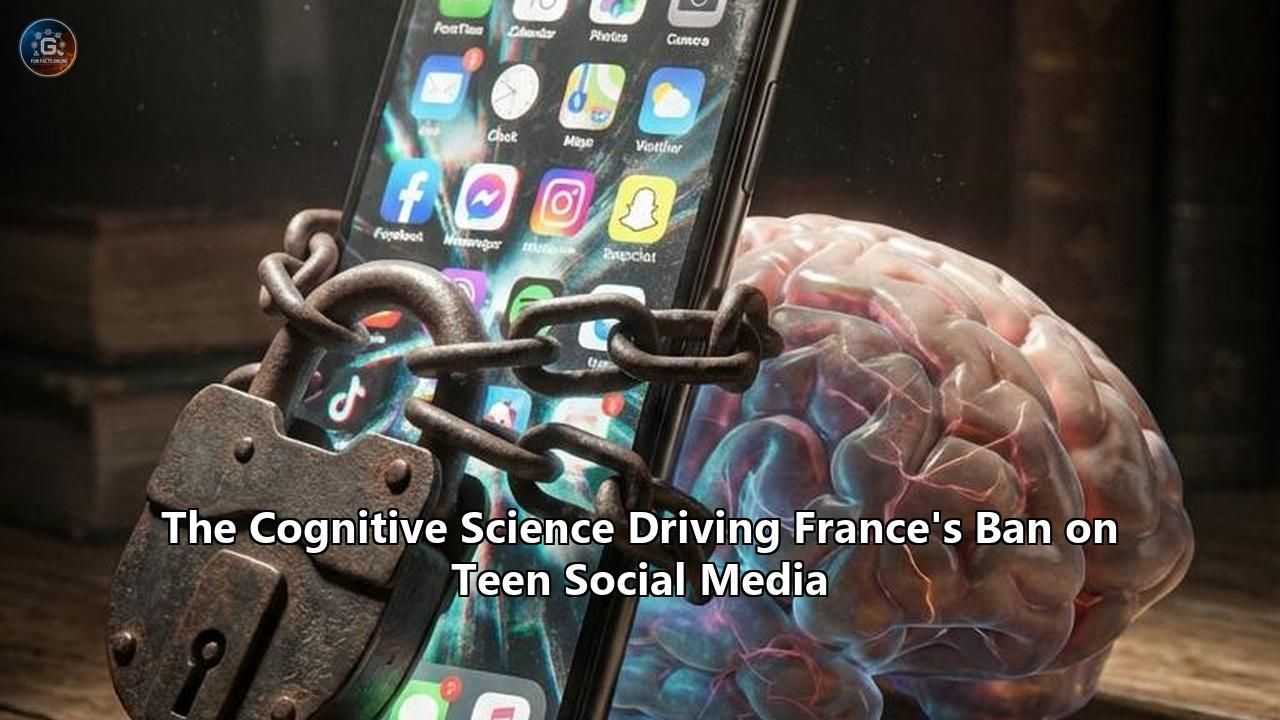
The Neurobiological Clash: Dopaminergic Hijacking Versus Adaptive Neuroplasticity
For the better part of two decades, cognitive science operated under a highly optimistic framework regarding adolescent brain development and digital interfaces. This early 2010s consensus, often championed by proponents of the "digital native" theory, posited that the adolescent brain’s intense neuroplasticity allowed it to adapt to rapid information processing. Proponents of this view argued that hyper-connectivity trained young brains in complex multitasking, rapid visual processing, and globalized social cognition.
The 2024 report commissioned by French President Emmanuel Macron, titled À la recherche du temps perdu (In Search of Lost Time), aggressively dismantled this optimistic framework. Co-chaired by neurologist Servane Mouton and psychiatrist Amine Benyamina of Paul Brousse Hospital, the 141-page report shifted the scientific lens from adaptive neuroplasticity to dopaminergic hijacking. By examining these two theoretical approaches side-by-side, a stark divergence in how we understand adolescent cognition emerges.
The adaptive neuroplasticity model views the brain as a muscle that strengthens in response to its environment. If teenagers are exposed to rapid-fire, concurrent streams of information, their prefrontal cortex and working memory adapt to filter and process multiple data streams simultaneously.
Benyamina and Mouton’s framework, which serves as the foundational science driving the impending France teen social media ban, observes the exact same neurological phenomena but interprets them as severe cognitive deficits. Where the adaptive model sees "multitasking," the French commission’s clinical data identifies fragmented attention, resulting in shallow cognitive processing and a measurable decline in sustained focus. The commission gathered evidence from over a hundred professionals and evaluated 150 young people, concluding that algorithmic feeds do not train the brain to process information faster; they train the brain to require higher thresholds of stimulation to release dopamine.
The tradeoff between these two theoretical models dictates policy. If the brain is merely adapting to a new digital environment, policy should focus on digital literacy—teaching teens how to navigate the web safely. If, however, the brain is being subjected to a synthetic, highly engineered dopaminergic loop that mimics substance addiction—as Benyamina, an addiction specialist, argues—then digital literacy is as ineffective as teaching a smoker how to hold a cigarette properly. The French commission chose the latter, concluding that tech companies have weaponized cognitive biases to bypass the rational faculties of the underdeveloped adolescent brain.
Legislative Architecture: Absolute Prohibition Versus Algorithmic Mitigation
Translating cognitive science into law yields drastically different approaches depending on the geographic and political context. We can clearly observe this by contrasting the aggressive legislative maneuvers in Paris—culminating in the January 2026 National Assembly vote of 116-23 in favor of blocking social media access for users under 15—with the mitigation strategies favored by the United States and the United Kingdom.
The French model operates on the principle of absolute neurological quarantine. Because the prefrontal cortex—the brain region responsible for impulse control, long-term planning, and risk assessment—does not fully mature until the mid-twenties, French lawmakers argue that exposing a 13-year-old to an engagement-optimized algorithm is a fundamental failure of public health. Consequently, the France teen social media ban mandates that children under 15 be physically barred from creating or accessing accounts on major platforms. Furthermore, the expert commission recommended no smartphones at all before age 13, and no mobile phones with internet access before age 11.
Conversely, the Anglo-American approach relies heavily on algorithmic mitigation and "safety by design." Rather than banning access, initiatives like the stalling U.S. Kids Off Social Media Act and the U.K.'s ongoing parliamentary consultations focus on forcing tech companies to alter the user experience for minors. Meta’s deployment of "Teen Accounts" on Instagram exemplifies this mitigation strategy. These accounts default to private settings, restrict direct messaging from adults, and attempt to filter out sensitive content related to self-harm or eating disorders, all while keeping the teenager integrated into the platform's broader ecosystem.
The tradeoffs between these two legislative architectures are immense. The French absolute ban prioritizes the elimination of the stimulus entirely, treating social media platforms as toxic environments that cannot be made safe for a developing brain. Emmanuel Macron summarized this ethos in a January 2026 broadcast, asserting that children's emotions are not for sale to "American platforms or Chinese algorithms".
However, the mitigation approach highlights a surprising vulnerability in the French model: the digital black market. Algorithmic mitigation keeps teenagers on the primary, regulated platforms where their behavior can, theoretically, be monitored by parents and automated safety tools. Absolute prohibition risks driving teenagers to encrypted messaging apps, unregulated forums, or the dark web to replicate the digital socialization they have been denied. French psychiatrist Serge Tisseron has warned that technologically literate adolescents will simply use Virtual Private Networks (VPNs) to bypass state-mandated age gates, a reality that forces the state into a perpetual, exhausting technological arms race with 14-year-olds.
Developmental Milestones: Staggered Age Gating Versus Continuous Scaffolding
At the heart of the cognitive debate are the specific ages at which a child’s brain is deemed resilient enough to handle digital pressures. Here, we can contrast the rigidly staggered developmental timeline proposed by the French commission against the continuous scaffolding model advocated by many developmental psychologists.
The French recommendations rely heavily on an evolution of Serge Tisseron’s famous "3-6-9-12+" rule, updated by Mouton and Benyamina to a stark 3-11-13-15 timeline. This model correlates specific chronological ages with neurological milestones:
- Under 3: No screens whatsoever. The brain is in its most critical period for acquiring language and spatial reasoning, requiring physical, three-dimensional interaction.
- Age 11: Introduction of a basic mobile phone, but no internet. The brain can handle remote communication but lacks the executive function to navigate the boundless web.
- Age 13: Introduction of a smartphone with internet, but no social media. The adolescent is developing a broader social identity but remains highly vulnerable to algorithmic manipulation and peer comparison.
- Age 15: Access to "ethical" social media.
Contrast this staggered gating with the continuous scaffolding approach. Proponents of scaffolding argue that chronological age is a blunt and often inaccurate proxy for cognitive maturity. A 12-year-old with strong parental involvement, high executive function, and robust offline hobbies might be significantly more equipped to navigate Instagram than a 16-year-old suffering from offline social isolation and depression.
The scaffolding model suggests that parents should introduce a child to digital platforms early but with intense, gradually decreasing supervision. The cognitive rationale is one of digital inoculation: by exposing the child to small, manageable doses of algorithmic content while the parent is actively co-viewing and discussing the mechanics of the platform, the child develops critical cognitive defenses. They learn to identify sponsored content, recognize manipulated images, and understand why a video is making them angry.
The tradeoff here centers on the concept of delayed onset versus managed exposure. The French staggered gating aims to protect the brain entirely until it has naturally developed thicker myelin sheaths and a more robust prefrontal cortex, theoretically ensuring that when a 15-year-old logs on, they possess the biological hardware necessary to resist addiction. The surprising difference highlighted by critics of the ban, however, is that executive function regarding digital spaces is not an innate biological development; it is a learned skill. If a teenager is kept entirely off social media until their 15th birthday and then handed the keys to the internet, their prefrontal cortex may be structurally more mature, but it is entirely naive to the specific psychological tactics employed by engagement algorithms.
The Anxiety Dispute: Neurochemical Depletion Versus Psychosocial Amplification
A driving force behind the global momentum for digital age limits—spanning from Australia's strict under-16 ban in December 2025 to the current French legislation—is the alarming spike in adolescent anxiety and depression. Yet, cognitive scientists and public health researchers remain fiercely divided on the exact mechanism linking screens to psychological distress. We must examine the neurochemical depletion theory side-by-side with the psychosocial amplification theory to understand the policy friction.
The neurochemical depletion theory, heavily cited by the French commission and American psychologist Jonathan Haidt, treats digital consumption as a biological pathogen. According to this framework, infinite scrolling and intermittent variable rewards (the mechanism that makes slot machines addictive) trigger unnatural spikes in dopamine. Over time, the adolescent brain downregulates its dopamine receptors to compensate for this constant flooding. This downregulation results in a baseline state of anhedonia—an inability to feel pleasure from normal, offline activities. Furthermore, the blue light and cognitive arousal from late-night screen use destroy sleep architecture. The lack of REM and deep sleep actively prevents the brain from pruning synapses and regulating cortisol, directly causing a neurochemical environment ripe for anxiety and depressive disorders.
Conversely, the psychosocial amplification theory suggests that the smartphone itself does not biologically induce mental illness. Instead, the technology merely acts as an unprecedented amplifier for the exact same social anxieties that have plagued human adolescents for centuries: the desperate need for peer validation, the fear of missing out (FOMO), and the agonizing process of identity formation.
When the French public health watchdog ANSES reviewed the evidence in early 2026, their findings illustrated a nuanced middle ground that slightly undercut the absolute certainty of the neurochemical depletion theory. ANSES ruled that while social media has numerous detrimental effects on adolescents—particularly worsening body image in teenage girls due to constant upward social comparison—the platforms cannot be identified as the sole, independent cause of declining mental health.
The tradeoffs in how we interpret this data are profound. If the neurochemical depletion theory is entirely correct, then the France teen social media ban is a necessary, life-saving intervention on par with banning lead paint or restricting youth access to alcohol. The biological damage must be stopped at the source.
However, if the psychosocial amplification theory holds more weight, an outright ban might inadvertently worsen adolescent distress. Peer socialization is a primary evolutionary drive for teenagers. By severing a 14-year-old from the digital ecosystem where their entire peer group communicates, the state risks inducing profound social isolation. Banning the technology removes the amplifier, but it does not address the underlying social anxieties; it merely silences the adolescent's primary tool for participating in modern social life.
Platform Topography: Algorithmic Infinite Scroll Versus "Ethical" Chronological Feeds
One of the most specific, and perhaps idealistic, recommendations from Mouton and Benyamina’s report was the suggestion that when 15-year-olds are finally allowed to access social networks, they should only be permitted on "ethical" platforms. The report explicitly names decentralized, chronological networks like Mastodon and BlueSky as acceptable, while keeping commercial giants like TikTok, Instagram, and X restricted. Comparing the cognitive topography of an algorithmic infinite scroll with an ethical chronological feed reveals precisely how user interfaces manipulate adolescent cognition.
An algorithmic, short-video feed (the TikTok model) is a masterpiece of applied cognitive science. It removes all friction. The user does not need to choose who to follow, search for content, or even click a "next" button. The algorithm analyzes micro-behaviors—how many milliseconds a user hovers over a video, whether they re-watch a specific frame—to build an eerily accurate psychological profile. It then feeds the user a highly personalized, infinite stream of content designed to trigger emotional arousal (often outrage, shock, or humor). For a developing brain, this lack of friction bypasses the executive function entirely. The prefrontal cortex is never asked to make a choice, meaning it rarely generates the "stop" signal necessary to log off.
By contrast, a chronological, text-heavy platform like Mastodon imposes significant cognitive friction. Users must actively search for instances to join, curate their own following lists, and read content in the exact order it was posted, regardless of its emotional valence. When the user reaches the end of the new posts, the feed stops. There is no algorithm dynamically surfacing inflammatory content to keep them engaged.
The surprising difference between these two topographies is how teenagers actually perceive them. From a cognitive health perspective, the chronological feed is vastly superior; it allows for deliberate consumption, natural stopping cues, and reduced emotional manipulation. Yet, from a user-experience standpoint, teenagers find ethical networks incredibly boring. The very lack of dopaminergic spikes that makes BlueSky "safe" also makes it highly unappealing to a demographic seeking high-intensity socialization and entertainment.
This presents a massive tradeoff for the enforcement of the French policy. If the state mandates that a 15-year-old can only use Mastodon, the policy effectively ignores the network effect. A social network is only valuable if a user's peers are on it. Attempting to force adolescents onto friction-heavy, chronological platforms while the global cultural zeitgeist occurs on algorithmic platforms may result in widespread non-compliance, pushing youth toward using illicit means to access the platforms where the actual cultural currency is traded.
The Economics of Attention: Commodifying Behavior Versus Protecting Agency
To fully understand the severity of the French government's response, one must compare the fundamental economic models driving the global digital economy with the European conception of fundamental human rights and cognitive agency.
In the United States, the dominant regulatory framework largely treats social media users as consumers participating in a free market. The extraction of behavioral data and the monetization of human attention are viewed as standard business practices, albeit ones that occasionally require antitrust scrutiny or specific privacy guardrails. The underlying assumption is that the user—even an adolescent user—has the agency to consent to terms of service and the capacity to regulate their own consumption.
The French commission radically rejects this premise. Drawing on cognitive behavioral studies, Benyamina and Mouton argued that the "strategies of captation of attention" employed by these companies invalidate the concept of user agency, particularly for minors. When a platform employs hundreds of neurobiologists and behavioral psychologists to design an interface that exploits evolutionary vulnerabilities—such as the human bias toward negative information or the deep-seated fear of social ostracization—it is not offering a service; it is extracting a cognitive resource.
This economic conflict is precisely what Emmanuel Macron highlighted when he framed the legislation not just as a health measure, but as a defense of French sovereignty against "American platforms and Chinese algorithms". The contrasting approaches reveal a profound philosophical divide. The American model prioritizes innovation, free speech, and market expansion, accepting a certain degree of cognitive collateral damage as the price of a digitally connected society. The French model, driven by the findings of its cognitive experts, views the digital commodification of a child's attention as a violation of their fundamental right to normal neurological development.
The tradeoff in restricting the digital economy to protect cognitive agency is the potential isolation of the European tech sector. By imposing massive fines on platforms that fail to verify user ages and actively blocking engagement algorithms for youth, France risks a scenario where global tech giants simply degrade their services in Europe rather than comply with structurally incompatible laws. We have already seen previews of this dynamic when Meta restricted access to certain AI features in the EU due to data privacy regulations. For French youth, the cognitive protection offered by the state may come at the cost of being temporarily sidelined from the global digital commons.
The Cognitive Reality of Enforcement: State Paternalism Versus Adolescent Subversion
The most rigorous cognitive science and the most fiercely debated legislative mandates ultimately collide with a single, highly volatile variable: the ingenuity of a rebellious teenager. Comparing the intended outcomes of state-mandated digital curfews with the psychological reality of adolescent subversion highlights the ultimate friction point in the France teen social media ban.
The law requires social media platforms to implement robust age-verification systems, moving away from the easily bypassed "self-declaration" boxes toward more stringent measures, potentially involving government IDs or biometric estimation. The state’s logic assumes that a technological barrier will alter behavior. If the door is locked, the child cannot enter the room, and the brain is protected.
However, developmental psychology tells us that adolescence is defined by boundary-testing and the circumvention of adult authority. Banning a highly desired social commodity often increases its perceived value. By driving social media use underground, the ban creates a new cognitive framing for teenagers: using TikTok or Instagram is no longer just a way to pass the time; it is a subversive, status-enhancing act of rebellion.
When we contrast state enforcement with the nuanced reality on the ground, surprising behavioral shifts emerge. French minors anticipating the ban have already begun sharing tutorials on how to install and configure VPNs to mask their location, routing their digital presence through countries with more permissive laws. Others are pivoting to encrypted, decentralized messaging apps like Telegram, which are notoriously difficult for state actors to regulate and monitor.
This highlights the most dangerous tradeoff of the absolute prohibition model. When a teenager uses Instagram on the open internet, their algorithmically induced anxiety or exposure to cyberbullying occurs in a space that, while flawed, is visible. Parents can look over their shoulder, educators can discuss online trends, and researchers can scrape data to study the effects. When that same teenager uses a VPN to access unregulated dark-web forums or encrypted channels to avoid state detection, they are pushed into a digital shadow economy. The state successfully removes the tech giant's algorithm from the equation, but it replaces it with an entirely unmonitored environment where the risks of grooming, extortion, and radicalization are exponentially higher.
As governments worldwide watch France's aggressive legislative experiment unfold through 2026, the global community remains at a digital crossroads. The cognitive science clearly demonstrates that the unmitigated extraction of adolescent attention by algorithmic platforms causes measurable harm to sleep, executive function, and psychological well-being. The data from the Benyamina-Mouton report is exhaustive, compelling, and impossible to ignore. Yet, the friction between biological protection and digital reality persists. The ultimate test of France’s sweeping ban will not be whether the cognitive science is accurate—it undoubtedly points to a severe public health crisis—but whether a legislative hammer can successfully rewire the deeply entrenched social behaviors of a generation that has never known a world without the internet. The coming years will reveal whether absolute digital prohibition acts as a vital neuro-protective shield, or simply forces the complex, messy reality of adolescent development further into the digital dark.
Reference:
- https://www.medscape.com/viewarticle/french-experts-provide-guidelines-childrens-screen-time-2024a10009c1
- https://www.addictaide.fr/pas-decran-avant-6-ans-droit-a-la-deconnexion-prevention-ce-que-preconise-le-rapport-de-la-commission-ecrans/
- https://courthousenews.com/france-uk-move-toward-social-media-bans-but-how-much-can-they-protect-kids/
- https://builtin.com/articles/social-media-bans-children
- https://economictimes.indiatimes.com/tech/technology/uk-france-mull-social-media-bans-for-youth-as-debate-rages/articleshow/126697967.cms?from=mdr
- https://www.lagazettedescommunes.com/926526/les-enfants-face-aux-ecrans-les-propositions-de-la-commission-dexperts-nommee-par-lexecutif/
- https://www.youtube.com/watch?v=elZlBOo0gm0
- https://www.techradar.com/computing/social-media/french-president-takes-aim-at-american-platforms-and-chinese-algorithms-as-france-moves-to-ban-social-media-for-under-15s