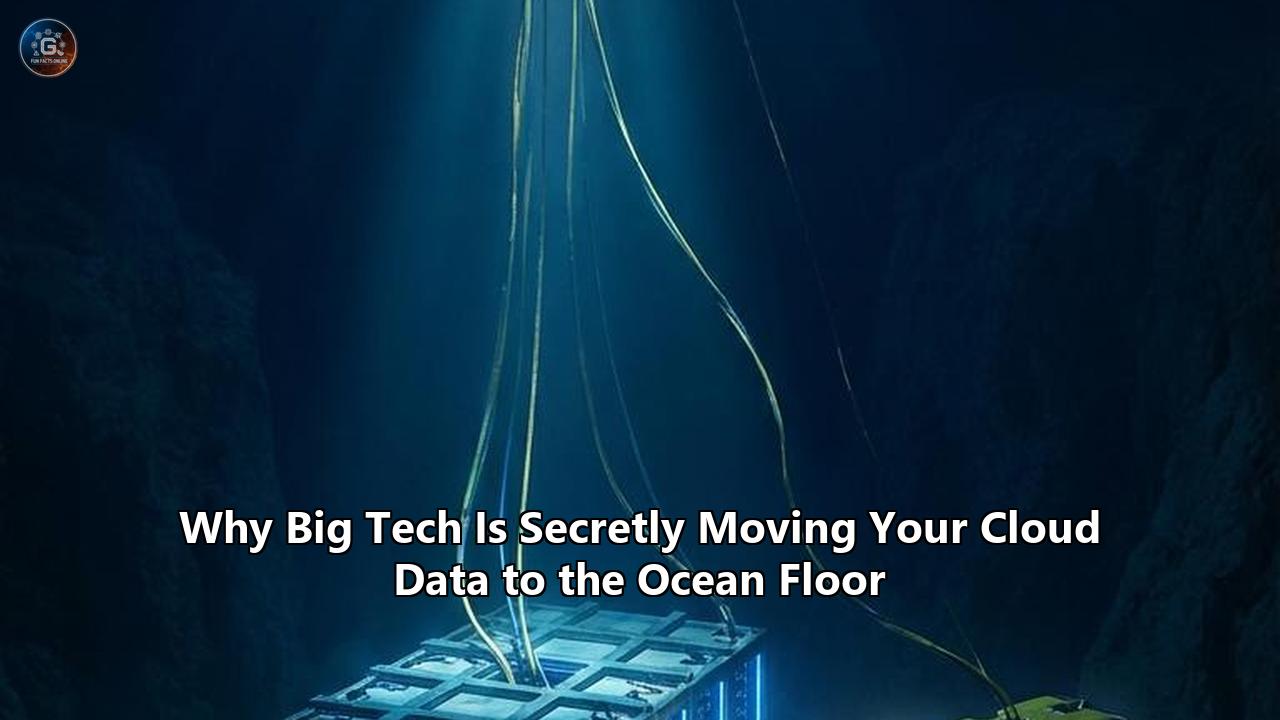
The commercial activation of the world’s first offshore wind-powered data center off the coast of Shanghai in early 2026, paired with San Francisco-based Aikido Technologies’ March 2026 blueprint to embed 12-megawatt AI computing hubs directly inside floating wind turbines, marks a definitive structural pivot in global cloud infrastructure.
For the past decade, placing servers on the ocean floor was largely viewed as an eccentric corporate science experiment. Microsoft proved the concept’s viability between 2018 and 2020 with Project Natick off the coast of Scotland, observing drastically lower hardware failure rates before eventually sunsetting that specific research program. But the explosive compute demands of generative AI models have forced the broader market to bypass further academic trials and initiate commercial scale-up. The transition from theoretical research to active, revenue-generating deployments is now underway, driven by an urgent need to bypass the terrestrial constraints of power grid bottlenecks, massive water consumption limits, and skyrocketing land acquisition costs near major urban hubs.
In China, marine engineering firm Highlander (Hailanyun) has officially brought its upgraded “version 2.0” facility—the Shanghai Lingang project—online, following a successful commercial deployment in Hainan. The Hainan module alone operates with a computing capacity equivalent to 30,000 high-end workstations and processes up to 7,000 queries per second for the deep-learning system DeepSeek. Simultaneously, Western firms are accelerating their timelines. Aikido Technologies is preparing a 100-kilowatt proof-of-concept unit in Norway for launch later this year, with a massive commercial rollout of its AO60DC platforms slated for the United Kingdom coast by 2028. OpenAI and Samsung have also publicly signaled their intent to pursue floating offshore computing infrastructure.
What began as a localized engineering challenge has rapidly evolved into a multibillion-dollar sector. Global market intelligence firm Dataintelo valued the underwater computing infrastructure market at $3.2 billion in 2025, projecting it will reach $14.8 billion by 2034. Driven by a compound annual growth rate of 18.6 percent, this sector is no longer an alternative edge case; it is becoming a foundational pillar of the next-generation internet.
The Catalyst: Why Big Tech Is Fleeing the Land
The sudden acceleration of subsea deployments is a direct response to a math problem that land-based infrastructure can no longer solve: the thermal limits of silicon and the finite nature of terrestrial resources.
Training and inferencing massive artificial intelligence models requires arrays of high-density graphics processing units (GPUs) and tensor processing units (TPUs) that consume vast amounts of electricity. When electrical current passes through billions of microscopic transistors inside these chips, resistance generates intense heat. If this heat is not rapidly dissipated, the processors thermally throttle, degrading performance or suffering permanent physical damage.
In conventional land-based facilities, managing this thermal output requires energy-intensive mechanical cooling systems, typically involving Computer Room Air Conditioning (CRAC) units, massive industrial chillers, and evaporative cooling towers. These mechanical systems often account for 30 to 40 percent of a conventional data center’s total operational expenditure. Furthermore, evaporative cooling towers consume staggering amounts of fresh water. A single hyperscale data center can evaporate millions of liters of potable water annually to maintain optimal server temperatures.
As of early 2026, this model has collided with environmental reality. Much of the American West and Southern Europe are experiencing sustained, exceptional drought conditions. With 34 percent of the European Union's population living in areas with seasonal water scarcity, local municipalities are increasingly hostile to zoning requests for new data centers that threaten to drain municipal reservoirs. In the United States, utility providers are extending grid-connection queues for new hyperscale facilities by up to five years because local power grids cannot handle the sudden addition of 100-megawatt or 500-megawatt loads.
The ocean solves both the thermal and spatial constraints simultaneously. Seawater is a highly efficient thermal conductor with vast heat capacity. By placing servers underwater, operators can eliminate the need for active mechanical chillers and evaporative towers entirely. The surrounding ocean currents act as an infinite, passive heat sink, reducing cooling-related energy consumption by approximately 90 percent. This dramatic reduction in overhead translates directly into increased compute density—allowing operators to extract up to 40 percent more processing power from a comparable physical footprint compared to a land-based system.
Deconstructing the Subsea Architecture
The engineering required to successfully deploy and maintain electronics in a high-pressure, highly corrosive saltwater environment represents a significant leap in industrial design. The architecture of modern subsea server pods relies heavily on advancements in maritime engineering, materials science, and fluid dynamics.
Pressure Vessels and Protective Coatings
The core of a subsea data center is a sealed pressure vessel, typically constructed from heavy-gauge steel. To combat the relentless corrosiveness of seawater, these cylindrical capsules are treated with advanced protective coatings, such as glass-flake epoxies, which create an impermeable barrier against salt ingress. The physical integrity of the vessel must withstand immense hydrostatic pressure, particularly for deep-water deployments, which represent the fastest-growing segment of the market with a projected 21.3 percent CAGR.
The Nitrogen Advantage
Before a pod is submerged, all oxygen and water vapor are completely purged from the interior chamber and replaced with dry nitrogen gas. This inert atmosphere is highly beneficial for delicate microelectronics. Oxygen causes gradual oxidation and corrosion of solder joints and copper traces, while humidity introduces the risk of short circuits through condensation. Furthermore, the absence of human technicians walking the aisles eliminates the most common cause of terrestrial server failure: accidental physical damage caused by human error. During Microsoft's early testing phase, this sealed, nitrogen-rich environment resulted in a hardware failure rate that was merely one-eighth that of comparable land-based servers.
Passive Heat Exchangers
The cooling mechanism is deceptively simple but highly effective. Internal fans circulate the nitrogen gas across the hot server racks. The heated gas is then routed across internal heat exchangers that are in direct thermal contact with the steel hull of the vessel. The cold seawater passing over the exterior of the hull rapidly absorbs the heat, cooling the gas before it is recirculated back through the servers. Because the system utilizes passive thermal transfer to the ocean currents, power usage effectiveness (PUE)—a metric used to determine the energy efficiency of a data center—drops to near 1.0, the theoretical ideal where 100 percent of the energy consumed is used exclusively for computing rather than cooling.
Integrated Power and Connectivity
Data and power are routed to the submerged pods via heavy-duty composite submarine cables, utilizing the same fiber-optic technology that currently underpins the transoceanic internet backbone. However, the newest generation of commercial underwater data centers, such as the Aikido AO60DC and the Highlander Shanghai module, bypass the terrestrial power grid entirely. By co-locating the data centers directly at the base of offshore wind turbines, these facilities draw power directly from the source of generation. This eliminates the transmission losses that occur when electricity is routed over long distances from an offshore turbine to a land-based substation, achieving a hyper-efficient, closed-loop energy ecosystem.
Who Is Affected: The Short-Term Casualties and Beneficiaries
The migration of compute infrastructure from land to sea is triggering a massive realignment across multiple industries. This physical shift disrupts established supply chains, alters the labor market, and fundamentally changes the economic geography of cloud services.
Coastal Metropolitan Areas and End-Users
The most immediate beneficiaries of this transition are the businesses and consumers located in dense coastal cities. Currently, over 40 percent of the global human population lives within 100 kilometers of a coastline. In terrestrial networks, real estate constraints often force cloud providers to build their massive hyperscale facilities in remote, arid regions where land is cheap, requiring data to travel hundreds or thousands of miles to reach the end-user. This physical distance introduces latency. By deploying high-density compute pods just a few miles offshore from financial hubs like New York, London, Tokyo, and Shanghai, cloud providers can drastically reduce latency, enabling real-time processing for autonomous vehicles, high-frequency trading, and instantaneous generative AI inferencing.
Offshore Wind Developers
The offshore wind industry is currently experiencing a massive windfall from this technological shift. Historically, offshore wind farms have struggled with the massive capital costs of laying high-voltage undersea transmission cables to connect their turbines to the mainland grid. Furthermore, during periods of peak wind generation when grid demand is low, turbines often face "curtailment"—they are forced to shut down because the grid cannot absorb the excess power. By housing gigawatt-scale AI infrastructure directly at the turbine, offshore developers can immediately monetize 100 percent of the power they generate directly at the source, transforming stranded renewable energy into highly lucrative computing power.
Terrestrial Real Estate and Municipal Water Boards
Local governments and terrestrial water authorities are finding sudden relief. The friction between data center developers and local zoning boards over water allocation has been a defining conflict of the early 2020s. Shifting these facilities offshore relieves the severe stress on municipal aquifers and frees up prime industrial real estate for other development priorities.
The Data Center Supply Chain and Labor Force
Conversely, traditional data center suppliers face immediate obsolescence risks. Manufacturers of large-scale mechanical cooling systems, commercial HVAC units, and evaporative chillers are seeing their total addressable market contract as cooling requirements move from active mechanical systems to passive marine heat exchangers.
The labor profile of the cloud computing industry is also undergoing a radical transformation. The role of the terrestrial IT technician—tasked with walking the aisles of a data center to swap out failed hard drives or replace faulty server blades—is being phased out. The new architecture relies on a "run-to-failure" model. Once a pod is submerged, it remains sealed on the ocean floor for a deployment lifecycle ranging from 5 to 20 years. If an individual server fails, the system simply routes traffic to redundant nodes within the pod. When the pod reaches the end of its operational lifespan or degradation threshold, specialized marine engineering crews utilizing dynamic positioning vessels and heavy-lift crane barges hoist the entire module to the surface for a wholesale refit. The workforce is shifting from land-based network administrators to maritime logistics specialists, subsea engineers, and commercial divers.
Geopolitical Maneuvering and Sovereign AI Infrastructure
The transition to oceanic computing is not just a corporate efficiency measure; it has become a theater for geopolitical competition. The ability to deploy high-density, energy-independent compute capacity rapidly is now viewed as a matter of national security.
State-Sponsored Acceleration in Asia
The Chinese government has taken a highly aggressive, subsidized approach to dominating the subsea computing sector. The Highlander projects in Hainan and Shanghai were not isolated corporate ventures; they were heavily supported by state funding, with Highlander receiving 40 million yuan (approximately $5.62 million) in government subsidies for its initial operations. This aligns directly with China's broader governmental push to lower the carbon footprint of its digital infrastructure while simultaneously securing an unassailable lead in AI processing capacity. The state-owned AI computing companies and domestic telecommunications giants like China Telecom are the primary clients for these offshore clusters, creating a guaranteed domestic revenue pipeline that allows marine engineering firms to scale up production rapidly.
Western Reliance on Private Capital and Startups
In contrast, the United States and Europe are relying heavily on private sector innovation and venture capital to close the gap. The North American market currently holds the largest regional revenue share at 38.7 percent, but much of this is driven by early-stage investments and pilot programs from companies like Nautilus Data Technologies and Aikido Technologies. Aikido's strategy of offering a pathway to "sovereign, gigawatt-scale AI infrastructure" reflects the growing anxiety among Western governments about energy dependency and computing supremacy.
The Jurisdictional Gray Area
Placing mission-critical data centers in the ocean introduces complex questions of sovereignty and legal jurisdiction. While initial deployments are occurring within the territorial waters of the host nations, the long-term vision of operating massive floating data centers in international waters or Exclusive Economic Zones (EEZs) creates a regulatory vacuum. If a sovereign data center processing sensitive financial or military intelligence is anchored 150 miles offshore, navigating the legal framework of data localization laws, privacy regulations, and international maritime law becomes extraordinarily complex. Cloud providers are actively lobbying international maritime bodies to establish clear frameworks protecting subsea computing infrastructure from regulatory ambiguity.
Environmental Risks: The Unknown Variables of the Benthic Zone
Despite the undeniable benefits of zero-carbon offshore wind integration and the total elimination of fresh-water consumption, the long-term environmental consequences of deploying megawatt-scale thermal emitters into marine ecosystems remain a subject of intense scientific debate.
The fundamental law of thermodynamics dictates that energy cannot be destroyed; it can only change forms. The massive amount of heat generated by 30,000 servers is no longer being vented into the terrestrial atmosphere; it is being transferred directly into the surrounding seawater.
Thermal Plumes and Localized Warming
Engineering firms point to independent environmental assessments, such as a 2020 study of a test project near southern China, which indicated that the vast volume and movement of ocean currents dissipate this heat almost instantly, keeping the surrounding water well below acceptable temperature thresholds. However, environmental scientists warn that scaling up these facilities from single experimental pods to massive commercial arrays involving dozens of megawatt-class modules fundamentally changes the equation.
The continuous emission of heat creates localized thermal plumes around the data center arrays. In coastal waters, even a fractional degree increase in baseline water temperature can significantly alter the metabolic rates of local marine flora and fauna. These artificial hot spots can attract invasive species that thrive in warmer waters, potentially disrupting the delicate ecological balance of the existing benthic habitat.
Acoustic and Chemical Concerns
Beyond thermal pollution, the acoustic impact of underwater data centers presents a risk to marine life. While the passive heat exchange mechanisms are largely silent, the internal circulation fans, cooling pumps, and the low-frequency vibrations transmitted from the attached offshore wind turbines generate continuous acoustic noise. For marine mammals and specific fish species that rely on echolocation and acoustic signals for navigation and mating, continuous low-frequency hums can cause behavioral disruption or habitat abandonment.
Furthermore, the materials used to construct and maintain these underwater facilities require rigorous scrutiny. The protective glass-flake coatings and anti-fouling paints used to prevent barnacles and algae from encasing the heat exchangers often contain biocides. As these coatings gradually ablate over their 5-to-20-year deployment lifecycle, they can introduce heavy metals and synthetic chemical compounds into the surrounding water column. The industry is under immense pressure from environmental regulatory bodies to develop non-toxic, biologically inert anti-fouling technologies before mass commercial deployment is permitted in protected coastal regions.
Security Vulnerabilities: Defending the Submerged Cloud
The physical relocation of data centers to the seabed fundamentally alters the physical security paradigm of cloud infrastructure. Land-based hyperscale facilities are heavily fortified compounds, protected by perimeter fencing, biometric access controls, armed security personnel, and constant surveillance. An underwater data center, anchored miles off the coast, replaces these traditional defenses with the natural barrier of the ocean itself.
While the immense hydrostatic pressure and extreme depths make it practically impossible for individual bad actors or rogue technicians to physically tamper with the server racks, the external infrastructure remains highly vulnerable. The power and data conduits connecting the subsea pods to the mainland rely on submarine composite cables. These cables are already the recognized Achilles' heel of the global internet, highly susceptible to accidental severance by commercial fishing trawlers dragging bottom-contact gear or ship anchors dragged during severe storms.
More concerning is the threat of targeted kinetic attacks or espionage by hostile state actors. Specialized military submarines and uncrewed underwater vehicles (UUVs) possess the capability to tap into subsea fiber-optic cables to intercept unencrypted traffic or deploy explosive charges to sever connectivity entirely. Because underwater data centers will process vast amounts of localized AI data—ranging from critical municipal infrastructure management to high-frequency trading algorithms—they represent high-value targets.
Unlike a terrestrial facility where an intrusion triggers an immediate physical response from law enforcement, a physical breach or cable severance occurring 50 miles offshore requires specialized naval or marine engineering assets to investigate and repair, resulting in potentially devastating downtime. Operators are increasingly exploring the integration of autonomous acoustic monitoring systems and localized sonar nets to detect unauthorized submersibles approaching the arrays, shifting the burden of physical security from private security firms to specialized maritime defense protocols.
What Happens Next: The Diverging Paths of Global Compute
As 2026 progresses, the trajectory of cloud infrastructure is rapidly diverging from its historical land-locked foundation. The successful commercialization of the Highlander modules in China and the impending deployment of Aikido Technologies’ wind turbine-integrated units in Europe have definitively proven the economic viability of the marine model.
The Imminent Maintenance Cycle Test
The most critical upcoming milestone for the industry will be the first large-scale retrieval and maintenance cycles. The financial models underpinning underwater data centers rely heavily on the assumption that hardware failure rates will remain exponentially lower than their terrestrial counterparts due to the nitrogen atmosphere and stable thermal environment. As the first generation of commercial pods deployed in 2024 and 2025 approach their natural mid-life degradation thresholds, operators will be forced to execute the complex logistics of raising the modules, breaching the pressure vessels, swapping out the obsolete silicon for next-generation AI accelerators, and redeploying them. Any significant delays, cost overruns, or marine accidents during these retrieval operations could severely chill investor confidence and slow the 18.6 percent CAGR projected for the next decade.
Standardization vs. Fragmentation
The industry is also racing toward a critical inflection point regarding architectural standardization. Currently, companies are deploying highly proprietary, bespoke module designs. For the market to reach its projected $14.8 billion valuation by 2034, cloud providers, marine engineering firms, and offshore wind operators must coalesce around standardized form factors and universal subsea docking interfaces. Without standardized connections, the interoperability of different vendors' hardware will be fundamentally broken, preventing the rapid scaling necessary to meet the exponentially growing demands of AI training runs.
The Extraterrestrial Alternative
While the immediate capital expenditure is heavily weighted toward the ocean floor, long-term strategic planners are simultaneously looking upward. Recognizing that both land and water are ultimately finite resources on Earth, aerospace and technology conglomerates are actively developing blueprints for space-based computing. Amazon and the European Union have publicly supported the exploration of deploying massive AI data centers into low Earth orbit. These orbital facilities would theoretically utilize the infinite vacuum of space for passive cooling and massive solar arrays for uninterrupted, limitless power generation. However, with viable space-based deployments estimated to be decades away from commercial reality due to the astronomical costs of payload launches and the difficulty of high-bandwidth orbital data transmission, the ocean floor remains the only immediately scalable solution to the silicon heat crisis.
The activation of commercial underwater data centers in 2026 is not a temporary stopgap; it is the permanent geographic relocation of human knowledge and processing power. The terrestrial data center era, defined by sprawling desert compounds and massive evaporative cooling towers, is reaching its physical and ecological limits. As governments restrict freshwater usage and power grids buckle under the weight of generative AI, the cloud is descending into the deep. The companies that master the complexities of marine engineering, subsea logistics, and offshore renewable integration over the next 24 months will control the foundational infrastructure of the next century.
Reference:
- https://w.media/beneath-the-waves-chinas-bold-bet-on-underwater-data-centers/
- https://aibusiness.com/data-centers/underwater-data-center-project-aboard-offshore-wind-turbine
- https://www.forbes.com/sites/suwannagauntlett/2025/10/20/china-has-an-underwater-data-center-the-us-will-build-them-in-space/
- https://dataintelo.com/report/global-underwater-data-center-market
- https://www.japantimes.co.jp/business/2025/10/04/tech/china-underwater-data-centers/