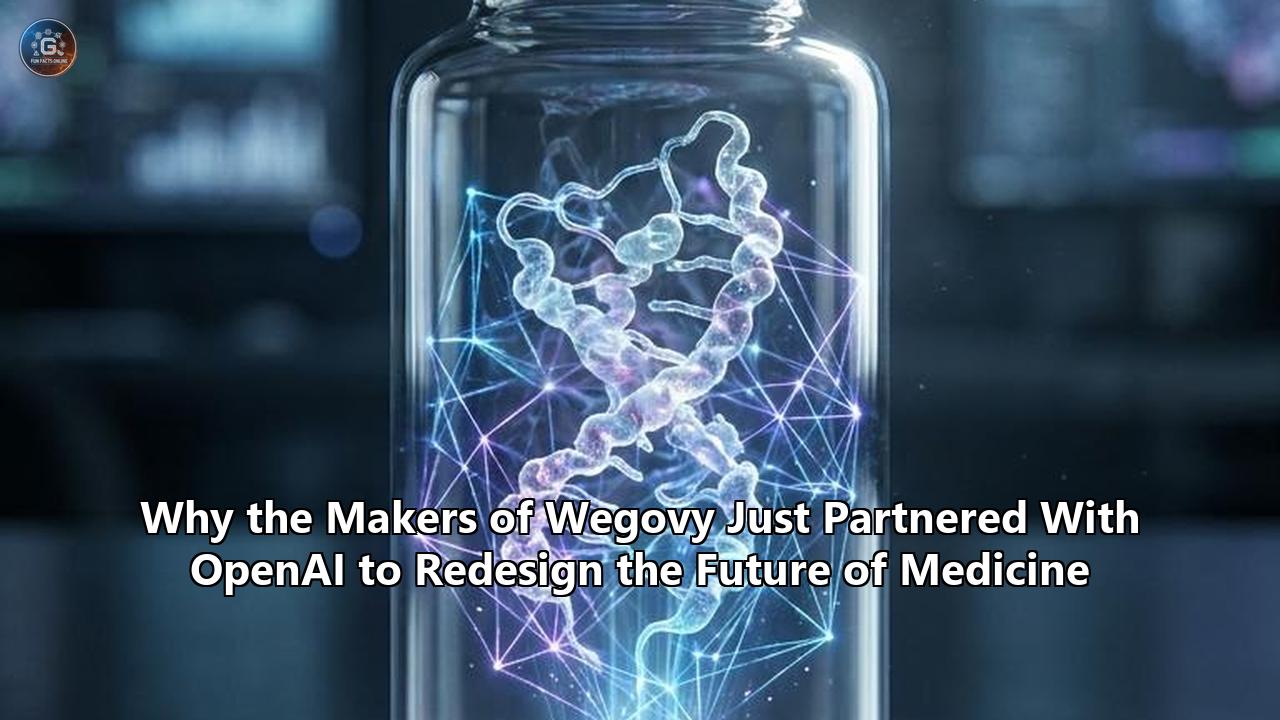
On April 14, 2026, Danish pharmaceutical giant Novo Nordisk announced a multi-year, enterprise-wide strategic partnership with OpenAI to integrate advanced artificial intelligence capabilities across its entire global operations. The agreement spans every node of the company’s value chain, deploying GPT-4-class large language models and customized generative AI tools to accelerate early-stage drug discovery, clinical development, manufacturing, supply chain logistics, and commercial execution.
The timing and scale of the announcement reveal a highly calculated operational shift. Just seven months prior, in September 2025, Novo Nordisk executed the largest restructuring in its 103-year history, laying off 9,000 employees—approximately 11% of its global workforce of 78,400. That reduction, designed to slice 8 billion Danish kroner (DKK) or $1.26 billion from the company’s annual cost base by late 2026, was driven by intensifying competition in the cardiometabolic market and a sharp contraction in its equity valuation.
By partnering with OpenAI, the makers of Wegovy and Ozempic are seeking to replace labor-intensive legacy workflows with high-throughput, AI-augmented systems. Under the agreement, pilot programs will launch immediately, with full integration across R&D, manufacturing, and commercial teams slated for completion by the end of 2026.
The stakes are measured in tens of billions of dollars. While Novo Nordisk’s total sales reached DKK 309,064 million (approximately $44.6 billion) in 2025, the company had to lower its sales and profit forecasts earlier in the year due to supply bottlenecks and market-share erosion. Meanwhile, the global market for glucagon-like peptide-1 (GLP-1) receptor agonists is expanding at an unprecedented rate. According to Morgan Stanley Research, the global market for type 2 diabetes and obesity therapies is projected to reach $190 billion by 2035—more than double the $79 billion recorded in 2025. BCC Research projects an even steeper trajectory, estimating the market will hit $268.4 billion by 2030, growing at a compound annual growth rate (CAGR) of 30.6%.
To capture this market, Novo Nordisk must overcome two critical challenges: the slow, capital-intensive nature of drug development and chronic manufacturing capacity constraints. The Novo Nordisk OpenAI partnership is designed to address both bottlenecks simultaneously, rewriting the mathematical realities of pharmaceutical R&D and operational scale.
The High-Stakes Math of the Incretin Market
To understand the economic rationale of this alliance, one must look at the shifting competitive dynamics of the GLP-1 sector in 2025 and early 2026. Novo Nordisk’s B-share price declined 48% over the course of 2025, dropping from DKK 624 to DKK 325, which erased hundreds of billions of kroner in market capitalization.
Novo Nordisk B-Share Price Evolution (2025)
===========================================
January 2025:  DKK 624
December 2025: DKK 325 (-48%)
This market correction was fueled by two distinct pressures:
- Intense Competition from Eli Lilly: Lilly’s dual-agonist therapy, tirzepatide (marketed as Mounjaro for diabetes and Zepbound for obesity), showed superior weight loss efficacy in clinical trials compared to semaglutide (Wegovy). In mid-2025, Zepbound officially overtook Wegovy in weekly U.S. prescriptions, capturing a dominant share of the high-value North American market.
- The Rise of Compounded Alternatives: Facing chronic shortages of branded Wegovy and Ozempic, U.S. compounding pharmacies exploited regulatory loopholes to produce massive quantities of generic semaglutide copies. This lower-priced supply severely impacted Novo Nordisk's planned market penetration.
Despite these headwinds, the volume growth of the global branded GLP-1 obesity market exploded by 104% in 2025. Novo Nordisk closed the year holding a 59.6% volume market share in the branded obesity segment, while its diabetes GLP-1 franchise (led by Ozempic) grew to a 45.8% value share of the global diabetes prescription market. The division of diabetes and obesity care generated DKK 271.8 billion in sales, representing a 27% growth rate at constant exchange rates (CER).
| Metric | 2025 Performance |
|---|---|
| Total Sales | DKK 309,064 million ($44.6 billion) |
| Diabetes & Obesity Sales | DKK 271.8 billion ($39.2 billion) |
| Obesity Care Specific Sales | DKK 82,347 million ($11.9 billion) |
| Wegovy Global Sales (2024) | DKK 58.2 billion ($8.4 billion) |
| Ozempic Global Sales (2025) | DKK 127,089 million ($18.3 billion) |
While these figures appear robust, the company’s operating profit growth for 2025 was dampened to a modest 4% to 10%. The dampening was largely due to the DKK 8 billion in one-off restructuring charges associated with the 9,000 layoffs.
For the new chief executive, Maziar Mike Doustdar, who assumed leadership in August 2025, the restructuring was an essential prerequisite to realigning the company's cost structure. In his public communications, Doustdar emphasized that the savings from the layoffs would be immediately redirected into R&D and commercial execution. The partnership with OpenAI represents the technological manifestation of this cost-realignment strategy, shifting capital from human labor to digital leverage.
Compressing the Drug Discovery Timeline
The traditional pharmaceutical research and development process is a brutal numbers game. On average, it takes 10 to 12 years and an estimated $2.6 billion to bring a single novel therapeutic compound from initial laboratory discovery to pharmacy shelves. The mathematical pipeline of drug discovery typically resembles a steep funnel:
R&D Pipeline Funnel (Historical Averages)
=========================================
Target Identification & Screening:  10,000 molecules
Preclinical Development:            250 molecules
Phase I Clinical Trials:            5 molecules
Phase II Clinical Trials:           2 molecules
Phase III Clinical Trials:          1 molecule
FDA Approval & Launch:              1 approved drug
By leveraging the Novo Nordisk OpenAI partnership, the company aims to dramatically flatten this funnel and accelerate the progression of candidates through early-stage R&D.
Machine Learning on "FounData"
Novo Nordisk’s digital R&D infrastructure is anchored by FounData, a proprietary central repository established in 2024 that pools and structures clinical trial data from decades of completed studies. Under the new agreement, OpenAI's custom models will be granted secure, governed access to FounData.
Large language models can process structured and unstructured clinical text, patient genomic sequences, and proteomic datasets at an unprecedented scale. This capability allows Novo Nordisk's researchers to:
- Identify Novel Incretin Targets: LLMs can cross-reference millions of medical literature publications with FounData trial results to map previously unrecognized metabolic pathways.
- Predict Drug-Target Interactions: By training models on chemical structures and protein folding data, researchers can simulate how potential drug molecules will bind to target receptors, reducing physical laboratory assay cycles by up to 70%.
- Optimize Molecular Design: Generative models can design novel peptide sequences in silico, optimizing them for stability, half-life, and minimal immunogenicity before they are ever synthesized in a physical wet lab.
In early-stage target and drug discovery, the industry standard for lead-to-candidate optimization is 3 to 5 years. Novo Nordisk targets a reduction of this phase to 12 to 18 months through AI integration.
The Economics of Clinical Success Rates
The financial value of shortening R&D timelines is compounded by the "Probability of Success" (PoS) metric. Historically, only about 10% of drugs that enter Phase I clinical trials eventually receive regulatory approval. Phase II trials represent the largest point of failure, with a historical attrition rate of approximately 68%.
If the Novo Nordisk OpenAI partnership can improve the PoS at Phase II by even 5% through better patient cohort selection and target validation, the financial implications are massive.
$$\Delta \text{R\&D Spend} = \text{Average Phase II Cost} \times (1 - \text{PoS Improvement})$$
If a typical Phase II trial costs $40 million, raising the success rate reduces wasted capital on failed trials by tens of millions of dollars per program. Furthermore, OpenAI’s capabilities will be integrated with Novo’s existing AI tool, NovoScribe. Originally built on Amazon Bedrock and MongoDB Atlas using Claude models, NovoScribe automates the compilation and draft generation of massive clinical study reports (CSRs). By introducing OpenAI's advanced reasoning models, Novo Nordisk expects to reduce CSR draft-generation times by 40%, shaving weeks off regulatory submission timelines.
Solving the Manufacturing Capacity Bottleneck
For GLP-1 therapies, the primary constraint on top-line revenue growth is not patient demand, but manufacturing capacity. Injectable GLP-1s like Wegovy require highly specialized, sterile fill-finish manufacturing lines. Unscheduled downtime, batch contamination, and supply chain delays have repeatedly limited Novo Nordisk’s ability to meet explosive global demand.
To address this physical bottleneck, Novo Nordisk announced in late 2024 that it was purchasing three manufacturing facilities from Catalent for $16.5 billion through its parent company, Novo Holdings. In addition, the company committed to spending DKK 65 billion ($9 billion) in 2025 alone on capital expenditures to expand its global supply chain.
Novo Nordisk Capital Expenditure Trend (USD)
============================================
2024: $6.2 billion
2025: $9.0 billion (+45%)
The OpenAI partnership is designed to serve as a digital force multiplier for this physical capital investment. The companies are establishing "Pharma 4.0" pilot programs across Novo Nordisk’s 14 U.S. fill-finish facilities and global manufacturing sites to apply generative AI to operations, predictive maintenance, and supply chain logistics.
Predictive Maintenance and Yield Optimization
Sterile filling lines operate under strict environmental controls. A single minor mechanical failure or environmental deviation (such as a microscopic temperature or humidity fluctuation) can force a complete line halt, requiring hours of sterilization protocols and the destruction of compromised batches.
- Preventing Costly Downtime: In high-throughput sterile manufacturing, unscheduled downtime can cost upwards of $250,000 per hour. By deploying AI models to analyze real-time telemetry data from thousands of vibration, temperature, and pressure sensors on the filling lines, Novo Nordisk can predict component wear and schedule maintenance before a failure occurs. The goal is to reduce unscheduled equipment downtime by 30%.
- Optimizing Fill-Finish Yield: A 1.5% improvement in fill-finish yield on a production line that outputs 100 million vials of Wegovy per year yields an additional 1.5 million vials. At an average U.S. net price of approximately $800 per monthly dose, this minor efficiency gain translates directly to $1.2 billion in incremental, high-margin annual revenue.
Supply Chain and Inventory Logistics
The production of semaglutide is a highly complex, multi-site process. Active pharmaceutical ingredients (API) are synthesized in Denmark and North Carolina, shipped to various fill-finish facilities, packaged, and distributed globally across 170 countries.
OpenAI's reasoning models will be used to analyze supply chain variables, including API production rates, customs clearance timelines, cold-chain temperature logs, and local demand surges. By dynamically optimizing shipping routes and inventory placement, Novo Nordisk expects to reduce excess safety stock holdings by 15% while simultaneously decreasing regional out-of-stock events.
Restructuring the Workforce: From Layoffs to AI Upskilling
The partnership with OpenAI is inextricably linked to Novo Nordisk’s historic September 2025 restructuring. The decision to eliminate 9,000 positions was a strategic pivot intended to transition the firm from an organization reliant on manual operational execution to a lean, AI-enabled enterprise.
Workforce Dynamics (September 2025 - April 2026)
===============================================
Pre-Restructuring Workforce:   78,400 employees
September 2025 Layoffs:        -9,000 employees (-11%)
Remaining Global Workforce:    69,400 employees
upskilled with OpenAI:         ~69,000 employees
The 9,000 layoffs were heavily concentrated, with 5,000 job cuts occurring in Denmark. These cuts targeted administrative, commercial, and operational roles that were highly susceptible to automation. The remaining workforce of approximately 69,000 employees is now the target of a massive, coordinated upskilling campaign led by OpenAI.
The Productivity Math of Enterprise Upskilling
Rather than viewing AI as a tool to replace the remaining staff, Novo Nordisk is positioning OpenAI’s models as an intelligence multiplier. OpenAI is directly tasked with designing and executing comprehensive AI literacy and technical upskilling programs for Novo's global staff.
The corporate productivity gains from this upskilling program are modeled on aggressive efficiency projections:
$$\text{Unlocked Capacity} = \text{Workforce Size} \times \text{Hours Saved/Week} \times \text{Weeks/Year}$$
$$\text{Unlocked Capacity} = 69,000 \times 4 \text{ hours} \times 48 \text{ weeks} = 13,248,000 \text{ hours per year}$$
At an average fully-burdened corporate labor cost of $80 per hour, unlocking 13.2 million hours of administrative and scientific capacity is equivalent to reclaiming $1.06 billion in annual productivity. This reclaimed capacity allows the streamlined workforce to manage a business that continues to grow at double-digit rates, effectively decoupling revenue expansion from headcount growth.
Real-World Use Cases of AI Literacy
Prior to the OpenAI alliance, Novo Nordisk had already established a baseline for AI utilization. By late 2025, more than 25,000 employees had developed custom chatbots for over 2,500 specific use cases within an internal Amazon Bedrock environment, executing more than 26,000 queries per month at an operational cost of roughly $10 per use case.
The OpenAI partnership moves this baseline from basic, fragmented search queries to advanced, multi-agent workflows:
- Automated Regulatory Compliance: Generative models can draft and review local regulatory submissions, matching documents against the divergent compliance requirements of 170 different countries.
- Commercial Localization: Marketing teams can instantly translate, adjust, and compliance-check educational materials for regional markets, reducing the localized content production cycle from weeks to minutes.
- Legal and Contract Auditing: AI agents can draft, audit, and flag anomalies in clinical site contracts, distributor agreements, and vendor NDAs, reducing corporate legal turnaround times by 65%.
Comparative Analysis: The AI Arms Race in Big Pharma
Novo Nordisk is not the only pharmaceutical giant attempting to gain a competitive advantage through generative AI. Over the last 24 months, the volume and value of AI-centric alliances in the life sciences sector have grown exponentially. According to data from GlobalData, the total financial value of AI partnerships in the biopharma sector experienced a 120% year-on-year surge between 2024 and 2025.
Biopharma AI Partnership Value (YoY Trend)
==========================================
2024: [Base Value]
2025: +120% YoY Increase
To contextualize the Novo Nordisk OpenAI partnership, it is valuable to compare it to similar initiatives launched by its peers.
| Pharmaceutical Company | AI Partner(s) | Primary Operational Focus | Key Strategic Goal |
|---|---|---|---|
| Novo Nordisk | OpenAI, NVIDIA, AWS, Microsoft, Google | R&D, Clinical Trials, Sterile Manufacturing, Supply Chain | Maintain GLP-1 market dominance, optimize cost structure, resolve sterile fill-finish shortages |
| Eli Lilly | OpenAI, NVIDIA, Alphabet (Isomorphic Labs) | Antimicrobial Resistance (AMR), Multi-target Incretin R&D | Accelerate next-generation oral metabolic pipelines, expand therapeutic scope beyond obesity |
| Moderna | OpenAI | Custom GPTs, mRNA Sequence Design, Corporate Automation | Scale digital biotechnology platform, shorten vaccine design-to-trial timelines |
| Sanofi | OpenAI, Formation Bio | Clinical Trial Enrollment, Cohort Optimization | Accelerate immunology pipeline, improve clinical trial retention and diversity |
| Thermo Fisher | OpenAI | R&D Acceleration, Laboratory Workflow Synthesis | Automate diagnostic development, optimize life science tooling support |
The Competitive Differentiation
While Eli Lilly took an early lead by partnering with OpenAI in June 2024 specifically for novel antimicrobial development, Novo Nordisk's 2026 agreement is broader in scope. Novo is integrating these technologies deeply into manufacturing, supply chain, and global workforce literacy.
Lilly has focused heavily on computational molecular design, utilizing its partnerships with Isomorphic Labs (leveraging proprietary successors to AlphaFold 3) and custom NVIDIA supercomputers to build a high-performance computing environment for early-stage screening.
Novo Nordisk, by contrast, is deploying a hybrid approach. By combining its existing NVIDIA high-performance computing partnership with OpenAI’s advanced reasoning models, Novo is addressing both biological discovery and physical operational scaling. This holistic approach acknowledges a fundamental market reality: in the modern pharmaceutical landscape, discovering a revolutionary molecule is only half the battle; the ability to manufacture and distribute that molecule at a global, multi-ton scale determines commercial victory.
Navigating Regulatory and Ethical Challenges
The deployment of advanced AI systems across critical biopharmaceutical operations introduces complex regulatory, ethical, and safety considerations. Pharmaceutical manufacturing and clinical development are among the most heavily regulated activities in the world, governed by strict frameworks such as Good Manufacturing Practices (GMP), Good Clinical Practices (GCP), and patient data privacy laws like HIPAA and GDPR.
In their joint announcement, Novo Nordisk and OpenAI emphasized that their partnership has been established with strict data protection, robust governance, and human-in-the-loop oversight to ensure ethical and compliant execution.
Operational AI Safety Framework
===============================
[Data Isolation] -> [Human-in-the-Loop Verification] -> [GMP/GCP Compliance Audits]
To meet these high regulatory standards, the partnership is implementing three distinct guardrails:
1. Data Isolation and Model Sandboxing
Under the agreement, Novo Nordisk’s proprietary clinical and genetic datasets (including FounData) will not be used to train OpenAI's public models. All model training, fine-tuning, and prompt processing occur within private, sandboxed enterprise cloud environments. This strict separation ensures that competitive IP and private patient data remain completely secure and isolated within Novo Nordisk's corporate boundaries.
2. Human-in-the-Loop Validation
In both drug discovery and clinical trial report generation, AI models will function strictly as assistive tools rather than autonomous decision-makers. For example, while NovoScribe can automatically draft clinical study reports, every document, paragraph, and data table must undergo multi-layer verification and sign-off by human medical writers, clinical leads, and regulatory affairs specialists before submission to agencies like the FDA or EMA.
3. Verification of Manufacturing Outputs
In the sterile manufacturing space, AI-driven predictive maintenance and yield optimization models are subject to strict software validation protocols. Any machine learning model that impacts GMP-regulated systems must be fully explainable and auditable. If an AI model recommends a change to a filling line's operating parameters, that recommendation must be logged, justified, and approved by human manufacturing engineers to prevent black-box decision-making in sterile environments.
Future Milestones: What to Watch Next
As the Novo Nordisk OpenAI partnership progresses from initial pilot programs to full enterprise integration by the end of 2026, the life sciences industry will monitor several key quantitative metrics to evaluate the success of the alliance.
Progression of the Next-Generation Incretin Pipeline
A primary test of the partnership's R&D efficacy will be the development speed of Novo Nordisk's next-generation weight-loss and diabetes candidates. Keep an eye on:
- CagriSema: A combination of semaglutide and cagrilintin. In Phase 3 trials (REDEFINE 1), CagriSema demonstrated an impressive mean weight loss of 22.7% over 68 weeks. AI models will be used to optimize Phase 3 sub-population analyses and accelerate regulatory package compilations.
- Oral Amycretin: A highly anticipated oral co-agonist of GLP-1 and amylin receptors. Phase 1b/2a trial evaluations showed a 13.1% weight loss in just 12 weeks. Transitioning this candidate to Phase 2 and Phase 3 trials will serve as a primary use case for AI-driven clinical site selection and trial design.
Weight Loss Efficacy Comparison (Clinical Trials)
=================================================
Wegovy (Semaglutide):  ~15% mean weight loss
CagriSema:             22.7% mean weight loss (REDEFINE 1)
Amycretin (Oral):      13.1% weight loss in 12 weeks (Phase 1)
Manufacturing Throughput and CapEx Efficiency
With Novo Nordisk spending $9 billion on capital expenditures in 2025, the integration of OpenAI's capabilities into manufacturing operations should yield measurable improvements in asset utilization. Success will be marked by a reduction in Wegovy and Ozempic supply shortage listings with global regulatory agencies, as well as a progressive expansion of the company’s operating profit margins back toward historical highs above 40%.
Financial Cost Savings Realization
The restructuring of September 2025 aimed to unlock 8 billion DKK ($1.26 billion) in annual savings by late 2026. Investors will scrutinize subsequent quarterly financial filings to verify if Novo Nordisk successfully managed to expand its business volume while keeping corporate overhead and administrative costs flat, proving the operational leverage of an AI-upskilled workforce.
Through this sweeping technological pivot, the makers of Wegovy are attempting to construct a highly agile, capital-efficient pharmaceutical powerhouse. By systematically replacing legacy, manual processes with advanced generative AI, the company is positioning itself to lead the rapidly growing cardiometabolic market, transforming the way chronic diseases are treated on a global scale.
Reference:
- https://ml-eu.globenewswire.com/Resource/Download/0b5ae541-df48-4ccb-b732-3432c02cb77f
- https://www.pharmaceutical-technology.com/news/novo-nordisk-openai-drug-development-partnership/
- https://intuitionlabs.ai/articles/novo-nordisk-openai-partnership-pharma-ai-strategy
- https://www.theguardian.com/business/2025/sep/10/ozempic-maker-novo-nordisk-to-cut-9000-jobs-amid-increased-competition
- https://www.cbsnews.com/news/novo-nordisk-nvo-stock-9000-job-cuts-wegovy/
- https://www.manufacturingdive.com/news/novo-nordisk-layoffs-restructuring-obesity-drug-competition/760015/
- https://www.biopharmadive.com/news/novo-nordisk-layoffs-restructuring-obesity-drug-competition/759748/
- https://pharmaphorum.com/news/novo-nordisk-partners-openai-rd-transformation
- https://www.computerweekly.com/news/366641591/Novo-Nordisk-partners-with-OpenAI-to-AI-power-drug-development
- https://annualreport.novonordisk.com/2025/strategic-aspirations/financial-performance.html
- https://www.pharmaceutical-technology.com/news/novo-nordisk-cuts-2025-outlook-due-to-compounding-hit-wegovy-demand/
- https://www.bccresearch.com/pressroom/phm/glp-1-analogues-market-to-reach-$2684-billion-by-2030
- https://www.morganstanley.com/insights/articles/glp1-weight-loss-market-may-double-190-billion-2035
- https://www.fiercepharma.com/pharma/novo-nordisk-lay-9000-workers-new-ceo-aims-save-13b-year-late-2026
- https://www.drugdiscoverytrends.com/2025-pharma50/novo-nordisk/
- https://www.fiercepharma.com/pharma/novo-nordisk-predicts-milder-sales-growth-2025-after-obesity-star-wegovy-doubles-numbers-q4
- https://www.fiercepharma.com/pharma/novo-taps-openai-deploy-ai-across-rd-manufacturing-and-corporate-functions
- https://www.biopharminternational.com/view/novo-nordisk-partners-with-openai-for-drug-discovery
- https://www.youtube.com/watch?v=QuCP7-Ql2cM
- https://www.rdworldonline.com/after-9000-announced-job-cuts-novo-nordisk-taps-openai-as-it-hires-in-china/
- https://www.biospace.com/press-releases/novo-nordisk-and-openai-partner-to-transform-how-medicines-are-discovered-and-delivered
- https://www.emeoutlookmag.com/healthcare/novo-nordisk-and-openai-partnership-transforms-medicine-discovery
- https://www.biopharminternational.com/view/novo-nordisk-partners-with-openai-for-drug-discovery
- https://www.researchandmarkets.com/report/glucagon-like-peptide-1-agonist
- https://www.thepharmacist.co.uk/in-practice/drug-giant-novo-nordisk-partners-with-openai-to-accelerate-scientific-discovery/