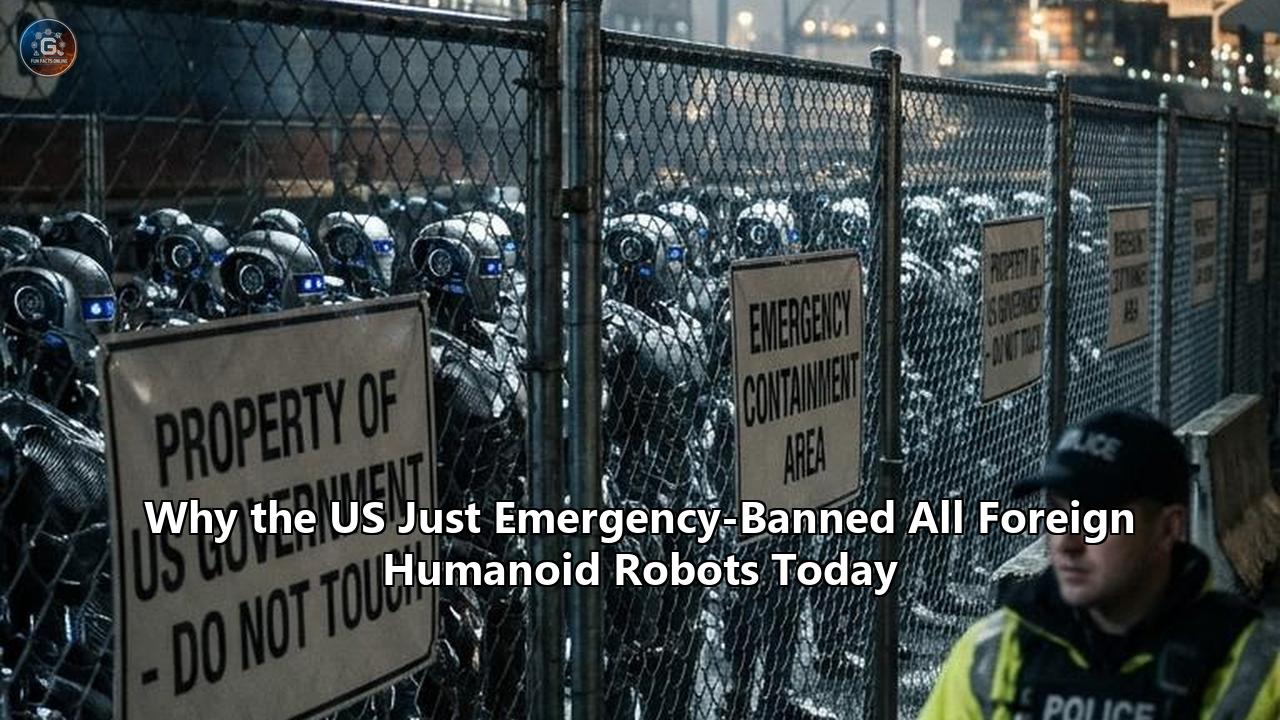
In a sweeping regulatory move that has sent shockwaves through the global technology sector, the Federal Communications Commission (FCC) issued an emergency order barring all new imports of foreign-made humanoid and quadruped robots into the United States.
The action, backed by a White House national security interagency determination, immediately places foreign advanced robotic devices on the FCC’s Covered List—the same regulatory mechanism previously used to ban telecommunications hardware from Huawei and commercial drones from DJI.
The ban halts the entry of fully assembled foreign humanoid robots, as well as units assembled on American soil if more than 35 percent of their components originate from foreign suppliers.
Exemptions are granted only for units already operating within the U.S. prior to the order and for specific defense deployments conditionally authorized by the Department of Defense or Department of Homeland Security. Alongside humanoids, the order extends to foreign-made, grid-connected power inverters—critical components used in renewable energy systems, industrial data centers, and battery storage networks.
┌────────────────────────────────────────────────────────────────────────────────────────┐
│                          FCC EMERGENCY COVERED LIST EXPANSION                          │
├───────────────────────────────┬────────────────────────────────────────────────────────┤
│ Target Scope                  │ New imports of foreign humanoid & quadruped robots     │
├───────────────────────────────┼────────────────────────────────────────────────────────┤
│ Domestic Assembly Threshold   │ Banned if foreign components exceed 35% of total value │
├───────────────────────────────┼────────────────────────────────────────────────────────┤
│ Primary Enforcement Mechanism │ FCC Equipment Authorization Revocation / Import Bar    │
├───────────────────────────────┼────────────────────────────────────────────────────────┤
│ Critical Infrastructure Rules │ Connected power inverters (solar, grid, data centers)  │
├───────────────────────────────┼────────────────────────────────────────────────────────┤
│ Legacy / Grandfather Status   │ Existing deployed models remain authorized      │
└───────────────────────────────┴────────────────────────────────────────────────────────┘
Federal regulators cited acute risks to national security, public safety, and supply chain integrity as the core rationale. Official determinations warned that mobile, internet-connected robots equipped with edge artificial intelligence, vision-language-action (VLA) models, high-resolution optical cameras, lidar, and acoustic arrays function as autonomous data-gathering platforms.
Regulators cautioned that malicious actors or foreign intelligence services could exploit these persistent edge connections to map sensitive U.S. industrial facilities, execute unauthorized surveillance, exfiltrate corporate intellectual property, or remotely commandeer physical hardware.
The immediate target of the directive is China’s rapidly expanding robotics industry. Chinese manufacturers currently account for an estimated 85 percent of global humanoid deployments, driven by aggressive state subsidies exceeding $20 billion and aggressive commercial scaling.
Companies such as Unitree Robotics, Agibot, UBTech, and Fourier Intelligence shipped over 15,000 humanoid units worldwide in 2025 alone. By contrast, leading U.S. developers—including Tesla, Figure AI, Boston Dynamics, and Agility Robotics—produced a combined total of fewer than 1,000 units over the same period, primarily focusing on pilot testing and controlled factory deployments.
Beijing responded swiftly to the announcement. Chinese Ministry of Foreign Affairs spokesperson Mao Ning characterized the action as an "abuse of national security concepts to suppress foreign competition," warning that the move would disrupt global supply chains and harm American enterprises.
The regulatory shockwave arrives just weeks before a scheduled diplomatic summit between President Donald Trump and Chinese President Xi Jinping, adding immense friction to an already fraught technological trade landscape.
National Security Mandate vs. Industrial Protectionism
The regulatory justification for the action relies on two distinct and competing philosophies: acute cybersecurity risk mitigation and strategic industrial policy. Understanding how these motivations intersect—and clash—is essential to evaluating the long-term impact of the decision.
The Cybersecurity Rationale: Physical Intelligence and Edge Vulnerabilities
From a pure cybersecurity standpoint, humanoid robots represent a fundamentally different category of risk than stationary servers or passive smart devices. Humanoid machines are designed to navigate unstructured human environments, open doors, operate industrial machinery, and interact directly with critical infrastructure. To accomplish these tasks, humanoids rely on dense sensor suites that continuously generate high-fidelity spatial telemetry:
- Spatial SLAM Mapping: Simultaneous Localization and Mapping algorithms aggregate optical, infrared, and lidar telemetry to construct real-time 3D vector maps of building interiors, industrial plant layouts, and defense research facilities.
- Audio-Visual Exfiltration: Onboard microphones and high-frame-rate cameras process human speech, proprietary engineering blueprints, and worker activity to feed edge-based multimodal AI models.
- Kinetic Threat Vectors: Unlike a compromised laptop or server, a compromised 150-pound, high-torque humanoid robot capable of lifting 50 pounds poses a direct physical hazard to human personnel and physical machinery.
National security officials argue that backdoors embedded in proprietary firmware, compressed neural network weights, or over-the-air (OTA) cloud updates could allow foreign state actors to exfiltrate spatial telemetry or execute remote kill-switches during periods of geopolitical crisis.
Because modern foundation models frequently ping cloud clusters for reinforcement learning updates and telemetry collection, ensuring a completely air-gapped system without degrading the robot’s operational intelligence has proven technically challenging.
                          DATA & CONTROL THREAT VECTOR
  ┌────────────────┐       Continuous Telemetry      ┌────────────────┐
  │ Humanoid Edge  ├────────────────────────────────►│ Foreign Cloud  │
  │ Robot (Sensor  │  Spatial Maps, Video, Audio     │ Server / OTA   │
  │ & VLA Engine)  │◄────────────────────────────────┤ Remote Command │
  └───────┬────────┘    Model Updates & Backdoors    └────────────────┘
          │
          │ Physical Kinetic Action
          ▼
  ┌──────────────────────────────────────────────────────────────────┐
  │ Industrial Facilities, Power Grids, & Defense Supply Chains      │
  └──────────────────────────────────────────────────────────────────┘
The Industrial Rationale: Shielding Domestic Manufacturing
Conversely, economic analysts and trade experts view the mandate through the lens of industrial policy and re-shoring initiatives. The aggressive price disruption driven by Chinese manufacturers threatened to lock U.S. robotic developers out of their own domestic market before their production lines could reach maturity.
Chinese robotics firms have achieved drastic cost reductions by leveraging mature local supply chains for harmonic reducers, brushless DC motors, lithium-ion battery cells, and precision sensors. Unitree’s G1 humanoid robot, for instance, entered the market at a retail price of approximately $16,000—a fraction of the $50,000 to $150,000 estimated unit cost for American alternatives like Agility Robotics' Digit or Figure AI's Figure 02.
| Feature / Metric | Chinese Mass-Production Model (e.g., Unitree G1, Agibot) | American High-Integration Model (e.g., Tesla Optimus, Figure 02) |
|---|---|---|
| Retail Price Point | $16,000 – $30,000 | $50,000 – $150,000+ (estimated) |
| Primary Target Market | Academia, light commercial, research, overseas export | Heavy manufacturing, automotive assembly, defense logistics |
| Supply Chain Origin | 90%+ localized Chinese components | Hybrid (U.S. silicon/software; imported magnets & actuators) |
| Deployment Scale (2025) | 12,000+ units globally | <1,000 units globally |
| Software Architecture | Hybrid open-source reference frameworks & custom cloud engines | Closed-loop proprietary neural networks (End-to-End VLA) |
By introducing the US humanoid robot ban, federal regulators have effectively created a protected domestic market. This wall grants U.S. robotics companies room to scale up manufacturing volume without competing against state-subsidized foreign hardware.
However, this protectionist shield creates immediate operational trade-offs for domestic enterprises, academic institutions, and AI developers who relied on low-cost foreign platforms to train physical AI models.
Technical Paradigms: Open Reference Designs vs. Proprietary Vertical Stacks
The divergence between foreign and domestic humanoid development extends beyond policy into the technical architecture of the hardware and software stacks. The ban directly impacts how physical AI is developed, deployed, and benchmarked across the industry.
                  HARDWARE & SOFTWARE STACK DIVERGENCE

  CHINA / FOREIGN APPROACH                 UNITED STATES APPROACH
┌─────────────────────────────────┐      ┌─────────────────────────────────┐
│ Open Reference Hardware         │      │ Vertically Integrated Hardware  │
│ (Unitree, Agibot, UBTech)       │      │ (Tesla Optimus, Figure AI)      │
├─────────────────────────────────┤      ├─────────────────────────────────┤
│ Modular Standardized Actuators  │  VS  │ Proprietary Custom Actuators    │
├─────────────────────────────────┤      ├─────────────────────────────────┤
│ Hybrid Open-Source Middleware   │      │ End-to-End Neural VLA Models    │
├─────────────────────────────────┤      ├─────────────────────────────────┤
│ Aggressive Low-Cost Hardware    │      │ High-Capital R&D & Domestic     │
│ Scaling ($16k Base Units)       │      │ Factory Deployment ($50k+)      │
└─────────────────────────────────┘      └─────────────────────────────────┘
The Foreign Model: Rapid Modular Scaling and Ecosystem Partnerships
Chinese humanoid developers have historically prioritized rapid hardware iteration, modular supply chains, and open software ecosystems. Rather than developing every joint, actuator, and board in-house, foreign manufacturers utilize standardized components produced by a dense network of specialized domestic suppliers.
This ecosystem approach enabled fast prototyping cycles and low production costs. It also fostered partnerships with major U.S. chipmakers.
In mid-2026, Nvidia revealed a humanoid robot reference design utilizing the physical chassis of China’s Unitree G1. By pairing American edge-AI silicon (such as the Jetson Thor platform) with Chinese physical hardware, global developers could rapidly deploy functional humanoids at low costs.
The FCC’s emergency action dismantles this hybrid model. Under the new rules, U.S. firms are prohibited from importing these integrated foreign chassis, forcing silicon providers and AI software developers to find domestic hardware partners or build their own physical platforms from scratch.
The U.S. Model: Proprietary Vertical Integration
Conversely, leading U.S. humanoid companies have pursued tight vertical integration. Tesla’s Optimus program, for example, designs its own rotary and linear actuators, custom structural elements, and proprietary sensor suites from the ground up. Figure AI and Boston Dynamics similarly focus on highly integrated, high-torque systems designed for rigorous industrial duty cycles.
  TRADITIONAL HYBRID MODEL (Now Restricted):
  [U.S. AI Chips & Software]  +  [Chinese Low-Cost Chassis]  ──► Fast Deployment
                                                                        │
  POST-BAN MANDATED MODEL:                                              │ (Blocked by FCC)
  [U.S. AI Chips & Software]  +  [U.S. Domestic Chassis]    ──► High Capital / Slower Ramp
While vertical integration produces specialized, high-performance machines, it demands massive upfront capital investments and extended development timelines.
The technical trade-off is clear: American humanoids feature higher structural payload capacities, advanced tactile manipulation, and tightly integrated end-to-end neural network architectures, but they remain prohibitively expensive for widespread research, small-scale logistics, and academic exploration.
Cybersecurity Architecture: The Air-Gap Dilemma
A central friction point highlighted by the regulatory action is whether modern AI-driven humanoids can ever be made fully secure while remaining functionally useful.
The Illusion of the Air-Gapped Humanoid
Proponents of foreign hardware imports argue that concerns over telemetry exfiltration and remote control can be mitigated through strict network controls and local deployment architectures:
- Air-Gapped Local Control: Disconnecting the robot’s onboard wireless telemetry from the wider internet and running all inferencing locally on edge compute chips.
- Firmware Inspection & Flashing: Replacing native foreign firmware with validated, open-source or domestically audited real-time operating systems (RTOS).
- Physical Data Diode Isolation: Implementing hardware-enforced unidirectionality on communication channels to ensure data cannot leave the facility.
However, national security agencies rejected these mitigation strategies as insufficient for advanced humanoid robotics.
Modern vision-language-action foundation models rely on continuous data ingestion and cloud computing to handle novel edge cases. A robot operating entirely offline rapidly runs into generalization limits when encountered with unfamiliar objects, altered physical layouts, or complex human commands.
Furthermore, security audits revealed that modern robotic platforms contain dozens of microcontrollers, sensor management boards, and power controllers—each running closed-source vendor microcode that could house dormant firmware exploits.
Kinetic Sabotage vs. Information Exfiltration
The security analysis highlights two distinct operational threat models: passive intelligence gathering and active kinetic disruption.
┌─────────────────────────────────────────────────────────────────────────┐
│                      TWO-FRONT ROBOTIC THREAT MODEL                     │
├────────────────────────────────────┬────────────────────────────────────┤
│ Passive Intelligence Gathering     │ Active Kinetic Disruption          │
├────────────────────────────────────┼────────────────────────────────────┤
│ • Continuous 3D LiDAR mapping of   │ • Remote commandeering during grid │
│   sensitive facility interiors     │   or supply chain crises    │
│ • Optical capturing of proprietary │ • Physical manipulation of control │
│   manufacturing techniques         │   valves, power switches, or lines │
│ • Acoustic recording of employee   │ • Causing direct physical damage   │
│   discussions & industrial processes│   to machinery or human personnel  │
└────────────────────────────────────┴────────────────────────────────────┘
While an airborne drone ban targets visual reconnaissance above a facility, a humanoid robot ban targets physical presence inside critical infrastructure. A fleet of compromised mobile robots inside an energy generation plant, automated semiconductor fab, or defense manufacturing hub represents a persistent, physically present vulnerability.
Immediate Impacts Across Key Sectors
The implementation of the US humanoid robot ban creates immediate operational disruption across multiple sectors of the domestic technology and manufacturing economy.
1. University Research and AI Development
Academic laboratories and AI startups are among the most severely impacted groups. For years, top-tier research universities—including MIT, Stanford, Carnegie Mellon, and UC Berkeley—relied on low-cost platforms like the Unitree H1 and G1 to train physical AI algorithms, reinforcement learning models, and dexterous manipulation framework models.
Because domestic U.S. humanoids were either commercially unavailable or cost over $100,000 per unit, foreign hardware provided an affordable foundation for academic research.
  IMPACT ON ACADEMIC & RESEARCH LABS
  ┌─────────────────────────────────┐      ┌─────────────────────────────────┐
  │ PRE-BAN ENVIRONMENT             │      │ POST-BAN ENVIRONMENT            │
  ├─────────────────────────────────┤      ├─────────────────────────────────┤
  │ • Sub-$20,000 foreign chassis   │  ──► │ • High-cost U.S. hardware only  │
  │ • Broad student accessibility   │      │ • Budget constraints limit fleet│
  │ • Rapid empirical benchmarking  │      │ • Reliance on simulation (Sim2Real)│
  └─────────────────────────────────┘      └─────────────────────────────────┘
With imports blocked, research labs face budget constraints. While existing models are grandfathered in, researchers cannot acquire next-generation foreign hardware or replacement components for hardware testing.
This shortfall threatens to push U.S. academic research away from real-world physical testing and back toward simulation environments (Sim2Real), potentially slowing American progress in physical AI software development.
2. Enterprise Warehousing and Manufacturing
Logistics giants and industrial manufacturers face immediate strategic recalibrations. Several major U.S. supply chain operators had initiated pilot programs featuring foreign quadruped and humanoid robots for automated inventory tracking, physical inspection, and material transport.
The sudden import bar leaves these enterprise adopters with three options:
- Accelerate Procurement of U.S. Alternatives: Transitioning pilot programs to domestic suppliers like Agility Robotics (Digit) or Boston Dynamics (Stretch/Atlas), accepting higher capital expenditure per unit.
- Apply for Federal Waivers: Attempting to navigate complex exemption pathways managed by the Department of Homeland Security or Department of War—a process largely restricted to defense-adjacent facilities.
- Delay Automation Deadlines: Postponing physical automation deployments until U.S. production volumes scale up and prices stabilize.
3. Domestic Robotics OEMs and Component Manufacturers
For domestic manufacturers like Tesla, Figure AI, Agility Robotics, and Apptronik, the ban removes low-cost foreign competition from the domestic market. However, it also exposes critical U.S. supply chain dependencies.
Even humanoids assembled within the United States rely heavily on global supply chains for core sub-assemblies:
- Neodymium Rare-Earth Magnets: Essential for high-torque-density electric motors, with over 80 percent of global refined supply controlled by China.
- Precision Strain-Wave (Harmonic) Reducers: Sourced primarily from specialized suppliers in Japan and China.
- High-Density Lithium/Solid-State Battery Cells: Highly concentrated in East Asian manufacturing hubs.
Because the FCC order restricts units assembled domestically if foreign components exceed 35 percent of total value, U.S. robot manufacturers must conduct immediate audits of their bill of materials (BOM).
Domestic robotics firms face the dual challenge of scaling production while rapidly re-shoring their component supply chains to comply with the 35 percent threshold.
┌──────────────────────────────────────────────────────────────────────────┐
│                   HUMANOID ROBOT BILL OF MATERIALS (BOM)                 │
├──────────────────────────────────────┬───────────────────────────────────┤
│ Component Category                   │ Supply Chain Dependency Risk      │
├──────────────────────────────────────┼───────────────────────────────────┤
│ Rare-Earth Magnets (Neodymium)       │ High (80%+ Chinese processing)    │
├──────────────────────────────────────┼───────────────────────────────────┤
│ Precision Harmonic Drives/Reducers   │ Moderate-High (Japan/China focus) │
├──────────────────────────────────────┼───────────────────────────────────┤
│ High-Density Battery Cells           │ Moderate (East Asia concentrated) │
├──────────────────────────────────────┼───────────────────────────────────┤
│ Edge AI Compute Chips                │ Low (U.S. designed / Taiwan fab)  │
├──────────────────────────────────────┼───────────────────────────────────┤
│ Structural Castings & Frame          │ Low (Domestic sourcing available) │
└──────────────────────────────────────┴───────────────────────────────────┘
Comparing Global Regulatory Frameworks
The imposition of the US humanoid robot ban highlights a growing global divergence in how nations regulate advanced robotics, artificial intelligence, and hardware supply chains.
┌──────────────────────────────────────────────────────────────────────────────┐
│                    GLOBAL REGULATORY APPROACHES TO ROBOTICS                  │
├─────────────────┬────────────────────────────────────────────────────────────┤
│ Jurisdiction    │ Regulatory Framework & Strategic Philosophy                │
├─────────────────┼────────────────────────────────────────────────────────────┤
│ United States   │ • National Security / Protectionist Trade Focus            │
│                 │ • Total Import Bans via FCC Covered List            │
│                 │ • Strict Component Thresholds (35% rule)           │
├─────────────────┼────────────────────────────────────────────────────────────┤
│ European Union  │ • Risk-Based Safety & Data Compliance                      │
│                 │ • EU AI Act & Machinery Directive Certification            │
│                 │ • Vendor-Neutral Operational & GDPR Assessments            │
├─────────────────┼────────────────────────────────────────────────────────────┤
│ China           │ • State-Subsidized Aggressive Global Scaling               │
│                 │ • $20B+ Provincial Industry Development Funds     │
│                 │ • Open Hardware & Rapid Export Expansion    │
└─────────────────┴────────────────────────────────────────────────────────────┘
The United States: Absolute Security and Industrial Protectionism
Washington’s strategy relies on national security directives, import bans, export controls, and aggressive component localizations. By treating physical AI hardware as critical dual-use infrastructure, the U.S. government prioritizes total risk elimination over immediate commercial cost efficiency.
This model mirrors previous regulatory actions taken against Chinese telecommunications equipment (Huawei/ZTE) and uncrewed aerial systems (DJI).
The European Union: Risk Classification and Safety Compliance
The European Union has adopted a risk-based framework centered on the EU Artificial Intelligence Act and the updated Machinery Regulation. Rather than issuing broad geopolitical bans on specific foreign nations, European regulators assess humanoid robotics based on functional risk tiers, functional safety standards, and strict GDPR data-handling compliance.
- Tradeoffs: European enterprises retain access to lower-cost foreign humanoid hardware, allowing for faster commercial adoption in warehousing and manufacturing.
- Vulnerabilities: European infrastructure remains exposed to potential supply chain lock-in and foreign data exfiltration risks that Washington seeks to prevent.
China: State-Directed Scaling and Open Hardware Ecosystems
Beijing’s strategy centers on aggressive scale, heavy provincial state funding, and building international hardware standards. China’s Ministry of Industry and Information Technology (MIIT) designated humanoid robots as a key strategic growth driver, establishing dedicated industrial parks in Shanghai, Shenzhen, and Beijing.
Blocked from entering the U.S. market, Chinese robotics manufacturers are pivoting their export strategies toward Europe, Southeast Asia, the Middle East, and Latin America.
This split threatens to bifurcate the global robotics landscape into two distinct technology spheres: an isolated, high-cost American ecosystem and a interconnected, low-cost foreign ecosystem powered by Chinese hardware platforms.
Power Inverters: The Parallel Energy Grid Security Ban
While public attention has focused heavily on humanoid and quadruped robots, the FCC’s order includes an equally consequential ban on foreign-made, connected power inverters. This addition highlights a crucial aspect of national security policy: protecting the energy backbone that powers AI data centers and critical industrial facilities.
                           POWER GRID THREAT VECTOR
  ┌──────────────────┐     Grid Connection & Control     ┌──────────────────┐
  │ Solar Panels /   ├──────────────────────────────────►│ Connected Power  │
  │ Battery Systems  │                                   │ Inverter (DC/AC) │
  └──────────────────┘                                   └────────┬─────────┘
                                                                  │
                                   Remote Shutdown /              │ Telemetry &
                                   Frequency Instability          │ Cloud Commands
                                                                  ▼
                                                         ┌──────────────────┐
                                                         │ Foreign Cloud /  │
                                                         │ Cyber Attackers  │
                                                         └──────────────────┘
Why Power Inverters are Critical to AI and National Security
Power inverters convert direct current (DC) electricity generated by solar arrays, wind turbines, and industrial battery banks into alternating current (AC) electricity used by the electrical grid, manufacturing plants, and high-density AI data centers.
Modern inverters are no longer passive electrical transformers; they are complex, internet-connected edge devices running real-time software designed to manage grid stability, load balancing, and energy storage telemetry.
National security agencies warned that foreign-made, grid-connected inverters present severe systemic risks:
- Remote Power Disruption: Cyberattackers or state actors exploiting firmware backdoors could remotely shut down thousands of inverters simultaneously, causing wide-scale frequency instability, localized blackouts, or grid crashes.
- Targeting Data Center Infrastructure: Modern AI training clusters require gigawatts of power managed by high-capacity inverters. Disrupting power quality or forcing sudden shutdowns at key data facilities could degrade or halt critical computing operations.
- Industrial Supply Chain Dominance: China currently controls a dominant share of global solar and battery inverter manufacturing. By banning new imports of foreign-made connected inverters, Washington aims to force data center operators and renewable energy developers to transition to domestic power hardware.
Comparing the two targeted technologies underscores Washington's regulatory vision: while humanoid robots represent mobile threats inside physical facilities, connected power inverters represent systemic threats to the energy grid powering those facilities.
Forward-Looking Perspective: Strategic Implications and Unresolved Questions
The emergency implementation of the US humanoid robot ban marks a major turning point in global industrial policy, technology trade, and artificial intelligence governance.
By moving from software export controls to physical hardware import blockades, Washington has signaled that physical AI will be governed under the strictest national security framework.
┌─────────────────────────────────────────────────────────────────────────────┐
│                       CRITICAL MILESTONES TO WATCH                          │
├───────────────────────────────────┬─────────────────────────────────────────┤
│ Milestone                         │ Operational Significance                │
├───────────────────────────────────┼─────────────────────────────────────────┤
│ Q3 2026 Trump-Xi Bilateral Summit │ Potential trade retaliations or rare-   │
│                                   │ earth export restrictions │
├───────────────────────────────────┼─────────────────────────────────────────┤
│ DoD / DHS Exemption Mechanism     │ Clearer criteria for defense waivers    │
│ Rollout                           │ and research facility approvals │
├───────────────────────────────────┼─────────────────────────────────────────┤
│ Domestic BOM Audits (35% Rule)    │ U.S. robot makers restructuring supply │
│                                   │ chains for sub-components       │
├───────────────────────────────────┼─────────────────────────────────────────┤
│ EU AI Act Robotics Certifications │ Divergence between U.S. and European    │
│                                   │ enterprise robot adoption rates         │
└───────────────────────────────────┴─────────────────────────────────────────┘
Key Milestones and Unresolved Questions
As the regulatory framework takes hold over the coming months, several critical factors will determine whether this policy succeeds in building a secure domestic robotics industry or inadvertently stalls American physical AI innovation:
- The Component Audit Challenge: How rigorously will federal authorities enforce the 35 percent foreign component rule on domestic assembly lines? If domestic robotic developers cannot secure rare-earth magnets, harmonic drives, and specialized sensor modules from non-restricted nations, production schedules for American humanoids could stall.
- The Research & Academic Divide: Will federal agencies establish clear, streamlined waiver frameworks for university robotics labs? Without affordable physical platforms for testing, U.S. computer science programs risk losing ground in physical AI algorithmic training to foreign institutions operating with lower hardware costs.
- Potential Retaliatory Countermeasures: Beijing’s warning that it will "take all necessary measures" to defend its industries raises the threat of targeted retaliatory actions. Should China restrict the export of critical rare-earth elements or specialized motor components, U.S. robotics and electric vehicle manufacturers could face severe supply disruptions.
- The September 2026 Summit Backdrop: With President Donald Trump scheduled to meet Chinese leader Xi Jinping in September, the emergency robot ban provides significant diplomatic leverage—while simultaneously raising the stakes for bilateral trade negotiations.
The regulatory barrier is now firmly in place. The burden now shifts to domestic technology companies, venture capital investors, and industrial manufacturers to demonstrate that American robotics can scale quickly, lower production costs, and secure critical supply chains without relying on cheap foreign hardware.
Whether this emergency action triggers a rapid domestic manufacturing revival or exposes the deep vulnerabilities of a fragmented global technology market remains the defining question for the future of physical artificial intelligence.
References
Saudi Gazette / Agencies. "US announces ban on foreign-made humanoid robots over national security risks." Saudi Gazette, July 29, 2026.
Bangkok Post / AFP. "US blocks imports of foreign humanoid robots targeting Chinese suppliers." Bangkok Post, July 29, 2026.
Tech2 News Staff. "US government bans imports of Chinese humanoid robots citing cybersecurity risks." Tech2, July 29, 2026.
Associated Press / Ho-Him, Chan. "US bans foreign-made humanoid robots, targeting China over national security." Associated Press / Daily Journal, July 29, 2026.
Sri Lanka Guardian / Tech Policy Desk. "US Bans Imports of New Humanoid Robots in Security-Focused Move Targeting China." Sri Lanka Guardian, July 29, 2026.
Humanoid Guide / CNN Wire. "US bans humanoid robot imports from foreign makers citing national security risks." Humanoid Guide, July 29, 2026.
CNN / KQ2 News. "Trump Administration bans foreign-made humanoid robot imports." CNN / KQ2, July 29, 2026.
The Robot Report. "FCC restricts imports of foreign humanoid robots and power inverters." The Robot Report, July 29, 2026.
Los Angeles Times / AP. "US bans foreign-made humanoid robots, power inverters." Los Angeles Times, July 29, 2026.
Al Jazeera News. "US bans imports of Chinese humanoid robots and power equipment." Al Jazeera, July 29, 2026.
The Hans India. "The U.S. is banning Chinese humanoid robots over cybersecurity threats." The Hans India, July 29, 2026.
Courthouse News Service / AP. "US bans foreign-made humanoid robots." Courthouse News Service, July 29, 2026.
Humanoid Guide / Daily Signal. "Policy Analysis: Regulatory Mechanisms for Foreign Humanoid Robots on the FCC Covered List." Humanoid Guide, July 22, 2026.
Engadget / Bell, Karissa. "The US is banning foreign-made humanoid robots and power inverters." Engadget, July 28, 2026.
MyNorthwest / AP. "US bans foreign humanoid robots in move targeting Chinese manufacturers." MyNorthwest, July 29, 2026.
Associated Press / Ho-Him, Chan. "US Federal Communications Commission bans new foreign-made humanoid robots." AP / 2News, July 29, 2026.
The Guardian / Kerr, Dara. "US bans humanoid robots from China, citing 'unacceptable risks'." The Guardian, July 28, 2026.
Reference:
- https://saudigazette.com.sa/article/663323/technology/trump-administration-bans-new-chinese-humanoid-robots
- https://humanoid.guide/us-bans-new-humanoid-robot-imports-from-foreign-makers/
- https://www.kq2.com/cnn-business-consumer/2026/07/29/chinas-humanoid-robots-have-been-taking-over-the-global-market-now-the-us-is-banning-them/
- https://www.bangkokpost.com/world/3293347/us-government-bans-humanoid-robots-manufactured-abroad
- https://www.therobotreport.com/industry-reacts-fcc-ban-u-s-imports-new-humanoid-quadruped-robots/
- https://slguardian.org/us-bans-imports-of-new-humanoid-robots-in-security-focused-move-targeting-china/
- https://www.engadget.com/2225693/the-us-is-banning-foreign-made-humanoid-robots-and-power-inverters/
- https://humanoid.guide/ban-call-puts-chinese-humanoid-robots-in-u-s-policy-fight/
- https://dailyjournal.net/2026/07/29/us-bans-foreign-made-humanoid-robots-targeting-china-over-national-security/
- https://www.courthousenews.com/us-bans-foreign-made-humanoid-robots-targeting-china-over-national-security/
- https://www.latimes.com/business/story/2026-07-29/u-s-bans-foreign-made-humanoid-robots-targeting-china-over-national-security
- https://www.aljazeera.com/economy/2026/7/29/us-bans-imports-of-new-chinese-robots-over-security-concerns
- https://www.thehansindia.com/technology/tech-news/us-bans-chinese-humanoid-robots-on-national-security-grounds-1102686
- https://mynorthwest.com/world/us-bans-foreign-made-humanoid-robots-targeting-china-over-national-security/4261257
- https://www.2news.com/news/national/us-bans-foreign-made-humanoid-robots-targeting-china-over-national-security/article_17796052-157e-5954-bb11-7855f5b94bd8.html
- https://www.tech2.com/technology/us-govt-bans-humanoid-robots-to-counter-cyber-intelligence-threat-text-ws-el-10240018.html
- https://www.theguardian.com/us-news/2026/jul/28/fcc-ban-humanoid-robots-china