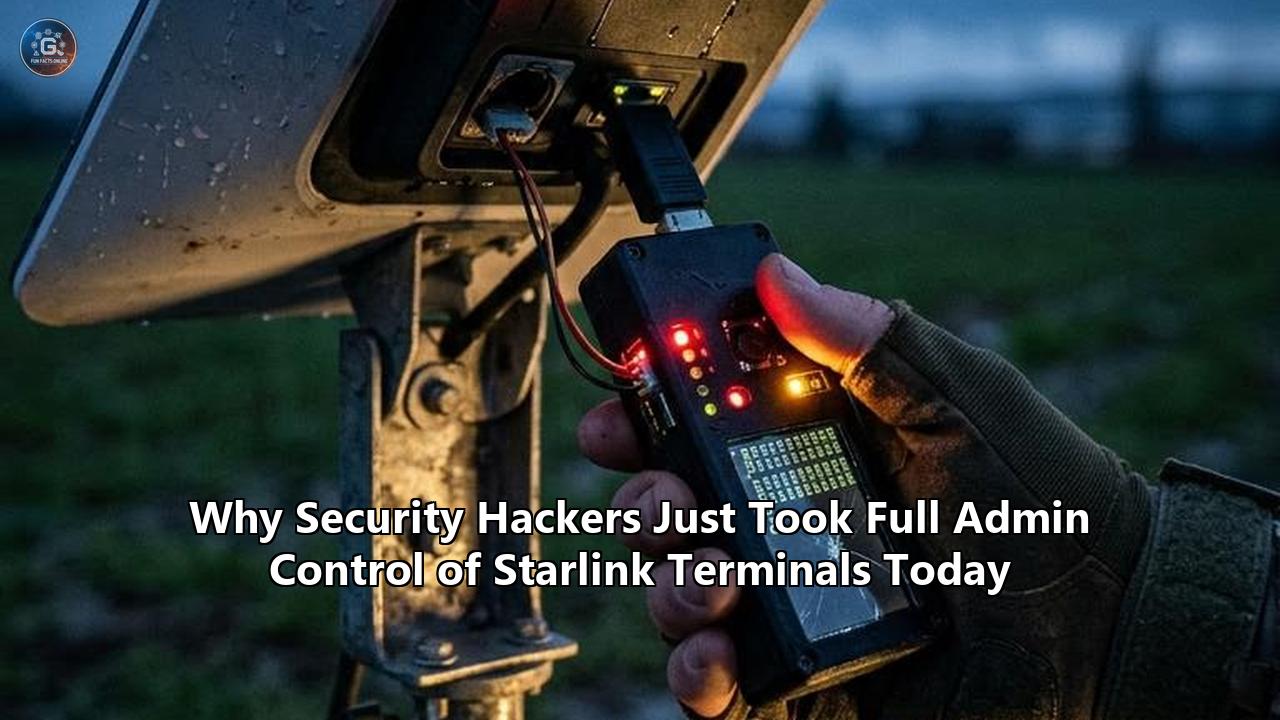
Security researchers have succeeded in seizing absolute administrative root control over SpaceX’s latest hardened Starlink user terminals, puncturing the silicon-level cryptographic defenses protecting the world’s largest satellite broadband network. By executing precision hardware-level fault injection attacks against the terminal’s central System-on-Chip (SoC), security engineers bypassed the device’s hardware root-of-trust, bypassed signature verification in the primary bootloader, and gained an unrestricted interactive root shell on the underlying Linux operating system.
The development represents a major escalation in hardware reverse engineering. While SpaceX spent several hardware iterations attempting to seal physical debug channels, burn internal eFuses, and obscure sensitive circuit board traces, the exploit proves that local physical access to the dish’s printed circuit board remains an unpatched doorway into the system’s lowest software layers.
This breach does not just expose the local terminal sitting on a user’s roof. By granting unrestricted administrative access to the phased-array transceiver, the exploit allows researchers to inspect proprietary radio-frequency (RF) drivers, dissect low-level satellite uplink protocols, analyze raw beamforming control code, and interrogate the cryptographic handshakes exchanged between Earth and low Earth orbit (LEO).
Understanding why this attack succeeds—and why SpaceX cannot easily remediate it across millions of deployed consumer, enterprise, and military dishes—requires examining the intersection of semiconductor physics, embedded cryptographic boot chains, advanced RF phased-array engineering, and orbital network design.
                     ┌───────────────────────────────────────────────┐
                     │          STARLINK TERMINAL ATTACK FLOW        │
                     └───────────────────────────────────────────────┘

 ┌───────────────────────────┐      Voltage Glitch      ┌───────────────────────────┐
 │   Quad-Core Cortex-A53    │◄─────────────────────────┤ Modchip / Glitcher Circuit│
 │      Boot ROM (BL1)       │  (Targeted Core VCC Drop)│  (Microcontroller + FET)  │
 └─────────────┬─────────────┘                          └───────────────────────────┘
               │
               │  [Fault Induced: Signature Check Instruction Skipped]
               ▼
 ┌───────────────────────────┐
 │   BL2 / Trusted Firmware  │ ──► Cryptographic signature verification bypassed
 └─────────────┬─────────────┘
               ▼
 ┌───────────────────────────┐
 │  Custom BL33 / U-Boot     │ ──► Attacker-controlled bootloader initialized
 └─────────────┬─────────────┘
               ▼
 ┌───────────────────────────┐
 │ Linux Kernel & Root Shell │ ──► Complete administrative takeover (SoC control)
 └─────────────┬─────────────┘
               │
      ┌────────┴────────────────────────────────────────┐
      ▼                                                 ▼
┌───────────────────────────┐                     ┌───────────────────────────┐
│ Phased Array Beamformers  │                     │ Local Runtime & Telemetry │
│ (1,200+ Patch Elements)   │                     │ (gRPC, Slate Sharing, GPS)│
└───────────────────────────┘                     └───────────────────────────┘
The Anatomy of the Fault: How Voltage Glitching Breaks Secure Boot
To understand how security researchers seized control of the device, one must look past standard software vulnerabilities like memory corruptions or buffer overflows. The vulnerability exploited in this Starlink security hack operates at the physical hardware layer through a technique known as Voltage Fault Injection (VFI).
Normal Clock / VCC:
Clock:  │   │   │   │   │   │   │   │   │   │   │
VCC:   ═══════════════════════════════════════════ (Stable 1.0V)
Logic: [ Fetch ] [ Decode ] [ CMP Signatures ] [ Branch if Equal ]

Glitched VCC (The Fault Attack):
Clock:  │   │   │   │   │   │   │   │   │   │   │
VCC:   ═══════════════╲_______/═══════════════════ (Glitch: Drop to ~0.3V for 10-50ns)
Logic: [ Fetch ] [ Decode ] [   CORRUPTED    ] [ Instruction Skipped / Forced Branch ]
                                 └─► Execution continues despite invalid signature!
The Boot Chain Architecture
The Starlink user terminal (designated internally by SpaceX engineering as the "Catson" architecture) relies on an ARM-based System-on-Chip containing a quad-core ARM Cortex-A53 central processor. To protect the device from unauthorized firmware modifications, SpaceX implements the industry-standard ARM Trusted Firmware-A (TF-A) secure boot pipeline:
- BL1 (Boot ROM): An immutable, read-only sequence of machine instructions permanently masked into the silicon during semiconductor manufacturing. Its sole responsibility is to initialize basic hardware, load the second-stage bootloader (BL2) from external eMMC flash memory into on-chip Static RAM (SRAM), cryptographically verify the digital RSA/ECDSA signature of BL2 against public keys burned into the SoC's hardware fuses, and jump execution to BL2.
- BL2 (Trusted Boot Firmware): Executes in high-privilege Secure World, initializes dynamic random-access memory (DRAM), loads and validates subsequent images, including the EL3 Runtime Software (BL31) and the non-secure world bootloader.
- BL33 (U-Boot): The open-source Universal Boot Loader, heavily customized by SpaceX to configure device trees and launch the kernel.
- Linux Kernel (EL0/EL1): The core operating system managing local hardware, networking stacks, and real-time beamforming tasks.
Under normal operation, if an attacker tampers with a single bit of the firmware stored in the flash memory, the BL1 Boot ROM detects a cryptographic signature mismatch during SHA-256 calculation and RSA/ECDSA verification. When verification fails, the SoC halts execution immediately, turning the dish into an inoperable brick until rebooted with authentic, SpaceX-signed code.
The Physics of Voltage Starvation
A digital semiconductor processor is fundamentally an intricate network of hundreds of millions of complementary metal-oxide-semiconductor (CMOS) field-effect transistors. When an ARM Cortex-A53 core executes an assembly instruction—such as CMP (compare) or B.EQ (branch if equal)—internal logic gates must transition between high and low voltage states (representing binary 1s and 0s) within precise nanosecond timing windows governed by the system clock oscillator.
                  +----------------------------------------------+
                  |      TRANSISTOR PROPAGATION DELAY BEHAVIOR   |
                  +----------------------------------------------+

    V_core (1.0V) ───────┐
                         │  Normal Operation: Gate transitions complete within clock cycle
    V_logic (High) ──────┴────────┐
                                  ▼
    Output State:      [ Bit Verified: Valid ]

    V_core (Glitched) ──┐
                        │   Glitch Event: Propagation delay increases; setup time violated
    V_logic (Dropped) ──┴───┐
                            ▼
    Output State:      [ Latch Failure: Bit Mismatch / Instruction Skipped ]
When the voltage supply ($V_{DD}$) powering the CPU core drops suddenly below operating thresholds for a duration of tens of nanoseconds, the electrical characteristics of the CMOS transistors change instantly:
- Propagation delays through combinational logic paths spike dramatically.
- Output signals fail to settle before the next clock edge arrives (violating register setup-and-hold time requirements).
- The processor's internal state registers latch incorrect data.
Hardware hackers exploit this physical reality by attaching a custom-built interposer board—a "modchip"—directly onto the Starlink printed circuit board (PCB). The modchip utilizes a fast MOSFET switch controlled by a low-cost microcontroller (such as an RP2040).
By monitoring the communication lines between the SoC and the eMMC flash memory (specifically listening on the eMMC_CMD or eMMC_D0 data lines), the modchip detects the exact microsecond when the BL1 Boot ROM reads the BL2 firmware image into memory and begins validating the cryptographic signature.
At that precise moment, the modchip's MOSFET shorts the SoC's core power rail directly to ground for a window of roughly 20 to 50 nanoseconds. The resulting transient voltage drop prevents the CPU from evaluating the conditional branch instruction that checks whether the cryptographic signature matched.
Instead of jumping to an error state and halting, the processor's program counter simply rolls over to the next instruction in memory, blindly executing the unauthenticated, attacker-modified BL2 firmware.
Once BL2 is modified, the rest of the secure boot chain collapses like a house of cards:
- BL2 loads a modified U-Boot (BL33) that re-enables debugging interfaces.
- U-Boot boots a custom Linux kernel image.
- The kernel mounts the root filesystem with full administrative (UID 0) privileges, spawning an unrestricted interactive root shell over serial or Ethernet.
Inside "Dishy McFlatface": The Phased-Array Supercomputer
To comprehend what an administrative compromise of a Starlink terminal unlocks, one must dismantle the common misconception that the dish is merely a simple satellite receiver like a television dish.
The Starlink User Terminal (UT) is an advanced, high-performance edge computer mated directly to an Active Electronically Scanned Array (AESA)—a radar technology that was previously restricted almost entirely to fifth-generation fighter aircraft like the F-22 and naval missile defense systems like Aegis.
                 +-------------------------------------------------------+
                 |       STARLINK USER TERMINAL HARDWARE ARCHITECTURE    |
                 +-------------------------------------------------------+

                                  Ku-Band RF Array (10.7 - 14.5 GHz)
                 ┌────────────────────────────────────────────────────────┐
                 │  [Patch 1]   [Patch 2]   [Patch 3] ... [Patch 1,200+]  │
                 └──────┬───────────┬───────────┬──────────────┬──────────┘
                        │           │           │              │
                 ┌──────▼───────────▼───────────▼──────────────▼──────────┐
                 │        Front-End Modules (FEMs - Codename "Pulsar")    │
                 │     Integrated LNAs, PAs, and Analog Phase Shifters    │
                 └──────────────────────────────┬─────────────────────────┘
                                                │
                 ┌──────────────────────────────▼─────────────────────────┐
                 │       Digital Beamformers (Codename "Shiraz")          │
                 │      Complex Baseband Summing & Amplitude Weighting    │
                 └──────────────────────────────┬─────────────────────────┘
                                                │ (I/Q Baseband Interface)
                 ┌──────────────────────────────▼─────────────────────────┐
                 │          Custom System-on-Chip (SpaceX Catson)         │
                 │  ┌──────────────────────────────────────────────────┐  │
                 │  │ Core 0: Linux OS & Ut_control Orchestrator       │  │
                 │  │ Core 1: Lower-MAC RX (Demodulation Engine)       │  │
                 │  │ Core 2: Lower-MAC TX (Modulation Engine)         │  │
                 │  │ Core 3: PhyFW, RF Calibration & Hardware IRQs    │  │
                 │  └──────────────────────────────────────────────────┘  │
                 │      eMMC Storage  │  DDR4 RAM  │  STSAFE Crypto Chip   │
                 └──────────────────────┬─────────────────────────────────┘
                                        │
                 ┌──────────────────────▼─────────────────────────────────┐
                 │  Power-Over-Ethernet (PoE) & Step-Down Power Subsystem │
                 └────────────────────────────────────────────────────────┘
The Physics of Electronic Beam Steering
Traditional satellite dishes rely on curved parabolic reflectors that must be pointed mechanically at a fixed geostationary satellite sitting 35,786 kilometers above the equator. Starlink operates in Low Earth Orbit at an altitude of roughly 550 kilometers. At this low altitude, satellites are not stationary relative to the ground; they whip across the sky at approximately 27,000 kilometers per hour (7.5 kilometers per second).
A user dish must lock onto a satellite, track it across its field of view, and seamlessly hand off the multi-hundred-megabit data link to another satellite rising above the horizon every 3 to 5 minutes—all within milliseconds to avoid dropping packets.
Physical motors cannot move quickly or reliably enough to sustain continuous mechanical tracking 24 hours a day for years on end. Instead, the dish uses an array of roughly 1,200 microstrip patch antennas arranged in a dense hexagonal lattice across the face of the circuit board.
Constructive Wavefront Formation (Phase-Shift Array):

Element 1:  ───( Phase: 0°   )───►  \
Element 2:  ───( Phase: 30°  )───►   \  Wavefront forms at Angle θ
Element 3:  ───( Phase: 60°  )───►    \  (Constructive Interference)
Element 4:  ───( Phase: 90°  )───►     \
                                        ▼
                                 [ Directed Beam to LEO Satellite ]
The terminal steers its radio beam entirely through constructive and destructive wave interference. By shifting the relative phase ($\Delta\phi$) of the electromagnetic signal feeding each individual antenna patch, the radio waves emitted by all 1,200 patches combine coherently along a single narrow vector while canceling each other out in all other directions:
$$\Delta\phi = \frac{2\pi}{\lambda} \cdot d \cdot \sin(\theta)$$
Where:
- $\lambda$ is the carrier wavelength in the Ku-band (spanning 10.7 to 12.7 GHz for downlink and 14.0 to 14.5 GHz for uplink).
- $d$ is the geometric spacing between antenna elements.
- $\theta$ is the steered pointing angle relative to the dish face.
To achieve this in real time, the main SpaceX SoC interfaces with dozens of proprietary beamformer integrated circuits (codenamed "Shiraz") distributed across the PCB. These beamformers connect to front-end modules (codenamed "Pulsar") that house low-noise amplifiers (LNAs), power amplifiers (PAs), and precision analog phase shifters.
The Dedicated Multi-Core Compute Allocation
Controlling 1,200 RF transceivers while processing hundreds of megabits of high-frequency data demands serious compute power. SpaceX engineered the custom quad-core Catson processor by dedicating individual CPU cores to strict real-time hardware execution:
| Processor Core | Dedicated Subsystem | Operational Responsibility |
|---|---|---|
| Core 0 | Operating System / Orchestration | Runs standard Linux kernel tasks, user-space management daemons, configuration parsers, and system telemetry. |
| Core 1 | Lower-MAC RX Engine | Handles real-time reception pipelines, physical channel framing, baseband error correction, and symbol decoding. |
| Core 2 | Lower-MAC TX Engine | Manages real-time transmission scheduling, uplink frame assembly, orthogonal frequency-division multiplexing (OFDM) symbol formatting, and power control. |
| Core 3 | PhyFW & Utility Hardware | Dedicated to direct hardware interrupts, dynamic RF calibration routines, phase-shifter alignment matrices, and temperature compensation. |
When security hackers execute an administrative takeover of this environment, they gain unmediated control over every one of these cores.
Software Architecture: What Hackers Expose at Root Level
Achieving root access strips away the black box surrounding Starlink’s runtime environment. Firmware reverse engineering conducted by researchers has laid bare the complex internal messaging and control architecture that orchestrates the terminal's operation.
                 +-------------------------------------------------------+
                 |            STARLINK USER TERMINAL RUNTIME MAP         |
                 +-------------------------------------------------------+

                                  User / LAN Network
                                          │
                                          ▼
                               ┌─────────────────────┐
                               │  gRPC API (Port 9200)│
                               │   Frontend Service  │
                               └──────────┬──────────┘
                                          │
                                          ▼
                        ┌───────────────────────────────────┐
                        │    ut_control (Master Daemon)     │
                        └───────┬───────────┬───────────┬───┘
                                │           │           │
         ┌──────────────────────┘           │           └──────────────────────┐
         │ (Slate UDP IPC)                  │ (Slate UDP IPC)                  │ (Slate UDP IPC)
         ▼                                  ▼                                  ▼
┌─────────────────┐                ┌─────────────────┐                ┌─────────────────┐
│     phyfw       │                │     rx_lmac     │                │     tx_lmac     │
│ RF Calibration, │                │ Downlink Baseband│                │ Uplink Framing, │
│ Thermal Control │                │ Frame Processing│                │ Power Balancing │
└─────────────────┘                └─────────────────┘                └─────────────────┘
The "Slate Sharing" Inter-Process Protocol
Unlike typical consumer routers that rely on standard POSIX sockets or Unix domain sockets for process coordination, Starlink runs a custom, high-speed inter-process communication (IPC) protocol called "Slate Sharing".
- Architecture: The master orchestrator daemon, ut_control, acts as the central router. Subordinate binaries—such as phyfw (physical firmware), rx_lmac (receive medium access control), tx_lmac (transmit MAC), and umac (upper MAC)—do not communicate directly with each other.
- Transport: All processes bind to dedicated UDP ports on the internal loopback interface (127.0.0.1).
- Structure: Messages are serialized binary structures containing error-correcting code (ECC) blocks. Each block begins with a distinct header magic number, followed by typed parameter payloads (such as boolean switches for antenna stowing, floating-point calibration factors, thermal readings, and satellite orbital ephemeris tables).
By obtaining root access, an attacker can monitor, spoof, or manipulate these UDP loopback datagrams in real time. An attacker can inject arbitrary control packets into tx_lmac, forcing the transmitter to alter its frequency offsets, manipulate power-spectral-density limits, or override regional geofencing mechanisms that prevent the terminal from broadcasting in unauthorized airspace or territories.
Local API Exposure and the gRPC Interface
Beyond the internal loopback bus, Starlink user terminals run a local Google Remote Procedure Call (gRPC) service accessible over the local area network on TCP port 9200 (or via HTTP JSON translation on port 9201).
// Extracted representation of Starlink Device Service Protobuf
syntax = "proto3";
package SpaceX.API.Device;

service Device {
  rpc Handle (Request) returns (Response);
}

message Request {
  uint64 id = 1;
  string target_id = 13;
  oneof request {
    RebootRequest reboot = 1001;
    DishStowRequest dish_stow = 2002;
    DishGetContextRequest dish_get_context = 2003;
    DishSetEmcRequest dish_set_emc = 2007;
    DishGetHistoryRequest dish_get_history = 2006;
  }
}
Security audits of the terminal firmware revealed that this gRPC management interface had critical authorization flaws. Because the interface was designed under the assumption that only the authenticated Starlink mobile application or local router would interact with it, several sensitive administrative endpoints lacked strict permission checks:
- Unauthenticated Administrative Actions: Attackers on the local network could send raw serialized protobuf payloads over HTTP to trigger physical dish movements (e.g., executing a DishStowRequest, forcing the motors to tilt the dish into its vertical storage position and immediately dropping satellite communication).
- Telemetry and Location Leaks: Endpoints such as dish_get_context and dish_get_history leak high-precision GPS coordinates, internal temperature logs, spatial elevation/azimuth orientation data, and active satellite tracking metadata without requiring cryptographic authentication.
- Cross-Origin Policy Bypass: Researchers uncovered that by stripping HTTP Referer headers from web requests, malicious web scripts running in a browser on the local network could execute arbitrary administrative commands against the terminal at 192.168.100.1, turning a user's web browsing session into a local denial-of-service vector against their own satellite connection.
Coupled with a hardware-level root compromise, these interface vulnerabilities complete an attacker's visibility into the entire software stack—from the bare-metal registers of the RF beamformers to the user-facing web services.
The Orbital Threat Model: What a Breached Dish Can and Cannot Do
When news breaks that security researchers have rooted a connected satellite terminal, the immediate fear is that the entire orbital constellation has been compromised. If an attacker controls the terminal, can they pivot into the satellite overhead, manipulate its orbital thrusters, or eavesdrop on other customers' encrypted web traffic?
Analyzing the blast radius of this Starlink security hack requires separating the security boundary of the ground terminal from the security architecture of the orbital constellation.
┌────────────────────────────────────────────────────────────────────────────┐
│                        STARLINK SYSTEM TRUST BOUNDARY                      │
└────────────────────────────────────────────────────────────────────────────┘

    [ UNTRUSTED ZONE: GROUND TERMINAL ]        [ TRUSTED ZONE: SPACE & CORE ]

 ┌──────────────────────────────────────┐       ┌────────────────────────────┐
 │  User Terminal (Dishy)               │       │  Starlink LEO Satellite    │
 │  - Catson SoC (Root Compromised)     │       │  - Cryptographic Firewall  │
 │  - Modified Linux Kernel             │ ~~~~► │  - Hardware Secure Element │
 │  - Arbitrary Code Execution          │ Ku/Ka │  - Strict Packet Filtering │
 │  - Local RF Control Overridden       │ Uplink│  - Isolated Flight Dynamics│
 └──────────────────────────────────────┘       └─────────────┬──────────────┘
                                                              │ Laser Cross-Link
                                                              ▼ (ISL)
 ┌──────────────────────────────────────┐       ┌────────────────────────────┐
 │  Untrusted Local Interfaces          │       │  Ground Station (Gateway)  │
 │  - Ethernet LAN Port                 │       │  - Point of Presence (PoP) │
 │  - gRPC Port 9200                    │       │  - Encrypted Core Network  │
 └──────────────────────────────────────┘       └────────────────────────────┘
The Principle of Least Privilege in Orbit
SpaceX built Starlink under a zero-trust network model that treats every user terminal as an intrinsically untrusted, potentially hostile edge node. The satellite floating 550 kilometers above does not trust the terminal's software integrity:
- Mutual Cryptographic Attestation: Communication between the terminal and the satellite base station relies on cryptographically signed session keys. Even if an attacker gains root access on the terminal's Linux OS, they do not automatically obtain the private keys stored in the hardware secure element (such as the STMicroelectronics STSAFE cryptographic coprocessor embedded on the PCB).
- Payload/Control Separation: The satellite's flight-critical systems (attitude determination, reaction wheels, krypton/argon ion thrusters, and orbital maneuvering computers) operate on a physically and logically isolated computer network separate from the Ku-band communications payload. A user terminal cannot send flight-dynamics commands to a satellite under any circumstance.
- End-to-End User Encryption: Modern internet traffic traversing the Starlink constellation is encrypted via Transport Layer Security (TLS 1.3), QUIC, and IPsec. Controlling a user terminal allows an attacker to capture raw packets emitted by devices connected to that specific dish, but it does not enable the decryption of third-party user traffic routed through adjacent beams or over satellite laser cross-links (inter-satellite links).
                  +----------------------------------------------+
                  |         EXPLOITATION REALITY MATRIX          |
                  +----------------------------------------------+

    ┌──────────────────────────────────────────┬───────────┬────────────────┐
    │ Attack Vector                            │ Feasible? │ Impact Level   │
    ├──────────────────────────────────────────┼───────────┼────────────────┤
    │ Take over orbital flight thrusters       │    NO     │ None (Isolated)│
    │ Intercept third-party customer data      │    NO     │ None (Isolated)│
    │ Steal terminal-specific credentials      │   YES     │ High (Local)   │
    │ Extract proprietary baseband firmware    │   YES     │ High (IP Loss) │
    │ Transmit rogue RF / Local RF jamming     │   YES     │ Medium/High    │
    │ Reverse-engineer satellite uplink framing│   YES     │ Critical Intel │
    └──────────────────────────────────────────┴───────────┴────────────────┘
Where the True Risks Lie
While an attacker cannot steer a satellite into the atmosphere, gaining root access on user terminals introduces distinct security and intelligence threats:
- Baseband Protocol Reverse Engineering: By dumping and debugging the phyfw, rx_lmac, and tx_lmac binaries while the dish is actively connected to the sky, researchers and nation-state adversaries can fully map SpaceX's proprietary Ku-band air interface. This includes frame structures, synchronization sequences, time-division multiplexing (TDM) slot allocations, and adaptive modulation schemes.
- Electronic Warfare & Signal Exploitation: Understanding the exact waveform characteristics allows electronic warfare units to design surgical, low-power jamming techniques. Rather than using brute-force wideband noise jamming, adversaries can craft targeted jamming signals that disrupt the specific synchronization bursts the dish requires every 1.33 milliseconds.
- Alternative Positioning, Navigation, and Timing (PNT): Researchers at the University of Texas at Austin demonstrated that by reverse-engineering the periodic synchronization sequences embedded in Starlink's downlink transmissions, the constellation can be utilized as an opportunistic, high-accuracy radionavigation beacon—a backup to GPS that operates without SpaceX’s permission. While this is a constructive use case, adversary access to low-level RF registers makes it easier to spoof these signals or deny positioning to others.
- Rogue Radio Transmission: Full root control removes the software-enforced power limits and frequency restrictions governed by the Federal Communications Commission (FCC) and International Telecommunication Union (ITU). An attacker could theoretically program the phased array to transmit out-of-band interference, disrupting adjacent satellite operators or terrestrial radar installations.
Geopolitics, Battlefield Telemetry, and State-Sponsored Exploitation
The security of Starlink terminals is no longer just an academic curiosity discussed in university laboratories or hacker conferences. It is an issue of geopolitical significance and modern warfare.
Battlefield Edge Vulnerability:
┌────────────────────────┐       Capture / Tamper       ┌────────────────────────┐
│ Frontline Terminal     ├─────────────────────────────►│ Adversary Signals Lab  │
│ (Active Command Node)  │                              │ (Hardware Exploitation)│
└────────────────────────┘                              └───────────┬────────────┘
                                                                    │
         ┌──────────────────────────────────────────────────────────┴───────────┐
         ▼                                                                      ▼
┌────────────────────────────────────────┐             ┌────────────────────────────────────────┐
│ High-Accuracy Node Geolocation         │             │ Cryptographic Key Extraction           │
│ (Extract internal GNSS / beam logs)    │             │ (Analyze device certificates / tokens) │
└────────────────────────────────────────┘             └────────────────────────────────────────┘
The Battlefield Reality
In the ongoing conflict in Ukraine, Starlink terminals became the backbone of military command, tactical communications, artillery fire-coordination networks, and long-range uncrewed surface vehicle (drone boat) strikes. When commercial hardware is deployed to the forward edge of a battlefield, the physical security boundary vanishes.
Terminals are routinely captured by opposing forces in overrun trenches, downed reconnaissance drones, and recovered maritime strike craft. For state-sponsored intelligence agencies—such as Russia's GRU or threat groups like Secret Blizzard (Turla)—a captured Starlink dish is not a consumer internet appliance; it is an intelligence goldmine.
                  +----------------------------------------------+
                  |         BATTLEFIELD ATTACK TREE SCENARIOS    |
                  +----------------------------------------------+

                              Captured Starlink Terminal
                                          │
                  ┌───────────────────────┴───────────────────────┐
                  ▼                                               ▼
         [ Static Analysis ]                             [ Dynamic Exploit ]
                  │                                               │
        ├── Desolder eMMC Flash                         ├── Attach Modchip
        ├── Dump Unencrypted Filesystem                 ├── Execute Voltage Glitch
        └── Extract Stored VPN Keys / Logs              ├── Obtain Live Root Shell
                                                        └── Sniff Operational Traffic
Exploiting Captured Hardware
When hostile signals-intelligence teams apply voltage fault injection attacks to captured battlefield terminals, they can extract operational intelligence:
- Historical Telemetry and Position Extraction: Although dynamic GPS coordinates fluctuate, unencrypted logs stored on the terminal's eMMC memory retain precise historical location points, boot histories, network handshakes, and cell-ID associations. This reveals exactly where the unit operated before capture, potentially exposing concealed command posts, drone launch sites, or maritime staging bases.
- Device Certificate Forgery & Credential Extraction: If an adversary can extract device certificates and authentication tokens, they can attempt to clone the identity of legitimate frontline terminals. This allows unauthorized access to military communications channels or the injection of fraudulent telemetry data into command networks until the cloned certificates are manually revoked.
- Starshield Implications: SpaceX’s dedicated government and national-security variant, known as Starshield, utilizes the same fundamental communications architecture and manufacturing pipelines as commercial Starlink, adding enhanced cryptographic overlays and government payloads. Hardware vulnerabilities present in consumer-grade Catson SoCs provide adversaries with a cheap testbed to develop exploits against defense-grade satellite systems.
The Silicon Economics: The Hard Wall of Physical Hardware Updates
When software flaws (such as buffer overflows or unauthenticated APIs) are discovered, technology companies roll out over-the-air (OTA) software updates within hours. But this Starlink security hack exposes the fundamental asymmetry of hardware security: you cannot patch immutable silicon once it has left the factory.
                 +-------------------------------------------------------+
                 |       THE ASYMMETRY OF HARDWARE VS. SOFTWARE PATCHING │
                 +-------------------------------------------------------+

  Software Vulnerability:
  [ Flaw Discovered ] ──► [ Patch Written ] ──► [ OTA Update Pushed ] ──► [ System Fixed ]
                                                                          (Time: Hours/Days)

  Hardware ROM Fault Injection:
  [ Flaw Discovered ] ──► [ Silicon Redesign ] ──► [ Fab & Mask Cycle ] ──► [ Physical Swap ]
                                                                          (Time: 12 - 24 Months)
                                                                          (Cost: Millions of $$)
The Cost Constraints of Consumer Mass Production
SpaceX's primary economic objective with Starlink was driving down terminal manufacturing costs. Early circular Generation 1 dishes cost SpaceX roughly $3,000 per unit to manufacture while retailing for $499—meaning SpaceX absorbed massive hardware subsidies.
To reach profitability, SpaceX aggressively re-engineered the terminal across successive revisions (Generation 2 Standard Actuated, Generation 3 Standard, and Starlink Mini), shrinking the PCB, consolidating power supplies, integrating discrete components into single chips, and cutting manufacturing costs below $400.
This aggressive cost optimization directly impacts silicon security:
- Lack of On-Die Glitch Detectors: High-security cryptographic smartcards and secure elements (such as those used in bank cards or hardware wallets) incorporate dedicated analog sensors directly on the silicon die. These sensors detect rapid voltage drops, clock tampering, or laser light pulses, immediately wiping internal encryption registers and terminating execution if a glitch occurs. Standard consumer application processors—like the custom Catson quad-core ARM SoC—frequently omit these costly silicon mitigations.
- Shared Power Rails: In budget-conscious hardware designs, the SoC core power rail ($V_{DD\_CORE}$) is exposed on decoupling capacitors positioned on the outer layers of the PCB to ensure power integrity. These capacitors provide accessible solder points for attackers to attach glitching MOSFETs.
- Immutable Mask ROM: The initial BL1 boot code is etched into physical silicon during the photolithography masking process at the semiconductor foundry. It is mathematically impossible to alter a single line of BL1 code on an existing chip via a software update.
                                    +-----------------------+
                                    | TERMINAL GENERATIONS  |
                                    +-----------------------+

    Gen 1 (Circular / "Dishy")       Gen 2 (Standard Actuated)       Gen 3 / Starlink Mini
  ┌───────────────────────────┐   ┌───────────────────────────┐   ┌───────────────────────────┐
  │ - Large Circular PCB      │   │ - Rectangular Form Factor │   │ - Ultra-Compact / Flat    │
  │ - High Power (~100W)      │   │ - Lower Power (~50-75W)   │   │ - Integrated Wi-Fi Router │
  │ - Exposed Decoupling Caps │   │ - eFuse Debug Disabling   │   │ - Buried Traces / PMICs   │
  │ - Vulnerable to VFI Mod   │   │ - Bypassed via VFI Mod    │   │ - Hardened Boot Checks    │
  └───────────────────────────┘   └───────────────────────────┘   └───────────────────────────┘
The Inadequacy of Software-Level Mitigations
When SpaceX learned of early hardware glitching research, the company deployed creative firmware updates to make the exploit more difficult:
- Blowing Debug eFuses: SpaceX pushed firmware commands to blow hardware fuses on the Catson SoC, permanently disabling the diagnostic serial output (UART) pins that hackers relied on to observe boot messages.
- eMMC Signal Monitoring: When UART output was disabled, hackers adjusted their modchips to sniff the high-speed data lines of the eMMC flash chip instead, finding the exact glitch timing window through storage read pulses rather than serial text.
- Firmware Integrity Checks in Late Boot: SpaceX added secondary cryptographic checks in later software stages. However, because the attacker owns the execution flow from BL2 onward, an attacker running a modified kernel can simply patch out those downstream verification routines in memory.
The immutable nature of silicon means that hundreds of thousands of legacy and early-generation Starlink user terminals currently operating in consumer homes, remote islands, commercial vessels, and combat zones will remain permanently vulnerable to physical root exploits for the entirety of their operational lifespans.
Defensive Engineering and the Future of Satellite Network Security
SpaceX’s handling of hardware vulnerabilities differs sharply from traditional aerospace contractors. Rather than threatening security researchers with legal action or dismissing the findings, SpaceX published an open technical paper titled "Starlink Welcome, Hackers" and expanded its bug bounty program on Bugcrowd, offering financial bounties of up to $100,000 for verified exploits.
                 +-------------------------------------------------------+
                 |            NEXT-GEN HARDWARE DEFENSE IN DEPTH         |
                 +-------------------------------------------------------+

 ┌────────────────────────────────────────────────────────────────────────────────────────┐
 │ 1. Advanced Silicon Packaging & Buried Traces (Eliminates easy physical probing)       │
 ├────────────────────────────────────────────────────────────────────────────────────────┤
 │ 2. Integrated Power Management ICs (PMICs) with Active Nanosecond Voltage Clamping     │
 ├────────────────────────────────────────────────────────────────────────────────────────┤
 │ 3. Asymmetric Cryptographic Enclaves with Dynamic Attestation Handshakes               │
 ├────────────────────────────────────────────────────────────────────────────────────────┤
 │ 4. Machine Learning-Driven Anomaly Detection on Satellite Uplink Telemetry             │
 └────────────────────────────────────────────────────────────────────────────────────────┘
The Next Evolution of Terminal Silicon
To counteract physical fault injection in newer hardware generations (such as the Gen 3 Standard dish and the integrated Starlink Mini), SpaceX has shifted its hardware security architecture:
- Integrated Power Delivery: Modern revisions replace discrete, exposed buck converters with highly integrated Power Management Integrated Circuits (PMICs). Power rails are routed through internal, buried layers of high-density interconnect (HDI) PCBs, making it impossible to attach physical modchip wires without destroying adjacent signal traces.
- Active On-Die Voltage Monitoring: Newer SoC iterations incorporate real-time brownout and glitch-detection circuitry. If the core voltage fluctuates outside a narrow $\pm 5\%$ tolerance envelope for even 5 nanoseconds, the chip immediately asserts a hard reset line or clears sensitive RAM.
- Encrypted Firmware-at-Rest: Modern storage pipelines ensure that all software partitions on the eMMC flash are stored using AES-XTS full-disk encryption, with the decryption keys held inside an isolated Secure Enclave that never exposes keys to the main Cortex-A53 application cores.
- Dynamic Attestation Protocols: Terminals must regularly compute cryptographic proof-of-integrity challenges issued randomly by the orbital network. If a rooted terminal's modified kernel fails to produce the expected cryptographic response within a strict microsecond deadline, the satellite de-authenticates the dish and drops the connection at the radio link layer.
                  +----------------------------------------------+
                  |    COMPARING LEO CONSTELLATION APPROACHES    |
                  +----------------------------------------------+

    ┌───────────────────────┬────────────────────────────┬────────────────────────────┐
    │ Architecture Metric   │ SpaceX Starlink            │ Amazon Project Kuiper      │
    ├───────────────────────┼────────────────────────────┼────────────────────────────┤
    │ Baseband Silicon      │ Custom In-House Catson SoC │ Custom "Prometheus" ASIC   │
    │ Beamforming Array     │ 1,200+ Elements (Ku/Ka)    │ Compact Array (Ka-Band)    │
    │ Terminal Security     │ Rapid Iteration / Bounties │ High-Assurance Zero-Trust  │
    │ Boot Protection       │ TF-A / Hardened Secure Boot│ Hardware Root-of-Trust HSM │
    │ Manufacturing Model   │ High-Volume Consumer First │ Enterprise/Cloud Native    │
    └───────────────────────┴────────────────────────────┴────────────────────────────┘
The Broader Constellation Race
The escalating tug-of-war over Starlink terminal security carries major lessons for the broader satellite industry. As rival mega-constellations—such as Amazon’s Project Kuiper, Eutelsat OneWeb, and direct-to-cell Non-Terrestrial Networks (NTN)—prepare for mass commercial deployment, the security of the ground layer is emerging as the primary battleground.
Satellite operators can no longer treat user terminals as simple, dumb modems. When a consumer device contains an active electronically scanned array, a multi-core application processor, and a multi-gigabit radio transceiver, it is a high-capability computer operating in an uncontrolled physical environment.
Critical Realities to Track
As satellite broadband becomes embedded across global aviation, maritime shipping, autonomous vehicles, and international defense, several key questions remain unresolved:
- Hardware Lifespans vs. Exploit Evolution: Will legacy terminals deployed on commercial aircraft and remote installations require mandatory physical recalls if deeper protocol flaws are extracted via rooted hardware?
- Spectrum Warfare: As hostile powers analyze extracted RF baseband drivers, how quickly will targeted, adaptive electronic countermeasures evolve against LEO broadband networks?
- The Zero-Trust Frontier: Can orbital networks maintain complete isolation when millions of increasingly powerful, rooted edge devices continuously probe the RF interface for subtle edge-case vulnerabilities?
The administrative takeover of Starlink user terminals demonstrates that no matter how sophisticated an orbital network is, its ultimate security remains tethered to the physical silicon bolted to roofs on Earth. In the contest between physical hardware access and digital cryptography, an attacker with a soldering iron, a twenty-five-dollar modchip, and a clear understanding of semiconductor physics will eventually force open the locked doors of the most complex distributed machines ever built.
Reference:
- https://www.gadgetreview.com/darknavy-claims-it-cracked-the-starlink-terminal-after-spacex-hardened-it
- https://www.researchgate.net/publication/401477066_Vulnerability_Assessment_of_Starlink_User_Terminals_Firmware_and_gRPC_Communication_Analysis
- https://www.keysight.com/blogs/en/tech/nwvs/2022/10/13/security-highlight-a-starlink-security-evaluation
- https://github.com/KULeuven-COSIC/Starlink-FI
- https://hackaday.com/2022/11/28/a-modchip-to-root-starlink-user-terminal-through-voltage-glitching/
- https://spacesecurity.wse.jhu.edu/2022/09/21/starlink-terminal-hack/
- https://abgoyal.com/posts/starlink-dish-rf-deep-dive/
- https://blog.quarkslab.com/starlink.html
- https://starlink.com/public-files/StarlinkWelcomesSecurityResearchersBringOnTheBugs.pdf
- https://threatpost.com/starlink-hack/180389/
- https://www.esat.kuleuven.be/cosic/blog/dumping-and-extracting-the-spacex-starlink-user-terminal-firmware/
- https://purplesec.us/breach-report/space-x-starlink-dish-hacked/
- https://www.microwaves101.com/encyclopedias/starlink
- https://blog.apnic.net/2024/05/17/a-transport-protocols-view-of-starlink/
- https://eureka.patsnap.com/article/starlink-user-terminals-phased-array-antenna-technology
- https://olegkutkov.me/2024/12/31/starlink-rev-3-v2-power-architecture/
- https://hackaday.com/2022/10/22/when-elon-says-no-just-reverse-engineer-the-starlink-signal/
- https://www.akawlabs.com/blog/starlink-grpc-execution
- https://systemweakness.com/hack-elon-musks-starlink-satellites-f16ef552b9b1?gi=e9a479c2115d
- https://nvd.nist.gov/vuln/detail/CVE-2025-67780
- https://evona.com/blog/elon-musks-starlink-hacked-with-25-device/
- https://www.businessinsider.com/researchers-who-reverse-engineered-starlink-signals-find-security-flaw-2022-10
- https://sciencespectrumu.com/the-hidden-fragilities-of-starlink-6b02a3598de1?gi=341d1eed5ca3
- https://thesign.media/media/uncovering-potential-vulnerabilities-in-starlink-russian-hackers-persistent-attempts