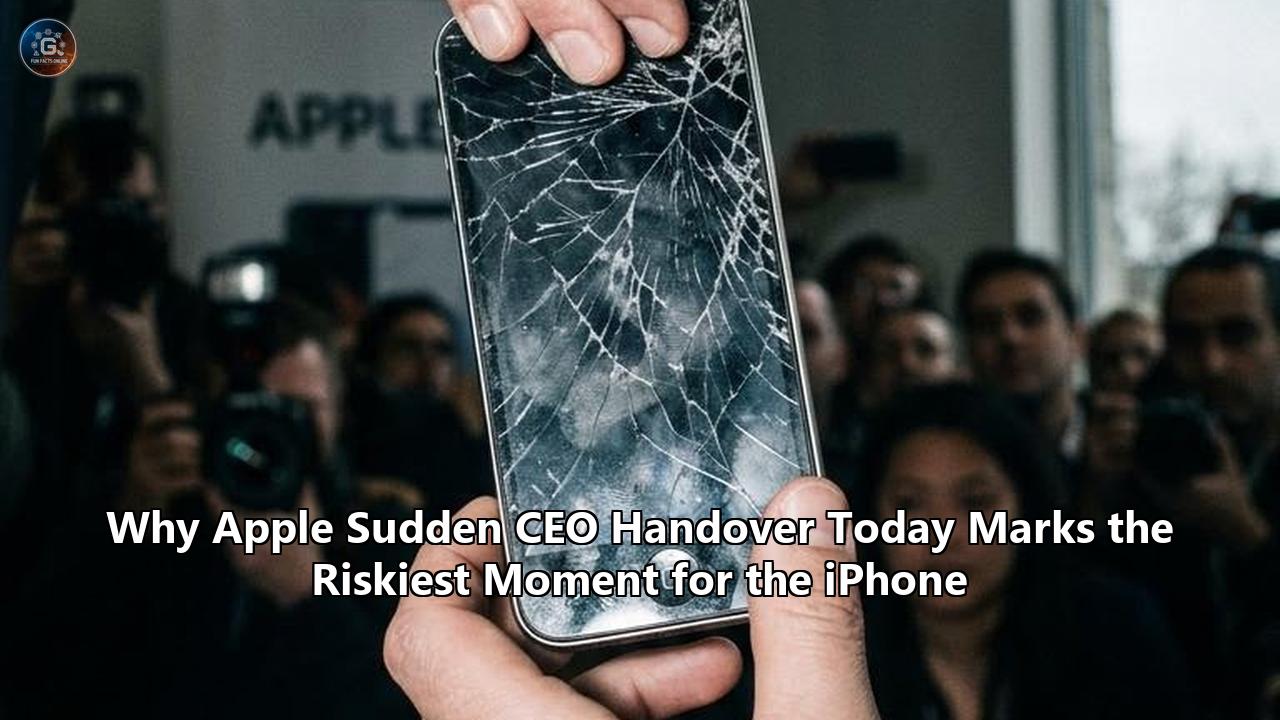
At Apple’s Cupertino headquarters, a fifteen-year era closed on September 1, 2026, as Tim Cook formally relinquished the role of chief executive officer to become executive chairman. Taking the helm is John Ternus, Apple’s longtime senior vice president of hardware engineering, who now assumes operational and strategic command of a corporate empire valued at $4.6 trillion.
The transition comes just eight days before Apple’s autumn keynote, where the company is scheduled to introduce its next-generation iPhone lineup.
While corporate successions at dominant technology firms are typically choreographed months in advance to project stability, the timing of this leadership handover thrusts the company’s core business into uncharted territory. The iPhone—which accounts for more than half of Apple’s annual revenue and anchors an installed base of more than 2.2 billion active devices—confronts an unprecedented convergence of technical, industrial, and regulatory pressures.
Cook took control in August 2011 on the eve of Steve Jobs’s death, steering the company through an operational expansion that quadrupled annual revenues beyond $400 billion. Yet the playbook that generated that historic run of market capitalization growth is reaching its physical and economic limits. As Ternus takes office, the smartphone industry is undergoing its most severe structural disruption in two decades. The intersection of generative artificial intelligence silicon requirements, maturing glass-slab form factors, complex supply chain migrations across Asia, and mounting global antitrust interventions makes this Apple CEO transition the most precarious inflection point in the history of the iPhone.
An Engineer at the Helm: Decoding the Management Pivot
Understanding why this transition alters Apple’s risk profile requires examining the distinct operational philosophies of the three leaders who have shaped the modern company.
Steve Jobs ran Apple as a product-driven autocracy, where industrial design and user intuition dictated engineering choices. Tim Cook altered that internal dynamic by placing inventory velocity, global supply chain optimization, and margin preservation at the center of Apple’s executive engine. Cook eliminated supply chain bloat, forged deep manufacturing relationships in mainland China, and transformed Apple into an operations powerhouse capable of building and shipping more than 220 million iPhones per year with surgical timing.
                CHIEF EXECUTIVE EVOLUTION AT APPLE

  Steve Jobs (1997–2011)        Tim Cook (2011–2026)         John Ternus (2026–Present)
┌─────────────────────────┐   ┌─────────────────────────┐   ┌─────────────────────────┐
│ • Vision & Design First │   │ • Operations & Scale    │   │ • Deep Hardware Silicon │
│ • Top-Down Dictates     │──▶│ • Supply Chain Velocity │──▶│ • Mechanical Systems    │
│ • Creating Categories   │   │ • Margin Maximization   │   │ • Architecture Overhaul │
└─────────────────────────┘   └─────────────────────────┘   └─────────────────────────┘
John Ternus represents a third archetype: the mechanical systems engineer. Joining Apple’s product design team in 2001, Ternus rose through the ranks by orchestrating the physical architectures of every major iPad generation, the Mac’s transition from Intel processors to custom Apple Silicon, and recent iterations of the iPhone and AirPods.
His elevation signals an internal recognition that the smartphone can no longer rely on cosmetic refinements or incremental camera sensor bumps. The device must be fundamentally re-engineered from the silicon substrate up to survive the next compute cycle.
The appointment breaks with the widespread Wall Street expectation that Apple would select another operational specialist, such as Chief Operating Officer Sabih Khan or Chief Financial Officer Kevan Parekh. Instead, the board of directors opted for deep engineering command.
The stakes of this shift are immediate. Cook’s genius was insulating the product lineup from geopolitical and supply chain volatility. Ternus must now prove that an engineering-focused leader can manage complex regulatory battles, balance sheet demands, and macroeconomic headwinds while simultaneously executing an overhaul of the device that funds the enterprise.
The On-Device AI Memory Wall: Silicon Physics and DRAM Economics
The most acute technical challenge facing Ternus is the physical and economic mismatch between generative artificial intelligence models and mobile device architectures.
For nearly two decades, smartphone operating systems were engineered around asymmetric computing: heavy computational tasks were offloaded to hyperscale cloud data centers, while the local system-on-chip (SoC) managed UI rendering, local sensor fusion, and lightweight neural processing. Apple’s privacy-centric architecture, marketed under its Apple Intelligence framework, inverts this model by mandating that high-utility foundational models run locally on the device’s Neural Engine.
       LOCAL LLM INFERENCE: THE SMARTPHONE MEMORY BOTTLENECK

┌───────────────────────────────────────────────────────────────┐
│ Unified Memory (LPDDR5X / LPDDR6)                             │
├───────────────────────────────┬───────────────────────────────┤
│ Model Weights (INT4 Quantized)│ ~4.5 GB to 5.5 GB             │
├───────────────────────────────┼───────────────────────────────┤
│ Dynamic Key-Value (KV) Cache  │ ~1.5 GB to 2.5 GB             │
├───────────────────────────────┼───────────────────────────────┤
│ iOS System + Background Tasks │ ~4.0 GB to 5.0 GB             │
├───────────────────────────────┼───────────────────────────────┤
│ High-End App Reserve / Camera │ ~3.0 GB to 4.0 GB             │
└───────────────────────────────┴───────────────────────────────┘
  Total Baseline Requirement:    13.0 GB to 17.0 GB of High-Speed DRAM
This requirement crashes directly into what semiconductor engineers call the "memory wall." A standard 7-billion to 9-billion parameter Large Language Model (LLM), when quantized down to 4-bit precision (INT4) to preserve performance, requires roughly 4.5 to 5.5 gigabytes of raw memory just to store its static weight parameters.
Beyond static weights, local inference requires dynamic memory allocation for the Key-Value (KV) cache, which stores contextual history during active prompt processing. The KV cache formula demonstrates how memory consumption scales during multi-turn interactions:
$$\text{Memory}_{\text{KV}} = 2 \times L \times H \times D \times S \times P$$
Where:
- $L$ is the number of transformer layers
- $H$ is the number of attention heads
- $D$ is the head dimension size
- $S$ is the context sequence length
- $P$ is the numerical precision byte size
When an operating system context buffer reaches 4,000 tokens, the KV cache alone can consume an additional 1.5 to 2.5 gigabytes of volatile memory. When combined with the baseline iOS system memory footprint (roughly 4 GB to 5 GB) and the operational headroom required to keep resource-intensive applications active in the background, a modern AI-capable smartphone requires a minimum of 12 to 16 gigabytes of unified dynamic random-access memory (DRAM).
This reality wrecks Apple’s historical product segmentation strategy. For years, Apple maintained profit margins by equipping base-tier iPhones with modest RAM allocations (such as 6 GB in standard models) while reserving higher memory pools for "Pro" tiers. Generative AI eliminates this tiered strategy; every handset sold must feature substantial memory bandwidth and capacity, or core software features fail to execute.
+-------------------+--------------------+--------------------+
| Component Spec    | Standard Tier      | Generative AI Spec |
|                   | (iPhone 14/15 Era) | (iPhone 17/18 Era) |
+-------------------+--------------------+--------------------+
| Base DRAM Size    | 6 GB LPDDR5        | 12 GB - 16 GB      |
|                   |                    | LPDDR5X/6          |
+-------------------+--------------------+--------------------+
| Memory Bandwidth  | ~51.2 GB/s         | >100 GB/s          |
+-------------------+--------------------+--------------------+
| NPU Compute Target| 15 - 35 TOPS       | >45 - 60 TOPS      |
+-------------------+--------------------+--------------------+
| Estimated DRAM BOM| $18 - $24          | $48 - $65          |
+-------------------+--------------------+--------------------+
The economic consequence is severe. With memory manufacturers like SK Hynix, Samsung, and Micron allocating increasing shares of their cleanroom capacity to high-bandwidth memory (HBM) modules for enterprise AI accelerators, consumer-grade low-power double data rate (LPDDR5X and emerging LPDDR6) prices have faced sharp inflationary spikes. Upgrading standard base models from 8 GB to 16 GB of DRAM increases the bill of materials (BOM) cost by an estimated $30 to $40 per unit. Multiplied across 220 million units annually, this represents a multi-billion-dollar margin headwind that Ternus must absorb or pass on to consumers already fatigued by high device prices.
Wafer Costs and Transistor Budgets: The 2nm TSMC Bottleneck
The silicon challenges extend beyond memory capacity to the physics of semiconductor fabrication. Apple’s competitive advantage has long relied on its ability to monopolize leading-edge process nodes from Taiwan Semiconductor Manufacturing Company (TSMC). Apple was the anchor customer for TSMC’s 3-nanometer (N3B and N3E) nodes, securing exclusive access ahead of competitors.
As Ternus assumes leadership, Apple is navigating the transition to TSMC’s 2-nanometer (N2) node, which introduces Gate-All-Around (GAA) nanosheet field-effect transistors to replace traditional FinFET architectures.
  TRANSISTOR EVOLUTION & DIE COST PROFILE

  FinFET (TSMC N3E Node)             GAA Nanosheets (TSMC N2 Node)
  ┌───────────────────────┐          ┌───────────────────────┐
  │ 3-Sided Gate Channel  │          │ 4-Sided Gate Wrap     │
  │ Wafer Cost: ~$18,500  │          │ Wafer Cost: ~$26,000+ │
  │ Density: ~215 MTr/mm² │          │ Density: ~280 MTr/mm² │
  └───────────────────────┘          └───────────────────────┘
While GAA nanosheets reduce sub-threshold leakage current and deliver a theoretical 10% to 15% speed improvement at identical power targets—or a 25% to 30% power reduction at matched frequencies—the economics of this transition are punishing. Industry estimates place the cost of a single 300mm processed N2 wafer above $25,000, compared to roughly $18,500 for early N3 wafers and $14,000 for 5-nanometer wafers.
+-----------------+-------------------+--------------------+--------------------+
| Foundry Node    | Transistor Arch   | Approx. Cost/Wafer | Est. Die Cost (A-  |
|                 |                   |                    | Series Class)      |
+-----------------+-------------------+--------------------+--------------------+
| 5nm (TSMC N5)   | FinFET            | ~$14,000           | $40 - $48          |
+-----------------+-------------------+--------------------+--------------------+
| 3nm (TSMC N3E)  | FinFET            | ~$18,500           | $65 - $75          |
+-----------------+-------------------+--------------------+--------------------+
| 2nm (TSMC N2)   | GAA Nanosheet     | >$25,000           | $95 - $115         |
+-----------------+-------------------+--------------------+--------------------+
This structural price increase forces Apple’s silicon design teams, previously overseen by Johny Srouji and coordinated closely with Ternus, into uncompromising trade-offs:
- Die Size Constraints: At $25,000 per wafer, enlarging the silicon die area to fit larger Neural Processing Units (NPUs) or expanded Level System Caches (SLC) rapidly erodes hardware margins.
- Thermal Envelope Ceiling: Modern smartphone chassis can sustainably dissipate between 3.5 to 5.0 Watts of thermal power under passive cooling before triggering thermal throttling. Sustained local AI processing creates continuous heat profiles unlike traditional bursty workloads (such as launching an app or taking a photo).
- Silicon Partitioning: Apple must balance CPU core counts, GPU compute clusters with hardware ray tracing, and dedicated AI matrix accelerators on a die that must stay under 110 to 120 square millimeters to maintain yield efficiency.
If Ternus cannot deliver hardware architectures that justify these silicon costs with clear consumer value, the iPhone risks seeing its gross margins drop below Apple's long-defended 42% to 45% corporate threshold.
Hinge Mechanics, Glass Fatigue, and the Foldable Yield Equation
Compounding the silicon crisis is the exhaustion of the standard industrial form factor. For seventeen years, the iPhone has been a monolithic rectangular glass slab. That design has reached peak physical refinement: bezels cannot shrink noticeably further, chassis materials have migrated from aluminum to stainless steel and Grade 5 titanium, and optical lens arrays have expanded to the spatial boundaries of the camera bump.
The broader market’s premium tier has shifted toward book-style and clamshell foldables. For Ternus, greenlighting and manufacturing a foldable iPhone represents one of the highest mechanical hardware risks Apple has faced.
                     FOLDABLE SCREEN MECHANICS & STRESS PROFILE

             Tensile Stress (Outer Curve Radius)
       ───────────────────────────────────────────────────
      ▲  ▲  ▲  ▲  ▲  ▲  ▲  ▲  ▲  ▲  ▲  ▲  ▲  ▲  ▲  ▲  ▲  ▲
     ┌─────────────────────────────────────────────────────┐ ── 30μm Ultra-Thin Glass (UTG)
     │                     Neutral Axis                    │ ── Optically Clear Adhesive (OCA)
     └─────────────────────────────────────────────────────┘ ── Flexible OLED Substrate
      ▼  ▼  ▼  ▼  ▼  ▼  ▼  ▼  ▼  ▼  ▼  ▼  ▼  ▼  ▼  ▼  ▼  ▼
             Compressive Stress (Inner Curve Radius)
The engineering barriers to an Apple-grade foldable device illustrate why the company has moved cautiously:
- Material Fatigue in Ultra-Thin Glass (UTG): Under repeated mechanical cycling, glass does not behave as an ideal elastic medium. At thicknesses between 30 and 50 micrometers, micro-fissures propagate within the glass matrix under cyclic tensile stress. Apple’s strict internal reliability threshold requires a minimum lifespan of 200,000 to 300,000 fold cycles across an operating temperature spectrum of -20°C to 50°C without micro-fracturing or optical delamination.
- Crease Mechanics and Dynamic Adhesives: The visible screen crease on competing foldable devices stems from the displacement of the Optically Clear Adhesive (OCA) layer that bonds the polarizer, flexible OLED panel, and UTG cover sheet. When folded, the inner radius experiences extreme compressive stress, while the outer radius experiences tensile stress. Creating a zero-crease display requires a mechanical teardrop hinge cavity that distributes the bend radius over a broader physical arc ($r > 2.5\text{ mm}$), demanding complex multi-axis titanium gear assemblies inside a device that must remain thinner than 5.0 mm per side when open.
- Component Packaging Densities: Moving to a hinged dual-chassis halves the continuous internal volume available for battery cells, logic boards, and camera assemblies. Integrating folded telephoto periscope zoom systems while maintaining water and dust ingress resistance (targeting IP68 rather than the industry-standard IPX8 foldable rating) requires custom mechanical miniaturization that drives initial manufacturing scrap rates exceptionally high.
In Apple’s high-volume manufacturing model, a drop in display assembly yield from the standard 95% down to 70% or 75% on a new form factor translates to hundreds of millions of dollars in scrapped inventory during initial production ramps.
As a hardware engineer, Ternus possesses the technical background to evaluate these mechanical designs. However, the economic exposure of bringing such an intricate assembly to market at the scale of 50 million to 80 million units is vastly greater than building standard unibody enclosures.
Supply Chain Recalibration: The Friction of the India-China Shift
While Ternus navigates silicon and mechanical engineering hurdles, he must also manage the most complex industrial relocation in modern corporate history. Under Cook, Apple built an unmatched manufacturing ecosystem in mainland China, centered around Zhengzhou ("iPhone City"), Shenzhen, and Chengdu. That infrastructure combined hundreds of thousands of specialized assembly technicians with a localized tier-two and tier-three component supplier ecosystem situated within a three-hour transit radius.
Geopolitical tensions, trade tariffs, and pandemic disruptions forced Apple to begin diversifying this manufacturing base. Apple has aggressively expanded production in India through manufacturing partners Foxconn, Pegatron, and the Tata Group.
+------------------------------+-------------------+-------------------+
| Metric                       | Mainland China    | India Hubs        |
|                              | Industrial Hubs   | (Tamil Nadu, etc.)|
+------------------------------+-------------------+-------------------+
| Assembly Volume (2025/2026)  | ~70% - 75%        | ~25% - 28%        |
|                              | (~165M units)     | (~55M units)      |
+------------------------------+-------------------+-------------------+
| Local Component Sourcing     | >40% - 50%        | ~15% - 22%        |
| (Value-Add)                  |                   |                   |
+------------------------------+-------------------+-------------------+
| Tier-2/3 Component Logistics | Localized Truck   | Air / Maritime    |
| Overhead                     | Routing           | Freight Dependent |
+------------------------------+-------------------+-------------------+
| Initial Model Ramp Yields    | 98%+              | 85% - 92% (imprv.)|
+------------------------------+-------------------+-------------------+
By late 2025, suppliers in India assembled roughly 55 million iPhones annually—representing approximately one out of every four iPhones manufactured worldwide. More than 75% of this Indian production volume was exported to global markets, including the United States.
Yet this geographic shift introduces structural supply chain friction:
1. Local Value-Add and Component Freight Overhead
While final enclosure assembly and surface-mount technology (SMT) lines are operational in Tamil Nadu and Karnataka, the underlying component infrastructure remains heavily anchored in East Asia. High-value sub-assemblies—including multi-layer ceramic capacitors (MLCCs), camera sensor modules from Sony in Japan, display panels from Samsung Display and LG Display in South Korea, and custom Apple Silicon packaged by TSMC in Taiwan—must still be air-freighted into India. This dynamic limits local value addition to roughly 15% to 22% of total BOM value, compared to more than 45% in fully integrated Chinese facilities.
2. Yield Parity and Worker Training Cycles
Achieving precision manufacturing tolerances on high-speed automated lines requires thousands of specialized industrial tooling engineers. Early production ramps outside China faced lower assembly yields, higher defect rates, and extended cycle times per device. Closing this yield gap requires embedding hundreds of experienced manufacturing engineers at overseas contract plants, increasing Apple's operating expense overhead.
       GLOBAL IPHONE MANUFACTURING DISTRIBUTION (2026 ESTIMATES)

┌─────────────────────────────────────────────────────────────┐
│ Mainland China (Foxconn, Luxshare, Pegatron): ~72%          │
├───────────────────────────────────────────────┬─────────────┤
│ India (Foxconn, Tata Electronics): ~25%       │ Other: ~3%  │
└───────────────────────────────────────────────┴─────────────┘
  *Total Annual Global Production Volume: ~220-230 Million Units
Recognizing the delicate political diplomacy required to balance relations with Washington and Beijing, Apple established an executive structure where Tim Cook, as executive chairman, retains direct oversight of high-level government affairs and policy engagement.
However, John Ternus bears direct operational responsibility if supply chain fractures, component delays, or quality control defects disrupt the flagship product during peak fourth-quarter delivery windows.
The $20 Billion Regulatory Shear: App Store Fees and Search Revenue Under Siege
The risks facing the iPhone are not confined to hardware engineering and manufacturing logistics. The monetization engine surrounding the device is under unprecedented legal and regulatory pressure worldwide.
For the past decade, Apple’s Services division was Wall Street’s primary growth story. Expanding to more than $100 billion in annual revenue with gross margins exceeding 70%, Services transformed Apple’s financial valuation from that of a cyclical hardware manufacturer into an enterprise software powerhouse.
      THE IPHONE FINANCIAL FLYWHEEL UNDER REGULATORY PRESSURE

                     ┌───────────────────────┐
                     │  Active iPhone Base   │
                     │    (2.2B+ Devices)    │
                     └──────────┬────────────┘
                                │
                 Monetization Streams Under Threat
                                │
        ┌───────────────────────┴───────────────────────┐
        ▼                                               ▼
┌───────────────────────────────┐               ┌───────────────────────────────┐
│ App Store 15-30% Take Rate    │               │ Google Default Search ISA     │
├───────────────────────────────┤               ├───────────────────────────────┤
│ • EU DMA Alternative Stores   │               │ • US DOJ Antitrust Remedies   │
│ • Core Technology Fees (CTF)  │               │ • Direct Threat to ~$20B Pure │
│ • Sideloading Margin Erosion  │               │   Operating Income Payment    │
└───────────────────────────────┘               └───────────────────────────────┘
The foundations of this Services cash machine face two major legal challenges:
The Information Services Agreement (ISA) Risk
The single most profitable line item in Apple's Services segment has been the revenue-sharing payment from Alphabet for default search engine placement in the Safari browser. Internal disclosures in antitrust litigation revealed that Google paid Apple an estimated $20 billion annually for this placement.
Because this revenue carries near-zero cost of goods sold (COGS), it flowed directly to Apple’s operating profit. Ongoing antitrust rulings in the United States targeting anti-competitive search distribution agreements threaten to prohibit or restrict these multi-billion-dollar default placement payments. Losing or restructuring this agreement would instantly eliminate a high-margin revenue stream that subsidizes hardware research and development.
European Union Digital Markets Act (DMA) and Global App Store De-monopolization
Across the European Union, the enforcement of the DMA has forced Apple to dismantle its closed ecosystem model. The company has had to permit alternative app marketplaces, enable third-party web browser engines without WebKit restrictions, and allow alternative in-app payment processors. While Apple introduced alternative fee frameworks—including a Core Technology Fee (CTF) of €0.50 per first annual install past one million downloads—the structure remains under intense regulatory scrutiny and European Commission legal challenges.
+--------------------+------------------------+------------------------+
| Services Segment   | Historical Model       | Emerging Regulatory    |
|                    |                        | Environment            |
+--------------------+------------------------+------------------------+
| App Store          | 30% / 15% closed take  | Mandated sideloading,  |
| Distribution       | rate; mandatory IAP    | third-party stores,    |
|                    |                        | fee caps               |
+--------------------+------------------------+------------------------+
| Safari Search      | ~$20B exclusive        | Banned default deals;  |
| Monetization       | default payment        | mandatory search-      |
|                    |                        | engine choice screens  |
+--------------------+------------------------+------------------------+
| Operating Margin   | ~70%+ gross margin on  | Direct margin erosion; |
| Impact             | Services line          | increased compliance   |
|                    |                        | and legal overhead     |
+--------------------+------------------------+------------------------+
This regulatory pressure creates a financial pinch for the new CEO. If high-margin Services revenue slows or contracts under regulatory pressure, the iPhone hardware must carry a heavier financial burden.
Ternus cannot afford hardware design mistakes, inventory miscalculations, or uncompensated BOM increases when the Services safety net is facing structural margin compression.
The Peripheral Compute Strategy: Where the iPhone Goes Next
The broader architectural question for Ternus is whether the smartphone remains the permanent anchor of personal computing, or transitions into an auxiliary processing hub for peripheral hardware.
Apple’s major hardware investments over the last five years illustrate this tension:
                        THE CENTRAL COMPUTE HUB ARCHITECTURE

                              ┌───────────────────┐
                              │    Apple Silicon  │
                              │    Neural Hub     │
                              │   (iPhone 18+)    │
                              └─────────┬─────────┘
                                        │
             Ultra-Wideband (UWB) / Low-Latency Wi-Fi 7 / Bluetooth 6
                                        │
         ┌──────────────────────────────┼──────────────────────────────┐
         ▼                              ▼                              ▼
┌──────────────────┐          ┌───────────────────┐          ┌──────────────────┐
│ Spatial Headsets │          │ Smart Audio / AI  │          │ Augmented Reality│
│ (Vision Series)  │          │ (Camera AirPods)  │          │ Smart Glasses    │
└──────────────────┘ └───────────────────┘ └──────────────────┘- Spatial and Immersive Computing: The Vision Pro demonstrated high-end spatial computing capabilities, but its weight, battery tether, and high price limited near-term mainstream adoption. A lighter, consumer-friendly spatial device will rely on offloading thermal and computational processing to a nearby pocket-sized device—the iPhone.
- Ambient Sensor Peripherals: Next-generation wearable designs, including camera-equipped AirPods and audio-driven smart glasses, act as distributed sensory inputs. They capture spatial audio, visual environment tokens, and biometric telemetry, routing those data streams back to the iPhone's Neural Engine for local contextual synthesis.
- Distributed Personal Area Networks: By using custom short-range low-latency wireless protocols, the iPhone changes from a standalone screen into an orchestration hub for wearable sensors, distributed displays, and peripheral AI agents.
This shift positions Ternus in familiar territory. As head of hardware engineering, he oversaw the silicon-to-hardware integration across Macs, iPads, and Apple Watches. His task now is ensuring that the iPhone’s silicon architecture can handle concurrent workloads: running local generative LLMs, processing high-bandwidth visual data from external smart glasses, and managing system-wide power budgets without degrading battery life.
Critical Milestones on the New CEO’s Ledger
The success or failure of this Apple CEO transition will become evident through several critical milestones over the next 12 to 36 months.
               STRATEGIC TIMELINE FOR JOHN TERNUS

   September 2026             Fiscal 2027 Ramps           2027–2028 Horizon
┌────────────────────────┐  ┌────────────────────────┐  ┌────────────────────────┐
│ • Keynote Debut:       │  │ • TSMC 2nm N2 Node     │  │ • Introduction of      │
│   iPhone Lineup Launch │─▶│   Silicon Deployment   │─▶│   Foldable / Hybrid    │
│ • Initial AI Siri &    │  │ • India Assembly Scale │   │   Hardware Architectures│
│   Gemini Integration   │  │   Past 30% of Global   │  │ • Settlement of Global │
│ • First Q4 Holiday     │  │ • App Store DMA / DOJ  │  │   Antitrust & Safari   │
│   Production Execution │  │   Remedy Adjustments   │  │   Search Remedies      │
└────────────────────────┘  └────────────────────────┘  └────────────────────────┘
Investors, industry analysts, and competitors will monitor key performance metrics to gauge how effectively Ternus steers the business:
- The September Keynote and Q4 Production Ramp: Ternus’s first test comes on stage and on the balance sheet within his initial 90 days. Flawless holiday execution of the new iPhone lineup, free of display yield bottlenecks or supply chain shortages, is required to maintain investor confidence.
- TSMC 2-Nanometer Volume Production: The integration of the A-series processors on TSMC’s N2 node will demonstrate whether Apple can maintain its silicon performance-per-watt lead over Qualcomm and MediaTek while absorbing elevated wafer costs without sacrificing gross margins.
- On-Device vs. Hybrid AI Monetization: Apple’s execution of its hybrid AI model—balancing on-device processing against Private Cloud Compute server costs and partnerships with external AI providers like Google—will determine whether consumer AI accelerates iPhone upgrade cycles or simply increases operating expenses.
- India Manufacturing Scale: Expanding Indian production capacity past 30% while reducing scrap rates, shortening supply transit times, and improving local component integration will test whether Ternus can match Cook’s operational efficiency.
- Defending Hardware Gross Margins: If rising DRAM prices, $25,000 silicon wafers, and complex hinge assemblies push unit production costs higher, Ternus must prove Apple can preserve hardware gross margins through product design and pricing power.
Tim Cook built the modern consumer tech supply chain, taking Apple from a niche computer maker to the world's most valuable public company.
John Ternus inherits an industrial powerhouse operating under physical, economic, and geopolitical constraints that the old operational playbook can no longer solve alone. The health of Apple’s multi-trillion-dollar business over the next decade depends entirely on whether an engineer can reinvent the iPhone for an era that demands completely new silicon, mechanics, and economic architectures.
Reference:
- https://www.apple.com/newsroom/2026/04/tim-cook-to-become-apple-executive-chairman-john-ternus-to-become-apple-ceo/
- https://www.theapplepost.com/2026/09/01/71252/tim-cook-officially-steps-down-as-apple-ceo-as-john-ternus-takes-over/
- https://www.investing.com/news/stock-market-news/apple-outlines-ternus-cook-compensation-in-ceo-transition-4884628
- https://wbznewsradio.iheart.com/content/2026-09-01-john-ternus-succeeds-tim-cook-as-apple-ceo-amid-ai-transition/
- https://www.pcmag.com/news/after-15-years-apple-ushers-in-tim-cooks-replacement-as-ceo
- https://www.youtube.com/watch?v=KjiHTLhyS_o
- https://www.businessinsider.com/tim-cook-apple-resignation-john-ternus-succeeding-legend-steve-jobs-2026-9
- https://www.chinadaily.com.cn/a/202609/02/WS6a9718b0e4b06d4aa055bc95.html
- https://www.indexbox.io/blog/apples-new-ceo-john-ternus-takes-the-helm/
- https://9to5mac.com/2026/08/31/tim-cook-last-day-john-ternus-apple-ceo/