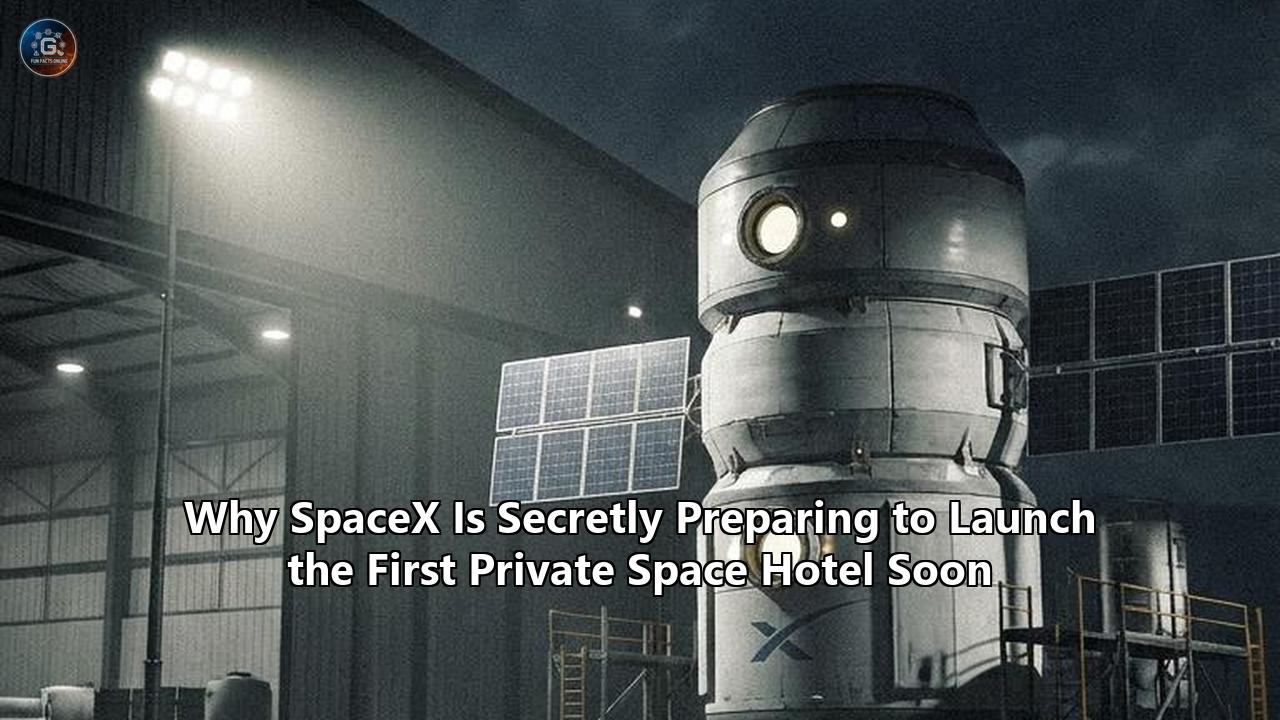
As of May 2026, the aerospace industry is undergoing a structural realignment that is entirely divorced from NASA’s deep-space ambitions. While public attention remains fixated on Mars colonization timelines and lunar outposts, a profound shift in low Earth orbit (LEO) is quietly reaching its operational climax. Inside cleanrooms in California, aerospace startup Vast Space has completed the primary structure qualification and phase-one system integration of a glossy, 45-cubic-meter cylinder known as Haven-1. Slated to launch into orbit as early as the first quarter of 2027, Haven-1 is designed to be the world’s first commercial space station.
Functionally, however, it represents something much more specific: the arrival of the first private space hotel.
The headline news is that Vast has officially secured the launch vehicle, the transport mechanism, the astronaut training, and the orbital communications network required to make this operational. Every single one of those foundational pillars is provided by SpaceX. By acting as the sole launch provider, transport operator, and communications backbone, SpaceX is the silent operating system behind the impending orbital hospitality industry. Through its Falcon 9 rockets, Crew Dragon capsules, and Starlink satellite constellation, SpaceX has quietly built the end-to-end infrastructure necessary to commercialize human life in a vacuum.
Understanding how a private company can suddenly launch a habitable orbital facility requires breaking down the complex intersection of rocket economics, life-support engineering, and artificial gravity physics.
The Architecture of a Single-Launch Station
To grasp the engineering leap of Haven-1, one must look at the precedent. The International Space Station (ISS) took over a decade to construct, required more than 30 dedicated Space Shuttle missions to assemble, and cost an estimated $150 billion. It is a sprawling, modular laboratory roughly the size of a football field, boasting 900 cubic meters of pressurized volume. It was built under a government paradigm where cost and timeline were secondary to international diplomacy and raw scientific capability.
Haven-1 operates on an entirely different philosophy: the minimum viable product.
Instead of launching distinct modules and painstakingly assembling them in the vacuum of space, Haven-1 is designed as a monolithic, single-structure habitat. At approximately 14,000 kilograms (31,000 pounds), it represents the physical maximum of what can be crammed inside the payload fairing of a SpaceX Falcon 9 rocket. The station measures roughly the interior volume of a small tour bus—45 cubic meters.
When the Falcon 9 engines ignite at Cape Canaveral, Haven-1 will be pushed into low Earth orbit fully assembled. There is no orbital construction phase. Once it detaches from the rocket's second stage, it simply powers up. The station is equipped with an integrated propulsion system built by Impulse Space, which relies on a storable propellant combination of nitrous oxide and ethane to feed its Saiph thrusters. This system allows the station to maintain its altitude and avoid orbital debris without needing immediate external servicing.
For attitude control—keeping the station oriented correctly in three-dimensional space without constantly firing thrusters and burning through finite chemical fuel—Haven-1 relies on six Control Moment Gyroscopes (CMGs). A CMG is a highly complex piece of engineering consisting of a massive, fast-spinning flywheel mounted on an articulated gimbal. By physically tilting the spinning flywheel, the gyroscopic effect exerts a torque on the entire space station, allowing it to silently and efficiently pivot its orientation to face the sun for solar power or align its docking port for incoming guests.
SpaceX as the Orbital Operating System
Vast Space is manufacturing the habitat, but SpaceX is executing the operation. The inaugural mission to this private space hotel, designated Vast-1, will carry four paying passengers—a mix of sovereign astronauts and private citizens—aboard a SpaceX Crew Dragon spacecraft.
SpaceX’s involvement effectively reduces the engineering burden on Vast. Crew Dragon is not merely a taxi; it acts as a critical extension of the station's life support systems. When the capsule docks with Haven-1, it remains attached for the duration of the 10-to-30-day mission. This allows the station to borrow Dragon’s highly advanced Environmental Control and Life Support Systems (ECLSS), providing redundancy for air revitalization, thermal control, and emergency abort capabilities.
Furthermore, SpaceX is managing the human element. The four passengers will train directly at SpaceX facilities, undergoing rigorous centrifuge simulations, emergency egress drills, and simulated docking procedures using the exact hardware they will rely on in orbit.
In orbit, the primary luxury is connectivity. Historically, astronauts on the ISS have relied on the Tracking and Data Relay Satellite System (TDRSS), a government network that, while robust, offers limited bandwidth and frequent blackout periods. Haven-1 bypasses this entirely by integrating directly with SpaceX’s Starlink network. Using optical laser links to communicate with the thousands of Starlink satellites in higher orbits, the station will provide its guests with continuous, gigabit-speed Wi-Fi. This allows passengers to livestream high-definition video of the Earth directly from the station's 1.1-meter domed window, fundamentally changing the psychological isolation typically associated with spaceflight.
The Economics of the $50 Million Ticket
The business model for orbital hospitality relies entirely on the collapse of launch costs. During the Space Shuttle era, transporting a single kilogram of payload to low Earth orbit cost approximately $54,000. Under those economic conditions, a private space hotel was mathematically impossible.
SpaceX’s introduction of the partially reusable Falcon 9 brought that cost down to roughly $2,700 per kilogram. This dramatic reduction in overhead allowed commercial entities to begin seriously drafting blueprints for orbital real estate.
Booking a trip to a commercial station is currently estimated to cost between $5 million and $50 million per seat, depending on the mission duration, the specific commercial provider, and the level of required training. For the Vast-1 mission, the economics work precisely because the footprint is small. By keeping the station simple and relying on a single Falcon 9 launch for the hardware, and a single Crew Dragon launch for the passengers, the capital expenditure is fractional compared to government space programs.
However, the hospitality aspect is only half of the revenue stream. The real economic driver for commercial space stations is in-space manufacturing and pharmaceutical research.
Haven-1 is equipped with the Haven-1 Lab, a dedicated microgravity research facility featuring 10 payload slots. Each slot can accommodate up to 30 kilograms of hardware and draws up to 100 watts of power. In the absence of gravity, convection currents do not exist. This quirk of physics allows for the manufacturing of exceedingly flawless materials. For example, ZBLAN optical fibers drawn in microgravity are vastly superior to those made on Earth, transmitting data with almost zero signal loss. Similarly, pharmaceutical companies can grow perfectly uniform protein crystals in zero gravity, leading to highly targeted drug delivery mechanisms for cancer treatments.
By selling payload space to private research firms, the station operators offset the massive overhead costs, subsidizing the purely tourist-driven aspects of the venture.
Life Support and the Vacuum Constraint
Keeping human beings alive in an artificial environment traveling at 17,500 miles per hour requires unforgiving engineering. The vacuum of space actively works to freeze, boil, irradiate, and depressurize the crew.
Unlike the ISS, which utilizes a complex, closed-loop life support system capable of recycling sweat and urine back into potable drinking water, Haven-1 opts for simplicity. It runs on an open-loop system. Because the station is only designed to host four crew members for short 10-to-30-day stints over a three-year lifespan, there is no mathematical need for heavy, power-hungry water reclamation centrifuges. Instead, the crew relies on fresh water and oxygen stores brought up by the Crew Dragon. When the supplies are exhausted, the crew returns to Earth, and the station sits dormant until the next Dragon arrives.
Air revitalization in this closed cylinder is a matter of strict chemistry. Human respiration constantly floods the cabin with carbon dioxide. If allowed to accumulate, CO2 causes headaches, confusion, and eventually asphyxiation. The station utilizes chemical scrubbers—likely amine beds or lithium hydroxide canisters—to physically bind the CO2 molecules and pull them out of the cabin air.
Thermal control presents a paradox. Despite the freezing vacuum of space, the primary thermal problem inside a spacecraft is heat. Four human bodies, continuously running avionics, and battery packs generate significant thermal energy. Without convection to carry the heat away, the cabin would quickly become an oven. Haven-1 uses an integrated system of fluid loops to absorb internal heat and pump it to external radiators, which then expel the thermal energy into the void of space via infrared radiation. Simultaneously, the outer hull is wrapped in multi-layer insulation (MLI) to protect the internal pressure vessel from the violent temperature swings that occur every 45 minutes as the station moves from the burning glare of orbital sunrise into the freezing shadow of Earth's night.
Physical safety from the environment is managed through heavy exterior armor. Low Earth orbit is highly congested, littered with spent rocket stages, flecks of paint, and micrometeoroids traveling at hypervelocity. Even a grain of sand hitting the hull at 15,000 miles per hour carries the kinetic energy of a rifle bullet. To counter this, the primary pressure vessel and the domed observation window are wrapped in highly specialized Micrometeoroid and Orbital Debris (MMOD) shielding. This shielding typically consists of an outer sacrificial bumper layer, often made of Kevlar or Nextel ceramic fabric, designed to shatter the incoming projectile. The resulting spray of debris is then absorbed by empty space between the layers before it can penetrate the inner pressurized hull.
The Physiology of Space and the Artificial Gravity Solution
The human body evolved under the constant pull of Earth’s 1g environment. Removing that vector completely throws human physiology into chaos.
Upon reaching orbit, astronauts immediately experience fluid shifts. Without gravity pulling blood down into the legs, fluids migrate into the chest and head, causing a persistent feeling of congestion and "puffy face" syndrome. The vestibular system in the inner ear, which relies on tiny gravity-sensing crystals to determine balance, begins sending conflicting signals to the brain. This mismatch between what the eyes see and what the inner ear feels results in Space Adaptation Syndrome (SAS)—a severe form of motion sickness that affects roughly half of all astronauts during their first few days in orbit.
Longer stays introduce severe bone density loss and muscle atrophy. The cardiovascular system weakens because the heart no longer has to pump against gravity.
To counteract these effects, the industry is aggressively pursuing artificial gravity. Vast plans to use the Haven-1 mission to conduct the world's first commercial spinning artificial gravity experiment. Once the Crew Dragon is securely docked to the Haven-1 module, the station's propulsion system will fire, causing the entire connected structure to tumble end-over-end in space.
The physics underlying this maneuver are based on centripetal acceleration. By spinning the station, the engineers create a centrifugal force that pushes the astronauts outward against the interior walls of the module, simulating the feeling of weight.
However, inducing gravity through rotation in a small vehicle is highly problematic. The formula for centripetal acceleration dictates that the simulated gravity is a product of the radius of the spin and the rotational velocity (RPM). Because the combined Haven-1 and Crew Dragon structure is relatively short, generating even a fraction of Earth's gravity requires a very fast spin rate.
High rotational speeds in a small radius induce the Coriolis effect. If an astronaut is standing on the outer wall of a rapidly spinning small cylinder, their feet are traveling at a significantly higher velocity than their head, which is closer to the center of the spin. If the astronaut turns their head quickly, the Coriolis forces severely disrupt the fluid in the inner ear, leading to instant, debilitating nausea. Vast’s spin experiment will carefully test the human tolerance for these rotational mechanics, gathering the precise biological data needed to scale up.
This research directly feeds into much larger, more ambitious architectural concepts like the Voyager Station. Proposed by Orbital Assembly Corporation (now Above: Space Development Corporation), Voyager Station is a heavily publicized concept for a massive rotating wheel designed to accommodate up to 280 guests and 112 crew members. Drawing on architectural concepts first drafted by Wernher von Braun in the 1950s, the Voyager design utilizes a massive outer ring structure. Because the radius of the wheel is vast, the station can rotate at a much slower, comfortable RPM while still generating roughly one-sixth of Earth’s gravity—similar to lunar gravity.
Guests on a station with a massive radius would experience a normal gravitational orientation. They could walk normally, use standard toilets, and sleep in regular beds without the need for zero-g restraints. While Voyager Station has faced significant funding and timeline skepticism, the underlying physics are sound, and Vast's physical spin tests with Haven-1 will validate the required math for these massive future structures.
The Guest Experience: Surviving the Luxury
For the passengers arriving at Haven-1, the reality of life aboard a private space hotel will be a masterclass in highly engineered logistics.
Food cannot simply be cooked in a zero-gravity environment. Crumbs pose a lethal threat to the station's electronics and air filtration systems. Liquid cannot be poured; it forms floating spheres that can easily short out avionics panels. Therefore, the fine dining experience touted by space hospitality firms will heavily rely on advanced food science. Meals will be prepared by top chefs on Earth, flash-frozen or thermo-stabilized, and packaged in specialized vacuum pouches. Guests will rehydrate or heat these meals using customized injection ports.
Personal hygiene requires similar zero-gravity workarounds. Showers in microgravity are mostly impossible because water clings to the skin in a suffocating layer due to surface tension. Guests will rely on specialized rinseless soaps and pre-moistened towels. The zero-gravity toilet operates entirely on pneumatic suction. A powerful fan creates a localized vacuum to pull waste away from the body and into specialized holding containers, which are either brought back on the Dragon or incinerated in the atmosphere upon reentry.
Sleeping involves strapping into a specialized sleeping bag attached directly to the wall. Without gravity, there is no "up" or "down," meaning a guest can sleep comfortably attached to the ceiling. The primary issue with zero-g sleep is the lack of air convection; if an astronaut sleeps in a poorly ventilated corner, the carbon dioxide they exhale will form an invisible bubble around their head, waking them up with an intense, gasping headache. Careful engineering of the cabin's ventilation fans ensures continuous airflow over the sleeping quarters.
The defining feature of the stay will undoubtedly be the view. The psychological impact of observing the Earth from orbit is known as the Overview Effect—a cognitive shift reported by astronauts who see the planet as a fragile, borderless sphere suspended in an infinite void. Haven-1’s 1.1-meter domed window is structurally designed specifically to facilitate this experience, shielded heavily against micrometeoroids but offering an unparalleled, wide-angle view of the planet rushing by at 5 miles per second.
The Regulatory Thicket and Space Law
Deploying a commercial habitat into orbit triggers a labyrinth of international law and domestic regulation. The legal foundation for all activity in orbit is the Outer Space Treaty of 1967. Article VI of the treaty explicitly states that nations bear international responsibility for national activities in space, whether carried out by governmental agencies or non-governmental entities.
This means that a private space hotel launched by an American company is legally the responsibility of the United States government. If Haven-1’s propulsion system fails and it collides with a European weather satellite, the US government is held liable on the international stage under the 1972 Space Liability Convention.
To manage this risk, the Federal Aviation Administration’s Office of Commercial Space Transportation (FAA-AST) heavily regulates and licenses every launch and reentry. However, the FAA currently operates under a Congressionally mandated "learning period" moratorium regarding passenger safety regulations. The law intentionally restricts the FAA from passing heavy-handed safety regulations on commercial space habitats to allow the nascent industry room to innovate.
Instead of strict government safety certifications, commercial space tourists operate under an "informed consent" framework. Paying passengers must sign extensive waivers acknowledging that they are participating in a highly experimental, inherently dangerous activity, and they accept the risk of catastrophic failure. As stations like Haven-1 transition from experimental outposts into routine commercial destinations, this regulatory framework will inevitably face extreme scrutiny, forcing the development of a unified commercial space code.
The End of the Government Monopoly
The launch of the first private space hotel is intrinsically tied to the retirement of the International Space Station. Expected to be safely de-orbited into the Pacific Ocean in the early 2030s, the ISS is aging rapidly. Micro-fractures, module leaks, and outdated computer architecture have forced NASA to look toward the private sector.
Through its Commercial LEO Destinations (CLD) program, NASA is actively funding private companies to build the replacements. Axiom Space is currently constructing commercial modules that will initially attach directly to the ISS, later detaching to form an independent free-flying station. Other conglomerates, such as Starlab and Blue Origin’s Orbital Reef project, are developing massive commercial habitats meant to serve as mixed-use business parks in space.
By pushing Haven-1 to the launch pad before the end of the decade using private capital, Vast is attempting to beat these heavily subsidized competitors to orbit. Their aggressive timeline relies entirely on the proven reliability of the SpaceX Falcon 9 and Crew Dragon ecosystem. By plugging into existing, flight-proven hardware, they bypass the decade-long development cycles that plague traditional aerospace contractors.
Starship and the Final Equation
While Haven-1 proves the concept of a single-launch commercial habitat, the true ceiling for orbital hospitality rests on the success of SpaceX's Starship.
The economic and architectural constraints of Haven-1 are dictated by the payload capacity of the Falcon 9. It can only lift 14,000 kilograms and provide 45 cubic meters of space. Starship fundamentally shatters this paradigm. A fully operational Starship features a payload volume of roughly 900 cubic meters—meaning a single Starship possesses the entire pressurized volume of the International Space Station.
If Starship achieves its targeted launch costs of a few hundred dollars per kilogram, the architecture of orbital habitats changes overnight. Future space hotels will not be constrained, minimalist cylinders designed for four people. They will be massive, multi-level structures featuring expansive common areas, dedicated laboratories, and high-capacity life support systems. The heavy lifting capability of Starship makes concepts like the massive artificial gravity rings of Voyager Station physically and economically viable.
Vast is already planning for this transition. Their proposed follow-up module, Haven-2, is designed to be larger and more capable, scaling directly with the increased lift capacity of next-generation rockets. The plan is to launch sequential modules and link them together in orbit, forming a continuously expanding orbital real estate portfolio.
The transition unfolding above the atmosphere marks a hard boundary in human history. For sixty years, access to the vacuum of space has been fiercely guarded by sovereign governments, restricted to highly trained test pilots and specialized scientists. The impending launch of Haven-1 atop a Falcon 9 represents the precise moment the environment shifts from a frontier of pure exploration into a domain of commercial infrastructure.
The machinery has been built. The life support systems have been validated in thermal vacuum chambers. The rockets are already flying weekly. The orbital hospitality industry is no longer a concept confined to science fiction; the hardware is currently being bolted together in California cleanrooms, preparing to host the first generation of paying residents in the silent expanse of low Earth orbit.
Reference:
- https://www.youtube.com/watch?v=K3qrbdHskno
- https://en.wikipedia.org/wiki/Haven-1
- https://en.wikipedia.org/wiki/Above:_Space_Development_Corporation
- https://www.voxelmatters.com/vast-will-build-the-the-haven-1-space-station-with-spacex/
- https://www.iflscience.com/earths-first-commercial-space-station-set-to-launch-in-2026-79820
- https://www.sciencefocus.com/space/vast-haven-1-space-station
- https://www.space.com/space-exploration/human-spaceflight/vast-gearing-up-to-launch-its-haven-1-private-space-station-in-2026
- https://en.wikipedia.org/wiki/Vast-1
- https://colombiaone.com/2026/01/08/first-space-hotel-voyager-station/
- https://matadornetwork.com/read/space-hotel-opening-2027/