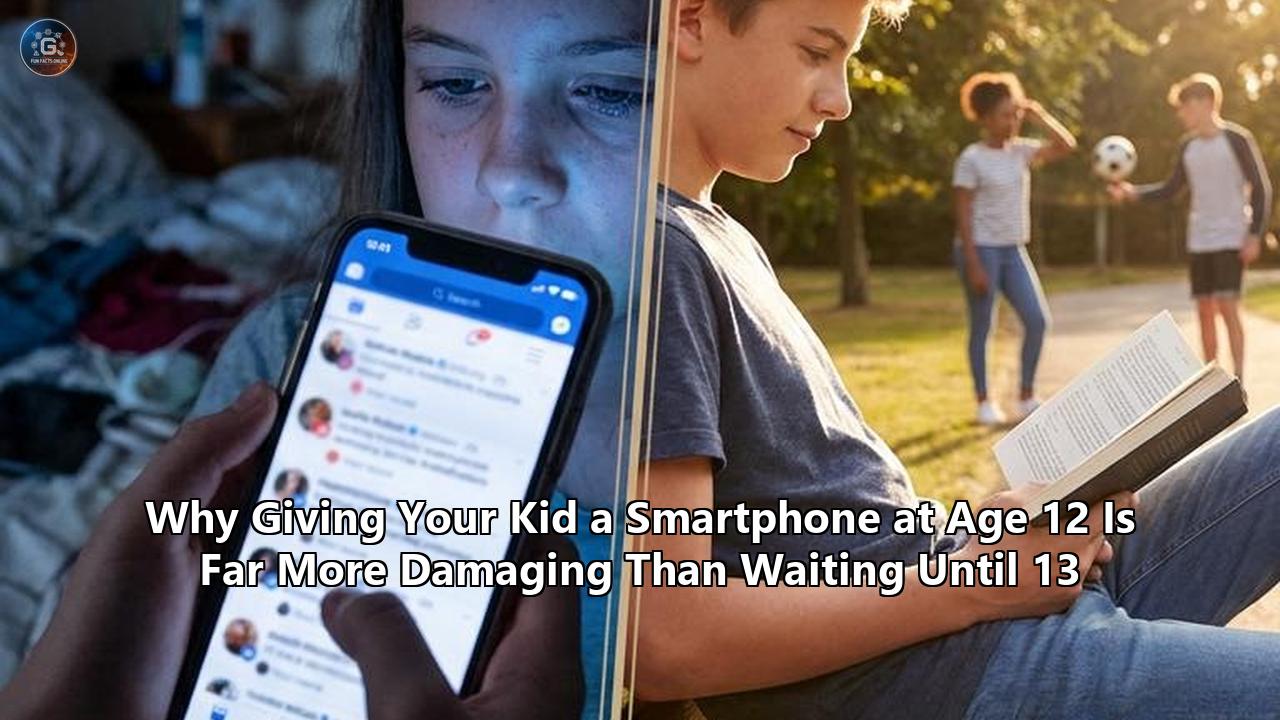
A landmark study published in JAMA Pediatrics on June 8, 2026, has provided researchers, pediatricians, and parents with a startlingly precise piece of data in the ongoing debate over youth and technology. The research reveals a stark, highly specific developmental boundary: giving a child a smartphone at age 12 is associated with severe, measurable deficits in mental health and physical well-being a year later, whereas waiting just 12 months longer—to age 13—appears to spare young teens from those automatic negative mental health outcomes.
The study, led by researchers at the Children’s Hospital of Philadelphia (CHOP) in collaboration with the University of California, Berkeley, and the University of Pennsylvania, tracked 1,959 young teens who had remained entirely smartphone-free up to age 13. By following this cohort as they transitioned from age 13 to 14, researchers discovered that simply acquiring a smartphone at age 13 did not trigger the same depressive trajectories that are routinely documented in children who receive devices at age 12 or younger.
This findings-heavy analysis builds directly upon a sister study published by the same CHOP research team in the journal Pediatrics on December 1, 2025. That earlier study analyzed more than 10,500 children and established that smartphone ownership at age 12 was linked to a 31% higher risk of clinical-level depression, a 40% higher chance of obesity, and a 62% higher risk of insufficient sleep compared to peers who remained phone-free.
"When considering the findings of this paper alongside our previous work, we can cautiously say that smartphone acquisition at age 13 appears safer than at or before age 12," explained Dr. Ran Barzilay, MD, PhD, a child psychiatrist at CHOP and the senior author of both studies.
This revelation has transformed how pediatricians and child psychologists advise families. For years, the guidance around technology has been characterized by vague warnings and generalized screen-time limits. Now, science has identified a sharp developmental cliff between ages 12 and 13. The structural and chemical differences in the brain across this single year mean that what is a psychological hazard for a 12-year-old can be navigated with far greater resilience by a 13-year-old.
The Neurodevelopmental Cliff: Why 12 Months Makes a Lifetime of Difference
To understand why a 12-year-old struggles so profoundly with a smartphone compared to a 13-year-old, one must look at the rapid, volatile neurodevelopmental changes occurring at the dawn of adolescence. Age 12 is a unique anatomical flashpoint. It is typically the absolute peak of pubertal onset, a period characterized by a massive surge of hormones that sensitizes the brain’s socio-emotional processing systems.
During this window, the brain undergoes a process of massive reorganization. Two critical regions are locked in an developmental mismatch:
- The Amygdala and Striatum: These deep-brain structures govern emotional responses, reward-seeking behavior, and social sensitivity. They mature early and rapidly, fueled by pubertal hormones, leaving early adolescents highly responsive to peer feedback, social status, and instant gratification.
- The Prefrontal Cortex (PFC): This area is responsible for cognitive control, impulse management, risk assessment, and long-term planning. The PFC does not fully mature until a person's mid-twenties.
At age 12, the gap between the hyper-sensitive reward centers of the brain and the underdeveloped prefrontal cortex is at its widest. Introducing a smartphone—a device engineered specifically to exploit dopamine-driven reward loops—into this neurological landscape is akin to handing a high-powered sports car to someone who cannot reach the brakes. The 12-year-old brain lacks the neurological wiring required to resist the persuasive design of modern applications, notifications, and social feeds.
By age 13, the brain has begun a critical phase of synaptic pruning and myelination, which structurally strengthens the connections between the prefrontal cortex and the amygdala. This neural consolidation significantly enhances a child’s capacity for cognitive control, emotional regulation, and self-monitoring.
According to child pediatric experts like Dr. Pilar Bradshaw of Eugene Pediatric Associates, introducing smartphones to children before this pruning process is sufficiently underway can result in severe developmental setbacks. "What we are seeing from this research is that younger children using smartphones are far more likely to show evidence of cognitive deficits, colloquially referred to as 'cognitive brain rot,'" Bradshaw observed. "This means a shorter working memory, a compromised attention span, and a significantly reduced ability to lock in and master complex academic concepts".
The data suggests that the 13th year acts as a developmental buffer. While a 13-year-old is by no means fully mature, their neural circuitry is significantly more integrated than it was just twelve months prior, allowing them to process the stimulation of a personal device without experiencing the same level of emotional dysregulation.
Who Is Affected? Inside the ABCD Study and Demographic Vulnerabilities
The evidence mapping this age-based disparity comes from the Adolescent Brain Cognitive Development (ABCD) study, funded by the National Institutes of Health (NIH). As the largest long-term study of brain development and child health in U.S. history, the ABCD study tracks more than 11,800 children across 21 distinct site locations, using neuroimaging, psychological evaluations, and lifestyle tracking to build an unprecedented map of youth development.
DEVELOPMENTAL PATHWAY: AGE 12 VS. AGE 13 OWNERSHIP
┌────────────────────────────────────────────────────────┐
│                   AGE 12 ACQUISITION                   │
├────────────────────────────────────────────────────────┤
│ • Peak pubertal vulnerability                          │
│ • Maximum prefrontal-amygdala developmental gap       │
│ • 31% higher risk of clinical depression               │
│ • 40% higher risk of pediatric obesity                 │
│ • 62% higher risk of severe sleep deprivation          │
└──────────────────────────┬─────────────────────────────┘
                           │ 12-Month Delay
                           ▼
┌────────────────────────────────────────────────────────┐
│                   AGE 13 ACQUISITION                   │
├────────────────────────────────────────────────────────┤
│ • Commencement of prefrontal-amygdala consolidation    │
│ • Marginally stabilized social-emotional regulation    │
│ • No automatic baseline depression correlation         │
│ • Vulnerable primarily to high-intensity use (>5 hrs)  │
└────────────────────────────────────────────────────────┘
The demographic data highlights that while early smartphone access harms all children, the impacts are not distributed entirely equally.
Gender-Based Vulnerabilities
The intersection of smartphone access and biological sex reveals a worrying trend. Girls undergo pubertal changes earlier than boys, often starting between ages 9 and 11, meaning that by age 12, their brains are already highly sensitized to social comparison, exclusion, and peer evaluation.
Global data compiled by Sapien Labs as part of their ongoing Global Mind Project—which assessed 27,969 young adults regarding their childhood technology habits—corroborates this gendered vulnerability. The researchers found that the earlier a young woman received her first smartphone, the more catastrophic her mental health quotient (MHQ) was in young adulthood.
Among young women who received their first smartphone at age 6, a staggering 74% were found to be mentally "distressed or struggling" by the time they reached ages 18 to 24. This rate declined systematically with every year the phone was delayed. For those who did not receive a device until age 13, the percentage of struggling young adult women dropped to approximately 56%, and fell further to 46% for those who waited until age 18.
For young men, a similar, though less steep, trajectory was observed: 42% of those who received a phone at age 6 experienced severe adult mental health challenges, compared to 36% of those who waited until age 18.
Socioeconomic and Peer Dynamics
Families in lower socioeconomic brackets often face unique pressures regarding device acquisition. In neighborhoods where safe, physical, after-school play spaces are scarce, parents frequently turn to smartphones earlier to keep children indoors and safe from physical harm, or as a tool to bridge communication gaps when working multiple jobs.
However, the CHOP study adjusted for these socio-demographic variables, alongside parental monitoring levels and alternative device ownership (like tablets). Even when accounting for these confounding factors, the statistical damage of receiving a smartphone at age 12 remained stark and independent. The device itself, when introduced too early, acts as a primary vector for physiological and psychological harm.
What Changes? The Structural Shift from Play-Based to Device-Based Childhood
The introduction of a personal smartphone does not merely add a new activity to a child’s schedule; it fundamentally alters the ecology of their daily life. In his influential work on adolescent mental health, social psychologist Jonathan Haidt argues that the rapid rise of youth mental illness starting around 2010 coincided with a massive transition from a "play-based childhood" to a "phone-based childhood".
This transition is particularly destructive at age 12 because of what the phone displaces during this critical developmental window.
HOURLY REALLOCATION OF A TWEEN'S DAY
Before Smartphone (Play-Based):
┌────────────────────────┬────────────────────────┬────────────────────────┐
│ Physical Play / Sports │ Face-to-Face Hangouts  │ High-Quality Sleep     │
│ (2-3 Hours)            │ (2 Hours)              │ (9-10 Hours)           │
└────────────────────────┴────────────────────────┴────────────────────────┘

After Smartphone (Phone-Based):
┌────────────────────────┬────────────────────────┬────────────────────────┐
│ Screen Use / Socials   │ Sedentary Media        │ Fragmented Sleep       │
│ (4-6 Hours)            │ (1-2 Hours)            │ (6-7 Hours)            │
└────────────────────────┴────────────────────────┴────────────────────────┘
The Loss of Physical Play and Socialization
Physical play is not idle time; it is the biological mechanism through which young mammals learn how to navigate social hierarchies, cooperate, read facial expressions, and regulate their own fight-or-flight responses. When a 12-year-old spends their afternoon staring at a screen, they miss thousands of micro-interactions that build social competence.
By age 13, a child has already logged a more robust foundation of real-world social experiences. They are slightly more secure in their offline identities, making them less susceptible to the devastating feelings of exclusion that social media algorithms are designed to amplify.
The Dopamine Loop and Attention Fragmentation
The continuous stream of notifications, likes, and short-form videos creates an artificial, high-frequency feedback loop. Because a 12-year-old's brain is highly sensitive to rewards but lacks mature executive control, they quickly develop what child psychiatrists classify as an "addictive attachment" to their device.
This constant interruption fragments their attention span. When a child cannot sit with boredom or focus on a single offline task for more than a few minutes without checking their device, the neural pathways associated with deep reading, critical analysis, and sustained focus begin to atrophy.
The Short-Term Consequences: Sleep, Obesity, and the Depressive Loop
The immediate, short-term impact of giving a child a smartphone at age 12 is characterized by a trio of interconnected physical and psychological health issues: sleep deprivation, metabolic changes, and clinical depression.
THE EARLY OWNERSHIP DOWNWARD SPIRAL
   ┌────────────────────────────────────────────────────────┐
   │             Smartphone Handed over at Age 12           │
   └───────────────────────────┬────────────────────────────┘
                               │
                               ▼
   ┌────────────────────────────────────────────────────────┐
   │               Severe Sleep Deprivation                 │
   │  • Melatonin suppressed by late-night blue light       │
   │  • Sleep-state disrupted by late notifications         │
   └───────────────────────────┬────────────────────────────┘
                               │
                               ▼
   ┌────────────────────────────────────────────────────────┐
   │                  Metabolic Disruption                  │
   │  • Decreased physical activity/increased screen time   │
   │  • Sleep-debt triggers cortisol & ghrelin production  │
   └───────────────────────────┬────────────────────────────┘
                               │
                               ▼
   ┌────────────────────────────────────────────────────────┐
   │              Onset of Depressive Symptoms              │
   │  • Neurochemical vulnerability from lack of sleep      │
   │  • Algorithmic comparison loops on social media        │
   └────────────────────────────────────────────────────────┘
1. The Sleep Deficit (62% Increased Risk)
Sleep is the foundation of adolescent development. During deep sleep, the brain consolidates learning, processes emotional experiences, and clears out cellular waste.
According to the 2025 study in Pediatrics, 12-year-olds with smartphones are 62% more likely to suffer from insufficient sleep than their smartphone-free peers. The biological mechanics behind this are twofold:
- Melatonin Suppression: The blue light emitted by smartphone screens suppresses the brain's natural production of melatonin, delaying the biological signals that tell a child it is time to sleep.
- Nighttime Disruption: A study looking at electronic device usage in early adolescents found that 11- and 12-year-olds who kept devices in their bedrooms were nearly 17% more likely to be awakened in the middle of the night by notification vibrations, pings, or the urge to check their feeds.
When a 12-year-old’s sleep is chronically interrupted or shortened, their emotional resilience plummets. Sleep-deprived brains show significantly higher reactivity in the amygdala and lowered activity in the prefrontal cortex, mimicking the biological signatures of clinical anxiety and depressive disorders.
2. Physical Health and Obesity (40% Increased Risk)
The CHOP study identified a direct 40% increase in the risk of pediatric obesity for children who received a smartphone at age 12. This metabolic decline is driven by both behavior and biology:
- Sedentary Displacement: Every hour spent on a smartphone is an hour not spent playing sports, riding bikes, or walking. Currently, more than 80% of children aged 11 to 17 fail to meet the recommended daily minimum of one hour of moderate-to-vigorous physical activity—a deficit heavily exacerbated by early screen addiction.
- Hormonal Changes: Chronic sleep deprivation directly disrupts the hormones that regulate appetite. It lowers leptin (the fullness hormone) and spikes ghrelin (the hunger hormone) while simultaneously increasing levels of cortisol (the stress hormone, which encourages the body to store visceral fat).
3. Clinical Depression (31% Increased Risk)
For a 12-year-old, the psychological toll of smartphone ownership is immediate. The 31% higher rate of clinical depression among 12-year-old smartphone owners is a direct consequence of their cognitive vulnerability.
At age 12, children are hyper-sensitive to peer feedback but do not yet possess the cognitive distance needed to realize that the curated lives they see on social media are artificial. They interpret digital silence (such as an unreturned text or a post with few likes) as devastating social rejection.
Because their brains are still developing their baseline emotional regulation systems, this constant digital stress can permanently alter their neural pathways, leaving them highly vulnerable to depressive episodes that can persist for years.
Long-Term Consequences: The Decimation of the "Social Self"
While the short-term consequences of early smartphone ownership are visible in sleep patterns and school grades, the long-term, systemic damage is far more worrying.
The global research conducted by Sapien Labs introduced a critical concept to this debate: the Social Self. The Social Self is an aggregate psychological metric that measures how an individual views themselves and how effectively they relate to, communicate with, and form positive relationships with others.
THE LONG-TERM TOLL OF EARLY ADOPTION
(Based on Sapien Labs Global Mind Project Data)
Percentage of Young Adults (Ages 18-24) Experiencing Clinical Mental Health Distress:

Age of First Smartphone:
Age 6:   ██████████████████████████████████ 74% (Female)
Age 10:  ████████████████████████████       61% (Female)
Age 13:  ██████████████████████             56% (Female)
Age 18:  ██████████████████                 46% (Female)
The Sapien Labs data showed that the Social Self score improved dramatically with every single year that smartphone ownership was delayed during childhood. Conversely, those who received their devices at earlier ages (especially at or before age 12) showed profound deficits in their Social Self metrics by the time they reached early adulthood (ages 18 to 24).
The long-term consequences of early smartphone-induced deficits in the Social Self include:
1. Chronic Suicidal Ideation and Self-Harm
The Sapien Labs study discovered a direct, linear relationship between the age of first smartphone acquisition and adult suicidal thoughts, intentions, and self-harm. On a clinical severity scale from 1 to 9 (where 1 indicates no issues and 9 indicates a constant, severe impact on the ability to function), young adult women who got their first phone at age 6 scored a highly concerning average of 5.8 for suicidal thoughts.
This risk declined systematically with each year of delay, dropping to 3.6 for those who received their first phone at age 18. For young men, the average rating dropped from 4.1 for early adopters down to 3.2 for late adopters.
2. Detachment from Reality and Dissociation
Young adults who received smartphones early in life are significantly more likely to report chronic feelings of detachment from reality, dissociation, and depersonalization.
Having spent their formative years navigating virtual worlds, online avatars, and algorithmic feeds during a time when their physical brains were trying to anchor themselves in physical reality, these individuals struggle to feel fully present in their own bodies and physical environments.
3. Persistent Aggression and Impaired Conflict Resolution
Children who spend their early adolescence communicating primarily through screens do not learn the vital, real-time social skills of reading body language, hearing vocal inflections, and experiencing the immediate consequences of their words.
Because digital communication is often low-consequence and highly polarized, early adopters are far more likely to exhibit adult traits of immediate aggression, defensive behavior, and an inability to resolve interpersonal conflicts constructively.
The Middle School Vortex: Peer Pressure and the Transition Hazard
To understand why age 12 is the absolute worst possible time to give a child a smartphone, one must look at the sociological reality of the middle school transition.
In the United States, age 12 typically corresponds with the transition into 6th or 7th grade. This is already one of the most socially turbulent, stressful transitions in a child's life.
Children are moving from the structured, familiar environment of elementary school into larger, more impersonal middle schools where peer hierarchies are complex, volatile, and intense.
THE MIDDLE SCHOOL SOCIAL PRESSURE COOKER
┌────────────────────────────────────────────────────────┐
│           The Middle School Transition (Age 12)        │
├────────────────────────────────────────────────────────┤
│ • Loss of elementary school structure                  │
│ • Higher academic pressure and changing classes       │
│ • High-stakes social hierarchies and exclusion risks   │
└──────────────────────────┬─────────────────────────────┘
                           │
             If Smartphone is Introduced:
                           ▼
┌────────────────────────────────────────────────────────┐
│             Amplified Social Stressors                 │
├────────────────────────────────────────────────────────┤
│ • 24/7 digital exclusion (group chats, read receipts)   │
│ • Algorithmic exposure to harmful content              │
│ • Cyberbullying moves from schoolyard into bedroom     │
└────────────────────────────────────────────────────────┘
When a child is handed a smartphone at this exact moment, all of these middle school stressors are amplified.
Group Chat Exclusion and Read Receipts
For a 12-year-old, being excluded from a real-world playground game is painful but temporary. But being left out of a class group chat—or seeing that classmates have read your message and chosen not to reply (the psychological torture of "read receipts")—is a constant, 24/7 source of anxiety.
A smartphone ensures that the social pressures, anxieties, and hierarchies of middle school follow a child home, invading their safe spaces and their bedrooms.
Cyberbullying and Algorithmic Exploitation
Data from the University of South Florida's Life in Media Survey found that nearly 6 in 10 children aged 11 to 13 had experienced some form of cyberbullying (such as being called mean or hurtful names online) in the preceding three months.
Because 12-year-olds lack the emotional maturity to handle online cruelty, even minor incidents of cyberbullying are associated with immediate spikes in depression, anger, and clinical anxiety.
Furthermore, social media algorithms are specifically designed to feed on emotional engagement. For a highly sensitive 12-year-old, this means their feeds quickly become flooded with content that reinforces their deepest insecurities, whether regarding body image, academic performance, or social status.
By waiting until age 13, parents allow their children to navigate the initial shock of the middle school transition first. By 8th grade (typically age 13 or 14), social groups have somewhat stabilized, academic routines are established, and the child has built up a level of resilience that makes them far more capable of handling the digital social landscape.
Determining the Best Age for Smartphone Ownership
Given this research, how should parents approach this decision?
Historically, parents have struggled with finding a specific age guideline, often giving in to the plea of "but everyone else has one" by age 11 or 12.
However, the latest developmental data points to a clear, evidence-based answer regarding the best age for smartphone ownership:
PEDIATRIC GUIDELINES FOR DEVICE ACQUISITION
┌──────────────────┬─────────────────────────────────────┬───────────────────────────┐
│ Age Range        │ Recommended Device Type             │ Access Level              │
├──────────────────┼─────────────────────────────────────┼───────────────────────────┤
│ Ages 5 to 11     │ Basic GPS Smartwatch                │ Call / Text Parents Only  │
├──────────────────┼─────────────────────────────────────┼───────────────────────────┤
│ Age 12           │ PIN-Locked Dumbphone (No App Store)  │ Voice Calls & SMS Only    │
├──────────────────┼─────────────────────────────────────┼───────────────────────────┤
│ Age 13 (Minimum) │ Strictly Monitored Smartphone       │ No Social Media / Bed Ban │
├──────────────────┼─────────────────────────────────────┼───────────────────────────┤
│ Age 16           │ Standard Smartphone                 │ Gradual Social Media      │
└──────────────────┴─────────────────────────────────────┴───────────────────────────┘
The medical and developmental consensus has shifted. While some surveys show that over half of children in the U.S. have a personal phone by age 11, the science indicates that this early access is a mistake.
Wait until at least age 13 to introduce a smartphone. If your child needs a way to communicate with you before then due to logistics or extracurricular sports, opt for a basic "dumbphone" (which only allows voice calls and SMS text messages) or a GPS-enabled smartwatch. These communication tools keep children connected to their families without exposing them to the internet, app stores, or social media algorithms.
When deciding on the best age for smartphone integration, it is also important to recognize that chronological age is only one part of the puzzle. A parent must also evaluate their individual child's maturity, cognitive focus, and emotional resilience.
Is your child able to complete their homework without constant distraction? Do they routinely follow household rules? Do they have a healthy, offline social circle?
If the answer to these questions is no, then even age 13 may be too early. The best age for smartphone introduction is whenever your child has demonstrated the cognitive and emotional control necessary to manage a device responsibly.
The Intensity Threat: Why 13 Is Not a Free Pass
While the June 2026 CHOP study published in JAMA Pediatrics showed that simply acquiring a smartphone at age 13 did not automatically increase a teen’s risk of depression at age 14, the researchers added a crucial caveat: intensity matters.
Acquiring a smartphone at age 13 is only safer if the child’s usage patterns are carefully managed and supervised.
THE 5-HOUR CLIFF
Mental and Physical Health Risks for 14-Year-Olds Based on Daily Phone Use:

Moderate Use (2 Hours or Less per Day):
• Low risk of clinical depression
• Healthy sleep patterns
• Normal metabolic/obesity risk

Intensive Use (5 Hours or More per Day):
• 2x risk of clinical depression
• 2x risk of pediatric obesity
• 2x risk of severe sleep deprivation
The study found that for children who owned a smartphone at age 14, spending more than five hours a day on the device was associated with:
- Double the risk of clinical depression compared to peers who used their devices for two hours or less.
- Double the risk of obesity.
- Double the risk of severe, chronic sleep deprivation.
"Our study did not look at what specific phone activities are harmful, but we did find that the overall duration of use and having nighttime access to the phone are key factors that drive risks to teen health," said lead author Dr. Ziv Bren, MD, a pediatrician postdoctoral research fellow at CHOP.
The lesson for parents is clear: delaying the age of acquisition is a necessary first step, but it is not a silver bullet on its own.
Even when waiting until the best age for smartphone adoption, parents must establish clear, firm boundaries around how, when, and where the device is used.
A Parenting Playbook: Strategic Delay and Practical Alternatives
Navigating this transition requires a proactive, strategic approach. You cannot simply tell a 12-year-old "no" without providing alternative options and support.
Here is a step-by-step playbook for parents to delay smartphone ownership successfully:
1. Implement the "Out of the Bedroom" Rule immediately
This is the single most effective rule a family can adopt. The CHOP study found that teens who kept their smartphones outside their bedrooms at night had significantly better sleep and lower rates of depression.
Establish a central charging station in the kitchen or living room. Every electronic device—including parents’ phones—must be plugged into the charging station by 8:30 PM.
To help your child wake up on time, buy them a basic, inexpensive digital alarm clock so they do not rely on a phone by their bed.
THE HOUSEHOLD DIGITAL CLEANSE
┌────────────────────────────────────────────────────────┐
│             Central Charging Station (8:30 PM)         │
├────────────────────────────────────────────────────────┤
│ • Parents' Phones                                      │
│ • Teens' Smartphones / Dumbphones                       │
│ • iPads, Tablets, and Laptops                          │
└──────────────────────────────────────────┬─────────────┘
                                           │
                            Saves Bedroom For:
                                           ▼
┌────────────────────────────────────────────────────────┐
│                   A Restorative Sanctuary              │
├────────────────────────────────────────────────────────┤
│ • 9.3 hours of uninterrupted, device-free sleep        │
│ • Reading physical books                               │
│ • Natural, screen-free morning routines                │
└────────────────────────────────────────────────────────┘
2. Orchestrate Collective Parent Action
One of the hardest parts of delaying a smartphone is your child's fear of social isolation. Parents can combat this by working together.
Reach out to the parents of your child’s close friends and classmates. Start a discussion about the latest neurodevelopmental research and suggest a collective agreement, such as pledging to wait until at least 8th grade (age 13 or 14) before giving your children smartphones.
When a group of friends is all on the same timeline, the peer pressure disappears, and the kids can continue socialising in the real world together.
3. Use Tiered, Dumbphone Alternatives
If your child needs a device for logistics, use a stepped transition:
- Step 1 (Ages 8-11): A basic GPS smartwatch that only allows calls and texts to pre-approved contacts.
- Step 2 (Age 12): A basic dumbphone with physical keys, no internet browser, and no app store. This allows them to coordinate rides and talk with friends without the risk of social media algorithms.
- Step 3 (Age 13+): A standard smartphone, but with strict parental controls that block social media downloads, limit screen time to under two hours a day, and automatically lock the device at night.
4. Model the Behavior You Want to See
Children learn more from what we do than what we say. If you are constantly checking your phone during dinner, while driving, or during family conversations, your child will notice.
Make a conscious effort to put your own phone away and be fully present during family times. This models healthy boundaries and shows your child that real-world relationships are more important than digital notifications.
Looking Ahead: The Evolving Regulatory and Cultural Landscape
The scientific consensus regarding the dangers of early smartphone ownership has sparked a broader, systemic movement among policymakers, schools, and health organizations worldwide.
THE EVOLVING POLICY LANDSCAPE (2026 AND BEYOND)
┌────────────────────────────────────────────────────────┐
│             Legislative & School Initiatives           │
├────────────────────────────────────────────────────────┤
│ • State-level phone-free school laws                    │
│ • Age-verification requirements for social media      │
│ • Surgeon General warning labels on digital platforms  │
└──────────────────────────┬─────────────────────────────┘
                           │
                           ▼
┌────────────────────────────────────────────────────────┐
│             Expected Outcomes for Youth                │
├────────────────────────────────────────────────────────┤
│ • Normalization of delayed smartphone acquisition      │
│ • Reductions in cyberbullying during school hours      │
│ • Recovery of active, play-based childhood spaces      │
└────────────────────────────────────────────────────────┘
1. State-Level School Phone Bans
Across the United States and Europe, governments are taking action to protect children. A growing number of states have passed legislation requiring public schools to implement phone-free policies during school hours.
These laws require students to turn off their phones and store them in secure, locked pouches (like Yondr pouches) or lockers from the first bell to the last bell.
Schools that have adopted these policies report immediate improvements: less cyberbullying during the day, higher academic focus, and a return to active, face-to-face socializing during lunch and recess.
2. Age-Verification Battles and Tech Accountability
The debate over age-verification on digital platforms has reached a boiling point. Lawmakers are pushing for stricter age-verification measures to prevent children under 13 from accessing social media platforms like TikTok, Instagram, and Snapchat.
At the same time, class-action lawsuits brought by school districts and state Attorneys General are pressuring tech companies to redesign their algorithms. The goal is to force platforms to remove addictive design features—such as infinite scroll and auto-play—for users under the age of 18.
3. The Shift in Medical and Public Health Advice
Just as the medical community eventually aligned on the dangers of tobacco and lead paint, public health agencies are now issuing clear, direct warnings about early smartphone use.
With major pediatric institutions like CHOP publishing clear data on the 12-to-13 divide, we are likely to see formal public health guidelines recommend a minimum age of 13 for personal smartphones.
The science is no longer vague. The developmental difference between giving a child a smartphone at age 12 versus waiting until age 13 is stark, measurable, and highly consequential.
By delaying this transition by just 12 months, parents can leverage their child's natural brain development to give them a stronger foundation of emotional resilience, better sleep, and a healthier lifestyle.
As communities, schools, and families adjust to these new findings, the movement to delay smartphone ownership is shifting from a parenting challenge to a mainstream, evidence-based public health standard.
Reference:
- https://www.prnewswire.com/news-releases/age-limits-alone-wont-fix-smartphone-risks-suggests-childrens-hospital-of-philadelphia-study-302794134.html
- https://www.morningstar.com/news/pr-newswire/20260608dc77137/age-limits-alone-wont-fix-smartphone-risks-suggests-childrens-hospital-of-philadelphia-study
- https://health.stonybrookmedicine.edu/is-your-child-too-young-for-a-smartphone-new-study-reveals-risks/
- https://www.chop.edu/news/childrens-hospital-philadelphia-study-links-smartphone-ownership-childhood-increased-risk
- https://www.mdpi.com/2036-7503/18/2/43
- https://research.com/education/what-age-should-a-child-get-a-smartphone
- https://www.independent.co.uk/life-style/smartphones-children-adolescence-mental-health-social-media-b2720374.html
- https://www.youtube.com/watch?v=F6baknxjUzc
- https://www.cbsnews.com/news/children-smartphones-increased-risk-of-health-problems-study/
- https://sapienlabs.org/age-of-first-smartphone-tablet-and-mental-wellbeing-outcomes-report/
- https://sapienlabs.org/whats_new/study-out-from-sapien-labs-links-age-of-first-smartphone-to-mental-wellbeing/
- https://sapienlabs.org/wp-content/uploads/2023/05/Sapien-Labs-Age-of-First-Smartphone-and-Mental-Wellbeing-Outcomes.pdf
- https://www.hindustantimes.com/india-news/delaying-smartphone-ownership-may-improve-mental-health-among-children-and-young-people-according-to-a-global-study-by-sapien-labs-the-study-found-that-an-earlier-age-of-smartphone-ownership-was-associated-with-poorer-mental-health-with-women-being-more-affected-the-percentage-of-women-experiencing-mental-health-challenges-decreased-from-74-to-46-as-the-age-of-first-ownership-increased-from-6-to-18-years-the-study-highlights-the-impact-of-social-media-particularly-on-young-people-and-the-need-for-guardrails-the-findings-have-significant-implications-for-parents-employers-and-policymakers-particularly-in-india-101684176307258.html
- https://en.tempo.co/read/2071018/study-reveals-impact-of-smartphone-ownership-on-children-under-age-12
- https://sapienlabs.org/age-of-first-smartphone-tablet-and-mental-wellbeing-outcomes/
- https://www.stpetersburg.usf.edu/news/2025/results-from-usf-study-on-kids-digital-media-use-reveal-benefits-of-smartphones.aspx