The Living Room Playground: How Media Diets Dictate Childhood Exclusions
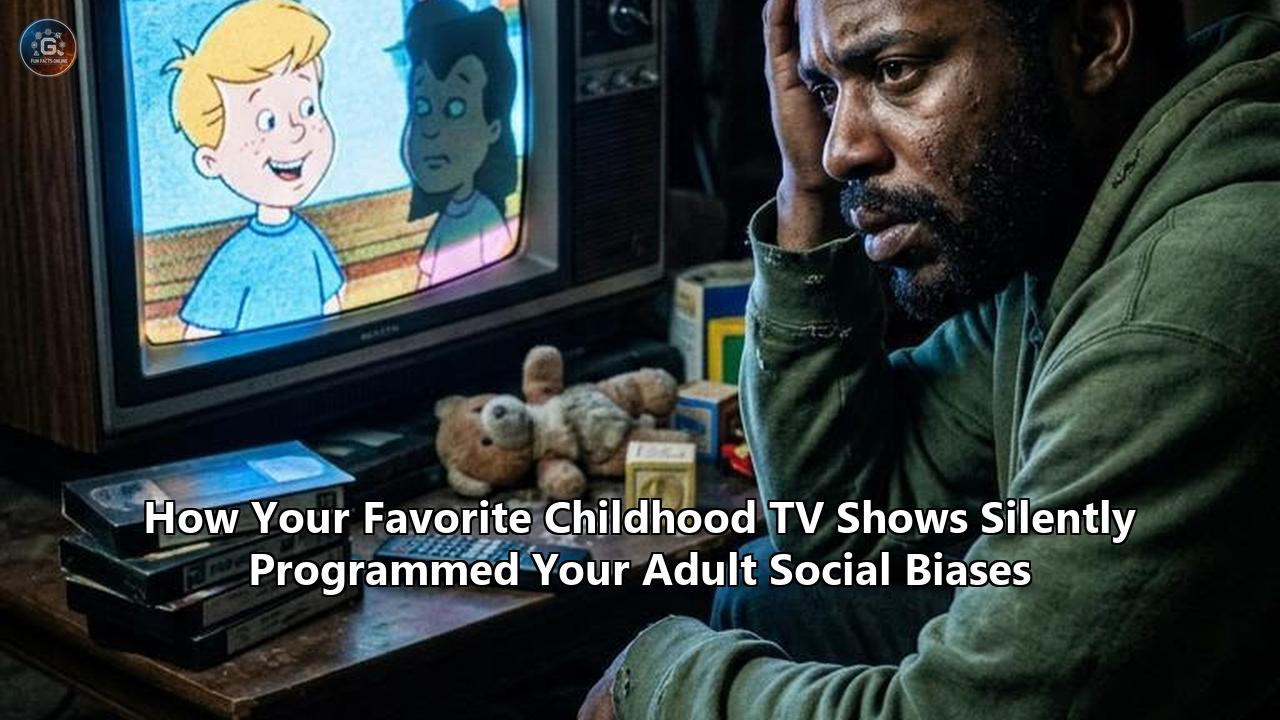
A yearlong longitudinal study published in Child Development has revealed that children’s media diets have a direct, measurable influence on their real-world social decisions and playground exclusions. The research, titled “The Role of Children's Media in White, U.S. Children's Developing Racial Bias,” tracked white children between the ages of 4 and 8 to evaluate how the demographic composition of their favorite television programs correlates with their developing racial and socioeconomic prejudices.
The findings are stark: children whose favorite television shows and films portrayed fewer Black characters were significantly less likely to choose to play with a Black peer in real life, demonstrated less positive attitudes toward Black children, and struggled to identify structural racial inequalities, instead attributing them to intrinsic personal differences. Led by Michael T. Rizzo, an assistant professor of psychology, the study provides concrete evidence of a direct causal pipeline running from early media consumption to active social exclusion on the preschool and elementary school playground.
                 [ Early Childhood TV Media Diet ]
                                 │
                                 ▼
              [ Neurological Encoding / Bias Formation ]
                                 │
            ┌────────────────────┴────────────────────┐
            ▼                                         ▼
[ Real-World Playground Exclusion ]        [ Adult Implicit Bias ]
  - Direct peer-group sorting               - Syntactic/Semantic associations
  - Avoidance of outgroup children          - Accent-based moral sorting
  - Normalization of inequality             - Career/Status stereotyping
This research challenges the long-held parental assumption that young children are naturally "colorblind" and that prejudice is only passed down through explicit, hateful adult instruction. Instead, the study demonstrates that passive media consumption acts as a silent architect of social hierarchy. When a child’s media diet is homogeneous, their brain automatically categorizes the underrepresented group as an "other" or an outsider, translating a lack of screen representation into active real-world avoidance on the playground.
As children spend more time in front of screens, the simulated relationships they observe on television increasingly replace organic community interactions. This shift makes it critical to understand the long-term childhood tv shows impact on adult cognitive development. The psychological scripts, linguistic biases, and social hierarchies encoded during these formative years do not disappear when the television is turned off. Instead, they become the foundation of our adult implicit biases, quietly shaping how we hire, vote, and interact with the world around us decades later.
The Syntax of Subservience: 60 Years of Hidden Gender Grammar
To understand how childhood TV shows impact adult cognitive frameworks, we must look beyond visual representation and examine the very language used in these programs. A computational study published in Psychological Science by researchers Andrea C. Vial, Aida Mostafazadeh Davani, Ruyuan Zuo, Shreya Havaldar, and Andrei Cimpian analyzed a massive corpus of scripts from 98 children’s television programs in the United States spanning from 1960 to 2018.
The dataset was vast:
- 6,600 episodes
- 2.7 million sentences
- 16 million words
Using advanced natural language processing (NLP) tools, the researchers examined gender bias along the two fundamental psychological dimensions that underlie social stereotypes: agency (achievement, power, intellect, and independence) and communion (nurturance, warmth, domesticity, and emotional connection).
                      GENDER STEREOTYPE DIMENSIONS

        AGENCY                                     COMMUNION
        (Power, Intellect, Independence)           (Nurturance, Warmth, Domesticity)

        ┌──────────────────────────────┐           ┌──────────────────────────────┐
        │ Active "Doer" (Subject)      │           │ Passive "Patient" (Object)   │
        │ Associated with Male/Boys    │           │ Associated with Female/Girls │
        └──────────────────────────────┘           └──────────────────────────────┘
The study uncovered a deep-seated linguistic divide. At the syntactic level, male characters were overwhelmingly positioned as active "agents"—the entities performing actions—while female characters were positioned as passive "patients"—the entities having actions performed upon them. For nearly six decades, words referring to men and boys (such as he, him, brother, or boy) consistently appeared in active subject roles.
In contrast, words referring to women and girls (such as she, her, sister, or girl) were relegated to object roles. Remarkably, this syntactic bias remained completely stable over the 58-year period. Despite decades of social progress and public demands for better representation, the underlying grammatical structure of children's television did not improve.
Semantic Associations: Agency vs. Communion
At the semantic level, the researchers measured how frequently gendered pronouns co-occurred with words denoting agency versus communion. Male characters were consistently linked to active, agency-driven concepts:
- Financial transactions
- Power dynamics
- Intellectual achievements
- Physical dominance
Female characters, on the other hand, were systematically associated with communion-driven concepts:
- Relational maintenance
- Domestic labor
- Emotional expression
This linguistic programming is especially powerful because it is subtle. While a child might notice if a show features only male heroes, they are unlikely to consciously recognize that the dialogue consistently frames male characters as the source of action and female characters as the recipients of those actions.
Over time, this grammatical bias quietly teaches children that agency belongs more naturally to boys, establishing a cognitive script that persists into adulthood.
       [ Male Pronouns / Nouns ]              [ Female Pronouns / Nouns ]
                   │                                       │
                   ▼                                       ▼
        Syntactic Agent (Subject)               Syntactic Patient (Object)
         - "He ran, built, decided"              - "She was saved, seen, given"
                   │                                       │
                   ▼                                       ▼
             Semantic Agency                         Semantic Communion
       - Achievement, Power, Intellect         - Nurturance, Emotion, Domesticity
The Illusion of Progress: Analyzing Classic Shows
This linguistic divide is highly visible when we deconstruct the classic children's programs of the 1990s and 2000s. Even shows celebrated for their progressive themes often relied on scripts that reinforced traditional gender dynamics.
Dexter's Laboratory (Cartoon Network)
This series features a stark gender division built directly into its premise. Dexter is a young male genius who operates with absolute syntactic agency. He invents, calculates, constructs, and controls.
His sister, Dee Dee, is a chaotic, non-rational force of communion who exists to disrupt his work. Dee Dee dances, giggles, destroys, and pleads.
The linguistic coding of the show establishes a clear hierarchy: male intellect and active agency are continually pitted against female emotionality and passive disruption.
       DEXTER'S LABORATORY (Linguistic Coding)

       DEXTER [Male Agency]                 DEE DEE [Female Communion]
       - Invents, calculates                - Dances, giggles
       - Active subject                     - Disruptive force
       - Controls the environment           - Reacts emotionally
Rugrats (Nickelodeon)
Although the show features strong female characters like Angelica Pickles, their agency is often framed negatively. Angelica is a bossy, manipulative antagonist whose active behavior is coded as selfish and socially disruptive, contrasting with the nurturing, communal traits expected of young girls.
Meanwhile, the main protagonist, Tommy Pickles, is defined by his positive, exploratory agency. He is the brave, active leader of the babies, while his female counterpart, Lil DeVille, is rarely given independent narrative agency, almost always acting in tandem with or in reaction to her twin brother, Phil.
The Fairly OddParents (Nickelodeon)
In this series, the division of labor between Timmy Turner’s fairy godparents, Cosmo and Wanda, follows a classic domestic script. Although Wanda is depicted as the competent, intelligent partner, her dialogue is syntactically tethered to communion and containment. She exists to clean up messes, worry about consequences, and care for Timmy's emotional needs.
Cosmo, despite his buffoonery, is given the active, agency-driven role of initiating action. He makes the wishes happen, creates the chaotic scenarios, and drives the narrative forward. This structure teaches young viewers that even incompetent male agency is more active and dynamic than highly competent female domestic maintenance.
Kim Possible (Disney Channel)
Often cited as a feminist milestone, the show still displays subtle linguistic biases under closer inspection. While Kim is a highly capable secret agent, her dialogue and storylines are frequently balanced by traditional feminine concerns, such as cheerleading, fashion, and romantic relationships.
Her male sidekick, Ron Stoppable, is allowed to be lazy, unkempt, and eccentric without losing his place in the narrative. The script constantly reminds the audience of Kim's need to maintain her social standing and relational harmony, anchoring her active agency to traditional communal expectations.
      Traditional Feminist Milestone?
      KIM POSSIBLE: Highly active agent ◄─── BUT ───► Dialogue balanced by fashion,
                                                      social standing, and relationships.
By consuming thousands of hours of these linguistic patterns, children build a cognitive database where "doing," "leading," and "thinking" are associated with masculinity, while "feeling," "helping," and "maintaining" are associated with femininity.
As adults, these associations solidify into implicit biases that affect workplace performance evaluations, career choices, and leadership dynamics. When a hiring manager subconsciously associates a female job applicant with support roles and a male applicant with decisive action, they are often executing a cognitive program that was written during their childhood television viewing.
Coded Villains: The Accentism and Xenophobia of the Animated Voice
Linguistic programming in children's media extends beyond grammar to the very sounds of the characters' voices. A study published in Child Development by Elizabeth Johnson, a psychology professor at the University of Toronto, examined how the use of accents in children’s television programs reinforces social biases and xenophobia.
The study analyzed more than 100 popular children’s animated films and television shows, tracking the correlation between a character's accent and their moral character, intelligence, and social status.
                          THE PHONETICS OF VILLAINY

      Standard/American Accents                    Non-Standard/Foreign Accents

      ┌──────────────────────────────┐             ┌──────────────────────────────┐
      │ Protagonists & Heroes        │             │ Antagonists & Sidekicks      │
      │ Coded as Kind, Trustworthy   │             │ Coded as Sinister, Devious   │
      └──────────────────────────────┘             └──────────────────────────────┘
The researchers found a consistent pattern: standard American or British Received Pronunciation accents were overwhelmingly reserved for protagonists, heroes, and characters depicted as kind, intelligent, and trustworthy.
In contrast, non-standard accents—including foreign accents (such as Slavic, Germanic, or Middle Eastern) and regional American accents (such as Southern, urban working-class, or African American Vernacular English)—were disproportionately used for villains, sidekicks, and characters depicted as unintelligent, devious, or comical relief.
The Accent Bias Experiment
To determine whether children internalize these vocal patterns, the researchers conducted a three-part experiment with children of various ages:
- The Media Diet Audit: 95 children and their parents compiled lists of their favorite animated programs. The researchers confirmed that non-standard accents were severely underrepresented in these shows, and when they did appear, they were consistently linked to negative traits or villainy.
- The Voice Association Test: Children were played audio clips of the same actor using different accents (e.g., standard American vs. British or Eastern European) and asked to assign each voice to a cartoon hero or a cartoon villain. Both children and parents were significantly more likely to associate foreign and non-standard accents with villainous characters.
- The Developmental Trajectory: The researchers repeated the experiment with children aged 5 and 13 to observe how these associations change over time. They found that language-based biases grew significantly stronger with age, with older children demonstrating a highly consolidated association between foreign accents and moral corruption.
               [ Voice Association Test ]
                    │          │
        ┌───────────┘          └───────────┐
        ▼                                  ▼
[ Standard Accent ]               [ Non-Standard/Foreign ]
  - Heroic                           - Villainous
  - Trustworthy                      - Devious
  - Intelligent                      - Comedic Relief
These linguistic biases begin to form as early as age three, and without intervention, they continue to harden throughout childhood and adolescence. By systematically linking non-standard accents to villainy and stupidity, children's television programs program viewers to associate linguistic differences with moral and intellectual deficiencies.
Classic Voice Coding: Shorthands for Moral Corruption
This vocal coding has been a staple of children's entertainment for decades, creating a deeply ingrained set of linguistic stereotypes.
┌──────────────────────────┬──────────────────────────┬──────────────────────────┐
│ Character / Show         │ Accent Used              │ Character Traits Coded   │
├──────────────────────────┼──────────────────────────┼──────────────────────────┤
│ Scar (The Lion King)     │ British Received Pron.   │ Devious, treacherous,    │
│                          │                          │ intellectual villainy    │
├──────────────────────────┼──────────────────────────┼──────────────────────────┤
│ Jafar (Aladdin)          │ Mid-Atlantic / British   │ Sinister, manipulative,  │
│                          │                          │ power-hungry             │
├──────────────────────────┼──────────────────────────┼──────────────────────────┤
│ Gru (Despicable Me)      │ Vaguely Eastern European │ Villainous, criminal,    │
│                          │                          │ bumbling but devious     │
├──────────────────────────┼──────────────────────────┼──────────────────────────┤
│ Doofenshmirtz (Phineas)  │ Germanic / Slavic blend  │ Mad scientist, chaotic,  │
│                          │                          │ obsessive, bumbling      │
└──────────────────────────┴──────────────────────────┴──────────────────────────┘
Scar (The Lion King)
In this Disney classic, the royal pride is divided by accent. Mufasa and Simba speak with standard, warm American accents, coding them as trustworthy, heroic, and familiar to American audiences.
Scar, the murderous uncle, speaks with an elegant, theatrical British accent. This vocal styling associates his British Received Pronunciation with deviousness, intellectual coldness, and treason.
Jafar (Aladdin)
While Aladdin and Jasmine speak with standard, unaccented American English, the villain Jafar speaks with a haughty, Mid-Atlantic British accent, and the street merchants speak with thick, caricatured Middle Eastern accents.
This vocal division positions standard American speech as the voice of goodness and beauty, while foreign accents are linked to untrustworthiness and greed.
Gru (Despicable Me)
The protagonist of the franchise begins his narrative as a supervillain, and his character design is paired with a heavy, cartoonish Eastern European accent.
This choice reinforces a long-running Hollywood convention that links Slavic and Eastern European accents with criminality, espionage, and global threats, tapping into lingering Cold War anxieties.
Heinz Doofenshmirtz (Phineas and Ferb)
The bumbling mad scientist of the series speaks with a thick, Germanic-sounding accent.
By pairing his obsessive, erratic behavior with a German vocal style, the show reinforces a common stereotype that associates Central European accents with eccentric, dangerous scientific ambition.
The Playground to the Workplace: Accentism in Adulthood
The consequences of this early linguistic conditioning are profound. In adulthood, these internalized stereotypes manifest as "accentism"—a highly pervasive form of bias that remains socially tolerated.
                                [ Accentism Pipeline ]

       Early Childhood TV                                  Adult Employment
    - Accent = Moral Shorthand                          - Accent = Trustworthiness Indicator
    - Foreign = Untrustworthy                           - Foreign = Unfit for Leadership
When an adult hears a regional or foreign accent, their brain's implicit processing network—conditioned by thousands of hours of cartoon villains and bumbling sidekicks—can instantly trigger subconscious judgments about the speaker's trustworthiness, intelligence, and capability.
In professional environments, this bias directly affects hiring decisions, performance evaluations, and leadership opportunities. Job applicants with non-standard accents are frequently rated as less suitable for executive positions, less persuasive, and less intelligent than those who speak with standard accents, even when their qualifications are identical.
Similarly, in legal settings, witnesses and defendants with non-standard accents are often perceived by juries as less credible and more likely to be guilty. The cartoon shorthand of our childhoods becomes a tool of systemic exclusion in our adult institutions.
The Sesame Street Blueprint: Empirical Proof of Lifelong Cognitive Rewiring
While children's media can encode harmful biases, it also has the power to dismantle them. The most compelling evidence of this potential comes from research on Sesame Street, a television program designed from its inception to address social inequalities.
An economic study published by the American Economic Association (AEA) investigated the long-term, causal impact of exposure to Sesame Street on adult social attitudes, voting behaviors, and implicit biases.
                     SESAME STREET NATURAL EXPERIMENT (1969)

       High UHF/VHF Coverage                           Low UHF/VHF Coverage
       (Easy access to Sesame Street)                  (No/Poor access to Sesame Street)

       ┌──────────────────────────────┐                ┌──────────────────────────────┐
       │ - Lower adult implicit bias  │                │ - Higher adult implicit bias │
       │ - +4.2% voter turnout        │                │ - Lower voter turnout        │
       │ - Higher support for diverse │                │ - Lower support for diverse  │
       │   political candidates       │                │   political candidates       │
       └──────────────────────────────┘                └──────────────────────────────┘
The study utilized a natural experiment created by the show's launch in 1969. At the time, television was broadcast via two types of signals: Very High Frequency (VHF) and Ultra High Frequency (UHF). Counties with high VHF coverage could easily receive the educational station broadcasting Sesame Street, while counties reliant on UHF coverage had poor or non-existent reception.
By comparing cohorts of children who grew up in high-coverage counties with those who grew up in low-coverage counties, researchers were able to isolate the causal effects of the show over several decades.
The longitudinal results were remarkable:
- Lower Implicit Bias: White adults who grew up in counties with high Sesame Street coverage demonstrated significantly lower levels of implicit bias against Black individuals decades later.
- Increased Voter Turnout: Individuals exposed to the show during early childhood were 4.2 percentage points more likely to vote in adulthood.
- Support for Diversity: Exposed cohorts demonstrated a significantly higher willingness to vote for demographically diverse political candidates.
This study provides empirical proof that positive representations in childhood media can lead to long-term reductions in social prejudice and lasting changes in political behavior.
Vicarious Intergroup Contact Theory
The success of Sesame Street is explained by a psychological framework known as Vicarious Intergroup Contact Theory. This theory suggests that observing positive, cooperative interactions between different social groups on television can reduce prejudice and anxiety in viewers, particularly when they have limited opportunities for direct contact in their physical neighborhoods.
                  [ Vicarious Intergroup Contact ]
                                 │
            ┌────────────────────┴────────────────────┐
            ▼                                         ▼
[ Reduced Intergroup Anxiety ]              [ Increased Empathy ]
            │                                         │
            └────────────────────┬────────────────────┘
                                 ▼
                     [ Lower Implicit Bias ]
When children watch characters from diverse backgrounds interact with warmth, respect, and mutual support, they build cognitive models that normalize diversity and reduce intergroup anxiety.
A study published in Race and Social Problems examined this mechanism, demonstrating that viewing cooperative intergroup interactions on television significantly increases viewers' ethnocultural empathy and reduces both explicit and implicit prejudice.
Sesame Street was intentionally designed to leverage this theory. Created by television producer Joan Ganz Cooney and developmental psychologist Gerald S. Lesser, the program bypassed traditional cartoon settings in favor of a realistic, gritty, inner-city neighborhood.The show featured a racially diverse cast of human actors (including Gordon, Susan, Maria, and Luis) who lived, worked, and solved problems alongside puppets and children.
                     SESAME STREET COGNITIVE DESIGN

      Realistic Urban Setting ◄─── INTENTIONAL ───► Diverse Human Cast
      (Bypassed fantasy tropes)                     (Gordon, Susan, Maria, Luis)
                                        │
                                        ▼
                           Egalitarian Interactions
                        (Modeled prosocial behavior)
By presenting an integrated, cooperative community, Sesame Street provided millions of children with positive vicarious contact, helping to counter the segregated realities of mid-century America.
The program modeled prosocial behavior, cooperative problem-solving, and emotional intelligence, proving that children's television can be a powerful tool for positive social development.
Synapses and Screens: The Neurobiology of the Televised Sponge
To understand why early media consumption has such a profound, lasting impact on our adult biases, we must look at the neurobiology of the developing brain. During the first eight years of life, a child's brain is in a state of hyper-plasticity, rapidly absorbing and organizing information from the environment. This rapid development is driven by two key neurological processes: synaptogenesis (the creation of neural connections) and myelination (the insulation of neural pathways to increase processing speed).
                 [ Early Childhood Brain (Ages 0-8) ]
                                 │
           ┌─────────────────────┴─────────────────────┐
           ▼                                           ▼
[ Hyper-Plasticity ]                            [ Mirror Neuron System ]
  - Rapid synaptogenesis                         - Internalizes observed social scripts
  - Myelination of pathways                      - Simulates televised interactions
  - High sensitivity to repetition               - Encodes "normal" vs. "other"
When a child repeatedly views specific social scripts, linguistic pairings, or demographic hierarchies on television, those pathways are continually activated and reinforced. Over time, the brain prunes away unused connections while strengthening and insulating the highly active pathways, turning temporary observations into permanent cognitive defaults.
This process explains how implicit biases become deeply embedded in our cognitive architecture, operating automatically beneath our conscious awareness.
The Mirror Neuron System and Social Categorization
This process is further amplified by the mirror neuron system—specialized brain cells that fire both when an individual performs an action and when they observe someone else performing that same action. When a child watches a television program, their mirror neurons internally simulate the actions, emotions, and social dynamics they see on screen. This neural simulation makes television a potent form of "accidental socialization," allowing children to internalize social hierarchies, gender roles, and behavioral scripts as if they were experiencing them directly in their physical environment.
This neural sensitivity makes young children exceptionally good at categorization. To make sense of a complex world, the developing brain seeks out shortcuts, grouping people and objects based on visible characteristics. A study from the University of California, Los Angeles (UCLA) demonstrated that children as young as first grade could easily categorize animated characters as "good" or "bad" based on subtle status cues and environmental markers they had observed on television.
                     CHILDHOOD COGNITIVE SORTING

       Visual Cue on Screen                        Cognitive Association

       ┌──────────────────────────────┐            ┌──────────────────────────────┐
       │ Spacious Suburban Home       │ ◄───OR───► │ Wealth, Goodness, Safety     │
       │ Clean, orderly environment   │            │ Coded as "Normal" & "Good"   │
       └──────────────────────────────┘            └──────────────────────────────┘

       ┌──────────────────────────────┐            ┌──────────────────────────────┐
       │ Working-Class Environment    │ ◄───OR───► │ Poverty, Failure, Danger     │
       │ Missing or comedic relief    │            │ Coded as "Abnormal" & "Bad"  │
       └──────────────────────────────┘            └──────────────────────────────┘
The study revealed that children do not just categorize people by race or gender; they also group them by socioeconomic status. When a child’s media diet consistently portrays wealthy, suburban families as the default standard of happiness and safety, while working-class or low-income families are either missing, treated as comic relief, or associated with danger and misery, the child’s brain builds a simplistic equation: wealth equals goodness, and poverty equals failure.
The Erasure of Class: Normalizing the Suburban Default
This socioeconomic programming is highly prevalent in modern children's television, where working-class realities are routinely erased or pathologized.
┌──────────────────────────┬──────────────────────────┬──────────────────────────┐
│ Television Program       │ Visual Setting           │ Classist Coding          │
├──────────────────────────┼──────────────────────────┼──────────────────────────┤
│ Hannah Montana /         │ Spacious, luxurious      │ Wealth is presented as   │
│ Lizzie McGuire           │ suburban homes           │ the default standard of  │
│                          │                          │ normalcy and happiness   │
├──────────────────────────┼──────────────────────────┼──────────────────────────┤
│ Suite Life of Zack &     │ Luxury hotel suite       │ Working-class employees  │
│ Cody                     │                          │ are depicted as lazy,    │
│                          │                          │ eccentric, or incompetent│
├──────────────────────────┼──────────────────────────┼──────────────────────────┤
│ The Simpsons             │ Run-down suburban home   │ Working-class father is  │
│                          │                          │ bumbling, lazy, and the  │
│                          │                          │ target of constant jokes │
└──────────────────────────┴──────────────────────────┴──────────────────────────┘
Hannah Montana / Lizzie McGuire (Disney Channel)
Most live-action Disney Channel sitcoms are set in spacious, upscale suburban homes or luxurious apartments. The characters' parents often hold high-paying, professional jobs (such as doctors, music producers, or executives), and the narratives revolve around consumerist pursuits, like shopping, styling, and status maintenance.
This consistent backdrop frames affluence as the baseline of a normal childhood, leaving working-class realities invisible.
The Suite Life of Zack & Cody (Disney Channel)
Set in a luxury hotel, the show's main protagonists live in a high-end suite, and the narrative frequently contrasts their lives with those of the hotel's working-class staff.
Employees like Esteban (the bellhop), Arwin (the janitor), and Muriel (the maid) are consistently depicted as eccentric, incompetent, or lazy, serving as comedic foils for the wealthier main characters. This setup teaches children to associate service-industry jobs with personal eccentricities and intellectual deficits.
SpongeBob SquarePants (Nickelodeon)
While the show features working-class characters, their labor is often depicted as a source of misery or bumbling incompetence. SpongeBob’s job as a fry cook is framed as a naive obsession, while Squidward's role as a cashier is depicted as a soul-crushing tragedy.
Their employer, Mr. Krabs, is a caricature of extreme greed, but his ruthless exploitation of his workers is treated as a harmless joke. This framing normalizes labor exploitation and discourages children from developing a critical understanding of workplace dynamics.
The Simpsons (Fox / Syndicated)
Although the show is celebrated for its satire of working-class American life, it still relies on a persistent classist trope: the bumbling, lazy, and incompetent working-class father. Homer Simpson's secure job at a nuclear power plant—which allows him to support a family of five, own a home, and have two cars—is treated as an absurdity, while his actual labor is depicted as a series of dangerous failures.
This framing reinforces a stereotype that working-class individuals are fundamentally incompetent, framing their economic stability as a fluke rather than a right.
By consuming these classist tropes, children build an adult cognitive framework that naturalizes economic inequality. They grow up associating wealth with moral and intellectual superiority, while viewing poverty not as a systemic issue, but as a personal, moral failing.
When adults oppose social safety nets or assume that low-wage workers are simply not working hard enough, they are often executing a socioeconomic program that was quietly installed in their childhood living rooms.
The Myth of the Colorblind Child: Why Passivity Feeds Bias
The long-term impact of childhood TV shows on adult bias is often underestimated because of the widespread belief in "colorblindness"—the idea that if children are raised in a neutral environment where race and class are not explicitly discussed, they will grow up without prejudice.
However, developmental psychology and media analysis show that this passive approach is ineffective. In the absence of explicit, diverse, and critical media consumption, children’s brains naturally fill the void with the biased scripts and structural inequalities they see on screen.
                                  [ THE VACUUM EFFECT ]

     Parental "Colorblind" Silence ◄─── CREATES ───► Childhood Media Exposure
     (No explicit discussion of                      (Homogeneous/biased programming)
      race, gender, or class)
                                         │
                                         ▼
                             Unconscious Socialization
                         (Biased scripts fill the vacuum)
By allowing children to consume media that reflects only their own demographic or relies on traditional stereotypes, parents and educators inadvertently reinforce a social hierarchy. This passive socialization is particularly powerful because it operates through omission.
When a child never sees a protagonist who lives in an apartment, rides public transit, or speaks with a foreign accent, they are programmed to view those lifestyles and identities as abnormal, lesser, or threatening.
The Algorithmic Trap: The Loss of the Shared Neighborhood
This issue is further compounded by the structure of modern media distribution. In the era of broadcast television, families watched a shared, curated set of programs, such as Sesame Street, Mister Rogers' Neighborhood, or Reading Rainbow, which were designed with public interest and child development goals in mind.
Today, children consume media via streaming platforms (such as YouTube, Netflix, or Disney+) that are driven by recommendation algorithms designed to maximize screen time.
       BROADCAST ERA                                STREAMING ERA

       ┌──────────────────────────────┐             ┌──────────────────────────────┐
       │ - Shared communal experience │             │ - Algorithmic personalization│
       │ - Public interest design     │             │ - Screen-time maximization   │
       │ - Diverse vicarious contact  │             │ - Siloed content bubbles     │
       └──────────────────────────────┘             └──────────────────────────────┘
These algorithms create highly personalized, siloed content loops, feeding children more of what they have already watched. If a child shows a preference for a program with a homogeneous cast, the algorithm will continue to recommend similar shows, locking them into a demographic echo chamber that limits their exposure to different cultures, accents, and life experiences.
This algorithmic isolation removes the shared, diverse vicarious contact that was once a staple of children's public broadcasting.
Path Forward: Actionable Solutions for Parents, Educators, and Creators
Dismantling the silent programming of childhood television requires an active, intentional, and multi-layered approach that spans home environments, educational settings, and the entertainment industry.
                            STRATEGIES FOR DEPROGRAMMING

      Active Co-Viewing           Intentional Media Auditing    Industry Code Reform

      ┌──────────────────────┐    ┌────────────────────────┐    ┌────────────────────────┐
      │ Ask critical, open-  │    │ Balance media diets    │    │ Integrate linguistic & │
      │ ended questions to   │    │ with diverse leads and │    │ semantic auditing      │
      │ disrupt bias loops   │    │ cooperative scripts    │    │ tools in screenplays   │
      └──────────────────────┘    └────────────────────────┘    └────────────────────────┘
1. Active Co-Viewing and Media Literacy in the Home
Research shows that parental co-viewing and active mediation can significantly reduce the negative impact of television violence and social biases. Parents must move away from using the television as a passive babysitter and instead treat media consumption as an interactive, educational experience.
- Disrupt the Bias Loop: During co-viewing, parents should ask open-ended, age-appropriate questions that challenge the stereotypes on screen.
For gender bias: "Why do you think the boy characters are always making the plans while the girl characters are waiting for them?"
For socioeconomic bias: "Is this character's house realistic for most families? What are some different, wonderful places where people live?"
For accent bias: "The character with the accent was the bad guy in this cartoon, but in real life, does an accent have anything to do with how kind or untrustworthy someone is?"
- Explicit Socialization: Talk openly with children about race, gender, and economic inequality, using stories to contextualize these concepts rather than pretending they do not exist.
2. Intentional Media Auditing
Parents and educators should actively audit children's media diets, curating a balanced selection of programs that features:
- Diverse protagonists who lead, invent, and drive the story.
- Positive cross-group friendships and cooperative intergroup interactions.
- Non-traditional gender roles and varied socioeconomic backgrounds.
- Characters who speak with regional or foreign accents in heroic, intelligent, and highly capable roles.
3. Structural Reform in the Entertainment Industry
Content creators, animators, and network executives must recognize the deep developmental impact of their scripts, vocal choices, and character designs.
- Linguistic and Semantic Auditing: Production companies should use computational tools—such as the natural language processing methods developed in the 2025 Vial study—to audit their screenplays for hidden syntactic and semantic gender biases before production begins.
- Dismantle Vocal Shorthands: Voice-casting directors must intentionally sever the link between accents and morality. Protagonists and authority figures should speak with a wide variety of regional and foreign accents, while standard accents should be used for villains to dismantle the "accentism of the animated voice".
- Socioeconomic Diversity: Writers must create narratives that reflect realistic working-class lives without resorting to caricature, lazy tropes, or paternalistic pity, proving that dignity, intelligence, and community are not exclusive to affluent suburbs.
What to Watch: The Shift in Children's Content
As we move forward, the battle over the cognitive development of future generations will be fought on both streaming platforms and in regulatory spaces. Researchers are increasingly turning their attention to new frontiers in childhood media, including the impact of short-form, algorithmic video content (such as TikTok and YouTube Shorts) on children's attention spans, social development, and bias formation.
Several milestones and unresolved questions will shape this landscape in the coming years:
1. The Integration of Media Literacy in Early Childhood Curricula
Educators are increasingly pushing for media literacy to be integrated into early childhood education programs, helping children build the critical thinking skills needed to recognize and resist media-driven stereotypes before they harden into permanent adult biases.
Key milestones to watch include state-level legislative mandates for media literacy in public preschools and elementary schools.
2. Industry-Wide Adoption of Semantic and Linguistic Auditing Tools
Will major children's networks—such as Disney Channel, Nickelodeon, and Cartoon Network—voluntarily adopt linguistic auditing tools to eliminate hidden grammatical biases from their scripts?
Or will they continue to rely on traditional, agency-communion divisions to drive their narratives?
The development of third-party certifications for unbiased children's content could incentivize creators to prioritize linguistic and demographic diversity.
3. The Future of Children's Public Broadcasting
As funding for public broadcasting remains a subject of political debate, the survival and expansion of programs like Sesame Street* and other research-backed, pro-social children's media will be critical.
Can public media compete with highly personalized streaming algorithms, or will future generations of children be raised in algorithmic content silos that reinforce narrow social divisions?
The child watching television today is consuming more video content than any generation in human history. If we do not address the silent, linguistic, and demographic programming of children’s media, we will continue to raise generations of adults who are unconsciously bound by the social biases and structural scripts of the past.
True cognitive liberation begins not by turning off the screen, but by changing what is on it—and teaching children how to look past the bright colors to see the hidden scripts underneath.
Reference:
- https://www.latimes.com/entertainment-arts/tv/story/2026-07-13/childrens-tv-diversity-study
- https://mdi.us.com/parents-get-wrong-diversity-kids-tv
- https://www.forbes.com/sites/kimelsesser/2025/07/16/for-60-years-kids-tv-cast-boys-as-doers-and-girls-as-passive-study-finds/
- https://www.chconline.org/resourcelibrary/stereotypes-movies-tv-impact-kids-development-downloadable/
- https://www.aeaweb.org/conference/2026/program/paper/RfBa7n8F
- https://research.google/people/aidadavani/
- https://research.google/pubs/syntactic-and-semantic-gender-biases-in-the-language-on-childrens-television-evidence-from-a-corpus-of-98-shows-from-1960-to-2018/
- https://media.mola-lab.org/file/1753116237052-2025_Vialetal.pdf
- https://basslab.usc.edu/diversity-in-childrens-entertainment-then-vs-now/
- https://www.researchgate.net/publication/398247849_Vicarious_Intergroup_Contact_Via_Television_Shows_to_Enhance_Empathy_and_Reduce_Explicit_and_Implicit_Prejudice_Toward_Black_Individuals
- https://www.sciencedaily.com/releases/2012/05/120530100105.htm
- https://ir.library.illinoisstate.edu/cgi/viewcontent.cgi?article=1024&context=fpfcs
- https://www.lemon8-app.com/experience/teen-shows-2000s?region=us
- https://www.apa.org/news/press/releases/2003/03/media-violence
- https://www.lemon8-app.com/experience/classic-nickelodeon-shows-from-the-90s?region=us