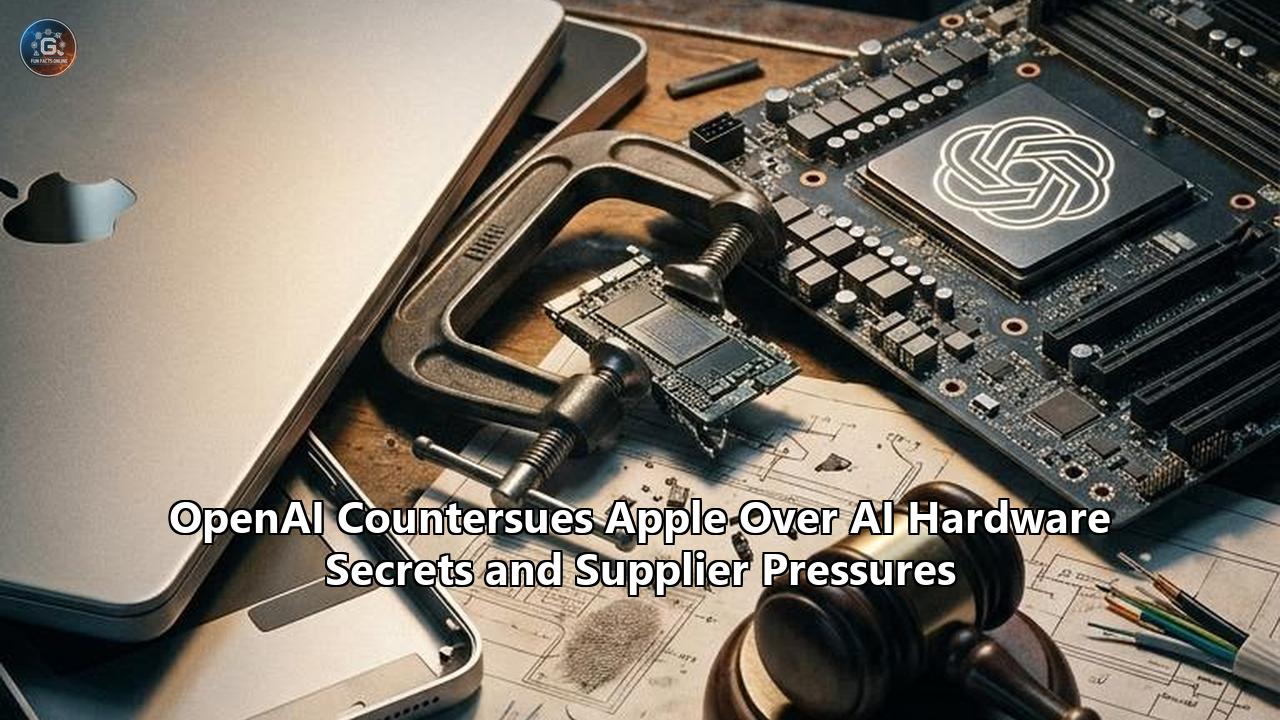
Federal court dockets in San Jose became the staging ground for an aggressive escalation between Silicon Valley’s foremost artificial intelligence developer and its most valuable consumer hardware manufacturer. On Friday, November 27, 2026, OpenAI Group PBC and its consumer hardware subsidiary, io Products Inc., filed a 12-count counterclaim against Apple Inc. in the U.S. District Court for the Northern District of California. The filing accuses Apple of corporate espionage, systemic trade-secret theft, and weaponizing its market dominance to threaten and intimidate Asian manufacturing suppliers building OpenAI’s unreleased personal AI devices.
The legal counterstrike answers Apple’s July 10, 2026 lawsuit, which alleged that former Apple executives Tang Tan and Chang Liu unlawfully carried confidential hardware designs and supply-chain roadmaps to OpenAI. Tan, Apple’s former vice president of product design for the iPhone and Apple Watch, joined OpenAI following its May 2025 acquisition of io Products, the device venture co-founded with legendary former Apple chief designer Jony Ive.
OpenAI’s counterclaims invert those charges entirely. The filing presents forensic evidence alleging that Apple rehired an operations specialist—designated in court records as "Employee X"—who systematically exfiltrated OpenAI’s confidential CAD files, tolerance analyses, and supplier evaluation data before returning to Cupertino. More broadly, OpenAI alleges that Apple engaged in anticompetitive supply-chain sabotage, coercing joint contract manufacturers in Asia to halt OpenAI production runs or banish them to overnight graveyard shifts under the threat of losing lucrative iPhone component contracts.
               CHRONOLOGY OF ESCALATION: OPENAI VS APPLE
─────────────────────────────────────────────────────────────────────────
Dec 2024        Apple integrates ChatGPT into iOS 18 (Siri & Writing Tools)
May 2025        OpenAI acquires Jony Ive's hardware startup "io" ($6.4B)
Dec 2025        "Employee X" joins OpenAI from Apple (Camera/Optics & Tooling)
Jun 2026        Employee X departs OpenAI; allegedly downloads confidential files
Jul 10, 2026    Apple sues OpenAI, io Products, Tang Tan, and Chang Liu
Jul 2026        Employee X rejoins Apple; alleged APac operations debrief occurs
Oct 9, 2026     OpenAI issues formal Cease-and-Desist letter to Apple
Nov 27, 2026    OpenAI countersues Apple for trade theft & supplier coercion
Jul 19, 2027    Scheduled trial date in U.S. District Court (San Jose)
─────────────────────────────────────────────────────────────────────────
Apple swiftly dismissed the counterclaims, calling them "a transparent attempt to distract from the substance of Apple's lawsuit, in which OpenAI has already been ordered to stop using Apple's confidential information". Yet the widening docket in the OpenAI vs Apple lawsuit exposes a structural crisis unfolding across the technology industry: the collision between software-driven artificial intelligence labs seeking physical distribution and legacy hardware monopolies determined to protect their computing ecosystems.
Resolving this crisis demands more than an evidentiary trial in San Jose. It requires an overhaul of trade-secret practices across cross-functional engineering teams, aggressive antitrust scrutiny of manufacturing monopsonies, and new operational strategies for building computing hardware free from incumbent bottlenecks.
The Core Dilemma: Algorithmic Power Collides with Industrial Control
The fundamental problem laid bare by this litigation is the physical boundary of modern artificial intelligence. Over the past four years, artificial intelligence architectures have shifted from web-hosted text boxes to multimodal, ambient agents capable of continuous vision, acoustic processing, and autonomous real-world workflows. Yet frontier models remain locked behind screens, constrained by operating system gatekeepers that command high commissions, restrict background execution, and intermediate customer relationships.
For OpenAI, building dedicated consumer electronics is not an ancillary experiment; it is a corporate necessity. The company's business model requires direct, unmediated access to sensory input—microphones, ultra-wide optical arrays, low-latency micro-actuators, and contextual biometric telemetry. Relying indefinitely on third-party mobile operating systems leaves AI labs exposed to platform deprecation, policy changes, and punitive data-access fees. When Apple introduced system-level integrations with ChatGPT in late 2024, the arrangement resembled a strategic truce. Behind that software partnership, however, an industrial land grab was already underway.
                  THE AMBIENT AI HARDWARE BOTTLENECK
┌───────────────────────────────────────────────────────────────────────┐
│                           FRONTIER AI LABS                            │
│           (OpenAI, xAI, Anthropic - Algorithmic Dominance)            │
└──────────────────────────────────┬────────────────────────────────────┘
                                   │ Requires dedicated edge devices
                                   ▼
┌───────────────────────────────────────────────────────────────────────┐
│                    GLOBAL PRECISION HARDWARE MOAT                     │
│  - Extreme-tolerance CNC machining   - Proprietary PVD coating runs   │
│  - Custom micro-optics calibration   - Advance foundry wafer capacity │
│  - Multi-axis robotic assembly lines - Specialized thermal dissipation│
└──────────────────────────────────┬────────────────────────────────────┘
                                   │ Commanded by incumbent buyer power
                                   ▼
┌───────────────────────────────────────────────────────────────────────┐
│                     HARDWARE PLATFORM MONOPOLY                        │
│            (Apple - Capital Expenditure Monopsony Control)            │
└───────────────────────────────────────────────────────────────────────┘
The barrier to entry for high-volume, premium consumer hardware is steep. Building high-performance, thermally efficient edge devices packed with neural processing units (NPUs) requires access to the world’s most sophisticated manufacturing supply chains—cleanroom assembly lines, multi-axis computerized numerical control (CNC) machining hubs, custom optical metrology laboratories, and specialist chemical anodizing plants.
Virtually all of this infrastructure is concentrated in an intricate network of specialized contract manufacturers throughout Taiwan, mainland China, Singapore, and Vietnam. Apple spent three decades securing this industrial ecosystem, investing tens of billions of dollars in specialized tooling, proprietary machinery, and advance purchase commitments.
When OpenAI entered this ecosystem through its acquisition of io Products and its recruitment of Apple design veterans, it entered an industrial complex where Apple does not just buy components—it effectively owns the manufacturing capacity. The dispute now playing out in federal court reveals what occurs when an AI challenger attempts to construct independent hardware in a manufacturing market dominated by a single, defensive incumbent.
Anatomy of the Espionage Claims: Employee X and the Counterclaims
The specific allegations in the November 27 filing detail an intense corporate intelligence confrontation. While Apple’s initial complaint focused on the departure of high-profile design leaders Tang Tan and Chang Liu, OpenAI’s counterclaims expose the covert activities of mid-level operations personnel who manage the practical details of industrial hardware ramp-ups.
OpenAI’s filing centers on an engineer identified as "Employee X". Court records state that Employee X was recruited from Apple to join OpenAI on December 2, 2025, initially working on optical quality assurance and miniature camera enclosures. Over the subsequent six months, Employee X’s responsibilities expanded across the manufacturing pipeline, granting him access to proprietary structural CAD geometries, thermal test fixtures, custom alloy specifications, and supplier audits for OpenAI’s inaugural device roadmap.
                ALLEGED EXFILTRATION TRAIL: EMPLOYEE X
┌───────────────────────────────────────────────────────────────────────┐
│ OpenAI Hardware Lab (Dec 2, 2025 - Jun 2, 2026)                       │
│ - Access to unreleased device geometry, tolerances, vendor rosters    │
└──────────────────────────────────┬────────────────────────────────────┘
                                   │
                                   │ Feb 5, 2026: 76-page inspection specs
                                   │ Jun 1, 2026: 6 encrypted archives
                                   ▼
┌───────────────────────────────────────────────────────────────────────┐
│ Personal Exfiltration Channels                                        │
│ - structure.zip, CPK_GRR.zip transferred to personal Singapore numbers│
│ - Sensitive manufacturing metrics forwarded to personal cloud storage │
└──────────────────────────────────┬────────────────────────────────────┘
                                   │
                                   │ Jun 2, 2026: Official departure
                                   │ Jul 2026: Re-employed by Apple
                                   ▼
┌───────────────────────────────────────────────────────────────────────┐
│ Apple Asia-Pacific Operations (Singapore / Cupertino)                 │
│ - Alleged systematic debriefs with senior operations directors        │
│ - Vendor roadmaps cross-referenced against OpenAI production schedules│
└───────────────────────────────────────────────────────────────────────┘
According to OpenAI's complaint, Employee X began offloading confidential technical data long before his departure:
- February 5, 2026: Employee X allegedly transmitted a 76-page internal document detailing custom inspection thresholds, gauge specifications, and supplier measurement standards to a personal email address.
- June 1, 2026 (One day prior to departure): Forensic network logs show Employee X compressing proprietary data into six encrypted archives—including files titled structure.zip and CPK_GRR.zip—and transmitting them to a personal Singapore phone number. These archives held unreleased product exterior geometries, process capability indices ($C_{pk}$), and gage repeatability and reproducibility ($GRR$) data critical for calibrating robotic assembly tolerances.
- June 2, 2026: Employee X formally resigned from OpenAI.
- July 2026: Employee X rejoined Apple.
The counterclaims assert that shortly after returning to Apple, Employee X briefed senior Asia-Pacific operations personnel during formal internal debriefs on OpenAI’s hardware roadmap, target launch windows, and supplier allocations. OpenAI wrote in its filing:
"Given the timing, it now appears that stealing those documents may have been his reason for joining OpenAI in the first place... Apple has responded to OpenAI's anticipated entry into the hardware market by unlawfully pressuring vendors not to work with OpenAI and using expansive employment restraints to limit OpenAI's access to talented engineers."
Apple denies that it ever received, inspected, or integrated OpenAI trade secrets, stating that its internal forensic audits found no traces of OpenAI’s files on corporate machines. However, the specificity of the file manifests submitted under seal suggests that discovery will be combative, involving hardware forensic images, server transfer logs, and depositions of operations managers across California and Singapore.
Supply Chain Monopsony: How Dominant Tech Traps Shared Suppliers
Beyond individual trade-secret theft, the most consequential sections of the countersuit describe Apple's alleged economic pressure on shared manufacturing vendors. Apple's operations infrastructure, built largely by Chief Executive Officer Tim Cook during his tenure as chief operating officer, relies on deep capital commitments across East Asia. Apple routinely purchases thousands of high-precision CNC machines, custom laser welding tools, and cleanroom optical inspection units, installing them directly inside factories owned by third-party contractors like Foxconn, Luxshare Precision, Pegatron, and BYD Electronic.
This model gives Apple unprecedented leverage. While suppliers are legally independent entities, they depend on Apple for the majority of their revenue and high-margin utilization rates. In the OpenAI vs Apple lawsuit, OpenAI claims Apple leveraged this monopsony power to systematically isolate its hardware projects.
                     ANATOMY OF SUPPLIER COERCION
┌───────────────────────────────────────────────────────────────────────┐
│                           APPLE INC.                                  │
│             (Global Anchor Customer / CapEx Provider)                 │
└──────────────────┬─────────────────────────────────┬──────────────────┘
                   │                                 │
                   │ Tooling Ownership               │ Threat of Contract
                   │ & Volume Leverage               │ Cancellation
                   ▼                                 ▼
┌─────────────────────────────────────┐   ┌─────────────────────────────┐
│    SPECIALIST FINISHING SUPPLIER    │   │     TIER-1 MANUFACTURING    │
│  - Pushed OpenAI to Graveyard Shift │   │           SUPPLIER          │
│  - Quarantined assembly areas       │   │  - Terminated development   │
│  - Imposed 35% cost premium on AI lab│  │  - Refused prototype runs   │
└─────────────────────────────────────┘   └─────────────────────────────┘
                   ▲                                 ▲
                   │                                 │
                   └────────────────┬────────────────┘
                                    │
                       OPENAI & IO PRODUCTS RUNS
                   (Deprived of standard factory floor access)
The complaint outlines specific forms of supply-chain pressure:
1. Graveyard Shift Banishment
OpenAI contracted with a specialized metal-finishing and physical vapor deposition (PVD) supplier in Asia to produce experimental enclosures with high thermal-conduction properties. When Apple operations personnel discovered the collaboration during a site audit, Apple representatives allegedly confronted vendor executives.
To avoid jeopardizing its Apple contracts, the supplier informed OpenAI that its prototyping runs could no longer take place during standard daytime shifts. Instead, OpenAI’s production was moved exclusively to the overnight graveyard shift (11:00 PM to 7:00 AM). This shift change prevented Apple auditors from encountering OpenAI hardware on the lines, but it created significant delays, required nocturnal engineering support, and increased initial manufacturing costs by an estimated 35%.
2. Abrupt Contract Abandonment
A second major supplier, slated to handle precision mechanical subassemblies and sensor integrations, terminated its development agreement with OpenAI following direct pressure from Cupertino. OpenAI alleges that Apple warned the vendor's executive leadership that allocating specialized floor space, cleanroom capacity, and fixture jigs to OpenAI’s hardware program would be viewed as a direct conflict of interest, jeopardizing upcoming component allocations for next-generation Apple products. The vendor subsequently canceled its contract with OpenAI, setting back the AI company's hardware timeline by months.
3. Supply-Chain Personnel Auditing
OpenAI claims Apple forced shared contract manufacturers to disclose the names, background histories, and factory-floor assignments of any supplier engineers assigned to OpenAI production lines. If a supplier engineer had previous experience working on Apple hardware lines, Apple demanded their immediate removal from OpenAI projects. This practice prevented suppliers from assigning their most skilled talent to the AI lab's prototyping programs, forcing OpenAI to rely on less experienced engineering teams.
These allegations demonstrate that in modern technology hardware, market power is exercised well beyond the retail shelf. Monopsony power—dominance as an exclusive or primary buyer—can quietly block competing products long before they reach commercial production.
The Talent Stranglehold: Device Segregation and Constructive Non-Competes
The third front in this legal confrontation involves talent mobility. California has long prohibited post-employment non-compete agreements under Section 16600 of the California Business and Professions Code, a statutory protection widely credited with fostering Silicon Valley's competitive innovation culture.
OpenAI contends that Apple has built a digital and legal apparatus that effectively circumvents California law, creating what the filing describes as an intentional "trap" for departing engineers.
               THE "DEVICE SEGREGATION TRAP" MECHANISM
┌───────────────────────────────────────────────────────────────────────┐
│                      TENURED APPLE ENGINEER                           │
│  - Required/encouraged to use personal iCloud, iMessage, MacBooks     │
│  - Corporate communications blend with private digital life           │
└──────────────────────────────────┬────────────────────────────────────┘
                                   │
                                   │ Decides to depart for OpenAI
                                   ▼
┌───────────────────────────────────────────────────────────────────────┐
│                  THE OFFBOARDING CONFLICT ZONE                        │
│  - Complete digital separation is technically impossible              │
│  - Residual code snippets, emails, and notes persist in private clouds│
└──────────────────────────────────┬────────────────────────────────────┘
                                   │
                                   │ Post-resignation forensic review
                                   ▼
┌───────────────────────────────────────────────────────────────────────┐
│               APPLE LEGAL & TRADE SECRET INTIMIDATION                 │
│  - Accesses personal accounts via historical device authorizations    │
│  - Inevitable residual files framed as "willful trade secret theft"   │
│  - Lawsuits deployed to freeze talent mobility and deter colleagues   │
└───────────────────────────────────────────────────────────────────────┘
OpenAI’s counterclaims allege that Apple achieves this restraint through deliberate workplace policies:
- Digital Entanglement: Apple encourages senior engineers and designers to conduct work across personal devices, private iCloud accounts, and personal iMessage threads. Because work and personal data share the same ecosystem, an employee cannot cleanly sever ties with corporate intellectual property without erasing their personal digital history.
- Post-Departure Surveillance: OpenAI claims that after employees resign, Apple uses residual mobile device management profiles and cloud-sync authorizations to review their personal communications, search histories, and private message archives.
- Weaponized Trade-Secret Claims: Because residual corporate files almost inevitably linger across personal devices following years of blended use, Apple can quickly manufacture trade-secret misappropriation claims against departing staff. OpenAI asserts this dynamic creates a powerful deterrent against engineering departures.
The scale of the rivalry is substantial. OpenAI revealed in its court filings that more than 400 former Apple employees have joined the AI company over the past two years. These hires span core foundation-model training, synthetic data pipelines, neural architecture search, spatial acoustics, camera lens design, and consumer hardware operations.
OpenAI argues that Apple’s primary motivation in filing its original July lawsuit was not protecting proprietary secrets, but creating a chilling effect across Cupertino's engineering campus. By suing Tang Tan and Chang Liu directly, Apple signaled to other staff that moving to an AI competitor could result in protracted personal litigation.
What io Products Is Building: The Imminent Threat to the App Store
To understand why Apple is actively defending its hardware and supply-chain perimeter, one must examine the specific computing shift OpenAI is preparing. The $6.4 billion acquisition of io Products in May 2025 brought Jony Ive, Tang Tan, and an elite team of former Apple industrial designers and mechanical engineers directly under the OpenAI corporate umbrella.
The collective vision emerging from this group directly challenges the modern smartphone interface:
┌───────────────────────────────────────────────────────────────────────┐
│                   THE SHIFTING PARADIGM OF COMPUTE                    │
├──────────────────────────────────┬────────────────────────────────────┤
│   THE SMARTPHONE REGIME (APPLE)  │    AMBIENT AI REGIME (OPENAI/IO)   │
├──────────────────────────────────┼────────────────────────────────────┤
│ • Rectangular glass touchscreen  │ • Screenless, acoustic/optical nodes│
│ • Interrupted application silos  │ • Continuous multimodal perception │
│ • App Store 30% toll booth       │ • Autonomous agent execution       │
│ • Manual tap-and-scroll inputs   │ • Low-latency contextual awareness │
│ • Device-tethered operating system│ • Edge-cloud hybrid infrastructure │
└──────────────────────────────────┴────────────────────────────────────┘
Reports from supply-chain sources and details embedded in recent court exhibits indicate that io Products is developing a distinct family of consumer devices, beginning with an ambient, screenless smart hub. Often described by analysts as a compact, toroidal (doughnut-shaped) acoustic-spatial node, the device is designed to sit in living spaces or workspaces, running continuous, low-latency, multimodal neural models.
                     OPENAI / IO DEVICE ARCHITECTURE
┌───────────────────────────────────────────────────────────────────────┐
│                       MULTI-APERTURE OPTICAL RING                     │
│           (Contextual scene tracking & facial orientation)            │
├───────────────────────────────────────────────────────────────────────┤
│                     SPATIAL MICROPHONE ARRAYS (8X)                    │
│             (360-degree beamforming & environmental audio)            │
├───────────────────────────────────────────────────────────────────────┤
│                     LOW-LATENCY EDGE NPU ENGINE                       │
│        (Continuous local inference, wake-word, sensory parsing)       │
├───────────────────────────────────────────────────────────────────────┤
│                     HIGH-EFFICIENCY THERMAL CHASSIS                   │
│        (Continuous passive cooling via custom alloy core)             │
├───────────────────────────────────────────────────────────────────────┤
│                     BIDIRECTIONAL BROADBAND LINK                      │
│      (Ultra-fast streaming to frontier model cloud clusters)          │
└───────────────────────────────────────────────────────────────────────┘
The device relies on eight beamforming microphones, dual low-power contextual cameras that process visual data locally to protect privacy, and a customized edge processor that handles local inference while streaming complex agent tasks to OpenAI's cloud models. Rather than requiring users to unlock an interface, navigate home screens, and jump between distinct third-party applications, the io device operates as an omnipresent conversational agent. It manages workflows, coordinates calendar schedules, writes software, monitors physical spaces, and interfaces with the internet autonomously.
This ambient model presents a direct threat to Apple’s primary revenue engines:
- iPhone Hardware Upgrades: If an ambient home or wearable device handles the majority of a user's digital coordination and information retrieval, the smartphone becomes secondary—a pocket display rather than the center of digital life.
- The App Store Monopoly: Autonomous AI agents do not download iOS apps or view interstitial banner ads; they call application programming interfaces (APIs) directly. If the screen ceases to be the primary computing interface, Apple loses its ability to charge a 30% commission on digital transactions.
- Services Revenue: Apple’s fastest-growing, highest-margin division relies on keeping users within its software ecosystem. A hardware transition to screenless, ambient agent devices threatens to erode that services lock-in.
Apple’s aggressive response in the supply chain reflects these commercial stakes. Cupertino is not merely protecting engineering tolerances; it is defending the App Store and the iPhone against an interface transition that could make screen-based operating systems obsolete.
Solutions in Motion: How Leaders and Regulators Are Responding
The legal and industrial conflict revealed by the OpenAI vs Apple lawsuit has sparked urgent discussions across the tech sector, antitrust agencies, and international manufacturing centers. The concentration of production capacity in a few contract manufacturers, combined with sweeping trade-secret disputes over routine employee departures, threatens to stifle independent consumer hardware development.
In response, industry leaders, legal scholars, supply-chain architects, and competition regulators are implementing concrete solutions to address these bottlenecks.
                         FRAMEWORK OF SOLUTIONS
┌───────────────────────────────────────────────────────────────────────┐
│ 1. LEGAL & OFFBOARDING MODERNIZATION                                  │
│    • Cryptographic, audited clean-room employee offboarding           │
│    • Reform of device segregation policies & end of personal iCloud mix│
├───────────────────────────────────────────────────────────────────────┤
│ 2. ANTITRUST REGULATION & MONOPSONY CURBS                             │
│    • DOJ & FTC scrutiny of supply-chain buyer power                   │
│    • Application of EU Digital Markets Act to factory floor access    │
├───────────────────────────────────────────────────────────────────────┤
│ 3. SUPPLY-CHAIN DECOUPLING & CONSORTIUM MANUFACTURING                 │
│    • Collaborative purchasing syndicates for non-Apple hardware       │
│    • Direct expansion into automotive & industrial manufacturing hubs │
├───────────────────────────────────────────────────────────────────────┤
│ 4. ARCHITECTURAL EDGE-CLOUD HYBRIDS                                   │
│    • Offloading compute to the cloud to reduce physical tooling needs │
│    • Open hardware modular standards for edge AI micro-peripherals    │
└───────────────────────────────────────────────────────────────────────┘
1. Legal and Operational Modernization of Hardware Offboarding
The messy evidentiary battle surrounding Employee X and former Apple designers demonstrates that conventional corporate offboarding policies are ill-equipped for modern, cloud-connected hardware engineering. To prevent future disputes, enterprise technology companies are overhauling how sensitive intellectual property is segregated from private lives.
                       MODERNIZED OFFBOARDING MODEL
┌─────────────────────────┐               ┌─────────────────────────┐
│     LEGACY SYSTEM       │               │    REFORMED PROTOCOL    │
├─────────────────────────┤               ├─────────────────────────┤
│ • Personal iCloud links │               │ • Zero-trust hardware   │
│ • Mixed device accounts │   ────────►   │ • Hardware-enforced MDM │
│ • Ad-hoc manual sweeps  │               │ • Cryptographic attests │
│ • Vague exit agreements │               │ • Air-gapped CAD vaults │
└─────────────────────────┘ └─────────────────────────┘- Air-Gapped Cloud Development Environments: Rather than allowing mechanical engineers to download native 3D CAD files, finite element analysis (FEA) models, and tolerance spreadsheets onto local laptop drives, firms are adopting strictly virtualized, air-gapped design environments. Engineers access files through secure, non-exportable virtual desktop infrastructure (VDI) sessions where local downloading, USB data transfer, and local screen capture are blocked at the kernel level.
- Cryptographically Audited Offboarding Protocols: Emerging legal solutions include third-party certified device offboarding. When an operations or hardware engineer resigns, independent forensic specialists audit their registered personal cloud storage and accounts. Using cryptographic hash-matching systems, the independent auditor verifies that no proprietary schematics, $C_{pk}$ charts, or vendor contact lists linger on personal devices, providing departing employees with a verified clean bill of health that prevents later retaliatory litigation.
- Corporate Device Mandates: Leading technology companies are abandoning practices that permit employees to mix corporate communication with personal accounts. By enforcing complete physical separation—providing dedicated corporate phones, cellular data lines, and laptops while explicitly banning work communications on personal iMessage or WhatsApp accounts—firms remove the legal gray area Apple is accused of exploiting.
2. Antitrust Interventions Against Manufacturing Monopsonies
Legal scholars and competition watchdogs point out that existing antitrust enforcement has focused almost exclusively on consumer monopoly pricing, while neglecting industrial monopsony power—the leverage a dominant buyer exerts over upstream suppliers.
┌───────────────────────────────────────────────────────────────────────┐
│                ANTITRUST EXPANSION: MONOPOLY VS MONOPSONY             │
├──────────────────────────────────┬────────────────────────────────────┤
│   HISTORIC FOCUS (MONOPOLY)      │    EMERGING FOCUS (MONOPSONY)      │
├──────────────────────────────────┼────────────────────────────────────┤
│ • Consumer pricing impacts       │ • Upstream supplier coercion       │
│ • Retail retail app lock-in      │ • Exclusive access to tooling/lines│
│ • Output restrictions to users   │ • Foreclosure of competing buyers  │
│ • End-user consumer harm         │ • Retaliatory volume reallocations │
└──────────────────────────────────┴────────────────────────────────────┘
Antitrust authorities are taking note:
- Scrutiny Under Sherman Act Section 2: The U.S. Department of Justice (DOJ) Antitrust Division and the Federal Trade Commission (FTC) are reviewing whether dominant technology companies violate Section 2 of the Sherman Act by barring shared suppliers from working with emergent rivals. If an anchor customer threatens to cancel business unless a supplier turns away competing purchasers, those actions can constitute unlawful maintenance of monopoly power through supply-chain foreclosure.
- European Digital Markets Act (DMA) Scrutiny: In the European Union, the European Commission is assessing whether the behavioral obligations imposed on digital "gatekeepers" under the DMA should extend to hardware procurement. European regulators are examining provisions that would prevent gatekeepers from leveraging platform dominance to manipulate European industrial parts manufacturers and international assembly houses.
- Prohibiting Vendor Exclusivity Covenants: Regulators are drafting guidelines to invalidate "de facto" non-solicitation clauses in contract manufacturing agreements. In the OpenAI vs Apple lawsuit, Apple's alleged requirement that suppliers disclose employees with past Apple experience and remove them from rival projects functions as an indirect restraint on trade. Outlawing such clauses ensures suppliers remain free to allocate engineering talent based on merit and operational availability rather than client intimidation.
3. Supply-Chain Diversification and Consortium Manufacturing
To break their reliance on incumbent-dominated consumer electronics supply chains, AI hardware developers are designing new manufacturing strategies.
             CONSORTIUM MANUFACTURING SYNDICATE MODEL
┌───────────────────────────────────────────────────────────────────────┐
│                      INDEPENDENT AI ALLIANCE                          │
│          (OpenAI, Humane, Rabbit, Framework, Autonomous Labs)         │
└──────────────────────────────────┬────────────────────────────────────┘
                                   │ Aggregated capital commitments &
                                   │ joint manufacturing orders
                                   ▼
┌───────────────────────────────────────────────────────────────────────┐
│                 INDEPENDENT MANUFACTURING CONSORTIUM                  │
│       - Co-owned precision tooling jigs & metrology cleanrooms        │
│       - Long-term capacity leases in non-Apple factory footprints     │
│       - Independent CNC machining & anodizing hubs (Vietnam/India)    │
└──────────────────────────────────┬────────────────────────────────────┘
                                   │
                                   ▼
┌───────────────────────────────────────────────────────────────────────┐
│              DIVERSIFIED AUTOMOTIVE & INDUSTRIAL EMS                  │
│             (Pegatron, Wistron, Magna International, Jabil)           │
└───────────────────────────────────────────────────────────────────────┘- Purchasing Syndicates and Consortium Tooling: Emerging consumer hardware companies are considering purchasing syndicates to aggregate purchasing volume. By pooling capital commitments across non-competing AI projects, an alliance of hardware startups can guarantee continuous line utilization to mid-tier contract manufacturers. This aggregated volume shields suppliers from the financial threat of a single dominant client pulling its business.
- Tapping Non-Traditional Electronics Manufacturers: Rather than relying exclusively on primary consumer electronics assemblers like Foxconn or Luxshare, hardware teams are partnering with alternative electronics manufacturing services (EMS) providers. Tier-1 automotive and aerospace contract manufacturers—such as Magna International, Jabil, and Celestica—maintain cleanroom capabilities, high-precision assembly lines, and optical calibration labs. These manufacturers operate independently of consumer smartphone supply lines and are less susceptible to tech-incumbent pressure.
- Geographic Expansion Beyond Legacy Hubs: AI hardware startups are accelerating investments in emerging manufacturing corridors in Vietnam, India, Malaysia, and Mexico. Establishing independent operations outside the traditional Shenzhen and Dongguan manufacturing hubs reduces exposure to incumbent supplier monitoring and minimizes espionage risks.
4. Architectural Workarounds: Minimizing the Physical Bill of Materials
Hardware architects are also adjusting their designs to navigate supply-chain bottlenecks. By shifting computational complexity from physical silicon and exotic materials to server-side infrastructure, AI developers can significantly streamline the physical device.
┌───────────────────────────────────────────────────────────────────────┐
│                ARCHITECTURAL MITIGATION STRATEGY                      │
├──────────────────────────────────┬────────────────────────────────────┤
│     CONVENTIONAL SMARTPHONE      │     STREAMLINED AI NODE            │
├──────────────────────────────────┼────────────────────────────────────┤
│ • Heavy internal GPU/SoC silicon │ • Low-power edge neural coprocessor│
│ • Complex multi-lens glass arrays│ • Micro-aperture sensor array      │
│ • Bulky thermal vapor chambers   │ • Passive conductive thermal core  │
│ • Custom, high-tolerance chassis │ • Simplified modular enclosure     │
│ • Dense lithium-ion pouch cells  │ • Standard external power delivery │
└──────────────────────────────────┴────────────────────────────────────┘- Edge-Cloud Dynamic Partitioning: By offloading resource-intensive model inference to cloud clusters via high-bandwidth, low-latency protocols, the physical device requires less onboard processing hardware. This reduces thermal dissipation demands and simplifies the chassis, allowing companies to avoid the exotic alloy machining and precision vapor chambers Apple tightly controls.
- Modular, Open-Source Component Architectures: Hardware developers are shifting toward standardized, off-the-shelf camera modules, sensory micro-electromechanical systems (MEMS), and wireless chipsets. By avoiding proprietary, single-source geometries, AI hardware teams make their products easier to produce across multiple manufacturing lines, denying any single incumbent an effective chokepoint.
Comparative Perspective: Precedents in High-Tech Industrial Litigation
The confrontation between Apple and OpenAI recalls previous high-stakes legal battles where incumbent platform operators used supply-chain control, non-compete agreements, and intellectual property claims to counter platform-level technological shifts.
┌───────────────────────────────────────────────────────────────────────┐
│                HISTORIC PLATFORM HARDWARE CLASHES                     │
├───────────────────┬───────────────────┬───────────────────────────────┤
│ DISPUTE           │ CORE CONTROVERSY  │ RESOLUTION / OUTCOME          │
├───────────────────┼───────────────────┼───────────────────────────────┤
│ Apple vs.         │ Smartphone UI,    │ Multi-year litigation cycle;  │
│ Samsung (2011)    │ utility patents,  │ normalized cross-licensing;   │
│                   │ component supply  │ established design standards. │
├───────────────────┼───────────────────┼───────────────────────────────┤
│ Waymo vs.         │ Autonomous driving│ Mid-trial $245M settlement;   │
│ Uber (2017)       │ trade secrets     │ strict containment protocols  │
│                   │ (Anthony Levandowski) on proprietary LiDAR tech.  │
├───────────────────┼───────────────────┼───────────────────────────────┤
│ Qualcomm vs.      │ Component pricing,│ Global commercial settlement; │
│ Apple (2017)      │ patent licensing, │ multi-year chip supply pact;  │
│                   │ supply cutoffs    │ reaffirmed patent boundaries. │
├───────────────────┼───────────────────┼───────────────────────────────┤
│ OpenAI vs.        │ AI hardware CADs, │ Scheduled July 2027 trial;    │
│ Apple (2026)      │ supplier coercion,│ pivotal test for industrial   │
│                   │ labor mobility    │ monopsony in the AI era.      │
└───────────────────┴───────────────────┴───────────────────────────────┘
The 2017 trade secrets litigation between Waymo and Uber provides a close operational parallel. In that case, Waymo alleged that former executive Anthony Levandowski downloaded 14,000 sensitive LiDAR design files onto an external memory drive before departing to launch an autonomous trucking startup later acquired by Uber. That dispute ended in a mid-trial settlement of $245 million and a federal criminal conviction, establishing strict legal boundaries around how emerging tech ventures onboard engineering talent from established rivals.
The current fight between Apple and OpenAI diverges from the Waymo precedent in one critical respect: the fight has quickly expanded beyond individual file downloads to encompass the global manufacturing pipeline. Apple’s original suit framed the dispute around individual intellectual property theft.
OpenAI’s counterclaims have broadened the focus to include Apple's alleged intimidation of shared Asian manufacturing lines, transforming a standard employment dispute into a fundamental antitrust conflict over the supply chains required to produce modern consumer electronics.
Strategic Repercussions: The Road to the July 2027 Trial
The escalating OpenAI vs Apple lawsuit fundamentally alters the relationship between two companies that once appeared to be practical partners. While ChatGPT still powers Siri query handoffs and text generation within iOS 18, their joint boardroom diplomacy has been replaced by adversarial court hearings.
                PROJECTED LITIGATION & PRODUCT ROADMAP
─────────────────────────────────────────────────────────────────────────
Late 2026       Forensic data collection on Employee X & Singapore files
Q1 2027         Preliminary injunction hearings; supply-chain subpoenas
Mid-2027        Antitrust review of supplier exclusivity covenants
Early 2027      Expected public reveal of OpenAI / io Products device
Jul 19, 2027    Jury Trial begins in San Jose Federal Court
─────────────────────────────────────────────────────────────────────────
Over the next 18 months, leading into the scheduled July 19, 2027 trial date, the case will navigate several legal and commercial milestones:
- Evidentiary Containment Hearings: Federal Judge Edward Davila will oversee forensic discovery concerning Employee X’s digital accounts, Singapore phone records, and Apple Asia-Pacific internal memos. If court audits confirm that proprietary OpenAI CAD geometries and inspection tolerances were distributed to Apple operations teams, OpenAI could secure preliminary injunctive relief restricting Apple from deploying matching manufacturing techniques.
- Subpoenas Across the Asian Manufacturing Chain: Discovery will extend beyond Cupertino and San Francisco into East Asia. Both legal teams will issue third-party subpoenas and foreign evidence requests targeting contract manufacturing facilities in Shenzhen, Taipei, and Singapore. Depositions of plant managers and finishing line operators regarding overnight shift reallocations and supplier meeting cancellations will force normally discreet contract manufacturers to testify publicly about behind-the-scenes big-tech practices.
- OpenAI’s Hardware Debut: OpenAI cannot afford to delay its hardware rollout until the completion of a July 2027 trial. The company is expected to push forward with the commercial launch of its first io Products device in late 2027, relying on the suppliers that remained on board. Once the product reaches the market, Apple’s legal team will analyze its mechanical assemblies, sensor mounts, and thermal chassis for traces of Apple design patents or trade secrets, likely sparking additional patent infringement claims.
- Antitrust Regulatory Filings: The allegations of supplier intimidation and labor market restraint will attract interest from state and federal regulators. California Attorney General Rob Bonta, along with the FTC, may intervene or file amicus briefs addressing Apple's restrictive employment covenants and the weaponization of personal iCloud accounts against departing workers.
                                 SUMMARY
┌───────────────────────────────────────────────────────────────────────┐
│ - OpenAI files 12-count counterclaim against Apple in California      │
│ - Accuses Apple of trade theft via "Employee X" and supplier coercion │
│ - Manufacturing vendors allegedly forced to run runs overnight        │
│ - Over 400 Apple employees have migrated to OpenAI's hardware efforts │
│ - Case broadens into a critical antitrust and industrial labor dispute│
│ - Federal jury trial set for July 19, 2027 in San Jose                │
└───────────────────────────────────────────────────────────────────────┘
The battle between OpenAI and Apple marks the end of an era when software platforms and consumer hardware manufacturers operated in separate, clearly defined markets. As artificial intelligence transitions from remote server farms into ambient physical environments, controlling the specialized factories, precision tooling, and materials science that bring edge devices to life has become just as critical as developing the algorithms themselves.
The San Jose trial will determine not only whether trade secrets crossed hands between corporate campuses, but whether an incumbent hardware monopoly can use its manufacturing scale to block the next generation of computing devices.
Reference:
- https://www.unite.ai/openai-countersues-apple-over-alleged-hardware-trade-secret-theft/
- https://www.thestar.com.my/tech/tech-news/2026/11/28/openai-countersues-apple-for-stealing-trade-secrets
- https://decrypt.co/384222/openai-countersuit-apple-trade-secret-theft-claims
- https://www.tradingview.com/news/stocktwits:c60802be4094b:0-openai-reportedly-fires-back-at-apple-over-trade-secrets-and-hardware-suppliers/
- https://www.latimes.com/business/story/2026-11-27/openai-accuses-apple-of-pressuring-suppliers-to-block-its-new-devices
- https://9to5mac.com/2026/11/27/openai-countersues-apple-alleging-trade-secret-theft-and-supplier-threats/
- https://www.cbsnews.com/news/openai-countersues-apple-trade-secrets-lawsuit/
- https://www.theguardian.com/technology/2026/nov/27/openai-countersues-apple-trade-secrets
- https://www.ventureatlas.org/news/2026-11-27-openai-apple-countersuit
- https://edition.cnn.com/2026/11/27/tech/openai-apple-countersuit
- https://emergent.sh/news/openai-accuses-apple-blocking-suppliers
- https://www.aljazeera.com/economy/2026/11/27/openai-countersues-apple-over-trade-secrets-as-ai-race-heats-up