The Catalyst: Rewriting Human Biology in 168 Hours
On April 7, 2026, researchers at the University of California San Diego (UC San Diego) published findings in Communications Biology that fundamentally alter the medical understanding of human physiology. By tracking 20 healthy adults through a highly structured, seven-day intensive meditation retreat, scientists captured real-time, systemic transformations in both brain activity and blood chemistry. The physiological shifts were so severe and rapid that they bypassed standard models of relaxation, instead triggering molecular changes that forced laboratory-grown neurons to sprout new physical connections.
The clinical data revealed a biological overhaul. High-density functional magnetic resonance imaging (fMRI) scans showed the participants’ brains entering states characterized by extreme global connectivity and the suppression of regions responsible for self-referential mental chatter. Concurrently, blood plasma extracted from the participants post-retreat was flooded with natural painkillers, immune-modulating signals, and potent neurotrophic factors.
What the researchers observed was not just advanced relaxation. The biochemical and neurological signatures precisely mirrored those induced by high doses of psilocybin and other hallucinogenic compounds. Human thought, guided through concentrated practice, had successfully hacked the body’s internal chemistry to synthesize an endogenous psychedelic state.
“We’re seeing the same mystical experiences and neural connectivity patterns that typically require psilocybin, now achieved through meditation practice alone,” stated Hemal H. Patel, Ph.D., professor of anesthesiology at UC San Diego School of Medicine and a leading researcher on the project.
The study, supported by the InnerScience Research Fund, provides the first systematic measurement of how multiple mind-body practices interact across biological systems simultaneously. It establishes a definitive, measurable bridge between conscious mental effort and cellular reality.
The Neuromolecular Shift: What Changes in the Blood
To understand the magnitude of this event, one must examine the specific methodology the UC San Diego team deployed to test the participants' blood.
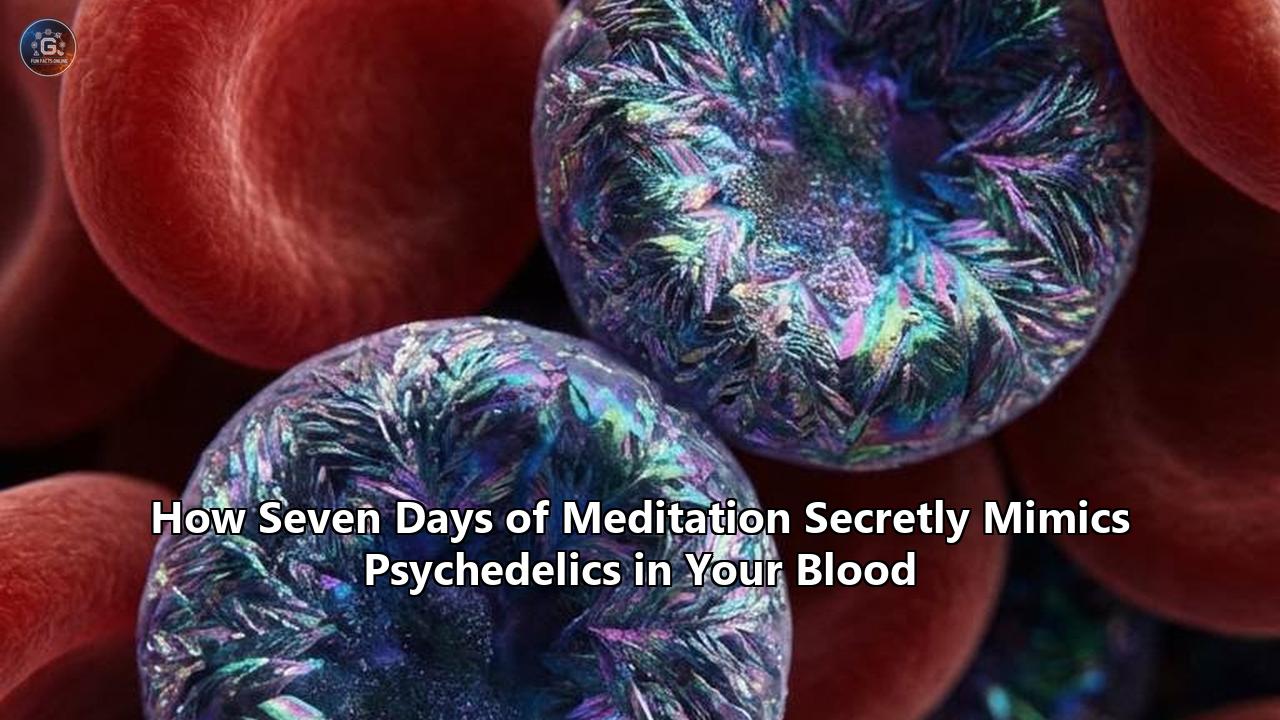
The researchers extracted blood plasma from the 20 participants before the intervention began and immediately after the seven-day retreat concluded. They then introduced this post-retreat plasma to naive, living human neurons cultivated in laboratory petri dishes. The results were immediate and visually striking. The neurons exposed to the post-retreat plasma began to rapidly grow longer neurites—the complex branches that nerve cells use to communicate and form new synaptic pathways.
The meditators' blood had literally transformed into a highly enriched neuro-growth medium.
This physical brain rewiring is driven by the activation of the BDNF (Brain-Derived Neurotrophic Factor) pathway. BDNF acts as a molecular fertilizer for the brain, promoting neuroplasticity, memory formation, and the repair of damaged neurological tissue. The spike in BDNF pathways within the blood confirms that the mind can instruct the body to generate the raw materials necessary for its own structural upgrades.
Beyond neuroplasticity, the blood chemistry analysis revealed a surge in endogenous opioids, specifically beta-endorphins and dynorphins. These are the body’s natural painkillers, identical in mechanism to the chemicals that cause a "runner's high" or drive the placebo effect. By engaging in deep, sustained focus, the participants commanded their nervous systems to flood their bloodstream with these compounds, achieving profound physical relief without ingesting a single pharmaceutical.
Metabolic functions also shifted. Cells exposed to the post-retreat plasma exhibited an increase in glycolytic metabolism, meaning they became significantly more flexible and efficient at burning sugar for energy. This metabolic flexibility is a key marker of cellular youth and resilience against metabolic disorders.
Simultaneously, the immune system adopted a highly sophisticated posture. The blood showed elevations in both inflammatory and anti-inflammatory signals. Rather than simply suppressing the immune system—which is what standard stress-reduction techniques often do—the intensive practice created a balanced, adaptive immune response, priming the body to fight off actual threats while preventing autoimmune overreactions.
Echoes of Psilocybin: The Functional Connectivity Overlap
The clinical community has spent the last decade pouring billions of dollars into psychedelic research, seeking to leverage compounds like psilocybin, MDMA, and 5-MeO-DMT to treat intractable depression, PTSD, and addiction. The therapeutic mechanism of these drugs relies heavily on disrupting the Default Mode Network (DMN)—the brain system responsible for our rigid sense of self, our anxieties about the future, and our repetitive internal narratives.
The fMRI data from the UC San Diego study showed that seven days of rigorous meditation effectively dismantled the same DMN structures. As the localized, self-referential hubs quieted down, the brain established new, long-range communication networks. Regions of the brain that rarely interact suddenly began synchronizing their electrical activity.
Researchers have long investigated the theoretical links between meditation and psychedelic effects, but this study provides the objective hematological and radiological proof. The subjective experience of the participants confirmed the data. The researchers utilized the Mystical Experience Questionnaire (MEQ-30)—the exact same standardized metric developed by Johns Hopkins University to measure the intensity of psychedelic drug trips.
Before the retreat, participants scored an average of 2.37 out of 5 on the MEQ-30. After seven days, that average jumped to 3.02. They reported profound feelings of unity, transcendence, and an altered perception of time and space. Crucially, the researchers discovered a direct dose-response correlation: the participants who reported the highest scores on the mystical experience scale also exhibited the most dramatic biological changes in their blood and brain scans.
Alex Jinich-Diamant, the study's lead author and a doctoral student in the Departments of Cognitive Sciences and Anesthesiology at UC San Diego, noted the structural reality of these findings. “This study demonstrates that our mind and body are deeply interconnected,” he observed. The physiological overlap highlights how meditation and psychedelic effects both disrupt the brain's default programming, forcing a reboot of the central nervous system that originates entirely from internal focus rather than chemical ingestion.
The Demographic Impact: Who Experiences These Shifts?
While the biological outcomes are highly encouraging, the parameters of the study require careful analysis to understand exactly who is affected and how these results can be replicated.
The participants in the UC San Diego trial were subjected to a highly specific, intense protocol. The seven-day residential retreat involved 33 hours of guided meditation, 25 hours of lectures on reconceptualization (changing how one interprets their reality and past traumas), and 5 hours of specific healing rituals.
This was not a casual, 10-minute daily practice facilitated by a smartphone app. It was an immersive, 63-hour behavioral intervention condensed into a single week.
This intensity dictates the current demographic reality of the findings. The people who can immediately benefit from these profound biological shifts are those with the time, physical ability, and financial resources to temporarily detach from society and enter a controlled, immersive environment.
The study also leaned heavily on the mechanics of the "open-label placebo." Participants were explicitly aware that they were engaging in healing rituals and intensive mental exercises designed to alter their biology. Rather than trying to blind the participants to this fact, the researchers weaponized expectation. The conscious belief that they were healing, combined with the extreme volume of meditation, acted as the trigger for the endogenous chemical release.
This challenges the modern wellness industry's approach, which often markets meditation as a quick, low-effort tool for daily stress management. The UC San Diego data suggests that achieving systemic, cellular-level transformation requires a massive, sustained "dose" of contemplative practice. Just as a microdose of a pharmaceutical will not yield the same results as a macrodose, casual meditation does not trigger the same biological cascades as an intensive retreat.
Short-Term Consequences: Immediate Physiological Recalibration
The immediate aftermath of this 168-hour intervention is a severe recalibration of the human baseline. For the individuals undergoing this process, the short-term consequences manifest across multiple physical and psychological vectors.
1. Acute Pain MitigationBecause the bloodstream is flooded with beta-endorphins and dynorphins, participants experience an immediate, sharp decrease in chronic pain, inflammation-induced discomfort, and psychosomatic tension. The body’s natural opioid receptors are fully saturated, providing systemic analgesia without the gastrointestinal or addictive side effects of synthetic opiates.
2. Psychological DecouplingThe suppression of the Default Mode Network provides rapid relief from rumination. Individuals suffering from acute anxiety or depressive loops experience a sudden quiet in their mental environment. The "narrator" of their daily life steps back, replaced by a highly observant, present-state awareness. This creates a brief but highly valuable window of psychological flexibility, during which therapists and practitioners can introduce new behavioral frameworks before the brain's old habits attempt to reassert themselves.
3. The Altered State TransitionThe similarities between meditation and psychedelic effects extend beyond subjective feelings into sensory perception. In the short term, participants exiting these intensive retreats process visual and auditory stimuli differently. With gamma wave activity reduced (often associated with active, anxious cognitive processing) and alpha power increased (tied to relaxed, inward vigilance), the nervous system stops treating external stimuli as threats. The short-term result is a profound state of sensory calm and environmental connectedness.
Long-Term Consequences: Sustained Neuroplasticity and Health
The most significant implications of the UC San Diego data lie in the weeks, months, and potentially years following the intervention.
When post-retreat blood plasma forces living neurons to grow longer branches in a laboratory, it indicates that the same neurogenesis is occurring within the participant's own skull. This structural rewiring has massive long-term consequences for cognitive decline and trauma recovery.
Neurological ResilienceBy actively stimulating the BDNF pathway, participants are building a physical buffer against neurodegenerative diseases. Thicker, more connected neural networks are intrinsically more resistant to the atrophy associated with aging, Alzheimer's, and Parkinson's. If an individual can intermittently trigger this endogenous growth state through intensive retreats, they effectively take control of their brain's physical aging process.
Metabolic LongevityThe shift toward glycolytic metabolism observed in the post-retreat plasma points to long-term systemic health. Metabolic inflexibility—where cells struggle to efficiently process energy—is a root cause of type 2 diabetes, cardiovascular disease, and chronic fatigue. By training the mind to force the cells into a state of higher metabolic efficiency, individuals can theoretically lower their risk profile for a host of modern metabolic syndromes.
Trait vs. State ChangesIn neuroscience, a "state" is a temporary condition, while a "trait" is a permanent alteration in baseline behavior. The intense neuroplasticity generated by the seven-day retreat allows temporary states of peace and connectivity to harden into permanent psychological traits. Because the brain is physically growing new synaptic bridges during and immediately after the retreat, the insights gained during the meditation are biologically locked into the brain's architecture.
The Disruption to Psychiatry and Psychedelic Medicine
The timing of this study intersects with a massive inflection point in global psychiatry. Over the past few years, the medical establishment has aggressively pivoted toward psychedelic-assisted therapies. Clinics utilizing ketamine, psilocybin, and MDMA have proliferated, backed by billions in venture capital and shifting regulatory frameworks.
The UC San Diego findings introduce a highly disruptive variable into this economic and medical ecosystem.
By mapping the shared territory of meditation and psychedelic effects, the medical community now has empirical proof that the exact same neural and hematological benefits can be achieved non-pharmacologically. This solves several critical bottlenecks in the psychedelic industry:
1. Bypassing Medical ContraindicationsPsychedelic drugs carry absolute contraindications for significant portions of the population. Individuals with a personal or family history of schizophrenia, bipolar disorder, or severe cardiovascular issues are routinely disqualified from psychedelic trials due to the risk of triggering psychosis or cardiac events. The meditation protocol offers a back door. Because the biological shifts are generated endogenously, the brain dictates the pace and intensity of the experience, inherently protecting the user from the chemical overwhelming associated with a "bad trip."
2. Eliminating Toxicity and Regulatory HurdlesWhile classical psychedelics have low physiological toxicity, they remain heavily scheduled in many jurisdictions, requiring expensive clinical supervision, specialized licensing, and complex supply chains. Meditation requires no DEA oversight, no synthetic manufacturing, and carries zero risk of chemical toxicity.
3. The Economics of TreatmentA single course of psychedelic-assisted therapy can cost upwards of $3,000 to $5,000 due to the required hours of clinical supervision before, during, and after the chemical administration. While a seven-day intensive meditation retreat also requires significant time and financial investment, the long-term economic model shifts. Once an individual learns the mechanics of deep meditation, they possess the internal technology to self-administer the treatment repeatedly over their lifetime, effectively decentralizing their mental health care.
Dr. Christopher Timmermann, who conducts parallel research on the intersection of advanced meditation and 5-MeO-DMT at University College London, has previously noted the utility of this overlap. For those seeking the profound mental health benefits of altered states, structured contemplative practice offers a viable route to states that replicate psychedelic effects without the external risks.
Forward-Looking Perspective: What Happens Next?
The publication of the UC San Diego study answers a fundamental question about the biological power of the mind, but it immediately generates a new set of logistical and scientific challenges.
The primary unresolved question is the exact half-life of these biological changes. The researchers proved that the blood plasma becomes highly neurotrophic immediately after the seven days, but exactly how long does that enriched state last? Does the BDNF pathway remain open for a day, a week, or a month? Future longitudinal studies must track participants at the 30-day, 90-day, and one-year marks to determine the decay rate of the endogenous psychedelic state.
Furthermore, scientists must now deconstruct the 63-hour protocol to find the minimum effective dose. While 33 hours of meditation over seven days works, researchers will need to determine if 15 hours over three days can produce 80% of the results. Isolating the specific variables—separating the breathing techniques from the reconceptualization lectures—will allow clinicians to build targeted, highly efficient non-pharmacological prescriptions for different diseases.
Upcoming milestones in this field will likely feature direct, head-to-head clinical trials comparing the biological markers of a psilocybin session against an intensive meditation retreat in a cohort of depressed patients. If the clinical outcomes remain identical, insurance companies and national health services may begin funding intensive contemplative retreats as first-line psychiatric interventions.
Human biology is proving to be vastly more malleable than 20th-century medicine assumed. The realization that focused attention can fundamentally alter blood chemistry, rewrite neural pathways, and synthesize potent internal painkillers pushes the boundaries of human agency. The pharmacy of the future may not be found in a pill bottle, but encoded within the disciplined architecture of human consciousness.