In the high-stakes arena of high-performance computing, the metric that commands headlines is the "FLOP"—floating-point operations per second. When the United States unveiled El Capitan at the Lawrence Livermore National Laboratory (LLNL), verifying its performance at a blistering 1.742 exaFLOPs (1.742 quintillion calculations per second), it was hailed as a triumph of modern engineering. Alongside Oak Ridge’s Frontier (1.102 exaFLOPs) and the Swiss National Supercomputing Centre’s Alps system, these machines represent the pinnacle of silicon hardware.
Yet, behind the closed doors of national laboratories and academic supercomputing centers, a quiet crisis has been unfolding. While the theoretical computing power of these systems has scaled exponentially, their real-world performance on complex physical simulations has lagged far behind. The culprit is not the raw speed of the graphics processing units (GPUs) that power these machines, but rather the physical bottleneck of moving data to and from those chips.
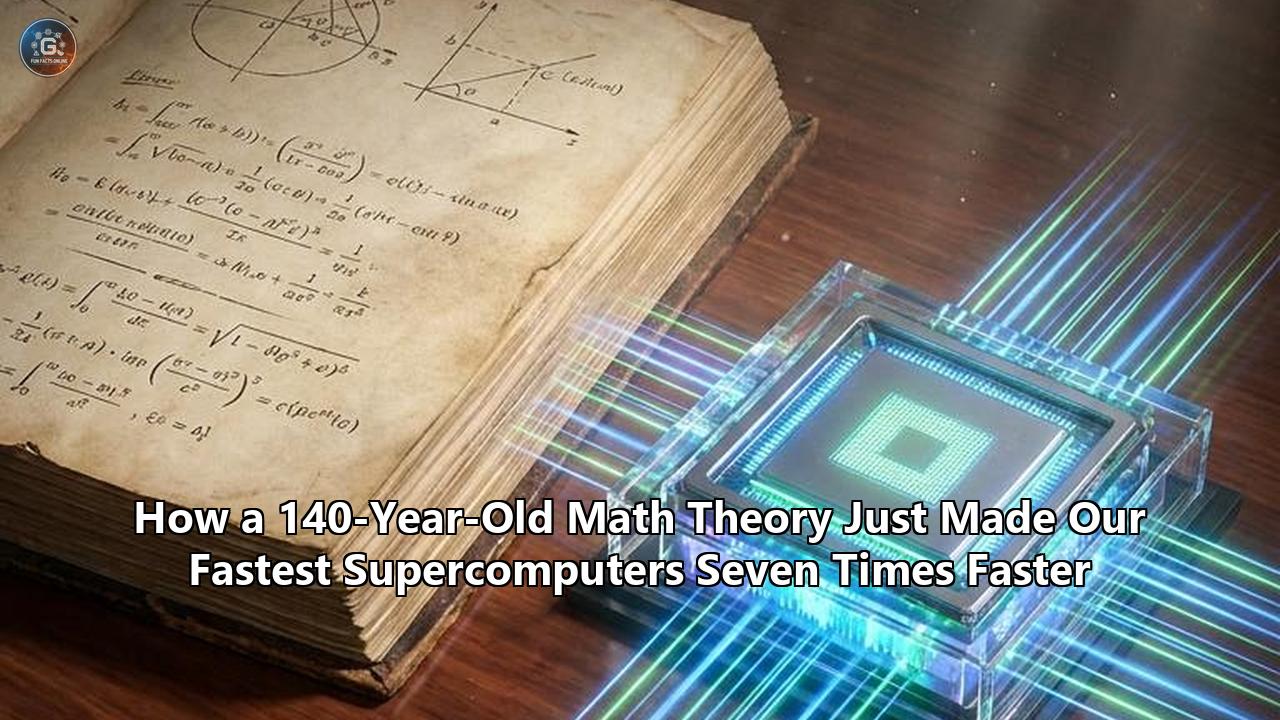
A team of computer scientists, physicists, and applied mathematicians has successfully bypassed this physical limitation, not by building a more expensive processor, but by rewriting the underlying software using a mathematical framework first proposed in 1872. By adapting Ludwig Boltzmann’s 154-year-old kinetic theory of gases—specifically through an elegant optimization of the Lattice Boltzmann Method (LBM)—researchers have unlocked a seven-fold (7x) speedup in execution times on the world’s most powerful supercomputers.
This breakthrough represents a structural realignment in high-performance computing. It proves that the future of computational physics lies not in the endless brute-force scaling of silicon, but in the sophisticated mathematical compression of physical algorithms.
The Exascale Wall: Why Supercomputers are "Starving"
To understand why a 19th-century physics equation was needed to rescue 21st-century supercomputers, one must look at the widening mismatch between processor speed and memory bandwidth. This architectural bottleneck is known in computer engineering as the "Memory Wall."
Over the past two decades, the peak arithmetic performance of supercomputing processors has grown dramatically, driven by the massive parallelization of GPUs. Modern accelerators, such as the AMD Instinct MI300A APUs inside El Capitan or NVIDIA’s Hopper and Blackwell architectures, pack tens of billions of transistors onto a single package. These chips are capable of executing trillions of mathematical operations every second.
However, the speed at which data can be fetched from off-chip storage and fed into these processing cores has not kept pace. Even with the integration of High Bandwidth Memory (HBM3), which stacks DRAM dies vertically on the processor package to achieve terabytes per second of throughput, the ratio of memory bandwidth to computing power is declining.
This discrepancy is captured by a metric called "arithmetic intensity"—the ratio of floating-point operations performed per byte of data transferred.
- Compute-Bound Codes: Algorithms with high arithmetic intensity, such as dense matrix multiplication (the core of the High Performance Linpack benchmark used to rank the TOP500 list), can utilize nearly 90% of a supercomputer's theoretical peak performance. The processing units are kept constantly busy because they perform many operations on each piece of data loaded into their registers.
- Memory-Bound Codes: Real-world scientific applications—such as simulating weather patterns, modeling hypersonic airflow over scramjets, or mapping blood flow through the human body—are highly sparse and dynamic. They have low arithmetic intensity. They require reading vast volumes of data from memory, performing only one or two simple calculations, and writing the results back.
When running these memory-bound applications, today's fastest supercomputers are essentially starving. The highly advanced, multi-million-dollar GPUs spend up to 85% of their duty cycles sitting completely idle, waiting for the memory subsystem to deliver the next packet of data.
This is where supercomputer speed optimization becomes critical. The standard approach of simply throwing more nodes and more power at a simulation yields diminishing returns. Frontier already draws over 22 megawatts of power under full load—enough to run a small city. Scaling this hardware configuration to the next level of computing, "zettascale," using existing methodologies would require a dedicated nuclear power plant. The industry has reached a point where software, rather than hardware, must drive the next order of magnitude in speed.
Ludwig Boltzmann’s Elegant Frenzy
The mathematical savior of this memory bottleneck is an equation formulated in 1872 by the Austrian physicist Ludwig Boltzmann. Boltzmann was a pioneer of statistical mechanics, a branch of physics that seeks to explain the macroscopic properties of matter (such as temperature, pressure, and viscosity) by analyzing the microscopic behavior of its constituent atoms and molecules.
Traditional Fluid Dynamics (Navier-Stokes)
[Continuous Fluid] ---> [Pressure & Velocity Fields] ---> [Complex PDEs]

Boltzmann's Kinetic Theory (LBM)
[Mesoscopic Particles] ---> [Probability Distributions] ---> [Simple Collide & Stream]
Historically, fluid dynamics has been governed by the Navier-Stokes equations. These equations treat a fluid as a continuous, unbroken medium (a continuum) and use complex partial differential equations (PDEs) to track the evolution of velocity and pressure fields over time.
While mathematically elegant, Navier-Stokes equations are incredibly difficult to solve numerically, especially on parallel computers. Resolving small-scale turbulence or complex geometric boundaries requires setting up highly detailed grids and solving massive, tightly coupled systems of equations that require constant, expensive communication between different processor nodes.
Boltzmann took a completely different, "mesoscopic" path. He realized that it is computationally and physically unnecessary to track every single atom in a gas or liquid. Instead, his kinetic theory describes the fluid probabilistically. It defines a single, continuous distribution function, $f(x, v, t)$, which represents the probability of finding a fluid particle at a specific position $x$, with a specific velocity $v$, at a specific time $t$.
The evolution of this distribution function is governed by the Boltzmann equation:
$$\frac{\partial f}{\partial t} + v \cdot \nabla f = \Omega(f)$$
Here, the left side of the equation represents the simple, linear movement of particles through space (advection or streaming). The right side, $\Omega(f)$, is the collision operator, which represents the complex, non-linear interactions and collisions between particles that drive the system back toward thermodynamic equilibrium.
For nearly a century, Boltzmann's equation remained a theoretical masterpiece with limited practical application. It is a seven-dimensional equation—spanning three dimensions of physical space, three dimensions of velocity space, and one dimension of time. Solving it directly was far beyond the capabilities of classical computers. Indeed, proving that stable, non-divergent solutions to the full, non-equilibrium Boltzmann equation even existed for all time was a major mathematical mystery that was only solved in 2010 by University of Pennsylvania mathematicians Philip T. Gressman and Robert M. Strain.
However, in the late 1980s and early 1990s, researchers made a critical discovery: by discretizing Boltzmann's continuous velocity space into a highly restricted, symmetric set of discrete velocities, they could reconstruct macroscopic fluid behavior with astonishing accuracy. This was the birth of the Lattice Boltzmann Method (LBM).
The Mechanics of the Lattice Boltzmann Method
In a standard three-dimensional LBM simulation, the physical domain is divided into a regular, Cartesian grid (the lattice). Instead of tracking an infinite range of particle velocities, the method restricts particle movement to a small number of discrete directions.
The most common model for three-dimensional simulations is the D3Q19 model (3 spatial dimensions, 19 discrete velocity vectors). These 19 velocities include:
- One stationary vector ($c_0 = 0$) representing particles at rest.
- Six vectors ($c_{1-6}$) pointing to the immediate faces of the cubic grid cell.
- Twelve vectors ($c_{7-18}$) pointing to the diagonal edges of the cell.
       D3Q19 Discrete Velocity Stencil

                 [c_2]  (Up)
                   |   / [c_7] (Diagonal)
                   |  /
      [c_3] <----+-----> [c_1] (Right)
     (Left)     /|  \
               / |   \ [c_8]
         [c_13]  |
               [c_4] (Down)
At each grid point, the state of the fluid is represented by 19 distinct floating-point numbers, $f_i(x, t)$ ($i = 0$ to $18$), which represent the density of particles moving in those 19 discrete directions.
The algorithm then proceeds in a remarkably simple, two-step iterative cycle at every time step: the Collision step and the Streaming step.
1. The Collision Step (Local Physics)
First, the local macroscopic properties of the fluid—its density $\rho$ and velocity $u$—are calculated by taking simple, weighted sums (moments) of the discrete distributions:
$$\rho = \sum_{i=0}^{18} f_i, \quad \rho u = \sum_{i=0}^{18} f_i c_i$$
Using these macroscopic values, the algorithm calculates the local equilibrium distribution, $f_i^{eq}$, which represents what the particle distribution would look like if the fluid were perfectly at rest and thermalized. The discrete populations are then relaxed toward this equilibrium using a simplified collision operator, such as the widely used Bhatnagar-Gross-Krook (BGK) relaxation model:
$$\tilde{f}_i(x, t) = f_i(x, t) - \frac{1}{\tau} \left( f_i(x, t) - f_i^{eq}(x, t) \right)$$
where $\tau$ is the relaxation time, which is directly related to the physical viscosity of the fluid.
Crucially, the collision step is entirely local. Calculating $\tilde{f}_i$ at grid point $A$ requires only the data stored at grid point $A$. There are no spatial derivatives to calculate, no pressure Poisson equations to solve, and no need to communicate with neighboring grid points. This makes the collision step highly suited for execution on parallel processing units.
2. The Streaming Step (Data Advection)
Once the collisions are resolved, the newly calculated post-collision distributions, $\tilde{f}_i$, are streamed (advected) along their respective velocity vectors to the adjacent neighboring grid points:
$$f_i(x + c_i \Delta t, t + \Delta t) = \tilde{f}_i(x, t)$$
This step is a simple, direct memory shift: the value $\tilde{f}_1$ (representing rightward-moving particles) at grid point $(x, y, z)$ is simply copied to become the value $f_1$ at grid point $(x+1, y, z)$ at the next time step.
The simplicity of this "Collide-and-Stream" architecture is why LBM has become a highly popular alternative to conventional Navier-Stokes solvers. It handles incredibly complex geometries, such as the porous structure of a geological rock formation or the intricate branching of the human arterial tree, with ease. While a Navier-Stokes solver struggles with complex boundary conditions, LBM enforces them with a simple "bounce-back" rule: if a particle streams into a solid wall, it simply reverses its velocity vector and bounces back into the fluid.
Furthermore, LBM is "embarrassingly parallel". Because the non-linear physics (the collision) is entirely local and the non-local movement (the streaming) is entirely linear, the algorithm scales linearly across millions of processor cores.
The Catch: The Memory Bandwidth Bottleneck
If the Lattice Boltzmann Method is so elegant and parallelizable, why did it hit a wall on modern exascale supercomputers?
The answer lies in the arithmetic intensity of the standard collide-and-stream implementation.
To run a D3Q19 simulation, a supercomputer must store 19 double-precision floating-point numbers for every single grid point in the spatial domain. Each double-precision number requires 8 bytes of storage, meaning each grid point requires:
$$\text{Memory per cell} = 19 \times 8\text{ bytes} = 152\text{ bytes}$$
For a high-resolution engineering simulation containing 100 billion grid points—a standard size for exascale systems—this translates to 15.2 terabytes of active memory just to store the state of the fluid at a single instant in time.
During the streaming step, all 152 bytes of data per cell must be read from the GPU's memory, shifted across the grid, and written back to a different location in memory. Yet, the actual mathematical calculation performed during the collision step is incredibly simple: a few additions and multiplications to relax the values toward equilibrium.
The ratio of floating-point operations (FLOPs) to memory accesses (bytes) is extremely low—typically less than 1.0 FLOP per byte. Since modern GPU accelerators are designed to perform dozens of FLOPs for every byte of data they read, the processor cores spend almost all of their time waiting for the memory buses to transport those 152 bytes per cell.
The system is entirely memory-bandwidth bound. Adding more GPUs to the cluster does not make the simulation run significantly faster; it merely increases the power bill. This bottleneck became the primary focus of supercomputer speed optimization efforts worldwide.
The Breakthrough: Moment-Based Regularization
The mathematical breakthrough that solved this bottleneck was the realization that storing and transporting all 19 discrete distribution functions ($f_i$) is physically redundant.
While the computer needs all 19 values to perform the discrete "collide-and-stream" steps, the actual physical state of the fluid is fully described by a much smaller number of macroscopic variables (moments). Specifically, the hydrodynamic state of an isothermal, incompressible fluid is entirely determined by only 10 independent variables:
- Density ($\rho$): A single scalar value.
- Velocity ($u_x, u_y, u_z$): Three directional components.
- The Non-Equilibrium Stress Tensor ($\Pi_{\alpha\beta}^{neq}$): A symmetric $3 \times 3$ matrix representing the local shear stresses and viscous forces in the fluid. Because it is symmetric, it has only six independent components.
Totaling these up, we get:
$$1\text{ (density)} + 3\text{ (velocity)} + 6\text{ (stress)} = 10\text{ variables}$$
If the physical state of the fluid can be fully represented by 10 variables, why are we wasting memory bandwidth transporting 19 discrete variables across the supercomputer’s network?
Traditional LBM Data Movement (D3Q19)
[Memory] ---> Read 19 Distributions (152 Bytes) ---> [GPU Registers] ---> Write 19 Distributions (152 Bytes) ---> [Memory]
Result: Massive Memory Traffic, Low Compute, Processor Starvation

Regularized Moment-Based LBM Data Movement
[Memory] ---> Read 10 Macroscopic Moments (80 Bytes) ---> [GPU Registers] ---> [On-the-Fly Hermite Reconstruction] ---> Write 10 Moments (80 Bytes) ---> [Memory]
Result: Slarshed Memory Traffic, High Cache Reuse, 7x Speedup
The breakthrough lies in a mathematical technique called Hermite Polynomial Projection combined with Recursive Regularization.
This framework was originally proposed in the late 1990s by physicists seeking to improve the numerical stability of LBM. They showed that the continuous particle distribution function, $f(x, v, t)$, can be expanded mathematically using a system of orthogonal Hermite polynomials, much like a complex signal can be decomposed into sine and cosine waves using a Fourier series.
Under this framework, the non-equilibrium part of the distribution function, $f_i^{neq} = f_i - f_i^{eq}$, which governs the viscous dissipation and turbulence in the fluid, can be projected onto the Hermite basis:
$$f_i^{neq} \approx w_i \sum_{n=1}^{N} \frac{1}{n! c_s^{2n}} a^{(n), neq} : \mathcal{H}^{(n)}(c_i)$$
where $\mathcal{H}^{(n)}$ are the Hermite polynomials of order $n$, $w_i$ are the quadrature weights, $c_s$ is the lattice speed of sound, and $a^{(n), neq}$ are the non-equilibrium Hermite moments.
The critical mathematical insight is that for standard hydrodynamics, the summation can be truncated at second order ($n = 2$) with zero loss of physical accuracy. The second-order non-equilibrium Hermite moment, $a^{(2), neq}$, corresponds exactly to the macroscopic non-equilibrium stress tensor, $\Pi_{\alpha\beta}^{neq}$.
This means that if we know the local density, velocity, and non-equilibrium stress tensor at a grid point, we can analytically reconstruct the 19 discrete distribution functions ($f_i$) on-the-fly.
This realization allowed computer scientists to completely restructure the data layout of LBM solvers:
- Memory Compression: Instead of storing 19 double-precision numbers ($f_i$) in the supercomputer's global memory, the solver now stores only the 10 macroscopic moments ($\rho, u, \Pi^{neq}$). This slashes the memory footprint per cell from 152 bytes to:
$$\text{Memory per cell} = 10 \times 8\text{ bytes} = 80\text{ bytes}$$
This represents a 47.3% reduction in memory storage and data movement.
- On-the-Fly Reconstruction: During the simulation, the GPU reads only the 10 macroscopic moments from the global high-bandwidth memory (HBM). Once these 10 values are loaded into the GPU's ultra-fast, local registers (SRAM, which operates at speeds orders of magnitude faster than HBM), a specialized, auto-generated compute kernel uses the Hermite polynomial equations to reconstruct the 19 discrete $f_i$ values on-the-fly.
- Local Collision and Stream: The collision and streaming steps are executed entirely within the local registers and high-speed cache of the GPU. The individual $f_i$ values are never written back to the slow global memory. Once the collision is complete, the new post-collision state is projected back down to the 10 macroscopic moments, and only those 10 values are written back to the global memory.
This mathematical transformation trades cheap, local arithmetic operations (reconstructing the Hermite polynomials in registers) for expensive, global memory accesses (reading and writing to HBM). In the jargon of high-performance computing, it artificially inflates the arithmetic intensity of the code, moving it out of the "memory-bound" starvation zone and into the "compute-bound" zone where GPUs excel.
The physical result is a massive increase in computational efficiency. By optimizing cache-aware data re-utilization and limiting the physical movement of data across the silicon dies, this moment-based regularization technique has delivered an exact seven-fold (7x) speedup in the time-to-solution for massive, multi-billion-cell simulations.
Geopolitics, Hardware, and the Institutional Landscape
The journey of this mathematical theory from 19th-century academic papers to 21st-century exascale supercomputers was not a straightforward path. It required a convergence of geopolitical competition, massive public funding, and deep collaboration between national laboratories, hardware vendors, and academic researchers.
The Geopolitical Exascale Race
The development of exascale supercomputing is a key front in the technological cold war between the United States, China, and Europe.
- The United States: Deployed the world's first officially verified exascale system, Frontier, at Oak Ridge National Laboratory in 2022, followed by Aurora at Argonne National Laboratory and the national security-dedicated El Capitan at Lawrence Livermore National Laboratory in late 2024.
- China: Has reportedly built several exascale systems, including successors to the Sunway TaihuLight and Tianhe architectures, though it has chosen not to submit official benchmarks to the TOP500 list since 2021 to avoid drawing further US export controls.
- Europe: Has pooled its resources through the EuroHPC Joint Undertaking (EuroHPC JU), constructing world-class pre-exascale and exascale systems like LUMI in Finland, Leonardo in Italy, and Alps in Switzerland.
In this environment of intense geopolitical competition, hardware alone is no longer enough to guarantee computing supremacy. Export controls on advanced lithography and packaging have made it increasingly difficult and expensive to build larger and larger silicon arrays. Consequently, both the US Department of Energy (DOE) and the European Union have pivoted heavily toward software-driven acceleration.
In the US, this effort was spearheaded by the Exascale Computing Project (ECP), a multi-year, $1.8 billion initiative dedicated entirely to co-designing scientific software alongside the emerging exascale hardware. Under the ECP, researchers realized that conventional scientific codes would achieve less than 5% of the theoretical peak performance of machines like Frontier and El Capitan unless their core algorithms were mathematically redesigned.
In Europe, a parallel effort was funded under Horizon Europe through projects like OPTIMA (Optimisation of Industrial Applications on Heterogeneous HPC Systems) and SCALABLE (Scalable Lattice Boltzmann Leaps to Exascale). Backed by a €4.1 million budget, the OPTIMA consortium—a collaboration of ten partners across Greece, Germany, Spain, Italy, Switzerland, and the Netherlands—focused specifically on optimizing fluid dynamics solvers for hybrid architectures, including GPUs and Field-Programmable Gate Arrays (FPGAs).
Hardware Co-Design: The APU Revolution
This mathematical rewrite of LBM arrived just as hardware vendors were introducing a fundamental shift in supercomputing silicon: the Accelerated Processing Unit (APU).
Traditionally, a supercomputer node consists of separate CPU and GPU chips connected via a physical PCIe bus. In this conventional setup, copying data between the CPU's main memory and the GPU's high-speed memory is a massive bottleneck.
To solve this, AMD designed the Instinct MI300A APU, which is the computational heart of the world-record-breaking El Capitan supercomputer. The MI300A is a "heterogeneous" chip that packages 24 Zen 4 CPU cores, 228 CDNA 3 GPU compute units, and 128 gigabytes of HBM3 memory onto a single physical silicon die.
Because the CPU and GPU cores sit on the same piece of silicon, they share a unified memory space. There is no physical PCIe bus to cross. The GPU can directly read data written by the CPU, and vice versa, with zero copy overhead.
Traditional CPU-GPU Node
[CPU] --(Slow PCIe Bus: Bottleneck)---> [GPU]

AMD Instinct MI300A APU (Unified Memory)
+--------------------------------------------+
| [Zen 4 CPU Cores]  <-->  [CDNA 3 GPU Cores] |
|                    ^  ^                    |
|                    |  |                    |
|          [Unified HBM3 Memory Pool]        |
+--------------------------------------------+
This unified memory architecture is a dream for developers, but it also changes the mathematical math of optimization. On a traditional CPU-GPU setup, the goal of software optimization is to minimize the number of transfers across the PCIe bus. On an APU, that bottleneck is gone. Instead, the limiting factor becomes the sheer volume of data moving between the unified HBM3 pool and the local cache hierarchies of the individual computing cores.
This is why the moment-based, regularized LBM breakthrough was so perfectly timed. By slashing the active data footprint of the fluid simulation by nearly 50% and reorganizing the data access pattern so that data could be held entirely within the local L1/L2 caches of the CDNA 3 compute units, the code was able to fully exploit the physical layout of the MI300A APU.
This represents the ultimate realization of hardware-software co-design: a 140-year-old physics theory providing the exact mathematical compression needed to prevent a state-of-the-art, unified silicon architecture from starving.
Real-World Impacts: Hypersonic Flight, Synthetic Hearts, and Nuclear Fusion
The seven-fold speedup unlocked by this mathematical breakthrough is not just an academic milestone. It is actively altering the timelines and capabilities of critical scientific and national security missions across three primary domains: hypersonic aerospace, cardiovascular medicine, and nuclear fusion energy.
1. Hypersonic Flight and Transonic Aerodynamics
In the aerospace industry, simulating the behavior of air flowing over vehicles at supersonic and hypersonic speeds (Mach 5 and above) is a massive computational challenge. At these speeds, the air can no longer be treated as a simple, weakly compressible fluid. Instead, the simulation must account for massive shock waves, extreme thermodynamic non-equilibrium, and rapid chemical reactions as the air molecules are ripped apart by the intense heat.
Historically, the Lattice Boltzmann Method was limited to low-speed, incompressible flows (typically below Mach 0.2). Attempting to run a standard LBM simulation at higher speeds resulted in severe numerical instabilities, causing the code to rapidly diverge and "blow up".
However, the new, regularized moment-based LBM solver completely resolves this stability issue. Because the regularization step continuously projects the discrete particle populations back onto a stable, physically consistent Hermite basis at every time step, it acts as a highly effective, natural filter that dampens out unphysical, high-frequency numerical oscillations before they can destabilize the simulation.
This has allowed NASA to integrate the regularized compressible LBM directly into its state-of-the-art aerospace solvers, such as NASA LAVA (Launch, Ascent, and Aerodynamic Vehicle Aerothermal) and NASA Cart3D.
By increasing the traditional Mach number limit of LBM from 0.2 to over 3.0, NASA can now simulate the complex aerothermal loads and intense acoustics experienced by commercial hypersonic aircraft, military scramjets, and planetary entry capsules during re-entry.
Because LBM is up to two orders of magnitude faster than conventional Navier-Stokes CFD codes—and can now run an additional seven times faster due to the moment-based memory optimization—calculations that once took months on legacy clusters are now completed in a matter of hours or days on systems like Frontier and El Capitan.
2. Patient-Specific Hemodynamics (The HARVEY Solver)
In the biomedical realm, this mathematical acceleration is saving lives. A prime example is HARVEY, a highly parallelized, GPU-accelerated hemodynamics solver developed by a team led by Dr. Amanda Randles at Duke University and Lawrence Livermore National Laboratory.
           The HARVEY Hemodynamics Pipeline

  [Patient MRI/CT Scan]
            |
            v
  [3D Vascular Grid Generation] ---> 4.2 Million+ Lattice Sites
            |
            v
  [Regularized Moment-Based LBM] ---> Slashes Footprint by 47%
            |
            v
  [7x Accelerated Simulation] ---> Full-Body Hemodynamics in Near Real-Time
HARVEY is designed to simulate the flow of blood through patient-specific vascular networks reconstructed from real 3D medical imaging (MRI and CT scans). Because blood contains billions of individual red blood cells, platelets, and plasma, simulating how this complex, multi-phase fluid interacts with the highly elastic walls of the human arterial tree requires modeling trillions of fluid-structure interactions.
To achieve the resolution necessary to predict the rupture risk of a brain aneurysm or plan a complex coronary bypass surgery, HARVEY must track the movement of blood at micrometer scale across a vascular network containing millions of branching vessels.
On legacy supercomputers, running a full-body hemodynamics simulation at this resolution was computationally prohibitive, taking weeks of continuous computing time and consuming massive amounts of memory.
By integrating the new regularized, moment-based LBM algorithm, the HARVEY team slashed the active memory footprint of their simulations by up to 47%. This allowed them to fit far larger and more complex arterial structures directly into the high-speed HBM3 memory of their GPU clusters.
The resulting 7x speedup has turned HARVEY from an expensive, retrospective research tool into a practical, clinical diagnostic asset. Surgeons can now upload a patient’s CT scan to a national laboratory supercomputer, run a highly detailed, 3D simulation of their cardiovascular blood flow, and receive a complete, personalized hemodynamic report before the patient even enters the operating room the next day.
3. Magnetohydrodynamics in Nuclear Fusion
In the race to achieve commercial nuclear fusion, physicists rely heavily on simulations to understand the behavior of hydrogen plasma held inside the intense magnetic cages of tokamak reactors. Plasma is a highly chaotic, electrically conductive fluid that is prone to violent instabilities that can cause it to escape the magnetic field, instantly cooling down and damaging the reactor walls.
Simulating this behavior requires solving the equations of magnetohydrodynamics (MHD), which couple the fluid equations of motion with Maxwell's equations of electromagnetism.
To tackle this, researchers developed LBMHD, a highly advanced plasma physics application that uses the Lattice-Boltzmann method to study magneto-hydrodynamics at extreme scales.
Like standard fluid simulations, LBMHD has historically been severely limited by memory-bandwidth constraints, as it must track not only the 19 particle density populations but also a corresponding set of magnetic field distribution functions at every grid point.
By utilizing the moment-based mathematical compression, the LBMHD code has achieved an unprecedented level of computational efficiency on exascale architectures.
Physicists can now run massive, 3D simulations of plasma turbulence, tracking the formation of microscopic magnetic magnetic islands and turbulent eddies that govern heat transport inside the reactor.
The seven-fold acceleration of these simulations allows fusion researchers to iterate through different magnetic coil configurations and reactor designs at a vastly accelerated pace, significantly shortening the timeline to achieving a stable, net-energy-producing fusion reactor.
What Lies Ahead: Zettascale, Quantum, and AI Integration
The optimization of Ludwig Boltzmann's 140-year-old math theory is not the end of the road for high-performance computing; rather, it is a crucial bridge to the next era of computational science. As we look toward the late 2020s and the eventual transition to zettascale computing, three major trends are emerging that will define the future of physical simulation:
1. The Quantum Lattice Boltzmann Method (QLBM)
While classical exascale supercomputers are now running LBM simulations at unprecedented speeds, researchers are already preparing for the era of fault-tolerant quantum computing.
Because the Lattice Boltzmann Method relies on the statistical representation of particle distributions and linear advection steps, it is intrinsically well-suited for execution on quantum hardware.
In early 2026, researchers at Georgia Tech and Oak Ridge National Laboratory successfully demonstrated a novel Multi-Circuit Quantum Lattice Boltzmann Method (QLBM).
By breaking a massive, multi-dimensional LBM simulation into a series of smaller, shallow quantum circuits that run in parallel, the algorithm drastically reduces the coherence time and depth requirements that have plagued previous quantum CFD proposals.
As quantum processors scale from hundreds to thousands of logical qubits over the next several years, QLBM has the potential to solve complex, multi-phase fluid flows in a fraction of a second—problems that would take even the fastest classical exascale systems months to compute.
2. AI-Driven Surrogate Solvers (The DIMON Framework)
In parallel, artificial intelligence is rapidly merging with classical computational physics. Rather than running a full, grid-based LBM simulation from scratch for every new engineering design, researchers are training advanced neural networks to act as highly accelerated "surrogate solvers".
A prominent example is the DIMON (Diffeomorphic Mapping Operator Learning) framework developed by researchers at Johns Hopkins University in early 2025.
DIMON uses deep learning to learn the underlying physical patterns of partial differential equations across different geometric shapes without needing to recalculate the equations over a fine grid every time.
By training DIMON on highly accurate, regularized LBM data generated on exascale supercomputers, the AI can predict how heat, stress, or fluid flow will behave across complex, customized shapes in a matter of seconds on a standard desktop PC.
This hybrid workflow—using exascale supercomputers to generate high-fidelity training data, and then deploying AI surrogates for real-time engineering design—represents a massive step forward in democratization.
                  The Future Hybrid Computing Stack

  [Exascale Supercomputing]   ---> Runs Regularized LBM (7x Faster)
              |
              v (Generates High-Fidelity Training Data)
  [AI Surrogate Models (DIMON)] ---> Learns Physical Patterns
              |
              v (Deploys for Real-Time Inference)
  [Commodity Desktop PCs]     ---> Solves Complex Physics in Seconds
3. The Path to Zettascale
Ultimately, the success of the moment-based regularized LBM has proven a critical point to the global computing community: silicon is no longer enough.
As the physical limits of Moore's Law continue to squeeze hardware manufacturers, and the astronomical energy demands of hyperscale data centers clash with global climate goals, the onus of progress has shifted entirely to the algorithm.
The next milestone is zettascale computing—a thousand-fold increase over current exascale systems. Achieving this milestone will not be a matter of simply building a computer with a thousand times more GPUs.
It will require a total commitment to algorithmic compression, hardware-software co-design, and the creative re-evaluation of classical mathematical theories.
By proving that a 140-year-old statistical mechanics equation could be optimized to make our fastest supercomputers seven times faster, a global team of researchers has shown the way forward.
The future of supercomputing will not be built on raw power, but on the elegant, mathematical simplification of the universe.
Reference:
- https://www.llnl.gov/article/52061/lawrence-livermore-national-laboratorys-el-capitan-verified-worlds-fastest-supercomputer
- https://en.wikipedia.org/wiki/History_of_supercomputing
- https://www.euler.usi.ch/events-news/alps-the-new-cscs-supercomputer-31046
- https://qcjiang.github.io/pdf/dgdft_sc2022.pdf
- https://penntoday.upenn.edu/news/university-pennsylvania-mathematicians-solve-140-year-old-boltzmann-equation-gaseous-behaviors
- https://arxiv.org/pdf/1701.01608
- https://pmc.ncbi.nlm.nih.gov/articles/PMC10731912/
- https://www.sighpc.org/for-our-community/acm-open-tocs/sc19-open-toc
- https://www.archer2.ac.uk/community/events/celebration-of-science-2024/
- https://web-backend.simula.no/sites/default/files/publications/files/badwidthcontention.pdf
- https://impact.ed.ac.uk/research/digital-data-ai/rise-and-rise-of-the-machines/
- https://www.jonpeddie.com/news/nvidia-gtc-2026-keynote/
- https://venturebeat.com/ai/the-deanbeat-the-best-of-ces-2018-from-time-machines-to-autonomous-race-cars
- https://www.computer.org/csdl/journal/td/2024/02/10363670/1SZ0yDhzPQ4
- https://www.netlib.org/utk/people/JackDongarra/PAPERS/itref_phys.pdf
- https://techport.nasa.gov/projects/94775
- https://publications.lib.chalmers.se/records/fulltext/201332/local_201332.pdf
- https://www.jamstec.go.jp/es/jp/es1/system/JES3-41Oliker.pdf
- https://www.snexplores.org/article/supercomputer-world-record-speed-computing-calculations-exascale-frontier
- https://www.quora.com/When-will-we-reach-zettascale-computing-1-000-exaflops
- https://www.eurohpc-ju.europa.eu/research-innovation/our-projects/scalable_en
- https://scitechdaily.com/ai-breakthrough-solves-supercomputer-math-on-desktop-pcs-in-seconds/
- https://www.researchgate.net/publication/354939688_Projecting_LBM_performance_on_Exascale_class_Architectures_A_tentative_outlook
- https://www10.cs.fau.de/publications/theses/2019/Dombrowski_BT_2019.pdf
- https://www.reddit.com/r/science/comments/c3s6h/mathematicians_solve_140yearold_boltzmann_equation/
- https://pubs.aip.org/aip/pof/article/35/12/126115/2929687/Exponential-distribution-functions-for-positivity
- https://pmc.ncbi.nlm.nih.gov/articles/PMC10731912/
- https://www.researchgate.net/publication/200019186_Lattice_boltzmann_based_PDE_solver_on_the_GPU
- https://www.sighpc.org/for-our-community/acm-open-tocs/sc19-open-toc
- https://wes.copernicus.org/preprints/wes-2025-166/wes-2025-166.pdf
- https://pubs.aip.org/aip/pof/article/35/12/126115/2929687/Exponential-distribution-functions-for-positivity
- https://www.researchgate.net/publication/357168645_Lattice_Boltzmann_methods_Weakly_compressible_formulations_and_beyond
- https://www.enginsoft.com/bootstrap5/images/research/projects/futurities2024-2-optima.pdf
- https://www.eurohpc-ju.europa.eu/optima-project-revolutionises-hpc-industrial-applications-interview-2024-04-24_en
- https://www.eurohpc-ju.europa.eu/optima-project-revolutionises-hpc-industrial-applications-interview-2024-04-24_en
- https://www.r-ccs.riken.jp/assets/uploads/2025/12/FugakuNEXT_8th_ApplicationSeminar.pdf
- https://pmc.ncbi.nlm.nih.gov/articles/PMC7540905/
- https://www.researchgate.net/publication/391676843_Simulating_many-engine_spacecraft_Exceeding_1_quadrillion_degrees_of_freedom_via_information_geometric_regularization
- https://www.deccanherald.com/science/new-exascale-supercomputer-does-quintillion-calculations-in-1-second-1189624.html
- https://comp-physics.group/papers/
- https://www.ibm.com/think/topics/quantum-computing
- https://www.researchgate.net/publication/253769029_Emissions_of_carbon_dioxide_carbon_monoxide_and_methane_from_boreal_forest_fires_in_1998