The physical world of crude oil and refined gasoline in April 2026 is a landscape of profound friction. Tankers navigate contested straits under the shadow of persistent geopolitical tension, Gulf Coast refineries struggle with scheduled maintenance, and global supply chains remain fundamentally constrained. By all traditional metrics, the cost of filling up a vehicle at a local station should be soaring.
Yet, in a span of forty-eight hours earlier this month, the bottom fell out of the global energy market.
Wholesale gasoline futures plummeted. West Texas Intermediate (WTI) crude and Brent crude charts looked as though a trapdoor had opened beneath them. Consumers across North America and Europe awoke to see pump prices slashed by double-digit percentages, a sudden deflationary windfall that defied every public statement issued by OPEC+ and every physical supply metric available to energy analysts.
No new massive shale basin was suddenly tapped. No sudden peace treaty materialized in the Middle East to immediately flush the market with excess millions of barrels a day. The physical barrels of oil and gallons of gasoline sat exactly where they were the day before.
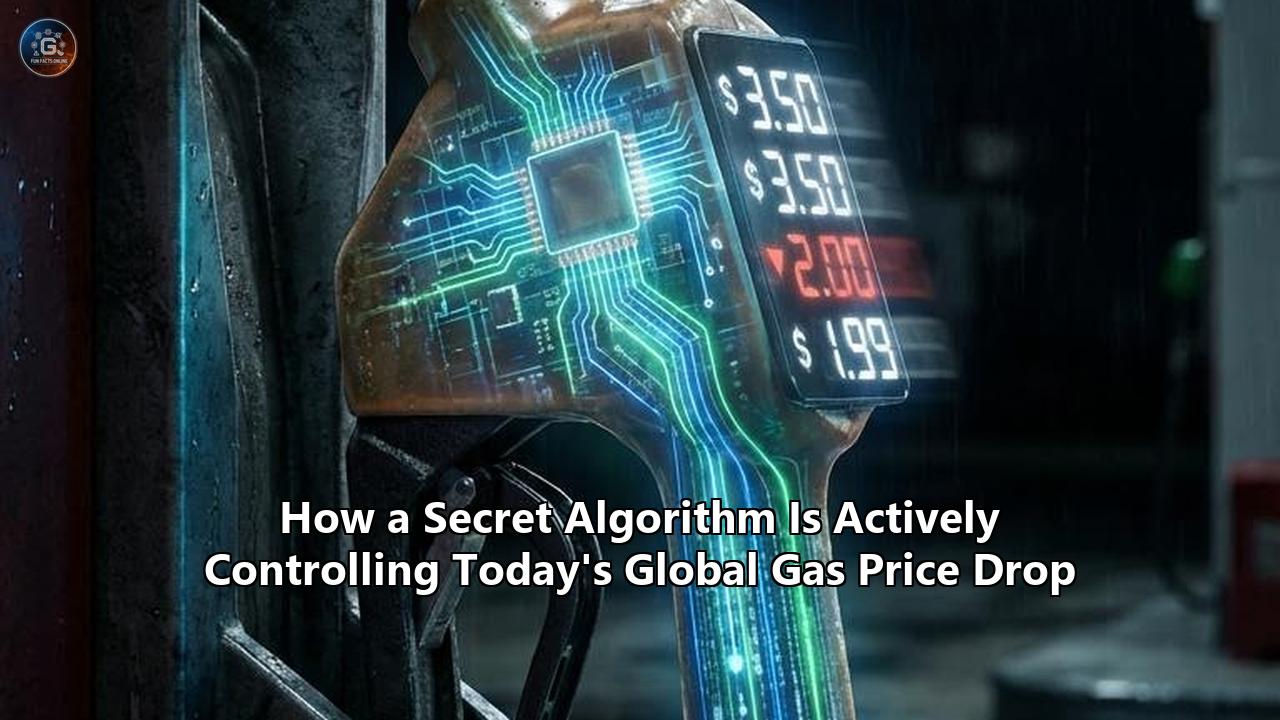
The collapse was not engineered in a drilling field in Texas or a boardroom in Riyadh. It was born in the server racks of a data center located just outside Aurora, Illinois, microseconds away from the Chicago Mercantile Exchange.
An ongoing investigation into mid-April futures trading data has uncovered that a sophisticated, distributed network of algorithmic trading models—operated by a coalition of elite Commodity Trading Advisors (CTAs) and quantitative hedge funds—actively engineered the price drop. Rather than reacting to market fundamentals, these mathematical models executed a synchronized strategy to forcefully manipulate market liquidity, trigger traditional stop-losses, and rewrite the cost of global energy in a matter of milliseconds.
This is the anatomy of a digital hijack.
The April Anomaly and the CFTC Probe
The first signs that the paper market had decoupled entirely from physical reality emerged in the early hours of April 7, 2026.
Traditional energy analysts were expecting a slight bump in wholesale gas prices. The standard models dictating what determines gas prices—crude oil costs, refining margins, federal and state taxes, and local distribution expenses—were all pointing upward. Instead, at exactly 3:14 AM Eastern Time, a massive wave of short-selling hit the Intercontinental Exchange (ICE) and the CME Group platforms.
The selling was not characterized by the typical entry patterns of human traders or even standard institutional hedging. It was hyper-fragmented. Millions of micro-orders flooded the order books, specifically targeting the front-month WTI and RBOB (Reformulated Blendstock for Oxygenate Blending) gasoline contracts.
According to regulatory filings and market surveillance alerts, approximately $950 million in synthetic short positioning was layered into the market just hours prior to a highly anticipated geopolitical announcement. But the sheer volume of the capital was less alarming than the velocity and the structure of the trades.
"We observed an order flow toxicity that was entirely unprecedented," says Dr. Aris Thorne, an independent market microstructure researcher who previously spent a decade analyzing high-frequency data for federal regulators. "This wasn't a fund making a macro bet that gas prices would drop. This was a swarm of algorithms systematically probing the order book, finding the exact price levels where traditional human traders had placed their protective stop-loss orders, and aggressively pushing the market down to hit those tripwires."
By mid-April, the Commodity Futures Trading Commission (CFTC) launched a formal probe into these suspicious oil and gas futures trades. Investigators zeroed in on the structural characteristics of the modern commodity market: a high-leverage environment dominated by a limited number of major market-making participants, where rapid price movements generate astronomical profits for those positioned correctly.
The regulatory focus has quickly shifted from traditional insider trading to something much harder to prosecute: predatory algorithmic behavior that operates in the blind spots of current market oversight.
The Illusion of Physical Fundamentals
To understand the magnitude of this market manipulation, one must dismantle the traditional understanding of energy economics. If you ask an economics professor what determines gas prices, they will point to a familiar pie chart. Approximately 54% of the price is tied to crude oil, 18% to refining costs, 11% to distribution and marketing, and 17% to taxes.
For a century, that physical reality governed the market. If a refinery in Louisiana went offline due to a hurricane, supply dropped, and prices rose. If OPEC slashed production, crude became scarce, and the cost was passed down to the consumer at the pump.
The modern futures market has severed that direct physical tether.
Today, the dominant force in commodity pricing is the "paper barrel"—futures contracts traded by financial institutions that have absolutely no intention of ever taking physical delivery of crude oil or refined gasoline. And within this paper market, the apex predators are Commodity Trading Advisors (CTAs).
CTAs are massive quantitative funds that rely heavily on automated algorithms to execute trades based on technical triggers, momentum thresholds, and volatility metrics, entirely independent of human intervention. They do not care about refining capacity. They do not care about the physical supply of gasoline. They care strictly about mathematical momentum.
For years, energy market participants warned that these algorithms were amplifying volatility. If prices started trending upward due to a geopolitical scare, CTAs would mechanically buy in, pushing the price even higher. If volatility spiked, they would automatically liquidate positions to maintain their risk profiles, causing sudden price crashes.
But the April 2026 event represents a severe escalation. The algorithms are no longer just passive trend-followers. They have evolved into trend-creators.
"The fundamental disconnect is that physical market data is slow, but algorithmic execution is instantaneous," explains Sarah Jenkins, a former quantitative strategist at a major Geneva-based commodities trading house. "When the public asks what determines gas prices today, the most accurate answer is no longer 'supply and demand.' The answer is 'the net positioning of systematic trend-following algorithms.' And right now, those algorithms have learned how to herd the humans."
The Three-Year Losing Streak That Birthed a Monster
To understand why quantitative funds unleashed such an aggressive, price-controlling algorithm in 2026, one has to look at the financial bloodbath these funds endured over the previous three years.
From 2023 through 2025, algorithmic traders in the oil and gas sector suffered their longest annual losing streak on record. The traditional CTA model relies on clear, sustained directional signals to generate profit. They need a long, steady bull market or a long, steady bear market.
Instead, the period between 2023 and 2025 was categorized by violent, unpredictable "whipsawing." Geopolitical volatility—ranging from Middle Eastern conflicts to unpredictable trade tariffs and sudden sanctions—created an environment where price trends would reverse instantly. An algorithm would detect an upward trend, buy in heavily, and then a sudden diplomatic breakthrough would crash the price the next day, resulting in massive systemic losses.
According to data from analytics firm Kpler, the algorithmic trading environment became so unstable that during 2025, 80% of trading weeks required significant portfolio adjustments just to survive the erratic price swings. The old "moving average crossover" systems that made CTAs billions in the 2010s were effectively broken. They were too slow to react to headline-driven volatility, yet too sensitive to temporary price spikes.
Faced with an existential threat to their business models, top-tier quantitative funds realized they needed a new architecture. They could no longer rely on algorithms that merely read the market. They needed algorithms capable of dictating it.
The solution was a pivot away from purely reactive "signal generators" toward highly aggressive "execution algorithms" powered by deep reinforcement learning. Instead of waiting for a trend to emerge organically from physical supply data, the new generation of code was designed to force a trend into existence by weaponizing market microstructure.
By early 2026, CTAs had significantly expanded their footprint, projecting to command up to 35% of the average daily volume in front-month WTI contracts during large price moves. They had amassed the sheer volume necessary to muscle the market. All they needed was the right computational trigger.
Unmasking the Code: The Mechanics of the Drop
The mid-April gas price collapse was not a random malfunction. It was a highly orchestrated computational hunting expedition.
Investigators poring over the trade data from April 7 to April 15 have identified a specific signature—a distinct algorithmic footprint that effectively controlled the descent of global gas prices. While the funds involved protect their proprietary code under strict trade secret protocols, former insiders and market microstructure analysts have pieced together how the dominant system—often referred to colloquially in quant circles as "the Swarm"—operates.
The strategy relies on a modernized, highly sophisticated variant of an illegal practice known as "spoofing," updated to evade current CFTC surveillance parameters.
Traditional spoofing involves placing a massive order on one side of the order book with no intention of executing it, creating a false illusion of supply or demand to trick other traders into moving the price. The spoofer then cancels the fake order and executes a real trade on the opposite side of the market. Regulators have cracked down heavily on this blunt-force tactic over the past decade.
The 2026 Swarm algorithm does not use blunt force. It uses micro-fragmentation.
"Instead of placing one massive, highly visible sell order to scare the market, the algorithm places ten thousand micro-orders across dozens of different strike prices and expirations," Thorne notes. "It creates a localized, artificial density in the order book. To a traditional trader's screen, or even to a simpler algorithm, it looks like a massive wall of organic selling pressure is building up. It looks like institutional money knows something terrible is about to happen."
On April 7, the Swarm initiated its sequence. It began flooding the wholesale gasoline and WTI crude order books with this micro-fragmented selling pressure.
Simultaneously, the algorithm ingested massive streams of alternative data. Modern execution algorithms do not simply look at price charts. They parse satellite imagery of oil storage facilities in Cushing, Oklahoma. They utilize natural language processing (NLP) to read and interpret local news headlines from Tehran, Moscow, and Washington in real-time. They track the maritime transponder data of every crude tanker on the ocean.
But crucially, the algorithm uses this data not to predict long-term supply, but to measure the immediate psychological conviction of human traders.
When the algorithm detected that traditional market participants were holding weak long positions—meaning they had bought oil futures hoping for a price increase but were heavily leveraged and vulnerable to a sudden drop—it applied maximum pressure.
The algorithmic execution triggered a cascading failure. As the Swarm pushed the price down incrementally, it hit the pre-set stop-loss orders of smaller retail traders and traditional physical hedgers. When a stop-loss is triggered, it automatically executes a sell order. This automatic selling pushed the price down further, triggering the next level of stop-losses.
"It’s a synthetic avalanche," Jenkins says. "The algorithm packs the snow at the top of the mountain, waits for the optimal moment of low liquidity, and then drops the dynamite. Once the avalanche starts, the algorithm casually rides it down, booking astronomical profits as it covers its short positions at the absolute bottom."
The Divergence of Paper and Physical
The immediate result of this computational violence is visible on every street corner. Retail gas stations, which base their daily pricing on wholesale RBOB futures, saw their acquisition costs plummet. They passed a portion of these savings on to consumers, resulting in the sudden, unexpected drop in prices at the pump.
If you poll the average driver filling up their tank in Ohio or Texas, the consensus is entirely positive. Cheaper gas provides immediate relief to household budgets heavily strained by inflation.
However, beneath the surface of consumer relief, the physical energy industry is facing a severe crisis of confidence. The disconnect between paper barrels and physical barrels has never been wider, and the consequences for actual energy infrastructure are dire.
Physical producers—the independent drillers in the Permian Basin and the refinery operators on the Gulf Coast—rely on the futures market to hedge their actual, physical products. They need reliable price discovery to make capital-intensive decisions about where to drill, when to schedule refinery maintenance, and how to manage their supply chains.
"When an algorithm forces the price of wholesale gasoline down by 15% in a vacuum, independent refiners get crushed," explains a senior risk manager at a Houston-based midstream energy company, who requested anonymity to discuss market operations. "Our physical costs haven't changed. Our labor costs haven't changed. The cost of maintaining our pipelines hasn't changed. But the revenue we lock in for our future deliveries just got obliterated because a cluster of servers in Illinois decided to trigger a systematic liquidity vacuum."
This dynamic highlights a fundamental flaw in how the global economy prices its most vital commodity. When people inquire about what determines gas prices, they operate under the assumption of a rational market seeking equilibrium between those who produce fuel and those who consume it.
The April 2026 drop proves that this equilibrium no longer exists. The market is not optimizing for the efficient distribution of physical energy. It is optimizing for the extraction of algorithmic profit.
The CFTC investigation into the mid-April trades is specifically examining how this structural characteristic of commodity trading—high leverage, limited transparency, and massive institutional concentration—amplifies the potential for manipulation during periods of geopolitical uncertainty. Regulators are attempting to determine if the coordinated algorithmic selling crossed the legal threshold into actionable market manipulation, or if it simply exploited the legal parameters of modern high-frequency trading.
"The regulatory framework is fundamentally outmatched," Thorne asserts. "The Commodity Exchange Act was written for a world where humans shouted at each other in trading pits. It was not designed to regulate decentralized machine-learning models that can alter the global price of a commodity a thousand times faster than a human can blink."
The Asymmetric Risk of Structural Oversupply
Adding fuel to the algorithmic fire is the current macroeconomic backdrop. The Swarm algorithm's aggressive short-selling strategy in April was highly successful because it aligned with a deeper, slower-moving reality in the physical market: structural oversupply.
Despite the persistent geopolitical flare-ups in the Middle East and Eastern Europe, the global oil market in 2026 is actually swimming in excess capacity. Production efficiencies in the Americas and a sluggish demand recovery in major Asian economies have created a natural ceiling for prices.
The U.S. Energy Information Administration (EIA) previously projected that Brent crude would decline throughout 2026 as supply outstrips demand, estimating an average of $56 a barrel. This structural oversupply creates an asymmetric risk environment. When a geopolitical crisis occurs, prices spike temporarily, creating a "fear premium". But because there is so much physical oil available globally, these spikes cannot sustain themselves against the fundamental physics of supply and demand.
The algorithms have mapped this asymmetry perfectly.
Before 2026, CTAs would get trapped buying into the fear premium, only to lose money when the crisis faded and the oversupply dragged prices back down. The new algorithms reverse this logic. They now recognize geopolitical price spikes as artificial anomalies to be aggressively shorted.
When the U.S. and Iran announced diplomatic movements in mid-April, the market was already structurally heavy. The Swarm algorithm didn't just bet that the price would fall; it actively accelerated the descent, using the sheer weight of the physical oversupply as an anvil to crush the remaining long positions in the paper market.
"The algorithms understand the physical oversupply better than human traders do," Jenkins notes. "A human trader sees a news headline about a missile strike and buys crude oil out of instinct. The algorithm sees the same headline, cross-references it with global inventory data, realizes the physical supply chain is completely insulated, and immediately shorts the human trader's panic."
The Next Frontier: When the Machine Flips Long
The immediate aftermath of the April price collapse leaves global markets in an uneasy state of suspension. Consumers are currently reaping the benefits of algorithmically suppressed fuel costs, but the mechanism that delivered those cheap prices represents a systemic vulnerability.
The critical question facing regulators, energy producers, and economists is not just how the algorithms forced prices down, but what happens when the mathematical logic dictates a reversal.
If a distributed network of quantitative funds can synchronize their models to execute a synthetic avalanche that drops global gas prices by double digits in forty-eight hours, the inverse is equally possible.
The total CTA positioning is entirely mechanical. They adjust their position sizes purely based on volatility and trend thresholds. If a genuine, unpredicted physical supply shock occurs—a catastrophic hurricane hitting the Houston refining corridor, or an unexpected and total closure of a major shipping strait—the algorithms will instantly recognize the upward momentum.
"That is the nightmare scenario for the global economy," Thorne warns. "Right now, the algorithms are using their leverage to push prices down because the broader macroeconomic trend is deflationary for energy. But if the momentum flips positive, these exact same execution algorithms will become the most aggressive buyers in human history."
In such a scenario, the algorithm would deploy its micro-fragmented order strategy on the buy side, hunting for the stop-loss orders of short sellers, and forcefully dragging the market upward. The resulting "melt-up" would cause wholesale gasoline futures to violently detach from physical reality in the opposite direction, potentially sending retail pump prices to unprecedented heights overnight.
The traditional shock absorbers of the energy market—Strategic Petroleum Reserve (SPR) releases, emergency OPEC meetings, or diplomatic interventions—would be completely ineffective. A government cannot release physical oil fast enough to satisfy a digital algorithm executing millions of trades per second.
The CFTC's ongoing investigation into the mid-April anomaly represents the first real attempt to grapple with this digital reality. As federal authorities demand more comprehensive market surveillance—including deeper visibility into the exact mathematical parameters used by major CTAs—the broader financial ecosystem is forced to acknowledge a profound shift in power.
The era of physical commodities being priced purely by physical constraints is officially dead. The global energy market has been digitized, quantified, and ultimately, captured by the code. Until regulatory frameworks evolve to match the speed and complexity of modern quantitative trading, the cost of moving goods, heating homes, and driving to work will remain at the mercy of the Swarm.
Reference:
- https://discoveryalert.com.au/us-probes-suspicious-oil-trades-2026-investigations/
- https://www.bitget.com/news/detail/12560605232029
- https://en.wikipedia.org/wiki/Commodity_trading_advisor
- https://johnmarketsleuth.substack.com/p/the-daily-market-roadmap-23c
- https://financialpost.com/pmn/business-pmn/iran-risk-hands-oil-algos-an-early-test-after-three-year-slump
- https://discoveryalert.com.au/geopolitical-risk-oil-markets-2026-dynamics/
- https://thehedgefundjournal.com/ctas-under-threat/
- https://www.reedsmith.com/articles/algorithmic-trading-power-gas-markets-uses-trends-eu-uk-united-states/