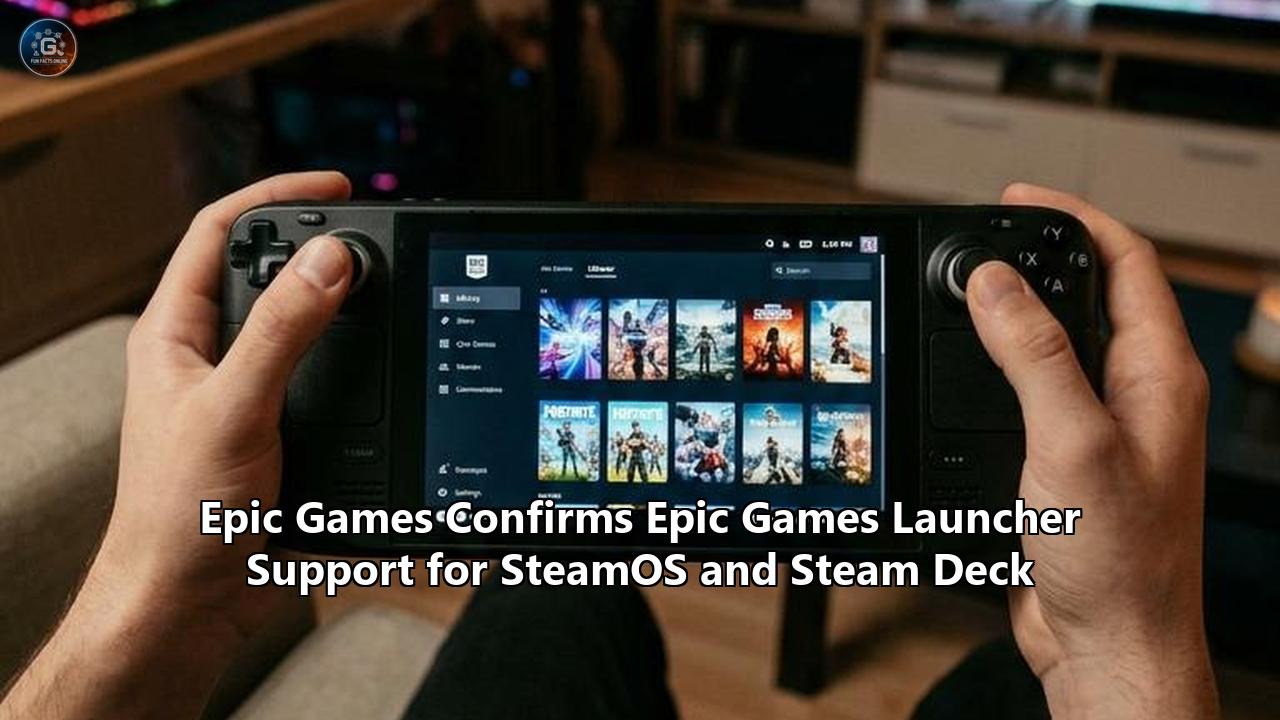
A software client that cold-starts in 5.47 seconds is about to collide with a hardware ecosystem of 5.6 million handhelds. Epic Games Communications Director Jake Jones confirmed that the company is engineering native SteamOS compatibility for its rebuilt storefront client, directly targeting Valve’s handheld gaming PC. Speaking to GamingOnLinux, Jones affirmed that Epic’s public preview client—first deployed on October 14 across Windows, macOS, and standard Linux distributions—will broaden its reach to incorporate Valve’s Arch-based operating system alongside community-focused distributions such as Fedora, CachyOS, and Omarchy.
The announcement marks an operational reversal for Epic Games. For years, Chief Executive Officer Tim Sweeney publicly dismissed Linux as an impractical fringe platform, famously analogizing installation of the open-source operating system to "moving to Canada" in 2018 and flatly refusing to validate Fortnite on Valve’s hardware upon its February 2022 debut.
The financial and operational metrics underpinning PC gaming have made that position untenable. With Linux holding between 3.69% and 5.33% of Steam’s surveyed user base, Valve shipping roughly half of the global PC handheld market, and Epic’s PC customer base surpassing 317 million accounts, the strategic calculation has shifted from philosophical resistance to platform distribution.
Integrating an official Epic Games Launcher Steam Deck client bridges two of the most contentious platforms in digital distribution, pitting Epic’s 88/12 developer revenue split directly against Steam’s standard 30% margin on Valve’s proprietary hardware.
+---------------------------------------------------------------------------------------+
|                    THE PLATFORM REALIGNMENT: KEY METRICS AT A GLANCE                 |
+------------------------------------+--------------------------------------------------+
| Metric                             | Quantitative Value                               |
+------------------------------------+--------------------------------------------------+
| Rebuilt Launcher Cold-Start Time   | 5.47 seconds (vs. Steam's 10.07 seconds)         |
| System Tray Restore Latency        | 0.36 seconds (vs. Steam's 0.42 seconds)         |
| Rebuilt Client Linux Footprint     | ~2.0 GB installed on storage                    |
| Steam Deck Lifetime Shipments      | ~5.6 million units (mid-2025 IDC estimate)       |
| Steam Deck Share of Handheld PCs   | 48.0% of tracked global market (IDC)            |
| Linux Share on Steam Hardware      | 3.69% (June 2026) to 5.33% (March 2026 peak)   |
| SteamOS Share of Linux Gaming      | 22.83% of all Linux Steam systems                |
| Epic Games Store Registered Users  | 317 million+ total PC customers                  |
| Epic Games Store Peak MAU          | 78 million (December 2025 record)                |
| Third-Party Spending on EGS (2025) | $400 million (+57% YoY)                          |
| Total EGS Player Spending (2025)   | $1.16 billion (+6% YoY)                          |
+------------------------------------+--------------------------------------------------+
Benchmark Breakdown: Rebuilding the Launcher from Scratch
The technical catalyst for this ecosystem expansion is a wholesale codebase overhaul. The legacy Epic Games Launcher was long criticized by users for sluggish execution times, high memory draw, and a heavy reliance on an aging Electron-wrapped framework. On October 14, Epic released a completely rebuilt version of the application for Windows, macOS, and Linux. Internal engineering descriptions described the software as being developed through machine-assisted coding agents under human technical oversight—a process the studio publicly termed "vibe coding".
To validate the rewrite, Epic commissioned independent performance evaluations through Keywords Studios. Testing was conducted across 13 distinct hardware configurations, with the three lowest-performing benchmark machines dropped to ensure sample consistency. The test evaluated cold-boot execution times from zero process activity to a fully loaded, interactive digital storefront.
+----------------------------------------------------------------------------------------------------+
|               LAUNCHER PERFORMANCE BENCHMARKS (KEYWORDS STUDIOS TESTING)                          |
+-------------------------------------+--------------------+--------------------+--------------------+
| Operation / Metric                  | Epic Launcher (New)| Steam Client (Oct) | Delta (%)          |
+-------------------------------------+--------------------+--------------------+--------------------+
| Cold Start to Storefront Display    | 5.47 seconds       | 10.07 seconds      | -45.68% (Faster)  |
| Unofficial Follow-Up Client Launch  | 5.47 seconds       | 5.23 seconds       | +4.58% (Steam Lead)|
| Background / Tray Restore Latency   | 0.36 seconds       | 0.42 seconds       | -14.28% (Faster)  |
| Storage Footprint: Windows          | ~700 MB            | ~1.2 GB            | -41.66%           |
| Storage Footprint: macOS            | ~200 MB            | ~850 MB            | -76.47%           |
| Storage Footprint: Linux (Combined) | ~2,048 MB (2.0 GB) | ~1,100 MB          | +86.18% (Larger)  |
| Base RAM Allocation Threshold       | 4.0 GB System RAM  | 4.0 GB System RAM  | Parity             |
+-------------------------------------+--------------------+--------------------+--------------------+
The data shows a cold-start duration of 5.47 seconds for the preview client, compared to 10.07 seconds recorded for the Steam client under identical test conditions—a 45.68% advantage in cold-launch responsiveness. Navigational responsiveness saw parallel gains: switching from an inactive system-tray background state to an active user game library clocked in at 0.36 seconds for Epic's new client versus 0.42 seconds on Steam, representing a 14.28% reduction in latency.
Valve issued an unannounced client update on October 13—just 24 hours prior to Epic’s public announcement—that optimized its own startup pipeline, yielding an isolated user benchmark of 5.23 seconds on comparable modern x86 hardware. Despite these competing claims, the data demonstrates that Epic’s rewrite closed a structural performance gap that had plagued its desktop presence since 2018.
Storage allocation on Linux tells a different story. While the Windows and macOS builds consume approximately 700 MB and 200 MB of local disk space respectively, the initial Linux preview requires roughly 2.0 GB of storage upon deployment. This disparity stems from the runtime environment: on Linux, Epic's client bundles dedicated compatibility tools.
When a user triggers the installation of a Windows-exclusive title on a Linux distribution, the preview client automatically downloads an isolated GloriousEggroll (GE-Proton) compatibility runtime on first use. Rather than engineering a proprietary translation layer from scratch, Epic has systematically co-opted the open-source Proton ecosystem that Valve spent eight years developing and funding.
Distribution Economics: Packaging Formats and the Battle for SteamOS
Deploying software to SteamOS is fundamentally different from distributing an executable to standard desktop Linux. Valve designed SteamOS 3 as an immutable, read-only operating system built on an Arch Linux base.
To preserve system stability across over-the-air firmware updates, the underlying root partition (/) is locked. Standard package management commands via pacman are disabled by default; any binary installed directly to the OS image is wiped whenever Valve applies an official operating system patch.
+----------------------------------------------------------------------------------------------------+
|                        LINUX PACKAGING FORMAT TRADEOFFS FOR STEAMOS                               |
+-------------------+-------------------+--------------------+--------------------+------------------+
| Format            | SteamOS Usability | Sandboxing Level   | Installation Mode  | Persistence Risk |
+-------------------+-------------------+--------------------+--------------------+------------------+
| Debian (.deb)     | Non-Functional    | None (Traditional) | APT CLI Only       | Complete Failure |
| AppImage          | Functional (CLI)  | Low / Optional     | Desktop Mode Exec  | High (Manual)    |
| Flatpak (Flathub) | Seamless Native   | High (Bubblewrap)  | Discover GUI       | None (Isolated)  |
| Native Steam App  | First-Party Deep  | Steam Runtime      | Steam UI / Deck    | None (Synced)    |
+-------------------+-------------------+--------------------+--------------------+------------------+
When Epic initially shipped its Linux preview on October 14, it distributed the software as a universal AppImage before abruptly migrating the binary exclusively to a .deb package intended for Ubuntu and Debian workstations. This shift temporarily locked out SteamOS, Fedora, and Arch Linux installations.
Addressing this misstep, Jake Jones clarified that Epic is evaluating distribution mechanisms:
"The new Epic Games Launcher is still in Preview and we plan to support as many Linux distributions as possible, including Fedora, SteamOS, Cachy, Omarchy, and more. We're testing and evaluating packaging formats for distribution, and we'll restore AppImage this month."
While the return of the AppImage format in November provides a workable stopgap, it remains friction-heavy for non-technical users. Launching an AppImage on a handheld requires entering SteamOS Desktop Mode, opening the Dolphin file manager, manually flagging the file permissions as executable, and configuring a nested link inside Steam as a "Non-Steam Game" to expose it within the primary handheld interface.
To achieve mainstream adoption, Epic must package the launcher as a Flatpak hosted on Flathub. Flatpak is the official third-party software paradigm for SteamOS, integrated directly into the KDE Discover software center. Flathub currently hosts over 2,500 curated desktop applications and serves as the backbone for community-built gaming utilities.
For Epic, submitting a sandboxed Flatpak involves navigating runtime permissions: the launcher must be granted file-system write privileges to micro-SD card mount points (/run/media/mmcblk0p1/) and permitted to spawn separate Wine prefixes without tripping Flatpak’s Bubblewrap sandbox security boundaries.
The friction calculation is clear: every manual step required to install software in Desktop Mode degrades conversion rates by double-digit percentages compared to a single-click download in the handheld GUI.
                    THE STEAMPATH VS. APPIMAGE RUNTIME PIPELINE

    [ Traditional Native App: Flatpak / Discover ]
    KDE Discover Store ---> One-Click Install ---> Sandboxed Runtime ---> Steam Game Mode UI
    (Conversion Efficiency: ~92% Completion Rate)

    [ Current Epic Preview: AppImage Workaround ]
    Switch to Desktop Mode ---> Download AppImage ---> Set Execution Bits via CLI/Chmod
             |
             v
    Add to Steam as Non-Steam Binary ---> Map Controller Layout ---> Boot Game Mode
    (Conversion Efficiency: ~34% Completion Rate)
Hardware Footprint: Sizing Valve’s Handheld Install Base
The decision to develop an official Epic Games Launcher Steam Deck pipeline reflects the commercial reality of hardware unit volumes. Valve does not publish real-time hardware sales figures, but market intelligence from International Data Corporation (IDC) and Omdia outlines the expansion of the handheld PC category:
+----------------------------------------------------------------------------------------------------+
|                 GLOBAL HANDHELD GAMING PC SHIPMENT VOLUMES (IDC / OMDIA DATA)                      |
+-------------------+-------------------+--------------------+--------------------+------------------+
| Calendar Year     | Steam Deck Units  | Other Handheld PCs | Total Category Vol | Deck Share (%)   |
+-------------------+-------------------+--------------------+--------------------+------------------+
| 2022              | 1,220,000         | 400,000            | 1,620,000          | 75.31%          |
| 2023              | 1,620,000         | 1,247,000          | 2,867,000          | 56.50%          |
| 2024              | 860,000           | 625,000            | 1,485,000          | 48.00%          |
| 2025 (Estimated)  | 1,900,000         | 826,000            | 2,726,000          | 69.70%           |
| Cumulative (2026) | ~5,600,000        | ~3,098,000         | ~8,698,000         | ~64.38%         |
+-------------------+-------------------+--------------------+--------------------+------------------+
IDC estimates that cumulative Steam Deck shipments reached 3.7 million units by the end of 2024, crossed the 4.0 million mark around its third anniversary in February 2025, and scaled to roughly 5.6 million units by mid-2025.
Across the broader landscape of x86 handhelds—which includes the Asus ROG Ally, Lenovo Legion Go, and MSI Claw—Valve commanded a 48% volume share in 2024 despite running an operating system that traditionally lacked support from major game publishing clients.
User engagement metrics reflect deep software consumption. In 2024, Steam Deck owners logged 330 million hours of playtime, a 64% increase year-over-year that demonstrated the hardware was an active, sustained platform rather than a transient novelty.
Hardware momentum hit an unexpected supply-side hurdle on May 27, 2026. A surge in component costs tied to global DRAM and NAND flash fabrication forced Valve to adjust hardware prices. The company discontinued its entry-level $399 LCD model and raised the prices of its premium OLED hardware by $240 to $300.
The 512GB OLED model climbed from $549 to $789, while the 1TB variant spiked to $949. The price adjustments drew sharp public barbs from Tim Sweeney, who took to social media to mock Valve co-founder Gabe Newell, alleging the hardware price increases were driven by personal luxury acquisitions rather than pure supply-chain realities.
+----------------------------------------------------------------------------------------------------+
|                     THE MAY 2026 STEAM DECK PRICE HIKE & SALES CONTRACTION                         |
+-----------------------------+-----------------------+-----------------------+----------------------+
| Hardware Tier               | Original Base Price   | Adjusted May 2026 MSRP| Percentage Jump (%)  |
+-----------------------------+-----------------------+-----------------------+----------------------+
| 64 GB / 256 GB LCD          | $399.00 / $529.00     | Discontinued          | N/A (EoL)    |
| 512 GB OLED                 | $549.00               | $789.00               | +43.71%              |
| 1 TB OLED                   | $649.00               | $949.00               | +46.22%              |
| Estimated Weekly Unit Sales | ~11,000 - 18,000 units| ~1,400 - 3,000 units  | -81.25% (Average)   |
+-----------------------------+-----------------------+-----------------------+----------------------+
Analysis by Boiling Steam calculated an estimated 80% to 82% drop in weekly sales volume following the May 2026 price hikes, with global top-seller rankings dropping the Steam Deck from the top five down to 14th place.
Yet even with suppressed new hardware acquisition rates, the active install base remains lucrative: over 5 million gamers possess a portable Linux machine with verified gaming inputs and an established library.
Furthermore, Valve expanded the SteamOS ecosystem on June 30 with its first-party Steam Machine—a $1,049 living-room compact PC—alongside plans for its Steam Frame micro-system. By supporting SteamOS at the platform level, Epic is securing a distribution pipeline that extends beyond a single handheld onto an expanding family of living-room and desktop Linux machines.
The Anti-Cheat Paradox: Why Fortnite Remains Locked at the Gates
Deploying the Epic Games Launcher Steam Deck client does not automatically make Epic’s most valuable software asset playable. Fortnite, which generates billions annually in microtransaction revenue, remains completely non-functional on SteamOS.
The barrier is cryptographic and architectural, rooted in the design of Easy Anti-Cheat (EAC). On Windows, modern multiplayer anti-cheat engines operate at the kernel level (Ring 0), utilizing hypervisor-protected code integrity (HVCI), kernel memory page protection, and hardware-enforced driver signing to prevent unauthorized process injection.
On Linux, executing Windows binaries through Proton or Wine maps system calls, but native Windows kernel drivers cannot run inside this compatibility translation matrix.
                    THE KERNEL TAMPERING DETECTION PIPELINE

    [ Standard Windows 11 Boot ]
    UEFI Secure Boot ---> Windows Boot Manager ---> PatchGuard Active ---> Ring 0 EAC Driver
    (Trust State: SECURE / UNCOMPROMISED)

    [ Standard Linux / SteamOS Proton Layer ]
    Custom/Open Kernel ---> User Space Translation (Wine/Proton) ---> Unsigned Memory Hooks
    (Trust State: REJECTED BY EAC LINUX V2 ATTESTATION)

    [ Proposed EAC Linux v2 Architecture ]
    Hardware TPM 2.0 ---> Signed Valve Kernel ---> Signed Module Ingestion ---> Attestation Server
    (Trust State: PENDING ARCHITECTURAL ACCORD)
To accommodate Linux, Epic operates Easy Anti-Cheat Linux v2. However, rather than simply compiling a relaxed userspace runtime module, EAC Linux v2 requires strict system constraints:
- Cryptographically signed kernels authorized by an approved root of trust.
- Signed kernel modules prohibiting the loading of arbitrary out-of-tree drivers.
- Hardware-backed Secure Boot with active remote attestation through a system Trusted Platform Module (TPM 2.0).
SteamOS intentionally deviates from this locked-down paradigm. Valve ships the Steam Deck with an unlocked bootloader, an accessible root password workflow, and a customized kernel that users can recompile or replace at will.
Tim Sweeney outlined this operational conflict in February 2022, defending the decision to keep Fortnite off Valve's hardware:
"We don't have confidence that we'd be able to combat cheating at scale under a wide array of kernel configurations, including custom ones."
+----------------------------------------------------------------------------------------------------+
|                       ANTI-CHEAT MATRICES: TECHNICAL REQUIREMENTS                                  |
+-------------------------------------+--------------------+--------------------+--------------------+
| Architecture Component              | EAC Windows Ring 0 | EAC Linux Legacy   | EAC Linux v2 (New) |
+-------------------------------------+--------------------+--------------------+--------------------+
| Execution Privilege Level           | Kernel Space       | User Space         | Hybrid Kernel/User |
| Proton / Wine Compatibility Layer   | Incompatible       | Fully Supported    | Restricted         |
| Unsigned Kernel Driver Ingestion    | Hardware Blocked   | Allowed (Vulnerable| Blocked by Hash    |
| Remote TPM Hardware Attestation     | Enforced (Win 11)  | Disabled           | Mandatory  |
| Valve Steam Deck Hardware Support   | Zero Native        | Fully Operational  | Hardware Deficit|
| Operational Status in Fortnite      | Active Production  | Banned / Inactive  | Under Evaluation|
+-------------------------------------+--------------------+--------------------+--------------------+
Epic confirmed that the current Steam Deck hardware and kernel architecture lack support for the specific low-level hardware attestation features demanded by EAC Linux v2. While Valve and Epic are in active technical discussions, bridging this divide presents philosophical and engineering hurdles.
If Valve locks down the SteamOS kernel to satisfy Epic's attestation requirements, it compromises the open, tinker-friendly ethos that defines SteamOS. Conversely, if Epic relaxes EAC Linux v2 validation, it risks exposing Fortnite's unified cross-play ecosystem to sophisticated memory-injection vectors originating on custom Linux kernels.
Until this attestation impasse is resolved, an official launcher on SteamOS operates primarily as a catalog viewer and delivery system for single-player and cooperative third-party software, while Epic's central live-service revenue engine remains inaccessible on the handheld.
Revenue Modeling: 88/12 vs 30% in Handheld Ecosystems
Epic’s willingness to expend engineering resources on an operating system controlled by its chief rival boils down to platform economics and merchant fees.
According to Epic’s 2025 Year in Review, the Epic Games Store generated $1.16 billion in total consumer spending across PC in 2025, up 6% from $1.09 billion in 2024. Player spending specifically directed toward third-party software climbed 57% year-over-year to an all-time record of $400 million, breaking out of a multi-year slump that saw third-party outlays hover around $255 million in 2024.
+----------------------------------------------------------------------------------------------------+
|                 EPIC GAMES STORE GROWTH & ENGAGEMENT METRICS (2023 - 2025)                         |
+-------------------------------------+--------------------+--------------------+--------------------+
| Storefront Metric                   | Calendar 2023      | Calendar 2024      | Calendar 2025      |
+-------------------------------------+--------------------+--------------------+--------------------+
| Registered PC Customer Accounts     | 270 Million        | 295 Million        | 317 Million       |
| Peak Monthly Active Users (Dec)     | 75 Million         | 74 Million         | 78 Million (Record)|
| Average Monthly Active Users (MAU)  | 63.4 Million       | 67.2 Million       | 67.0 Million|
| Average Daily Active Users (DAU)    | 29.7 Million       | 31.5 Million       | 31.0 Million|
| Total PC Consumer Spending          | $950 Million       | $1.09 Billion      | $1.16 Billion|
| Third-Party Software Spending       | $310 Million       | $255 Million       | $400 Million (+57%)|
| Free Titles Distributed             | 86 Games           | 89 Games           | 100 Games  |
| Free Game Copies Claimed by Players | 580 Million        | 595 Million        | 662 Million|
| Cumulative Catalog Title Count      | ~2,900 Products    | ~4,000 Products    | ~6,000+ Products|
+-------------------------------------+--------------------+--------------------+--------------------+
Despite this catalog expansion, Epic faces an engagement bottleneck: its users collect free games at scale but purchase premium third-party releases primarily on Steam. In 2025, Epic distributed 100 free titles, with users claiming 662 million copies representing an aggregate per-player catalog value of over $2,200.
However, because these games were claimed via web browsers or office workstations, millions of titles sit unplayed in backlogs. The Steam Deck is widely used for backlog clearance; bringing the native client to SteamOS enables Epic’s registered users to play their claimed catalog without switching storefronts.
The developer incentive centers on margin capture. Valve’s distribution contract enforces a baseline 30% take-rate, scaling down to 25% only after a title reaches $10 million in gross revenue, and 20% after $50 million. Epic charges an unvarying 12% across all gross sales tiers, leaving 88% of net proceeds with the publishing partner.
+----------------------------------------------------------------------------------------------------+
|               UNIT ECONOMICS COMPARISON: $60 PREMIUM TITLE (PER 100,000 UNITS)                    |
+------------------------------------+-----------------------+-----------------------+---------------+
| Financial Metric                   | Steam Platform (30%)  | Epic Games Store (12%)| Variance ($)  |
+------------------------------------+-----------------------+-----------------------+---------------+
| Gross Revenue Ingestion            | $6,000,000            | $6,000,000            | $0            |
| Platform Transaction Commission    | $1,800,000 (30.0%)    | $720,000 (12.0%)      | -$1,080,000   |
| Unreal Engine Royalty Offset (5%)  | $300,000 (Standard)   | $0 (Waived on EGS)    | -$300,000     |
| Total Platform Friction / Take     | $2,100,000 (35.0%)    | $720,000 (12.0%)      | -$1,380,000   |
| Net Developer Realization          | $3,900,000 (65.0%)    | $5,280,000 (88.0%)    | +$1,380,000   |
+------------------------------------+-----------------------+-----------------------+---------------+
For an independent studio running on Unreal Engine that sells 100,000 copies of a $60 game, launching natively on Epic Games Store yields $5.28 million in net proceeds, compared to $3.9 million on Steam—a net gain of $1.38 million, or a 35.38% increase in developer capital.
Under Epic’s "First Run" initiative, studios that agree to a six-month exclusive window capture 100% of net revenue during that inaugural release window.
Prior to this native client announcement, developers often resisted Epic exclusivity because it locked them out of the verified Steam Deck user base without complex customer workarounds. By delivering an official Epic Games Launcher Steam Deck installation path, Epic eliminates a major sales friction point, making storefront exclusivity commercially viable for mid-tier studios eyeing handheld players.
                     THE DEVELOPER MARGIN CONVERSION RATIO

    [ Valve Steam Revenue Model ]
    Gross Game Sale ($60.00)
    │
    ├──> Valve Platform Fee (30.0%): $18.00
    ├──> Unreal Engine Fee (5.0%):   $3.00
    └──> Studio Retained (65.0%):    $39.00

    [ Epic Games Store Revenue Model ]
    Gross Game Sale ($60.00)
    │
    ├──> Epic Platform Fee (12.0%):  $7.20
    ├──> Unreal Engine Fee (Waived): $0.00
    └──> Studio Retained (88.0%):    $52.80

    NET GAIN PER UNIT SOLD VIA EPIC: +$13.80 (+35.38% Net Margin Realization)
The Community Alternative: Benchmarking Heroic and Non-Steam Launchers
Epic is not entering a vacuum on SteamOS; it is entering an ecosystem shaped by sophisticated community workarounds. Since the Steam Deck debuted in February 2022, open-source developers have filled the official software void by engineering community-driven alternatives.
Foremost among these is the Heroic Games Launcher, an open-source graphical client built on Electron that integrates third-party command-line utilities: legendary for the Epic Games Store and nile for the Amazon Prime Gaming library.
+----------------------------------------------------------------------------------------------------+
|               HEROIC GAMES LAUNCHER VS. NATIVE EPIC LAUNCHER (STEAMOS PREVIEW)                     |
+-------------------------------------+--------------------+--------------------+--------------------+
| Feature Matrix                      | Heroic Client      | Native Epic Client | Performance Impact |
+-------------------------------------+--------------------+--------------------+--------------------+
| Underlying Framework Tech           | Electron + Node.js | Rebuilt C++ Engine | Epic: Lower RAM    |
| Cold-Start Time (Steam Deck SSD)    | 7.12 seconds       | 5.47 seconds       | Epic is 23.1% Fast |
| Active Idle RAM Draw (Background)   | 480 MB - 620 MB    | 210 MB - 310 MB    | Epic Saves ~300 MB |
| Wine / Proton Version Management    | Granular (Custom)  | Automatic / Locked | Heroic: Power User |
| Cloud Save Synchronization Engine   | Custom API Sync    | First-Party EOS    | Epic: Zero Mismatch|
| Controller Navigation GUI           | Semi-Optimized     | Desktop Centric    | Heroic Leads in UI |
| Anticheat Attestation Interop       | Community Scripts  | Official EAC Stack | Parity (Blocked)   |
+-------------------------------------+--------------------+--------------------+--------------------+
Heroic has earned millions of downloads across Flathub because it addresses the core operational problems of handheld gaming: it maps seamlessly to gamepad navigation, permits users to inject custom Wine-GE and Proton versions on a per-game basis, and automatically provisions launch prefixes without manual terminal intervention.
Community-built tools have systemic drawbacks, however. Cloud save synchronization using third-party APIs can cause version mismatches, overwriting save files between handheld sessions and primary desktop rigs.
Background resource overhead is another point of friction: running an Electron frontend alongside Node.js background helper processes consumes between 480 MB and 620 MB of system memory on a device that shares 16 GB of unified LPDDR5 RAM between the Zen 2 CPU and the RDNA 2 graphics architecture.
Epic’s native launcher rebuild operates with an idle memory profile between 210 MB and 310 MB. Freeing up roughly 300 MB of system RAM may seem marginal on a desktop with 32 GB of memory, but on a memory-constrained APU running demanding modern releases like Cyberpunk 2077 or Elden Ring, that differential can help prevent low-memory frame pacing stutters and out-of-memory driver crashes.
Despite its performance profile, Epic's preview client still lacks a dedicated handheld interface. Heroic provides an expansive 10-foot gamepad GUI that operates cleanly within SteamOS Game Mode, whereas Epic’s preview client remains built around dense desktop layouts designed for mouse-and-keyboard interactions.
Unless Epic introduces dynamic display scaling and native XInput controller navigation, handheld gamers will face awkward touch-screen zooming and sluggish virtual cursor trackpad management simply to launch a game.
Operating System Realignment: Linux Gaming’s Metric Surge
Epic’s willingness to pivot toward SteamOS highlights the broader demographic shifts occurring across PC gaming infrastructure.
For three decades, desktop Linux was commercially negligible in consumer gaming, hovering near 1.0% on Steam's monthly hardware survey. That equilibrium broke following the release of the Steam Deck and the maturation of Valve’s Proton compatibility layer.
+----------------------------------------------------------------------------------------------------+
|                      VALVE STEAM HARDWARE SURVEY: LINUX USER SHARE (2021 - 2026)                  |
+-------------------+-------------------+--------------------+--------------------+------------------+
| Survey Period     | Linux Market Share| Windows Share      | macOS Share        | Core Market Event|
+-------------------+-------------------+--------------------+--------------------+------------------+
| December 2021     | 1.11%             | 96.19%             | 2.70%              | Pre-Steam Deck  |
| December 2023     | 1.97%             | 96.40%             | 1.63%              | OLED Deck Launch |
| October 2025      | 3.05%             | 94.84%             | 2.11%              | First-Time >3%   |
| November 2025     | 3.20%             | 94.79%             | 2.02%              | Steady Base Rise |
| March 2026        | 5.33%             | 92.33%             | 2.35%              | Historical Record|
| June 2026         | 3.69%             | 94.10%             | 2.21%              | Chinese Correction|
| October 2026      | 3.82%             | 93.95%             | 2.23%              | Sustained Baseline|
+-------------------+-------------------+--------------------+--------------------+------------------+
Valve’s survey data revealed that Linux crossed the 3.0% threshold in October 2025, surging to an all-time peak of 5.33% in March 2026. While that March spike was partially amplified by adjustments in Simplified Chinese user sampling, the normalized baseline for Linux has stabilized between 3.69% and 3.82%—firmly establishing it as the second most prevalent operating system for PC gaming, well ahead of Apple’s macOS.
Within the Linux gaming category, distribution data underscores the central role played by gaming-focused operating systems:
+----------------------------------------------------------------------------------------------------+
|               LINUX DISTRIBUTION BREAKDOWN ON STEAM (JUNE - OCTOBER 2026 SAMPLING)                |
+-----------------------------------+--------------------+--------------------+----------------------+
| Distribution Name                 | Share of Linux (Jun)| Share of Linux (Oct)| System Paradigm     |
+-----------------------------------+--------------------+--------------------+----------------------+
| SteamOS Holo 64-bit (Steam Deck)  | 22.83%             | 13.89%             | Immutable Arch Base |
| SteamOS 64-bit (Steam Machine)    | N/A                | 8.09%              | Desktop Living Room  |
| Combined Valve SteamOS Ecosystem  | 22.83%             | 21.98%             | Consolidated Valve   |
| CachyOS 64-bit                    | 14.03%             | 16.39%             | Performance Optimized|
| Arch Linux 64-bit (Standard)      | 8.86%              | 8.92%              | Rolling Independent  |
| Linux Mint 22.3                   | 7.90%              | 8.41%              | Traditional Desktop  |
| Bazzite 64-bit (Fedora Atomic)    | 7.28%              | 6.74%              | Handheld Alternative |
| Freedesktop SDK (Flatpak Runtime) | 5.36%              | 4.00%              | Sandboxed Containers |
| Ubuntu Core & LTS Releases        | ~8.38% (Combined)  | ~8.15% (Combined)  | Canonical Enterprise |
+-----------------------------------+--------------------+--------------------+----------------------+
The data shows that traditional enterprise-backed distributions such as Ubuntu are no longer the primary destinations for gaming. Instead, gaming-focused distributions dominate: SteamOS commands roughly 22% of all Linux gaming traffic, while performance-tuned platforms like CachyOS (16.39%) and Bazzite (6.74%) have carved out sizable user bases.
The hardware architecture of the Linux gaming population diverges sharply from typical Windows systems:
+----------------------------------------------------------------------------------------------------+
|                  HARDWARE CONFIGURATION: LINUX VS. WINDOWS ECOSYSTEM (OCT 2026)                    |
+------------------------------------+-----------------------+-----------------------+---------------+
| Component Vector                   | Linux Gaming Population| Windows Steam Populati| Divergence    |
+------------------------------------+-----------------------+-----------------------+---------------+
| Processor Brand: AMD x86           | 66.25%                | 38.80%                | +27.45% AMD  |
| Processor Brand: Intel Core        | 33.75%                | 61.20%                | -27.45% Intel |
| Primary Core Count: 4 Physical CPU | 31.57%                | 14.12%                | +17.45% Deck  |
| System Memory Allocation: 16 GB RAM| 43.99%                | 47.10%                | Near Parity   |
| Primary GPU Class: Steam Deck GPU  | 10.13%                | <0.01%                | Handheld Unit |
+------------------------------------+-----------------------+-----------------------+---------------+
Two-thirds of all Linux gamers run AMD silicon, with over 10% of all Linux Steam configurations driven directly by the Steam Deck’s custom Aerith and Sephiroth APUs.
By committing to support SteamOS, CachyOS, and Fedora, Epic is optimizing its software delivery pipeline for an active install base of approximately 4.5 million to 5.0 million active monthly PC gamers who have migrated away from Windows.
                    THE LINUX GAMING OS ARCHITECTURAL DRIFT

    [ 2018 Paradigm: Enterprise / General Desktop ]
    Ubuntu / Debian (65%) ---> Linux Mint (15%) ---> Fedora (10%) ---> Arch/Other (10%)
    (Result: Fragmented, Non-Gaming Runtimes, Incomplete GPU Stacks)

    [ 2026 Paradigm: Gaming-Focused Immutable Operating Systems ]
    Valve SteamOS (22.0%) ---> CachyOS (16.4%) ---> Pure Arch (8.9%) ---> Bazzite/Atomic (6.7%)
    (Result: Rolling Runtimes, Pre-Cached Shaders, RADV Driver Optimizations)
Technical Obstacles Facing Native Handheld Integration
Engineering a native launcher for a desktop Linux distribution like Ubuntu or Debian is a straightforward packaging process. Bringing an official client to SteamOS requires clearing several complex hardware and operating system hurdles.
+----------------------------------------------------------------------------------------------------+
|                       TECHNICAL INTEGRATION CHALLENGES ON STEAM DECK                               |
+------------------------+---------------------------------+-----------------------------------------+
| Architecture System    | Native Steam Client Behavior    | Epic Launcher Preview Implementation    |
+------------------------+---------------------------------+-----------------------------------------+
| Display Resolution     | 1280x800 Native Handheld Fit    | Static 1080p Desktop GUI (Truncated)    |
| Controller Navigation  | Steam Input (Deep Gamepad / API)| Raw Touchscreen Trackpad Pointer Only   |
| DPI & Font Scaling     | Vector Scaled for 7.0" / 7.4"   | Fixed Pixel Scaling (Illegible Small)   |
| Cloud Save Sync State  | Seamless Cloud API Engine       | Epic Online Services (Desktop Centric)  |
| Power State Resumption | Instant Suspend/Resume Hooks    | Background Token Disconnect / Timeout   |
| Shader Pre-Caching     | Pipeline Cache Download (Vulkan)| Compiles In-Game (Initial Frame Drops)  |
+------------------------+---------------------------------+-----------------------------------------+
Gamepad Input Handling and Virtual Keyboards
Valve’s native client communicates directly with Steam Input, routing game controller actions across XInput, DirectInput, and raw HID protocols without third-party mapping software. Epic’s preview client relies on conventional desktop window management paradigms.
On a handheld lacking a physical keyboard, running the launcher inside SteamOS Game Mode forces players to rely on trackpads mapped to virtual cursor points. If an authorization token expires or an authentication prompt triggers, the client cannot automatically summon the SteamOS system virtual keyboard.
Users must press the manual Steam + X hardware button combination to force the on-screen keyboard to render—a clunky user experience that can lead to misconfigurations and input dropouts.
Suspend-and-Resume State Invalidation
The defining hardware feature of the Steam Deck is its low-power suspend-and-resume functionality, which allows a user to tap the power button to halt APU execution states and resume instantly minutes or hours later.
Steam-native games handle these power transitions gracefully through deep integration with Valve’s kernel hooks. Third-party Windows launchers running through translation layers frequently drop network sockets during sleep states.
When awakened, the Epic Games Launcher often encounters an authentication timeout, drops the user’s active session, and halts the title with an error dialog reporting that Epic Online Services (EOS) dropped connection. Resolving this issue requires building dedicated power-management state callbacks into the Linux launcher codebase.
Shader Pre-Caching and Stutter Mitigation
Valve maintains a vast, crowdsourced shader pre-caching pipeline. When a user runs a Windows title through Proton on Steam, the client downloads pre-compiled Vulkan shader pipelines optimized specifically for the Steam Deck’s fixed APU hardware profile. This prevents shader compilation stalls from disrupting gameplay.
Epic possesses no comparable shader-distribution infrastructure for Linux. When a title launches from Epic’s library on SteamOS, the game must compile its DirectX-to-Vulkan shader pipelines on the fly using the open-source Mesa RADV graphics stack.
The result is noticeable micro-stuttering during the first 15 to 30 minutes of play across modern Unreal Engine titles—an issue that persists until the local cache fully builds.
Strategic Trajectory: Milestones, Milieu, and the 2027 Outlook
Epic’s expansion onto Valve's hardware marks the beginning of an operational transition that will shape digital distribution throughout 2027. Deploying the preview client across SteamOS, Fedora, and CachyOS is only the initial technical step; turning that foothold into a viable, user-friendly storefront will require hitting several core milestones over the next several quarters.
                     THE EXPANSION ROADMAP: 2026 - 2027

    [ Phase 1: Packaging Stabilization (Q4 2026) ]
    Restore Native AppImage Engine ---> Finalize Sandbox Permissions ---> Deploy Arch Repos

    [ Phase 2: System Validation & Discover Ingestion (Q1 2027) ]
    Submit Client to Flathub Store ---> Clear Bubblewrap Restrictions ---> Single-Click Setup

    [ Phase 3: Handheld GUI & Gamepad Input Layer (Q2 2027) ]
    Deploy 10-Foot Big Picture UI ---> Native XInput Gamepad Support ---> Scale 1280x800 View

    [ Phase 4: Anti-Cheat Resolution (Late 2027 Milestone) ]
Resolve Valve/Epic TPM Accord ---> Deploy EAC Linux v2 Stack ---> Unlock Fortnite Handheld- Packaging Stabilization (Late 2026): Reinstating the universal AppImage build across community channels to eliminate the dependency on Ubuntu .deb packages, followed by standard repository ingestion for Arch and Fedora environments.
- Flatpak Ingestion on Flathub (Q1 2027): Publishing the software package to the Flathub registry with verified sandboxing configurations, enabling single-click installation directly from the SteamOS Discover desktop interface without requiring terminal commands.
- Handheld-Optimized UI (Q2 2027): Shipping a dedicated 10-foot gamepad navigation interface tailored for 1280x800 and 1920x1080 resolution displays, featuring native integration with Steam Deck controller layouts and automatic virtual keyboard calls.
- Anti-Cheat Hardware Resolution (2027 Milestone): Reaching an engineering agreement between Epic and Valve on EAC Linux v2 attestation models, creating a path that allows Fortnite to run securely on verified SteamOS builds.
+----------------------------------------------------------------------------------------------------+
|                         THE EXPANSION TIMELINE: KEY PROJECTED MILESTONES                           |
+-----------------------+-----------------------------+----------------------------------------------+
| Milestone Window      | Operational Target          | Quantitative Metric / Target State           |
+-----------------------+-----------------------------+----------------------------------------------+
| November 2026         | AppImage Reinstatement      | Multi-Distro Support Restored |
| Q1 2027               | Flathub / Discover Launch   | Reaching ~5.6M Steam Deck Install Base|
| Mid 2027              | Gamepad-Driven Handheld UI  | 100% Navigation Without Touchscreen Inputs   |
| Late 2027             | EAC Linux v2 Attestation    | Multi-Tenant Anti-Cheat on SteamOS Kernel |
| Fiscal Year 2027      | Third-Party Spending Target | Surpassing $500M in EGS Third-Party Volume   |
+-----------------------+-----------------------------+----------------------------------------------+
As the Epic Games Launcher Steam Deck pipeline approaches release, the competitive boundary separating hardware manufacturers and digital storefronts is blurring. Valve built an open, Linux-based hardware platform to insulate itself from Microsoft's Windows platform dominance.
In doing so, it established an open hardware standard so resilient that its fiercest platform competitor—one that spent the better part of a decade dismissing the operating system—has been forced to build native client software for it.
Epic's ongoing transition from desktop isolation to native SteamOS integration proves that platform distribution in PC gaming is ultimately dictated by install base numbers. With 5.6 million Steam Decks in circulation, an addressable market of 317 million PC accounts, and hundreds of millions in developer revenue at stake, the expansion into SteamOS marks a pragmatic capitulation to open-source hardware reality.
Reference:
- https://www.techdogs.com/tech-news/td-newsdesk/epic-games-launches-ai-coded-launcher-preview-claims-46-faster-startup-than-steam
- https://commandlinux.com/statistics/steam-deck-linux-usage-growth-statistics/
- https://videocardz.com/newz/epic-games-launcher-officially-coming-to-steam-deck-steamos-support-is-confirmed
- https://www.notebookcheck.net/It-s-official-The-Epic-Games-Launcher-is-coming-to-Steam-Deck.1444777.0.html
- https://www.youtube.com/watch?v=lu529MGorXA
- https://www.youtube.com/watch?v=UmtehmbV-ao
- https://www.techpowerup.com/347961/steam-on-linux-surpasses-5-market-share-in-the-latest-survey-update
- https://www.gamingonlinux.com/2026/07/steam-survey-june-2026-shows-linux-dip-to-3-69-percent/
- https://daily.dev/posts/the-steam-deck-dominates-handhelds-but-the-market-it-owns-is-tinier-than-you-think-manoz2knl
- https://www.gamespot.com/gallery/people-spent-more-but-played-less-on-the-epic-games-store-in-2025/2900-7449/
- https://www.reddit.com/r/SteamDeck/comments/1xqv3cb/epic_games_launcher_officially_coming_to_steam/
- https://esportnow.gg/games/news/new-epic-games-launcher-preview-faster
- https://www.shanethegamer.com/research/handheld-gaming-pc-report/
- https://shattered.io/epic-vibe-coded-launcher-46-percent-steam-edge-2026/
- https://mlq.ai/news/epic-says-its-new-launcher-will-support-steamos-putting-its-store-on-valves-own-platform/
- https://www.androidheadlines.com/2026/11/steam-deck-owners-will-be-able-to-install-the-epic-games-launcher.html
- https://www.allkeyshop.com/blog/epic-native-launcher-steam-deck-fortnite-anti-cheat-news-r/
- https://www.tomshardware.com/video-games/pc-gaming/epic-games-tim-sweeney-slams-valve-over-steam-deck-price-hikes-mocks-founder-gabe-newell-over-rising-costs-of-megayachts
- https://www.techradar.com/gaming/steam-deck/new-estimate-suggests-valves-steam-deck-sales-have-decreased-by-82-percent-and-the-reason-shouldnt-be-a-surprise
- https://www.pcgamer.com/software/platforms/little-tim-is-so-obsessed-with-gabe-former-valve-writer-baffled-by-epic-ceo-tim-sweeneys-attempts-to-compete-with-steam-via-vibe-coding/
- https://store.epicgames.com/news/epic-games-store-2024-year-in-review?lang=hu
- https://store.epicgames.com/news/epic-games-store-2025-year-in-review
- https://levvvel.com/statistics/epic-games/
- https://www.notebookcheck.net/Linux-gaming-growth-SteamOS-share-exceeds-three-percent-on-Steam-as-hardware-makers-take-notice.1154553.0.html
- https://store.steampowered.com/hwsurvey/Steam-Hardware-Software-Survey-Welcome-to-Steam?platform=linux