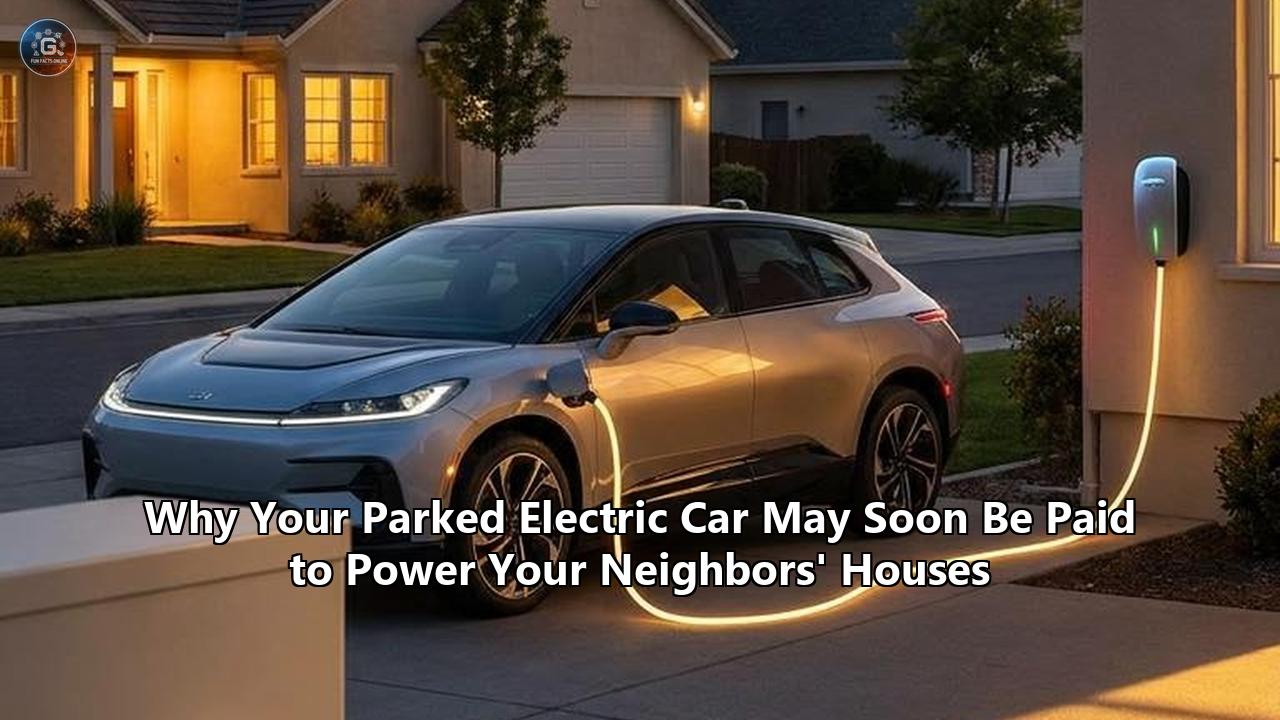
On April 20, 2026, Pacific Gas and Electric Company (PG&E) and Tesla quietly finalized an agreement that signaled a fundamental shift in the relationship between electric vehicles and the American power grid. The utility approved the Tesla Cybertruck, along with its Powershare Gateway and Universal Wall Connector, for participation in PG&E’s residential Vehicle-to-Everything (V2X) program in California.
This was not just another minor pilot program. It marked the first alternating current (AC) vehicle-to-grid application approved for residential customers in California, allowing a mass-market electric vehicle to act as a dispatchable power plant using standard, everyday home electrical equipment.
Similar developments are rapidly occurring across the United States. Just weeks later, on June 30, 2026, Commonwealth Edison (ComEd), which serves more than four million customers in Illinois, announced that state regulators had approved its Scheduled Dispatch Virtual Power Plant (SDVPP) program. Spurred by the state’s Clean and Reliable Grid Affordability Act, the program will aggregate customer-owned batteries to relieve grid strain, with a explicit mandate to expand the system to include electric vehicles by 2029.
Meanwhile, in Europe, global energy tech giant Octopus Energy and CATL, the world’s largest battery manufacturer, announced a joint venture named "Swaptopus". The venture aims to build dozens of battery-swapping mega-hubs for electric freight trucks, explicitly designed to act as virtual power plants that can feed gigawatts of cheap, stored energy back into the European grid during peak demand.
These overlapping developments highlight a major transition: electric vehicles are shifting from being a significant new drain on the power grid to becoming its primary defense system. Driven by a historic surge in power demand from artificial intelligence data centers, frequent extreme weather events, and an aging electrical infrastructure, utilities are realizing they can no longer build traditional power plants fast enough.
Instead, they are looking at the millions of electric vehicles parked in suburban driveways and commercial depots. By utilizing vehicle to grid technology, utilities are preparing to pay EV owners hundreds—and in some cases, thousands—of dollars a year to let their parked cars power their neighbors' homes.
The Double Squeeze: Why Our Grid Urgently Needs Your Parked Car
To understand why utilities are suddenly willing to write checks to EV owners, one must look at the unprecedented dual challenge facing the modern electrical grid.
For the past two decades, electricity demand in the United States remained relatively flat. That stability has vanished. The rapid expansion of artificial intelligence, machine learning, and massive cloud-computing data centers has created an insatiable appetite for power. Tech companies are building facilities that require gigawatts of continuous electricity, springing up much faster than utilities can build new substations or transmission lines.
Compounding this demand surge is the rapid electrification of building heating and transportation. At the same time, extreme weather events—from prolonged summer heatwaves in California and Texas to severe winter freezes in the Midwest—are pushing grid infrastructure to its absolute physical limits.
   Traditional Power Supply vs. New Era Grid Demands

   [Centralized Fossil Fuel Plants]  ──(10+ Year Build Times)──> [Strained Grid]
                                                                     │
   [AI & Data Center Surge] ─────────(Immediate Demand)─────────────>┤
   [Extreme Weather Events] ─────────(Peak Load Spikes)──────────────>┤

   [Parked EV Fleet (V2G)]   <───(Sub-Second Balancing Power)───────┘
The financial consequences of these constraints are already showing up in wholesale energy markets. During a capacity auction held by PJM Interconnection—the regional transmission organization coordinating wholesale electricity across 13 eastern states—final capacity prices shot up nearly tenfold compared to the previous year. Ratepayers are facing billions of dollars in added capacity costs, driving utilities to seek alternative solutions to avoid building expensive "peaker" plants that sit idle for 95% of the year.
This is where the massive, untapped capacity of parked electric vehicles comes into play.
A typical residential stationary battery, such as the Tesla Powerwall 3, holds roughly 13.5 kilowatt-hours (kWh) of usable energy. By contrast, the average electric passenger vehicle on the road today carries a battery pack ranging from 60 to 100 kWh. The battery inside a single Ford F-150 Lightning or a Tesla Cybertruck is equivalent to six to eight stationary home batteries combined.
Most passenger vehicles remain parked approximately 95% of the day. When aggregated, millions of idle EVs represent a massive, mobile energy storage network.
If just 10% of the projected 8 million electric vehicles expected on California roads by 2030 are connected to bidirectional chargers, they would represent 48 to 80 gigawatt-hours of flexible capacity. That is more than double the entire state's current stationary battery storage capacity, offering enough power to keep the lights on for millions of homes during critical peak periods.
Monetizing the Driveway: The Real-World Economics of V2G Payouts
The financial incentive for EV owners to participate in these programs is shifting from speculative estimates to concrete, recurring revenue streams.
When utilities experience peak demand—typically between 4:00 PM and 9:00 PM on hot summer afternoons when air conditioners are running and solar generation begins to drop—the wholesale cost of electricity spikes dramatically. Rather than purchasing power from expensive, high-emission natural gas peaker plants, utilities are finding it more cost-effective to buy electricity back from their own customers.
                     HOW THE V2G ARBITRAGE SYSTEM WORKS

     Off-Peak Hours (Midnight - 6 AM)         Peak Demand Hours (4 PM - 9 PM)

        Grid (Low Cost: $0.10/kWh)               Grid (High Value: $2.00/kWh)
                  │                                        ▲
                  ▼                                        │
        [Parked EV Battery]                      [Parked EV Battery]
   (Charges cheaply overnight)              (Discharges and sells back to grid)
Across the United States, several distinct utility structures have emerged to compensate EV owners for grid participation:
1. Emergency Load Reduction Programs (ELRP)
In California, PG&E’s V2X program operates in tandem with the state’s Emergency Load Reduction Program. Under this framework, participants are paid a premium—up to $2.00 per kWh—for power exported back to the grid during emergency events.
If an enrolled Cybertruck or Chevrolet Silverado EV exports a modest 10 kilowatts (kW) of power for three hours during a hot August afternoon, the owner earns $60 for that single event. Over the course of a hot summer with 15 dispatch events, an EV owner can easily clear $900 in direct incentive payments.
2. Seasonal Capacity Payments
In New England, the landmark ConnectedSolutions demand-response program operated by National Grid and Eversource has expanded from home batteries to include bidirectional electric vehicles.
The program pays customers based on their average performance during summer and winter peak events. In Massachusetts, the current payout rate sits at $225 per kilowatt (kW) of average performance during summer events. A homeowner with a standard 10 kW bidirectional home charger who consistently discharges power during called events can expect to earn between $1,350 and $2,700 annually.
3. Direct Bill Credits and Smart Tariffs
In Texas, Tesla launched its Powershare Grid Support program in early 2026 for Cybertruck owners living in CenterPoint Energy and Oncor service territories, which cover Houston and Dallas.
Because Texas operates its own highly volatile, isolated grid under ERCOT, wholesale prices can spike to thousands of dollars per megawatt-hour. Tesla’s program automatically coordinates the vehicle's discharge during these price spikes, passing the revenue directly to the vehicle owner in the form of substantial energy bill credits.
An exhaustive life-cycle analysis published in MDPI Sustainability examined the cumulative impact of these various payment structures. The study concluded that in regions characterized by wide differentials between overnight off-peak rates and daytime peak tariffs, the net V2G revenues over a ten-year period could reach as high as $25,000 per vehicle.
This level of return changes the overall cost of ownership for electric vehicles, effectively transforming a depreciating transportation asset into a yielding energy infrastructure investment.
Inside the Tech: The High-Stakes Shift from DC to AC Bidirectional Charging
To understand the sudden acceleration of vehicle to grid technology, we must look at a major engineering debate that has divided the automotive and utility industries for a decade: Direct Current (DC) versus Alternating Current (AC) bidirectional charging.
       Two Paths to Bidirectional Power Flow

   1. DC Bidirectional System (Off-board Inversion)
      [EV Battery (DC)] ──> [CCS/CHAdeMO Plug] ──> [Expensive External Inverter (DC to AC)] ──> [Grid]
      * Hardware Cost: $10,000 - $30,000

   2. AC Bidirectional System (On-board Inversion)
      [EV Battery (DC)] ──> [On-board Inverter (DC to AC)] ──> [Standard J1772/NACS Plug] ──> [Grid]
      * Hardware Cost: $4,000 - $7,500
An EV battery natively stores and discharges electricity as Direct Current (DC). The electrical grid, however, operates on Alternating Current (AC). For electricity to flow from a parked car back to the grid, the power must be inverted from DC to AC.
Historically, this inversion process was handled outside the vehicle using a specialized DC bidirectional charger. These units are large, industrial-grade pieces of power electronics that bypass the vehicle's internal charging equipment to pull DC power directly from the battery and convert it to AC on the wall.
While highly effective, DC bidirectional chargers are incredibly expensive. A commercial-grade unit can cost up to $30,000, and even residential-grade DC setups historically cost between $10,000 and $15,000 before labor and permitting. This high cost barrier kept residential V2G programs confined to small, highly subsidized utility pilots.
The integration of the Tesla Cybertruck into PG&E’s program represents a major shift toward AC-based bidirectional charging.
In an AC system, the heavy lifting of inverting DC power to AC is handled inside the vehicle by its own onboard charger. Instead of outputting raw DC power to the wall, the car itself outputs clean, grid-synchronized AC power directly through a standard charging cable.
This approach slashes the cost and complexity of the home charging equipment. Rather than requiring a specialized, multi-thousand-dollar DC inverter on their garage wall, homeowners only need a compatible AC gateway and transfer switch—such as the Tesla Powershare Gateway—to safely isolate their home's electrical panel from the public utility grid during a discharge event.
The total hardware and installation cost for a complete residential AC bidirectional system ranges from $4,000 to $7,500. While still more expensive than a basic $800 "dumb" Level 2 charger, it is thousands of dollars cheaper than a DC setup and completely eliminates the need to purchase a standalone $15,000 home backup battery.
| Parameter | DC Bidirectional Charging | AC Bidirectional Charging |
|---|---|---|
| Inversion Location | External Wall-Mounted Charger | Inside the Vehicle (Onboard Charger) |
| Average Hardware Cost | $10,000 – $30,000 | $4,000 – $7,500 (Including Gateway) |
| Installation Complexity | Very High (Requires specialized DC run) | Moderate (Utilizes conventional AC service) |
| Vehicle Compatibility | Nissan Leaf (CHAdeMO), Specific CCS | Tesla Cybertruck (NACS), GM model year 2026 |
| Interconnection Standards | Highly established | Emerging (UL 1741 CRD pathway) |
This technological shift is supported by evolving safety and interconnection standards. Historically, local utilities were hesitant to allow AC bidirectional power back into their grids due to fears of "islanding"—a hazardous scenario where a home battery or vehicle continues to pump electricity into local power lines during an outage, risking the safety of utility linemen working to repair the system.
As of mid-2026, the formal AC bidirectional standard, known as UL 1741 SC, is still winding its way through the final approval stages. However, safety regulators have established an interim pathway called the UL 1741 CRD (Certification Requirement Decision). This allows manufacturers to certify their AC bidirectional hardware for immediate, safe connection to the public grid, clearing the regulatory path for wide-scale consumer rollouts.
The Automaker Strategy: Who Is Ready to Turn Their Cars into Power Plants?
With utility payouts rising and hardware costs dropping, the world's largest automakers are racing to integrate bidirectional capabilities into their standard production vehicles. What was once offered as an expensive, premium option is quickly becoming standard across the industry.
                     AUTOMAKER BIDIRECTIONAL TIMELINES

  Nissan Leaf (CHAdeMO)  ───────[Pioneered early V2G]─────────> Active Since 2018

  Tesla (Powershare)     ───[Texas Support (Feb 2026)]────────> Standard on Cybertruck
                             └───> [California AC V2G (Apr 2026)]

  General Motors         ────────[Model Year 2026 Mandate]────> Standard on all new EVs

  Volkswagen / Elli      ────────[Integrated European V2G]────> Launching Q4 2026
General Motors
General Motors has taken one of the most aggressive stances on the technology. In model year 2026, the company made bidirectional charging capability standard across its entire electric vehicle lineup, including the Chevrolet Blazer EV, Equinox EV, GMC Sierra EV, and Cadillac Lyriq.
By June 2026, GM reported that it had sold nearly a quarter-million vehicles equipped with bidirectional charging technology. The company is actively collaborating with PG&E and Michigan’s DTE Energy to transition these vehicles into residential power resources.
Tesla
Despite CEO Elon Musk’s historical skepticism toward vehicle to grid technology—which he long argued was less efficient than dedicated home batteries like the Powerwall—Tesla has moved quickly to capture the bidirectional market.
The launch of the Cybertruck’s Powershare platform in early 2024 served as the hardware foundation. Following its successful grid-integration rollouts in Texas and California in early 2026, Tesla is on track to integrate bidirectional charging as a standard feature across its entire mass-market vehicle lineup.
Ford
Ford was an early pioneer in the space, heavily marketing the F-150 Lightning's "Intelligent Backup Power" system. Built on a massive battery pack (98 to 131 kWh), the Lightning is capable of powering an average American home for up to ten days during an outage. Ford is working with various energy software aggregators to transition this backup capability into active, revenue-generating V2G programs.
Hyundai Motor Group
Hyundai and Kia vehicles built on the company's dedicated E-GMP (Electric Global Modular Platform)—including the Ioniq 5, Ioniq 6, EV6, and EV9—have natively featured Vehicle-to-Load (V2L) technology, which allows drivers to plug standard household appliances directly into the car's ports. The company is rolling out software updates to enable full, grid-parallel V2H and V2G capabilities across its newest model years.
European Manufacturers
In Europe, where high electricity prices make V2G economics highly favorable, the transition is moving even faster. Volkswagen, in partnership with its energy brand Elli, is launching a fully integrated consumer V2G package in Germany by late 2026.
French manufacturer Renault launched the highly anticipated Renault 5 E-Tech, which comes with standard V2G capabilities integrated with the company's Mobilize power contracts. Meanwhile, Mercedes-Benz has announced that its new electric CLA and GLC models, arriving later this year, will feature bidirectional charging enabled for grids in Germany, France, and the United Kingdom.
The Growing Pains: Software Glitches, Solar Net-Metering Clashes, and Battery Health
The transition to a decentralized, vehicle-supported grid is not without significant friction. As bidirectional charging moves from small pilots into commercial operations, project managers and engineers are uncovering complex technical, regulatory, and psychological hurdles.
The Solar Net-Metering Billing Clash
One of the most surprising and urgent bottlenecks was discovered during the Massachusetts Clean Energy Center's (MassCEC) V2X demonstration program.
The state-funded program set out to deploy bidirectional chargers across residential, municipal, and commercial settings. However, senior program manager Elijah Sinclair revealed that the agency had to disqualify roughly 75% of the nearly 300 residential applicants because they already had solar panels installed on their homes.
                 THE NET-METERING DOUBLE-COUNTING DILEMMA

          [Solar Panels]                     [V2G EV Battery]
                │                                    │
                ▼                                    ▼
       (Generates clean solar              (Charges overnight from grid
          electrons for credit)               using cheap fossil fuels)
                │                                    │
                └─────────────────┬──────────────────┘
                                  │
                                  ▼
                            [Utility Meter]
                                  │
               "Who generated these exported electrons?"
               "Do we pay solar rates or V2G rates?"
The issue stems from a limitation in current utility billing software and metering infrastructure. Existing billing systems cannot distinguish between:
- Electrons generated by a home's solar panels (which are legally eligible for state-mandated solar net-metering credits).
- Electrons discharged from an EV battery (which might have been sucked from the grid at a cheap rate overnight, potentially from fossil-fuel sources, and are being sold back to the grid for a V2G premium).
Without physical sub-metering or advanced software that can audit the precise origin of every exported electron, utilities face double-counting and regulatory compliance issues. In many investor-owned utility territories across Massachusetts and California, current regulations simply ban customers from receiving solar net-metering credits if a grid-parallel bidirectional EV charger is installed on the same meter.
Resolving this billing bottleneck is a major focus for utility commissions, requiring a complete modernization of ratepayer billing engines and software communication standards.
The Battery Degradation Concern
For many EV owners, the primary hesitation to participating in V2G programs is the fear of wearing out their expensive vehicle battery. Every cycle of charge and discharge causes microscopic wear to a lithium-ion battery's internal structure, slowly reducing its capacity over time. Owners worry that letting the utility tap their car to power the neighborhood will degrade the battery, leaving them with significantly reduced driving range.
However, extensive real-world data and academic research are largely debunking these concerns:
- Gentle Discharge Rates: The rate of power discharge used in V2H and V2G applications is incredibly slow compared to the physical stress of driving or fast-charging. While a DC fast-charger pumps up to 350 kW of energy into a battery in under an hour, residential V2G programs typically discharge power at a gentle rate of 5 to 10 kW.
- Marginal Long-Term Impact: A comprehensive life-cycle study published in Sustainability concluded that slow-cycling an EV battery for grid support has a negligible impact on long-term capacity. For a vehicle with a 75 kWh battery pack, participating in regular V2G events over ten years would result in ending the decade with approximately 62 to 63 kWh of usable capacity, compared to 64 to 65 kWh if the vehicle was only used for driving—a marginal difference that most drivers would never notice.
- Warranty Protection: Demonstrating their confidence in battery chemistry, major automakers—including Ford, GM, Tesla, Nissan, Volvo, and Polestar—now explicitly state that utilizing bidirectional capabilities through manufacturer-approved charging hardware will not void the vehicle's 8-year, 100,000-mile high-voltage battery warranty.
Future Horizon: From School Buses to Heavy "Swaptopus" Trucking
As the technology matures, the vehicle-to-grid landscape is expanding beyond individual passenger cars into highly structured commercial and public fleet operations.
                    V2G FLEET UTILIZATION SCOPE

  [Electric School Buses]  ───> Idle all summer during peak heatwaves.
                                Massive 200 kWh batteries. Perfect grid asset.

  [Heavy-Duty Trucking]   ───> CATL & Octopus "Swaptopus" JV.
                                Mega-hubs swap flat batteries for charged ones.
                                Charges off-peak; feeds grid during stress.
Commercial fleets are, in many ways, the ideal participants for virtual power plants. Unlike passenger cars, which move unpredictably, commercial vehicles operate on highly structured schedules, are parked in centralized locations, and feature massive battery packs.
Electric school buses are a prominent example. School buses have enormous battery packs, often exceeding 200 kWh, and operate on highly predictable, short daily routes.
Crucially, school buses sit entirely idle during the hot summer months—the exact time when the electrical grid experiences its most severe, heatwave-driven peak demand events.
In the MassCEC V2X pilot, the Acton-Boxborough school district in Massachusetts deployed electric school buses to charge overnight when electricity is cheapest and cleanest, and then discharge power back to the grid from 4:00 PM to 7:00 PM during summer peak periods.
As Kate Crosby, energy manager for the school district, noted: "The more we plug in batteries to the grid, the less we use peaker plants." The revenue generated from these peak exports can offset the school district’s entire energy charging cost for the year.
In the commercial freight sector, the June 2026 "Swaptopus" joint venture between Octopus Energy and CATL points to the future of heavy-duty transport.
By deploying a network of mega battery-swapping stations across Europe, Swaptopus will allow electric semi-trucks to swap a depleted battery pack for a fully charged one in under five minutes.
Crucially, the thousands of massive truck batteries waiting at these swapping hubs will be plugged directly into the grid. Controlled by AI-powered trading software, these stations will absorb excess solar energy during the day and discharge gigawatts of power back into the European transmission system when demand and prices spike, acting as a massive, distributed battery reserve.
At the regulatory level, the pressure to integrate vehicles into the grid continues to mount. In California, lawmakers are actively working with the California Energy Commission (CEC) and the California Air Resources Board (CARB) under the framework of Senate Bill 233.
The bill charges these agencies with addressing the hardware and software interoperability challenges of bidirectional systems. The goal is to establish a clear regulatory pathway to make bidirectional charging capability a mandatory standard for all new electric vehicles sold in the state by 2030.
What to Watch Next
As vehicle to grid technology transitions from a novel engineering concept into a key part of utility operations, several milestones over the next 18 to 24 months will dictate how quickly these cash payouts reach the mainstream:
- Software Upgrades for Solar Homes: Watch for utilities to roll out updated, "dual-register" billing software and sub-metering standards that allow homes with existing solar arrays to participate in V2G programs without losing their net-metering credits.
- The Finalization of UL 1741 SC: The formal standard governing AC bidirectional safety is expected to be finalized, replacing the interim UL 1741 CRD pathway and enabling a wave of cheaper, certified AC bidirectional chargers to hit the consumer market.
- Automaker Warranty Language: Keep an eye on how traditional, conservative automakers update their high-voltage battery warranties. If other manufacturers follow GM and Tesla’s lead in explicitly welcoming bidirectional usage, it will go a long way in easing consumer anxiety.
- Expansion of Smart Charging Tariffs: Watch for state public utility commissions (PUCs) to mandate that investor-owned utilities file dedicated bidirectional tariffs, defining exactly how much they will pay EV owners for exporting power.
The days of the automobile existing purely as a depreciating, resource-consuming transportation device are coming to a close. In this new energy landscape, your next car might not just sit in your garage—it could actively secure your neighborhood’s energy grid, earning you a steady stream of income while you sleep.
Reference:
- https://www.teslaacessories.com/blogs/news/cybertruck-becomes-california's-first-ac-vehicle-to-grid-asset-via-pg-e-partnership
- https://www.iesna.com/news-insights/tesla-cybertruck-joins-pges-vehicle-to-grid-program-in-california-first/
- https://www.investing.com/news/company-news/comed-launches-virtual-power-plant-program-in-illinois-93CH-4767812
- https://octopus.energy/big-on-batteries-octopus-and-catl-team-up-to-unlock-electric-trucking-across-europe/
- https://octopus.energy/big-on-batteries-octopus-and-catl-team-up-to-unlock-electric-trucking-across-europe/
- https://www.independent.co.uk/cars/electric-vehicles/battery-swap-for-electric-trucks-octopus-catl-b3000357.html
- https://blogs.edf.org/climate411/2026/06/29/grid-expectations-re-wiring-duke-energys-rate-case-for-a-clean-energy-future/
- https://www.emporiaenergy.com/blog/what-is-v2g/
- https://www.pv-magazine.com/2026/06/29/the-virtual-power-plant-era-has-arrived/
- https://www.naturetechmemos.com/p/top-10-virtual-power-plant-startups-to-watch-in-2026
- https://www.futuremarketinsights.com/reports/vehicle-grid-market
- https://thechargeport.com/v2h-v2g
- https://www.smartenergydecisions.com/wp-content/uploads/2025/04/liftoff_doe_virtualpowerplants2025update.pdf
- https://www.bostonsolar.us/solar-blog-resource-center/blog/is-a-bi-directional-ev-charger-worth-it-2026-cost-benefits-and-verdict/
- https://nuvve.com/sb233bidirectionalcharging/
- https://www.publicpower.org/periodical/article/california-senate-approves-bill-calls-all-new-evs-include-bidirectional-charging
- https://www.electrive.com/2026/04/21/pge-and-tesla-integrate-cybertruck-into-v2g-programme/
- https://thechargeport.com/v2h-v2g
- https://www.masscec.com/sites/default/files/documents/FAQs%203.10.25%20%281%29.pdf
- https://www.masscec.com/masscec-focus/clean-transportation/electric-vehicle-charging-infrastructure/vehicle-to-everything-demonstration
- https://www.greenfueljournal.com/post/vehicle-to-grid-v2g-how-ev-batteries-are-powering-the-future-smart-grid
- https://driivz.com/blog/2026-ev-charging-industry-predictions-and-trends/
- https://news.gm.com/home.detail.html/Pages/topic/us/en/2026/jun/0625-gm-sustainable-energy-ecosystem.html
- https://www.cnet.com/home/electric-vehicles/california-bill-requiring-bidirectional-charging-in-all-evs-is-defeated-in-state-assembly/
- https://evwire.com/p/tesla-pge-launch-first-ac-based-v2x-program-cybertruck-california-details
- https://www.greencarreports.com/news/1139443_california-might-require-bidirectional-charging-capability-in-evs
- https://www.imarcgroup.com/vehicle-to-grid-market
- https://www.canarymedia.com/articles/ev-charging/massachusetts-evs-feeding-grid
- https://www.snsinsider.com/press/vehicle-to-grid-market-9613
- https://www.smmt.co.uk/octopus-and-catl-bring-battery-swapping-hubs-to-uk/
- https://seuc.senate.ca.gov/sites/seuc.senate.ca.gov/files/sb_233_analysis.pdf