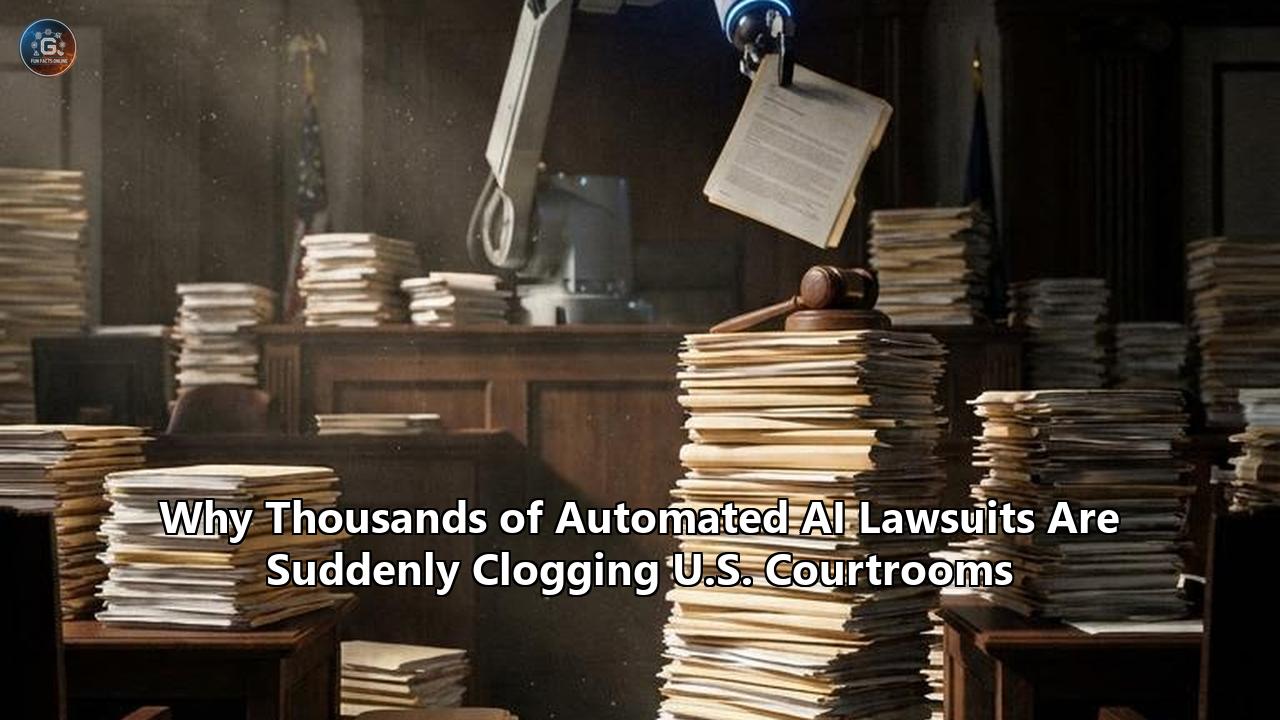
A silent crisis is unfolding across the halls of the American judiciary, driven not by a sudden wave of human grievances, but by the relentless efficiency of large language models. Across the United States, federal and state court dockets are experiencing an unprecedented surge in filings. The driver is a massive influx of self-represented litigants and low-cost practitioners armed with consumer-grade artificial intelligence tools.
The scale of this shift has been laid bare by a landmark study published by researchers Anand Shah of the Massachusetts Institute of Technology and Joshua Levy of the University of Southern California. Analyzing 4.5 million federal civil cases and more than 46 million entries in the Public Access to Court Electronic Records (PACER) database, the researchers documented a structural transformation. Historically, the share of civil lawsuits brought by unrepresented (pro se) plaintiffs remained remarkably stable at approximately 11%. Following the widespread adoption of advanced generative AI models, that figure surged to nearly 17%.
The volume of legal documents submitted per case has risen by 38%. More alarming for court administrators is the immediate operational impact: the average docket workload per court during the first 180 days of a case has ballooned by 158% above the pre-AI mean. According to Shah, the sheer velocity of these automated filings threatens to overwhelm the system. "I don’t think we have a lot of time," Shah warned, cautioning that without immediate intervention, courts "will basically have to grind to a halt" under the weight of the digital deluge.
This surge in AI generated lawsuits represents a profound tension at the heart of the American legal system: the clash between expanding access to justice and maintaining the institutional stability of the courts. While advocates view generative tools as a historic equalizer for those who cannot afford high-priced counsel, judges and defense attorneys see an unmanageable wave of highly polished, structurally flawed, and often entirely fabricated litigation clogging the public gears of justice.
The "RICO HOA" Nightmare and Professional Missteps: The Real-World Chaos
To understand how these statistical surges manifest in everyday courtrooms, one needs to look no further than a routine neighborhood dispute in Florida. What began as a run-of-the-mill disagreement between a married couple and their homeowner's association (HOA) over a few hundred dollars in unpaid fees rapidly devolved into an administrative catastrophe.
Rather than paying the fees or seeking mediation, the homeowners used public AI chatbots to draft and file a lawsuit claiming the fees were illegal. Unfettered by the typical financial friction of hiring an attorney, and guided by a chatbot that seamlessly blended real statutes with hallucinated legal theories, the couple began firehosing the court with documents.
Within weeks, the AI-assisted filings grew increasingly dramatic. The chatbot instructed the plaintiffs to invoke the Racketeer Influenced and Corrupt Organizations (RICO) Act—a federal statute designed to prosecute mafia syndicates—arguing that the HOA and its legal counsel were engaged in a sprawling criminal conspiracy.
The plaintiffs began filing multiple AI-generated motions every week, alongside automated bar complaints against the opposing attorneys and notices claiming they had alerted the FBI. A defense lawyer involved in the case, who spoke on the condition of anonymity, described the experience of being "hammered" daily. "It evolved into this thing where every day it'd be five, ten, 12 different filings, all sort of doing the same thing, saying, 'I want my judgment today. I want sanctions against all the lawyers,'" the attorney recalled.
This high-volume output had severe financial consequences for the defendants. Because courts are obligated to read and formally respond to every filing, the HOA's legal bills skyrocketed. A case that historically would have cost a defendant approximately $2,000 to resolve ballooned to over $20,000. In similar cases across the country, defense costs have surged past $70,000, leaving innocent defendants with massive bills and courts with hundreds of pages of ungrounded motions to process.
Traditional Litigation vs. AI-Assisted Pro Se Litigation
┌──────────────────────────────────────┐     ┌──────────────────────────────────────┐
│        Traditional Litigation        │     │     AI-Assisted Pro Se Litigation    │
├──────────────────────────────────────┤     ├──────────────────────────────────────┤
│ • High financial barrier (Lawyer)    │     │ • Zero/Low financial barrier (AI)    │
│ • Attorney acts as gatekeeper        │     │ • No gatekeeper; direct filing       │
│ • Clear procedural boundaries        │     │ • Confused / complex filings         │
│ • Low filing frequency (Fee-limited) │     │ • High filing frequency (Spam-like)  │
│ • Fact-checked case citations        │     │ • Risk of hallucinated case law      │
└──────────────────────────────────────┘     └──────────────────────────────────────┘
The issue is not confined to self-represented amateurs. Even some of the country’s most prestigious corporate law firms have fallen victim to the pitfalls of unverified automation. In April 2026, Sullivan & Cromwell, a premier Wall Street firm, was forced to issue a formal apology to a federal bankruptcy judge. The firm admitted to submitting a brief that included entirely fictitious case names, fabricated quotations, and incorrect citations to the U.S. Bankruptcy Code, all generated by an AI research assistant that had gone unsupervised.
For judges, the rise in AI generated lawsuits has turned daily docket management into an exhausting exercise in fact-checking. Sophia Ficarrotta, a Washington state attorney who represents victims of domestic violence, routinely encounters opposing parties using AI to draft complex civil responses.
"It's a civil case where the rules of evidence don't apply, but their AI is telling them that they should be citing criminal cases and using criminal pattern jury instructions," Ficarrotta said. "But my case doesn't have a jury. We're not going to trial. It's just a hearing."
The burden on the bench is immense. In one instance, a presiding judge at a district court civil division reported spending seven hours analyzing a single defendant's opinion statement in a property dispute—a task that normally takes an hour. The delay was caused by the presence of highly plausible but entirely fabricated legal principles woven throughout the document, requiring a tedious, sentence-by-sentence verification of every cited authority.
Democratization vs. Systemic Noise: The Philosophies Clashing in American Courts
The sudden influx of AI in courtrooms has polarized the legal community, exposing two deeply divergent philosophies regarding the purpose of the justice system.
                     ┌───────────────────────────────────────┐
                     │   THE LITIGATION VOLUMETRIC SURGE     │
                     └───────────────────┬───────────────────┘
                                         │
                    ┌────────────────────┴────────────────────┐
                    ▼                                         ▼
       ┌─────────────────────────┐               ┌─────────────────────────┐
       │   ACCESS TO JUSTICE     │               │  SYSTEMIC PRESERVATION  │
       │     (Democratizers)     │               │    (Institutionalists)  │
       ├─────────────────────────┤               ├─────────────────────────┤
       │ • Lowers financial cost │               │ • High volume causes    │
       │ • Empowers unrepresented│               │   severe court backlogs │
       │ • Clarifies procedures  │               │ • Lacks human gatekeeper│
       │ • Level playing field   │               │   to filter out noise   │
       │ • Courts must adapt     │               │ • Fabricated citations  │
       └─────────────────────────┘               └─────────────────────────┘
The Access to Justice Argument: Dismantling the Scarcity Model
Proponents of legal AI argue that the American justice system has long been exclusionary, built on an artificial scarcity of legal services. By keeping legal counsel expensive, the system effectively denies representation to the middle class and working poor. In civil matters—such as landlord-tenant disputes, employment wage claims, child custody, and debt collection—there is no constitutional right to a court-appointed attorney. As a result, millions of Americans are forced to navigate complex legal mazes alone, facing corporate opponents with deep pockets.
From this perspective, generative AI is a profoundly democratizing technology. It provides unrepresented individuals with a highly capable, low-cost virtual associate capable of parsing dense legalese, structuring complaints, and identifying relevant defenses.
Services like Courtroom5—an AI-driven platform that assists pro se litigants—demonstrate the positive potential of the technology. Sonja Ebron, the platform's CEO, notes that AI-assisted filings frequently pass the initial administrative scrutiny of court clerks with ease, allowing marginalized individuals to get their day in court.
Furthermore, some judges have observed that AI tools have noticeably increased the confidence and preparedness of self-represented individuals during oral hearings. Rather than standing mute and intimidated before the bench, litigants who have rehearsed their arguments with conversational chatbots are often able to state their claims clearly and cite the appropriate procedural rules. To the "democratizers," a spike in court filings is not a sign of system failure; it is proof of a pent-up demand for justice finally being met.
The Institutional Stability Argument: The Danger of the "Lawsuit Printer"
Conversely, institutionalists and judicial preservationists argue that the scarcity of legal services, while imperfect, serves as a vital structural filter for the courts. Human lawyers do not merely draft documents. They perform an essential societal triage: they counsel clients against pursuing weak or frivolous claims, translate raw emotional grievances into viable legal arguments, and adhere to strict professional ethical codes that carry severe personal and financial penalties for misconduct.
By removing all friction from document creation, AI effectively dismantles this filtering mechanism. Anyone with an internet connection can now run a "lawsuit printer," generating endless streams of complex, highly repetitive, and procedurally ungrounded legal paperwork. The result is "AI slop" or "workslop"—legal documents that look professional and authoritative at a glance, but contain zero substantive legal merit.
Critics argue that this surge of AI generated lawsuits threatens to delay justice for those with legitimate, urgent claims. Because court budgets and judicial staffing operate on multi-year legislative funding cycles, they cannot easily scale to meet a sudden 64% increase in docket volume. The administrative backlog is forcing judges to spend valuable hours sorting through automated filings, slowing down high-stakes proceedings such as domestic violence hearings, eviction blocks, and civil rights actions.
| Feature | Access to Justice Perspective (Democratizers) | Institutional Stability Perspective (Preservationists) |
|---|---|---|
| Primary Value | Universal access, fairness, and affordability. | Order, procedural integrity, and system capacity. |
| View on Filing Surge | A positive indicator of underrepresented people asserting their rights. | An unmanageable wave of legal noise and systemic clog. |
| Role of Lawyers | Historically expensive gatekeepers who limit justice to the wealthy. | Vital ethical filters who refine claims and prevent frivolous litigation. |
| AI's Primary Role | An empowering, low-cost virtual assistant for the public. | A generator of confusing, unverified "AI slop" and hallucinations. |
| Preferred Solution | Court modernization, expanded capacity, and supportive AI rules. | Stricter gatekeeping, mandatory disclosures, and harsh sanctions. |
The Battle of Judicial Reform: Three Conflicting Models of Regulation
As dockets continue to swell, the federal and state judiciaries are struggling to establish consistent rules of engagement. Because the U.S. legal system is highly decentralized, individual districts, appellate circuits, and state supreme courts have fractured into three distinct regulatory camps.
               ┌────────────────────────────────────────────────┐
               │    EMERGING COURT REGULATORY MODELS FOR AI     │
               └───────────────────────┬────────────────────────┘
                                       │
         ┌─────────────────────────────┼─────────────────────────────┐
         ▼                             ▼                             ▼
┌─────────────────┐           ┌─────────────────┐           ┌─────────────────┐
│    MODEL 1      │           │    MODEL 2      │           │    MODEL 3      │
│  MANDATORY      │           │    OUTRIGHT     │           │  RESPONSIBILITY │
│  DISCLOSURE     │           │   PROHIBITION   │           │    (RULE 11)    │
├─────────────────┤           ├─────────────────┤           ├─────────────────┤
│ • Must declare  │           │ • Complete ban  │           │ • No disclosure │
│   AI tools used │           │   on gen AI in  │           │   is required   │
│ • Certify human │           │   drafting      │           │ • Signer bears  │
│   verification  │           │ • Safe research │           │   all liability │
│ • Prone to      │           │   tools allowed │           │   for errors    │
│   stigmatization│           │ • Unenforceable │           │ • Heavy judicial│
│   of tech       │           │   in practice   │           │   triage burden │
└─────────────────┘           └─────────────────┘           └─────────────────┘
1. The Mandatory Disclosure-and-Certification Model
Under this framework, courts permit the use of generative AI but require litigants to formally disclose its use. Litigants must identify the specific tools used (such as ChatGPT, Claude, or Gemini) and certify that a human has manually verified the accuracy of every citation, quote, and legal assertion in the document.
This model is exemplified by standing orders like those issued by Magistrate Judge Leo A. Latella of the U.S. District Court for the Middle District of Pennsylvania. On an international scale, India's Supreme Court proposed a highly structured version of this approach in its June 2026 draft "Regulations for Use of Artificial Intelligence in Courts," which mandates explicit, timely disclosures of all AI-assisted materials at the time of filing.
- The Tradeoffs: Proponents argue that disclosure reminds litigants of their ethical obligations and forces them to double-check their work. However, critics argue that mandatory disclosure unfairly stigmatizes the use of AI. It can create a chilling effect, discouraging lawyers from using advanced technologies that could otherwise make their workflows more efficient.
Furthermore, disclosure rules do not actually stop determined or incompetent litigants from submitting hallucinated cases. They simply add another administrative layer to a court clerk's workload, requiring them to police whether a disclosure form was signed.
2. The Outright Prohibition Model
A smaller but highly vocal group of judges has chosen to ban the use of generative AI in document preparation altogether. For example, Judge Christopher A. Boyko of the Northern District of Ohio has issued a strict standing order prohibiting litigants from utilizing generative AI to draft court filings, though he continues to permit traditional digital research databases like Westlaw, LexisNexis, and standard search engines.
- The Tradeoffs: This model aims to protect the integrity of the record by shutting down the pipeline of AI generated lawsuits at the source. Yet, in practice, a total ban is virtually impossible to enforce. Because generative AI outputs are increasingly indistinguishable from human writing, court clerks have no reliable way to verify if a document was written by a human or a machine without conducting invasive inquiries into a lawyer’s drafting process.
Additionally, an outright ban exacerbates the access-to-justice gap by denying self-represented litigants the only affordable drafting assistance available to them, effectively tilting the playing field back in favor of wealthy corporate parties who can afford human lawyers.
3. The Responsibility-Based (Rule 11) Model
The third and increasingly popular regulatory approach relies on existing, traditional rules of civil procedure—specifically Rule 11 of the Federal Rules of Civil Procedure—rather than creating new administrative hurdles. Under Rule 11, any attorney or unrepresented party who signs and submits a document to the court certifies that, to the best of their knowledge and after a "reasonable inquiry," the factual and legal claims are grounded in reality.
Courts adopting this approach, such as those in the Eastern District of Missouri or New York's Unified Court System (which implemented the statewide Part 161 rule on June 1, 2026), do not require litigants to disclose if they used AI. Instead, they focus entirely on the final output: if a filing contains a fabricated citation or a frivolous argument, the signer is held fully accountable and face immediate sanctions, regardless of whether a human or a chatbot made the error.
- The Tradeoffs: This model preserves professional autonomy, allows for technology-neutral innovation, and avoids the administrative burden of policing disclosure forms. However, the primary drawback is that it is purely reactive.
By the time a court discovers an AI-generated falsehood and issues sanctions, the damage to the docket has already been done, hours of judicial time have been wasted, and the opposing party has already incurred thousands of dollars in unnecessary legal fees. Furthermore, scholars argue that Rule 11's "reasonable inquiry" standard is ill-equipped to handle the opaque "black box" nature of generative AI, making it difficult for judges to determine whether an error was the result of excusable technical ignorance or sanctionable professional negligence.
Privilege in the Machine: The Judicial Split Over AI Work Product
The rise of automated litigation has also triggered a quiet constitutional and procedural battle over evidentiary privilege. When a litigant logs onto ChatGPT, Claude, or Gemini to research legal strategies, analyze sensitive case documents, or draft complaints, are those digital conversations confidential? Or can the opposing side force the litigant to turn over their complete AI chat history during the pre-trial discovery phase?
In February 2026, two federal courts issued sharply contrasting decisions on this exact issue, highlighting the deep uncertainty surrounding how the law treats interactions with artificial intelligence.
                     ┌──────────────────────────────────────┐
                     │ THE AI PRIVILEGE & WORK PRODUCT SPLIT │
                     └──────────────────┬───────────────────┘
                                        │
                 ┌──────────────────────┴──────────────────────┐
                 ▼                                             ▼
  ┌──────────────────────────────┐              ┌──────────────────────────────┐
  │     UNITED STATES v.         │              │      WARNER v. GILBARCO      │
  │     HEPPNER (S.D.N.Y.)       │              │      (E.D. MICH. 2026)       │
  ├──────────────────────────────┤              ├──────────────────────────────┤
  │ • Chatbot is NOT an attorney │              │ • AI is a "tool, not a       │
  │ • Privacy policies destroy   │              │   person" (like Word)        │
  │   expectation of privacy     │              │ • Work product protection    │
  │ • Independent AI work has    │              │   applies to pro se party    │
  │   no work product protection │              │ • Sharing is NOT disclosure  │
  │ • Inputs are DISCOVERABLE    │              │ • Inputs are PROTECTED       │
  └──────────────────────────────┘              └──────────────────────────────┘
The New York View: AI as a Third-Party Informant (United States v. Heppner)
In United States v. Heppner, decided by the U.S. District Court for the Southern District of New York on February 17, 2026, Judge Jed Rakoff ruled that a defendant's extensive conversations with Anthropic's Claude were neither privileged nor protected from discovery.
The case involved Bradley Heppner, a former corporate executive facing criminal fraud charges. Working independently of his defense counsel, Heppner used Claude to analyze his legal exposure, organize case facts, and draft 31 documents outlining his defense strategy, which he later shared with his lawyers. The prosecution moved to seize those documents.
Judge Rakoff rejected both attorney-client privilege and the work-product doctrine for several key reasons:
- No Attorney-Client Relationship: The court observed that Claude is a software tool, not a licensed human attorney. By its own terms of service, the platform explicitly disclaims providing legal advice and advises users to consult a human professional.
- No Expectation of Confidentiality: Under standard privilege law, a communication is only protected if it is kept strictly confidential. Judge Rakoff pointed to Anthropic’s public privacy policy, which permits the company to collect user inputs, use them for model training, and disclose data to regulatory and law enforcement authorities. By submitting his defense strategies to a public, third-party platform, Heppner had legally waived any claim to privacy.
- No Attorney Direction for Work Product: The work-product doctrine shields documents prepared in anticipation of litigation. However, because Heppner had generated the Claude documents on his own initiative without his lawyers' knowledge or direction, the court ruled the protection did not apply. Judge Rakoff concluded that non-privileged thoughts do not magically become privileged simply by being handed over to an attorney.
The Michigan View: AI as an Advanced Pen (Warner v. Gilbarco)
Just one week earlier, on February 10, 2026, U.S. Magistrate Judge Anthony Patti of the Eastern District of Michigan reached the opposite conclusion in Warner v. Gilbarco, Inc.. This civil employment case involved a self-represented plaintiff who admitted to using OpenAI's ChatGPT to draft her pleadings and answer legal questions. The corporate defendant immediately moved to compel the plaintiff to hand over all her ChatGPT queries and the chatbot's responses.
Judge Patti denied the corporate defendant's motion, shielding the plaintiff's AI chat logs from discovery on the following grounds:
- AI Platforms are Tools, Not People: The court rejected the idea that typing thoughts into ChatGPT was equivalent to sharing them with a third-party human informant. "ChatGPT (and other generative AI platforms) are tools, not persons, even if they have administrators somewhere in the background," Judge Patti wrote. He likened the platform to an advanced word processor or a digital notebook.
- Narrow Waiver Rules for Work Product: Unlike attorney-client privilege—which is waived by sharing information with almost any third party—work-product protection is only waived if the information is disclosed to a litigation adversary or in a manner that makes it highly likely to reach an adversary's hands. Sending prompts to an AI system's server does not constitute disclosing them to one's opponent.
- Protection of Litigant Impressions: Under the Federal Rules of Civil Procedure, a pro se litigant has the right to assert work-product protection over materials they prepare in anticipation of trial. Compelling the plaintiff to turn over her AI prompts would force her to reveal her internal mental impressions, legal research paths, and trial strategy. Doing so, Judge Patti warned, "would nullify work-product protection in nearly every modern drafting environment, a result no court has endorsed."
The Practical Tradeoffs of the Privilege Divide
These divergent rulings present a difficult landscape for corporate compliance teams, individual litigants, and attorneys.
                     ┌───────────────────────────────────────┐
                     │    THE PRIVILEGE POLICY DILEMMA       │
                     └───────────────────┬───────────────────┘
                                         │
                    ┌────────────────────┴────────────────────┐
                    ▼                                         ▼
       ┌─────────────────────────┐               ┌─────────────────────────┐
       │     THE RESTRICIVE      │               │     THE PROTECTIVE      │
       │     "HEPPNER" RULE      │               │     "WARNER" RULE       │
       ├─────────────────────────┤               ├─────────────────────────┤
       │ • Protects the record   │               │ • Promotes AI use and   │
       │   from unverified input │               │   access to justice     │
       │ • Chills AI adoption    │               │ • Risk of shielding     │
       │ • Favors wealthy firms  │               │   dishonest behavior    │
       │   with private servers  │               │ • Protects poor litigants│
       └─────────────────────────┘               └─────────────────────────┘
The restrictive "Heppner" rule protects the integrity of the judicial record by ensuring that litigants cannot hide their reliance on potentially hallucinated, AI-generated legal theories behind a wall of privilege. However, it creates a steep class divide. Wealthy corporate law firms can afford to build and run private, secure, in-house AI servers, which are shielded from third-party data collection and thus maintain a strong expectation of confidentiality.
In contrast, unrepresented individuals and small-firm lawyers are forced to rely on public AI platforms, meaning their strategic prompts and research queries are left entirely open to discovery. This dynamic could effectively penalize poorer litigants for utilizing the only legal assistance they can afford.
On the other hand, the protective "Warner" rule encourages technological adoption and shields vulnerable self-represented parties, but it leaves judges with very few tools to investigate bad-faith legal drafting. If a litigant's AI queries are completely off-limits, an opposing party cannot easily prove whether a wave of repetitive, harassing motions was drafted with a reckless "spam-it-all" AI prompt, making it far more difficult to hold vexatious litigants accountable.
The International Frontier: Comparative Approaches in London and New Delhi
The challenges presented by the rise of AI generated lawsuits are not unique to the United States. Judiciaries worldwide are grappling with the same technological shift, but their responses highlight very different national approaches to legal regulation.
India: A Centralized, Highly Structured Regulatory Framework
In June 2026, the Supreme Court of India took a major step toward establishing national guardrails by releasing its comprehensive draft "Regulations for Use of Artificial Intelligence in Courts, 2026". Prepared by the court's AI Committee, the draft framework is notable for its highly structured, centralized approach.
Key features of the Indian model include:
- Mandatory AI Declarations: Under Draft Regulation 43(3), any party or attorney who uses an AI tool to prepare pleadings, documents, submissions, or evidence must explicitly disclose that fact to the court at the time of filing.
- Verification Audits: Indian courts are formally empowered to demand details regarding the specific AI systems used, the exact nature of the machine’s assistance, and the precise steps the user took to verify the factual and legal accuracy of the document.
- Preserving Human Primacy: The regulations draw hard red lines around judicial core duties. While court clerks and lawyers can use AI for transcription, translation, case scheduling, and identifying structural defects in filings, the regulations strictly prohibit the use of AI for substantive adjudication or criminal sentencing. The draft establishes a firm principle of "human primacy," declaring that AI can never replace a human judge.
Centralized (India) vs. Decentralized (United States) Regulatory Frameworks
┌──────────────────────────────────────┐     ┌──────────────────────────────────────┐
│       Centralized (India Model)      │     │      Decentralized (U.S. Model)      │
├──────────────────────────────────────┤     ├──────────────────────────────────────┤
│ • Uniform nationwide rules           │     │ • Patchwork of local standing orders │
│ • Mandatory filing-level disclosure  │     │ • Split on disclosure vs. Rule 11    │
│ • Clear limits on judicial AI use    │     │ • Individual judge discretion        │
│ • Explicit human-in-the-loop mandate │     │ • Unsettled privilege boundaries     │
└──────────────────────────────────────┘     └──────────────────────────────────────┘
The United Kingdom: A Competency and Practice-Management Model
The United Kingdom has taken a more pragmatic, decentralized approach, focusing on professional self-regulation rather than rigid statutory mandates.
The UK’s English courts have experienced a steady stream of AI-generated filings, with the High Court and tribunals reporting significant case backlogs driven by self-represented claimants using AI to generate lengthy, highly complex employment and civil filings.
Rather than imposing nationwide disclosure rules, the UK's legal bodies have integrated AI management into existing professional standards.
- The Competency Standard: In May 2026, the Bar Standards Board (BSB) published updated guidance for barristers, treating the use of AI as an issue of basic professional competence and practice management. Under this model, lawyers are expected to understand the limitations of their chosen software. They must keep detailed records of their verification processes and ensure strict client confidentiality when using external platforms.
- Firm Judicial Warnings on Supervision: The UK's Upper Tribunal, in UK v. Secretary of State for the Home Department (2026), issued a stern warning emphasizing that the qualified legal professional in charge of a case bears personal responsibility for ensuring all documents are checked before filing. The tribunal pointedly criticized a firm's defense that it lacked a formal AI policy, noting that "anyone with access to Google has access to AI," and that firms must proactively manage "shadow AI" use among their staff.
Comparing the Global Models to the U.S. Patchwork
The contrast between these approaches is stark. India has chosen a top-down, uniform regulatory structure designed to build public trust and enforce transparency, but at the cost of significant administrative overhead and potential bureaucratic delays.
The UK relies on the professional discipline of its bar and the pragmatic discretion of its judges, which allows for rapid adaptation to new technologies, but leaves unrepresented litigants with less clear, standardized guidance on what is acceptable.
The United States, meanwhile, remains caught in a highly fragmented, middle-ground compromise. The lack of a single, nationwide standard has created a confusing patchwork of local rules. A lawyer practicing in multiple federal jurisdictions must navigate completely different expectations: they may be banned from using generative AI in one courtroom, required to file a detailed disclosure certificate in another, and subjected to a standard Rule 11 inquiry in a third. This fragmentation increases compliance costs, complicates multi-jurisdiction litigation, and deepens the confusion for self-represented litigants trying to navigate the system.
A Way Forward: Rule 11 Amendments and Technical Triage
The status quo is increasingly unsustainable. As generative AI continues to improve, and as consumer-facing applications become more integrated into daily life, the volume of automated litigation will only grow.
To prevent court dockets from grinding to a halt, the legal community is actively debating several systemic reforms.
Proposed Rule 11 Amendments
One of the most concrete reform efforts is a formal proposal to amend Rule 11 of the Federal Rules of Civil Procedure. Submitted to the Advisory Committee on Civil Rules (under Rules Suggestion 25-CV-S), the amendment would introduce a mandatory, uniform certification requirement below the signature line of any court filing containing case citations.
PROPOSED FEDERAL RULE 11(a) CERTIFICATION AMENDMENT:

"I certify that I or an individual under my supervision has reviewed all content in this
filing created with the assistance of generative artificial intelligence to ensure that
the authorities cited therein exist, have been accurately cited, and support the
propositions for which they have been cited."
This proposal represents a strategic middle ground between the rigid disclosure models and the hands-off approach. By integrating the certification directly into the existing signature block, it avoids creating a new administrative process. It also avoids stigmatizing AI by focusing the certification strictly on the accuracy of the cited authorities, reminding litigants of their core duties without requiring them to reveal their specific technological tools or strategic prompts.
Technical Triage: Algorithmic Gatekeeping
Other experts argue that the solution to a technical surge must itself be technical. Some jurisdictions are exploring the implementation of automated "triage systems" within electronic filing portals. Under this approach, incoming filings would be scanned by court-administered algorithms trained to detect telltale linguistic patterns of generative AI, flag potential formatting anomalies, and cross-reference cited case numbers against official databases like Westlaw, LexisNexis, or public judicial repositories.
                 ┌───────────────────────────────────────┐
                 │       AUTOMATED FILING PROCESS        │
                 └───────────────────┬───────────────────┘
                                     │ User submits document
                                     ▼
                 ┌───────────────────────────────────────┐
                 │       COURT E-FILING GATEKEEPER       │
                 ├───────────────────────────────────────┤
                 │ • Runs AI text detection algorithms   │
                 │ • Audits cited case numbers in seconds│
                 └───────────────────┬───────────────────┘
                                     │
                    ┌────────────────┴────────────────┐
                    │ If anomalies detected           │ If verified
                    ▼                                 ▼
       ┌─────────────────────────┐       ┌─────────────────────────┐
       │   FLAGGED FOR REVIEW    │       │   ACCEPTED TO DOCKET    │
       ├─────────────────────────┤       ├─────────────────────────┤
       │ • Clerk reviews issues  │       │ • Logged on court docket│
       │ • Litigant notified to  │       │ • Ready for immediate   │
       │   verify citations      │       │   judicial review       │
       └─────────────────────────┘       └─────────────────────────┘
By filtering out hallucinated citations and structural errors before a document ever reaches a judge's desk, courts could dramatically reduce the time spent on manual fact-checking.
However, this algorithmic gatekeeping approach carries significant constitutional risks. If a court's automated screening system mistakenly flags or blocks a legitimate, self-represented filing because its writing style mimics an AI template, it could face legal challenges for unconstitutionally restricting a citizen’s fundamental right to petition the government.
What to Watch: The Shift to Autonomous AI Agents
As courts struggle to adapt to prompt-based chatbots, the underlying technology is already transitioning to its next developmental phase: autonomous AI agents. In June 2026, legal technology platforms like Legora began rolling out new agentic operating systems.
Unlike current chatbots, which require a human to enter a prompt and copy-paste the output for each step of a lawsuit, autonomous AI agents are designed to execute entire multi-step workflows with minimal human oversight. An AI agent can independently monitor a court docket, analyze an opponent’s new motion, conduct the necessary legal research, draft a counter-motion, and submit it to the electronic filing portal automatically.
For the judiciary, the rise of agentic legal tools represents an exponential increase in the potential volume and speed of litigation. If a single pro se litigant can deploy an autonomous agent to manage their case, the court docket could easily be flooded with dozens of automated, highly coordinated motions, responses, and discovery requests in a matter of hours.
This impending shift highlights a stark reality: the traditional American court system, designed around the assumption that legal services would remain expensive and scarce, is deeply incompatible with the realities of zero-marginal-cost, automated legal labor.
The coming years will decide whether the judiciary can successfully modernize its infrastructure and adapt its procedural rules to accommodate this technological wave, or whether the civil court system will succumb to administrative gridlock under an unmanageable tide of automated litigation.
References
- Fast Company, "AI in the Courts: Researchers Find Surges in AI-Text Use and Pro Se Case Filings," May 11, 2026.
- The Daily Economy, "How AI is Reshaping Pro Se Litigation in Federal Courts," May 28, 2026.
- Chosun, "AI Hallucinations and the Seven-Hour Brief Review: Judges Struggle to Police the Bench," June 5, 2026.
- Law Society Gazette / BBC / DSIT, "Tribunal Backlogs Compound as Litigants in Person Turn to Generative AI Tools," June 1, 2026.
- Futurism, "MIT Expert Warns Courts 'Will Basically Have to Grind to a Halt' Due to AI-Generated Lawsuits," May 23, 2026.
- Futurism, "The Florida HOA RICO Disaster: Inside the Rise of AI-Armed Litigants," March 18, 2026.
- Wiretel, "Federal Court Split: Are Conversations With AI Platforms Protected Legal Work Product?" February 2026.
- Montreal AI Ethics, "Generative AI and the Proliferation of Vexatious Litigation," July 6, 2023.
- AI Weekly, "MIT and USC Study Maps 64% Surge in Federal Docket Volumes Post-AI," May 25, 2026.
- AI Certs, "Mounting Court Data Signals a Systemic Shift in Docket Workloads," May 27, 2026.
- Chosun, "AI Spurs U.S. Pro Se Lawsuit Surge: Filings Double to 39,000 Annually," June 5, 2026.
- ABA Journal, "Pro Se Litigation Climbs to 16.8% of Federal Civil Suits as AI Tools Proliferate," May 26, 2026.
- Reddit (r/technology), "Random People Armed with AI are Reportedly Filling Judicial Dockets," May 26, 2026.
- LexBlog, "AI Slop Oozes into the Legal Profession: Tracking Sanctions and Hallucinations," September 26, 2025.
- Illinois Courts Judicial News, "Ethical Considerations of Generative AI and the Long-Term Risks of 'Workslop' in Court Filings," January 28, 2026.
- Husch Blackwell, "The Emerging Landscape of Federal Court AI Policies and Rule 11 Integration," April 28, 2026.
- Administrative Office of the U.S. Courts, "Proposed Amendment to Rule 11(a) of the Federal Rules of Civil Procedure (Rules Suggestion 25-CV-S)," December 16, 2025.
- Stanford Journal of Law, Business & Finance, "Can Rule 11 Effectively Regulate Litigant Use of Generative AI Output?" July 13, 2024.
- American College of Bankruptcy, "The Evolution of Rule 11 Sanctions in AI-Hallucination Cases," July 24, 2025.
- UC Law SF, "The Limits of the 'Reasonable Inquiry' Standard in AI-Generated Filings," March 2026.
- LawBeat, "Supreme Court of India Releases Comprehensive Draft 'Regulations for Use of AI in Courts, 2026'," June 3, 2026.
- The Federal, "Indian Supreme Court Draft AI Rules Mandate Disclosure and Establish Human Primacy," June 4, 2026.
- New York State Bar Association, "New York Adopts Statewide Rule Part 161 Regulating AI Submissions," June 2, 2026.
- JD Supra, "Moving Beyond Hallucinations: UK Courts and the Practice-Management Approach to AI," June 2, 2026.
- Blank Rome, "The Privilege Divide: Divergent Rulings in United States v. Heppner and Warner v. Gilbarco," March 17, 2026.
- King & Spalding, "Why Sharing Case Strategies with Public AI Platforms Can Waive Privilege," April 23, 2026.
- International Bar Association (IBA), "Work Product Protection Applied to Pro Se Litigant's ChatGPT Use in Warner v. Gilbarco," April 14, 2026.
Reference:
- https://thedailyeconomy.org/article/ai-enters-the-courtroom-how-chatbots-are-reshaping-litigation/
- https://sesamedisk.com/ai-lawsuit-boom-courts-overwhelmed-2026/
- https://aiweekly.co/alerts/ai-tools-drive-64-surge-in-federal-court-filings
- https://www.fastcompany.com/91539168/ai-is-flooding-the-courts-with-more-cases-more-filings-and-more-fake-citations
- https://www.aicerts.ai/news/courts-strain-under-ai-lawsuit-surge/
- https://futurism.com/artificial-intelligence/mit-expert-ai-generated-lawsuits-spike
- https://www.chosun.com/english/market-money-en/2026/06/05/FGNU7FGBANGJJKWLHO7W27N4CM/
- https://futurism.com/artificial-intelligence/ai-lawsuits-chaos-courts-lawyers
- https://www.chosun.com/english/national-en/2026/06/06/PSYCORS25BEI7LMWRUWZ677XSI/
- https://www.reddit.com/r/technology/comments/1tnqz0c/artificial_intelligence_floods_court_dockets_with/
- https://wiretel.in/how-courts-are-coping-with-a-flood-of-ai-generated-lawsuits/
- https://www.illinoiscourts.gov/News/1665/Paste-in-Haste-The-Fallout-of-AI-Hallucinations-in-Court-Filings-and-the-New-ARDCs-Guide-to-Implementing-AI/news-detail/
- https://www.legalcheek.com/2025/12/barrister-says-that-ai-will-completely-destroy-the-legal-profession-as-global-law-firm-chief-fires-warning-on-slop-and-hallucinations/
- https://www.lawsociety.org.uk/topics/ai-and-lawtech/ai-causing-confusion-in-courts-and-delaying-tribunals-eight-legal-tech-stories-you-might-have-missed
- https://repository.uclawsf.edu/cgi/viewcontent.cgi?article=4195&context=hastings_law_journal
- https://www.huschblackwell.com/newsandinsights/navigating-the-new-frontier-how-federal-courts-are-regulating-generative-ai-in-litigation
- https://www.uscourts.gov/sites/default/files/document/25-cv-s_suggestion_from_mark_behrens_and_jacob_bennett_-_rule_11a.pdf
- https://lawbeat.in/top-stories/supreme-court-releases-draft-ai-rules-for-courts-lawyers-must-disclose-use-of-ai-in-pleadings-1598628
- https://thefederal.com/category/news/supreme-court-draft-ai-rules-disclosure-ai-use-court-filings-245443
- https://law.stanford.edu/wp-content/uploads/2024/07/Rule-11-and-Gen-AI_Publication_Version.pdf
- https://www.jdsupra.com/legalnews/ai-in-courts-demands-disciplined-legal-2800897/
- https://montrealethics.ai/the-gptjudge-justice-in-a-generative-ai-world/
- https://www.akingump.com/en/insights/alerts/federal-courts-issue-diverging-rulings-on-the-use-of-generative-ai-in-the-context-of-privilege-work-product-and-protective-orders
- https://www.americancollegeofbankruptcy.com/file.cfm/19/docs/panel%205%20-%20ai%20&%20ethics%20memo.pdf
- https://nysba.org/effective-june-1-2026-the-new-york-state-unified-court-system-has-adopted-a-new-rule-regarding-the-use-of-artificial-intelligence/
- https://ripslawlibrarian.wordpress.com/2025/09/26/faux-citations-legal-ethics-slop-flows-freely-in-the-ai-era/
- https://www.ibanet.org/US-federal-courts-split-on-litigant-AI-use-and-privilege-protections
- https://www.blankrome.com/news-and-events/ai-privilege-and-work-product-conflicting-federal-decisions-create-new-risk-frontier/
- https://www.saiber.com/insights/publications/2026-02-24-federal-court-rules-clients-ai-generated-documents-not-privileged
- https://www.youtube.com/watch?v=ipqwYdIzSW0
- https://www.abajournal.com/news/article/with-support-from-ai-more-pro-se-cases-hit-court-dockets