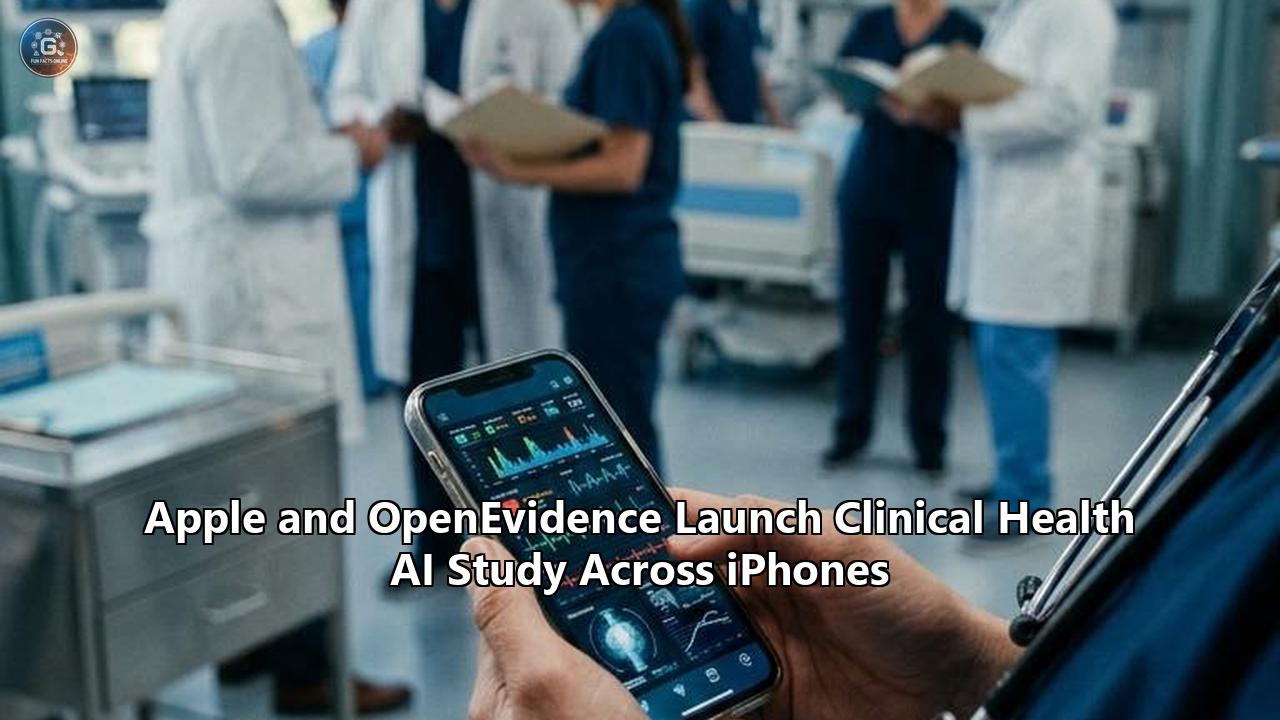
Apple has launched a 200,000-participant virtual clinical trial across the United States to evaluate how conversational artificial intelligence influences patient understanding, clinical decision-making, and everyday health actions. Conducted in partnership with medical search platform OpenEvidence, the Apple Health AI Usage Study marks the consumer hardware maker’s first direct foray into natural language medical interactions at population scale.
Enrolled participants interact with a dedicated research application designed to answer symptom, wellness, and medical questions using clinical citations drawn directly from peer-reviewed literature. Rather than relying on open-web scraping or generic conversational foundation models, the system runs on OpenEvidence’s specialized medical architecture, which holds direct licensing agreements with medical authorities including The New England Journal of Medicine, JAMA, Nature, and Cochrane.
Eligible participants must be 21 or older, reside in the United States, and use an Apple Intelligence-compatible iPhone running iOS 26 or later. Over an observation window spanning up to 12 months, researchers will measure whether clinically grounded responses decrease misinformation, change how patients prepare for doctor visits, and alter downstream care utilization.
“Responsible innovation starts with scientific rigor and clinical grounding. Health is deeply personal, and conducting a dedicated research study is the most thoughtful way to understand how people engage with, comprehend, and evaluate health AI in everyday life,” said Dr. Sumbul Desai, M.D., Apple’s vice president of Health and Fitness. “Insights from this study will help advance the broader scientific conversation and ensure that as technology evolves, we continue building trusted tools that genuinely support people wherever they are on their health journey.”
The initiative represents an escalation in Silicon Valley’s approach to medical AI. While rival tech companies have integrated diagnostic chat interfaces directly into consumer search bars and operating systems, Apple has cordoned off its conversational medical technology inside a standalone clinical research framework. The data collected across hundreds of thousands of iPhones will determine whether generative medical software can safely transition from clinician-facing point-of-care tools to everyday consumer devices.
The Breaking Crucible: Inside the Apple Health AI Usage Study
Enrollment opened nationwide through the App Store via the specialized Apple Health AI Study App. The interface mimics conversational search, inviting participants to type or dictate inquiries about complex diagnoses, prescription interactions, or ambient health indicators.
Each response generates conversational prose coupled with interactive reference cards. When a participant asks about managing newly identified elevated blood pressure or the interplay between two prescription drugs, the application delivers a synthesized explanation supported by primary-source citations from major medical journals. Tapping a citation exposes the underlying abstract, study methodology, and publication date.
+-------------------------------------------------------------------+
|               Apple Health AI Study App Architecture              |
+-------------------------------------------------------------------+
|  [ Participant Query ]  <--->  [ Apple Privacy Gateway / Proxy ] |
|                                             |                     |
|                                             v                     |
|  [ Optional HealthKit Data ]        [ Tokenized Query ]           |
|  - Resting Heart Rate                       |                     |
|  - Sleep Cycles                             v                     |
|  - Lab Results (Quest/Labcorp) ---> [ OpenEvidence Engine ]       |
|                                             |                     |
|                                             v                     |
|                             [ Retrieval-Augmented Generation ]    |
|                             - NEJM, JAMA, Nature, Cochrane        |
|                                             |                     |
|                                             v                     |
|  [ Approachable Response ]  <---  [ EvidenceGrade Citations ]     |
|  [ In-App Trust & Comprehension Rating Prompts (1-5 Scale) ]      |
+-------------------------------------------------------------------+
Participants can voluntarily link specific Apple HealthKit data points to their query context. By opting to share metrics such as resting heart rate trends, sleep architecture stages, physical activity tracking, and uploaded clinical laboratory panels, users allow the underlying engine to contextualize its answers. A query regarding lingering morning fatigue, for instance, can evaluate whether self-reported symptoms coincide with logged sleep fragmentation or documented iron deficiency panels in the user's Health records.
The primary protocol evaluates four distinct research dimensions:
- User Trust: How confidence scores fluctuate when users are presented with peer-reviewed source links versus unsourced prose.
- Response Quality: Participant and clinician scoring of clinical relevance, completeness, and clarity.
- Comprehension: Objective verification of whether users correctly interpret medical guidance, risk stratifications, and pharmacological warnings.
- Actionable Follow-Through: The tangible actions taken after an AI interaction, such as scheduling a primary care appointment, preparing a specific list of clinical questions, or avoiding unnecessary emergency room visits.
Apple and OpenEvidence structured the infrastructure around explicit data boundaries. Identifiable user queries are decoupled from Apple accounts through a cryptographic proxy network before reaching OpenEvidence’s inference infrastructure. OpenEvidence automatically purges all query and response payloads from its operational servers within 24 hours. Crucially, participant interactions are contractually barred from being ingested into foundation model training pipelines.
The Apple OpenEvidence clinical study addresses the friction point where consumer curiosities collide with clinical expertise. The deployment reflects years of institutional maneuvering, mounting clinician fatigue with hallucinated search results, and a race between technology platforms to construct consumer health ecosystems grounded in verifiable science.
2014–2022: The Sensor Era and Apple’s Institutional Foundation
To understand Apple’s measured approach to the OpenEvidence deployment, one must trace the hardware maker’s decadelong assembly of its clinical research infrastructure. The company’s medical strategy began not with conversational assistants, but with sensor biometrics and clinical study architectures designed to establish institutional credibility.
The Foundation of ResearchKit and HealthKit
In June 2014, Apple introduced HealthKit alongside iOS 8, establishing a centralized, encrypted repository for personal biometric metrics. The system gave third-party applications and medical devices a unified schema to log glucose levels, blood pressure measurements, activity intervals, and caloric intake.
Nine months later, in March 2015, the company launched ResearchKit, an open-source framework designed to let academic institutions convert iPhones into data-gathering hubs for clinical studies. Historically, clinical research recruitment suffered from geographic constraints, administrative overhead, and small cohort sizes.
Apple Clinical Milestone Progression:
2014: HealthKit introduced (centralized encrypted health telemetry).
2015: ResearchKit launched; enables remote multi-thousand patient studies.
2017: Apple Heart Study with Stanford Medicine recruits 419,297 participants.
2018: Apple Watch Series 4 receives FDA de novo clearance for ECG and Afib.
2019: Longitudinal studies launch on Women's Health, Hearing, and Heart/Movement.
2024: AirPods Pro 2 gain FDA clearance for OTC hearing aid functionality.
2026: Apple Health AI Usage Study launches with OpenEvidence (200k cohort).
Initial ResearchKit initiatives proved that remote smartphone enrollment could mobilize research populations:
- The Parkinson mPower Study: Developed by Sage Bionetworks and the University of Rochester, the program enrolled over 12,000 participants within its first 48 hours to measure dexterity, balance, and gait via the iPhone’s gyroscope and touchscreen.
- The Asthma Health Study: Built by the Icahn School of Medicine at Mount Sinai, the project monitored symptom triggers across diverse patient geographies using geolocation and environmental data.
- The GlucoSuccess Study: Conducted by Massachusetts General Hospital to analyze glycemic fluctuations relative to diet and exercise patterns.
These initiatives established a core Apple principle: biometric software must undergo scrutiny in validated clinical studies before entering general consumer workflows.
The Landmark Stanford Collaboration
The validation philosophy reached clinical maturity in November 2017 with the launch of the Apple Heart Study, conducted with Stanford Medicine. Over eight months, the study recruited 419,297 Apple Watch users across all 50 states to determine whether an optical photoplethysmography (PPG) pulse sensor could identify cardiac arrhythmias indicative of atrial fibrillation.
The trial's results, published in The New England Journal of Medicine in November 2019, showed that among participants who received an irregular pulse notification, 34% were confirmed to have atrial fibrillation on subsequent ambulatory ECG patch monitoring. The positive predictive value for the tachogram algorithm reached 84%.
+------------------------------------------------------------------------+
|                      The Apple Heart Study (2017–2019)                 |
+------------------------------------------------------------------------+
| Total Enrolled Cohort:           419,297 participants                  |
| Notification Rate:               0.52% received irregular pulse alerts |
| Diagnostic Confirmation:         34% confirmed Afib via ECG patch      |
| Algorithm Concordance:           84% positive predictive value         |
| Primary Publication:             New England Journal of Medicine (NEJM)|
+------------------------------------------------------------------------+
The Stanford collaboration secured Apple an FDA de novo classification for its Series 4 ECG sensor in 2018. More importantly, it established a blueprint for how Apple intended to operate in healthcare:
- Do not diagnose disease autonomously.
- Monitor passive physiological indicators at scale.
- Use institutional clinical trials to evaluate false positive rates and clinical utility before embedding features into daily consumer life.
Under Dr. Sumbul Desai, recruited from Stanford in 2017 to helm Apple’s health division, the company applied this blueprint systematically. Longitudinal initiatives followed: the Apple Women’s Health Study with the Harvard T.H. Chan School of Public Health, the Apple Hearing Study with the University of Michigan, and the Apple Heart and Movement Study with Brigham and Women’s Hospital and the American Heart Association.
By 2022, Apple had built a consumer health empire anchored to passive biometric sensors: peripheral capillary oxygen saturation ($SpO_2$), body temperature trends for retrospective ovulation estimation, sleep architecture classification, and fall detection.
Yet an operational chasm remained. The iPhone could collect, aggregate, and encrypt an individual's biometric record, but it could not talk to the user about what those numbers meant. When users wanted to interpret their health data, they left the Apple ecosystem entirely and searched the internet.
2022–2024: The Generative Explosion and the Hallucination Crisis
The launch of OpenAI’s ChatGPT in November 2022 destabilized consumer health information retrieval. Within months, millions of people abandoned traditional search engines to ask general-purpose conversational models about acute bodily pains, suspicious dermatological marks, and pediatric medication dosing.
According to a national tracking poll by the Kaiser Family Foundation (KFF), roughly one in three American adults had consulted an artificial intelligence tool for medical information by mid-2024. Among demographics aged 18 to 29, the proportion exceeded 45%.
Consumers embraced conversational AI because it was accessible, synthesized disparate concepts quickly, and offered an empathetic, conversational tone. Unlike traditional search engines that returned disjointed links interspersed with sponsored listings, conversational systems produced tailored, direct answers to personal dilemmas.
Escalation of Consumer Health AI Adoption (2022–2026):
Late 2022: ChatGPT launches; public begins querying LLMs for medical triage.
Early 2023: Medical licensing benchmarks (USMLE) show LLMs passing exams.
Mid 2023: Clinicians report "cyberchondria 2.0" as patients bring AI confabulations.
Late 2024: KFF survey reveals 1 in 3 US adults use AI for health advice.
Early 2025: Major tech labs deploy ungrounded consumer search bots.
Late 2026: Apple counters ungrounded chat with the OpenEvidence clinical trial.
The Fabricated Source Dilemma
The rapid consumer embrace of general large language models coincided with an alarming increase in medical confabulations. Generalist foundation models predict statistically probable text tokens rather than indexing clinical databases. As a result, early iterations hallucinated medical advice with absolute confidence.
Clinicians, academic institutions, and regulators documented severe vulnerabilities across general-purpose AI platforms:
- Fabricated Primary Literature: Chatbots frequently produced non-existent journal citations, complete with fabricated Digital Object Identifiers (DOIs), invented author lists, and synthesized volume numbers to support incorrect medical advice.
- Pharmacological Dosage Errors: In complex multi-drug regimens, models regularly failed to recognize contraindications, at times recommending dangerous therapeutic combinations or calculating pediatric antibiotic dosages based on flawed linear weight extrapolations.
- Failure Under Edge-Case Clinical Ambiguity: When queries involved conflicting symptoms—such as an atypical presentation of myocardial infarction presenting solely as jaw discomfort and epigastric burning—models defaulted to benign diagnoses like acid reflux, downplaying life-threatening conditions.
In mid-2023, the American Medical Association (AMA) issued formal warnings highlighting the risks of unverified conversational engines. AMA President Dr. Jesse M. Ehrenfeld warned that ungrounded AI risked injecting widespread clinical misinformation into households, exacerbating self-triage errors and increasing emergency department visits.
+-------------------------------------------------------------------------+
|                  The Consumer Health AI Risk Matrix                     |
+-------------------------------------------------------------------------+
| Failure Mode          Mechanism                   Clinical Consequence  |
+-------------------------------------------------------------------------+
| Citation Forgery     Token-probability mapping   Validates flawed data |
| Dosage Distortion     Poor arithmetic reasoning   Toxicity / Under-dose |
| Atypical Triage       Defaulting to majority data Missed emergencies    |
| Context Blindness     Ignoring patient history    Drug contraindications|
+-------------------------------------------------------------------------+
The Divergent Paths of Big Tech
Faced with this consumer migration, Silicon Valley split into two philosophical camps.
OpenAI, Google, and Microsoft moved rapidly to capture the consumer query market. Google integrated medical search summaries directly into its core search results via AI Overviews and developed Med-PaLM, demonstrating that large neural networks could pass the United States Medical Licensing Examination (USMLE) with top marks. Microsoft integrated conversational co-pilots across its software suite and acquired clinical documentation platforms like Nuance.
These companies raced to introduce conversational health features directly to consumers, trusting that ongoing model scale and fine-tuning would gradually mitigate clinical hallucinations.
Apple chose total public reticence. Throughout 2023 and 2024, as competitors introduced conversational health bots, Apple made zero consumer announcements regarding natural language medical diagnosis.
Inside Apple’s health division, the internal mandate was clear: conversational health interfaces carried massive reputational, ethical, and clinical liability. A single hallucinated pediatric dosage delivered through Siri or the iOS Health app could erode a decade of regulatory goodwill built through ResearchKit and FDA-cleared sensors.
Apple required an architecture that removed token-probability guessing from the diagnostic equation entirely. The solution would not emerge from generalist Silicon Valley artificial intelligence labs, but from a specialized biomedical startup founded on the principles of copyright licensing and point-of-care clinical utility.
2022–2025: The Rise of OpenEvidence and the Clinical Counter-Revolution
While consumer tech companies focused on massive parameter scales and general chatbot interfaces, Daniel Nadler approached the artificial intelligence problem from an entirely different operational perspective.
Daniel Nadler's Structural Playbook:
2013: Founds Kensho Technologies (financial intelligence engine for Wall Street).
2018: S&P Global acquires Kensho for ~$700 million.
2020: Observes post-pandemic medical literature doubling rate; conceives OpenEvidence.
2022: Co-founds OpenEvidence with Harvard AI researcher Zachary Ziegler.
2023: Participates in Mayo Clinic Platform Accelerate; scores 90% on USMLE.
2024: Executes copyright content licensing deals with NEJM, JAMA, and Nature.
2025: Achieves 100% USMLE benchmark; surpasses 430,000 verified US physician users.
2026: Reaches 700k+ monthly active clinicians; partners with Apple for iOS study.
Nadler had spent the previous decade analyzing high-stakes data environments. In 2013, he founded Kensho Technologies, an artificial intelligence platform built for financial institutions to parse complex market events and institutional data. Incubated by Goldman Sachs, Kensho was acquired by S&P Global in 2018 for approximately $700 million, one of the largest early exits in the machine learning space.
During the COVID-19 pandemic, Nadler turned his attention to medical science. He observed that biomedical literature was expanding faster than the human mind could comprehend. In 1950, global medical knowledge doubled roughly every 50 years; by 2020, biomedical research was doubling every 73 days.
Nadler estimated that a physician would need to read new literature for more than nine hours every day simply to keep up with developments in the top 10 medical journals. As a consequence, life-saving clinical breakthroughs frequently took 17 years to move from the research bench to everyday bedside practice.
The iTunes Licensing Playbook
In 2022, Nadler teamed up with Zachary Ziegler, a Harvard machine learning researcher, to co-found OpenEvidence. Their operational thesis was straightforward: the central challenge in modern healthcare is not a lack of diagnostic knowledge, but the inability of clinicians to retrieve the correct evidence at the point of care.
Rather than following the common tech strategy of scraping public websites and risking copyright lawsuits from medical publishers, Nadler looked to Steve Jobs’s strategy for the original iTunes Store.
In the early 2000s, Jobs convinced major record labels to license their master tracks to Apple rather than lose control of their intellectual property to peer-to-peer piracy networks. Nadler applied that exact strategy to academic medical publishing. He approached the world's most prestigious non-profit medical societies and commercial publishers, arguing that general artificial intelligence companies were already scraping their research without permission or attribution.
OpenEvidence offered an alternative: formal, multi-year intellectual property and content licensing agreements. In exchange for accessing their full-text archives—including complex diagnostic flowcharts, clinical tables, histological photography, and multi-variable pharmacological trials—OpenEvidence made these organizations official AI partners, in some cases granting them equity stakes.
+--------------------------------------------------------------------------+
|                  OpenEvidence Medical Publisher Network                  |
+--------------------------------------------------------------------------+
| Partner Institution                    Licensed Content Depth            |
+--------------------------------------------------------------------------+
| New England Journal of Medicine (NEJM) Full-text archives from 1990–Pres. |
| JAMA & 11 JAMA Network Specialty Pubs  Complete editorial, clinical data |
| Nature Portfolio                       Biotechnology & oncology studies  |
| Cochrane Collaboration                 Systematic meta-analyses reviews  |
| National Comprehensive Cancer Network   NCCN Guidelines & algorithms      |
| Elsevier, Wiley, Springer Nature       Selected clinical reference texts |
+--------------------------------------------------------------------------+
This licensing foundation fundamentally transformed the underlying mechanics of retrieval-augmented generation (RAG). While consumer chatbots operated on outdated public web scrapes and abstracts, OpenEvidence’s engine indexed more than 35 million peer-reviewed papers and clinical guidelines with full-text fidelity. Every statement generated by its inference model was tied directly to a primary clinical source.
Point-of-Care Adoption Without Hospital Procurement
OpenEvidence adopted a distribution strategy designed to bypass the traditional enterprise health tech sales cycle.
Typically, enterprise medical software requires lengthy institutional pilot tests, multi-tiered data-security reviews, and protracted hospital procurement negotiations. Instead, OpenEvidence made its core platform free for every verified clinician in the United States.
To access the platform, a provider simply had to verify their National Provider Identifier (NPI)—the unique ten-digit identification number issued to healthcare providers by the Centers for Medicare & Medicaid Services (CMS).
OpenEvidence Monthly Active US Clinician Growth:
January 2024:    355 verified clinicians
July 2024:       112,000 verified clinicians
January 2025:    280,000 verified clinicians
July 2025:       430,000 verified clinicians (approx. 40% of all US doctors)
June 2026:       703,265 verified clinicians
November 2026:   Platform powers over 1.5 million daily clinical consultations
The platform's growth proved explosive. By mid-2025, OpenEvidence had enrolled 430,000 verified American doctors. By mid-2026, that number climbed past 700,000 monthly active clinicians, representing a majority of practicing physicians in the United States. The engine had processed more than 271 million clinical queries across 10,000 hospitals, clinics, and academic medical centers, including the Mayo Clinic, Mount Sinai, Cedars-Sinai, and Memorial Sloan Kettering.
In academic evaluations, OpenEvidence demonstrated exceptional capabilities. Having graduated through the Mayo Clinic Platform Accelerate program, the model attained a 90% score on the USMLE in 2023, followed by a verified 100% score on the licensing examination in 2025.
By mid-2026, OpenEvidence stood as the dominant clinical decision support tool for medical professionals. Yet its tools remained restricted to licensed practitioners, hidden behind an NPI verification paywall. Everyday patients seeking to understand their lab panels and treatment alternatives remained stranded on the open web, asking ungrounded consumer chatbots for advice.
2024–Mid 2026: The Widening Chasm and Regulatory Scrutiny
Between early 2024 and mid-2026, the gulf between clinical-grade medical AI and consumer-facing health tools grew unsustainable.
In primary care offices and oncology clinics across the country, doctors reported spending valuable appointment time dispelling medical misinformation generated by consumer chatbots. Patients arrived with printouts of AI conversations that conflated rare metabolic syndromes with everyday viral illnesses, missed serious drug interactions, or hallucinated clinical trials that did not exist.
At the same time, federal regulatory bodies began signaling an imminent crackdown on ungoverned consumer health tools.
Federal Regulatory Escalation Timeline:
2021: FDA, Health Canada, and UK MHRA publish Good Machine Learning Practice principles.
2023: White House Executive Order 14110 mandates clinical safety evaluations for AI.
2024: FDA issues updated guidance on Clinical Decision Support (CDS) software exemptions.
2025: HHS Office for Civil Rights enforces strict HIPAA rules on AI training data.
2026: FDA signals oversight framework for Direct-to-Consumer Conversational Health Agents.
The U.S. Food and Drug Administration (FDA), operating under the 21st Century Cures Act, established strict delineations regarding what constitutes Software as a Medical Device (SaMD):
- Clinical Decision Support (CDS) Exemptions: Software intended for healthcare professionals is exempt from medical device regulation if and only if the clinician can independently review the clinical basis of the recommendations and does not rely primarily on the software to make a diagnostic determination. OpenEvidence qualified under this exemption by providing full peer-reviewed citations and transparent clinical reasoning exclusively to licensed doctors.
- Direct-to-Consumer (DTC) Liabilities: The moment an automated algorithm delivers diagnostic or treatment recommendations directly to a patient without a clinician in the loop, the software loses its CDS exemption. It risks classification as a regulated Class II or Class III medical device requiring clinical trial data, 510(k) clearance, or Premarket Approval (PMA).
The legal liabilities were clear. If Apple were to deploy an automated medical assistant directly into iOS or Apple Intelligence, it risked regulatory enforcement actions from both the FDA and the Federal Trade Commission (FTC) for unauthorized medical practice or unsubstantiated clinical efficacy claims.
Yet consumer demand was undeniable. Apple saw that hundreds of millions of users were manually copying resting heart rate metrics, sleep stages, and laboratory panels out of Apple Health and pasting them into unregulated third-party chatbots.
The company recognized it could not sit out conversational health AI indefinitely. However, to introduce an iPhone-based clinical interface that satisfied regulators, clinicians, and consumers alike, Apple needed to gather empirical evidence within an institutional clinical trial.
Mid 2025–Late 2026: The Secret Courtship and Architectural Convergence
By late 2025, informal discussions were underway between Apple’s health division in Cupertino and OpenEvidence’s leadership in Miami.
Under Dr. Sumbul Desai, Apple Health was planning its software roadmap for iOS 26 and iOS 27. The division was evolving from passive biometric tracking (monitoring steps, heart rhythms, and sleep stages) toward an active health management model capable of providing actionable clinical context.
Apple had constructed its Apple Intelligence framework around privacy-focused, on-device small language models and off-device Private Cloud Compute (PCC) infrastructure. However, Apple Intelligence lacked deep, licensed biomedical knowledge. Training foundation models on general biomedical literature was legally precarious due to ongoing copyright litigation with scientific publishers, and technically vulnerable to hallucination.
OpenEvidence possessed the solution:
- An undisputed reputation among hundreds of thousands of practicing clinicians.
- Ironclad copyright licensing agreements across major medical literature.
- DeepConsult, a specialized reasoning architecture designed to synthesize multi-variable diagnostic pathways without generating fabricated statements.
- An operational requirement that every clinical statement map directly to an authoritative medical citation.
+--------------------------------------------------------------------------+
|                  Strategic Complementarity Matrix                        |
+--------------------------------------------------------------------------+
| Asset / Capability            Apple Inc.              OpenEvidence       |
+--------------------------------------------------------------------------+
| Global Hardware Footprint     2+ Billion Active Dev.   None              |
| Biometric Sensor Telemetry    Apple Watch / HealthKit None               |
| Consumer Interface Design     World-Class iOS UX      Clinician-Focused  |
| Full-Text Medical Licensing   Limited                 NEJM, JAMA, Nature |
| Clinical Search Footprint     None                    700,000+ Doctors   |
| Regulatory Precedent (Trials) Stanford Heart Study    Mayo Clinic Accel. |
+--------------------------------------------------------------------------+
Rather than licensing OpenEvidence’s engine for immediate, unvetted release across iOS, Apple proposed a clinical trial: deploy OpenEvidence’s point-of-care clinical technology directly to consumers through a structured, multi-cohort clinical trial running entirely on iPhones.
The project would not be marketed as an autonomous artificial intelligence doctor. Instead, it would be framed as a longitudinal health communication study. By launching the Apple OpenEvidence clinical study, the companies could study how everyday patients engage with, interpret, and act upon conversational medical advice, while building the empirical safety dataset required to satisfy institutional regulators.
Technical Anatomy of the iPhone Deployment
The resulting Apple Health AI Usage Study combines Apple’s on-device privacy architecture with OpenEvidence’s biomedical retrieval engine.
The technical pipeline bridges local smartphone hardware with high-performance clinical inference servers, maintaining privacy and data isolation throughout the interaction.
+-------------------------------------------------------------------------+
|                  End-to-End Data Lifecycle & Sanitization               |
+-------------------------------------------------------------------------+
| [Participant Input]                                                     |
| User types: "My lab work shows an eGFR of 52. Should I stop ibuprofen?" |
|                                                                         |
| [On-Device Sanitization (iOS 26 / Secure Enclave)]                      |
| - Strips Apple ID, Hardware UUID, Name, and Precise Location            |
| - Assigns Randomized Ephemeral Session Key                              |
| - Encrypts Payload via Blinded Network Proxy                            |
|                                                                         |
| [Apple Privacy Gateway]                                                 |
| - Relays Encrypted Packet to OpenEvidence Inference Cluster             |
| - IP Address Masked (Oblivious HTTP Protocol)                           |
|                                                                         |
| [OpenEvidence Medical Retrieval System]                                 |
| - Step 1: Semantic Intent Classification & Risk Stratification          |
| - Step 2: Vector Search against 35M+ Licensed Full-Text Papers          |
| - Step 3: Synthesis of Clinical Guidance via Specialized Medical LLM    |
| - Step 4: Verification of EvidenceGrade™ Citation Graph                 |
|                                                                         |
| [Return Delivery & Retention Scrubbing]                                 |
| - Sanitized Response & Citations routed back to Study App               |
| - OpenEvidence server cache scrubbed within 24 hours                    |
| - Zero logging into foundation model pre-training corpora               |
+-------------------------------------------------------------------------+
1. On-Device Ingestion and Sanitization
When an enrolled participant types an inquiry into the study application, the query does not travel directly to a standard cloud endpoint.
The iOS framework intercepts the prompt within the phone's sandboxed environment. The application removes all personal identifiers—including the user's Apple ID, International Mobile Equipment Identity (IMEI), personal names, phone numbers, and precise geolocation coordinates.
If the participant has opted to share HealthKit context, the local software parses the relevant telemetry. Rather than streaming an entire longitudinal health history, the system extracts only the specific data parameters relevant to the immediate query window.
If a user asks about sleep cycle fragmentation, the software extracts only sleep architecture metrics from the preceding 14 to 30 days, converts them into a standardized, anonymized JSON payload, and attaches them to the sanitized query.
2. Network Isolation and Privacy Infrastructure
The sanitized query packet leaves the device via an Oblivious HTTP (OHTTP) relay architecture managed through an independent third-party network proxy. This network layer splits the communication into two cryptographically segregated components:
- The network proxy knows the user's IP address, but cannot decrypt the encapsulated health query.
- The destination server receives and decrypts the health query, but has no knowledge of the originating IP address.
This design ensures that Apple cannot link an individual's commercial identity to sensitive health inquiries, while OpenEvidence receives only an anonymized string of text and telemetry variables.
3. Retrieval-Augmented Synthesis across Licensed Medical Repositories
Upon receiving the payload, OpenEvidence’s inference infrastructure processes the prompt through a multi-stage clinical retrieval architecture:
- Query Expansion and Intent Classification: The system determines whether the query reflects an acute life-threatening emergency (such as stroke symptoms or severe anaphylaxis), an inquiry regarding chronic condition management, or a question about medication pharmacology. If an immediate life-threatening emergency is detected, the pipeline bypasses conversational synthesis and displays localized urgent emergency protocols and 911 contact prompts.
- Targeted Document Retrieval: For non-emergent clinical inquiries, the system runs vector-embedding searches across its licensed repository of 35 million peer-reviewed studies, authoritative textbook chapters, and professional clinical guidelines.
- Reasoning and Synthesis: OpenEvidence's model synthesizes the clinical findings into approachable language. The system uses constrained decoding algorithms to prevent the model from generating any declarative medical claim that cannot be validated by a cited source document.
- EvidenceGrade Verification: Each citation is assigned an EvidenceGrade score, reflecting its place in the clinical hierarchy: prospective randomized double-blind controlled trials and systematic Cochrane reviews rank above retrospective cohort studies, which rank above preliminary case reports.
+-----------------------------------------------------------------------+
|                    Hierarchy of Evidence Verification                 |
+-----------------------------------------------------------------------+
| Level 1: Systematic Reviews & Cochrane Meta-Analyses (Highest Grade)  |
| Level 2: Multi-Center Randomized Controlled Trials (e.g., NEJM, JAMA) |
| Level 3: Prospective Observational Cohort Studies (Nature, Lancet)    |
| Level 4: Clinical Guidelines & Algorithms (NCCN, AHA, ACC)            |
| Level 5: Expert Consensus & Case Series (Lowest Acceptable Grade)     |
+-----------------------------------------------------------------------+
4. Client-Side Evaluation and Data Gathering
The synthesized response arrives on the participant's iPhone, displaying formatted clinical citations alongside actionable health context. Immediately following the response, the participant completes structured micro-surveys:
- Rating the perceived accuracy, clarity, and depth of the response on a 1-to-5 Likert scale.
- Answering targeted comprehension questions to evaluate whether they accurately understood the underlying medical advice.
- Completing follow-up surveys 7, 14, and 30 days later to track what real-world actions were taken (such as discussing the AI-generated citation list with their physician, starting or discontinuing medications, or scheduling follow-up diagnostic screenings).
By pairing technical telemetry with longitudinal behavioral surveys, the study captures the full trajectory of consumer medical artificial intelligence—from the initial symptom search to real-world clinical follow-through.
The Clinical and Societal Escalation: Healthcare System Repercussions
The launch of the Apple OpenEvidence clinical study marks a fundamental evolution in consumer health technology, with profound implications for clinical workflows, medical liability, and health equity.
+-------------------------------------------------------------------------+
|                  Healthcare System Impact Vector Analysis               |
+-------------------------------------------------------------------------+
| Dimension             Status Quo (Dr. Google)     Apple-OpenEvidence    |
+-------------------------------------------------------------------------+
| Evidence Base         Ad-funded blogs / Forums    Licensed peer-review  |
| Physician Handoff     Vague printouts & anxiety   Structured prep notes |
| Triage Reliability    High false-alarm rate       Guideline-grounded    |
| Privacy Guarantee     Ad-tracking & commercialize Anonymized OHTTP; 24h |
| Liability Allocation  Undefined consumer risk     Institutional study   |
+-------------------------------------------------------------------------+
Reshaping the Doctor-Patient Dynamic
For decades, the patient-doctor relationship has struggled with the phenomenon of "Dr. Google"—patients bringing printouts of unvetted internet search results to appointments, fueling anxiety and adversarial clinical consultations.
The Apple-OpenEvidence collaboration introduces a new dynamic: evidence parity.
When a patient arrives at an examination room equipped with citations from JAMA or The New England Journal of Medicine that match the exact decision support tools the clinician uses at the point of care, the dynamic shifts. Instead of spending appointments debunking forum rumors, doctors can engage with informed questions about treatment options and diagnostic tradeoffs.
This dynamic addresses administrative inefficiencies across modern healthcare systems. By helping patients systematically organize their symptom timelines, medication histories, and HealthKit biometric trends before an appointment, the study application serves as a pre-visit clinical organizer.
A patient consulting the app about erratic blood pressure, for example, receives an evidence-backed summary of their home readings, contextualized against clinical hypertension guidelines, ready to export directly to their electronic health record (EHR).
The Pre-Visit Preparation Pipeline:
1. Patient inputs symptom array + optional biometric telemetry into Study App.
2. OpenEvidence processes query against peer-reviewed clinical guidelines.
3. App formats a structured "Clinician Discussion Summary."
4. Highlights: Specific questions to ask, verified drug allergies, symptom log.
5. Patient shares summary with physician during examination.
6. Result: Shorter discovery phase, longer collaborative decision-making window.
The Liability and Malpractice Dilemma
This shift in consumer medical agency introduces complex legal and bioethical challenges.
If an evidence-grounded application reassures an enrolled participant that their symptoms do not indicate acute cardiovascular disease, and that participant subsequently suffers an adverse coronary event, who bears legal responsibility?
- The participant who used the application?
- Apple, which designed the hardware, the user experience, and recruited the cohort?
- OpenEvidence, whose retrieval models synthesized the underlying literature?
- The academic medical journal whose peer-reviewed study was cited?
By structuring this deployment as an IRB-approved virtual clinical research study, Apple and OpenEvidence have established a protective regulatory boundary.
Participants sign comprehensive informed consent agreements acknowledging that the application is an investigational research tool, does not provide medical diagnoses, and does not establish a patient-physician relationship.
However, this experimental liability umbrella cannot last forever. If Apple eventually migrates OpenEvidence's clinical search technology out of its dedicated research app and directly into native iOS services, the protective research shield will fall away. The data collected during this 12-month study will serve as empirical evidence in future FDA software evaluations, helping determine whether conversational clinical systems can be safe enough for unregulated everyday consumer use.
+-----------------------------------------------------------------------+
|                    Regulatory & Liability Transitions                 |
+-----------------------------------------------------------------------+
| Study Phase (Current)          | Commercial Production (Projected)    |
+-----------------------------------------------------------------------+
| Governed by Institutional IRB  | Governed by FDA Medical Device Laws  |
| Signed Patient Informed Consent| Standard Consumer Software EULA      |
| Investigational Tool Exemption | Direct Product Liability Exposure    |
| Anonymized Academic Data Logs  | Commercial Electronic Health Records |
+-----------------------------------------------------------------------+
Health Equity and the Socioeconomic Hardware Divide
The study's hardware requirements illuminate a persistent challenge in digital health: the socioeconomic divide in access to medical technology.
To enroll in the 200,000-person cohort, users must own an Apple Intelligence-compatible iPhone—specifically an iPhone 15 Pro, iPhone 16 series, or later model running iOS 26 or higher. This hardware restriction automatically excludes lower-income populations who rely on older hardware or lower-cost Android smartphones.
Epidemiologists and bioethicists point out that health disparities in the United States run along sharp socioeconomic, racial, and geographic lines. Chronic illnesses—such as uncontrolled Type 2 diabetes, hypertensive heart disease, and renal failure—disproportionately impact communities with the least financial access to flagship consumer electronics.
If advanced, clinically verified medical artificial intelligence tools remain exclusive to high-end smartphones, the technology risks widening health disparities. Wealthier, tech-enabled demographics will benefit from evidence-grounded health advice, while under-resourced populations remain reliant on ad-supported search engines and unvetted, hallucination-prone free chatbots.
Addressing this disparity will determine whether consumer health AI becomes a tool for democratizing clinical expertise, or simply a luxury amenity for affluent digital health consumers.
Big Tech’s Battlefield: Point-of-Care Meets the Consumer
The deployment of the Apple OpenEvidence clinical study redefines competitive battle lines across the broader technology landscape. The race for consumer health AI is no longer a contest of raw parameter size; it is a battle over clinical credibility, institutional integration, and data trust.
+-------------------------------------------------------------------------+
|                  Competitive Enterprise Medical Matrix                  |
+-------------------------------------------------------------------------+
| Platform          Strategy                Clinical Architecture         |
+-------------------------------------------------------------------------+
| Apple +           Sensor Telemetry +      Licensed Full-Text RAG        |
| OpenEvidence      Clinical Studies        (NEJM, JAMA, Cochrane)        |
+-------------------------------------------------------------------------+
| Google Health     Search Engine Overviews General Foundation LLMs       |
|                   + Med-PaLM Synthesis    (Med-Gemini Parameter Tuning) |
+-------------------------------------------------------------------------+
| Microsoft +       Enterprise EHR Copilots Ambient Scribe / Clinical Hub |
| Nuance / Epic     + In-Clinic Dictation   (DAX Copilot / Azure Health)  |
+-------------------------------------------------------------------------+
| Amazon Health     Vertical Primary Care   One Medical Care Team Models  |
|                   + Pharmacy Fulfillment  + Bedrock Foundation Tools    |
+-------------------------------------------------------------------------+
Apple vs. Google: Divergent Philosophical Paths
The contrast between Apple and Google’s health strategies has never been starker.
Google approaches medical knowledge as an organic indexing challenge. The company has integrated generative AI directly into consumer search results worldwide, processing billions of unstructured medical queries through generalist language models tuned on clinical datasets.
While technically capable, Google’s strategy exposes millions of users to the risk of occasional hallucinated search summaries, relying on automated user disclaimers to mitigate liability.
Apple has taken an opposite path:
- Refuse to integrate ungrounded conversational medicine into the core operating system or Siri.
- Partner with the most trusted clinical decision platform used by practicing physicians.
- Gatekeep the technology behind a controlled 200,000-person clinical study to measure behavioral outcomes before committing to a broader software rollout.
By prioritizing institutional trust and clinical rigor over rapid commercial scaling, Apple aims to build the gold standard for consumer health intelligence.
The Microsoft and Amazon Counter-Strategies
Simultaneously, Microsoft and Amazon are attacking health tech from opposite enterprise angles.
Microsoft has focused its investments on clinical infrastructure, leveraging its partnership with OpenAI and its acquisition of Nuance Communications to embed Dragon Ambient eXperience (DAX) Copilot directly into Epic Systems’ electronic health records. Microsoft’s focus remains centered on hospital workflows, easing physician documentation burdens, and capturing high-margin enterprise cloud contracts.
Amazon has pursued vertical integration through physical infrastructure. By acquiring One Medical and launching Amazon Pharmacy, Amazon constructed an end-to-end clinical delivery model that funnels consumers directly to salaried physicians and prescription fulfillment centers.
Apple’s partnership with OpenEvidence bridges these strategies. By pairing personal biometric sensors with point-of-care clinical literature, Apple creates an informed consumer who can navigate both digital health platforms and traditional hospital systems.
Chronological Trajectory: From Clinical Benchmarks to Mass Deployment
To understand how Apple and OpenEvidence reached this historic deployment, one must examine the timeline of clinical milestones, strategic partnerships, and technological developments that made it possible.
+--------------------------------------------------------------------------+
|                  Complete Chronological Milestone Matrix                 |
+--------------------------------------------------------------------------+
| Date              Milestone Event                                        |
+--------------------------------------------------------------------------+
| June 2014         Apple introduces HealthKit, creating an encrypted      |
|                   biometric database on iOS.                             |
| March 2015        Apple launches ResearchKit, enabling large-scale       |
|                   remote clinical studies via iPhone.                    |
| November 2017     Apple Heart Study with Stanford launches; enrolls      |
|                   419,297 participants across the U.S.                   |
| September 2018    Apple Watch Series 4 receives FDA de novo clearance    |
|                   for consumer ECG and irregular heart rhythm alerts.    |
| November 2019     Stanford NEJM paper validates Apple Watch PPG accuracy;|
|                   Apple launches three longitudinal clinical studies.    |
| November 2022     OpenAI launches ChatGPT, triggering widespread         |
|                   unregulated consumer medical inquiries.                |
| Late 2022         Daniel Nadler and Zachary Ziegler co-found             |
|                   OpenEvidence to address clinical literature overload.  |
| Mid 2023          OpenEvidence graduates Mayo Clinic Platform            |
|                   Accelerate; scores 90% on USMLE.                       |
| Mid 2023          AMA issues clinical warnings regarding hallucinated    |
|                   medical advice from consumer chatbots.                 |
| February 2024     OpenEvidence signs content licensing agreements with   |
|                   the New England Journal of Medicine and JAMA.          |
| Late 2024         KFF survey reveals 1 in 3 American adults use          |
|                   conversational AI for self-triage.                     |
| July 2025         OpenEvidence secures $210M; reaches 430,000 verified   |
|                   U.S. physician users and achieves 100% on USMLE.       |
| May 2026          Cedars-Sinai integrates OpenEvidence directly into its |
|                   electronic health record workflows.                    |
| June 2026         OpenEvidence surpasses 700,000 monthly active doctors, |
|                   powering 1.5 million point-of-care queries daily.      |
| Late Summer 2026  Apple and OpenEvidence finalize architectural,         |
|                   privacy, and clinical protocols for iOS trial.         |
| November 15, 2026 Apple publicly announces the Apple Health AI Usage     |
|                   Study across iPhones with OpenEvidence.                |
+--------------------------------------------------------------------------+
This trajectory demonstrates that the Apple OpenEvidence clinical study was not an overnight reaction to Silicon Valley trends. It was the culmination of two parallel institutional movements: Apple’s decadelong development of consumer biometric research tools, and OpenEvidence’s strategic consolidation of peer-reviewed clinical literature into an evidence-grounded reasoning engine.
Looking Ahead: The Study's Evolution and Unresolved Questions
As enrollment progresses across all 50 states, the clinical research community is watching for several critical milestones over the next 12 to 24 months:
1. The Six-Month Interim Safety and Comprehension Registry
By mid-2027, researchers expect the publication of preliminary findings evaluating the first 50,000 enrolled participants.
The primary metric under scrutiny will be the comprehension discordance rate: how often an individual user fundamentally misunderstands an evidence-grounded response and acts against established clinical guidelines.
If structured, peer-reviewed citations reduce comprehension errors compared to traditional search engines, the trial will provide the empirical safety foundation needed for wider consumer deployments.
2. FDA Regulatory Clarification and Software as a Medical Device (SaMD)
The dataset generated by this study will directly influence federal regulators at the FDA Digital Health Center of Excellence.
The central policy question is whether a conversational, context-aware interface that draws directly from peer-reviewed literature can be exempt from formal medical device pre-market review, or whether any system delivering personalized health advice requires formal 510(k) clearance.
Apple’s disciplined trial methodology will establish the real-world safety data the FDA needs to build a regulatory framework for direct-to-consumer conversational health software.
3. The Future of Apple Intelligence
The most significant consumer question is when—and how—this clinical architecture will graduate from a research application to native iOS features.
Industry observers anticipate that the study will serve as a proving ground for an evidence-grounded, Apple-designed health agent built directly into Apple Intelligence.
Such a system would not guess at answers or scrape unvetted internet forums. Instead, it would use OpenEvidence’s licensed literature base and HealthKit telemetry to help users interpret lab results, monitor longitudinal biometrics, and prepare for doctor visits with absolute clinical transparency.
The Projected Apple Intelligence Health Horizon:
Phase 1 (Current):   Dedicated Apple Health AI Study App (200k Cohort).
Phase 2 (Late 2027): Interim NEJM/JAMA Publication of Clinical Outcomes.
Phase 3 (2028):      Integration of EvidenceGrade into Apple Health app.
Phase 4 (Future):    Contextual Siri Voice Consultations backed by OpenEvidence.
The Apple Health AI Usage Study marks the moment the tech industry abandoned the reckless pursuit of ungrounded conversational medicine in favor of scientific rigor and clinical evidence.
By connecting the clinical decision support tools trusted by hundreds of thousands of doctors to the personal smartphones used by millions of patients, Apple and OpenEvidence are building a future where conversational artificial intelligence is not an unpredictable oracle, but a rigorous, evidence-based partner in healthcare.
Reference:
- https://www.fiercehealthcare.com/ai-and-machine-learning/hlth26-apple-kicks-new-study-examine-use-ai-chatbots-health
- https://www.apple.com/newsroom/2026/11/apple-launches-research-study-to-explore-the-use-of-ai-for-health/
- https://cryptobriefing.com/apple-health-ai-usage-study-openevidence/
- https://www.openevidence.com/download
- https://techcrunch.com/2026/11/15/apple-launches-new-app-to-study-how-people-use-ai-for-health/
- https://www.editusa.com/ai/apple-health-ai-usage-study-who-can-join
- https://ua.news/ua/dovkolo-svitu/apple-zaluchit-do-200-tisiach-liudei-do-doslidzhennia-medichnogo-shi-the-verge
- https://www.marketscreener.com/news/apple-launches-research-study-to-explore-the-use-of-ai-for-health-ce785ededf8cff22
- https://finance.biggo.com/podcast/fc984de2ba4a9ab7
- https://okara.ai/blog/openevidence-revenue-growth
- https://time.com/collections/time100-health-2025/7279622/daniel-nadler/
- https://en.wikipedia.org/wiki/OpenEvidence
- https://www.openevidence.com/
- https://apps.apple.com/us/app/openevidence/id6612007783
- https://www.sermo.com/resources/openevidence-ai/
- https://sequoiacap.com/podcast/training-data-daniel-nadler
- https://www.healthexport.dev/blog/ios-27-health-app-vs-metricbridge
- https://news.cnyes.com/news/id/6334507