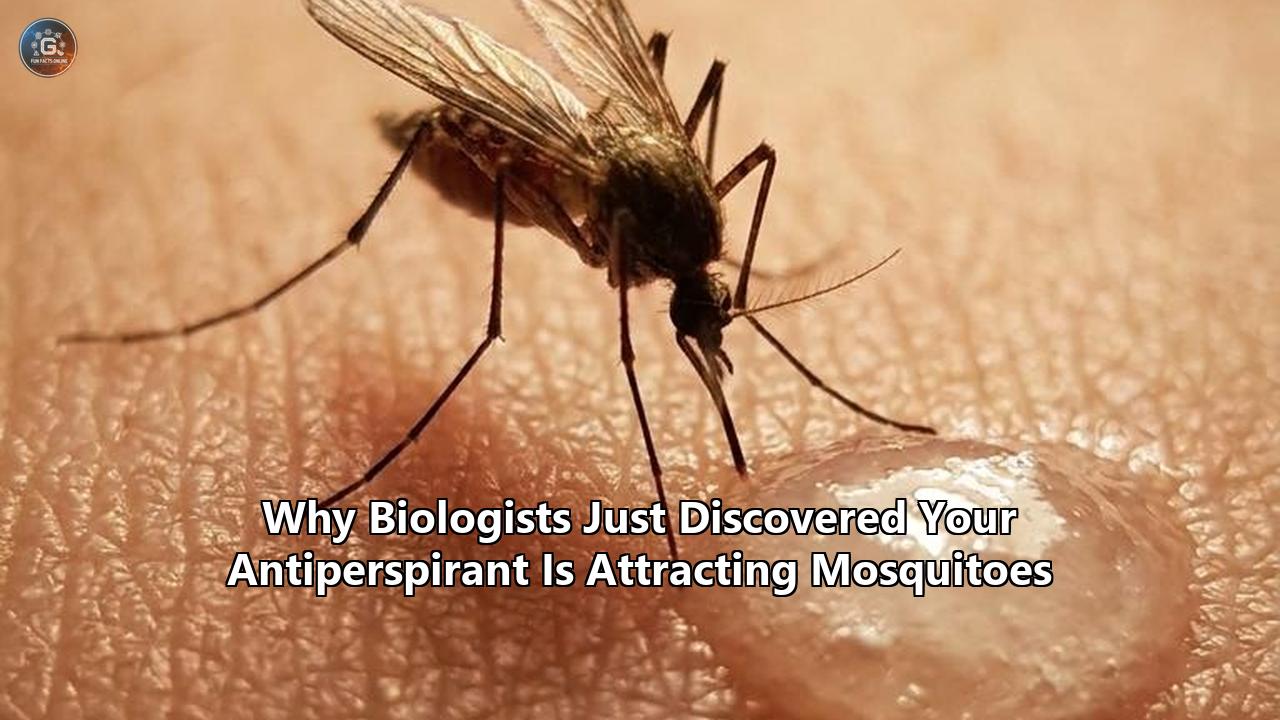
Biologists and chemical ecologists have just fundamentally upended our understanding of summer grooming. In a comprehensive study published this week, a consortium of sensory neurobiologists and entomologists revealed that the daily application of commercial antiperspirants creates a highly localized chemical plume that actively lures Aedes aegypti and Anopheles mosquitoes. Rather than masking our natural body odor and hiding us from these disease-carrying vectors, the precise combination of aluminum salts, synthetic carrier oils, and floral fragrances found in standard antiperspirants synthesizes a "super-stimulus" that mosquito olfactory systems find irresistible.
The findings, demonstrated through a combination of wind-tunnel behavioral assays, skin microbiome sequencing, and gas chromatography-mass spectrometry (GC-MS), show that individuals wearing traditional antiperspirants experienced up to a 45 percent increase in mosquito landing rates compared to when they wore no product at all. The researchers discovered that the cosmetic ingredients do not simply sit inertly on the skin; they react violently with our unique biological chemistry. The interaction between synthetic antiperspirant compounds and the bacteria living in the human axilla (the armpit) generates entirely new volatile organic compounds (VOCs) that broadcast an amplified feeding signal across vast distances.
For years, people have anecdotally wondered, does antiperspirant attract mosquitoes? The scientific consensus previously leaned toward a hesitant "no," assuming that covering up natural body odor would logically disrupt a mosquito’s ability to find human skin. But this recent breakthrough proves that the reality of chemical ecology is far more complex. We are not hiding our scent; we are accidentally broadcasting a biochemical dinner bell.
To understand why this discovery is sending shockwaves through both the public health sector and the $25 billion global personal care industry, we have to pull back the curtain on the complex neurobiology of the mosquito, the microscopic ecosystem of the human armpit, and the hidden economics of synthetic fragrance formulation.
The Evolutionary Arsenal of the Mosquito
To grasp why our hygiene products are betraying us, we must first understand how mosquitoes perceive the world. A mosquito does not see a human being as a discrete physical object; she perceives us as a glowing, multi-layered gradient of heat, moisture, and invisible gas.
Only female mosquitoes bite. They are anautogenous, meaning they require the dense protein and lipid payload found in vertebrate blood to synthesize their eggs. To track down this vital resource, millions of years of evolutionary pressure have sculpted the female mosquito into one of the most sophisticated chemical detection systems on the planet. Her hunting sequence is a masterclass in progressive sensory targeting.
The hunt begins at the macro level. Up to 50 meters away, a female mosquito is "woken up" by plumes of carbon dioxide. Every time a human exhales, we release a dense cloud of CO2. The mosquito detects this via highly specialized neurons called cpA neurons located on her maxillary palps—the small appendages protruding near her feeding proboscis. Carbon dioxide acts as an activation switch. It tells her nervous system that a living, breathing vertebrate is somewhere in the vicinity, shifting her from a resting state into an aggressive, zigzagging flight pattern designed to track the plume upwind.
As she navigates closer, moving within 10 to 15 meters, her visual system engages. She looks for high-contrast objects moving against the horizon. But vision and CO2 alone are not enough to confirm a blood meal; a running car engine produces both heat and CO2, but offers no blood. To distinguish a human from a machine or a tree, she relies on her antennae, which are covered in microscopic sensory hairs called sensilla.
These sensilla house a vast array of olfactory receptors (ORs) and ionotropic receptors (IRs). It is within this microscopic, neurological machinery that the antiperspirant trap is sprung. Mosquitoes rely on specific receptors, particularly one known as IR8a, to detect the acidic volatiles evaporating off human skin. They are hunting for signs of human sweat—specifically lactic acid, ammonia, and carboxylic acids. When the mosquito gets within a few meters of a target, she analyzes the exact ratio of these chemicals. If the blend matches the evolutionary signature of human skin, she commits to a landing.
What biologists just proved is that the chemical footprint of an antiperspirant-treated armpit perfectly hacks this short-range detection system.
The Chemistry of Human Odor and the Axillary Microbiome
To engineer an effective mosquito lure, you have to understand human sweat. The irony of the personal care industry is that sweat itself is entirely odorless.
The human body possesses two primary types of sweat glands: eccrine and apocrine. Eccrine glands are distributed across almost the entire surface of the body. They secrete a clear, watery fluid packed with electrolytes like sodium and chloride, and their primary function is thermoregulation. When this water evaporates, it cools the skin.
Apocrine glands are entirely different. Concentrated heavily in the axilla and groin, these glands do not activate for temperature control; they respond to hormonal fluctuations, stress, and emotional arousal. Furthermore, the fluid they secrete is not watery. Apocrine sweat is a viscous, milky cocktail of proteins, lipids, and steroids.
When this dense fluid reaches the surface of the skin, it encounters the human microbiome. The armpit is a lush, tropical rainforest for bacteria. It is dark, humid, and constantly supplied with nutrient-rich apocrine secretions. The dominant bacterial populations in this environment—specifically Corynebacterium and Staphylococcus species—feast on these odorless proteins and lipids.
As the bacteria digest apocrine sweat, they excrete waste products. It is this bacterial metabolism that creates human body odor. The microbes break down complex lipids into volatile fatty acids (VFAs), including a group of chemicals known as carboxylic acids. They also produce thioalcohols, which carry the pungent, onion-like scent commonly associated with intense body odor.
In 2022, a landmark study out of Rockefeller University established that individuals who naturally produce higher levels of these carboxylic acids are inherently more attractive to mosquitoes. The insects use these specific bacterial byproducts as an unmistakable biological beacon.
Therefore, the original logic behind antiperspirants seemed sound: if you block the sweat, you starve the bacteria. If you starve the bacteria, you halt the production of carboxylic acids. If you halt the carboxylic acids, the mosquito cannot find you.
But the new biological data reveals a spectacular backfire.
How Antiperspirants Alter the Rules of Attraction
Addressing the question of does antiperspirant attract mosquitoes requires separating the active sweat-blocking ingredients from the carrier chemicals used in modern cosmetic formulations. The biological collision between these two elements is what generates the new attractant plume.
Unlike a deodorant, which merely attempts to kill bacteria and cover up the scent, an antiperspirant is classified as an over-the-counter drug because it alters human physiology. The active ingredients are almost exclusively aluminum-based compounds, such as aluminum chlorohydrate or aluminum zirconium tetrachlorohydrex gly.
When these aluminum salts come into contact with the moisture on your skin, they undergo a rapid chemical reaction. The salts dissolve and polymerize, forming a temporary, physical gel plug directly over the opening of the sweat duct. This effectively barricades the apocrine and eccrine fluids from reaching the surface.
Simultaneously, the aluminum alters the local pH of the armpit, making it more acidic. This pH shift acts as a localized antimicrobial bomb, decimating the populations of Corynebacterium. For the human consumer, this is a success—the thioalcohols vanish, and the classic "body odor" scent is neutralized.
However, nature abhors a vacuum. By wiping out the dominant Corynebacterium, the antiperspirant creates empty real estate on the skin. Other, more resilient strains of bacteria—particularly certain Staphylococcus epidermidis clades—rapidly colonize the area. These surviving bacteria are now confronted with a new food source: not human sweat, but the thick, oily carrier chemicals of the antiperspirant itself.
To make an antiperspirant glide smoothly onto the skin and prevent the aluminum salts from crumbling, manufacturers blend them with heavy emollients, synthetic esters, and fatty alcohols. Ingredients like cyclopentasiloxane, stearyl alcohol, isopropyl myristate, and PEG-8 distearate make up the bulk of the stick.
The breakthrough discovery of 2026 is that the surviving skin bacteria metabolize these cosmetic carrier oils. As the microbes break down synthetic esters like isopropyl myristate, they release entirely new volatile compounds into the air. These newly synthesized VOCs, combined with the residual lactic acid naturally present on the skin, mimic the exact molecular weight and volatility of the carboxylic acids that mosquitoes evolved to hunt.
When consumers ask, does antiperspirant attract mosquitoes, the answer lies in this precise microbial warfare. The antiperspirant doesn't just fail to hide you; it weaponizes your surviving skin bacteria to convert cosmetic oils into a synthetic beacon that mimics the highest-value human targets. The mosquito's IR8a receptors are triggered just as violently by the metabolized cosmetic oils as they are by natural human sweat.
The Nectar Illusion: The Role of Synthetic Fragrances
The microbial breakdown of carrier oils is only half of the biological trap. The other half involves the fragrances layered into the antiperspirant, which inadvertently exploit a lesser-known aspect of mosquito biology: phytophagy, or plant-feeding.
Because the female mosquito's bloodlust is so heavily publicized, it is easy to forget that blood is not her primary food source. Blood is strictly for reproduction. For daily caloric energy, flight fuel, and survival, both male and female mosquitoes rely on sugar. In the wild, they obtain this sugar by drinking nectar from flowers and plant sap.
As a result, a mosquito’s olfactory system is dual-wired. Part of her brain is dedicated to hunting vertebrate blood (tracking CO2, lactic acid, and heat), while another entirely separate neural pathway is dedicated to hunting flowers (tracking floral volatiles like linalool, pinene, and limonene).
The personal care industry heavily relies on these exact same volatile compounds to make antiperspirants smell "fresh," "clean," or "invigorating." An inspection of the ingredient list on a standard antiperspirant will likely reveal generic terms like "Fragrance (Parfum)." Under trade secret laws, that single word can hide a cocktail of hundreds of synthetic chemicals. Almost universally, these formulations contain heavy concentrations of limonene (citrus scent), alpha-isomethyl ionone (powdery floral), benzyl salicylate (sweet floral), and synthetic musks.
Previous research laid the groundwork for understanding this danger. A seminal 2023 study by researchers at Virginia Tech demonstrated that certain body washes and soaps actually increased a person's attractiveness to mosquitoes. The researchers theorized that bathing in flower-scented soaps added nectar-mimicking chemicals to the human body.
The new research on antiperspirants takes this mechanism much further. Because an antiperspirant is applied directly to the axilla—a major thermal hub of the human body, radiating intense heat due to the proximity of major blood vessels—the cosmetic fragrances are effectively aerosolized by body heat.
When a female mosquito flies into this specific chemical cloud, she experiences a sensory overload. She detects the CO2 and heat that promise a blood meal, the metabolized carrier oils that mimic human carboxylic acids, and the synthetic limonene that promises a high-energy nectar source. To her neurological processing center, an antiperspirant-treated human is not just a host; it is a super-host offering both reproductive fuel and caloric energy in a single location.
The researchers proved this by conducting isolated wind-tunnel tests. When mosquitoes were presented with a choice between a nylon sleeve worn by a completely unwashed human and a nylon sleeve worn by a human treated with a commercially leading antiperspirant, the insects aggressively swarmed the antiperspirant-treated fabric. The nectar illusion overrode their natural baseline preferences.
Economic Shockwaves in the Personal Care Sector
Now that we know the answer to does antiperspirant attract mosquitoes, the billion-dollar personal care industry faces a massive reformulation challenge. The implications of this biological discovery are already triggering structural shifts within the boardrooms of global cosmetic conglomerates like Unilever, Procter & Gamble, and Beiersdorf.
The personal care supply chain is a rigid, heavily optimized machine. The specific carrier oils and emollients used in antiperspirants—like cyclopentasiloxane and stearyl alcohol—are chosen because they are incredibly cheap, shelf-stable for years, and provide a consumer-pleasing texture. Shifting away from these specific lipids because they serve as food for VOC-producing skin bacteria requires dismantling decades of industrial formulation practices.
Furthermore, the fragrance supply chain is highly centralized. A few massive flavor and fragrance houses—such as Givaudan, Firmenich, and IFF—design the vast majority of the scents used in global hygiene products. Because limonene and linalool are the bedrock of "clean" scents, extracting them from the formulation architecture will force a complete redesign of what cleanliness actually smells like to the consumer.
Market analysts predict an immediate, aggressive pivot toward "mosquito-neutral" or "biomimetic" deodorants and antiperspirants. We are already seeing the early stages of this economic shift. Some boutique brands, operating on agile supply chains, have preemptively stripped floral and fruity VOCs from their formulas.
There is a growing focus on coconut derivatives as a potential savior for the industry. Earlier entomological studies hinted that certain medium-chain fatty acids found in coconut oil—specifically lauric acid and capric acid—naturally repel mosquitoes. When applied to the skin, these specific carbon chains appear to interfere with the mosquito's olfactory receptors, effectively jamming the signal rather than amplifying it.
Expect to see a tidal wave of cosmetic marketing pivoting toward "coconut-derived bases" and "unscented mineral barriers" over the next 18 months. However, substituting ingredients at scale is not simple. The raw material cost for specific medium-chain triglycerides is substantially higher than synthetic petroleum-derived carrier oils. This economic reality means that the first wave of scientifically reformulated, mosquito-neutral antiperspirants will likely carry a significant premium at the retail level, effectively turning mosquito evasion into a luxury commodity.
Public Health and the Urban Disease Matrix
While the economic scramble is compelling, the true urgency of these findings lies in global public health. This is not merely an issue of consumer comfort or avoiding itchy welts at a backyard barbecue. We are currently navigating a severe, escalating crisis in vector-borne disease transmission.
Due to a combination of shifting climate zones, increased global travel, and rapid urbanization, the geographic footprint of disease-carrying mosquitoes has expanded exponentially. Aedes aegypti, the primary vector for Dengue fever, Zika virus, Chikungunya, and Yellow Fever, is no longer confined to the tropics. Its range now extends deep into temperate zones, establishing permanent populations across the southern and central United States, southern Europe, and higher altitudes in South America.
In 2023, the World Health Organization reported catastrophic surges in Dengue cases, with numbers crossing into the multiple millions globally. As we push through 2026, the data shows that urban disease clusters are becoming more frequent and severe.
Aedes aegypti is uniquely adapted to human environments. Unlike other mosquito species that breed in natural swamps or forests, Aedes breeds in the artificial containers of the urban landscape: discarded tires, flower pots, clogged gutters, and plastic bottle caps. They live in our homes, rest under our beds, and feed exclusively on us.Because these mosquitoes live in such close proximity to dense human populations, the chemical dynamics of our personal grooming habits scale up to population-level impacts. If millions of commuters in a dense metropolitan area are applying daily antiperspirants that amplify their chemical signature by 45 percent, they are effectively turning the urban grid into a massive, highly visible feeding ground.
Public health officials are beginning to realize that the advice traditionally given to populations in disease-endemic areas—"wear insect repellent, remove standing water, and maintain personal hygiene"—may contain a fatal contradiction. If the mandated personal hygiene involves aluminum-based, floral-scented antiperspirants, the population is actively undermining the efficacy of their mosquito repellents (like DEET or Picaridin).
The interaction between attractants and repellents is a zero-sum game of chemical concentration. If an antiperspirant is broadcasting a heavy, nectar-mimicking attractant plume, a standard application of DEET has to work twice as hard to block the mosquito's olfactory receptors. In cases where the repellent application is light or has begun to wear off, the underlying antiperspirant signal easily punches through, drawing the vector directly to the host.
This realization is prompting immediate discussions within epidemiological circles about revising public health guidelines. In regions currently experiencing active Dengue outbreaks, there is a push to advise the public to temporarily cease the use of scented cosmetics and traditional antiperspirants, treating the cessation of these products as a front-line vector control strategy alongside window screens and bed nets.
The Regulatory Horizon: Is Antiperspirant an Attractant?
The discovery that a ubiquitous daily hygiene product behaves as an insect lure opens up unprecedented regulatory complexities. Currently, the jurisdictional oversight of personal care products is rigidly siloed.
In the United States, the Food and Drug Administration (FDA) monitors antiperspirants strictly through the lens of human safety. Because aluminum salts physically alter the sweat glands, antiperspirants are regulated as over-the-counter drugs, requiring specific monographs and safety testing to ensure they do not cause skin necrosis, systemic toxicity, or heavy metal poisoning.
However, the FDA does not evaluate cosmetics or OTC drugs for their ecological impact on insects. Conversely, the Environmental Protection Agency (EPA) heavily regulates insect repellents and attractants. If a company manufactures a chemical lure designed to draw mosquitoes into a trap, the EPA requires exhaustive efficacy data, environmental impact statements, and strict labeling warnings.
Antiperspirants now exist in a bizarre regulatory gray area. They are manufactured and sold as human hygiene drugs, but in the field, they function with the mechanical efficiency of an EPA-regulated insect attractant.
Consumer advocacy groups and environmental health watchdogs are already drafting petitions demanding that regulatory agencies bridge this gap. There is mounting pressure to require mandatory warning labels on antiperspirants sold in regions known to harbor Dengue or Zika vectors. A label stating, “Warning: This product has been shown to increase host-seeking behavior in disease-carrying mosquitoes” would be disastrous for cosmetic brands, giving the industry immense motivation to self-regulate and reformulate before the government intervenes.
Furthermore, this scientific revelation is forcing a re-evaluation of military and outdoor occupational safety. Armed forces operating in jungle environments, agricultural workers, and forestry personnel are routinely issued heavy-duty insect repellents. Yet, there has historically been little oversight regarding the commercial deodorants and antiperspirants these workers use off-duty or under their uniforms. Updating occupational health protocols to ban specific cosmetic formulations could immediately reduce bite rates and the subsequent loss of labor hours to mosquito-borne illnesses.
What Consumers Can Do Right Now
While the chemical engineers and regulatory bodies battle over the future of the hygiene aisle, consumers are left to navigate the current, flawed marketplace. If the standard approach to underarm care is biologically compromised, how can an individual stay clean without becoming a target?
The biological data provides several actionable strategies based on the precise mechanics of mosquito olfaction:
1. Switch to Acid-Based Chemical ExfoliantsSince the core issue is the bacterial breakdown of cosmetic carrier oils and apocrine sweat, altering the microbiome without using aluminum is highly effective. Many dermatologists are now recommending the use of alpha-hydroxy acids (AHAs) or beta-hydroxy acids (BHAs), such as glycolic acid or salicylic acid, applied to the armpit. These acids lower the pH of the skin so drastically that odor-causing bacteria cannot survive, neutralizing the scent. Because these are water-soluble acids and do not rely on heavy synthetic ester carrier oils, there is nothing for surviving bacteria to metabolize into mosquito-attracting VOCs.
2. Isolate Fragrance ApplicationIf you must use fragrance, keep it away from areas of intense body heat. Mosquitoes zero in on the synergy between heat, CO2, and floral volatiles. Applying perfumes or scented products directly to the armpits, neck, or chest vaporizes the scent rapidly. Applying a targeted scent to cooler extremities or outer clothing reduces the vaporization rate and disrupts the thermal-olfactory lock the mosquito relies upon.
3. Embrace Coconut-Derived SurfactantsAs noted in the 2023 Virginia Tech soap study and validated by current antiperspirant research, coconut-derived fatty acids actively disrupt mosquito host-seeking behavior. Seeking out natural deodorants that use raw coconut oil as a primary base, devoid of added synthetic limonene or linalool, offers a twofold defense: the lauric acid helps suppress odor-causing bacteria, and the residual medium-chain triglycerides actively confuse the mosquito's IR8a receptors.
4. The Timing of HygieneMosquitoes, particularly Aedes aegypti, are diurnal—they are highly active during the day, with distinct feeding peaks in the early morning and late afternoon. Anopheles, the malaria vector, is typically nocturnal. Aligning product application with mosquito behavioral lulls, or simply choosing to wash off heavy cosmetic layers before spending time outdoors during peak biting hours, drastically reduces the chemical plume radius.
Formulating the Future: Where Science Goes Next
The revelation that our daily hygiene routines are fundamentally entangled with the sensory biology of dangerous insect vectors marks a paradigm shift in chemical ecology. We can no longer design personal care products in a vacuum, assuming that human skin is an isolated canvas. The human body is a node in a vast, interconnected biological network, constantly broadcasting signals into the ecosystem.
The next frontier for researchers involves mapping the exact metabolic pathways of the skin microbiome. If biologists can identify exactly which bacterial enzyme cleaves the synthetic esters in an antiperspirant to release the attractant VOCs, they could potentially design enzyme-inhibitors. Future antiperspirants might not just block sweat; they could include compounds that selectively shut down the specific bacterial machinery responsible for generating mosquito lures, rendering the armpit ecologically invisible.
Additionally, molecular biologists are utilizing CRISPR and advanced gene-editing techniques to further decode the mosquito's olfactory system. By mapping the precise three-dimensional structure of the IR8a and Orco receptors, scientists hope to develop "olfactory antagonists"—synthetic molecules that perfectly plug the mosquito's sensory receptors without triggering them. Imagine an antiperspirant that doesn't just stop you from sweating, but actively releases a volatile compound that temporarily blinds the mosquito's sense of smell as soon as it flies within ten feet of your body.
Until that technology reaches the consumer market, we are forced to reconsider the true cost of our synthetic grooming standards. The pursuit of an entirely sterile, floral-scented existence has inadvertently made us the most visible targets in the natural world. As we head into the height of vector season, the latest biological data serves as a stark reminder: sometimes, in attempting to mask our human nature, we only succeed in ringing the dinner bell.
The convergence of cosmetic chemistry, microbiology, and entomology has permanently altered the landscape of personal care. As millions of consumers continue to adapt to expanding mosquito territories and the rising threat of vector-borne disease, the hygiene aisle will transform from a simple selection of fragrances into the front line of public health defense. The era of the blindly applied daily antiperspirant is officially over, replaced by a new era of ecological awareness where what we put on our skin must be negotiated with the predators that hunt us.
Reference:
- https://www.news-medical.net/health/The-Science-Behind-Why-Mosquitoes-Prefer-to-Bite-Certain-People.aspx
- https://www.labmanager.com/how-mosquitoes-smell-human-sweat-and-new-ways-to-stop-them-2219
- https://givenews.fiu.edu/2019/03/28/scientists-discover-how-mosquitoes-zero-in-on-our-sweat/
- https://health.clevelandclinic.org/how-you-may-be-unknowingly-attracting-mosquitoes
- https://www.charlotteobserver.com/news/science-technology/article31302032.html
- https://www.the-scientist.com/smell-of-carboxylic-acids-from-skin-attracts-mosquitoes-70659
- https://www.wsls.com/news/local/2023/05/10/what-scents-can-keep-mosquitos-away-virginia-tech-researchers-share-their-findings/
- https://news.vt.edu/articles/2023/05/cals_mosquito_scent_preference_study.html
- https://www.bionity.com/en/news/1180536/how-to-repel-mosquitoes-with-the-right-soap-scent.html
- https://www.happi.com/breaking-news/virginia-tech-researchers-study-scented-soap-and-mosquito-attraction/
- https://www.nationalgeographic.com/premium/article/mosquito-magnet-smell-repell