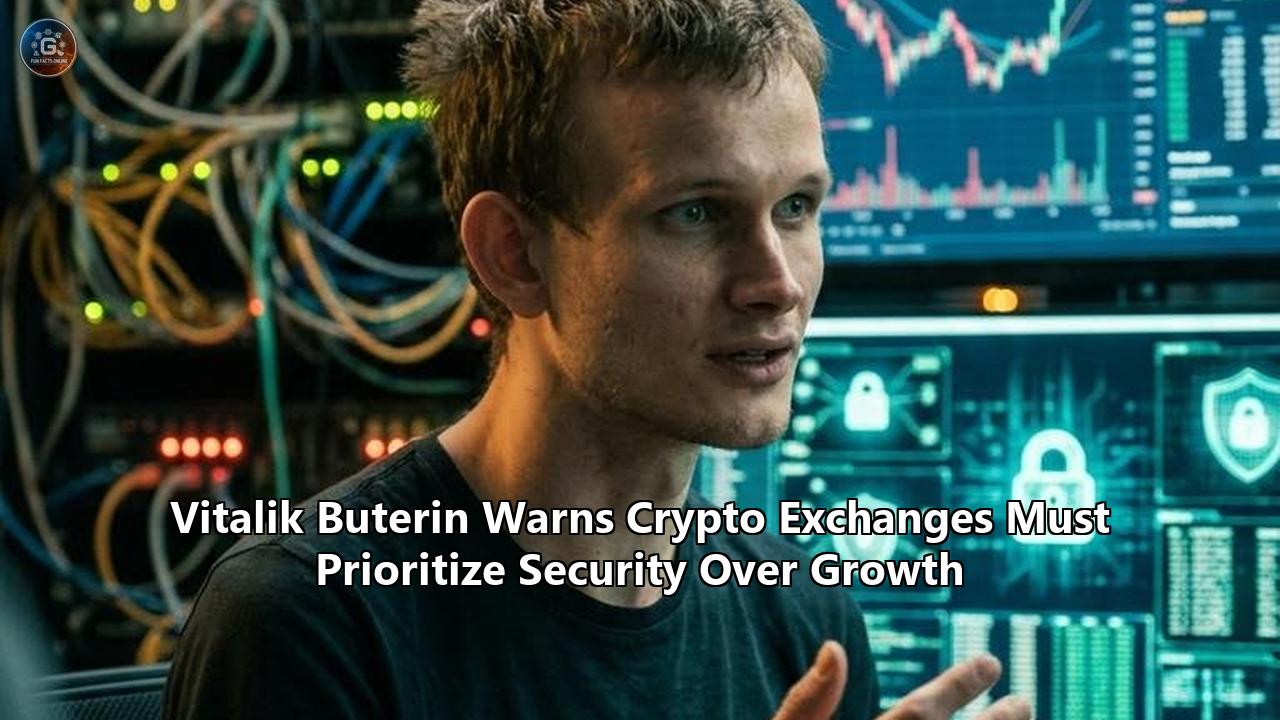
Speaking at Devcon 8 in Mumbai, Ethereum co-founder Vitalik Buterin delivered an unsparing directive to the digital asset industry: cryptocurrency exchanges must immediately abandon aggressive growth strategies and enter a two-year defensive "bunker mode" focused entirely on institutional survival.
Buterin’s warning followed the October 29 security breach at Binance, where state-sponsored operatives affiliated with North Korea’s TraderTraitor unit compromised internal wallet-signing infrastructure to siphon roughly $6.34 billion across ten blockchains in less than twenty minutes. The incident—eclipsing the $1.5 billion Bybit compromise of February 2025 as the largest cyber heist in history—demonstrated that while smart contract protocols have hardened against direct mathematical exploits, the centralized scaffolding supporting modern trading operations remains catastrophically brittle.
"What we have been seeing is more and more people are realizing that their main responsibility for the next two years is not to win, but to survive," Buterin said in an interview with Moneycontrol. He warned that if custodial breaches continue feeding state-sponsored weapons programs, regulatory authorities will discard self-regulatory frameworks and classify security lapses as national security liabilities. "If you get hacked and it goes to North Korea, if you go all the way to the extreme, they should treat that as donating to North Korea," he added.
The crisis has split the digital asset sector into competing engineering and operational philosophies. On one side, legacy centralized operators argue that maintaining competitive matching latencies and multi-billion-dollar daily liquidity requires automated, centralized signing pipelines backed by corporate balance sheets and balance-sheet insurance funds. On the other side, protocol researchers and decentralized infrastructure developers advocate for mathematical verifiability: moving custody onto public ledgers via native multi-signature frameworks, implementing zero-knowledge proofs of solvency, and decoupling transaction matching from asset settlement.
Evaluating these competing architectures reveals irreconcilable tradeoffs between execution speed, operational overhead, systemic attack surface, and regulatory accountability.
Anatomy of an Attack Surface Inversion
The nature of digital asset exploits has shifted decisively over the past 18 months. Between 2020 and 2023, the vast majority of capital lost to exploits vanished through protocol vulnerabilities: reentrancy bugs, automated market maker (AMM) flash loan manipulations, cross-chain bridge logic errors, and oracle misconfigurations. The maturation of formal verification tooling, standardization of core smart contract libraries, and continuous automated auditing have systematically closed those attack vectors.
ATTACK VECTOR EVOLUTION: 2021–2026
┌────────────────────────────────────────────────────────┐
│ 2021–2023: Protocol Layer Exploits                     │
│ [Smart Contract Bugs] ──> [Bridge Logic] ──> [Flash Loans]│
└────────────────────────────────────────────────────────┘
                           │
                           ▼
┌────────────────────────────────────────────────────────┐
│ 2024–2026: Peripheral & Infrastructure Exploits        │
│ [CI/CD Pipelines] ──> [DevOps Machines] ──> [Signing APIs]│
└────────────────────────────────────────────────────────┘
Attackers have shifted their focus upstream, targeting the human and operational infrastructure that bridges off-chain order books with on-chain settlement systems. This shift has exposed critical vulnerabilities in crypto exchange security, where the central threat is no longer code executing within a virtual machine, but the access credentials, container orchestration pipelines, and administrative interfaces operating around it.
The October 29 Binance compromise laid bare this dynamic. According to technical post-mortems released by the exchange and forensic investigators at TRM Labs, the breach did not stem from cryptographic failures or smart contract exploits. It was the culmination of a multi-stage social engineering and endpoint exploitation campaign that began months earlier.
In June 2026, an engineer within Binance’s wallet infrastructure group downloaded a poisoned utility package while sourcing artificial intelligence coding assistance tools. Although internal monitoring isolated that specific machine, adversaries used metadata harvested during the intrusion to profile the internal layout of the wallet division.
By September, operatives approached a second engineer through a professional networking site, conducting multiple rounds of technical interviews on behalf of a fictitious venture capital firm. The candidate was asked to download and debug a coding test that contained an obfuscated, memory-resident remote access trojan (RAT) capable of bypassing endpoint detection and response (EDR) agents.
Once persistent access was established inside the internal corporate network, the attackers moved laterally. They harvested session tokens and internal AI querying credentials, escalating privileges until they accessed a DevOps orchestration container holding automated administrative access to the exchange’s multi-chain hot wallet signing service.
At 20:05 UTC on October 29, the adversary initiated automated scripts that issued validly signed outbound transfer requests directly to the wallet execution nodes.
On Ethereum, the attackers demonstrated deep protocol fluency by weaponizing EIP-7702 authorizations. By submitting 50 pre-signed authorization payloads, they transformed an active Binance operational hot wallet into an automated sweeper contract. This delegation allowed them to drain 167,464 ETH and over 1.6 billion USDT while circumventing internal velocity limits, moving funds independently of the normal withdrawal pipeline.
Parallel drainage scripts simultaneously emptied hot reserves across the Bitcoin network, XRP Ledger, Solana, Tron, Arbitrum, Avalanche, Optimism, Base, and Polygon.
BINANCE HOT WALLET EXPLOIT PATH (OCTOBER 29, 2026)
[Poisoned AI Dev Tool] ──> [Targeted Recruitment Trojan]
                                    │
                                    ▼
[Lateral Pivot via Internal AI] ──> [DevOps Deployment Token]
                                    │
                                    ▼
[Compromised Signing Container] ──> [Batch EIP-7702 Delegations]
                                    │
                                    ▼
[$6.34B Siphoned Across 10 Blockchains in 20 Minutes]
Although Binance’s rapid coordination with centralized stablecoin issuers and cross-chain bridge validators succeeded in freezing roughly $2.85 billion within hours, more than $2.4 billion in unencumbered native assets slipped into decentralized liquidity pools and cross-chain mixers.
Binance dipped into its corporate balance sheet and its Secure Asset Fund for Users (SAFU) to replenish 98% of customer account balances within 72 hours. But the incident made clear that balance-sheet restitution cannot substitute for structural security.
The attack confirmed Buterin’s core argument: relying on off-chain operational trust, regardless of capital scale, creates systemic vulnerabilities when pitted against well-resourced state adversaries.
Custody Architecture: MPC vs. Smart Contract Multisig
The divergent responses to this crisis center on an architectural debate: should institutional custodians secure multi-billion-dollar reserves through off-chain Multi-Party Computation (MPC) or native, on-chain multi-signature (multisig) smart contracts?
Both paradigms aim to eliminate the single private key as an absolute failure point, but they distribute trust, latency, and operational risk across fundamentally different surfaces.
CUSTODIAL MECHANICS COMPARISON
┌────────────────────────────────────────────────────────┐
│ MULTI-PARTY COMPUTATION (MPC)                          │
│ [Share A] + [Share B] + [Share C]                      │
│            │                                           │
│            ▼ (Off-Chain Threshold Signing)             │
│   Produces standard signature (e.g., single ECDSA)     │
│   Blockchain sees: Standard single-key transaction     │
└────────────────────────────────────────────────────────┘

┌────────────────────────────────────────────────────────┐
│ ON-CHAIN MULTI-SIGNATURE (MULTISIG)                    │
│ [Key 1 Signs] ──> [Key 2 Signs] ──> [Key 3 Signs]      │
│            │           │                 │             │
│            ▼           ▼                 ▼             │
│   Smart Contract validates policies and threshold      │
│   Blockchain sees: Contract execution with event logs  │
└────────────────────────────────────────────────────────┘
Multi-Party Computation: Latency Optimization and Privacy
MPC employs threshold cryptography—most commonly variants of Gennaro and Goldfeder's threshold ECDSA or FROST for Schnorr signatures—to divide a private key into mathematical shares, or "shards". These shards are distributed among multiple isolated virtual machines, hardware security modules (HSMs), or geographic locations.
When a transaction requires authorization, the distinct nodes compute partial signatures off-chain. They combine these shares through zero-knowledge proofs and secure communication rounds to produce a standard signature.
To the receiving blockchain, the transaction looks identical to an instruction originating from an ordinary, single-key Externally Owned Account (EOA).
PROS OF MPC:
• Universal compatibility across all cryptographic chains (Bitcoin, Solana, EVM).
• Zero on-chain fee overhead (settles as a single signature).
• Complete operational privacy; signers and internal policies remain hidden.
• Microsecond cryptographic threshold generation.

CONS OF MPC:
• Policy enforcement occurs entirely off-chain; blind to internal host compromises.
• Susceptible to side-channel and memory-injection attacks if orchestrator is breached.
• Opacity conceals internal policy drift from public and regulatory auditors.
The commercial appeal of MPC stems from its chain-agnostic profile and execution efficiency. Because threshold generation occurs entirely off-chain, the underlying blockchain does not require smart contract capabilities. A single MPC operational framework can manage Bitcoin, Ethereum, Solana, and XRPL transactions without bespoke contract deployments.
Furthermore, MPC conceals an exchange’s governance architecture. Competitors and attackers cannot determine how many keys are required to sign a transfer, who holds those shares, or what specific compliance policies govern execution.
However, the Binance hack demonstrated the central vulnerability of automated MPC implementations. While the private key is never reassembled in one location, the authorization rules that trigger the distributed computation are enforced by traditional, centralized web services.
If an attacker breaches the container environment or internal API dispatch engine that tells the MPC nodes "this is an approved withdrawal," the MPC cluster will construct a valid signature for an unauthorized recipient without detecting the compromise. The cryptography functions as designed, but the business logic directing it fails completely.
Smart Contract Multisig: Programmable Enforcement
Native on-chain multi-signature architectures, typified by Safe (formerly Gnosis Safe) and programmable account-abstraction contracts, take the opposite approach.
Instead of generating a single signature off-chain, a multisig setup deploys a smart contract directly to the blockchain. The contract explicitly maintains a public registry of authorized signer addresses and enforces an immutable threshold rule—such as 3-of-5 or 4-of-7—directly in virtual machine bytecode.
PROS OF ON-CHAIN MULTISIG:
• Transaction validation rules enforced by public consensus, not corporate APIs.
• Programmable parameters: hardware-enforced rate limits, time-locks, and whitelists.
• Immutable public auditability; signers cannot secretly change operational policies.
• Compartmentalization prevents an orchestrator exploit from moving total reserves.

CONS OF ON-CHAIN MULTISIG:
• High gas overhead: each additional signer incurs on-chain data and execution fees.
• Incompatible with chains lacking smart contract architectures without custom scripts.
• Public visibility reveals the exact quorum threshold and signer addresses.
• Latency constraints: awaiting multiple on-chain confirmations delays processing.
In his remarks at Devcon 8, Buterin explicitly urged custodial platforms to transition away from opaque off-chain signing software toward on-chain multi-signature models.
The primary advantage of on-chain multisigs is programmable transparency. Within a smart contract, spending policies are not lines of code hosted on an Amazon Web Services container; they are cryptographically locked on-chain execution rules.
A smart contract multisig can natively mandate that any withdrawal exceeding a designated threshold (for example, 500 ETH) automatically triggers a 24-hour time-lock. This delay gives emergency response teams an unalterable window to cancel unauthorized outflows, even if multiple keyholders are compromised.
Additionally, access controls can force transactions through whitelist registries and velocity governors that execute directly within the virtual machine.
The tradeoff is operational friction. Every signature validation consumes computational steps on-chain, increasing transaction costs and execution latencies.
For an exchange processing tens of thousands of customer withdrawals an hour, routing every movement through on-chain multisig contracts across multiple Layer 1 chains creates heavy fee structures and operational backlogs.
Furthermore, multisigs are not universally portable. While EVM chains, Solana, and modern Layer 2 networks offer robust smart contract execution, legacy UTXO chains like Bitcoin require complex scripting approaches (such as MuSig2 or Miniscript via Taproot) that lack the arbitrary state logic required for dynamic, real-time velocity limits.
| Metric / Dimension | Off-Chain Multi-Party Computation (MPC) | On-Chain Smart Contract Multisig |
|---|---|---|
| Execution Settlement | Off-chain round computation; on-chain single-key spend | Direct on-chain multi-transaction invocation |
| Multi-Chain Portability | High; uniform across all signature schemes (ECDSA, Ed25519) | Low to Moderate; requires native contract virtual machines |
| Verification Overhead | Off-chain policy engines; vulnerable to software-layer tampering | Consensus-enforced; protected against host operating system compromise |
| Latency Profile | Sub-second off-chain aggregation | Dependent on block confirmation times and multi-step signing rounds |
| Operational Privacy | Obfuscates signing topology, signer identities, and policy details | Quorums, signer accounts, and transaction approvals are publicly inspectable |
| Programmability | Gated by off-chain middleware and microservice architectures | Arbitrary smart contract logic (time-locks, velocity caps, spending whitelists) |
Solvency Verification: Zero-Knowledge Proofs vs. Conventional Accounting
Beyond securing outgoing transactions, the October 2026 events reignited debate over how trading venues prove they possess the assets they claim to manage.
Historically, centralized exchanges relied on two methods to reassure depositors and regulators: conventional third-party accounting audits and early-stage Merkle tree Proof of Reserves (PoR). Both approaches have broken down under stress.
THE EVOLUTION OF SOLVENCY VERIFICATION
┌─────────────────────────┐
│ Conventional Audits     │ ──> Vulnerable to off-chain borrowing,
│ (Point-in-Time Attest)  │     hidden debt, and operational lag.
└─────────────────────────┘
             │
             ▼
┌─────────────────────────┐
│ Basic Merkle PoR        │ ──> Exposes internal user balances; fails to
│ (Asset / Liability Hash)│     prove non-inclusion of negative balances.
└─────────────────────────┘
             │
             ▼
┌─────────────────────────┐
│ zk-SNARK Solvency       │ ──> Mathematical completeness: non-negative checks,
│ (KZG / Polynomials)     │     balance privacy, and real-time validation.
└─────────────────────────┘
The Failures of Conventional Attestation
The traditional finance model relies on licensed auditing firms conducting point-in-time reviews of corporate general ledgers and banking statements.
In digital asset markets, this approach has repeatedly failed. Traditional audits offer a snapshot of a single moment, allowing exchanges to borrow capital temporarily to pass inspection before returning it immediately after.
Furthermore, accounting firms frequently issue "Agreed-Upon Procedures" (AUP) reports rather than full financial audits. These reports verify mathematical balances given by management without examining broader corporate debt structures, encumbered assets, or off-balance-sheet trading liabilities.
Following the collapse of FTX in 2022, global accounting brands like Mazars and Armanino pulled back from providing public crypto attestations, citing reputational exposure and public confusion over the scope of their reviews.
First-Generation Merkle Tree Proof of Reserves
To provide cryptographic transparency, exchanges developed Merkle tree PoR protocols. Under this model, the exchange places all customer balances into a Merkle tree where each leaf node contains a hash of a user's ID and account balance. The exchange publishes the Merkle root, allowing individual users to verify that their balance is included in the tree by checking their cryptographic leaf path. The total sum of the tree is then compared to assets held in proven on-chain exchange addresses.
While superior to unaudited balance sheets, basic Merkle proofs suffer from two critical vulnerabilities:
- Privacy Leakage: Publishing full Merkle branches reveals structural details about the exchange's user base. If sister nodes are revealed to users to enable local hashing, active market participants can infer the account sizes, trading activities, and total user volumes of competing traders.
- The "Negative Balance" Vulnerability: A dishonest exchange operator can introduce fake accounts with negative balances into the Merkle tree to artificially lower its reported liabilities. If the exchange owes customers 100,000 BTC but only controls 70,000 BTC, it can inject a hidden account holding -30,000 BTC. The mathematical root will sum neatly to 70,000 BTC, and honest users whose accounts are verified along unrelated branches will see no evidence of fraud.
Zero-Knowledge Proofs (zk-SNARKs) and KZG Commitments
The state of the art in solvency verification—championed by Buterin in research dating back to late 2022 and renewed during his Devcon address—relies on Zero-Knowledge Succinct Non-Interactive Arguments of Knowledge (zk-SNARKs) paired with KZG polynomial commitments.
In a zero-knowledge solvency architecture, an exchange does not publish raw customer lists or open Merkle branches. Instead, it encodes its entire liability database into a polynomial or arithmetic circuit.
Using zero-knowledge constraint systems, the exchange generates a cryptographic proof that demonstrates three conditions:
- Every individual account balance within the dataset is non-negative ($balance \ge 0$).
- The sum of all individual balances equals a publicly declared total liability value ($L$).
- Each user can independently verify that their account was correctly incorporated into the commitment via a zero-knowledge evaluation proof, without learning the balances, identities, or tree positions of any other user.
To verify assets, the exchange signs a designated cryptographic message using the private keys of its cold and hot reserve addresses, or creates a zero-knowledge proof of ownership over those UTXOs and account states without exposing which specific public addresses belong to its institutional reserve pool.
If the verified assets ($A$) exceed the proven liabilities ($L$), mathematical solvency is established:
$$\sum_{i=1}^{n} \text{Assets}_i \ge \sum_{j=1}^{m} \text{Liabilities}_j \quad \text{where} \quad \forall j, \, \text{Liabilities}_j \ge 0$$
ZERO-KNOWLEDGE SOLVENCY ARTIFACT GENERATION
┌───────────────────────────────────────────────┐
│ User Liability Matrix                         │
│ [User 1: $1,200] [User 2: $4,500] ... [User N]│
└───────────────────────────────────────────────┘
                       │
                       ▼
┌───────────────────────────────────────────────┐
│ zk-SNARK Proving Engine                       │
│ Constrains: Balance ≥ 0                       │
│ Constrains: Sum(Liabilities) == Total Claimed │
└───────────────────────────────────────────────┘
                       │
                       ▼
┌───────────────────────────────────────────────┐
│ Cryptographic Solvency Proof (KZG Commitment) │
│ • Zero private user data leaked               │
│ • Zero sister-node balance leakage            │
│ • Mathematically verified on-chain            │
└───────────────────────────────────────────────┘
The primary hurdle to adopting zk-SNARK solvency proofs is computational complexity. For an exchange with 100 million user accounts, generating a full non-negative range-proof across high-degree polynomials demands specialized server clusters equipped with hardware accelerators (FPGAs and GPUs) running for several hours.
Furthermore, zero-knowledge proofs cannot detect unrecorded off-chain debt. If an exchange borrows capital through a confidential off-chain agreement not recorded in its internal matching database, the cryptographic proof remains valid while the operating company is functionally insolvent.
ZK solvency guarantees that declared liabilities match verified reserves; it cannot guarantee that all real-world corporate debts have been entered into the system.
Centralized Matching Engines vs. Hybrid Non-Custodial Layer 2s
The security vulnerabilities exposed by the Binance hack stem directly from the structural design of centralized cryptocurrency exchanges (CEXs).
To deliver the performance institutional traders demand, conventional platforms pair off-chain matching engines with omnibus custodial deposit pools. This design creates a central honeypot that attackers can target.
The architectural challenge of modern exchange development is matching the transaction throughput of centralized platforms without inheriting their systemic security risks.
SETTLEMENT TOPOLOGY COMPARISON

CENTRALIZED CEX:
[User Deposit] ──> [Omnibus Exchange Wallet] (Honeypot)
                           │
                           ▼
             [Off-Chain In-Memory Matching]
             (Speed: Microseconds | Custody: 100% Platform)

HYBRID VALIDIUM / LAYER 2:
[User Deposit] ──> [Self-Custodial Smart Contract Escrow]
                           │
                           ▼
             [Off-Chain Matching Engine]
                           │
                           ▼
        [ZK Prover Submits Valid State Transitions]
             (Speed: Milliseconds | Custody: User-Retained)
Centralized Order Books: Extreme Speed, Centralized Risk
Tier-1 centralized exchanges run proprietary matching engines implemented in low-level languages like C++ or Rust, often running on bare-metal servers using in-memory architectures inspired by the LMAX Disruptor.
These engines process between 100,000 and 1,000,000 orders per second per trading pair, with internal matching latencies dropping below 50 microseconds.
Trades occur entirely within local computer memory: balances change instantly in an off-chain relational database without triggering on-chain transactions or gas fees.
PROS OF CENTRALIZED ORDER BOOKS:
• Microsecond execution matching.
• Zero cost for placing, updating, or canceling orders.
• Direct integration with traditional API infrastructure (REST, FIX, WebSocket).
• Deep aggregated liquidity profiles across spot and derivative books.

CONS OF CENTRALIZED ORDER BOOKS:
• Requires complete surrender of asset custody to the exchange.
• Single point of administrative, credential, and operational failure.
• Vulnerable to insider manipulation, front-running, and unauthorized rehypothecation.
• Honeypot: omnibus wallets store billions in automated hot reserves.
The tradeoff for this speed is custody. To trade on a central limit order book (CLOB), market participants must surrender their private keys and deposit capital into omnibus wallets controlled by the exchange.
This design creates the honeypot problem Buterin addressed at Devcon. By concentrating hundreds of thousands of individual user balances into a single operational hot and cold wallet infrastructure, an exchange becomes a prime target for nation-state cyber operations, which can yield billions from a single operational oversight.
Hybrid Validium and Application-Specific Rollups
In response to these risks, specialized non-custodial trading environments—such as StarkEx-based platforms, Lighter, and Aztec—have emerged as high-performance alternatives.
These architectures decouple trade execution from fund custody.
In a hybrid Validium or Layer 2 order-book platform, user funds are locked inside an on-chain smart contract escrow on the underlying blockchain (such as Ethereum). The exchange manages an off-chain matching engine that routes, cancels, and matches bids and asks at near-centralized speeds.
However, when a trade executes, the balance adjustment is not simply recorded in a private database. Instead, the matching platform generates a zero-knowledge validity proof (STARK or SNARK) certifying that:
- Every executed trade was authorized by the account owner’s cryptographic signature.
- No balances dropped below zero.
- The internal state transition strictly follows verified matching logic.
This validity proof is posted directly to the Layer 1 smart contract, which updates state roots accordingly.
Most importantly, these protocols incorporate an immutable fallback called an "escape hatch" or forced withdrawal mechanism. If the exchange’s matching engine goes offline, is seized by law enforcement, or is hacked, users can submit an on-chain request directly to the base-layer smart contract. The contract independently verifies their state ownership and releases their capital directly to their personal wallets without exchange approval.
PROS OF HYBRID VALIDIUMS / APPLICATION ROLLUPS:
• Assets remain under mathematical self-custody; platforms cannot steal user funds.
• Matches execution speeds of modern exchanges (sub-10 millisecond latencies).
• Eliminates the omnibus honeypot: an infrastructure breach does not leak total deposits.
• Forced withdrawal mechanics prevent operator asset freezes.

CONS OF HYBRID VALIDIUMS / APPLICATION ROLLUPS:
• Prover computational overhead: generating zero-knowledge proofs incurs server costs.
• Complex data availability dependencies: Validiums store state data off-chain to cut costs.
• Steeper developer and user onboarding curves compared to traditional API setups.
The primary engineering tradeoff of the Validium model is data availability.
If transaction state data is stored entirely on-chain (as in a standard ZK-rollup), data availability costs can make high-frequency trading economically unviable for smaller market makers.
To maintain low fees, Validiums store raw transaction details off-chain using a Data Availability Committee (DAC) or decentralized storage networks like Celestia or EigenDA, while posting only the verification proof on-chain.
If the data availability layer is compromised or withheld, user funds cannot be stolen, but they can be temporarily frozen until the state is reconstructed.
| Architectural Layer | Centralized Exchange (CEX) | Hybrid Validium / Application Rollup | On-Chain AMM / DEX |
|---|---|---|---|
| Custody Custodian | Full exchange custody (omnibus accounts) | Cryptographic self-custody via smart contracts | Absolute self-custody |
| Matching Engine | Off-chain, in-memory, highly centralized | Off-chain central sequencer with ZK-proving | On-chain liquidity pools; block-rate dependent |
| Execution Latency | Sub-millisecond (10–500 $\mu$s) | Low (5–50 ms) | High (1–12 seconds, block time constrained) |
| Attack Blast Radius | Systemic: total omnibus wallet drainage | Localized: limited to in-flight state or sequencer downtime | Limited to contract vulnerabilities and liquidity drained |
| Throughput (TPS) | 100,000+ orders per second | 5,000–20,000 orders per second | 50–500 transactions per second |
| Counterparty Risk | Severe; relies on solvency, corporate integrity, and OPSEC | Minimal; mathematical escape hatches protect assets | None; code execution governs swaps |
Bunker Mode: Defensive Engineering vs. Growth Capital
Buterin’s Devcon 8 call for exchanges to operate in "bunker mode" for the next two years challenges the primary economic model of the exchange business.
For a decade, cryptocurrency platforms grew by prioritizing speed over caution: listing new altcoins within hours of release, integrating emerging Layer 1 blockchains, offering cross-chain bridging tools, deploying hyper-leveraged derivatives, and embedding complex Web3 portals into their mobile applications.
Entering a defensive posture requires deliberately trading market velocity for system hardening.
COMPETING BUSINESS PHILOSOPHIES
┌──────────────────────────────────────┐
│ VELOCITY-FIRST GROWTH ENGINE         │
│ • Rapid listing of speculative assets│
│ • Instant multi-chain withdrawals    │
│ • Minimal withdrawal friction        │
│ • Aggressive API permissions         │
│ RESULT: Maximum market share;        │
│         Catastrophic breach risk.    │
└──────────────────────────────────────┘
                  VS.
┌──────────────────────────────────────┐
│ DEFENSIVE "BUNKER MODE" (BUTERIN)    │
│ • Hardware-enforced time delays      │
│ • 48-hour quarantine for new routes  │
│ • Strict multisig infrastructure     │
│ • Minimal attack surface             │
│ RESULT: Reduced operational velocity;│
│         Mathematical survivability.  │
└──────────────────────────────────────┘
The engineering principles of an authentic "bunker mode" require systemic operational sacrifices:
- Mandatory Withdrawal Delays and Address Whitelisting: Growth-driven platforms treat instant withdrawals as a core marketing asset. In contrast, a hardened operational posture mandates 24- to 48-hour hardware-enforced cooling-off periods for newly whitelisted addresses, transfers using novel API keys, or withdrawals initiated from unfamiliar IP addresses and geographical zones. While this protects assets from drainage scripts, it frustrates retail arbitrageurs and institutional market makers who rely on rapid rebalancing.
- Aggressive Hot Wallet Capital Caps: An exchange maintaining deep liquidity typically keeps between 5% and 15% of its total managed assets in online hot wallets to service redemption requests automatically. Under strict defensive protocols, hot wallet capacity is capped at 0.5% to 1% of total reserves, backed by programmatic transfers from deep cold storage that require multi-party physical presence ceremonies. If an unexpected withdrawal surge occurs, processing halts until manual, cold-storage signing ceremonies conclude.
- Isolation of Operational Software Supply Chains: As shown by the initial entry vectors in the Bybit and Binance compromises, developers' personal and work environments represent major vulnerabilities. Hardened defenses demand that infrastructure engineers interact with critical wallet containers exclusively via dedicated, air-gapped terminals stripped of general internet access, local compilers, and generative AI productivity tools.
- Restricting Chain Integration Velocity: Adding support for every new Layer 1 network exposes an exchange to untested RPC daemons, novel consensus mechanics, unique address standards, and idiosyncratic smart contract features. Bunker mode requires platforms to freeze the expansion of supported blockchains, focusing engineering resources exclusively on auditing and formally verifying code bases for their existing core networks.
The economic dilemma is straightforward: an exchange that unilaterally adopts defensive restrictions risks losing institutional and retail volumes to less disciplined competitors that continue offering frictionless, sub-second settlement and instant access to volatile new assets.
Adopting bunker mode is an admission that surviving multi-billion-dollar attacks is worth sacrificing market dominance and fee revenue.
Regulatory Realities: Prescriptive Bureaucracy vs. Mathematical Guarantees
The aftermath of the Binance breach has triggered divergent regulatory responses worldwide, presenting two distinct paths for the oversight of digital asset custodial risk.
In the immediate wake of the incident, South Korea’s Financial Services Commission (FSC) issued emergency regulatory guidelines requiring all registered domestic virtual asset service providers (VASPs) to undergo mandatory structural changes.
The FSC’s directives represent the prescriptive operational approach:
- Mandating that exchanges store a minimum of 80% (rising to 90% under proposed amendments) of customer digital assets in completely offline cold storage facilities disconnected from any network interface.
- Imposing strict rules on internal withdrawal sign-offs, including physical, dual-signatory verification for transfers that exceed specified sovereign currency thresholds.
- Requiring local exchanges to maintain dedicated capital reserves and purchase mandatory cyber-breach insurance policies underwritten by licensed domestic carriers.
In the United States, congressional leaders on the House Financial Services Committee, led by Representative Maxine Waters, pointed to the $6.34 billion breach as evidence that private balance-sheet recovery pledges are insufficient.
Lawmakers renewed their scrutiny of executive pardons granted to industry founders, demanding federal standards requiring independent, continuous oversight of operational wallet infrastructure and real-time reporting of wallet access tokens.
REGULATORY PHILOSOPHY CONFLICT
┌──────────────────────────────────────┐
│ PRESCRIPTIVE OPERATIONAL (STATE)     │
│ • Mandated 90% offline cold storage  │
│ • Dual-human physical sign-offs      │
│ • Regulated fiat auditing firms      │
│ • Licensed third-party cyber policies│
│ RISK: Human error, bureaucratic lag, │
│       point-in-time opacity.         │
└──────────────────────────────────────┘
                  VS.
┌──────────────────────────────────────┐
│ MATHEMATICAL SOVEREIGNTY (CRYPTO)    │
│ • Protocol-enforced ZK solvency      │
│ • Algorithmic on-chain escape hatches│
│ • Immutable virtual machine multisigs│
│ • AI-assisted formal verification    │
│ RISK: Prover computation bottlenecks,│
│       complex smart contract bugs.   │
└──────────────────────────────────────┘
This prescriptive, compliance-driven framework clashes with the mathematical verification model advocated by Buterin and cryptographic researchers.
Prescriptive rules rely on human enforcement: compliance officers, periodic inspections, physical signatures, and corporate insurance balance sheets.
Historically, this paper-driven approach has failed to stop internal rogue actors or sophisticated nation-state hackers who use memory-resident malware to compromise signers without tripping administrative alarms.
The mathematical approach argues that regulation should focus on protocol-enforced outcomes rather than bureaucratic procedures.
Instead of dictating how many employees must supervise a cold-storage vault, authorities could require exchanges to maintain zero-knowledge proof of solvency contracts running continuously on-chain, proving solvency in real time.
By pushing platforms toward self-custodial Layer 2 engines, validiums, and immutable on-chain multisigs, regulators could remove the exchange's ability to misuse or expose customer capital entirely.
As Buterin noted regarding the international regulatory landscape, imposing centralized operational mandates often creates massive regulatory bottlenecks without fixing the underlying technical vulnerabilities.
The industry's ultimate security backstop lies in reducing the need for operational trust through mathematics, not in building layers of human compliance around vulnerable software architectures.
Geopolitical Stakes: The Lazarus Problem and the Cost of Failure
The Binance breach elevated the operational resilience of digital asset platforms into a pressing national security issue.
The federal attribution of the hack to North Korea’s TraderTraitor (an elite unit within the Reconnaissance General Bureau) follows a consistent pattern of state-sponsored operations.
Security analysts at TRM Labs estimate that North Korean hacking units have extracted over $6.75 billion across crypto platforms, using stolen assets to finance foreign-currency-denominated weapon systems and ballistic missile development.
GEOPOLITICAL CAPITAL FUNNEL
┌───────────────────────────────┐
│ Target Crypto Exchange        │
│ Compromised Signing Services  │
└───────────────────────────────┘
                │
                ▼ (Speed: Minutes)
┌───────────────────────────────┐
│ Laundering Infrastructure     │
│ Mixers, DEXs, Cross-Chain Bridges│
└───────────────────────────────┘
                │
                ▼ (Sanctions Evasion)
┌───────────────────────────────┐
│ DPRK State Apparatus          │
│ Weapons Programs & Procurement│
└───────────────────────────────┘
This dynamic explains Buterin’s warning that continuing these failures will prompt authorities to treat security lapses as state-level financial breaches.
When an exchange’s compromised signing services send billions in unencumbered digital assets to sanction-evading state apparatuses, that failure crosses from a private corporate loss into a matter of international sanctions enforcement.
Under existing anti-money laundering (AML) and Counter-Terrorist Financing (CTF) regulations, financial institutions that exhibit willful blindness or gross operational negligence in their compliance programs face severe penalties, corporate asset forfeiture, and criminal charges for executive leadership.
If international regulators conclude that centralized exchanges cannot protect their automated signing infrastructure against state-sponsored operations, the industry will face severe sanctions.
Supervisory agencies may demand that tier-1 exchanges freeze cross-border transactions, restrict operations to state-regulated walled gardens, or prohibit unhosted, non-custodial wallet interactions altogether.
For exchanges, investing in crypto exchange security is no longer just about protecting customer deposits—it is an existential requirement to maintain their ability to interface with global financial systems.
The Path Forward: 2026–2028
The next two years will test whether the cryptocurrency industry can implement the defensive measures Buterin has outlined.
As artificial intelligence tools accelerate both code development and automated vulnerability discovery, the gap between secure and vulnerable platforms will widen rapidly.
CRITICAL PATH TO INSTITUTIONAL SURVIVAL (2026–2028)
┌────────────────────────────────────────────────────────┐
│ 1. AI-Driven Formal Verification of Infrastructure     │
│    Expand mathematical verification from contract code │
│    to off-chain DevOps pipelines and signing gateways. │
├────────────────────────────────────────────────────────┤
│ 2. Sunset Legacy Single-Signer Architecture            │
│    Replace vulnerable omnibus hot-wallet gateways with │
│    transparent, on-chain programmable multisig systems.│
├────────────────────────────────────────────────────────┤
│ 3. Universal Adoption of zk-SNARK Solvency Protocols   │
│    Deprecate static Merkle PoR in favor of continuous, │
│    non-negative zero-knowledge liability commitments.  │
├────────────────────────────────────────────────────────┤
│ 4. Migration to Hybrid Layer 2 Custody Engines         │
│    Decouple order-book matching performance from asset │
│    custody via Validium escrows and escape hatches.    │
└────────────────────────────────────────────────────────┘
To survive this window, custodial platforms and decentralized developers will need to advance four critical initiatives:
- Formal Verification of Infrastructure Software: Formal verification—the mathematical proof that software behaves exclusively as intended—must expand beyond isolated smart contracts into DevOps build pipelines, container dispatch managers, and signing software APIs. Using automated theorem provers and AI-accelerated auditing, platforms must prove that their signing engines cannot execute unauthorized transaction batches, regardless of compromised local environment variables.
- Replacing Automated Hot-Wallet Signing Services: Centralized exchanges must decommission legacy, automated hot-wallet signing architectures that operate with single administrative keys or opaque off-chain orchestrators. These systems must be replaced with programmable, on-chain multi-signature accounts that enforce strict rate caps, time delays, and multi-party physical verifications.
- Institutional Adoption of Zero-Knowledge Solvency Standards: Exchanges must deprecate static Merkle-tree balance sheets in favor of real-time, privacy-preserving zero-knowledge proofs of solvency. By publishing cryptographic commitments on public blockchains, platforms can prove their solvency continuously to both depositors and regulators without leaking private user trading data.
- Transition to Validium-Style Hybrid Settlement: The industry must actively decouple matching engine speed from asset custody. By shifting capital settlement onto Validiums, specialized application-specific rollups, and Layer 2 smart contracts, exchanges can preserve high-speed trading without creating multi-billion-dollar omnibus honeypots. Under this model, an infrastructure compromise threatens only the transactions in flight, not the entire balance of customer deposits.
The era of scaling platforms on the assumption that exchange balance sheets can perpetually absorb security breaches has come to an end.
As Buterin’s warning makes clear, the digital asset industry faces an inescapable structural reality: platforms that continue prioritizing market share over defensive engineering will eventually suffer breaches they cannot survive.
The exchanges that anchor the digital economy in the years ahead will not be the platforms that listed tokens fastest or captured the highest peak trading volumes, but those that treated crypto exchange security as their core architectural foundation.
Reference:
- https://crypto.news/vitalik-buterin-warns-crypto-exchanges-must-focus-on-survival-after-binance-hack/
- https://en.cryptonomist.ch/2026/11/05/crypto-exchange-security-defense/
- https://www.trmlabs.com/resources/blog/north-korea-steals-usd-6-36-billion-from-binance-in-the-largest-hack-in-history
- https://www.binance.com/en/blog/community/3229153443759566763
- https://www.acams.org/en/opinion/binance-hack-compliance-story-four-lessons-financial-crime-teams
- https://fluidattacks.com/blog/binance-hack-privileged-access
- https://forklog.com/en/buterin-emphasizes-survival-as-key-focus-for-crypto-exchanges/
- https://incrypted.com/en/buterin-crypto-exchanges-should-focus-on-survival-amid-a-rising-number-of-hacks/
- https://www.antier.com/blogs/crypto-exchange-architecture-a-2026-blueprint-for-founders/
- https://vitalik.eth.limo/general/2022/11/19/proof_of_solvency.html
- https://medium.com/@BitradeX_Official/how-crypto-exchanges-prevent-hacks-and-fraud-a-practical-guide-to-crypto-exchange-security-548f5b2554d6
- https://redwerk.com/blog/binance-hack/
- https://www.pixelwebsolutions.com/crypto-exchange-architecture/
- https://paybis.com/blog/payout-security-in-crypto/
- https://arxiv.org/pdf/2208.01263
- https://cryptorank.io/news/feed/27726-crypto-hack-risks-test-exchange-survival-vitalik-buterin-warns
- https://www.reddit.com/r/ethtrader/comments/1qn6zux/vitalik_now_supports_zksnarks_and_underline_the/
- https://medium.com/@VitalikButerin/zk-snarks-under-the-hood-b33151a013f6
- https://shattered.io/vitalik-buterin-crypto-exchange-hacks-survival-two-years-bunker-mode-2026/
- https://www.webopedia.com/crypto/exchanges/safest-crypto-exchanges/
- https://en.bloomingbit.io/feed/news/123576
- https://www.tradingview.com/news/cointelegraph:5dba6e7bf094b:0-vitalik-buterin-backs-crypto-bunker-mode-amid-rapid-ai-math-advances/