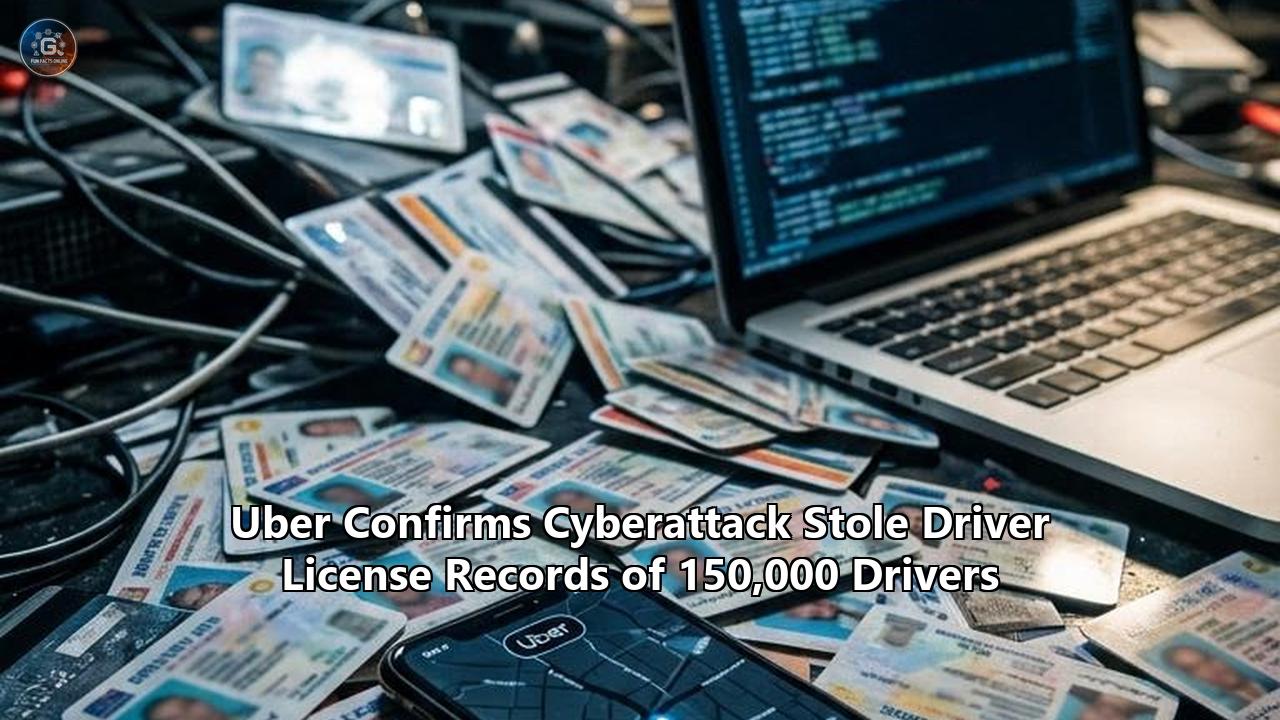
Regulatory disclosures filed across multiple state jurisdictions have confirmed that a major third-party artificial intelligence security failure resulted in the exfiltration of driver's license numbers, full names, dates of birth, and home addresses belonging to nearly 150,000 Uber drivers. Formal filings submitted by Uber Technologies Inc. to state attorneys general, including those in Oregon and Texas, establish that a total of 149,346 commercial drivers had their government-issued identity documents and sensitive personal records compromised.
The breach originated not within Uber’s core application infrastructure, but inside the systems of Fireworks AI, a specialized cloud platform that provides high-performance model deployment and inference engines for enterprises. On October 9, 2026, Fireworks AI notified Uber that unauthorized actors had compromised internal employee credentials and abused those administrative keys to penetrate Uber-specific data stores connected to the service. By October 13, internal digital forensics conducted by Uber's Cloud Security team established that attackers had successfully leveraged those credentials on October 7 to siphon driver identification datasets.
The incident highlights a critical vulnerability in modern enterprise operations: the rapid, unchecked integration of third-party generative artificial intelligence and machine learning pipelines into legacy enterprise stacks. While corporate defenses have hardened against traditional perimeter intrusions, the outsourcing of sensitive data processing to external AI inference engines has created an expansive, poorly governed backchannel for threat actors.
For Uber, this latest uber cyberattack data breach carries heightened operational and regulatory weight. The San Francisco-based gig-economy titan operates under an intensive 20-year consent order with the Federal Trade Commission (FTC) stemming from historical data security and privacy failures. Driver's licenses serve as bedrock identity documents across the financial, legal, and transportation sectors; unlike passwords, software tokens, or compromised credit cards, a state-issued driver's license number cannot be reset with the click of an administrative button.
Anatomy of the Intrusion: How Stolen Credentials Defeated Cloud Tripwires
Understanding how an adversary walked away with nearly 150,000 physical identification records requires analyzing the mechanics of modern cloud environments and third-party API trust boundaries.
+-----------------------------------------------------------------------------------+
|                            ATTACK CHAIN TIMELINE                                  |
+-----------------------------------------------------------------------------------+
|  Oct 6-7:   Adversary compromises internal credentials at Fireworks AI            |
|  Oct 7:     Threat actor uses valid Fireworks AI credentials to access Uber data  |
|             • Dedicated AWS/GCP storage connected to AI inference pipelines      |
|             • Uber Cloud Security alert tripwires fail to fire (valid token used) |
|             • Exfiltration of 149,346 driver license records and image files      |
|  Oct 9:     Fireworks AI discovers system compromise; alerts Uber incident team   |
|  Oct 9:     Uber severs all live data pipelines and API hooks to Fireworks AI     |
|  Oct 13:    Uber forensics verifies unauthorized access and data exfiltration     |
|  Nov 10-16: Formal breach disclosures filed across state Attorneys General        |
+-----------------------------------------------------------------------------------+
The Vendor Vector: Fireworks AI
Fireworks AI has emerged as an infrastructure partner for organizations seeking to run open-weight artificial intelligence models—such as Meta’s Llama family, Mistral, and custom open-source architectures—at scale without constructing internal GPU clusters. To utilize these models for document processing, optical character recognition (OCR) validation, and natural language tasks, enterprise clients direct structured and unstructured data into Fireworks AI's runtime environment.
According to security advisories and incident notifications from Fireworks AI, the company suffered unauthorized intrusions involving exposed internal developer access tokens and compromised cloud development machines. The intrusion was attributed to a financially motivated cybercriminal syndicate whose primary initial objective was suspected to be the scraping of enterprise API tokens, compute resources, and high-value training datasets. Fireworks AI maintains that its core "zero-data-retention" stateless inference endpoints do not cache customer requests; however, batch-processing workflows, dynamic evaluation pipelines, and fine-tuning storage buckets require persistent or semi-persistent customer data storage.
The Illusion of Alerting: The MITRE ATT&CK T1078 Problem
In its disclosures to state regulators, Uber stated that its Cloud Security team had configured automated alerting mechanisms specifically designed to flag unauthorized access attempts within the environment shared with Fireworks AI. Yet, throughout the intrusion window on October 7, not a single alarm triggered.
The technical reason highlights a fundamental challenge in enterprise identity architecture: Valid Accounts (MITRE ATT&CK Technique T1078). The attackers did not exploit an unpatched zero-day vulnerability in Uber’s cloud perimeter, nor did they use SQL injection or remote code execution. Instead, they authenticated using authentic administrative and system credentials issued to Fireworks AI personnel.
To security information and event management (SIEM) systems and Cloud Infrastructure Entitlement Management (CIEM) tools, the requests appeared structurally legitimate. The cryptographic signatures, API bearer tokens, and session headers mirrored standard operational workflows. Because the identity verification evaluated what token was presented rather than how the authenticated entity behaved, the exfiltration traffic moved across the network unhindered.
The timeline shows that Uber only initiated its forensic response after Fireworks AI issued an external upstream compromise alert on October 9:
- October 7, 2026: Threat actors deploy compromised vendor credentials to access Uber’s connected storage resources, executing mass read operations against identity repositories.
- October 9, 2026: Fireworks AI confirms an internal breach to Uber's security operations center. Uber’s team cuts live data connections and revokes shared authentication keys.
- October 13, 2026: Forensic investigators conclude that the attacker leveraged the valid credentials to access and download driver personal data and license images.
- November 10–16, 2026: Uber issues individual breach notices to affected personnel and files statutory notifications with attorneys general nationwide.
Why Driver's License Records Present Acute, Irreversible Risk
The exfiltrated records represent high-value data for identity theft syndicates. According to regulatory filings in Massachusetts, South Carolina, Rhode Island, California, and Texas, the stolen cache includes:
- Full legal names and residential addresses.
- Dates of birth.
- State driver's license numbers and associated jurisdictional codes.
- High-resolution digital images of state-issued driver's licenses submitted during onboarding.
- Associated government identification metadata.
| Data Attribute | Replacement Feasibility | Lifespan of Compromise | Primary Dark Web Exploitation Vectors |
|---|---|---|---|
| Credit Card Number | High (Instant freeze, card re-issue via app) | Hours to Days | Unauthorized consumer purchases, digital gift card laundering |
| Password / Session Token | High (One-click reset, salt/hash revocation) | Minutes to Hours | Credential stuffing, account takeover (ATO) |
| Driver's License Number | Very Low (Requires in-person DMV petition, fee) | Years to Lifetime | Synthetic identity creation, vehicle financing fraud, SIM swap |
| Physical License Image | Near Zero (Physical biometric portrait, layout) | Permanent | Remote KYC bypass at neobanks, cryptocurrency wash accounts |
A compromised driver's license enables several specific fraud vectors:
Synthetic Identity Fraud and KYC Bypasses
In synthetic identity creation, fraudsters combine real and fabricated credentials—pairing an authentic driver’s license number and date of birth with a fabricated Social Security number and disposable address—to construct clean credit profiles. The dark web market values raw, high-resolution scans of physical driver's licenses significantly higher than simple text credentials.
Modern financial platforms, digital banks, and peer-to-peer payment networks rely on automated "Know Your Customer" (KYC) onboarding software. These automated identity verification engines require applicants to upload images of their driver's license alongside a live selfie. With legitimate, high-resolution license images obtained from an enterprise data repository, fraud rings can defeat first-line optical validation filters or generate 3D facial projection deepfakes aligned with the victim's photo.
Fleet Hijacking and Gig-Worker Impersonation
Within the gig economy, driver identity theft introduces direct operational consequences. Unscrupulous actors who have been barred from driving platforms due to criminal records, platform violations, or lack of valid insurance purchase authentic gig-worker profiles to operate on rideshare and food delivery networks.
By possessing the driver's license image, full name, address, and birth date of an active Uber driver, malicious operators can attempt to hijack legitimate driver accounts through targeted SMS social engineering against support representatives, or register fraudulent satellite accounts that funnel earnings while deflecting tax liabilities to the victim.
The Systemic Breakdown: How Driver Records Reached an AI Inference Engine
The fundamental architectural question raised by the incident is why high-resolution images of government identification documents were residing in environments connected to an external AI platform.
+-----------------------------------------------------------------------------------+
|                 UNINTENDED ENTERPRISE AI DATA EXPOSURE PATTERN                    |
+-----------------------------------------------------------------------------------+
|  [Raw Document Store]                                                             |
|   (Unmasked Drivers' Licenses, Names, Addresses, Dates of Birth)                  |
|          │                                                                        |
|          ▼                                                                        |
|  [Document Automation Pipeline]                                                   |
|   (OCR, Document Verification, Fraud Detection, Driver Onboarding)                |
|          │                                                                        |
|          ▼ (Unencrypted, unmasked data fed downstream)                            |
|  [External AI Vendor Ecosystem: Fireworks AI]                                     |
|   (Batch Processing, Inference Fine-Tuning, Model Optimization)                   |
|          │                                                                        |
|          ▼ (Compromised internal vendor access tokens)                            |
|  [Unauthorized Threat Actor Exfiltration Engine]                                  |
+-----------------------------------------------------------------------------------+
Enterprise technology organizations have spent decades refining data classification systems for traditional relational databases. Sensitive elements like Social Security numbers, payment card numbers, and health records are governed by strict tokenization rules and regulatory mandates such as PCI-DSS and HIPAA.
The enterprise race to integrate large language models and multi-modal computer vision models has outpaced these legacy data governance boundaries:
The Document Ingestion Pipeline
Ride-hailing services process millions of contractor applications annually. To streamline operational workflows, manual document inspection has been replaced by automated machine learning pipelines. High-resolution images of licenses, vehicle registrations, and insurance forms are piped through multi-modal models to parse text, verify state watermarks, check micro-print authenticity, and match physical faces with application profiles.
When enterprises transition from internal optical character recognition libraries to third-party hosted artificial intelligence platforms, sensitive source data often gets mirrored directly into cloud compute spaces. If these external platforms lack automated data masking, client-side tokenization, and strict cryptographic segregation, the third-party infrastructure effectively becomes an extension of the primary database—inheriting all of its value to attackers, but none of its internal perimeter controls.
Collateral Fallout Across the Modern AI Stack
The Fireworks AI breach was not an isolated event affecting a single client. Online productivity and knowledge workspace provider Notion confirmed that unauthorized parties accessed AI chat transcripts associated with a portion of its user workspaces during the same security failure. AI coding platform Cursor similarly reviewed customer exposures connected to the compromised developer machines.
This shared vulnerability illustrates the systemic risk of AI infrastructure aggregation:
                                  +-------------------+
                                  |   Threat Actor    |
                                  +---------+---------+
                                            | (Stolen Internal Dev Keys)
                                            ▼
                                  +-------------------+
                                  |   Fireworks AI    |
                                  +----+----+----+----+
                                       |    |    |
           +---------------------------+    |    +--------------------------+
           |                                |                               |
           ▼                                ▼                               ▼
+---------------------+           +---------------------+         +---------------------+
|   Uber Platform     |           |   Notion Systems    |         |    Cursor AI        |
|  (149,346 Licenses  |           | (Workspace Chat     |         |  (Code Repositories |
|  & PII Exfiltrated) |           |  Transcripts)       |         |   & Model Weights)  |
+---------------------+           +---------------------+         +---------------------+
When hundreds of global software platforms channel their internal operational data, employee chats, proprietary source code, and customer identification into a handful of centralized, venture-backed AI inference vendors, those AI vendors become prime targets for cybercrime syndicates. A single set of leaked administrative keys at one AI startup can instantly grant adversaries access to multiple enterprise networks simultaneously.
Uber’s Security Record and the Regulatory Spotlight
To contextualize this exposure, one must evaluate Uber's documented history of cybersecurity governance challenges. Over the past decade, the organization has navigated several major security crises that fundamentally reshaped how corporate officers manage data breaches:
+----------------------------------------------------------------------------------+
|                          UBER CYBERSECURITY TIMELINE                             |
+----------------------------------------------------------------------------------+
|  2016:  57M rider/driver records stolen via private GitHub credentials.           |
|         Breach covered up using $100,000 "bug bounty" payment.                   |
|                                                                                  |
|  2018:  Uber settles with 50 U.S. states for $148M; enters 20-year FTC accord.   |
|                                                                                  |
|  2022:  Historic federal criminal conviction of former CISO Joe Sullivan.        |
|         Teens (Lapsus$) breach Uber internal AWS, Slack, and financial systems.  |
|                                                                                  |
|  2026:  Uber Freight division suffers data extortion incident.                   |
|                                                                                  |
|  2026:  Fireworks AI compromise exposes 149,346 driver licenses and PII.        |
+----------------------------------------------------------------------------------+
The Shadow of the 2016 Cover-Up
In 2016, attackers compromised Uber’s private GitHub repositories, obtained Amazon Web Services access keys, and downloaded personal information belonging to 57 million riders and drivers, including approximately 600,000 driver's license numbers.
Rather than reporting the breach to the FTC, state attorneys general, or affected drivers as mandated by law, Uber’s internal security leadership routed a $100,000 payment to the hackers through its third-party bug bounty platform, HackerOne. They classified the incident as an educational white-hat discovery and executed nondisclosure agreements to conceal the intrusion.
The fallout was unprecedented:
- Uber paid $148 million to settle civil actions brought by attorneys general across all 50 states and the District of Columbia.
- The FTC expanded its existing oversight program, binding Uber to a comprehensive 20-year mandated privacy and security program.
- In late 2022, former Uber Chief Information Security Officer Joe Sullivan was convicted in federal court for obstruction of justice and misprision of a felony for his role in concealing the hack. This marked the first time a corporate security executive faced criminal charges for managing a data breach response.
The 2022 Social Engineering Breach
In September 2022, Uber suffered another major breach when an 18-year-old attacker affiliated with the Lapsus$ hacking collective bypassed multi-factor authentication (MFA) using an MFA fatigue attack against an external contractor.
Once inside the corporate network, the attacker discovered hardcoded administrative PowerShell scripts containing cleartext credentials for Uber’s enterprise password manager, Thycotic. This provided the intruder with complete administrative control over Uber's Google Workspace, Slack communication channels, Amazon Web Services environments, and internal financial tracking dashboards.
The 2026 Vendor Attack
This latest uber cyberattack data breach differs fundamentally in structure, yet arrives under the same stringent legal environment. The direct target was not Uber's employee endpoints or corporate Slack channels, but an external vendor in its supply chain.
Federal and state regulators increasingly reject third-party supply chain distinctions when sensitive user data is exposed. Under modern regulatory interpretations, enterprises maintain non-delegable responsibilities for the security of consumer and worker data, regardless of where that data is hosted, routed, or transformed.
Technical Solutions: Engineering Zero-Trust Protections for AI Workloads
The systemic failure demonstrated by the Fireworks AI incident requires an architectural pivot away from passive credential-checking models and toward verifiable, hardware-enforced zero-trust principles for all artificial intelligence and external software-as-a-service pipelines.
Enterprises can no longer afford to treat third-party AI platforms as trusted internal network extensions. Securing these environments requires four architectural solutions:
+-----------------------------------------------------------------------------------+
|            DEFENSE-IN-DEPTH ARCHITECTURE FOR THIRD-PARTY AI VENDORS               |
+-----------------------------------------------------------------------------------+
|                                                                                   |
|  [1. Ingestion: Client-Side Pseudonymization & Cryptographic Masking]            |
|   • Raw identity documents processed inside isolated, ephemeral micro-services.   |
|   • Driver's license numbers tokenized before cloud transit.                      |
|   • Deterministic synthetic representations replace real PII for model training.  |
|                                                                                   |
|  [2. Authentication: Hardware-Bound Ephemeral Machine Identities]                 |
|   • Static API tokens replaced by SPIFFE/SPIRE dynamic, short-lived certificates. |
|   • Mutual TLS (mTLS) with cryptographic identity pinning across all endpoints.   |
|   • Continuous FIDO2/WebAuthn session validation for administrative vendor access.|
|                                                                                   |
|  [3. Execution: Confidential Computing & Trusted Execution Environments (TEEs)]   |
|   • Models run inside hardware-enforced enclaves (AMD SEV-SNP / Intel TDX).      |
|   • Data remains fully encrypted in memory while active in GPU/CPU compute space. |
|   • Zero-knowledge proofs verify vendor system integrity prior to payload release.|
|                                                                                   |
|  [4. Detection: Behavioral Machine-Identity Analytics (UEBA)]                     |
|   • Baseline analysis for API query volumes, data transfer speeds, and geoloc.    |
|   • Immediate throttling on abnormal bulk read operations (even with valid auth). |
|   • Decoy records ("canary data") trip instant alerts upon unauthorized access.   |
|                                                                                   |
+-----------------------------------------------------------------------------------+
1. Client-Side Cryptographic Tokenization and Data Minimization
The most effective method for preventing driver identification data from being stolen from an external AI platform is to ensure that genuine identity records never reach the external provider in cleartext:
- Format-Preserving Encryption (FPE) and Synthetic Surrogates: When an artificial intelligence model requires driver's license records to test or fine-tune verification logic, raw production records must be sanitized using deterministic tokenization or synthetic data engines. A mathematical proxy preserving the layout, length, and check-sum of a California or Texas driver’s license allows the machine learning model to execute validation training without exposing actual citizen records.
- Edge-Based Ephemeral Redaction: If multi-modal models are deployed to extract metadata from license scans, image redaction must occur within secure, isolated boundary instances controlled by the primary enterprise before the payload leaves its infrastructure. Driver images must have full names, dates of birth, and home addresses programmatically redacted, passing only mathematically hashed features to external processors.
2. Replacing Static Credentials with Ephemeral SPIFFE/SPIRE Identifiers
The root cause of the unauthorized exfiltration was the compromise of static, privileged administrative credentials issued to vendor personnel.
Static API keys, long-lived access tokens, and persistent service-account secrets represent single points of failure:
- Cryptographically Verifiable Workload Identity: Modern distributed enterprises must implement frameworks like SPIFFE (Secure Production Identity Framework for Everyone) and SPIRE (the SPIFFE Runtime Environment). Rather than hardcoding static developer keys or service tokens that can be copied or leaked from development machines, SPIFFE issues short-lived, dynamically rotated X.509 cryptographic certificates to services based on verifiable cryptographic properties of the host and workload.
- Zero-Standing Privileges (ZSP): Administrative access into client-associated cloud buckets should never remain active by default. Platforms must deploy automated "Just-In-Time" (JIT) access mechanisms where administrative privileges are granted on-demand for specific operational tasks, bounded to 30-minute windows, authenticated by biometric hardware keys (FIDO2), and revoked automatically upon task completion.
3. Confidential Computing and Trusted Execution Environments (TEEs)
As enterprises channel sensitive workloads into third-party cloud AI vendors, the underlying infrastructure must enforce hardware-level data isolation. Even if an attacker gains root administrative access to a vendor's host operating system, they should remain mathematically barred from inspecting the active workload:
- Hardware Enclaves: Modern enterprise silicon—such as AMD SEV-SNP (Secure Encrypted Virtualization-Secure Nested Paging) and Intel TDX (Trust Domain Extensions)—enables the execution of models and data ingestion inside isolated hardware-enforced enclaves.
- Memory Encryption: Inside a Trusted Execution Environment (TEE), customer data remains fully encrypted while in memory. The host operating system, hypervisor, and vendor technicians cannot view or dump the system memory containing the unencrypted driver's licenses. If a threat actor steals vendor credentials, their access is limited to the hypervisor plane, leaving them unable to exfiltrate cleartext data processed within the enclave.
4. Behavioral Profiling for Machine and Vendor Identities
Because Uber's automated tripwires failed when valid credentials were used, detection engineering must evolve beyond traditional authentication checks and deploy advanced User and Entity Behavior Analytics (UEBA) for programmatic accounts:
+-----------------------------------------------------------------------------------+
|               MACHINE IDENTITY BEHAVIORAL ANOMALY DETECTION ENGINE                 |
+-----------------------------------------------------------------------------------+
|                                                                                   |
|  [Incoming API / Storage Operation]                                               |
|   • Authenticated via: Fireworks AI Vendor Secret Token (Status: Valid)           |
|                                                                                   |
|  [Heuristic Evaluation Checks]                                                    |
|   ├── Volume Anomaly?         [FAIL] 150k read requests vs. 200/hr baseline       |
|   ├── Temporal Anomaly?       [FAIL] Bulk access triggered at 02:14 UTC           |
|   ├── Geographic Inconsistency? [FAIL] IP Origin: Unrecognized Cloud VPS / TOR     |
|   ├── Target Diversity?       [FAIL] Traversing across multi-state datasets       |
|                                                                                   |
|  [Automated Enforcement Decision]                                                 |
|   ├── Dynamic Step-Up Challenge (Require Hardware Key Re-Auth)                    |
|   ├── Automated Session Termination & Key Revocation                              |
|   └── Immediate Out-of-Band Security Alert to SOC Leadership                      |
|                                                                                   |
+-----------------------------------------------------------------------------------+- Volumetric Anomaly Clamps: If a vendor service account typically issues 200 read operations per hour to check driver validation flags, an abrupt spike to tens of thousands of continuous read operations must trigger an immediate automated pipeline freeze, regardless of authentication validity.
- Tripwire Canary Tokens: Security teams should seed their external document buckets with realistic, synthetic "canary" records. These decoy identity files are not connected to real drivers and remain dormant. If any query—authorized or unauthorized—attempts to read or download a canary record, an immediate security alert fires, signaling that an account is scanning entire tables rather than fulfilling operational requests.
Regulatory, Legal, and Compliance Implications
The regulatory fallout from the Fireworks AI and Uber compromise will likely establish legal precedents regarding liability across generative AI infrastructure and third-party data processing.
+-----------------------------------------------------------------------------------+
|                     STATE AND FEDERAL REGULATORY LIABILITIES                      |
+-----------------------------------------------------------------------------------+
|                                                                                   |
|  [U.S. Federal Trade Commission (FTC)]                                             |
|   • Enforcement of 20-year consent decree regarding privacy and cybersecurity.    |
|   • Strict scrutiny on whether "reasonable security" encompassed AI vendor audit. |
|   • Potential civil penalties for non-compliance with historical consent orders.  |
|                                                                                   |
|  [State Attorneys General Taskforces]                                             |
|   • California (CCPA/CPRA): Statutory fines of $2,500 - $7,500 per violation.     |
|   • Texas (TDPSA) & Multi-State AGs: Mandatory reviews of vendor risk audits.     |
|   • Strict statutory notification timelines (scrutiny of Oct 7 - mid-Nov gap).    |
|                                                                                   |
|  [Securities and Exchange Commission (SEC)]                                       |
|   • Mandatory Form 8-K disclosure rules regarding material cybersecurity events.  |
|   • Scrutiny of enterprise supply chain oversight and public risk disclosures.    |
|                                                                                   |
+-----------------------------------------------------------------------------------+
The Federal Trade Commission's Enforcement Power
Under Section 5 of the FTC Act, the agency prosecutes unfair and deceptive business practices, including failures to maintain appropriate safeguards for consumer and worker data. Because Uber is subject to an active 20-year consent agreement from its 2016 breach resolution, the bar for compliance is elevated.
The FTC’s recent enforcement actions highlight that enterprises cannot disclaim legal responsibility by shifting processing workloads to external artificial intelligence vendors. If the Commission determines that Uber failed to verify Fireworks AI’s credential security protocols, data isolation boundaries, and retention practices, Uber could face civil contempt penalties that scale into millions of dollars per violation.
State Privacy Laws: CCPA, CPRA, and TDPSA
At the state level, attorneys general are exercising broader statutory powers:
- California Consumer Privacy Act (CCPA / CPRA): California law gives consumers a private right of action if non-encrypted and non-redacted personal information—specifically including driver's license numbers—is breached due to a business's failure to maintain reasonable security procedures. Statutory damages range from $100 to $750 per consumer per incident, creating an immediate multi-million dollar class-action exposure for the breach of nearly 150,000 drivers.
- The Texas Data Privacy and Security Act (TDPSA): The Texas Attorney General’s Office maintains an active enforcement posture regarding enterprise data leaks. With Texas residents accounting for a substantial portion of the affected individuals (with 149,346 total notices officially reported via state mechanisms), state regulators will investigate whether vendor contract covenants met statutory requirements for data hygiene and risk assessment.
SEC Disclosure Rules
The Securities and Exchange Commission requires publicly traded organizations to disclose cybersecurity incidents determined to have material financial or operational impacts within four business days of that determination via Form 8-K.
While enterprises often argue that third-party vendor breaches are non-material if primary transactional infrastructure remains online, the SEC's expanded focus on enterprise cyber risk scrutinizes whether cumulative supply chain exposures compromise strategic operations or create major contingent liabilities.
Action Plan: Steps for Affected Drivers and Fleet Operators
For the 149,346 commercial drivers whose personal information and state driver's license scans were compromised, the risk of identity theft will persist for years.
+-----------------------------------------------------------------------------------+
|                        VICTIM REMEDIATION WORKFLOW                                |
+-----------------------------------------------------------------------------------+
|                                                                                   |
|  Step 1: Contact State DMV Fraud Bureau                                           |
|          • File an official identity theft police report.                         |
|          • Petition for a "Driver's License Number Modification / Fraud Alert."   |
|          • Request a verified physical duplicate with new audit control numbers.  |
|                                                                                   |
|  Step 2: Enforce Comprehensive Credit Freezes                                      |
|          • Direct locks via Equifax, Experian, TransUnion, and Innovis.           |
|          • Freeze National Telecommunications Data (National Verifier / NCTUE).   |
|          • Prevent fraudulent mobile phone lines and SIM swapping attacks.        |
|                                                                                   |
|  Step 3: Secure Critical Platform Credentials                                     |
|          • Migrate rideshare/delivery driver accounts from SMS to passkeys/TOTP.  |
|          • Establish IRS Identity Protection PIN (IP PIN) to block tax fraud.     |
|          • Enable active monitoring across Social Security Administration (SSA).  |
|                                                                                   |
+-----------------------------------------------------------------------------------+
Affected drivers and fleet operations must take immediate steps to mitigate potential downstream fraud:
1. Initiate State DMV Identity Theft Protections
A driver's license number is a permanent credential that typical credit freezes do not directly protect. Drivers who receive an official breach notification letter must:
- File an Official Report: File an identity theft complaint with the Federal Trade Commission (via IdentityTheft.gov) and local law enforcement agencies to obtain an official police incident number.
- Petition the State Licensing Bureau: Submit the police report to their state's Department of Motor Vehicles (DMV) or Department of Public Safety. Several states allow drivers to request a new driver's license number if they can prove their existing identifier was compromised in a major breach.
- Flag the State Record: If a state agency refuses to issue a new license number, drivers should request that a formal "Fraud Alert" or "Verification Password" be placed on their driving record. This flag requires state motor vehicle personnel to conduct secondary manual verification before processing duplicate card applications, address updates, or title transfers.
2. Freeze Credit Bureaus Across All Four Networks
Victims must enact complete credit freezes across all credit reporting bureaus. Placing a credit freeze restricts access to credit reports, stopping criminals from opening fraudulent credit cards, personal loans, or vehicle leases in the victim's name:
- The Major Credit Bureaus: Contact Equifax, Experian, and TransUnion directly. A credit freeze is free by federal law and does not affect existing credit ratings or daily banking transactions.
- The Overlooked Fourth Bureau: Contact Innovis, a specialized credit reporting repository frequently checked by credit card providers and commercial lenders for secondary validation.
- NCTUE Protection: Submit a freeze to the National Consumer Telecom & Utilities Exchange (NCTUE). Fraud syndicates routinely leverage stolen driver’s licenses to activate new wireless accounts, finance smartphones, and bypass SIM security checks.
3. Establish an IRS Identity Protection PIN (IP PIN)
Armed with an authentic driver's license, full name, residential address, and birth date, criminal operations can file fraudulent federal and state tax returns early in the fiscal year to intercept tax refund checks.
Drivers should register with the Internal Revenue Service to obtain a six-digit Identity Protection PIN (IP PIN). This number serves as a private, out-of-band authentication code required to file any federal tax return, blocking fraudulent filings that rely on compromised biographical data.
4. Fortify Platform Accounts
Drivers must transition all authentication on gig-work, personal banking, and email accounts away from SMS-based multi-factor authentication. Stolen driver's license data simplifies unauthorized SIM card reassignments (SIM swapping) by providing customer service representatives with the personal information needed to bypass verification checks.
Drivers should configure multi-factor authentication using dedicated authenticator applications (such as Google Authenticator or Microsoft Authenticator) or deploy physical, hardware-based FIDO2 security keys (such as YubiKeys).
The Strategic Shift: Managing Third-Party AI Integrations
The incident involving Uber and Fireworks AI serves as a broader case study for chief information security officers, cloud architects, and corporate risk leaders managing the shift toward external artificial intelligence platforms.
The lesson of this latest uber cyberattack data breach is clear: organizations cannot insulate themselves from security risks merely by maintaining hardened perimeters if sensitive operational and personal data is shared with external AI vendors.
+-----------------------------------------------------------------------------------+
|                        ENTERPRISE AI ADOPTION MATURITY MODEL                      |
+-----------------------------------------------------------------------------------+
|                                                                                   |
|  Phase 1: AD-HOC EXPERIMENTATION (High Exposure Risk)                             |
|  • Raw customer PII/data piped directly to third-party AI APIs.                   |
|  • Static service credentials stored across internal repositories.                |
|  • Vendor security evaluation limited to standard questionnaire checklists.       |
|                                                                                   |
|  Phase 2: PERIMETER ENFORCEMENT (Moderate Exposure Risk)                          |
|  • IP whitelisting and SIEM logging deployed across API interfaces.               |
|  • Alerting rules bound to traditional perimeter failure models.                  |
|  • Reliance on static vendor assurances and standard SOC2 Type II reports.       |
|                                                                                   |
|  Phase 3: ZERO-TRUST WORKLOAD GOVERNANCE (True Defense-in-Depth)                   |
|  • Mandatory client-side tokenization and synthetic data minimization.            |
|  • Ephemeral, dynamic machine identities (SPIFFE/mTLS) without persistent keys.  |
|  • Workloads run strictly inside hardware Trusted Execution Environments (TEEs). |
|  • Behavioral telemetry monitoring queries continuously for anomalous volume.     |
|                                                                                   |
+-----------------------------------------------------------------------------------+
Enterprise security postures must adapt across three technical dimensions:
Transforming Vendor Risk Audits
Traditional Third-Party Risk Management (TPRM) has historically relied on annual security questionnaires and standard SOC2 Type II certifications. The speed of generative AI development makes these static compliance mechanisms obsolete.
Enterprises must demand continuous, programmatically verified security posture assessments from AI vendors:
- Contractual Data Minimization: Strict verification that client data sent for inference tasks is wiped from memory immediately upon completion, with runtime auditing validating zero-data-retention claims.
- Ephemeral Key Policies: Prohibiting the creation and persistence of long-lived access keys across third-party environments.
- Mandatory Penetration Testing Disclosures: Requiring external AI providers to provide unredacted results from regular red-team exercises and external cloud environment penetration tests.
Eliminating the "Valid Identity" Blindspot
The fact that automated alerts failed to trigger because threat actors presented valid internal credentials highlights an urgent need for security teams to rethink identity-based detection. When designing SIEM tripwires and automated security orchestration (SOAR) playbooks, detection engineers must base alerts on behavioral patterns rather than authentication status:
- Does the velocity of data access align with historical operational baselines?
- Is the geographic origin of an API call consistent with standard corporate nodes?
- Is a credential performing mass export operations across entire data stores when it typically checks only single records?
Whenever these behavioral deviations occur, systems must automatically downgrade access, challenge for hardware-bound multi-factor authentication, or sever session tokens—even if the credentials presented are completely valid.
Future Trajectory: Autonomous Systems and Identity Protection
The breach exposing 149,346 commercial drivers marks a turning point in enterprise cybersecurity. As organizations continue integrating artificial intelligence to handle customer support, identity document parsing, automated financial evaluation, and code generation, external AI models will remain primary targets for sophisticated cybercriminal syndicates.
+----------------------------------------------------------------------------------+
|                   THE ROAD AHEAD: UPCOMING REGULATORY MILESTONES                 |
+----------------------------------------------------------------------------------+
|  Early 2027: State AG Joint Investigative Findings on Fireworks AI Breach.       |
|              • Potential unified multi-state enforcement actions.                 |
|              • First legal precedents on AI API vendor liability.                |
|                                                                                  |
|  Mid-2027:   FTC Rulemaking on Artificial Intelligence Supply Chains.            |
|              • Formal codification of data minimization rules for AI vendors.    |
|              • Enhanced statutory penalties for repeat consent decree violators. |
|                                                                                  |
|  Late 2027:  Implementation of Verifiable Digital Credentials (ISO/IEC 18013-5). |
|              • Rollout of mobile, cryptographically verifiable driver's licenses. |
|              • Phasing out static physical card scans and license numbers.       |
|              • Zero-Knowledge Proof (ZKP) identity verification for gig economy. |
+----------------------------------------------------------------------------------+
The long-term solution to this growing challenge requires two parallel developments:
First, industry must accelerate the deployment of Verifiable Digital Credentials and Mobile Driver's Licenses (mDLs) governed by cryptographically secure standards such as ISO/IEC 18013-5. In a digital identity architecture powered by asymmetric public-key cryptography, a commercial driver does not upload a static photograph or enter an immutable license number into an onboarding app. Instead, they provide a cryptographically signed Zero-Knowledge Proof (ZKP) issued directly by their state DMV.
The enterprise platform verifies that the driver possesses a valid, unrevoked commercial license without receiving or storing any static numbers, dates of birth, or physical portraits. If an AI platform or external vendor handling that verification is subsequently breached, the attacker acquires only an expired, one-time cryptographic token that cannot be reused to steal the victim's identity.
Second, enterprises must adopt zero-trust AI engineering practices. Treating machine learning platforms as exceptions to zero-trust principles undermines traditional perimeter defenses. Unless companies implement client-side data sanitization, client-side encryption, and continuous behavioral telemetry across all machine identities, threat actors will continue bypassing perimeter defenses by exploiting weak links across external AI supply chains.
The exposure of thousands of driver's licenses via Fireworks AI demonstrates that in an interconnected cloud ecosystem, an enterprise is only as secure as the developer keys protecting its least-audited AI vendor. Addressing this challenge requires treating artificial intelligence infrastructure not as an external service provider, but as a critical attack surface that demands continuous, hardware-enforced zero-trust defenses.
Reference:
- https://www.securityweek.com/uber-data-breach-impacts-150000-people/
- https://techcrunch.com/2026/11/16/uber-confirms-hackers-stole-thousands-of-drivers-license-information-in-data-breach/
- https://cybernews.com/security/uber-confirms-data-breach/
- https://nationalcioreview.com/articles-insights/extra-bytes/uber-data-breach-exposes-thousands-of-drivers-license-records-through-ai-vendor/
- https://cryptobriefing.com/uber-data-breach-drivers-licenses-exposed/
- https://techcrunch.com/2026/11/16/uber-confirms-hackers-stole-thousands-of-drivers-license-information-in-data-breach/
- https://www.nacionale.com/en/articles/was-uber-hacked-fireworks-ai-breach-drivers-license-data-stolen-what-to-do