The European Union’s first-ever Soil Monitoring Law officially entered into force in December 2025, initiating a massive legislative effort to address a crisis that currently costs the bloc over €50 billion annually. According to the European Commission, between 60% and 70% of European soils are now classified as unhealthy. While chemical contamination and erosion frequently dominate public discussions regarding agricultural sustainability, policymakers and agronomists are now turning their attention to a much heavier, entirely physical problem: the structural crushing of global farmlands.
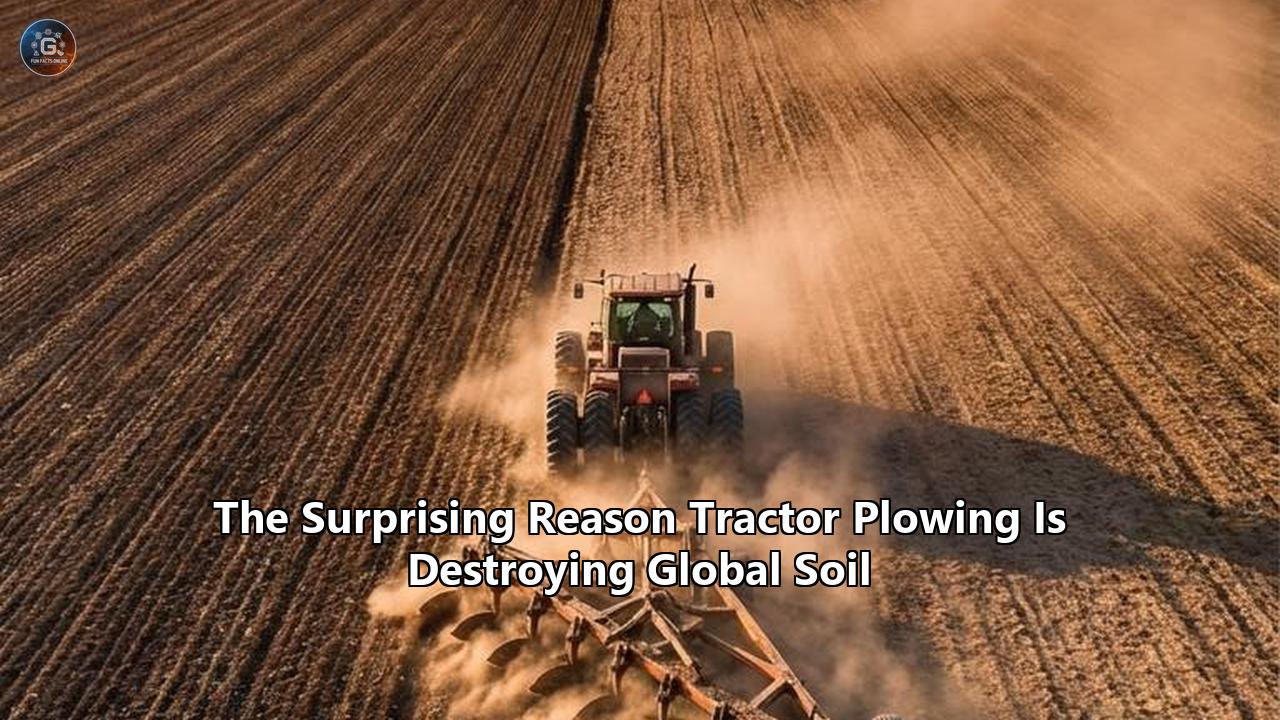
The primary driver of this physical degradation is not an invisible chemical, but the massive, escalating weight of modern agricultural machinery combined with repetitive mechanical tillage. Recent field studies and legislative frameworks highlight a stark reality: modern tractors and combine harvesters have become so heavy that they are fundamentally altering the physical, hydrological, and biological properties of the earth beneath them,.
This case study analyzes the intersection of modern agricultural engineering, soil physics, and newly enacted environmental policy. By examining the mechanics of machinery-induced soil compaction, we can extract critical principles about how industrial farming methods have outpaced the biological carrying capacity of the land, and what must change as global agricultural policies, such as the EU's impending 2028-2034 Common Agricultural Policy (CAP) reforms, begin to tie financial support to soil resilience.
The Sauropod Paradox: When Engineering Outpaces Geology
To understand the severity of modern soil compaction, researchers have drawn a direct comparative analysis between modern farm machinery and the largest terrestrial animals to ever exist. A landmark study published in the Proceedings of the National Academy of Sciences (PNAS) by researchers from the Swedish University of Agricultural Sciences and ETH Zürich evaluated the mechanical limits of safe soil functioning. The researchers found that the axle loads of modern combine harvesters—often exceeding 66 tons when fully loaded—are directly comparable to the estimated body mass of sauropod dinosaurs.
This comparison is not merely illustrative; it is rooted in biomechanics and soil physics. When a sauropod walked across soft earth, the static pressure applied to the ground was immense, but the geographical footprint of the animal was highly localized. Modern agricultural machinery applies a similar, if not greater, pressure, but does so uniformly across millions of hectares of arable land multiple times a year.
Since the 1960s, the drive for agricultural efficiency and the need to manage larger tracts of land with less human labor has fueled a mechanical arms race. Tractors and harvesters have grown exponentially in size and horsepower. A modern combine is nearly ten times heavier than its 1960s counterpart. Common axle loads on high-horsepower tractors can range from 10 to 20 tons, while full grain carts can impose up to 70 tons per axle.
The land is reacting to this weight exactly as the laws of physics dictate. Soil is not a solid mass; it is a porous, fragile scaffolding comprised of minerals, organic matter, water, and air. When subjected to extreme mechanical loads, the pore spaces collapse. The air and water are forcibly pressed out, and the mineral particles are pushed tightly together, increasing the soil's bulk density.
The Mechanics of Subsoil Compaction
The destruction of soil structure through machinery occurs in distinct layers, each presenting unique agronomic challenges. When assessing the impact of tractor plowing, it is necessary to differentiate between surface compaction and subsoil compaction.
Surface Compaction and Wheel-Slip
Surface compaction occurs in the top 0 to 15 centimeters of the soil profile. This layer is directly manipulated by tillage implements and bears the immediate brunt of the tractor's tire contact patch. However, the compression of this layer is not solely vertical. When a tractor pulls a heavy implement—such as a moldboard plow or a deep ripper—it requires immense draft force. This pulling action inherently causes the tires to slip against the soil surface.
Research demonstrates that wheel-slip is often more destructive to the topsoil than the static weight of the tractor itself,. When a tire slips, the treads act like horizontal shears, cutting and displacing the soil structure. A slip rate of just 27% can physically displace a soil layer by up to 35 centimeters horizontally. This shearing action destroys the natural aggregation of soil particles. Furthermore, as slip increases, the maximum shear pressure applied to the soil escalates dramatically. For example, moving from a 1% slip to a 27% slip can increase the shear pressure from 19.7 kilopascals (kPa) to 42.6 kPa for the front wheels, and from a mere 6.0 kPa to 61.6 kPa for the rear wheels.
The Chronic Threat of Subsoil Compaction
While surface compaction can temporarily be broken up by subsequent tillage passes, subsoil compaction—occurring beneath the typical plowing depth of 15 to 30 centimeters—presents a chronic, highly persistent threat.
The vertical stress transmitted through the soil profile is a function of the total axle load and the moisture content of the soil at the time of the pass. Because water is incompressible, operating heavy machinery on wet soils acts as a hydraulic press, transmitting the weight of the tractor deep into the subsoil profile. Recent soil bin experiments measuring the stress transmission of different tractor loads found that at a normal load of 5.65 kilonewtons (kN) and multiple passes, the subsoil layer at 15 to 30 centimeters experienced maximum compaction, reaching a bulk density of 1.55 Megagrams per cubic meter (Mg/m³).
At this depth, the soil cannot be easily remediated. Plowing rarely reaches below 20 centimeters, meaning the subsoil compaction is never mechanically fractured. Over successive seasons of heavy traffic, this compressed subsoil forms a "plow pan"—a dense, impenetrable barrier of hardpan earth that effectively disconnects the topsoil from the deep subsoil. The PNAS study estimated that globally, 20% of all farmland currently faces a high risk of permanent productivity loss due to this deep, machinery-induced compression.
The Vicious Cycle of Remedial Tillage
One of the most complex systemic failures in modern agriculture is the behavioral feedback loop surrounding tillage and compaction. Tillage—the physical manipulation of soil to prepare seedbeds, eradicate weeds, and incorporate residues—has been a foundational agricultural practice for millennia. However, intensive mechanical tillage using heavy machinery creates a self-perpetuating cycle of degradation.
- The Initial Pass: A farmer drives a heavy, high-horsepower tractor across a field to pull a primary tillage implement. The tires cause immediate surface compaction and transmit stress into the subsoil, creating the beginnings of a plow pan.
- Loss of Structure: The implement flips and shatters the topsoil, destroying the natural organic glues (glomalin) and fungal hyphae that hold soil aggregates together. The topsoil is temporarily fluffed and aerated, but its structural integrity is entirely gone.
- Subsidence and Crusting: With the first heavy rain, the structureless topsoil collapses and forms a surface crust. The water cannot infiltrate the dense plow pan below, leading to ponding and further settling.
- The Remedial Pass: The next season, the farmer observes that the soil is hard, crusted, and compacted. To prepare the seedbed, the farmer believes they must plow again to loosen the earth.
- Escalation of Force: Because the soil is now denser and harder than before, pulling the plow requires more draft force. To generate more draft force without excessive wheel-slip, the farmer must use a heavier tractor or add ballast weights to the existing machine.
- Deepening the Damage: The heavier tractor applies even greater axle loads, driving the subsoil compaction deeper and increasing the bulk density of the plow pan.
This cycle explains why the continuous application of mechanical force fails to solve a problem created by mechanical force. The impact of tractor plowing is not a linear degradation; it is an accelerating loop that forces farmers to expend increasingly higher amounts of diesel fuel to pull heavier implements through deteriorating earth.
The Biological Asphyxiation of the Soil Microbiome
Soil is an ecosystem, and its biological inhabitants dictate its fertility. The physical crushing of pore spaces has immediate, lethal consequences for soil biology.
Under undisturbed conditions, soil comprises roughly 50% solid matter (minerals and organic material) and 50% pore space (divided evenly between air and water). When a heavy tractor compacts the soil, the macroscopic pore spaces are the first to collapse. These macropores are the primary conduits for oxygen to enter the soil profile and for carbon dioxide to vent out.
When bulk density increases and porosity drops, the soil becomes anaerobic. Earthworms, which require oxygen to survive and loose soil to burrow through, are either physically crushed or suffocated. Furthermore, the delicate, microscopic networks of mycorrhizal fungi—which form symbiotic relationships with plant roots to exchange carbon for essential nutrients like phosphorus—are physically sheared apart by tillage implements and blocked by the dense walls of compacted earth.
Without adequate oxygen, aerobic bacteria die off, and anaerobic bacteria proliferate. These anaerobic microbes utilize different metabolic pathways that are highly detrimental to crop growth. For instance, in compacted, waterlogged soils, anaerobic bacteria strip oxygen molecules from nitrate fertilizers, converting the valuable agricultural nitrogen into nitrous oxide gas—a potent greenhouse gas that is subsequently lost to the atmosphere. This process, known as denitrification, represents both an environmental liability and a direct financial loss to the farmer, who paid for fertilizer that the crop will never utilize.
Hydrological Failure: From Drought Vulnerability to Flood Exacerbation
The structural failure of compacted soil completely alters the hydrology of an agricultural watershed. The formation of a dense plow pan severs the hydraulic connectivity between the surface and the deep aquifers.
During periods of heavy rainfall, water attempts to infiltrate the soil. In healthy, well-aggregated soil, water moves rapidly through macropores, old root channels, and earthworm burrows, recharging the deep moisture reserves. In a field suffering from the severe impact of tractor plowing, the water hits the dense, compacted layer just below the tillage zone and stops. The shallow topsoil quickly saturates. Once the top layer reaches its maximum water-holding capacity, any additional rainfall pools on the surface and eventually runs off, carrying valuable topsoil, nutrients, and applied agricultural chemicals into local waterways,.
This runoff accelerates soil erosion, which the European Union cites as a primary reason for the estimated €1.25 billion in annual agricultural productivity lost to soil washing away.
Conversely, during periods of prolonged heat and drought, the compacted soil proves equally catastrophic. Crop resilience during a drought relies entirely on the plant's ability to drive its roots deep into the subsoil to access stored moisture. However, roots possess limited physical strength. When the penetration resistance of the soil exceeds approximately 2.0 to 2.5 Megapascals (MPa), most agricultural crop roots simply cannot push through.
When roots encounter a plow pan, they turn and grow horizontally, entirely confined to the top 15 centimeters of the soil. As the summer sun bakes the earth, this shallow top layer dries out rapidly. Because the roots cannot penetrate the subsoil, and capillary action cannot pull deep moisture up through the compacted layer, the crop suffers severe drought stress, resulting in stunted growth and massive yield reductions. Field trials have shown that highly compacted soils can experience yield drops of up to 35.4% for high-power tractor passes, alongside notable decreases in crop quality.
Engineering Mitigations: Analyzing Tire Technology and Tracks
Recognizing the unsustainable trajectory of machinery weight, agricultural engineers and machinery manufacturers have spent the last decade attempting to design their way out of the compaction crisis. The primary objective has been to increase the "footprint" of the machine, thereby distributing the massive axle loads over a larger surface area to reduce the localized ground pressure.
The Shift in Tire Inflation Pressures
Historically, tractor tires were inflated to relatively high pressures (e.g., 160 kPa or higher) to support heavy loads and reduce rolling resistance on paved roads during transport. However, high-pressure tires maintain a rigid, highly convex shape that presses deeply into the soil, creating deep ruts and intense localized compaction.
Recent agronomic guidelines push for the use of low-pressure, high-flexion radial tires. By dropping the inflation pressure to as low as 60 kPa for field operations, the tire casing flattens out, lengthening the contact patch. Studies analyzing the contact length of a standard 18.4 R38 tire demonstrated that decreasing the pressure from 124 kPa to 41 kPa extended the contact footprint from 0.64 meters to 0.76 meters. While this successfully reduces surface compaction and minimizes rut depth, soil physicists warn that it does not solve the subsoil problem. The total axle load remains identical; therefore, the deep vertical stress transmitted to the 30-centimeter depth remains largely unchanged, continuing to threaten subsoil functionality.
Tracked Vehicles vs. Wheeled Tractors
To further maximize the contact area, many large-scale farming operations have transitioned from conventional wheeled tractors to continuous track systems (caterpillar tracks). The theoretical advantage is straightforward: a long rubber track provides vastly more surface area than a round tire, dropping the static ground pressure significantly.
However, comparative impact studies between wheeled and tracked vehicles present highly nuanced and occasionally contradictory results. While tracked tractors distribute weight better when moving in a straight line, they exhibit severe shearing forces during turns. Because tracks cannot pivot on an axis like a wheel, the machine must brake one track and accelerate the other to change direction. This aggressive mechanical action tears the soil surface apart, obliterating soil aggregates and drastically increasing shear resistance.
Furthermore, some comparative studies in mixed forest and agricultural stands have found that while tracked tractors might reduce penetration resistance in dry conditions compared to wheeled counterparts, their vibrations and unique loading mechanics can actually result in higher increases in bulk density under certain soil moisture profiles.
The Advent of Non-Pneumatic Tires (NPTs)
Looking toward future engineering solutions, 2026 has seen an increase in research regarding Non-Pneumatic Tires (NPTs), commonly referred to as airless tires or "tweels." Utilizing flexible polyurethane spokes rather than an air chamber, NPTs are designed to deform entirely to the contour of the ground. Experimental models comparing original NPTs, reduced-spoke NPTs, and standard pneumatics found that optimized NPT designs can marginally reduce soil sinkage and bulk density compared to traditional tires. However, similar to the low-pressure pneumatic strategies, NPTs only address surface pressure, failing to negate the total mass of a 40-ton machine pressing down on the subsoil.
Spatial Containment: Controlled Traffic Farming (CTF)
If engineering cannot eliminate the weight of the machines, agronomy must dictate where that weight is placed. The most effective mechanical strategy for managing compaction currently deployed in advanced agricultural systems is Controlled Traffic Farming (CTF).
In a conventional farming setup, a tractor pulling a plow, a sprayer, a fertilizer spreader, and a combine harvester all have different operating widths and varying track gauges (the distance between the wheels). Over the course of a single season, the random, overlapping paths of these various machines can result in wheel traffic covering 80% to 90% of the field surface. Every square meter of the field is subjected to compaction.
CTF standardizes the operating widths and track gauges of all machinery on the farm. Utilizing ultra-precise RTK (Real-Time Kinematic) GPS auto-steering, every machine drives on the exact same permanent tramlines year after year.
By restricting all machinery traffic to these designated lanes, the field is permanently divided into two distinct zones:
- The Traffic Zone: The tramlines become heavily compacted, functioning almost like paved roads. This permanent compaction is actually beneficial for traction, reducing wheel-slip and drastically improving fuel efficiency.
- The Growing Zone: The remaining 80% of the field is never driven on. The soil remains entirely uncompacted, allowing natural biological processes, root expansion, and water infiltration to occur without mechanical interruption.
While CTF represents a brilliant spatial compromise, the transition requires massive capital expenditure. Farmers must replace or modify their entire fleet of machinery to ensure all axles align perfectly, a financial barrier that keeps adoption rates relatively low outside of large-scale corporate agriculture.
The Agronomic Pivot: Conservation Tillage and No-Till Systems
The mechanical and spatial mitigation strategies discussed above address the weight of the machines, but they do not address the destructive nature of the tillage implement itself. To truly halt the degradation of global soils, the agricultural paradigm is slowly shifting away from the moldboard plow toward conservation agriculture.
Minimum Tillage and Strip-Till
Conservation tillage encompasses a spectrum of practices designed to minimize soil disturbance. Rather than inverting the entire topsoil layer, minimum tillage utilizes shallow discs or tines to mix only the top few centimeters, leaving the majority of the crop residue anchored on the surface. This residue acts as armor, absorbing the kinetic energy of falling raindrops and preventing the soil surface from crusting.
A more advanced variation is strip-tillage, which creates a narrow, shallow band of tilled soil just wide enough for the seed placement, leaving the soil between the rows entirely undisturbed. This provides the fast germination benefits of a tilled seedbed while preserving the structural integrity and moisture-retention capabilities of the surrounding soil.
The No-Till Revolution and Biological Priming
The ultimate rejection of mechanical soil manipulation is zero-tillage, or continuous no-till farming. In a strict no-till system, the soil is never plowed, ripped, or disced. A specialized planter cuts a narrow slit into the ground, places the seed, and presses the slit closed in a single pass.
Without the destructive impact of tractor plowing, the soil architecture is allowed to rebuild. Over a period of three to five years, earthworm populations explode, creating deep, vertical macropores. Fungal networks re-establish themselves, binding silt and clay particles together with organic glues to create resilient aggregates.
However, transitioning a compacted, degraded field directly into no-till presents a major biological hurdle. If a farmer simply stops plowing a field that already has a severe subsoil plow pan, the crop roots will still hit that physical barrier, leading to immediate yield penalties in the early years of the transition.
To break up existing compaction without relying on heavy steel implements, advanced conservation systems utilize biological tillage. Farmers plant specific cover crops—such as the forage radish (often called the tillage radish)—immediately after the cash crop is harvested. These radishes possess a massive, highly aggressive taproot capable of generating immense biological pressure. The taproot drills vertically through the dense plow pan, seeking subsoil moisture. When winter arrives, the radish freezes and dies. As the large root decomposes in the spring, it leaves behind a massive, nutrient-rich vertical tunnel that the subsequent cash crop's roots can follow deep into the subsoil profile.
This synergistic approach—combining zero mechanical disturbance with aggressive, root-driven biological aeration—represents the most scientifically sound method for reversing the structural damage inflicted by decades of heavy machinery.
The Policy Horizon: Europe’s Blueprint for Soil Resilience
The scientific consensus regarding soil compaction and tillage degradation is overwhelming, yet behavioral change at the farm level remains sluggish due to the economic pressures of maximizing short-term yields. This disconnect between long-term ecological stability and short-term economic viability is exactly what the European Union's newly enforced Soil Monitoring Law seeks to address.
Entering into force in December 2025, the directive establishes a comprehensive, harmonized monitoring framework across all member states. For the first time, soil health is being legally recognized with the same level of vital importance as air and water quality. While the law deliberately avoids imposing immediate punitive restrictions on individual farmers—maintaining flexibility for localized soil conditions—it sets the stage for a massive shift in how agricultural subsidies will be allocated.
The 2028-2034 Common Agricultural Policy (CAP)
The true leverage of the Soil Monitoring Law will manifest during the negotiations for the 2028-2034 Common Agricultural Policy. Currently, the EU distributes billions of euros in farm income support. The European Commission has proposed radical shifts for the next CAP, heavily tying financial distributions to verifiable ecological outcomes.
By standardizing the definition and measurement of "healthy soil," the EU creates the necessary metrics to reward farmers who adopt conservation tillage, cover cropping, and controlled traffic farming. Conversely, operations that continue to rely on repetitive, deep inversion tillage with excessively heavy machinery on wet soils will likely find their access to CAP funds increasingly restricted.
The Bioeconomy Strategy and Resource Efficiency
Furthermore, upcoming legislative frameworks, such as the Circular Economy Act expected in the third quarter of 2026, will directly target the water resilience of European agriculture. Because the impact of tractor plowing inherently destroys the water infiltration capabilities of the soil, the continuation of severe tillage practices runs in direct opposition to the bloc’s goals for water retention and drought mitigation.
As these policies intertwine, the economic calculus for the European farmer will change. The cost of pulling a heavy plow will no longer just be measured in diesel fuel and machinery wear; it will be measured in the loss of compliance-based agricultural subsidies and the resulting drop in land valuation as the soil's biological health is formally audited and recorded.
Final Perspectives on a Compressed Future
The degradation of the world's arable land via mechanical compaction is a quiet, invisible crisis. Unlike a swarm of locusts or a catastrophic drought, the crushing of subsoil happens slowly, inch by inch, beneath the tread of technological progress. The persistent pursuit of labor efficiency and scale drove the agricultural sector to develop machinery with the mass of prehistoric giants, effectively prioritizing the speed of the machine over the physics of the soil.
The resulting reliance on repetitive tillage to temporarily mask the symptoms of compaction only deepened the problem, locking farmers into an escalating cycle of horsepower and heavy iron. We are now reaching the terminal velocity of that approach. The soil physics cannot be altered, and the biological reality of root penetration limits cannot be negotiated.
Moving forward, the focus must shift from engineering heavier tractors to engineering smarter agricultural systems. The upcoming milestones will heavily feature the rollout of the EU’s soil health data portals in 2026, giving scientists and policymakers an unprecedented, high-definition look at the structural integrity of a continent's farmland. Simultaneously, the agricultural machinery sector faces a profound inflection point: they must either pioneer automated, lightweight swarm-robotics that execute tasks without immense axle loads, or watch as progressive farming operations abandon heavy tillage equipment entirely in favor of biological solutions and no-till practices.
The ultimate lesson from the modern compaction crisis is one of fundamental limits. The soil is not an inert substrate to be endlessly manipulated by brute force; it is a living, structural matrix. Recognizing and respecting the mechanical boundaries of that matrix will dictate the future viability of global food production.
Reference:
- https://environment.ec.europa.eu/news/first-eu-law-soil-set-enter-force-2025-12-05_en
- https://pubs.aip.org/aip/acp/article/3256/1/050045/3352633/Impact-of-modern-tractor-tires-on-soil-compaction
- https://www.weforum.org/stories/2022/05/modern-farm-vehicles-dinosaurs-damage-soil-decades-study/
- https://www.farmersjournal.ie/news/news/five-eu-policies-for-farmers-to-watch-in-2026-898634
- https://soilhealth.wsu.edu/2023/02/27/soil-compaction-an-inevitable-part-of-modern-agriculture-or-a-symptom-of-poor-soil-health/
- https://cigrjournal.org/index.php/Ejounral/article/download/8867/4475/45937
- https://bsssjournals.onlinelibrary.wiley.com/doi/10.1111/j.1365-2389.1973.tb00775.x
- https://www.mdpi.com/2076-3417/15/11/6115
- https://www.researchgate.net/publication/383720263_Assessment_of_the_impact_of_agricultural_tractor_wheels_on_soil_compaction
- https://www.researchgate.net/publication/353018318_Impacts_of_Tillage_Technologies_on_Soil_Plant_Environment_and_Its_Management_A_Short_Communication
- https://www.researchgate.net/publication/390052003_Impact_of_tillage_on_soil_health_crop_and_environment_A_review
- https://www.researchgate.net/publication/401267850_Assessing_non-pneumatic_tires_for_agricultural_tractors_A_study_on_soil_compaction_and_tractive_performance
- https://jaat.fudutsinma.edu.ng/index.php/jaat/article/view/300
- https://iforest.sisef.org/contents/?id=ifor1382-008
- https://europeansting.com/2025/04/11/moving-towards-healthier-soils-in-europe/
- https://www.mdpi.com/2077-0472/15/3/260
- https://www.farm-europe.eu/news/note-agenda-2026-ambitious-actions-for-farmers-and-the-bioeconomy-needed/