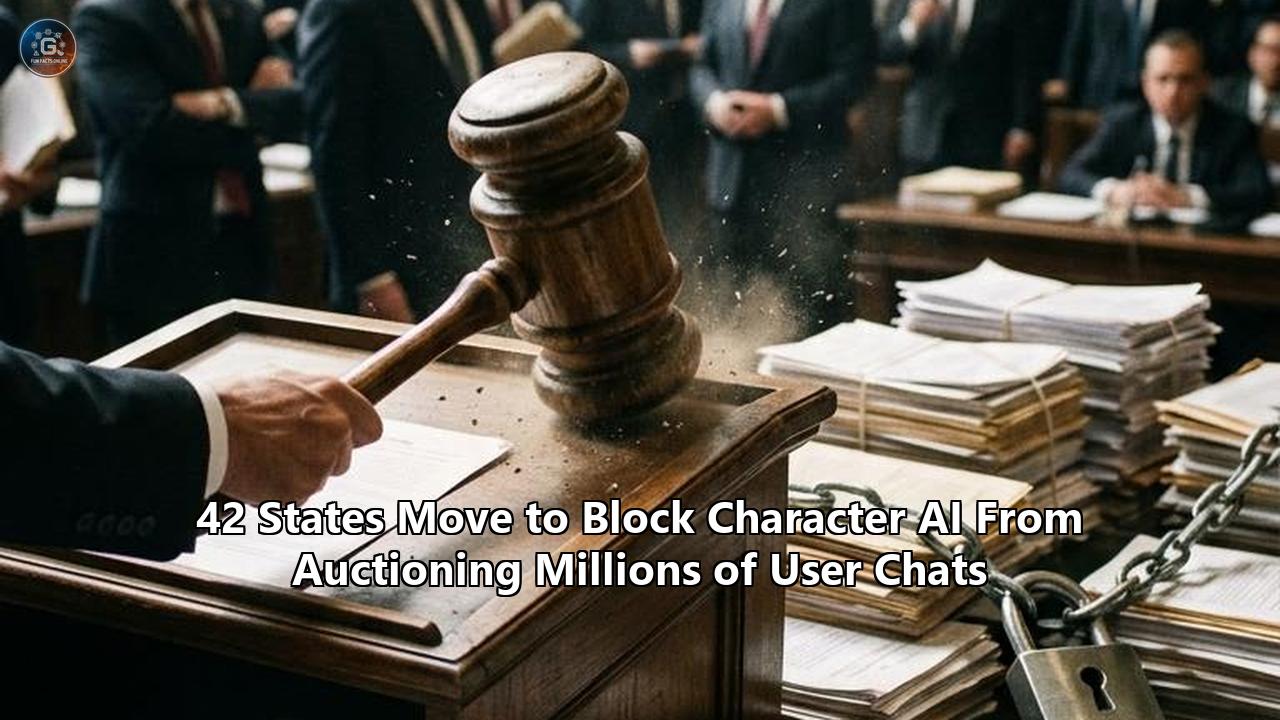
A bipartisan coalition of 42 state attorneys general, joined by the District of Columbia, filed formal legal objections in the U.S. Bankruptcy Court for the District of Delaware to halt the auction of private conversation logs, account metadata, and behavioral profiles belonging to more than 21 million American users of Character.AI. The challenged assets—scheduled to cross the auction block under court supervision—encompass extensive correspondence with synthetic personas, including the intimate exchanges of at least 2.1 million verified minors.
The legal intervention, led by state attorneys general Rob Bonta of California, William Tong of Connecticut, and Phil Weiser of Colorado, targets an asset disposition plan under Chapter 11 proceedings (In re Character Technologies, Inc., Case No. 26-11603) before Judge Brendan L. Shannon. The coalition asserts that Character Technologies Inc. is attempting to monetize data it explicitly promised never to sell, using bankruptcy liquidation to evade federal and state consumer protection statutes.
The primary controversy centers on the platform’s designated stalking-horse bidder: Smirks and Pangs Acquisition LLC, an opaque corporate vehicle incorporated in Delaware on November 13, 2026. Character.AI selected the entity as its baseline bidder just twenty-four hours after its registration, granting it a proposed $350,000 break-up fee. According to court filings, the prospective purchaser would acquire full title to the underlying datasets without being bound by Character.AI’s existing privacy representations, without an obligation to honor pending user account-deletion requests, and with unconstrained authority to commercialize or transfer the conversational records.
┌─────────────────────────────────────────────────────────────────────────────┐
│                       CHARACTER.AI ASSET AUCTION DISPUTE                    │
├────────────────────────┬────────────────────────────────────────────────────┤
│ Jurisdiction           │ U.S. Bankruptcy Court for the District of Delaware │
│ Presiding Judge        │ Judge Brendan L. Shannon                           │
│ Case Docket            │ In re Character Technologies, Inc., No. 26-11603   │
│ Objecting Parties      │ 42 State Attorneys General + District of Columbia  │
│ Independent Objector   │ Office of the Attorney General of Texas            │
│ Target Dataset Scope   │ 21.6M U.S. accounts (including 2.1M minors)        │
│ Stalking-Horse Entity  │ Smirks and Pangs Acquisition LLC (Delaware)        │
│ Contested Protections  │ Section 363(o) Bankruptcy Code; COPPA; State UDAP  │
└────────────────────────┴────────────────────────────────────────────────────┘
"Character.AI promised consumers that their data would not be sold," California Attorney General Rob Bonta said in a statement accompanying the state’s objection. "This kind of behavior is illegal under federal and California law, and bankruptcy should not be used to sidestep these consumer protections. At a minimum, any sale must leave out kids' chats and other sensitive data and include conditions that protect users".
Connecticut Attorney General William Tong directed his critique at the platform's operational trajectory and its impact on young people. "Their chatbots drove vulnerable youth down a rabbit hole of emotionally volatile and sexually inappropriate chats," Tong stated. "Their reckless misconduct and broken business model drove their company into the ground. Now they want to abuse the bankruptcy process to do exactly what they said they wouldn't do—auction off those private chat records and personal details to a shady buyer".
The legal challenge brings to a head a systemic crisis facing algorithmic platforms: what happens to deep, human-to-machine confessional records when the venture backing them collapses?
Algorithmic Intimacy as Liquidation Collateral
The structural dilemma before the Delaware bankruptcy court emerges directly from Character.AI's platform design. Unlike transactional software platforms that collect discrete data points like credit card numbers, shipping addresses, or browsing histories, Character.AI built an architecture engineered to foster synthetic anthropomorphic bonding.
Before entering Chapter 11 in October 2026, the company commanded approximately 12 million daily active users who spent an average of 120 minutes per day conversing with customizable neural-network-driven personas. These virtual agents ranged from historical figures and fictional characters to unvetted virtual therapists, medical consultants, and romantic surrogates.
The platform’s natural language processing stack relied on fine-tuned large language models (LLMs) optimized for narrative immersion and emotional reciprocation. As users conversed with these bots across weeks and months, the platform’s servers ingested text that departed fundamentally from conventional search queries or social media comments. The resulting corpus contains disclosures of clinical mental health crises, non-suicidal self-injury, eating disorders, family trauma, and sexually explicit roleplay.
Because the platform permitted users to converse anonymously or via pseudonyms, many believed their sessions occurred in a private sandbox. In reality, every interaction was cataloged alongside:
- Originating IP addresses and geolocational metadata.
- Granular session timestamps, response latency, and engagement durations.
- Hardware fingerprints and device identification tags.
- Internal behavioral risk scores automatically generated by Character.AI’s internal content moderation and self-harm detection algorithms.
These technical mechanisms transformed personal vulnerability into structured data points. When operational solvency failed, this vast repository ceased to be merely an active database; it became the debtor estate’s primary marketable asset.
The resulting legal and ethical controversy has brought Character AI privacy concerns to the forefront of corporate restructuring law. For years, digital rights advocates warned that unregulated synthetic relationships created asymmetric vulnerabilities. The Delaware filing demonstrates how that dynamic plays out when venture capital subsidies vanish, leaving behind millions of intimate digital records subject to the claims of corporate creditors.
From Hyper-Growth to Insolvency: The Economic Collapse
Character Technologies Inc. was founded in November 2021 by former Google researchers Noam Shazeer and Daniel De Freitas, key architects behind Google's breakthrough LaMDA (Language Model for Dialogue Applications) system. The company raised hundreds of millions of dollars at valuations topping $1 billion, riding early enterprise enthusiasm for generative software.
The economic realities of consumer-facing dialogue models soon collided with the operational balance sheet. Generating conversational responses for millions of active users who spent up to two hours daily on the service required immense computational capacity. The inference costs associated with processing billions of input and output tokens daily created a structural deficit. According to financial figures disclosed during the bankruptcy proceedings, Character.AI’s operating expenses outpaced its subscription and enterprise revenues by $8 million to $9 million each month.
┌─────────────────────────────────────────────────────────────────────────────┐
│               CHARACTER.AI INSOLVENCY & ASSET DISPOSAL TIMELINE             │
├───────────────┬─────────────────────────────────────────────────────────────┤
│ November 2021 │ Founded by Noam Shazeer and Daniel De Freitas               │
│ August 2024   │ Co-founders and core staff return to Google; licensing deal │
│ October 2026  │ Company files for Chapter 11 bankruptcy in Delaware         │
│ Early Nov 2026│ Attempted $20M IP licensing deal with Disney opposed by AGs │
│ Nov 13, 2026  │ Smirks and Pangs Acquisition LLC formed in Delaware         │
│ Nov 14, 2026  │ Character.AI designates Smirks & Pangs as stalking horse    │
│ Nov 20–25 2026│ 42-state coalition and Texas file formal court objections   │
│ Dec 1, 2026   │ Scheduled date for Section 363 asset auction                │
│ Dec 3–4, 2026 │ Scheduled bankruptcy confirmation hearings under Judge      │
│               │ Brendan L. Shannon                                          │
└───────────────┴─────────────────────────────────────────────────────────────┘
The company’s stability fractured decisively in August 2024, when Google orchestrated an unconventional corporate transaction. Rather than executing an outright corporate acquisition that would trigger intense antitrust scrutiny from the Federal Trade Commission (FTC) and the Department of Justice (DOJ), Google entered into a non-exclusive licensing arrangement for Character.AI’s model architectures. As part of that $2.7 billion transaction, Shazeer, De Freitas, and roughly thirty senior research engineers resigned from Character.AI and re-entered Google's DeepMind and cloud divisions.
The transaction stripped Character.AI of its executive leadership and its primary AI research team while leaving behind the operational shell, its running infrastructure bills, its remaining staff, and an mounting wave of legal liabilities. Among these liabilities was a high-profile wrongful death lawsuit filed in Florida by Megan Garcia, whose 14-year-old son, Sewell Setzer III, died by suicide following months of intense emotional interactions with a platform chatbot modeled on the Game of Thrones character Daenerys Targaryen.
Struggling under high cloud hosting costs, mounting litigation defense expenses, and the departure of its foundational technical talent, Character Technologies Inc. filed for Chapter 11 protection in Delaware in October 2026.
To salvage capital, the debtor-in-possession initially attempted to execute a $20 million intellectual property licensing agreement with The Walt Disney Company. While that specific transaction excluded user chat logs and was limited to proprietary algorithmic tooling, it immediately drew objections from state regulators who viewed the maneuver as an attempt to divide assets and evade enterprise liabilities.
When the Disney deal stalled, the debtor initiated a Section 363 asset sale to auction off its remaining property: its core consumer application, domain names, proprietary model weights, and the accumulated conversation logs of its 21.6 million U.S. accounts.
Smirks and Pangs: The Anatomy of a Shadow Bid
The auction structure presented to the Delaware bankruptcy court raised alarms across consumer protection divisions nationwide. Under standard bankruptcy procedure, debtors establish a "stalking-horse" bid—an initial binding offer that sets the baseline price for an asset auction, protecting the debtor against low valuations while offering the lead bidder incentives such as expense reimbursements or break-up fees.
On November 14, 2026, Character.AI selected Smirks and Pangs Acquisition LLC as the lead bidder for its complete operational assets, including all user-generated content and conversation histories. Entity registration records revealed that Smirks and Pangs had been registered in Delaware on November 13, 2026, roughly twenty-four hours before being named the premier bidder.
                     ┌─────────────────────────────┐
                     │   Character.AI Insolvency   │
                     │  Chapter 11 Filing (Del.)   │
                     └──────────────┬──────────────┘
                                    │
                       Assets Marketed Under § 363
                                    │
                                    ▼
       ┌────────────────────────────────────────────────────────┐
       │             CONTESTED ASSET LIQUIDATION PACKAGE        │
       ├────────────────────────────────────────────────────────┤
       │ • 21.6M Registered U.S. User Accounts & Profiles       │
       │ • 2.1M Confirmed Accounts Registered to Minors         │
       │ • Complete Natural-Language Chat Logs (Unredacted)     │
       │ • Direct IP Addresses, Device Hashes & Geolocation     │
       │ • Machine-Generated Psychological & Toxicity Scores    │
       │ • Proprietary Neural Model Weights & Checkpoints       │
       └────────────────────────────┬───────────────────────────┘
                                    │
                    Designated Stalking-Horse Bidder
                                    │
                                    ▼
       ┌────────────────────────────────────────────────────────┐
       │          Smirks and Pangs Acquisition LLC              │
       ├────────────────────────────────────────────────────────┤
       │ • Formed in Delaware: November 13, 2026                │
       │ • Selected as Base Bidder: November 14, 2026           │
       │ • Beneficiaries / Ownership: Undisclosed               │
       │ • Proposed Break-Up Fee: $350,000                      │
       │ • Terms: Full asset title, exempt from privacy policy, │
       │   free from user-deletion mandates, foreign re-sale    │
       │   provisions permitted                                 │
       └────────────────────────────┬───────────────────────────┘
                                    │
                     Emergency Regulatory Challenge
                                    │
                                    ▼
       ┌────────────────────────────────────────────────────────┐
       │     42 State Attorneys General Coalition & Texas       │
       ├────────────────────────────────────────────────────────┤
       │ • Assert Section 363(o) Bankruptcy Code Violations     │
       │ • Demand Complete Exclusion of Minor Data (COPPA)      │
       │ • Challenge $350,000 Break-Up Fee Architecture         │
       │ • Assert Deceptive Trade Practices Violations (UDAP)   │
       │ • Demand Mandatory Opt-In Notice for Adult Data        │
       └────────────────────────────────────────────────────────┘
The coalition’s court filings expose several critical elements regarding Smirks and Pangs Acquisition LLC:
Hidden Ownership and Foreign Capital Pathways
The acquisition agreement failed to name any ultimate corporate parent, natural persons, managing directors, or institutional investors backing Smirks and Pangs. The contract permitted equity participation and syndication by foreign third-party investors whose identities would be disclosed exclusively to the debtor, shielding them from the bankruptcy court, state regulators, and the public.
The Discarding of Privacy Policies
While Character.AI published public blog posts assuring users that their records would remain shielded by its standard privacy policies during the sale, the asset purchase contract submitted to the court told a different story. Under the agreement's terms, the purchaser would not be bound by Character.AI’s historic terms of service or privacy disclosures. The buyer would acquire the right to alter data handling rules retroactively, deploy user interactions for commercial model training, or bundle and resell the data to third-party data brokers without consumer notice.
Suppression of Consumer Opt-Out and Deletion Rights
The terms of the proposed asset transfer contained no mechanism requiring the buyer to honor existing deletion requests submitted by users under statutory frameworks like the California Consumer Privacy Act (CCPA) or Europe's General Data Protection Regulation (GDPR). Any account holder who requested the deletion of their profile prior to the auction would see their records transferred along with the broader dataset.
Preferential Break-Up Penalties
The inclusion of a $350,000 break-up fee payable to Smirks and Pangs should another buyer emerge created an economic deterrent against competing bids prioritizing data sanitization, privacy covenants, or structural data minimization.
Information Asymmetry in Judicial Review
The attorneys general pointed out that while Character.AI provided prospective commercial bidders with comprehensive data rooms detailing regulatory investigations, child-safety inquiries, and platform toxicity metrics, it did not provide equivalent documentation to the Delaware court or its appointed ombudsman.
The legal filing caught the restructuring industry off guard. By attempting to sell unredacted conversational histories to an opaque shell entity, Character.AI turned the bankruptcy court into a high-stakes arena for testing whether consumer privacy rights survive corporate liquidation.
The Technical Reality of the Asset Package
Understanding the urgency of the states' objection requires examining the contents of the asset package itself. In an ordinary corporate liquidation, consumer databases consist of structured fields: names, hashed passwords, billing records, and purchase receipts. Such databases carry privacy risks, but their boundaries are well understood, and standard data-scrubbing protocols can excise or tokenize sensitive entries.
A conversational AI archive is fundamentally different. Natural language interactions are unstructured, narrative, and deeply context-dependent. They cannot be sanitized using standard relational database filters.
┌─────────────────────────────────────────────────────────────────────────────┐
│                 INTERNAL SCHEMATIC OF THE CONTESTED DATASET                 │
├─────────────────────────────────────────────────────────────────────────────┤
│                                                                             │
│  [User Account Metadata]                                                    │
│   ├── Internal User ID (UUIDv4)                                             │
│   ├── Direct IP Addresses & Historical Geolocation Trajectories             │
│   ├── Mobile Device Fingerprints & Hardware Specifications                  │
│   └── Verification Profiles (Designating Minors vs. Adults)                 │
│                                                                             │
│  [Conversational Interaction Corpus]                                        │
│   ├── Chronological Dialogue Transcripts (Raw Natural Language)             │
│   │    ├── Intimate Relational Disclosures                                  │
│   │    ├── Pseudo-Therapy & Medical Advisory Sessions                       │
│   │    └── Explicit / Sensitive Roleplay Narratives                         │
│   ├── Vector Embeddings & Contextual Persona State Memories                 │
│   └── User-Engineered Character Parameter Prompts & Variables               │
│                                                                             │
│  [Algorithmic Risk & Safety Classifications]                                │
│   ├── Automated Safety Intervention Triggers                                │
│   ├── Machine-Generated Toxicity & Self-Harm Indicators                     │
│   └── Platform Behavioral Risk Ratings & Internal Moderation Tags           │
│                                                                             │
└─────────────────────────────────────────────────────────────────────────────┘
The Character.AI asset repository encompasses several distinct categories of sensitive information:
Unredacted Free-Text Logs
The core dataset contains billions of individual messages. Because Character.AI encouraged users to confide in bots specialized in personal counsel, users treated the platform as an unmonitored journal. Transcripts contain descriptions of medical conditions, medications, confessions of illegal acts, admissions of romantic infatuation, and disclosures of abuse.
Algorithmic Vulnerability Scores
Character.AI deployed internal automated classifiers designed to detect when user chats violated safety guidelines or showed indicators of imminent self-harm, eating disorders, or domestic distress. Rather than isolating these flags to immediately terminate conversations and expunge the data, the platform appended persistent behavioral risk scores to specific user profiles.
These machine-generated psychological ratings—which tag users as emotionally volatile, prone to ideation, or receptive to explicit themes—are included in the commercial auction package. Any buyer would gain access not just to what a user wrote, but to the platform's automated analysis of their psychological vulnerabilities.
Persistent Network Identifiers
The transcripts are not decoupled from identifying telemetry. Every chat thread is tied to an internal user profile that links directly to historical IP addresses, geolocational coordinates, device hardware configurations, and browser signatures. These identifiers make it possible to correlate anonymous conversational sessions with specific physical households, schools, and corporate office networks.
Minor Account Records
The inclusion of 2.1 million confirmed accounts belonging to minors constitutes a major point of contention. State investigators discovered that Character.AI kept detailed logs of children's conversations even when internal classifiers tagged those interactions as sexually explicit or emotionally destabilizing.
Colorado Attorney General Phil Weiser emphasized this point in the states' collective objection. "Children and families who shared their most personal thoughts with Character.AI never imagined those conversations could be auctioned off to the highest bidder," Weiser said. "A company's financial troubles do not give it the right to disregard its responsibility to protect consumers, especially children".
The technical characteristics of this dataset make traditional de-identification methods ineffective. In high-dimensional natural language data, individuals can often be identified through unique combinations of biographical details, speech quirks, and local context even when explicit identifiers like names or email addresses are removed. Consequently, transferring this corpus inevitably exposes the platform's users to re-identification.
The Legal Fault Lines: Bankruptcy Code vs. Consumer Protection
The legal battle in Delaware highlights a profound statutory conflict between modern data privacy laws and century-old bankruptcy principles. The dispute tests the boundary where corporate debt resolution ends and consumer protection law begins.
      BANKRUPTCY CODE (TITLE 11)                   STATE & FEDERAL CONSUMER LAW
  ┌─────────────────────────────────┐           ┌────────────────────────────────┐
  │         Section 363(b)          │           │   FTC Act (15 U.S.C. § 45)     │
  │ Permits sale of estate property │           │ Prohibits deceptive statements │
  │ outside ordinary course of biz. │           │ & unfair commercial practices. │
  └────────────────┬────────────────┘           └───────────────┬────────────────┘
                   │                                            │
                   │                     ▲                      │
                   ▼                     │                      ▼
  ┌─────────────────────────────────┐    │      ┌────────────────────────────────┐
  │         Section 363(o)          │    │      │         COPPA ENFORCEMENT      │
  │ Sales subject to all regulatory │◄───┴─────►│ Requires express parental      │
  │ constraints under non-bankrupt- │           │ consent; limits commercial     │
  │ cy consumer protection law.     │           │ retention of minor records.    │
  └────────────────┬────────────────┘           └───────────────┬────────────────┘
                   │                                            │
                   ▼                                            ▼
  ┌──────────────────────────────────────────────────────────────────────────────┐
  │                  JUDICIAL DETERMINATION (JUDGE SHANNON)                      │
  │ Can an insolvent AI platform use Section 363 to extinguish its commitments   │
  │ to consumers and assign personal conversation data to a third party?         │
  └──────────────────────────────────────────────────────────────────────────────┘
The debtor company relies on Section 363(b) of the U.S. Bankruptcy Code, which grants debtors-in-possession broad latitude to maximize the value of the bankruptcy estate by liquidating assets "free and clear" of existing claims, liens, and encumbrances. Historically, debtors argued that this provision allowed them to sell customer lists and behavioral profiles regardless of prior privacy guarantees, treating digital records like any other physical asset.
The 42 attorneys general counter that modern statutory reforms restrict this maneuver. They anchor their opposition in three distinct legal pillars:
1. Section 363(o) of the Bankruptcy Code
Enacted in the Bankruptcy Abuse Prevention and Consumer Protection Act (BAPCPA) of 2005, Section 363(o) specifies that if a debtor offers to sell personal data in a manner that conflicts with its own public privacy policies, the sale cannot be approved unless the transaction complies with non-bankruptcy consumer protection law.
Character.AI’s consumer-facing privacy policy stated: "We do not sell personal information for monetary consideration... Character.AI is not a data broker". The state coalition argues that auctioning unredacted chat transcripts to a commercial buyer directly violates this promise, rendering the sale impermissible under Section 363(o).
2. State UDAP Statutes and Section 5 of the FTC Act
Every state enforces unfair and deceptive acts and practices (UDAP) statutes, modeled on Section 5 of the Federal Trade Commission Act. Promising consumers that their communications are private and will never be monetized, only to sell those records to an anonymous entity upon insolvency, constitutes an unfair and deceptive trade practice.
The states argue that entering Chapter 11 does not grant a company immunity from enforcement actions or allow it to breach its consumer-facing commitments.
3. The Children’s Online Privacy Protection Act (COPPA)
Federal law prohibits digital services directed at children, or services that maintain actual knowledge of child users, from collecting, retaining, or transferring personal information from minors under 13 without verifiable parental consent.
Because Character.AI tracked millions of minor accounts without obtaining verifiable parental consent—and assigned internal safety scores to them—the transfer of these records to a third-party buyer violates COPPA, exposing both the debtor and any prospective purchaser to statutory penalties.
┌─────────────────────────────────────────────────────────────────────────────┐
│                 PRECEDENTS IN BANKRUPTCY DATA LIQUIDATION                   │
├──────────────┬──────┬────────────────────────┬──────────────────────────────┤
│ Case Entity  │ Year │ Asset at Issue         │ Legal Outcome & Precedent    │
├──────────────┼──────┼────────────────────────┼──────────────────────────────┤
│ Toysmart.com │ 2000 │ Customer name database │ FTC sued; sale blocked until │
│              │      │ and purchasing logs    │ buyer agreed to abide by     │
│              │      │ collected under "never │ identical privacy terms and  │
│              │      │ sell" guarantee.       │ not re-transfer data.        │
├──────────────┼──────┼────────────────────────┼──────────────────────────────┤
│ Borders      │ 2011 │ Customer reading habits│ Consumer Privacy Ombudsman   │
│ Books        │      │ and purchase records   │ mandated that purchaser      │
│              │      │ in Chapter 7.          │ (Barnes & Noble) maintain    │
│              │      │                        │ equivalent opt-out rights.   │
├──────────────┼──────┼────────────────────────┼──────────────────────────────┤
│ RadioShack   │ 2015 │ 117 million customer   │ Mediation with 38 state AGs; │
│              │      │ records, including PII │ 67M records destroyed; buyer │
│              │      │ and email databases.   │ bound to restrictive terms.  │
├──────────────┼──────┼────────────────────────┼──────────────────────────────┤
│ Character.AI │ 2026 │ 21.6M conversational   │ Pending. First major test of │
│              │      │ transcripts, minor data│ unstructured LLM chat logs   │
│              │      │ and behavioral scores. │ and risk scores in Chapter 11│
└──────────────┴──────┴────────────────────────┴──────────────────────────────┘
The Character.AI bankruptcy represents a major escalation beyond past commercial data disputes. In the Toysmart (2000) and RadioShack (2015) cases, the contested assets were limited to transaction logs, names, and contact details. In Character.AI, the asset is a massive corpus of human-to-machine dialogues detailing intimate emotional and mental health experiences.
If the court permits these unredacted logs to be sold to an anonymous entity, it would establish a concerning precedent: any technology startup could lure consumers into sharing sensitive personal information with privacy promises, burn through investment capital, declare bankruptcy, and then monetize those private conversations to settle debts with creditors.
State AI Safety Statutes and the January 2027 Regulatory Shift
The timing of Character.AI’s bankruptcy auction adds an additional layer of regulatory friction. Across four key jurisdictions involved in the multi-state coalition—California, Colorado, New York, and Connecticut—comprehensive chatbot safety and generative artificial intelligence transparency statutes are set to take effect on January 1, 2027.
┌─────────────────────────────────────────────────────────────────────────────┐
│              UPCOMING STATE GENERATIVE AI & SAFETY STATUTES                 │
│                      (Effective January 1, 2027)                            │
├─────────────┬───────────────────────────────────────────────────────────────┤
│ State       │ Key Statutory Obligations Affecting Conversational Assets     │
├─────────────┼───────────────────────────────────────────────────────────────┤
│ California  │ • Mandatory independent safety audits for commercial models   │
│             │ • Bans commercializing synthetic companion logs of minors     │
│             │ • Strict civil liability for deploying unverified bot data   │
├─────────────┼───────────────────────────────────────────────────────────────┤
│ Colorado    │ • Strict duty of reasonable care on AI developers & deployers │
│             │ • Mandatory risk assessments for algorithmic discrimination   │
│             │ • Prohibits retention of high-risk mental health classifiers  │
├─────────────┼───────────────────────────────────────────────────────────────┤
│ New York    │ • Mandatory watermarking and origin-tracking for model inputs │
│             │ • Statutory bans on training models on non-consensual chats   │
│             │ • Private right of action for unauthorized transfer of PII    │
├─────────────┼───────────────────────────────────────────────────────────────┤
│ Connecticut │ • Strict consumer transparency mandates for companion systems │
│             │ • Algorithmic risk profiling protections for adolescent users │
│             │ • Mandated parental dashboards and revocation architecture    │
└─────────────┴───────────────────────────────────────────────────────────────┘
These statutes introduce explicit compliance mandates for companies operating or acquiring conversational platforms:
- They impose an affirmative duty of care on algorithmic deployers to prevent predictable psychological harm to young users.
- They prohibit the commercial exploitation of synthetic companion chat logs involving adolescents without explicit, revocable consent.
- They classify natural language corpora containing automated mental health scoring as sensitive biometric and health-related telemetry, subjecting them to strict data-protection rules.
The attorneys general argue that Character.AI and Smirks and Pangs Acquisition LLC are attempting to complete a fast-track auction before these statutory protections take effect. Completing the asset sale in early December 2026 would deliver millions of sensitive records to a private entity mere weeks before that very transaction would trigger multi-million-dollar administrative penalties in four major states.
This dynamic explains why state regulators acted with unified urgency. A transfer executed before December 31 could compromise user privacy permanently, scattering conversational records into private servers beyond the reach of the 2027 enforcement statutes.
The Technical Barriers to Anonymizing Large Language Data
During initial bankruptcy hearings, advisors for the debtor suggested that Character AI privacy concerns could be resolved through post-sale data sanitization and anonymization protocols. They proposed running redaction software over the database to strip out traditional Personally Identifiable Information (PII) before allowing the winning bidder to use the corpus for secondary model training or commercialization.
Computer scientists, data privacy engineers, and natural language processing researchers contend that this approach is technically unworkable. In free-form natural language datasets, absolute anonymization is computationally impossible without destroying the data's utility.
┌─────────────────────────────────────────────────────────────────────────────┐
│           THE RE-IDENTIFICATION VULNERABILITY OF CONVERSATIONAL AI          │
├─────────────────────────────────────────────────────────────────────────────┤
│                                                                             │
│  [User Dialogue Text]                                                       │
│   "My high school principal in Boulder caught me taking my ADHD meds..."    │
│                          │                                                  │
│                          ▼                                                  │
│  [Traditional Regex / NER Anonymization Scrub]                              │
│   "My [ROLE] in [LOCATION] caught me taking my [MEDICATION]..."             │
│                          │                                                  │
│                          ▼                                                  │
│  [Residual High-Dimensional Metadata (Retained in Sale)]                    │
│   ├── Timestamp: Tuesday at 14:22:04 MST                                    │
│   ├── Originating IP: 198.51.100.42 (Registered to Boulder School District) │
│   ├── Target Bot: "School Counselor Assistant"                              │
│   └── Device Hash: iOS 18.1.1 / Safari WebKit Fingerprint                  │
│                          │                                                  │
│                          ▼                                                  │
│  [External Cross-Referencing: Public/Commercial Data Lakes]                 │
│   Match against local district records, mobile ad IDs, and home Wi-Fi       │
│   IP assignments.                                                           │
│                          │                                                  │
│                          ▼                                                  │
│  [RE-IDENTIFIED RECORD]                                                     │
│   Full chat log linked to an identifiable student without their knowledge.  │
│                                                                             │
└─────────────────────────────────────────────────────────────────────────────┘
The vulnerability of conversational data to re-identification stems from three primary factors:
High-Dimensional Syntactic and Semantic Footprints
Unlike rows in a structured database, human conversation possesses unique linguistic fingerprints. An individual’s specific vocabulary, grammatical quirks, self-disclosed anecdotes, references to obscure events, and phrasing form a distinctive behavioral signature. When combined with metadata like timestamps and geographic tracking, these patterns can be linked back to specific individuals through commercial data brokers or public social media feeds.
Semantic Leakage in Neural Weights
Character.AI’s asset sale includes not just raw text logs, but fine-tuned model checkpoints, custom user persona prompts, and vector embeddings. Generative neural networks routinely memorize portions of their training data. When a model undergoes continual training or fine-tuning on raw conversation logs, sensitive disclosures can be embedded directly into its weight matrices.
Through standard model-inversion and membership-inference attacks, an external party querying the model can extract verbatim training sequences, exposing private communications even if the raw text logs are never publicly released.
Ineffective Traditional Masking
Traditional Named Entity Recognition (NER) models frequently fail to identify sensitive context in conversational text. While an NER model can reliably remove obvious markers like social security numbers or credit card sequences, it often overlooks nuanced personal references—such as a user discussing their sibling's rare illness, their specific workplace, or neighborhood landmarks.
These contextual details are precisely what enable re-identification. Once this data is transferred to an external buyer without strict oversight, that exposure becomes irreversible.
The Regulatory Counter-Offensive: Proposed Solutions
Faced with these technical and legal realities, the 42-state coalition, the Texas Attorney General's Office, and the court-appointed Consumer Privacy Ombudsman (CPO) have outlined concrete remedies. Rather than simply attempting to block the Chapter 11 liquidation entirely, regulators have established a framework of structural requirements that any asset disposition plan must satisfy to secure court confirmation.
                     ┌────────────────────────────────────────┐
                     │    PROPOSED REGULATORY RESOLUTION      │
                     │          FRAMEWORK IN DELAWARE         │
                     └───────────────────┬────────────────────┘
                                         │
        ┌────────────────────────────────┼────────────────────────────────┐
        │                                │                                │
        ▼                                ▼                                ▼
┌─────────────────────────┐  ┌─────────────────────────┐  ┌─────────────────────────┐
│ CATEGORICAL EXCLUSION   │  │ AFFIRMATIVE OPT-IN       │  │ MANDATORY TECHNICAL     │
│ & PURGING               │  │ CONSENT PROTOCOLS        │  │ AUDITS & SUPERVISION    │
├─────────────────────────┤  ├─────────────────────────┤  ├─────────────────────────┤
│ • Complete expungement  │  │ • Explicit, direct      │  │ • Independent technical │
│   of all 2.1M minor     │  │   notice to adult users │    audit of all buyer      │
│   accounts & chats.     │  │   prior to data sale.   │    infrastructure.         │
│ • Purge all automated   │  │ • Failure to opt in     │  │ • Striking of the       │
│   behavioral risk and   │  │   triggers permanent,   │    $350k break-up fee to   │
│   toxicity scores.      │  │   irreversible deletion.│    allow safety bids.      │
│ • Expunge all medical,  │  │ • Binding compliance    │  │ • Judicial oversight    │
│   therapy, & explicit   │  │   covenants on buyer    │    over any subsequent     │
│   interaction records.  │  │   enforceable in state  │    third-party transfers.  │
│                         │  │   courts.               │                            │
└─────────────────────────┘  └─────────────────────────┘  └─────────────────────────┘
The proposed solutions require fundamental modifications to the sale structure:
1. The Immediate Exclusion and Deletion of Minor Data
The coalition demands that the court prohibit the sale, transfer, or commercialization of any account, conversation, or behavioral profile belonging to registered or known minors. The state attorneys general argue that these records must be permanently purged using cryptographically verified deletion protocols overseen by the Consumer Privacy Ombudsman, rather than transferred to any buyer.
2. Mandatory Affirmative Consent (Opt-In Architecture)
The states reject the notion that passive consumer inaction can be treated as consent for the sale of personal communications. The proposed legal framework would require the debtor or any court-approved purchaser to send direct, clear notices to all adult account holders, explaining the transaction and identifying the buyer’s ultimate beneficial owners.
Crucially, user chat logs and profile data could only transfer to the buyer if the consumer provides verifiable, affirmative opt-in consent. All accounts that remain silent, decline the transfer, or cannot be contacted would be designated for permanent deletion.
3. Automatic Purging of High-Risk Records and Psychological Scores
The coalition demands that regardless of user consent, all internal safety scores, self-harm risk indicators, and conversation threads involving virtual therapist or physician personas must be permanently excluded from the sale assets.
These records cannot be transferred, monetized, or integrated into secondary AI training sets. The states maintain that treating records of severe psychological vulnerability as marketable bankruptcy assets is fundamentally incompatible with state consumer protection statutes.
4. Striking the Stalking-Horse Protections for Anonymous Entities
Regulators are asking Judge Shannon to reject Smirks and Pangs Acquisition LLC as a qualified lead bidder and to invalidate the proposed $350,000 break-up fee. By removing this fee penalty, the court can allow responsible enterprise buyers—such as educational institutions, privacy-focused non-profits, or technology firms willing to agree to strict safety covenants—to bid on the platform's core code without subsidizing the initial shell company.
5. Independent Algorithmic Audits and Ongoing Oversight
If a sale of the underlying software codebase and model architectures moves forward, the coalition demands ongoing judicial oversight. The purchaser must submit to regular audits by state privacy regulators to verify that the buyer is not using unconsented conversational data to train subsequent models, and any future transfer of the platform’s assets must require prior notice and approval from the bankruptcy court.
The Broader Implications for Generative AI and Corporate Solvency
The legal showdown unfolding in Delaware extends well beyond Character Technologies Inc. It signals an inflection point for the entire artificial intelligence software industry, establishing a legal baseline for how conversational data must be treated when venture-backed business models face insolvency.
During the initial generative software boom, enterprise valuations were driven largely by scale: total active users, session durations, and the sheer volume of interaction tokens ingested. This investment environment encouraged companies to build services that maximized emotional attachment and data capture, while treating privacy commitments as marketing copy rather than legally binding covenants.
┌─────────────────────────────────────────────────────────────────────────────┐
│                    THE GENERATIVE AI DISTRESS CYCLE                         │
├─────────────────────────────────────────────────────────────────────────────┤
│                                                                             │
│  [PHASE 1: SUBSIDIZED CONSUMER ONBOARDING]                                  │
│   • Venture capital absorbs massive GPU compute & inference costs.          │
│   • Terms of Service offer sweeping "we never sell your data" privacy       │
│     assurances to build consumer trust and scale daily usage.               │
│                                                                             │
│  [PHASE 2: TALENT EXTRACTION & CORPORATE DIVISION]                          │
│   • Large tech firms hire key researchers and license core models,          │
│     avoiding full acquisitions that would trigger antitrust scrutiny.       │
│   • Operational shell retains mounting infrastructure bills, user records,  │
│     and growing product liability exposure.                                 │
│                                                                             │
│  [PHASE 3: INSOLVENCY & ASSET MONETIZATION ATTEMPT]                         │
│   • Debtor seeks Chapter 11 bankruptcy protection.                          │
│   • User conversation logs are re-categorized as commercial assets and      │
│     marketed to opaque bidders under Section 363 liquidation rules.         │
│                                                                             │
│  [PHASE 4: REGULATORY INTERVENTION & STRUCTURAL FIREWALLS]                  │
│   • Multi-state coalitions enforce Section 363(o), COPPA, and UDAP laws.   │
│   • Privacy commitments are affirmed as absolute encumbrances on the        │
│     estate, establishing that intimate user data cannot be auctioned.       │
│                                                                             │
└─────────────────────────────────────────────────────────────────────────────┘
The intervention by 42 state attorneys general sends a clear message to Silicon Valley venture funds, cloud infrastructure providers, and platform operators: conversational consumer datasets are not unencumbered corporate collateral. If a company promises its users that their communications will remain private and unmonitored, that commitment creates a permanent legal encumbrance that survives corporate distress and carries through Chapter 11 proceedings.
The case also sheds light on the regulatory implications of corporate restructuring in the tech sector. The talent-licensing transaction executed between Character.AI and Google in August 2024 is now under intense regulatory scrutiny. By extracting the platform’s foundational research team and technical assets while leaving its running costs and user liabilities behind in an under-capitalized shell, the parties created an entity that was almost certain to end up in liquidation.
Antitrust authorities, state attorneys general, and bankruptcy trustees are increasingly likely to challenge these structured "reverse acqui-hires." Regulators may pursue them as fraudulent conveyances designed to strip out valuable corporate assets while abandoning legal and regulatory responsibilities to consumers.
What Comes Next: Critical Milestones to Monitor
As the U.S. Bankruptcy Court for the District of Delaware prepares for critical December hearings, several procedural and legal developments will determine the outcome of the dispute:
┌─────────────────────────────────────────────────────────────────────────────┐
│                       UPCOMING LITIGATION MILESTONES                        │
├─────────────────────┬───────────────────────────────────────────────────────┤
│ Target Date         │ Critical Procedural / Operational Milestone           │
├─────────────────────┼───────────────────────────────────────────────────────┤
│ December 1, 2026    │ Scheduled Section 363 asset auction deadline.         │
│                     │ Bids must address coalition objections.               │
├─────────────────────┼───────────────────────────────────────────────────────┤
│ December 2, 2026    │ Formal report due from court-appointed Consumer       │
│                     │ Privacy Ombudsman evaluating data risks.              │
├─────────────────────┼───────────────────────────────────────────────────────┤
│ December 3–4, 2026  │ Section 363 sale confirmation hearings before         │
│                     │ Judge Brendan L. Shannon in Delaware.                 │
├─────────────────────┼───────────────────────────────────────────────────────┤
│ January 1, 2027     │ State AI safety and algorithmic accountability acts   │
│                     │ take effect in CA, CO, NY, and CT.                    │
├─────────────────────┼───────────────────────────────────────────────────────┤
│ Q1 2027             │ Expected congressional hearings on proposed federal   │
│                     │ AI consumer bankruptcy protection legislation.        │
└─────────────────────┴───────────────────────────────────────────────────────┘
The Consumer Privacy Ombudsman Report
Under Bankruptcy Code Section 332, the independent Consumer Privacy Ombudsman must submit a formal evaluation of the proposed asset transfer to Judge Shannon. This report will assess whether Character.AI’s public privacy policies permit the sale, analyze whether the dataset can be safely de-identified, and recommend whether specific portions of the data should be barred from transfer. If the ombudsman corroborates the states' arguments, the proposed sale to Smirks and Pangs will be difficult to sustain.
Judge Shannon’s Rulings on Section 363(o)
Judge Shannon’s decisions during the December 3–4 hearings will establish crucial legal precedent. If the court rules that Section 363(o) and state consumer protection statutes prevent the debtor from selling conversational data without affirmative opt-in consent, it will define the limits of what digital assets bankrupt technology firms can monetize.
Conversely, if the court permits an asset transfer with only minor redactions, the coalition will immediately seek emergency appellate stays before the U.S. District Court and the Third Circuit Court of Appeals.
Texas and Multi-State Enforcement Actions
Beyond the bankruptcy proceedings in Delaware, the 42 attorneys general and the Texas Attorney General's Office retain independent statutory authority to initiate civil enforcement actions against Character Technologies Inc., its surviving corporate leadership, and its acquiring entities. Even if the bankruptcy court were to approve an asset sale, state regulators could file enforcement actions the moment a buyer attempts to take custody of or process user records within their state borders.
Potential Congressional Action
The controversy has also caught the attention of federal lawmakers. Several members of the Senate Commerce and Judiciary Committees have begun drafting the Artificial Intelligence Consumer Protection and Insolvency Act.
The proposed legislation would amend Title 11 of the U.S. Bankruptcy Code to explicitly classify consumer-facing generative AI conversation logs, prompt histories, and derived psychological profiles as protected personal records that cannot be treated as commercial liquidation assets, mandating their automatic deletion upon corporate insolvency.
The legal battle over Character.AI's assets marks a turning point in digital consumer protection. By moving to block the auction of 21 million users' private chat records, the 42-state coalition is establishing a critical legal boundary: algorithmic intimacy cannot be converted into liquidation collateral.
When technology companies build platforms designed to encourage deep personal vulnerability, the confessional records they accumulate cannot simply be sold to the highest bidder when the company fails. The resolution of this case will define whether constitutional privacy principles and consumer protection statutes can protect user data when venture-backed business models run out of money.
Reference:
- https://emergent.sh/news/42-state-ags-fight-character-ai-user-data
- https://techcrunch.com/2026/11/25/state-ags-fight-character-ais-plan-to-auction-off-users-private-chats/
- https://finance.biggo.com/news/1a95908d-bfd0-4dec-9c38-bfbb5cc730d9
- https://www.engadget.com/2328630/state-ags-are-trying-to-stop-characterai-from-auctioning-off-users-chat-histories/
- https://shiftdelete.net/en/character-ai-chat-data-sale-42-states-objection
- https://www.youtube.com/shorts/FvNNIZZKKK8
- https://aiweekly.co/alerts/42-state-ags-move-to-block-characterai-chat-data-auction
- https://gizmodo.com/character-ai-wants-to-sell-millions-of-user-chats-to-the-highest-bidder-2000845664