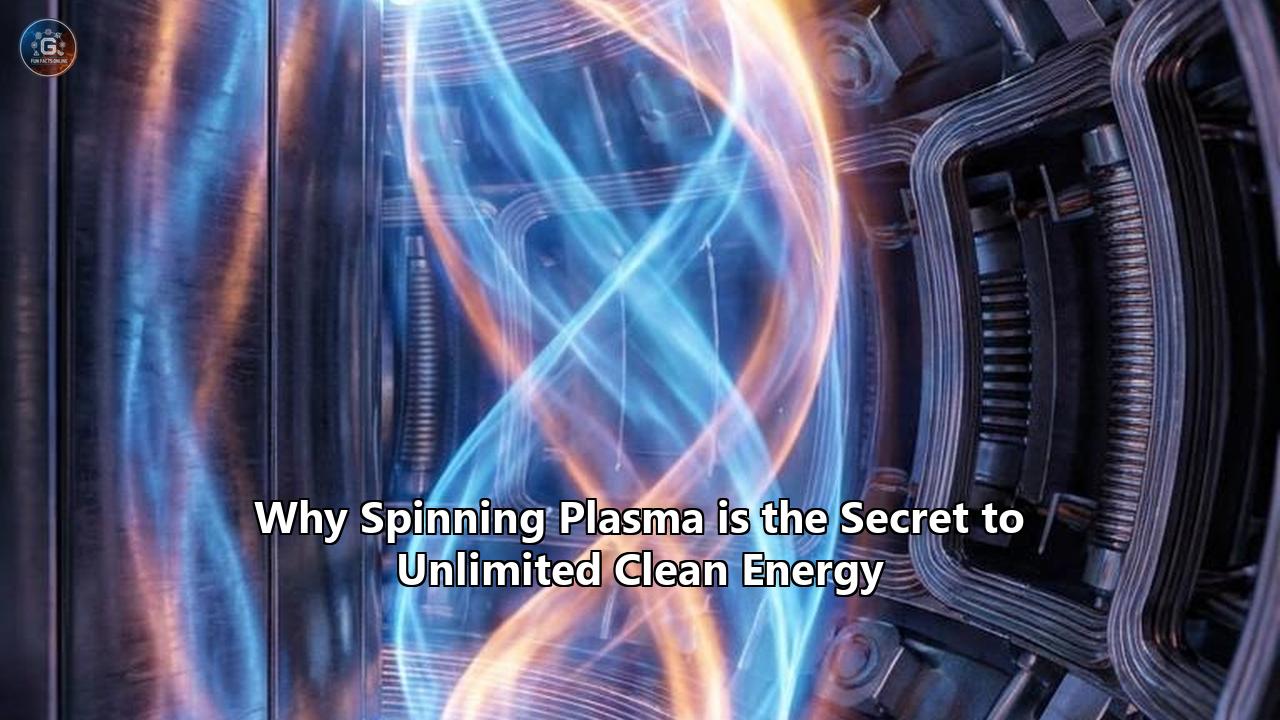
The Geometry of Confinement and the Rebellion of Fluids
Containing a star inside a steel cage is a problem of fluid rebellion. When you heat isotopes of hydrogen to temperatures exceeding 100 million degrees Celsius, the electrons are violently stripped from their nuclei. This creates a highly energetic, electrically charged soup known as a plasma. Because it possesses an electrical charge, this fluid can be manipulated by magnetic fields. The standard approach to nuclear fusion for the past sixty years has been to weave an invisible magnetic basket to hold this plasma suspended in a vacuum, preventing it from touching the physical walls of the reactor.
But plasmas are stubbornly uncooperative.
When squeezed by external magnetic fields, the plasma pushes back. It writhes, bends, and distorts the very magnetic lines meant to contain it. Physicists refer to these macroscopic distortions as Magnetohydrodynamic (MHD) instabilities. Some of the most notorious are the "kink" instability, where the plasma column suddenly buckles like a bent garden hose, and the "sausage" instability, where the plasma pinches inward at certain points, snapping the magnetic field lines and violently ejecting its heat against the reactor walls.
For decades, the mainstream solution has been to build increasingly massive, superconducting magnetic coils to simply overpower the plasma through brute force. This approach led to the creation of the modern tokamak, a gargantuan, donut-shaped machine that requires billions of dollars and decades of construction to realize. Even in these massive devices, micro-turbulence—tiny, chaotic eddies within the plasma—acts like a sponge, soaking up heat from the dense core and transporting it outward to the cooler edges.
The underlying issue is static confinement. Trying to squeeze a stationary plasma is like trying to squeeze a water balloon with your bare hands; the fluid always finds the path of least resistance and escapes through the gaps between your fingers.
However, over the last several years, experimental physicists and mechanical engineers have shifted their focus toward a dynamic, rather than static, solution. They realized that the universe does not confine matter using static cages. Galaxies, solar systems, and black hole accretion disks maintain their structure and stability through angular momentum. By forcing the plasma to rotate at supersonic speeds, researchers have discovered a mechanism to stiffen the magnetic field lines, suppress microscopic turbulence, and plug the leaks that have plagued fusion research for half a century. Understanding why spinning plasma clean energy is transitioning from a theoretical footnote to the primary engineering pathway for several leading fusion startups requires examining the precise physics of rotational confinement.
Gyroscopic Stabilization: The Physics of Rotational Confinement
To understand how rotation stabilizes a charged fluid, we must first look at a classical mechanical phenomenon: gyroscopic stabilization.
If you take a bicycle wheel by its axle and attempt to twist it while it is stationary, it yields immediately to your force. If you spin that same wheel at a high velocity, it suddenly exhibits an eerie, rigid resistance to any twisting motion. This is the conservation of angular momentum. A spinning object resists any torque applied perpendicular to its axis of rotation.
When a plasma is forced to rotate, it behaves similarly. The entire fluid column gains angular momentum, creating a macroscopic rigidity. If an MHD instability attempts to kink the plasma, the gyroscopic forces oppose the deformation. The magnetic field lines embedded within the plasma are stretched tight by the rotational motion, effectively creating a stiff "backbone" that resists buckling.
But rotation does more than just stop the plasma from bending; it also fundamentally alters the microscopic turbulence that leaks heat. This is achieved through a mechanism known as "flow shear suppression of turbulence."
In a rotating plasma column, the fluid does not spin at a single, uniform speed like a solid record. Instead, the plasma closest to the outer edge spins at a different velocity than the plasma in the dense core. This creates a gradient of velocity, or "shear flow," between adjacent layers of the fluid.
Imagine dropping a spot of dye into a flowing river. If the river flows at exactly the same speed across its entire width, the dye spreads out evenly in a perfect circle. But if the water in the center of the river is flowing much faster than the water near the banks, the circle of dye is immediately stretched, smeared, and torn apart into a long, thin line.
In a fusion reactor, the "dye" represents a turbulent eddy—a swirling vortex of heat that normally transports energy away from the core. When the plasma is spinning with a strong velocity gradient, these eddies are physically ripped apart by the shear flow before they can grow large enough to move significant amounts of heat. The rotation effectively shears the turbulence to pieces, creating a highly insulated core where fusion temperatures can be maintained with significantly less input power.
We know this works because it has been observed in conventional tokamaks. In the early 2000s, experiments conducted at the DIII-D National Fusion Facility by Columbia University physicists, including Gerald Navratil and Andrea Garofalo, demonstrated that injecting neutral beams to make a tokamak plasma spin allowed the reactor to sustain pressures almost twice as high as the conventional limit. The wall of the reactor acts like a superconductor in the frame of the spinning plasma, generating image currents that actively push back against magnetic distortions.
However, sustaining this spin in a traditional tokamak is incredibly difficult. The plasma experiences "magnetic braking" from tiny imperfections in the magnetic field, dragging it to a halt unless complex active control coils constantly smooth out the field. As a result, a new wave of fusion designs has emerged—architectures built from the ground up to utilize rotation not as a secondary feature, but as the foundational principle of their confinement.
The Centrifugal Mirror: Throwing Particles to the Equator
One of the most elegant applications of rotation is the Centrifugal Mirror concept. To understand this design, we have to revisit an old fusion architecture called the magnetic mirror.
A simple magnetic mirror consists of a linear tube with strong electromagnets at both ends. The magnetic field lines are straight in the middle but bunch together tightly at the poles. As a charged particle travels down the tube and hits the tightly bunched magnetic lines at the end, it is reflected backward—hence the name "mirror."
The problem with classical magnetic mirrors is the "loss cone." If a particle is moving too perfectly straight down the center axis, it ignores the mirror effect entirely and shoots right out the end of the machine. Over time, all the highest-energy particles leak out the poles, dropping the temperature below the threshold required for fusion.
The Centrifugal Mirror Fusion Experiment (CMFX) at the University of Maryland, Baltimore County (UMBC), led by Carlos Romero-Talamas, solves this leakage problem by making the entire plasma spin.
Supported by a multi-million dollar grant from the Department of Energy's ARPA-E BETHE program, the UMBC team built a linear reactor using three decommissioned, low-cost MRI magnets to create the mirror field. Down the precise center of this magnetic tube, they placed a high-voltage central rod (a cathode), while outer electrode rings act as the anode.
When millions of volts are applied between the central rod and the outer edge, it creates an intense radial electric field. The plasma sits in a space where it feels both this radial electric field and the axial magnetic field. In plasma physics, when a charged particle is subjected to an electric field (E) and a magnetic field (B) at right angles to each other, it undergoes what is called an E x B drift (pronounced "E cross B"). The particle doesn't move directly toward the electrode; instead, it is forced to move perpendicularly to both fields.
Because the reactor is a cylinder, this perpendicular drift forces the particles to race around the central axis. The entire plasma column is whipped into a supersonic azimuthal rotation.
This is where the magic of the centrifugal mirror happens. As the plasma spins at supersonic speeds, centrifugal force takes over. Just like riders pinned against the wall of a spinning carnival centrifuge, the heavy hydrogen ions are thrown outward toward the "equator" of the magnetic field (the widest part of the tube).
Because the particles are being continuously pushed toward the center midplane by centrifugal force, they are physically prevented from wandering near the poles where the loss cone exists. The spin effectively plugs the leaks. The rotation stabilizes the plasma, heats it through internal friction, and centrifugally confines it away from the ends.
In May 2025, researchers on the CMFX published diagnostics measuring the fusion yield of these centrifugally confined plasmas for the first time. Using Xylene liquid scintillator detectors—specialized instruments capable of capturing and measuring the exact energy of fast neutrons emitted by deuterium fusion—the team measured a peak neutron emission rate of 8.4 million neutrons per second. This indicated that the device achieved an inferred triple product (a measurement of density, temperature, and confinement time essential for evaluating fusion viability) of $1.9 \times 10^{17} \text{ m}^{-3} \text{ keV s}$.
While this is an intermediate step, it proves the core physics hypothesis. By relying on supersonic E x B rotation, the Centrifugal Mirror concept removes the need for expensive, massive external heating systems that plague tokamaks. It offers a linear, mechanically straightforward pathway to a commercial reactor.
Self-Organizing Smoke Rings: Field-Reversed Configurations
While the UMBC team uses a physical central rod to drive rotation, another company has figured out how to make the plasma spin itself into a stable, self-contained ring. TAE Technologies, based in Foothill Ranch, California, has spent over two decades perfecting a reactor architecture known as a Field-Reversed Configuration (FRC).
An FRC is essentially a localized vortex of plasma—a spinning electromagnetic smoke ring. Unlike a tokamak, which requires a massive physical magnet running through the center of the donut to generate the confining magnetic field, an FRC generates its own internal magnetic field.
When plasma is spinning in a ring, the moving charged particles act exactly like an electrical current running through a loop of wire. This current generates a magnetic field. In an FRC, the plasma currents run in such a way that they create a magnetic field that reverses the direction of the external background magnetic field applied by the reactor. This "reversed" field folds back on itself, trapping the plasma in a tight, self-organized toroidal bubble that simply floats in the middle of a linear vacuum chamber.
Because an FRC creates its own main magnetic field, the external electromagnets required to hold it in place are incredibly weak and inexpensive compared to a tokamak. An FRC reactor can achieve up to 100 times the fusion power output of a tokamak of the exact same magnetic field strength and plasma volume.
However, early FRC experiments in the 1960s and 70s suffered from a fatal flaw: they would wobble, tilt, and quickly tear themselves apart. The smoke ring was fundamentally unstable.
The late physicist Norman Rostoker, founder of TAE Technologies, realized that the FRC could be stabilized if it was forced to spin with enough macroscopic angular momentum. He proposed a concept that initially met with deep skepticism in the physics community: injecting high-energy neutral atoms tangentially into the edges of the FRC to drive rotation.
When a neutral beam of hydrogen is fired into the plasma, the atoms are moving extremely fast. Because they are neutral, they ignore the magnetic fields and penetrate deep into the plasma core. Once inside, they collide with other particles and are instantly ionized—stripped of their electron. Suddenly bearing a charge, they are caught by the magnetic field and begin to orbit. Because they were fired tangentially, they transfer their massive kinetic forward momentum to the rest of the plasma through collisions, driving the entire FRC into a rapid, sustained spin.
This neutral beam injection (NBI) acts like a paddlewheel continuously stirring a pool of water, keeping the FRC spinning, stable, and hot.
For years, forming the initial FRC before the neutral beams could take over was a highly complex mechanical process. In TAE's previous machine, "Norman," the FRC was formed by firing two separate plasmas from opposite ends of a long tube at supersonic speeds, smashing them together in the middle to form the ring. It required lengthy quartz tubes and highly complex, high-voltage theta-pinch formation hardware.
In 2025, TAE achieved a massive engineering leap with a new reactor named "Norm." They completely eliminated the supersonic collision hardware. Instead, they demonstrated the first-ever successful formation of an FRC using only the neutral beams. By precisely angling the high-power particle accelerators directly into the center of the linear machine, they were able to spin up the FRC from scratch.
This NBI-only formation reduced the length, complexity, and cost of the machine by 50%. The success of this purely rotation-driven plasma formation was so profound that TAE announced they were skipping their planned intermediate reactor, Copernicus, and moving straight toward the development of their first prototype power plant, Da Vinci, slated for the early 2030s.
The ultimate goal for TAE’s spinning FRC is to burn proton-boron-11 (p-B11) fuel. Unlike deuterium-tritium fusion, which releases 80% of its energy as highly destructive, high-energy neutrons that irradiate and destroy the reactor walls, proton-boron fusion is "aneutronic". It produces three positively charged alpha particles (helium nuclei) and virtually zero neutrons.
Aneutronic fuels require unimaginably high temperatures to ignite—nearly a billion degrees. But if achieved, the spinning FRC design allows the charged alpha particles to be funneled directly out the ends of the linear reactor into a direct energy converter, capturing the electricity without ever needing a steam turbine. Achieving this reality makes spinning plasma clean energy the ultimate goal of advanced nuclear engineering.
Critics have historically pointed out that maintaining the incredibly narrow peak-energy cross-section required for proton-boron fusion might be impossible due to rapid thermalization—where the injected fast particles lose their energy to the background plasma before they can fuse. TAE’s counter-strategy relies heavily on maintaining an ultra-thin-walled FRC rotating at a highly uniform velocity, minimizing the thermal scatter. The physical viability of this exact mechanism at scale remains one of the most rigorously debated topics in modern plasma physics, yet the sheer performance leaps observed in the Norm reactor provide compelling empirical momentum.
The Liquid Metal Vortex: Mechanical Spin and Acoustic Shockwaves
Rotation in fusion engineering is not limited to the invisible plasma itself; it can be applied to the physical architecture of the containment vessel. General Fusion, a Canadian company headquartered in Richmond, British Columbia, approaches the confinement problem by utilizing the physical spin of liquid metal.
Founded in 2002 by Dr. Michel Laberge, General Fusion employs a concept called Magnetized Target Fusion (MTF). MTF sits exactly in the middle between magnetic confinement (like a tokamak) and inertial confinement (like the National Ignition Facility, which crushes fuel pellets with lasers). General Fusion uses a magnetic field to hold the plasma together momentarily, but uses sheer mechanical force to crush it to fusion temperatures.
The mechanics of this machine resemble a massive piece of steampunk engineering. The core of the reactor is a spinning cylindrical drum filled with a liquid metal mixture of lithium and lead.
Before any plasma is injected, this massive drum is spun up by industrial motors. As the drum rotates, the intense centrifugal force pushes the heavy liquid metal outward against the inner walls. This creates a perfect, hollow, cylindrical cavity—a liquid metal vortex—running down the exact center of the machine.
At the top of the reactor sits a plasma injector. This injector creates a compact toroid—a highly magnetized, self-contained ring of plasma very similar to an FRC. This ring is fired downward at extreme velocity into the empty center of the spinning liquid metal vortex.
The moment the plasma is inside the cavity, the machine strikes.
Surrounding the outside of the rotating drum are hundreds of pneumatic pistons driven by high-pressure steam. In the early days, Laberge literally tested this concept using explosives to crush metal spheres. In the modern design, a highly sophisticated digital control system synchronizes the pistons to fire at the exact same microsecond. They slam into the outer wall of the spinning liquid metal with immense force.
This synchronized impact creates a massive acoustic shockwave that travels inward through the liquid lithium-lead. As the shockwave races toward the center, the inner wall of the liquid metal vortex rapidly collapses inward, crushing the trapped plasma ring.
When a gas is compressed quickly enough, it heats up. This is adiabatic compression, the same physical principle that ignites the fuel in a diesel engine without a spark plug. As the liquid metal collapses, it compresses the plasma from a wide ring down to a tight sphere in a matter of milliseconds. The density and temperature of the plasma skyrocket, pushing past 100 million degrees Celsius, forcing the hydrogen isotopes to fuse.
The beauty of General Fusion’s spinning liquid wall is that it solves three of the most difficult engineering problems in fusion simultaneously.
First, there is the "first wall" problem. In a traditional tokamak, the solid metal walls closest to the plasma suffer extreme structural damage from the bombardment of high-energy neutrons, becoming brittle and radioactive over time. In General Fusion's design, the wall facing the plasma is liquid. When the fusion reaction occurs and releases a burst of neutrons, they simply slam into the spinning liquid lithium. You cannot damage a liquid. The fluid simply absorbs the kinetic energy of the neutrons, converting it into heat.
Second, the reaction requires tritium, a heavy isotope of hydrogen that is practically non-existent in nature and costs tens of thousands of dollars per gram. However, when a high-energy neutron strikes a lithium atom in the liquid wall, a nuclear reaction occurs that breeds a brand new atom of tritium. The reactor continually manufactures its own fuel.
Third, energy extraction is vastly simplified. The spinning liquid metal, now superheated by the fusion burst, is constantly pumped out of the reaction chamber and sent through a standard heat exchanger. The heat is used to boil water, create steam, and drive a conventional steam turbine to generate electricity. Some of this steam is routed directly back to power the pneumatic pistons for the next shot. The cycle repeats: spin the liquid metal, inject the plasma, crush, extract heat, repeat.
In early 2025, General Fusion announced that they had successfully generated plasma inside their newest scaled prototype, Lawson Machine 26 (LM26). By 2026, the company anticipates pushing the temperature of this mechanically compressed plasma past 100 million degrees, moving aggressively toward scientific breakeven. The integration of the plasma injector with the mechanical compression system validates the unique fluid dynamics of using rotational centrifugal forces to shape the containment vessel itself.
Thermodynamics and the Grid: Extracting Energy from the Spin
Producing high temperatures in a laboratory is one engineering hurdle; successfully extracting that heat to power an electrical grid is an entirely different thermodynamics challenge. The integration of rotational dynamics deeply influences how energy conversion is handled in next-generation fusion architectures.
In static magnetic confinement systems, heat extraction must be carefully managed through a "divertor," a specialized physical exhaust pipe at the bottom of the reactor. The divertor captures the helium ash and excess heat that bleeds off the edge of the plasma. The extreme thermal loads concentrated on the physical divertor plates push the limits of material science, frequently melting or eroding the tungsten tiles.
In a system utilizing spinning plasma clean energy, the thermodynamics of extraction are inherently modified. Because rotation enforces a rigid boundary layer and suppresses turbulent heat transport across the magnetic field lines, the core remains highly insulated. The heat only escapes along the designated axial pathways.
For the University of Maryland’s Centrifugal Mirror, the linear geometry means that any particles that do manage to overcome the centrifugal forces and escape the magnetic mirrors exit cleanly out the ends of the tube. Because they are traveling along a straight path rather than striking the side of a donut wall, they can be decelerated gradually in an expansion chamber, distributing the thermal load over a much larger, highly manageable surface area.
TAE Technologies' FRC approach takes this a step further. Because the FRC floats entirely free of the external walls, the linear space at both ends of the reaction chamber is entirely unrestricted. If TAE successfully achieves proton-boron fusion, the charged alpha particles exiting the FRC will carry the fusion energy as pure kinetic energy.
Instead of catching these particles with a physical wall to boil water—a thermal conversion process that is inherently limited by the Carnot cycle to around 40% efficiency—TAE plans to use direct energy conversion. As the positively charged alpha particles fly out the ends of the spinning FRC, they pass through a series of grids with increasing electrical voltage. The voltage pushes back against the positively charged particles, decelerating them.
As the particles slow down against the grid, their kinetic energy is directly converted into an electrical current. Direct energy conversion can theoretically achieve efficiencies upwards of 80%, completely eliminating the need for steam turbines, massive cooling towers, and the vast water resources required by traditional thermal power plants.
General Fusion operates on the other end of the thermodynamic spectrum. Their mechanical MTF reactor embraces the thermal cycle, relying on the robust, century-old technology of the steam turbine. By using a spinning liquid metal wall to capture 100% of the neutron energy as raw heat, they bypass the delicate material science challenges of solid plasma-facing components entirely. The spinning liquid vortex acts simultaneously as the vacuum chamber, the radiation shield, the fuel breeder, and the primary heat transfer medium.
The mechanical simplicity of this setup drastically lowers the capital expenditure required to build a pilot plant. The pistons, liquid metal pumps, and steam turbines are mature industrial technologies. The only novel physics occur in the exact microsecond when the acoustic shockwave crushes the magnetized target. By isolating the high-risk plasma physics inside a fortress of low-risk, spinning liquid lead, the MTF architecture presents a highly pragmatic path to baseload grid integration.
The Structural Mechanics of the Lawson Criterion
The ultimate viability of any fusion reactor is judged by a single, unforgiving mathematical metric: the Lawson Criterion. Proposed by John Lawson in 1955, the criterion dictates that to achieve ignition—where the fusion reaction produces enough energy to sustain itself without external heating—the product of the plasma's density ($n$), its temperature ($T$), and its confinement time ($\tau$) must exceed a specific threshold.
For deuterium-tritium fusion, the required triple product ($n \tau T$) is approximately $3 \times 10^{21} \text{ keV s/m}^3$.
Traditional tokamaks have historically tried to satisfy the Lawson Criterion by maximizing confinement time ($\tau$). They build massive magnetic cages to hold a low-density plasma for several seconds.
Inertial confinement systems, like the laser-driven National Ignition Facility, take the opposite route. They compress a microscopic fuel pellet to unimaginable densities ($n$) for a fraction of a billionth of a second, relying on the sheer concentration of mass to force fusion before the pellet explodes.
Rotational systems manipulate the variables of the Lawson Criterion in entirely unique ways.
The Centrifugal Mirror utilizes the E x B supersonic rotation to fundamentally increase the density ($n$) at the midplane of the reactor, while simultaneously increasing confinement time ($\tau$) by plugging the axial loss cones. The sheer kinetic energy of the rotation also contributes to the ion temperature ($T$) through viscous heating. The macroscopic rotation attacks all three variables of the triple product simultaneously.
General Fusion's Magnetized Target Fusion operates in an intermediate density regime. By crushing a pre-heated, magnetically confined plasma with a spinning liquid wall, they spike the density and temperature drastically for a few milliseconds. It is a pulsed system. Instead of holding a reaction steady for an hour, they fire the pistons about once every second. The average power output over time meets the grid requirements, even if the individual $\tau$ of each shot is brief.
TAE’s advanced FRCs seek to satisfy the Lawson Criterion by operating in a steady state, utilizing the neutral beam injectors to continuously feed angular momentum and fuel into the plasma. By stripping away the turbulent micro-eddies through shear flow suppression, the FRC dramatically increases $\tau$ by closing off the thermal escape routes that normally drain the core.
Theoretical frameworks developed in the mid-2020s heavily suggest that macroscopic plasma rotation may actually represent the missing unifying principle linking all successful magnetic confinement devices. When rotational equilibrium is achieved, classical confinement limits are modified. Pressure gradients induced by centrifugal forces actively reshape the magnetic topology, providing dynamic stability that a static field simply cannot replicate.
The Rotational Imperative
The architecture of energy generation has always been dictated by the physics of motion. Coal and gas plants burn fuel to spin a turbine. Fission reactors split heavy atoms to boil water, which spins a turbine. Windmills capture the kinetic energy of the atmosphere to spin a generator.
For decades, the pursuit of nuclear fusion attempted to break this paradigm by locking the most energetic substance in the universe inside a perfectly still, silent, static magnetic cage. It demanded that the fundamental fuel of the cosmos remain completely motionless. The structural failures, the massive costs, and the microscopic instabilities that haunted the tokamak design were all symptoms of this unnatural stagnation.
Matter at extreme energy states inherently seeks to move. When a cloud of interstellar gas collapses under its own gravity to form a star, it does not remain static; it conserves its angular momentum, flattening into a spinning accretion disk and eventually igniting into a rotating stellar body. The magnetic fields of the sun are generated by the differential rotation of its plasma layers. The stability of the solar system is anchored by the centrifugal forces balancing the gravitational pull of the center.
The engineering breakthroughs at UMBC, TAE Technologies, and General Fusion demonstrate an acknowledgment of this physical reality. Whether it is using supersonic E x B fields to create a centrifugal mirror, injecting neutral beams to drive a self-organizing smoke ring, or relying on pneumatic pistons to crush a vortex of spinning liquid metal, these architectures stop fighting the dynamic nature of fluid mechanics.
By weaponizing angular momentum, they shear apart turbulence, stabilize magnetic lines, and plug the geometric leaks of classical reactor design. The realization of a commercial fusion grid will not be achieved by building a heavier, tighter, more restrictive cage. It will be achieved by aligning the mechanics of the reactor with the mechanics of the astrophysics it seeks to imitate. The path to continuous, unlimited power requires embracing the spin.
Reference:
- https://en.wikipedia.org/wiki/General_Fusion
- https://higherlogicdownload.s3.amazonaws.com/APS/b702bb59-ce08-4ebc-b70c-ab50811fa080/UploadedImages/documents/Spinning_Plasma_D3D_3.pdf
- https://www.apam.columbia.edu/increasing-pressure-spinning-plasma
- https://higherlogicdownload.s3.amazonaws.com/APS/b702bb59-ce08-4ebc-b70c-ab50811fa080/UploadedImages/documents/peng.pdf
- https://umbc.edu/stories/umbc-led-team-receives-dept-of-energy-grant-to-advance-nuclear-fusion-energy-research/
- https://arpa-e.energy.gov/programs-and-initiatives/search-all-projects/centrifugal-mirror-fusion-experiment
- https://arxiv.org/html/2505.01784v2
- https://www.fusionenergybase.com/organizations/advanced-research-projects-agency-energy
- https://www.researchgate.net/publication/401065342_Will_a_Spinning_Plasma_State_Facilitate_the_Manufacture_of_a_Nuclear_Fusion_Reactor
- https://arxiv.org/abs/2505.23047
- https://www.prnewswire.com/news-releases/tae-technologies-delivers-fusion-breakthrough-that-dramatically-reduces-cost-of-a-future-power-plant-302429115.html
- https://tae.com/tae-technologies-delivers-fusion-breakthrough-that-dramatically-reduces-cost-of-a-future-power-plant/
- https://tae.com/tae-shortens-device-roadmap-prepares-for-commercial-era/
- https://www.techsteel.net/tae-technologies-frc-reactor-is-cheaper-and-easier-to-build-than-dominant-design/
- https://www.reddit.com/r/fusion/comments/p1gnwf/promotional_video_from_tae_formerly_known_as_tri/
- https://www.biv.com/news/bc-company-plans-to-ignite-fusion-within-three-years-10388342
- https://newatlas.com/energy/general-fusion-nuclear-reactor-lm26-plasma/
- https://www.youtube.com/watch?v=mnMKvB97ZIU