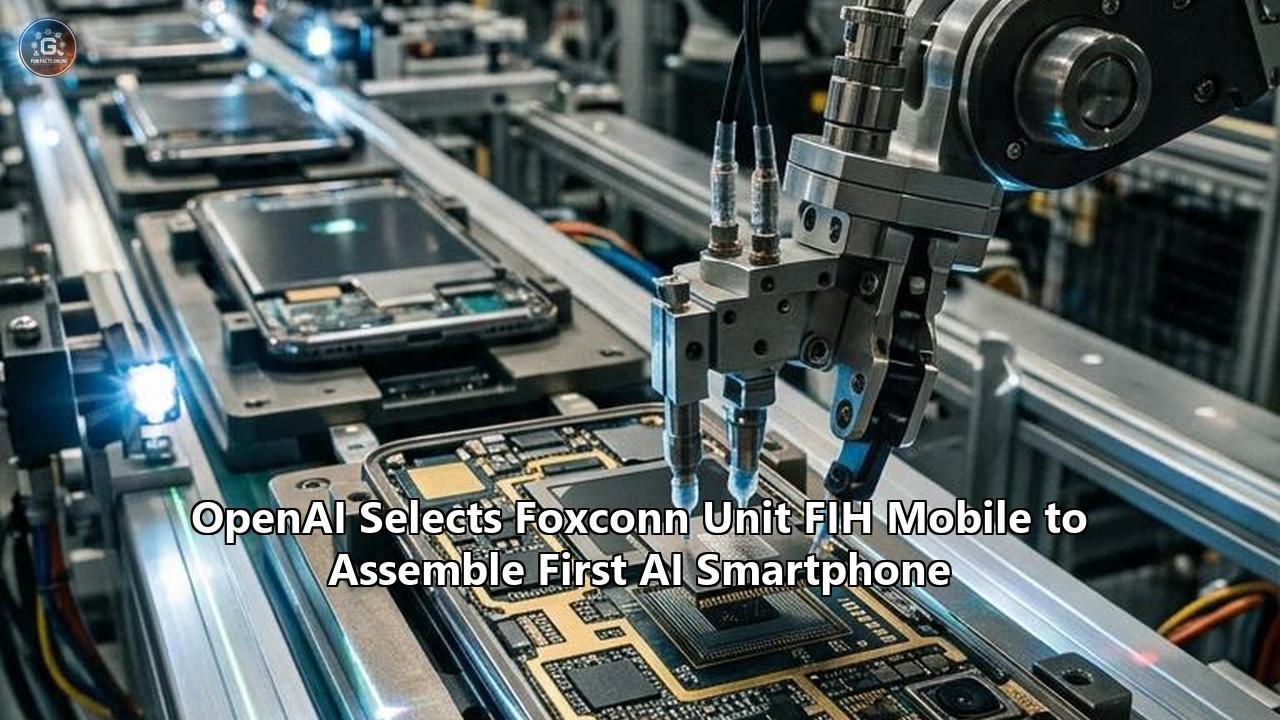
Foxconn subsidiary FIH Mobile has secured the contract to assemble the first OpenAI AI smartphone, marking a definitive transition for the artificial intelligence research lab into consumer hardware. The manufacturing deal, confirmed through supply-chain filings and reports from China’s Securities Times and Cailian Press, delegates final assembly of the long-rumored handset to the Hong Kong-listed arm of Hon Hai Precision Industry (ticker: 02038.HK). The commercial release is scheduled for late 2027 or early 2028, with initial production targets set at up to 30 million units across its first two years on the market.
The selection of FIH Mobile represents an aggressive move into physical computing by OpenAI chief executive Sam Altman and former Apple chief design officer Jony Ive. Rather than relying on third-party mobile operating systems where its models are sandboxed inside mobile apps, OpenAI is establishing a vertically integrated hardware supply chain. The initiative directly challenges Apple and Google by targeting the primary gateway through which consumers access digital services.
While mainland Chinese manufacturer Luxshare Precision was originally reported to be the exclusive assembly partner, the contract has been reallocated. Luxshare has been moved down the production tier to supply discrete mechanical and acoustic sub-assemblies alongside Apple-ecosystem veterans Lingyi iTech and AAC Technologies. FIH Mobile will oversee final system-in-package integration, testing, and box-build assembly.
The decision to entrust production to Foxconn’s dedicated handset subsidiary carries profound structural consequences for the global technology sector. It creates operational friction inside Foxconn’s factories—which have served as the bedrock of Apple’s iPhone production for nearly two decades—while forcing silicon designers, operating system architects, and component fabricators to reorient around a hardware platform designed for autonomous software agents rather than screen-bound mobile applications.
Supply Chain Architecture: Why Foxconn’s FIH Mobile Won the Contract
                     ┌────────────────────────────────────────┐
                     │          OpenAI Hardware Core          │
                     │   (io Products / LoveFrom Design)      │
                     └───────────────────┬────────────────────┘
                                         │ Specifications & Architecture
                                         ▼
                     ┌────────────────────────────────────────┐
                     │         FIH Mobile (Foxconn)           │
                     │   Final Box-Build & System Assembly    │
                     │        (Vietnam / India / U.S.)        │
                     └───────▲───────────▲────────────▲───────┘
                             │           │            │
       ┌─────────────────────┴─────┐     │            └─────────────────────────┐
       │                           │     │                                      │
┌──────┴──────────────┐ ┌──────────┴─────┴────────┐ ┌───────────────────────────┴─────────┐
│ Custom MediaTek APU │ │    Precision Mechanics   │ │   Sensor & Acoustic Subsystems      │
│  Dimensity 9600 2nm │ │   Luxshare / Lingyi     │ │      AAC Technologies / Sony        │
│   (TSMC Foundry)    │ │   Structural Modules    │ │ Real-Time Environment Understanding │
└─────────────────────┘ └─────────────────────────┘ └─────────────────────────────────────┘
The reallocation of the final assembly contract from Luxshare Precision to FIH Mobile reflects the complex intersection of geopolitical risk, factory automation requirements, and corporate alliances.
Luxshare’s initial selection by OpenAI, reported in late 2025 by supply chain analyst Ming-Chi Kuo, was rooted in the Chinese manufacturer's aggressive price competitiveness and rapid mastery of sophisticated consumer electronic packaging. Luxshare has steadily absorbed assembly allocations for Apple’s AirPods, Apple Watch, and select iPhone tiers. However, operating as an American artificial intelligence firm subject to export controls, congressional scrutiny, and national security directives made reliance on mainland Chinese assembly lines an untenable liability for OpenAI.
Sources close to the Taiwanese supply chain indicate that OpenAI leadership sought absolute geographic flexibility. Specifically, they required assembly facilities capable of scaling outside mainland China—predominantly in northern Vietnam, southern India, and potentially domestic industrial corridors in North America.
FIH Mobile provides that geographical distribution. Unlike Foxconn’s primary Hon Hai entity, which remains heavily weighted toward Zhengzhou and Shenzhen for Apple assembly, FIH Mobile has built out extensive manufacturing infrastructure across Bac Giang and Bac Ninh provinces in Vietnam, as well as operational campuses in Sriperumbudur, India. FIH Mobile has historically operated as the contract manufacturer of choice for non-Apple handset pioneers, having handled volume production for Google’s Pixel hardware, HMD Global’s Nokia-branded portfolio, and high-complexity Android devices.
The corporate relationship between Foxconn Technology Group and OpenAI extends well beyond consumer electronics. In November 2025, the two companies formalized a joint engineering initiative focused on AI data center infrastructure. Under that framework, Foxconn began manufacturing custom AI server chassis, advanced liquid-cooling manifolds, and power distribution racks for OpenAI’s data center buildouts at Foxconn facilities in Wisconsin and Texas. During an industry briefing, Foxconn Chairman Young Liu confirmed that the contract manufacturer was exploring expanded operational initiatives with OpenAI. Awarding FIH Mobile the assembly contract for the handset consolidates these server-side and client-side hardware pipelines under a single manufacturing parent.
Luxshare has not been excised from the project entirely. Supply-chain manifests compiled by Cailian Press indicate Luxshare will manufacture structural mid-frames, internal composite brackets, and high-density interconnect (HDI) flex cables. AAC Technologies has been contracted for specialized acoustic transducer arrays and haptic actuators, while Lingyi iTech will supply advanced thermal dispersion shields and electromagnetic interference (EMI) housings.
By splitting the contract—relegating mainland suppliers to component tiers and assigning final assembly and firmware flashing to FIH Mobile—OpenAI insulates its device from single-jurisdiction regulatory vulnerability while tapping into Foxconn's engineering capacity.
Silicon, Memory, and the Physics of Edge AI
Building a phone around an autonomous AI agent requires an entirely different system architecture than building a device to run mobile apps. A standard smartphone relies on a central processor (CPU) and graphics chip (GPU) designed for short bursts of computation. These processors wake up, render a user interface, execute an application loop, and return to an idle state to conserve battery life.
The reported hardware blueprint for the OpenAI AI smartphone upends this architecture. The device requires continuous environment sensing, real-time audio and visual streaming, and local model inference—all operating within a strict thermal ceiling of 4.5 to 5.5 watts under sustained operation.
+------------------------------------------------------------------------------------+
|                          OPENAI HANDSET HARDWARE BLUEPRINT                         |
+--------------------------+---------------------------------------------------------+
| Compute Subsystem        | Custom MediaTek Dimensity 9600 variant                  |
| Semiconductor Node       | TSMC 2nm (N2 Gate-All-Around GAAFET process)            |
| Neural Processing Unit   | Dual-NPU Design: Low-Power Sensor Core + Deep Burst Core|
| System Memory            | 16GB–24GB LPDDR6 DRAM (Peak Bandwidth: ~14.4 Gbps)      |
| Non-Volatile Storage     | 512GB–1TB UFS 5.0 (Dedicated low-latency model cache)   |
| Sensor Infrastructure    | Multi-spectral visual cameras, 6-mic directional array  |
| Primary Assembly Partner | FIH Mobile (Foxconn Technology Group)                   |
| Secondary Suppliers      | Luxshare Precision, Lingyi iTech, AAC Technologies      |
| Targeted Volume Window   | 30 million units across 2027–2028 operational cycle     |
+--------------------------+---------------------------------------------------------+
The Custom MediaTek-TSMC Alliance
To execute this workload, OpenAI bypasses conventional off-the-shelf mobile processors. Analyses published by Ming-Chi Kuo identify a customized application processor co-designed with Taiwan's MediaTek, built upon TSMC’s cutting-edge 2-nanometer (N2) process node. The core silicon design relies on a modified variant of MediaTek’s Dimensity 9600 series, discarding legacy graphics rendering silicon to clear die space for a dual-cluster Neural Processing Unit (NPU).
                      ┌────────────────────────────────────────┐
                      │    TSMC 2nm MediaTek APU Architecture  │
                      └───────────────────┬────────────────────┘
                                          │
                  ┌───────────────────────┴───────────────────────┐
                  ▼                                               ▼
     ┌─────────────────────────┐                     ┌─────────────────────────┐
     │ Low-Power "Always-On"   │                     │ High-Throughput Burst   │
     │ NPU Subsystem           │                     │ NPU Cluster             │
     ├─────────────────────────┤                     ├─────────────────────────┤
     │ • Continuous Mic Ingest │                     │ • Agentic Tree Search   │
     │ • Frame-Delta Tracking  │                     │ • On-Device SLM (3B-7B) │
     │ • Wake-Vector Matching  │                     │ • Multimodal Reasoning  │
     │ • Thermal Load: <0.4W   │                     │ • Thermal Load: 3.5-5W  │
     └─────────────────────────┘                     └─────────────────────────┘
The split NPU architecture addresses a fundamental engineering barrier in edge artificial intelligence:
- The Always-On Context Core: Fabricated within a tiny ultra-low-leakage power island, this low-power NPU consumes less than 400 milliwatts. It remains continuously active, ingesting live audio streams from a six-microphone directional array and low-resolution spatial feeds from ultra-wide camera sensors. Its sole responsibility is processing environmental vectors, tracking conversational shifts, and maintaining an immediate semantic memory buffer without waking the primary computing cores.
- The Burst Agentic Cluster: When the ambient monitor detects a direct prompt, an environmental change, or an implicit intention, it activates the larger high-throughput NPU cluster. This block is optimized for matrix multiplication operations using quantized FP8 and INT4 mathematical precision. It executes local Small Language Models (ranging from 3 to 7 billion parameters) directly on the device, allowing the handset to parse user intent, construct an execution plan, and run local agentic tasks without cloud latency.
The Memory Bottleneck: LPDDR6 and UFS 5.0
In consumer hardware, an AI model's speed is ultimately dictated by how fast data moves between memory and the processor. Running a 4-bit quantized 7-billion-parameter model at acceptable reading speeds (30 to 40 tokens per second) requires an absolute minimum sustained memory throughput of 120 to 140 gigabytes per second. Conventional LPDDR5X memory setups in today's flagship smartphones choke under this continuous demand, triggering severe thermal throttling within minutes.
To prevent this, the device specification calls for next-generation LPDDR6 DRAM, operating over an expanded bus width capable of delivering theoretical transfer rates up to 14.4 gigabits per second per pin. By pairing this memory fabric with high-speed UFS 5.0 solid-state storage, OpenAI creates a high-bandwidth pipeline between storage and memory. This architecture allows the system to swap specialized model weights in and out of the active computing core in fractions of a second, matching the specific operational context—whether translating a foreign language, debugging code visible through the camera, or summarizing an incoming legal contract.
Who Is Affected: Stakeholder Impact Mapping
The ripple effects of OpenAI's hardware manufacturing contract extend across competitors, chipmakers, and global component suppliers.
┌────────────────────────────────────────────────────────────────────────────────────────┐
│                          ECOSYSTEM STAKEHOLDER IMPACT MATRIX                           │
├────────────────────┬─────────────────────────────┬─────────────────────────────────────┤
│ STAKEHOLDER        │ STRUCTURAL THREAT           │ STRATEGIC VULNERABILITY             │
├────────────────────┼─────────────────────────────┼─────────────────────────────────────┤
│ Apple              │ Disintermediation of iOS    │ Loss of Services revenue, supply    │
│                    │ platform; supply friction.  │ chain friction inside Foxconn.      │
├────────────────────┼─────────────────────────────┼─────────────────────────────────────┤
│ Google (Alphabet)  │ Collapse of Search default  │ Loss of Mobile Services (GMS)       │
│                    │ integration via browsers.   │ telemetry and Play Store commissions│
├────────────────────┼─────────────────────────────┼─────────────────────────────────────┤
│ MediaTek           │ Direct elevation into       │ Execution risk on advanced TSMC     │
│                    │ tier-one flagship devices.  │ 2nm packaging yields.               │
├────────────────────┼─────────────────────────────┼─────────────────────────────────────┤
│ Qualcomm           │ Displacement from frontier  │ Erosion of premium-tier Android NPU │
│                    │ AI hardware architectures.  │ dominance.                          │
├────────────────────┼─────────────────────────────┼─────────────────────────────────────┤
│ Samsung & Android  │ Trapped in commodity        │ Margin compression; dependence on   │
│ Device Makers      │ hardware manufacturing.     │ external foundational models.       │
└────────────────────┴─────────────────────────────┴─────────────────────────────────────┘
Apple: Threat on the Factory Floor and at the System Level
For Apple, FIH Mobile's selection is a direct competitive challenge from former members of its own executive team. In May 2025, OpenAI paid $6.4 billion in an all-equity transaction to acquire io Products—the secretive consumer hardware startup established by Jony Ive alongside former Apple engineering vice presidents Tang Tan and Evans Hankey.
That acquisition brought 55 veteran Apple hardware engineers, industrial designers, and material scientists directly into OpenAI's organization. Jony Ive's independent studio, LoveFrom, remains the creative authority overseeing the handset's form factor and user experience.
                     ┌────────────────────────────────────────┐
                     │          Jony Ive / LoveFrom           │
                     │       Industrial Design Strategy       │
                     └───────────────────┬────────────────────┘
                                         │
                                         ▼
                     ┌────────────────────────────────────────┐
                     │              io Products               │
                     │  (Acquired by OpenAI for $6.4B in 2025)│
                     │    55 Former Apple Hardware Veterans   │
                     └───────────────────┬────────────────────┘
                                         │
                         ┌───────────────┴───────────────┐
                         ▼                               ▼
            ┌─────────────────────────┐     ┌─────────────────────────┐
            │        Tang Tan         │     │      Evans Hankey       │
            │ Former Apple VP iPhone  │     │ Former Apple VP Ind.    │
            │  Hardware Engineering   │     │         Design          │
            └─────────────────────────┘     └─────────────────────────┘
Apple now faces a competitor bankrolled by billions in software capital, staffed by the creators of its most celebrated hardware lines, and assembled by its primary manufacturing partner, Foxconn.
The competitive danger for Apple centers on platform disintermediation. The iPhone currently generates over $200 billion in annual hardware sales and anchors Apple’s $100 billion-per-year Services division. That Services engine relies on App Store commissions (ranging from 15% to 30%) and billions in search placement fees paid by Alphabet.
If the OpenAI AI smartphone succeeds in presenting consumers with an operating system where autonomous agents handle complex digital actions, the traditional App Store interface becomes an unnecessary intermediary. Users would no longer buy, download, and manually tap through specialized applications. If consumer interaction migrates away from mobile apps toward agentic mediation, Apple’s Services business faces margin compression.
This competitive friction has spilled into the courts. Apple has filed intellectual property and trade-secret litigation targeting several former senior engineering managers who transitioned to io Products and OpenAI. The lawsuits allege the misappropriation of proprietary design patents covering tactile materials, micro-acoustic chambers, and internal component layouts. These legal challenges could complicate OpenAI's path toward commercial manufacturing.
Google and the Android Coalition: The Threat to App-Store Rents
Alphabet’s exposure is even broader. Google's core revenue model is designed around extracting ad value from web searches and collecting transaction fees on its mobile platform. When a consumer uses an iPhone or an Android device, Google pays or negotiates to ensure its search engine acts as the primary access point for the web.
An agentic phone designed around local and cloud-based AI models eliminates that access point entirely. When an autonomous agent coordinates a user's calendar, books travel itineraries, purchases products, and summarizes research directly across background APIs, traditional search engine results pages (SERPs) are bypassed. There are no display links to click, no sponsored ad banners to view, and no search queries to monetize.
OpenAI’s selection of an independent contract manufacturer also signals an ambition to control the operating layer. If OpenAI licenses a bare-metal, open-source Android base (AOSP) while stripping out all proprietary Google Mobile Services (GMS)—or introduces its own bespoke operating system—Google loses real-time behavioral telemetry for millions of high-intent mobile users.
For traditional hardware makers like Samsung, Xiaomi, and Vivo, the emergence of an OpenAI-built device creates a dangerous squeeze. These companies risk being relegated to lower-margin hardware assembly while foundational model creators capture user loyalty and premium software subscriptions.
The Semiconductor Landscape: MediaTek's Ascent over Qualcomm
In mobile semiconductors, OpenAI's hardware alliance is a major victory for MediaTek and a strategic blow to Qualcomm. Historically, Qualcomm’s Snapdragon series has held a near-monopoly over the premium tier of flagship non-Apple mobile computing. MediaTek was largely confined to budget and mid-tier handsets manufactured across China and developing economies.
By partnering with MediaTek to engineer its custom 2nm application processor, OpenAI validates the Taiwanese chip designer’s premium silicon capabilities. MediaTek has gained a flagship demonstration platform for its high-performance neural processing pipelines, developed in coordination with TSMC’s advanced semiconductor nodes.
Qualcomm risks losing its pricing power in the flagship tier if leading AI software developers begin building custom silicon with alternative Asian design firms.
The Agentic Paradigm: Replacing Apps with Intent-Based Computing
The decision to build a dedicated smartphone rather than remaining a software developer highlights the limitations OpenAI faces on current mobile platforms.
┌─────────────────────────────────────────────────────────────────────────────┐
│                    SOFTWARE PARADIGM ARCHITECTURE SHIFT                     │
└─────────────────────────────────────────────────────────────────────────────┘

TRADITIONAL APP-CENTRIC COMPUTING (iOS / Android):
┌───────────┐      ┌──────────────┐      ┌─────────────┐      ┌──────────────┐
│ User Tap  │ ───► │ Launch App   │ ───► │ Navigate UI │ ───► │ Closed Silo  │
│ Execution │      │ Permissions  │      │ Manual Form │      │ App Database │
└───────────┘      └──────────────┘      └─────────────┘      └──────────────┘

INTENT-BASED AGENTIC COMPUTING (OpenAI Device Layer):
┌───────────┐      ┌──────────────┐      ┌─────────────┐      ┌──────────────┐
│ Multimodal│ ───► │ Ambient NPU  │ ───► │ Intent      │ ───► │ Background   │
│ Context   │      │ Verification │      │ Planner     │      │ API / Action │
└───────────┘      └──────────────┘      └─────────────┘      └──────────────┘
On both iOS and Google Android, modern operating systems are built around defensive sandboxing. Each application runs in an isolated software container, strictly separated from other programs to protect consumer data and defend platform security. While this architecture protects user privacy, it prevents artificial intelligence models from acting as autonomous system assistants:
- Permission Chokepoints: An application running on an iPhone cannot look across your screen, inspect data inside your banking app, parse an incoming messaging payload from a rival network, and execute an authenticated transaction without multiple manual confirmation taps.
- Background Execution Throttling: Both iOS and Android terminate or sleep non-active background processes within seconds to protect device battery life. An AI model cannot maintain a continuous loop of reasoning, environmental listening, or proactive task orchestration while buried in an inactive background app.
- Sensory Isolation: Current mobile operating systems restrict camera and microphone access. Applications cannot capture ambient environmental context unless the device is unlocked, the application is in the active foreground, and the camera sensor is actively powered on.
By controlling the physical hardware and the underlying operating system through FIH Mobile's buildout, OpenAI can bypass these restrictions.
The planned OpenAI AI smartphone is built to replace the visual grid of application icons with an intent-driven interface. Rather than forcing a consumer to open an airline app, pick seat reservations, switch to a calendar to check schedules, open an email client to find confirmation codes, and launch a ride-hailing app to arrange airport transit, the device's system layer delegates these operations to background autonomous agents.
                     ┌────────────────────────────────────────┐
                     │          User Multimodal Prompt        │
                     │  "Book flight, sync calendar, call cab"│
                     └───────────────────┬────────────────────┘
                                         │
                                         ▼
                     ┌────────────────────────────────────────┐
                     │      Local Context Planner (NPU)       │
                     │      Deconstructs Goal into Vectors    │
                     └───────┬────────────────────────┬───────┘
                             │                        │
         ┌───────────────────┴────┐              ┌────┴───────────────────┐
         ▼                        ▼              ▼                        ▼
┌─────────────────┐      ┌────────────────┐ ┌─────────────────┐  ┌────────────────┐
│ Travel Protocol │      │ System Calendar│ │ Ride Dispatch   │  │ Authenticated  │
│  (Direct API)   │      │ (Local SQLite) │ │ (Headless API)  │  │ Secure Enclave │
└─────────────────┘      └────────────────┘ └─────────────────┘  └────────────────┘
This interaction model relies on automated screen manipulation and direct API integration. The device's operating system is built from the ground up to let local neural networks navigate web interfaces, authenticate with remote services, and execute multi-step workflows without requiring dedicated third-party apps.
The camera system is engineered around spatial and visual understanding rather than traditional consumer photography. Instead of prioritizing heavy computational filters to optimize portrait shots, the camera sensors are calibrated for real-time edge detection, spatial depth mapping, optical text parsing, and physical object tracking.
The phone continuously decodes the physical environment around it, maintaining an active, rolling awareness of what you are reading, where you are walking, who you are speaking with, and what objects you are interacting with.
Short-Term Consequences: Market Realignment and Legal Friction (2026–2027)
The industrial ramp leading to a planned 2027–2028 commercial rollout introduces immediate operational, financial, and legal obstacles.
2025: Architectural Inception
├── May: OpenAI acquires io Products for $6.4B; absorbs 55 Apple veterans.
└── Nov: Foxconn and OpenAI announce data center AI hardware partnership.

2026: Industrial Consolidation
├── Jan: Manufacturing shifted from Luxshare to Foxconn amid geopolitical reviews.
├── May: Prototype tape-out of custom 2nm MediaTek processor with TSMC.
└── Nov: FIH Mobile officially selected for box-build assembly; Apple IP litigation begins.

2027: Tooling and Pilot Production (Projected)
├── Q1-Q2: Engineering Verification Testing (EVT) across FIH Mobile Vietnam campuses.
├── Q3: Design Verification Testing (DVT); baseline system operating platform reveal.
└── Q4: Production Verification Testing (PVT); initial commercial unit runs.

2028: Commercial Deployment (Projected)
├── Q1: Global retail launch across primary carrier channels.
└── Q2-Q4: Target scale toward 30-million-unit cumulative production threshold.
Foxconn’s Delicate Customer Balancing Act
The assembly award places Foxconn’s executive suite in a complicated operational position. Apple accounts for an estimated 45% to 55% of Foxconn’s annual consolidated revenues. While assigning the project to FIH Mobile creates some corporate separation from Hon Hai’s primary iPhone assembly units, both entities share executive oversight, logistics networks, and board leadership under Young Liu.
Apple has historically guarded its contract manufacturing capacity with extreme jealousy. During early transitions of competing consumer hardware lines, Apple executives frequently pressured contract manufacturing partners to wall off proprietary assembly techniques, custom robotic tooling fixtures, and cleanroom engineering teams.
Foxconn must now implement strict internal firewalls to ensure that manufacturing processes, equipment, and production metrics for the OpenAI handset do not overlap with Apple's production facilities. Any evidence suggesting that Apple-funded manufacturing automation or design workflows were adapted for OpenAI could trigger sweeping contractual penalties or a shift of iPhone production allocations toward rival assemblers Pegatron and Tata Electronics.
The Intellectual Property Battle over poached Cupertino Talent
The legal campaign launched by Apple against former members of its hardware design team will accelerate over the next eighteen months. When Evans Hankey stepped down as Apple’s head of industrial design and joined Tang Tan at io Products, Apple lost leaders who held key design patents covering structural metallurgy, internal space packaging, and glass-bonding processes.
Apple’s litigation strategy will aim to slow the development of the device by filing patent infringement claims and trade-secret motions before trial courts in Northern California and international trade bodies.
If Apple secures preliminary injunctions or import exclusion orders through the U.S. International Trade Commission (ITC), OpenAI could be barred from importing devices using contested antenna layouts, display driver interfaces, or thermal casing designs into the North American market. Navigating around these patents without compromising the industrial design vision established by Jony Ive will require extensive engineering workarounds.
                  ┌────────────────────────────────────────┐
                  │      Apple Trade-Secret Litigation     │
                  │        Targeting io / OpenAI Team      │
                  └───────────────────┬────────────────────┘
                                      │
              ┌───────────────────────┴───────────────────────┐
              ▼                                               ▼
┌───────────────────────────┐                   ┌───────────────────────────┐
│ International Trade Comm. │                   │ Federal District Courts   │
│  Section 337 Complaints   │                   │  Trade Secret Claims      │
├───────────────────────────┤                   ├───────────────────────────┤
│ Seeks exclusion orders    │                   │ Seeks preliminary design  │
│ barring entry of foreign- │                   │ injunctions & patent      │
│ assembled devices into    │                   │ design modifications on   │
│ North American ports.     │                   │ internal layout patents.  │
└───────────────────────────┘                   └───────────────────────────┘
Capital Requirements and Hardware Margin Compression
For OpenAI, producing consumer hardware introduces capital demands that contrast sharply with the economics of software licensing. Building advanced electronic devices requires massive upfront cash outlays:
- Advance Component Bookings: Securing guaranteed allocations for TSMC’s 2nm fabrication wafers requires substantial advance capital commitments.
- Raw Material and Memory Reserves: Sourcing specialized LPDDR6 memory dies and industrial tooling lines requires tying up billions in operational cash.
- Inventory Risk: Unlike digital software distribution, physical hardware carries high carrying costs, yield loss vulnerabilities, and supply-chain depreciation risks.
Contracting for an initial batch of 30 million premium handsets requires an upfront hardware capital commitment estimated between $9 billion and $12 billion. OpenAI must finance this manufacturing ramp while continuing to invest billions in training next-generation frontier models and funding global data center expansions.
Hardware manufacturing gross margins rarely exceed 35% to 42% even for an established operator like Apple, while traditional Android manufacturers frequently operate with single-digit hardware margins. OpenAI must absorb this financial reality while convincing retail consumers to purchase a standalone device rather than simply running its software via an app on their existing phones.
The Lessons of Failed AI Hardware: Avoiding the Pitfalls
OpenAI enters a hardware landscape littered with failed consumer AI devices. The commercial collapses of the Humane AI Pin and the Rabbit r1 demonstrate the dangers facing specialized artificial intelligence hardware.
┌────────────────────────────────────────────────────────────────────────────────────────┐
│                        HARDWARE EVOLUTION: LESSONS FROM FAILURE                        │
├─────────────────────┬───────────────────────────┬──────────────────────────────────────┤
│ DEVICE / PLATFORM   │ CORE FAILURE MECHANISM    │ OPENAI / FIH COUNTERMEASURE          │
├─────────────────────┼───────────────────────────┼──────────────────────────────────────┤
│ Humane AI Pin       │ Cloud round-trip latency; │ High-throughput local 2nm NPU;       │
│                     │ severe thermal throttling;│ familiar tactile slate form factor;  │
│                     │ laser interface fatigue.  │ carrier-integrated cellular stack.   │
├─────────────────────┼───────────────────────────┼──────────────────────────────────────┤
│ Rabbit r1           │ Fragile cloud RPA scripts;│ Native OS-level API control;         │
│                     │ underpowered silicon;     │ premium MediaTek APU; deep on-device │
│                     │ disposable build quality. │ memory fabric and sensor arrays.     │
├─────────────────────┼───────────────────────────┼──────────────────────────────────────┤
│ Meta Ray-Ban Glasses│ Battery-constrained compute;│ Hybrid architecture: Dedicated       │
│                     │ lack of direct visual     │ high-compute mobile hub driving      │
│                     │ interface; cloud reliant. │ dense local models.                  │
└─────────────────────┴───────────────────────────┴──────────────────────────────────────┘
The fundamental flaw of early AI hardware experiments was their complete reliance on cloud processing. The Humane AI Pin attempted to shrink its industrial profile into a screenless wearable, leaving insufficient physical space for high-capacity batteries or active thermal cooling.
As a consequence, every user request was forced to travel over cellular networks to remote cloud servers, run through an external reasoning model, and beam back to the device. The resulting latency—often three to six seconds per response—made everyday interactions frustrating for consumers. When the device attempted to process continuous camera feeds, its small chassis quickly overheated, triggering automatic performance throttling.
The Rabbit r1 suffered from software fragility. Rather than building native platform integrations, its software layer attempted to navigate standard consumer websites using cloud-hosted computer vision and screen-scraping bots. When external services modified their login screens, updated their user interfaces, or deployed basic anti-bot defenses, the system's workflows broke down immediately.
OpenAI and Jony Ive's team appear to have absorbed these lessons in designing their project with FIH Mobile:
- Retaining the Functional Smartphone Profile: Instead of gambling on an unproven screenless pin, pendant, or laser projection system, OpenAI is building an actual smartphone. Retaining a familiar handset form factor preserves battery capacity, provides space for advanced heat-dissipation plates, and maintains a traditional high-refresh display for tasks where text and visual media remain essential.
- Prioritizing Edge Compute Over Pure Cloud: By incorporating MediaTek's custom 2nm application processor and a dual-NPU architecture, the device executes common reasoning tasks locally. This approach cuts operational latency down to milliseconds while ensuring fundamental voice, transcription, and device actions continue to work even when disconnected from cellular networks.
- Controlling the System Layer: Rather than using brittle screen-scraping scripts, OpenAI is building a custom operating system that operates with direct system-level permissions. The system interacts with services through native headless protocols, developer toolkits, and deep operating hooks, preventing the platform failures that undermined early AI gadget startups.
Long-Term Consequences: Reshaping the Mobile Computing Monopoly (2028 and Beyond)
Looking toward the late 2020s, a successful commercial deployment of the OpenAI AI smartphone would disrupt the settled economics of the consumer technology sector.
                     ┌────────────────────────────────────────┐
                     │    OpenAI AI Smartphone Ecosystem      │
                     │  (Intent-Driven / Agentic Marketplace) │
                     └───────────────────┬────────────────────┘
                                         │
                 ┌───────────────────────┴───────────────────────┐
                 ▼                                               ▼
    ┌─────────────────────────┐                     ┌─────────────────────────┐
    │  Direct Agentic Rents   │                     │ Agentic Intent Commerce │
    ├─────────────────────────┤                     ├─────────────────────────┤
    │ High-tier subscriptions │                     │ Autonomous purchasing,  │
    │ Dedicated compute tiers │                     │ real-time arbitration,  │
    │ Enterprise system hooks │                     │ transaction fees.       │
    └─────────────────────────┘                     └─────────────────────────┘
                 ▲                                               ▲
                 │ Displaces 30% App Tax                         │ Displaces Ad SERPs
                 │                                               │
    ┌────────────┴────────────┐                     ┌────────────┴────────────┐
    │ Traditional App Store   │                     │ Legacy Search Engine    │
    │ Ecosystem (Apple iOS)   │                     │ Monetization (Google)   │
    └─────────────────────────┘                     └─────────────────────────┘
The Breakdown of the 30% App Store Economy
For nearly twenty years, the global mobile software market has run on the economic model established by Steve Jobs in 2008: software developers build applications for closed platforms, distribute them through central platform stores, and hand over a 15% to 30% cut of all purchases to Apple or Google.
If the computing paradigm shifts from running isolated applications to delegating tasks to autonomous agents, that entire economic model breaks down. In an operating system driven by AI agents, individual software applications largely disappear behind programmatic background functions:
- The Death of the In-App Purchase Funnel: Consumers no longer interact with branded software storefronts. Instead, your local model discovers a service, connects via an automated interface, and completes the action instantly.
- The Rise of Direct Agentic Commerce: Instead of collecting tolls on software downloads, the platform owner monetizes the transactions its models manage. OpenAI could secure processing fees on every booking made, seat reserved, product ordered, and service authenticated by its autonomous agents.
- Subscription Bundling Over App Ownership: Digital revenues shift from paying for individual apps to purchasing access to high-tier intelligence models, specialized reasoning capabilities, and priority compute processing.
Geopolitical Supply-Chain Realignment
The supply chain OpenAI is constructing with FIH Mobile, MediaTek, Luxshare, and TSMC illustrates how consumer hardware manufacturing is decoupling from mainland China.
┌─────────────────────────────────────────────────────────────────────────────┐
│                    GLOBALIZED MANUFACTURING VALUE STREAM                    │
└─────────────────────────────────────────────────────────────────────────────┘

Silicon Fabrication (Taiwan):
  └── TSMC Fab 20 (Hsinchu) & Fab 22 (Kaohsiung)
      └── 2nm (N2 GAAFET) Process Node

Component Sub-Assembly (Mainland China & Regional Hubs):
  ├── Luxshare Precision: Composite mid-frames, high-speed HDI flex circuits
  ├── Lingyi iTech: Thermal vapor chambers, internal EMI shielding
  └── AAC Technologies: Acoustic mic arrays, dynamic haptic transducers

Final Box-Build Integration (FIH Mobile Distributed Plants):
  ├── Bac Giang / Bac Ninh Campuses (Vietnam): Initial volume assembly
  └── Sriperumbudur Facility (India): Secondary regional volume line
By moving final assembly away from mainland Chinese manufacturing plants and into automated facilities across Vietnam and India, OpenAI establishes a hardware production model designed to weather rising trade barriers.
This decentralized assembly network ensures that even if export restrictions, tariff policies, or geopolitical tensions worsen across the Taiwan Strait, OpenAI maintains the ability to produce and ship hardware to Western, Japanese, and European markets.
However, this supply chain remains completely reliant on advanced semiconductor fabrication across western Taiwan. A custom MediaTek processor fabricated on TSMC’s 2nm process node anchors the device to foundries operating in Hsinchu and Kaohsiung. If military tensions or supply interruptions disrupt TSMC’s production lines, the assembly lines operated by FIH Mobile in Southeast Asia would come to an immediate halt.
The Central Question for Consumers
Even with advanced engineering and deep financial backing, OpenAI faces a fundamental consumer adoption hurdle: Will mainstream smartphone users actually carry a dedicated new hardware device, or will Apple and Google deploy enough AI features into existing phones to keep their customers satisfied?
Modern smartphones are deeply entrenched in consumer habits. The global public has spent almost two decades accumulating application data, purchasing digital accessories, mastering touch interfaces, and syncing their lives across iCloud and Google Drive ecosystems. Persuading a consumer to switch to an unfamiliar operating platform requires proving that the new device offers a dramatically superior daily experience.
                     ┌────────────────────────────────────────┐
                     │      The Consumer Defensibility Hub    │
                     └───────────────────┬────────────────────┘
                                         │
                 ┌───────────────────────┴───────────────────────┐
                 ▼                                               ▼
    ┌─────────────────────────┐                     ┌─────────────────────────┐
    │   The Incumbent Defense │                     │ The Dedicated AI Vector │
    ├─────────────────────────┤                     ├─────────────────────────┤
    │ Deep ecosystem lock-in  │                     │ Native hardware freedom │
    │ Built-in cloud sync     │                     │ Zero app store tolls    │
    │ "Good enough" native AI │                     │ Continuous perception   │
    │ High consumer switching │                     │ Real-time autonomous    │
    │ friction                │                     │ agent execution         │
    └─────────────────────────┘                     └─────────────────────────┘
If Apple’s upcoming iterations of Apple Intelligence and Google's ongoing system integrations of its Gemini architecture manage to automate core mobile tasks smoothly—without requiring consumers to replace their hardware, switch operating systems, or change daily habits—OpenAI risks launching an expensive, niche device that appeals only to early tech adopters.
Conversely, if Apple and Google remain constrained by their need to protect app-store revenues, trapped within defensive security sandboxes, and unable to allow autonomous agents to operate freely across their operating systems, the OpenAI AI smartphone could emerge as a serious alternative.
By partnering with Foxconn’s FIH Mobile, OpenAI ensures that when its hardware vision arrives, it will possess the industrial manufacturing capacity, supply chain scale, and assembly expertise needed to compete directly with the consumer tech industry's incumbent leaders.
Strategic Indicators to Monitor
As the project moves from initial supply-chain contracts toward volume manufacturing, several key milestones will signal its commercial viability:
- Carrier Distribution Agreements: Modern handset launches require formal qualification across major North American, European, and Asian telecom networks. Watch for preliminary device testing filings with the FCC and regulatory authorities in early 2027 to see if carriers like AT&T, Verizon, and Deutsche Telekom agree to support the handset's custom cellular architecture.
- AOSP Fork vs. Bespoke Microkernel: The industry awaits clarity on the device's underlying software stack. Whether OpenAI forks Android Open Source Project (AOSP) to maintain baseline compatibility with Android developer tools, or introduces a clean-sheet microkernel built purely around native model interpretation, will reveal how easily existing digital services can run on the platform.
- TSMC 2nm Wafer Allocation Disclosures: MediaTek's formal booking filings with TSMC will confirm the production schedule for the Dimensity 9600 variant. Wafers must clear early-stage lithography by mid-2027 to meet volume device assembly targets for late 2027 or 2028.
- Federal Court Patent Rulings: Preliminary hearings in California and proceedings before the International Trade Commission regarding Apple’s trade-secret and patent infringement claims against io Products leadership will define the legal landscape. Any court-ordered design modifications could force FIH Mobile to re-tool its initial manufacturing lines, delaying the product's market debut.
Reference:
- https://basic-tutorials.com/news/openai-smartphone-foxconn-subsidiary-fih-to-assemble-the-chatgpt-phone/
- https://www.livemint.com/technology/gadgets/openai-smartphone-in-the-works-foxconn-subsidiary-secures-assembly-orders-launch-tipped-for-202728-11795169231874.html
- https://www.androidauthority.com/openai-phone-foxconn-assembly-3737193/
- https://gadgets.beebom.com/news/openai-first-smartphone-foxconn-assembly-report
- https://www.phonearena.com/news/rumored-chatgpt-phone-could-have-iphone-connection_id184966
- https://introl.com/blog/openai-consumer-device-jony-ive-hardware-2026
- https://www.androidheadlines.com/2026/11/openai-first-smartphone-foxconn-iphone-maker.html
- https://gadgetsnow.indiatimes.com/tech-news/openai-reportedly-picks-foxconns-fih-mobile-to-assemble-its-first-ai-smartphone-launch-tipped-for-2027-28/articleshow/136016960.cms
- https://www.businesstoday.in/technology/news/story/openais-first-smartphone-chatgpt-maker-reportedly-picks-iphone-supplier-foxconn-for-assembly-568684-2026-11-20
- https://www.benzinga.com/markets/tech/26/01/49661988/openai-shifts-ai-hardware-manufacturing-to-foxconn-as-jony-ive-designed-device-targets-2026-launch-report
- https://www.indiatvnews.com/technology/news/chatgpt-maker-openai-reportedly-developing-ai-phone-with-custom-mediatek-chipset-2026-11-20-1059944